


444 Results
Form:
drawings, works of art
Quantity:
2 portfolio(s)
drawings, works of art
Quantity:
2 portfolio(s)
Actions:
Reference number:
DR1974:0002:032:001-066
Description:
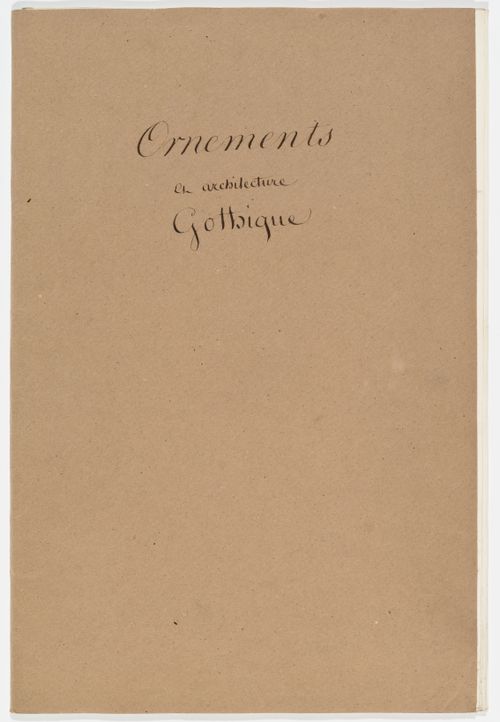
- This group comprises two portfolios entitled Arabesques et Mosaïques (DR1974:0002:032:001 - DR1974:0002:032:048 and Ornements et architecture Gothique (DR1974:0002:032:049 - DR1974:0002:032:066). The portfolio entitled Arabesques et Mosaïques comprises 46 sheets, mostly ornament drawings and interior views which are partially or fully coloured with watercolour, or perhaps gouache. Geometric, interlacing and foliate ornament, many apparently of Islamic origin, and arabesques predominate. Inscriptions on some of the drawings indicate their sources which include mosques in Cairo, various buildings in Italy and Sicily and and arabesques from the Palazzo del Tè and Palazzo ducale in Mantua. A number of drawings are uninscribed and consequently the source of the ornament cannot be identified. The presence of inscribed numbers on some of the drawings suggests that they may have been copied or traced from books. Drawings DR1974:0002:032:034 - DR1974:0002:032:038, which depict two ancient tombs on mainland Italy and various architectural subjects in Sicily, are perhaps travel sketches. This portfolio also includes one sheet of drawings depicting pottery (DR1974:0002:032:028), and a partial side elevation and a detail of the entablature of a classical temple with polychrome ornament (DR1974:0002:032:029). -- The portfolio entitled Ornements Et architecture Gothique comprises 17 sheets, mostly graphite line drawings on tracing paper - some of which are probably tracings - depicting details of French and English Gothic and Romanesque architecture. This portfolio includes numerous drawings of capitals as well as other ornamented stone and wooden elements such as corbels, mouldings, finials and gargoyles. Inscriptions indicate the source of the detail on a number of the drawings. Also included in this portfolio is a sheet of numbered drawings of furniture (DR1974:0002:032:053), a longitudinal section of Cathédrale Sainte-Marie, Bayonne, France (DR1974:0002:032:056), and a frontal elevation of Freiburg Munster in Freiburg im Breisgau, Germany (DR1974:0002:032:065).
DR1974:0002:032:001-066
Description:
- This group comprises two portfolios entitled Arabesques et Mosaïques (DR1974:0002:032:001 - DR1974:0002:032:048 and Ornements et architecture Gothique (DR1974:0002:032:049 - DR1974:0002:032:066). The portfolio entitled Arabesques et Mosaïques comprises 46 sheets, mostly ornament drawings and interior views which are partially or fully coloured with watercolour, or perhaps gouache. Geometric, interlacing and foliate ornament, many apparently of Islamic origin, and arabesques predominate. Inscriptions on some of the drawings indicate their sources which include mosques in Cairo, various buildings in Italy and Sicily and and arabesques from the Palazzo del Tè and Palazzo ducale in Mantua. A number of drawings are uninscribed and consequently the source of the ornament cannot be identified. The presence of inscribed numbers on some of the drawings suggests that they may have been copied or traced from books. Drawings DR1974:0002:032:034 - DR1974:0002:032:038, which depict two ancient tombs on mainland Italy and various architectural subjects in Sicily, are perhaps travel sketches. This portfolio also includes one sheet of drawings depicting pottery (DR1974:0002:032:028), and a partial side elevation and a detail of the entablature of a classical temple with polychrome ornament (DR1974:0002:032:029). -- The portfolio entitled Ornements Et architecture Gothique comprises 17 sheets, mostly graphite line drawings on tracing paper - some of which are probably tracings - depicting details of French and English Gothic and Romanesque architecture. This portfolio includes numerous drawings of capitals as well as other ornamented stone and wooden elements such as corbels, mouldings, finials and gargoyles. Inscriptions indicate the source of the detail on a number of the drawings. Also included in this portfolio is a sheet of numbered drawings of furniture (DR1974:0002:032:053), a longitudinal section of Cathédrale Sainte-Marie, Bayonne, France (DR1974:0002:032:056), and a frontal elevation of Freiburg Munster in Freiburg im Breisgau, Germany (DR1974:0002:032:065).
People:
Subject:
architecture, interior design, ornament
architecture, interior design, ornament
Date:
between 1800 and 1868
between 1800 and 1868
Title:
Two portfolios of drawings of ornament and other architectural subjects, mainly Italian and Islamic, and details of English and French Gothic and Romanesque architecture
Actions:
DR1974:0002:032:001-066
Description:
- This group comprises two portfolios entitled Arabesques et Mosaïques (DR1974:0002:032:001 - DR1974:0002:032:048 and Ornements et architecture Gothique (DR1974:0002:032:049 - DR1974:0002:032:066). The portfolio entitled Arabesques et Mosaïques comprises 46 sheets, mostly ornament drawings and interior views which are partially or fully coloured with watercolour, or perhaps gouache. Geometric, interlacing and foliate ornament, many apparently of Islamic origin, and arabesques predominate. Inscriptions on some of the drawings indicate their sources which include mosques in Cairo, various buildings in Italy and Sicily and and arabesques from the Palazzo del Tè and Palazzo ducale in Mantua. A number of drawings are uninscribed and consequently the source of the ornament cannot be identified. The presence of inscribed numbers on some of the drawings suggests that they may have been copied or traced from books. Drawings DR1974:0002:032:034 - DR1974:0002:032:038, which depict two ancient tombs on mainland Italy and various architectural subjects in Sicily, are perhaps travel sketches. This portfolio also includes one sheet of drawings depicting pottery (DR1974:0002:032:028), and a partial side elevation and a detail of the entablature of a classical temple with polychrome ornament (DR1974:0002:032:029). -- The portfolio entitled Ornements Et architecture Gothique comprises 17 sheets, mostly graphite line drawings on tracing paper - some of which are probably tracings - depicting details of French and English Gothic and Romanesque architecture. This portfolio includes numerous drawings of capitals as well as other ornamented stone and wooden elements such as corbels, mouldings, finials and gargoyles. Inscriptions indicate the source of the detail on a number of the drawings. Also included in this portfolio is a sheet of numbered drawings of furniture (DR1974:0002:032:053), a longitudinal section of Cathédrale Sainte-Marie, Bayonne, France (DR1974:0002:032:056), and a frontal elevation of Freiburg Munster in Freiburg im Breisgau, Germany (DR1974:0002:032:065).
Two portfolios of drawings of ornament and other architectural subjects, mainly Italian and Islamic, and details of English and French Gothic and Romanesque architecture
Actions:
DR1974:0002:032:001-066
Description:
- This group comprises two portfolios entitled Arabesques et Mosaïques (DR1974:0002:032:001 - DR1974:0002:032:048 and Ornements et architecture Gothique (DR1974:0002:032:049 - DR1974:0002:032:066). The portfolio entitled Arabesques et Mosaïques comprises 46 sheets, mostly ornament drawings and interior views which are partially or fully coloured with watercolour, or perhaps gouache. Geometric, interlacing and foliate ornament, many apparently of Islamic origin, and arabesques predominate. Inscriptions on some of the drawings indicate their sources which include mosques in Cairo, various buildings in Italy and Sicily and and arabesques from the Palazzo del Tè and Palazzo ducale in Mantua. A number of drawings are uninscribed and consequently the source of the ornament cannot be identified. The presence of inscribed numbers on some of the drawings suggests that they may have been copied or traced from books. Drawings DR1974:0002:032:034 - DR1974:0002:032:038, which depict two ancient tombs on mainland Italy and various architectural subjects in Sicily, are perhaps travel sketches. This portfolio also includes one sheet of drawings depicting pottery (DR1974:0002:032:028), and a partial side elevation and a detail of the entablature of a classical temple with polychrome ornament (DR1974:0002:032:029). -- The portfolio entitled Ornements Et architecture Gothique comprises 17 sheets, mostly graphite line drawings on tracing paper - some of which are probably tracings - depicting details of French and English Gothic and Romanesque architecture. This portfolio includes numerous drawings of capitals as well as other ornamented stone and wooden elements such as corbels, mouldings, finials and gargoyles. Inscriptions indicate the source of the detail on a number of the drawings. Also included in this portfolio is a sheet of numbered drawings of furniture (DR1974:0002:032:053), a longitudinal section of Cathédrale Sainte-Marie, Bayonne, France (DR1974:0002:032:056), and a frontal elevation of Freiburg Munster in Freiburg im Breisgau, Germany (DR1974:0002:032:065).
Form:
drawings, works of art
Quantity:
2 portfolio(s)
drawings, works of art
Quantity:
2 portfolio(s)
Date:
between 1800 and 1868
between 1800 and 1868
People:
Subject:
architecture, interior design, ornament
architecture, interior design, ornament
Form:
works of art
works of art
Reference number:
DR1988:0437:017
Description:
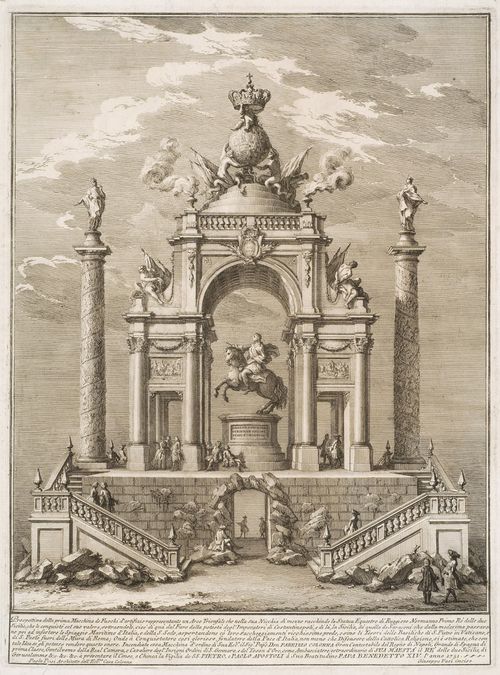
- This etching shows a fireworks construction or macchina in the form of a triumphal arch which is raised on a basement and flanked by two columns. Inside the arch is a statue of the Roger, the first Norman King of the Two Sicilies, while the top of the arch is crowned by the arms of the current King of the two Sicilies, Charles Bourbon.
DR1988:0437:017
Description:
- This etching shows a fireworks construction or macchina in the form of a triumphal arch which is raised on a basement and flanked by two columns. Inside the arch is a statue of the Roger, the first Norman King of the Two Sicilies, while the top of the arch is crowned by the arms of the current King of the two Sicilies, Charles Bourbon.
People:
Subject:
temporary architecture
temporary architecture
Date:
printed 1751
printed 1751
Title:
Etching of Posi's design for the "prima macchina" of 1751
Actions:
DR1988:0437:017
Description:
- This etching shows a fireworks construction or macchina in the form of a triumphal arch which is raised on a basement and flanked by two columns. Inside the arch is a statue of the Roger, the first Norman King of the Two Sicilies, while the top of the arch is crowned by the arms of the current King of the two Sicilies, Charles Bourbon.
Etching of Posi's design for the "prima macchina" of 1751
Actions:
DR1988:0437:017
Description:
- This etching shows a fireworks construction or macchina in the form of a triumphal arch which is raised on a basement and flanked by two columns. Inside the arch is a statue of the Roger, the first Norman King of the Two Sicilies, while the top of the arch is crowned by the arms of the current King of the two Sicilies, Charles Bourbon.
Form:
works of art
works of art
Date:
printed 1751
printed 1751
People:
Subject:
temporary architecture
temporary architecture
Form:
works of art
works of art
Reference number:
DR1988:0437:019
Description:
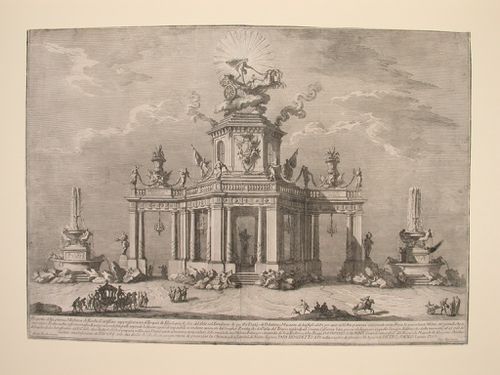
- This etching for a fireworks construction or macchina in the form of an octagonal temple is dedicated to Esculapius. The macchina is flanked by fountains.
DR1988:0437:019
Description:
- This etching for a fireworks construction or macchina in the form of an octagonal temple is dedicated to Esculapius. The macchina is flanked by fountains.
People:
Subject:
temporary architecture
temporary architecture
Date:
printed 1753
printed 1753
Title:
Etching of Posi's design for the "prima macchina" of 1753
Actions:
DR1988:0437:019
Description:
- This etching for a fireworks construction or macchina in the form of an octagonal temple is dedicated to Esculapius. The macchina is flanked by fountains.
Etching of Posi's design for the "prima macchina" of 1753
Actions:
DR1988:0437:019
Description:
- This etching for a fireworks construction or macchina in the form of an octagonal temple is dedicated to Esculapius. The macchina is flanked by fountains.
Form:
works of art
works of art
Date:
printed 1753
printed 1753
People:
Subject:
temporary architecture
temporary architecture
Form:
works of art
works of art
Reference number:
DR1988:0437:020
Description:
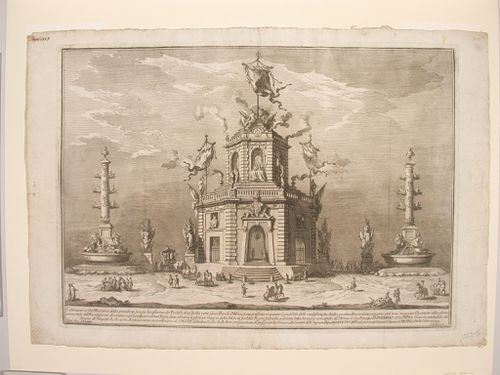
- This etching for a fireworks construction or macchina is in the form of a pavilion commemorating the munificence of the King towards his people and his troops. The pavilion is flanked by military trophies and two fountains topped by rostral columns.
DR1988:0437:020
Description:
- This etching for a fireworks construction or macchina is in the form of a pavilion commemorating the munificence of the King towards his people and his troops. The pavilion is flanked by military trophies and two fountains topped by rostral columns.
People:
Subject:
temporary architecture
temporary architecture
Date:
printed 1753
printed 1753
Title:
Etching of Posi's design for the "seconda macchina" of 1753
Actions:
DR1988:0437:020
Description:
- This etching for a fireworks construction or macchina is in the form of a pavilion commemorating the munificence of the King towards his people and his troops. The pavilion is flanked by military trophies and two fountains topped by rostral columns.
Etching of Posi's design for the "seconda macchina" of 1753
Actions:
DR1988:0437:020
Description:
- This etching for a fireworks construction or macchina is in the form of a pavilion commemorating the munificence of the King towards his people and his troops. The pavilion is flanked by military trophies and two fountains topped by rostral columns.
Form:
works of art
works of art
Date:
printed 1753
printed 1753
People:
Subject:
temporary architecture
temporary architecture
Form:
works of art
works of art
Reference number:
DR1988:0437:021
Description:
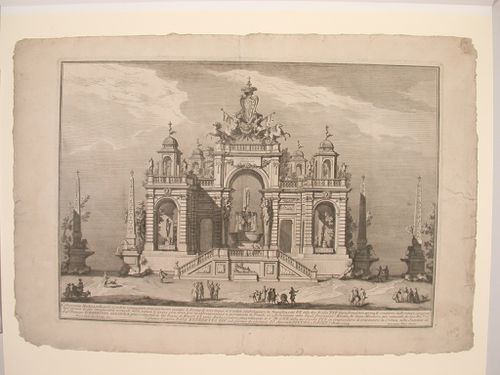
- This etching for a fireworks construction or macchina is in the form of a garden pavilion, including a large central and two side fountains with running water. The pavilion is set off by four obelisks.
DR1988:0437:021
Description:
- This etching for a fireworks construction or macchina is in the form of a garden pavilion, including a large central and two side fountains with running water. The pavilion is set off by four obelisks.
People:
Subject:
temporary architecture
temporary architecture
Date:
printed 1754
printed 1754
Title:
Etching of Posi's design for the "seconda macchina" of 1754
Actions:
DR1988:0437:021
Description:
- This etching for a fireworks construction or macchina is in the form of a garden pavilion, including a large central and two side fountains with running water. The pavilion is set off by four obelisks.
Etching of Posi's design for the "seconda macchina" of 1754
Actions:
DR1988:0437:021
Description:
- This etching for a fireworks construction or macchina is in the form of a garden pavilion, including a large central and two side fountains with running water. The pavilion is set off by four obelisks.
Form:
works of art
works of art
Date:
printed 1754
printed 1754
People:
Subject:
temporary architecture
temporary architecture
Form:
works of art
works of art
Reference number:
DR1988:0437:022
Description:
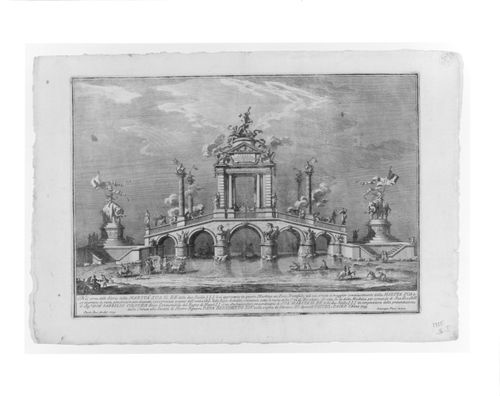
- This etching for a fireworks construction or macchina is in the form of a triumphal bridge with statues of the elements, commemorative columns, and a central pavilion crowned by a statue of Hercules killing a monster. People are crossing the bridge and simulated river in carriages and rowboats.
DR1988:0437:022
Description:
- This etching for a fireworks construction or macchina is in the form of a triumphal bridge with statues of the elements, commemorative columns, and a central pavilion crowned by a statue of Hercules killing a monster. People are crossing the bridge and simulated river in carriages and rowboats.
People:
Subject:
temporary architecture
temporary architecture
Date:
printed 1755
printed 1755
Title:
Etching of Posi's design for the "prima macchina" of 1755
Actions:
DR1988:0437:022
Description:
- This etching for a fireworks construction or macchina is in the form of a triumphal bridge with statues of the elements, commemorative columns, and a central pavilion crowned by a statue of Hercules killing a monster. People are crossing the bridge and simulated river in carriages and rowboats.
Etching of Posi's design for the "prima macchina" of 1755
Actions:
DR1988:0437:022
Description:
- This etching for a fireworks construction or macchina is in the form of a triumphal bridge with statues of the elements, commemorative columns, and a central pavilion crowned by a statue of Hercules killing a monster. People are crossing the bridge and simulated river in carriages and rowboats.
Form:
works of art
works of art
Date:
printed 1755
printed 1755
People:
Subject:
temporary architecture
temporary architecture
Form:
works of art
works of art
Reference number:
DR1988:0437:023
Description:
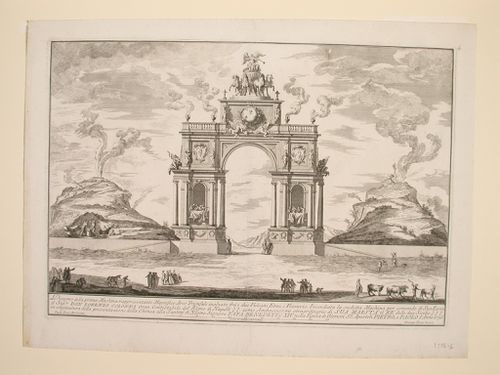
- This etching for a fireworks construction or macchina is in the form of a triumphal arch, flanked on either side by representations of the smoking volcanoes Etna and Vesuvius.
DR1988:0437:023
Description:
- This etching for a fireworks construction or macchina is in the form of a triumphal arch, flanked on either side by representations of the smoking volcanoes Etna and Vesuvius.
People:
Subject:
temporary architecture
temporary architecture
Date:
printed 1756
printed 1756
Title:
Etching of Posi's design for the "prima macchina" of 1756
Actions:
DR1988:0437:023
Description:
- This etching for a fireworks construction or macchina is in the form of a triumphal arch, flanked on either side by representations of the smoking volcanoes Etna and Vesuvius.
Etching of Posi's design for the "prima macchina" of 1756
Actions:
DR1988:0437:023
Description:
- This etching for a fireworks construction or macchina is in the form of a triumphal arch, flanked on either side by representations of the smoking volcanoes Etna and Vesuvius.
Form:
works of art
works of art
Date:
printed 1756
printed 1756
People:
Subject:
temporary architecture
temporary architecture
Form:
works of art
works of art
Reference number:
DR1988:0437:024
Description:
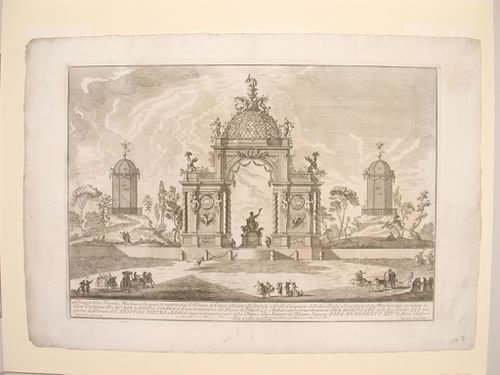
- This etching for a fireworks construction or macchina is in the form of a temple dedicated to the goddess Ceres. The central pavilion, an archway with two porticoes on both sides, is surmounted by a lattice work dome and there are two lattice gazebos on both sides of the temple.
DR1988:0437:024
Description:
- This etching for a fireworks construction or macchina is in the form of a temple dedicated to the goddess Ceres. The central pavilion, an archway with two porticoes on both sides, is surmounted by a lattice work dome and there are two lattice gazebos on both sides of the temple.
People:
Subject:
temporary architecture
temporary architecture
Date:
printed 1756
printed 1756
Title:
Etching of Posi's design for the "seconda macchina" of 1756
Actions:
DR1988:0437:024
Description:
- This etching for a fireworks construction or macchina is in the form of a temple dedicated to the goddess Ceres. The central pavilion, an archway with two porticoes on both sides, is surmounted by a lattice work dome and there are two lattice gazebos on both sides of the temple.
Etching of Posi's design for the "seconda macchina" of 1756
Actions:
DR1988:0437:024
Description:
- This etching for a fireworks construction or macchina is in the form of a temple dedicated to the goddess Ceres. The central pavilion, an archway with two porticoes on both sides, is surmounted by a lattice work dome and there are two lattice gazebos on both sides of the temple.
Form:
works of art
works of art
Date:
printed 1756
printed 1756
People:
Subject:
temporary architecture
temporary architecture
Form:
works of art
works of art
Reference number:
DR1988:0437:051
Description:
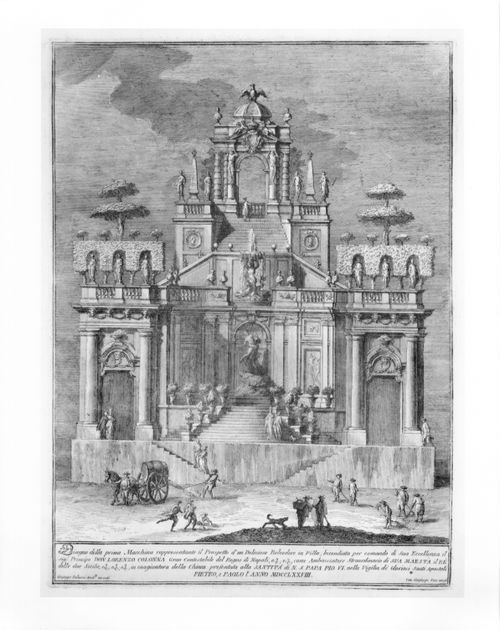
- This etching for a fireworks construction or macchina is in the form of a garden belvedere. The decoration of the macchina includes topiary, a central statue of Hercules, portrait busts, and full figure statues.
DR1988:0437:051
Description:
- This etching for a fireworks construction or macchina is in the form of a garden belvedere. The decoration of the macchina includes topiary, a central statue of Hercules, portrait busts, and full figure statues.
People:
Subject:
temporary architecture
temporary architecture
Date:
printed 1778
printed 1778
Title:
Etching of Palazzi's design for the "prima macchina" of 1778
Actions:
DR1988:0437:051
Description:
- This etching for a fireworks construction or macchina is in the form of a garden belvedere. The decoration of the macchina includes topiary, a central statue of Hercules, portrait busts, and full figure statues.
Etching of Palazzi's design for the "prima macchina" of 1778
Actions:
DR1988:0437:051
Description:
- This etching for a fireworks construction or macchina is in the form of a garden belvedere. The decoration of the macchina includes topiary, a central statue of Hercules, portrait busts, and full figure statues.
Form:
works of art
works of art
Date:
printed 1778
printed 1778
People:
Subject:
temporary architecture
temporary architecture
Form:
works of art
works of art
Reference number:
DR1988:0437:052
Description:
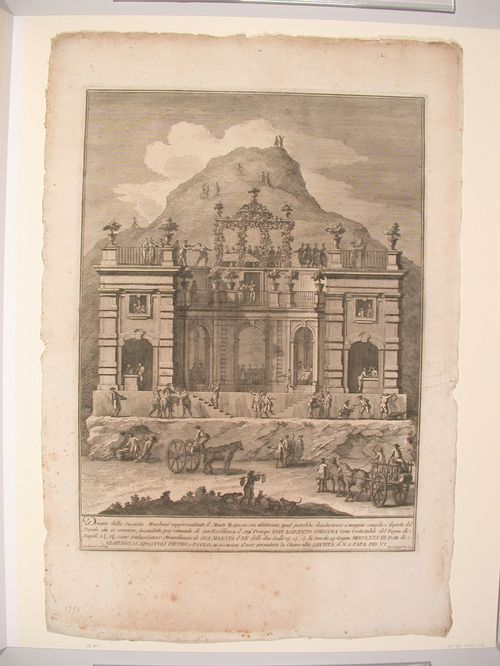
- This etching for a fireworks construction or macchina is in the form of a dining pavilion, with a representation of Monte Testaccio in the background.
DR1988:0437:052
Description:
- This etching for a fireworks construction or macchina is in the form of a dining pavilion, with a representation of Monte Testaccio in the background.
People:
Subject:
temporary architecture
temporary architecture
Date:
printed 1778
printed 1778
Title:
Etching of Palazzi's design for the "seconda macchina" of 1778
Actions:
DR1988:0437:052
Description:
- This etching for a fireworks construction or macchina is in the form of a dining pavilion, with a representation of Monte Testaccio in the background.
Etching of Palazzi's design for the "seconda macchina" of 1778
Actions:
DR1988:0437:052
Description:
- This etching for a fireworks construction or macchina is in the form of a dining pavilion, with a representation of Monte Testaccio in the background.
Form:
works of art
works of art
Date:
printed 1778
printed 1778
People:
Subject:
temporary architecture
temporary architecture


