


212 Results
Form:
books
books
Price:
$38.95
(available to order)
Summary:
''Citizens of photography'' explores how photography offers access to forms of citizenship beyond those available through ordinary politics. Through contemporary ethnographic investigations of photographic practice in Nicaragua, Nigeria, Greece, India, Nepal, Sri Lanka, Bangladesh, and Cambodia, the PhotoDemos Collective traces the resonances between political(...)
$38.95
(available to order)
Summary:
''Citizens of photography'' explores how photography offers access to forms of citizenship beyond those available through ordinary politics. Through contemporary ethnographic investigations of photographic practice in Nicaragua, Nigeria, Greece, India, Nepal, Sri Lanka, Bangladesh, and Cambodia, the PhotoDemos Collective traces the resonances between political(...)
Subject:
Theory of Photography
Theory of Photography
Publication:
September 2023
September 2023
Title:
Citizens of photography: The camera and the political imagination
Actions:
Price:
$38.95
(available to order)
Summary:
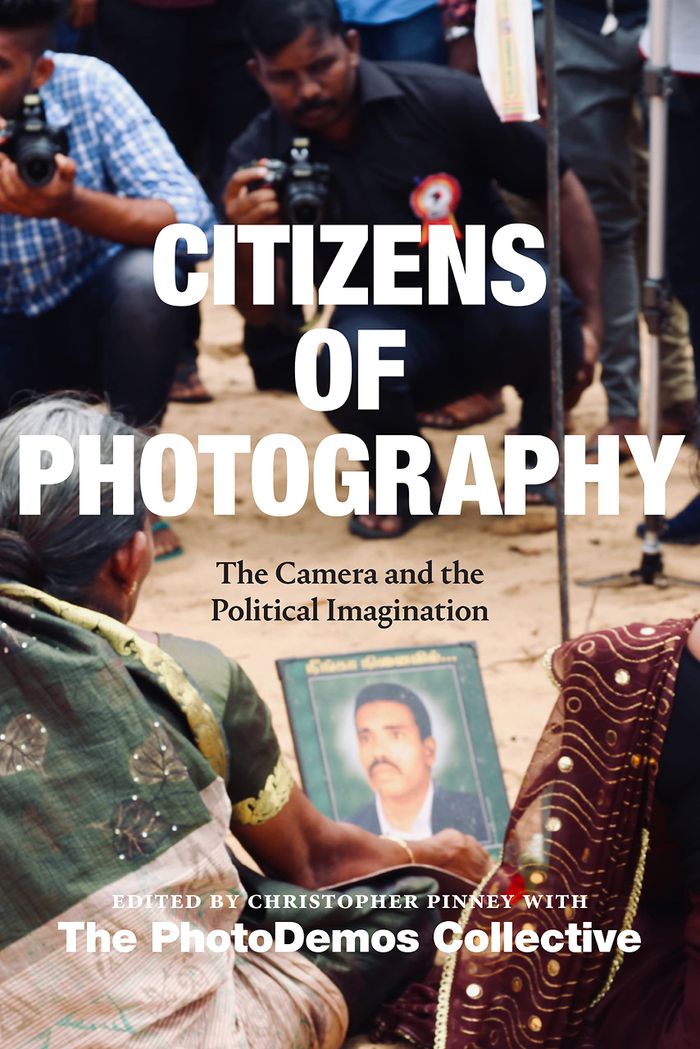
''Citizens of photography'' explores how photography offers access to forms of citizenship beyond those available through ordinary politics. Through contemporary ethnographic investigations of photographic practice in Nicaragua, Nigeria, Greece, India, Nepal, Sri Lanka, Bangladesh, and Cambodia, the PhotoDemos Collective traces the resonances between political representation and photographic representation. The authors emphasize photography as lived practice and how photography’s performative, transformative, and transgressive possibilities facilitate the articulation of new identities. They analyze photography ranging from family albums and social media to state and public archives, showing how it points to new destinations in the context of social movements, the aftermath of atrocity and civil war, and the legacies of past injustices. By foregrounding photography’s open-ended and contingent nature and its ability to subvert and reconfigure conventional political identifications, this volume demonstrates that as much as photography looks to the past, it points to the future, acting in advance of social reality.
Citizens of photography: The camera and the political imagination
Actions:
Price:
$38.95
(available to order)
Summary:
''Citizens of photography'' explores how photography offers access to forms of citizenship beyond those available through ordinary politics. Through contemporary ethnographic investigations of photographic practice in Nicaragua, Nigeria, Greece, India, Nepal, Sri Lanka, Bangladesh, and Cambodia, the PhotoDemos Collective traces the resonances between political representation and photographic representation. The authors emphasize photography as lived practice and how photography’s performative, transformative, and transgressive possibilities facilitate the articulation of new identities. They analyze photography ranging from family albums and social media to state and public archives, showing how it points to new destinations in the context of social movements, the aftermath of atrocity and civil war, and the legacies of past injustices. By foregrounding photography’s open-ended and contingent nature and its ability to subvert and reconfigure conventional political identifications, this volume demonstrates that as much as photography looks to the past, it points to the future, acting in advance of social reality.
Form:
books
books
Publication:
September 2023
September 2023
Subject:
Theory of Photography
Theory of Photography
Form:
books
books
Actions:
Price:
$46.95
(available to order)
Summary:
Un panorama des mutations des trente dernières années, depuis l’entrée de l’Inde dans la globalisation et la libéralisation de son économie. Aujourd’hui, plus de la moitié de la population mondiale vit en ville et le taux d’urbanisation atteindra 68% en 2050. Les pays émergents joueront un rôle majeur dans ce futur d’une urbanisation généralisée mais c’est l’Inde qui(...)
$46.95
(available to order)
Summary:
Un panorama des mutations des trente dernières années, depuis l’entrée de l’Inde dans la globalisation et la libéralisation de son économie. Aujourd’hui, plus de la moitié de la population mondiale vit en ville et le taux d’urbanisation atteindra 68% en 2050. Les pays émergents joueront un rôle majeur dans ce futur d’une urbanisation généralisée mais c’est l’Inde qui(...)
Title:
Quand l'Inde s'urbanise : services essentiels et paradoxes d'un urbanisme bricolé
Actions:
Price:
$46.95
(available to order)
Summary:
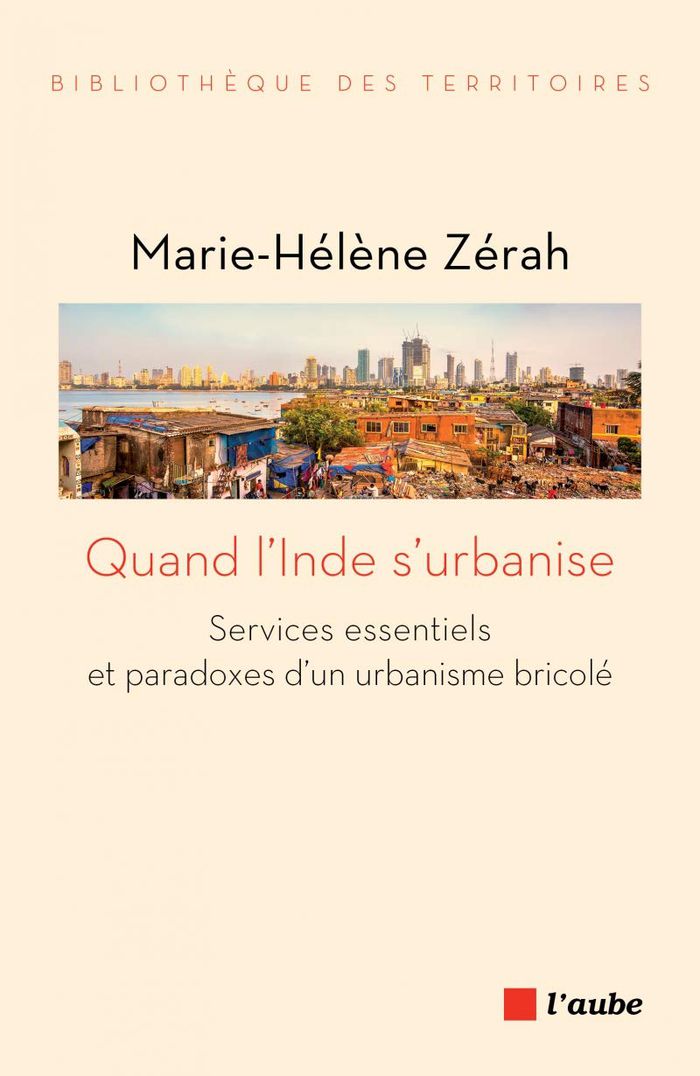
Un panorama des mutations des trente dernières années, depuis l’entrée de l’Inde dans la globalisation et la libéralisation de son économie. Aujourd’hui, plus de la moitié de la population mondiale vit en ville et le taux d’urbanisation atteindra 68% en 2050. Les pays émergents joueront un rôle majeur dans ce futur d’une urbanisation généralisée mais c’est l’Inde qui contribuera le plus à cette croissance, devant la Chine et le Nigeria. À cette date, le nombre d’habitants dans les villes indiennes sera de 800 millions, contre 377 millions en 2011, soit une fois et demie la population totale de l’Europe. Ces chiffres sont vertigineux et rendent nécessaire une appréhension fine de ce qu’est la transition urbaine de l’Inde. Trois grandes lignes de force structurent cet ouvrage : la nature du processus d’urbanisation, les effets de libéralisation économique sur les villes indiennes et la persistance de très fortes inégalités.
Quand l'Inde s'urbanise : services essentiels et paradoxes d'un urbanisme bricolé
Actions:
Price:
$46.95
(available to order)
Summary:
Un panorama des mutations des trente dernières années, depuis l’entrée de l’Inde dans la globalisation et la libéralisation de son économie. Aujourd’hui, plus de la moitié de la population mondiale vit en ville et le taux d’urbanisation atteindra 68% en 2050. Les pays émergents joueront un rôle majeur dans ce futur d’une urbanisation généralisée mais c’est l’Inde qui contribuera le plus à cette croissance, devant la Chine et le Nigeria. À cette date, le nombre d’habitants dans les villes indiennes sera de 800 millions, contre 377 millions en 2011, soit une fois et demie la population totale de l’Europe. Ces chiffres sont vertigineux et rendent nécessaire une appréhension fine de ce qu’est la transition urbaine de l’Inde. Trois grandes lignes de force structurent cet ouvrage : la nature du processus d’urbanisation, les effets de libéralisation économique sur les villes indiennes et la persistance de très fortes inégalités.
Form:
books
books
Publication:
March 2020
March 2020
Subject:
Urban Theory
Urban Theory
Form:
books
books
Actions:
Holdings:
Description:
255 pages : illustrations (chiefly color), portraits (some color) ; 28 cm
Description:
255 pages : illustrations (chiefly color), portraits (some color) ; 28 cm
Author:
Subject:
Publication:
Munich ; London ; New York : Prestel, [2021], ©2021
Munich ; London ; New York : Prestel, [2021], ©2021
Title:
Raising the roof : women architects who broke through the glass ceiling / Agata Toromanoff.
Actions:
Holdings:
Description:
255 pages : illustrations (chiefly color), portraits (some color) ; 28 cm
Raising the roof : women architects who broke through the glass ceiling / Agata Toromanoff.
Actions:
Holdings:
Description:
255 pages : illustrations (chiefly color), portraits (some color) ; 28 cm
Form:
books
books
Publication:
Munich ; London ; New York : Prestel, [2021], ©2021
Munich ; London ; New York : Prestel, [2021], ©2021
Author:
Subject:
Form:
books
books
Price:
$34.00
(available to order)
Summary:
In November 2022, the first annual Alchemy Lecture took place at York University in Toronto, bringing four deep and agile writers from different geographies and disciplines into vibrant conversation on a topic of urgent relevance: humans and borders. Now, in these pages, that conversation is captured and expanded in insightful, passionate ways. Architect, artist, and(...)
$34.00
(available to order)
Summary:
In November 2022, the first annual Alchemy Lecture took place at York University in Toronto, bringing four deep and agile writers from different geographies and disciplines into vibrant conversation on a topic of urgent relevance: humans and borders. Now, in these pages, that conversation is captured and expanded in insightful, passionate ways. Architect, artist, and(...)
Title:
Borders, human itineraries, and all our relation. The alchemy lecture 1
Actions:
Price:
$34.00
(available to order)
Summary:
In November 2022, the first annual Alchemy Lecture took place at York University in Toronto, bringing four deep and agile writers from different geographies and disciplines into vibrant conversation on a topic of urgent relevance: humans and borders. Now, in these pages, that conversation is captured and expanded in insightful, passionate ways. Architect, artist, and urban theorist Dele Adeyemo (UK/Nigeria) calls attention to the complexity of Black infrastructures, questioning how “the environments that surround us condition the possibility of our being.” Poet Natalie Diaz (US/Mojave/Akimel O’otham) writes: “Like story, migration is the sensual movement of knowledge,” and asks, “What is the language we need to live right now?” Philosopher Nadia Yala Kisukidi (France) suggests there is no diasporic life “without the dynamics of fabulation, where we pass down, from generation to generation, the stories of our ancestors who walked barefoot for many months.” And cultural theorist Rinaldo Walcott (Canada) asks us to consider inheritances beyond white supremacist logics: “What might it mean to live a life, if we can’t risk desiring and working towards utopia?”
Borders, human itineraries, and all our relation. The alchemy lecture 1
Actions:
Price:
$34.00
(available to order)
Summary:
In November 2022, the first annual Alchemy Lecture took place at York University in Toronto, bringing four deep and agile writers from different geographies and disciplines into vibrant conversation on a topic of urgent relevance: humans and borders. Now, in these pages, that conversation is captured and expanded in insightful, passionate ways. Architect, artist, and urban theorist Dele Adeyemo (UK/Nigeria) calls attention to the complexity of Black infrastructures, questioning how “the environments that surround us condition the possibility of our being.” Poet Natalie Diaz (US/Mojave/Akimel O’otham) writes: “Like story, migration is the sensual movement of knowledge,” and asks, “What is the language we need to live right now?” Philosopher Nadia Yala Kisukidi (France) suggests there is no diasporic life “without the dynamics of fabulation, where we pass down, from generation to generation, the stories of our ancestors who walked barefoot for many months.” And cultural theorist Rinaldo Walcott (Canada) asks us to consider inheritances beyond white supremacist logics: “What might it mean to live a life, if we can’t risk desiring and working towards utopia?”
Form:
books
books
Publication:
October 2023
October 2023
Subject:
Social
Social
Form:
books
books
Actions:
Price:
$36.95
(available to order)
Summary:
In this volume, Ayala Levin charts the settler colonial imagination and practices that undergirded Israeli architectural development aid in Africa. Focusing on the ''golden age'' of Israel’s diplomatic relations in and throughout the continent from 1958 to 1973, Levin finds that Israel positioned itself as a developing-nation alternative in the competition over aid and(...)
$36.95
(available to order)
Summary:
In this volume, Ayala Levin charts the settler colonial imagination and practices that undergirded Israeli architectural development aid in Africa. Focusing on the ''golden age'' of Israel’s diplomatic relations in and throughout the continent from 1958 to 1973, Levin finds that Israel positioned itself as a developing-nation alternative in the competition over aid and(...)
Title:
Architecture and development: Israeli construction in sub-saharan Africa 1958-1973
Actions:
Price:
$36.95
(available to order)
Summary:
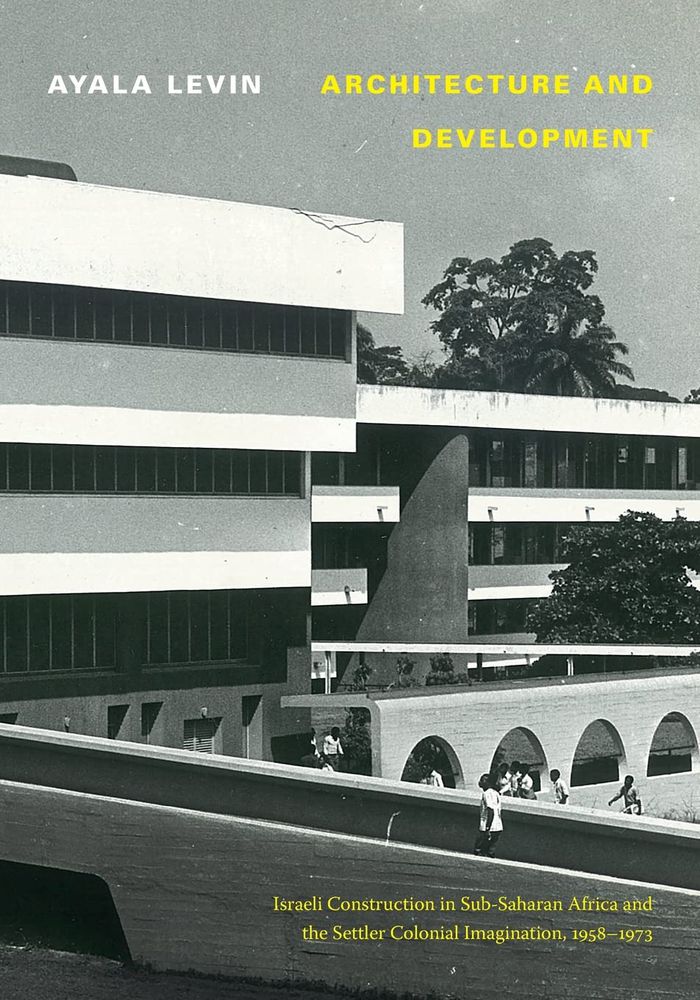
In this volume, Ayala Levin charts the settler colonial imagination and practices that undergirded Israeli architectural development aid in Africa. Focusing on the ''golden age'' of Israel’s diplomatic relations in and throughout the continent from 1958 to 1973, Levin finds that Israel positioned itself as a developing-nation alternative in the competition over aid and influence between global North and global South. In analyses of the design and construction of prestigious governmental projects in Nigeria, Sierra Leone, and Ethiopia, Levin details how architects, planners, and a trade union--owned construction company staged Israel as a new center of nonaligned expertise. These actors and professionals paradoxically capitalized on their settler colonial experience in Palestine, refashioning it as an alternative to Western colonial expertise. Levin traces how Israel became involved in the modernization of governance, education, and agriculture in Africa, as well as how African leaders chose to work with Israel to forge new South-South connections. In so doing, she offers new ways of understanding the role of architecture as a vehicle of postcolonial development and in the mobilization of development resources.
Architecture and development: Israeli construction in sub-saharan Africa 1958-1973
Actions:
Price:
$36.95
(available to order)
Summary:
In this volume, Ayala Levin charts the settler colonial imagination and practices that undergirded Israeli architectural development aid in Africa. Focusing on the ''golden age'' of Israel’s diplomatic relations in and throughout the continent from 1958 to 1973, Levin finds that Israel positioned itself as a developing-nation alternative in the competition over aid and influence between global North and global South. In analyses of the design and construction of prestigious governmental projects in Nigeria, Sierra Leone, and Ethiopia, Levin details how architects, planners, and a trade union--owned construction company staged Israel as a new center of nonaligned expertise. These actors and professionals paradoxically capitalized on their settler colonial experience in Palestine, refashioning it as an alternative to Western colonial expertise. Levin traces how Israel became involved in the modernization of governance, education, and agriculture in Africa, as well as how African leaders chose to work with Israel to forge new South-South connections. In so doing, she offers new ways of understanding the role of architecture as a vehicle of postcolonial development and in the mobilization of development resources.
Form:
books
books
Publication:
March 2022
March 2022
Subject:
Architecture since 1900, Africa
Architecture since 1900, Africa
Form:
books
books
Actions:
Price:
$88.00
(available in store)
Summary:
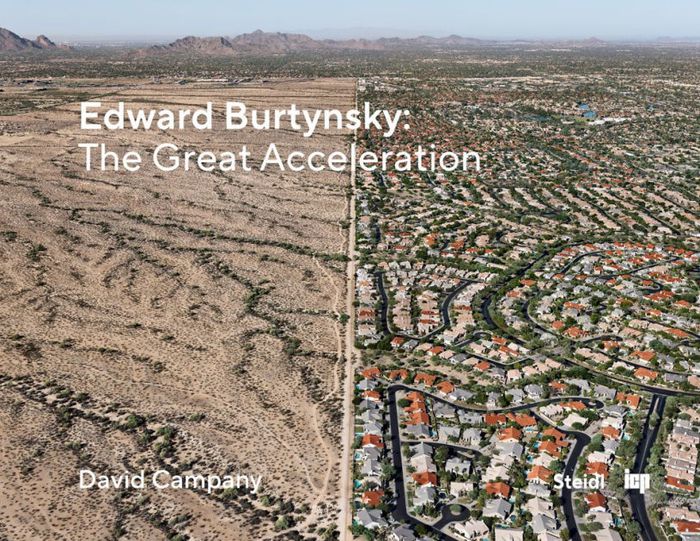
A retrospective of Edward Burtynsky's (born 1955) photography from the past 40 years, The Great Acceleration reveals the depth of the photographer's investigation into the human alteration of natural landscapes around the world, showing their present fragility and enduring beauty in equal measure. "The Great Acceleration" is an established term used to describe the rapid(...)
$88.00
(available in store)
Summary:
A retrospective of Edward Burtynsky's (born 1955) photography from the past 40 years, The Great Acceleration reveals the depth of the photographer's investigation into the human alteration of natural landscapes around the world, showing their present fragility and enduring beauty in equal measure. "The Great Acceleration" is an established term used to describe the rapid(...)
Title:
Edward Burtynsky: The great acceleration
Actions:
Price:
$88.00
(available in store)
Summary:
A retrospective of Edward Burtynsky's (born 1955) photography from the past 40 years, The Great Acceleration reveals the depth of the photographer's investigation into the human alteration of natural landscapes around the world, showing their present fragility and enduring beauty in equal measure. "The Great Acceleration" is an established term used to describe the rapid rise of human impact on our planet, among them population growth, water usage, transportation, greenhouse gas emissions, resource extraction and food production, each of which Burtynsky has photographed the signs of in great detail throughout his career. From open pit mines across North America to oil derricks in Azerbaijan, from rice terraces in China to oil bunkering in Nigeria, Burtynsky has traveled the world and back again as part of his restless and seemingly inexhaustible drive to discover the ways, both old and new, that organized human activity has transformed the earth. Including many of Burtynsky's landmark images, and which have never been published, the book is an urgent call to action, inviting us to appreciate the sublimity that remains in nature while deepening our understanding of the challenges and responsibilities confronting us today.
Edward Burtynsky: The great acceleration
Actions:
Price:
$88.00
(available in store)
Summary:
A retrospective of Edward Burtynsky's (born 1955) photography from the past 40 years, The Great Acceleration reveals the depth of the photographer's investigation into the human alteration of natural landscapes around the world, showing their present fragility and enduring beauty in equal measure. "The Great Acceleration" is an established term used to describe the rapid rise of human impact on our planet, among them population growth, water usage, transportation, greenhouse gas emissions, resource extraction and food production, each of which Burtynsky has photographed the signs of in great detail throughout his career. From open pit mines across North America to oil derricks in Azerbaijan, from rice terraces in China to oil bunkering in Nigeria, Burtynsky has traveled the world and back again as part of his restless and seemingly inexhaustible drive to discover the ways, both old and new, that organized human activity has transformed the earth. Including many of Burtynsky's landmark images, and which have never been published, the book is an urgent call to action, inviting us to appreciate the sublimity that remains in nature while deepening our understanding of the challenges and responsibilities confronting us today.
Form:
books
books
Publication:
December 2025
December 2025
Subject:
Photography monographs
Photography monographs
Form:
books
books
Title:
Fairy tale architecture
Fairy tale architecture
Actions:
Price:
$38.95
(available to order)
Summary:
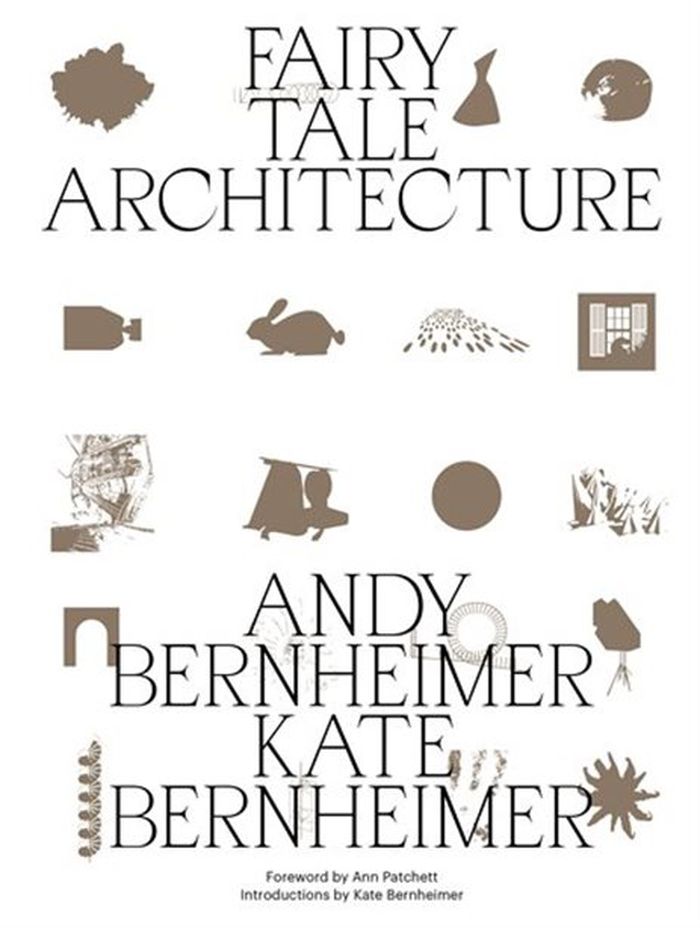
Little Red Riding Hood, Baba Yaga, Rapunzel, Jack and the Beanstalk, The Snow Queen: these and more than fifteen other stories designed by Bernheimer Architecture, Snøhetta, Rural Studio, LEVENBETTS, and LTL Architects and many other international vanguards have created stunning works for this groundbreaking collection of architectural fairy tales. Story by story, Andrew(...)
$38.95
(available to order)
Summary:
Little Red Riding Hood, Baba Yaga, Rapunzel, Jack and the Beanstalk, The Snow Queen: these and more than fifteen other stories designed by Bernheimer Architecture, Snøhetta, Rural Studio, LEVENBETTS, and LTL Architects and many other international vanguards have created stunning works for this groundbreaking collection of architectural fairy tales. Story by story, Andrew(...)
Title:
Fairy tale architecture
Actions:
Price:
$38.95
(available to order)
Summary:
Little Red Riding Hood, Baba Yaga, Rapunzel, Jack and the Beanstalk, The Snow Queen: these and more than fifteen other stories designed by Bernheimer Architecture, Snøhetta, Rural Studio, LEVENBETTS, and LTL Architects and many other international vanguards have created stunning works for this groundbreaking collection of architectural fairy tales. Story by story, Andrew Bernheimer and Kate Bernheimer- a brother and sister team as in an old fairy tale- have built the ultimate home for lovers of fiction and design. Snow girls and spinning houses. Paper capes and engineered hair braids. Resin bee hives and infinite libraries. Here are futuristic structures made from traditional stories, inspired by everything from Hans Christian Andersen’s The Snow Queen and The Little Match Girl to the Brothers Grimm’s Rapunzel and The Juniper Tree to fairy tales by Jorge Luis Borges and Joy Williams and from China, Japan, Russia, Nigeria, and Mexico. A desire for story and shelter counts as among our most ancient instincts, and this dual desire continues to inspire our most imaginative architects and authors today. ''Fairy Tale Architecture'' invites the reader into a space of wonder, into a new form that will endure ever after.
Fairy tale architecture
Actions:
Price:
$38.95
(available to order)
Summary:
Little Red Riding Hood, Baba Yaga, Rapunzel, Jack and the Beanstalk, The Snow Queen: these and more than fifteen other stories designed by Bernheimer Architecture, Snøhetta, Rural Studio, LEVENBETTS, and LTL Architects and many other international vanguards have created stunning works for this groundbreaking collection of architectural fairy tales. Story by story, Andrew Bernheimer and Kate Bernheimer- a brother and sister team as in an old fairy tale- have built the ultimate home for lovers of fiction and design. Snow girls and spinning houses. Paper capes and engineered hair braids. Resin bee hives and infinite libraries. Here are futuristic structures made from traditional stories, inspired by everything from Hans Christian Andersen’s The Snow Queen and The Little Match Girl to the Brothers Grimm’s Rapunzel and The Juniper Tree to fairy tales by Jorge Luis Borges and Joy Williams and from China, Japan, Russia, Nigeria, and Mexico. A desire for story and shelter counts as among our most ancient instincts, and this dual desire continues to inspire our most imaginative architects and authors today. ''Fairy Tale Architecture'' invites the reader into a space of wonder, into a new form that will endure ever after.
Form:
books
books
Publication:
December 2020
December 2020
Subject:
Architectural Theory
Architectural Theory
Form:
books
books
Actions:
Price:
$25.95
(available to order)
Summary:
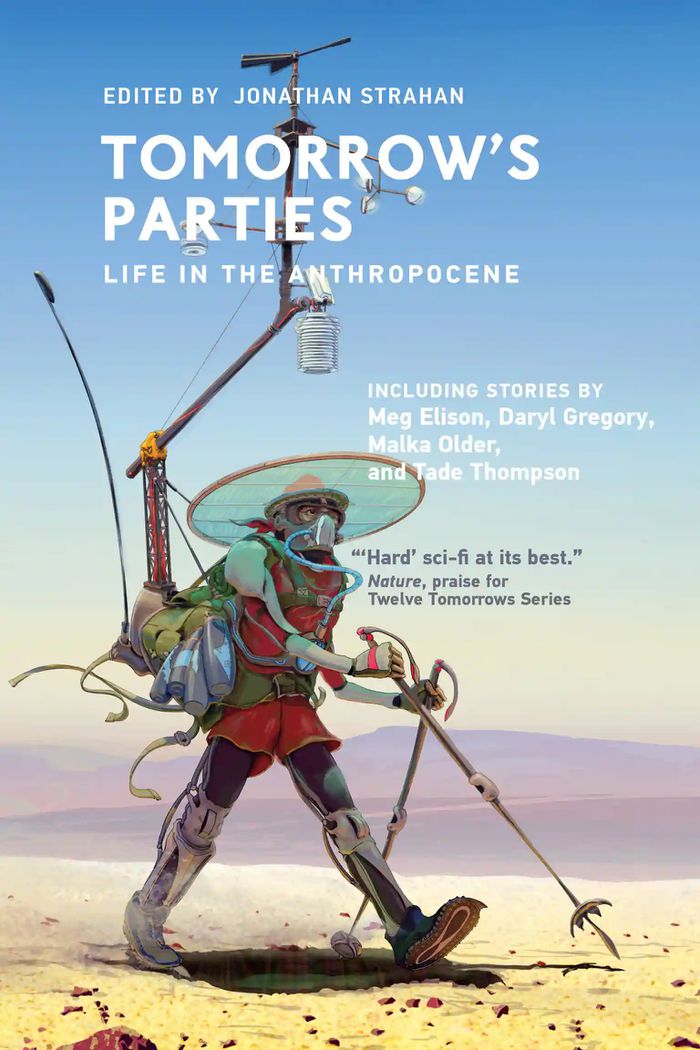
We are living in the Anthropocene—an era of dramatic and violent climate change featuring warming oceans, melting icecaps, extreme weather events, habitat loss, species extinction, and more. What will life be like in a climate-changed world? In ''Tomorrow’s parties,'' science fiction authors speculate how we might be able to live and even thrive through the advancing(...)
$25.95
(available to order)
Summary:
We are living in the Anthropocene—an era of dramatic and violent climate change featuring warming oceans, melting icecaps, extreme weather events, habitat loss, species extinction, and more. What will life be like in a climate-changed world? In ''Tomorrow’s parties,'' science fiction authors speculate how we might be able to live and even thrive through the advancing(...)
Title:
Tomorrow's parties: Life in the Anthropocene
Actions:
Price:
$25.95
(available to order)
Summary:
We are living in the Anthropocene—an era of dramatic and violent climate change featuring warming oceans, melting icecaps, extreme weather events, habitat loss, species extinction, and more. What will life be like in a climate-changed world? In ''Tomorrow’s parties,'' science fiction authors speculate how we might be able to live and even thrive through the advancing Anthropocene. In ten original stories by writers from around the world, an interview with celebrated writer Kim Stanley Robinson, and a series of intricate and elegant artworks by Sean Bodley, ''Tomorrow’s parties'' takes rational optimism as a moral imperative, or at least a pragmatic alternative to despair. In these stories—by writers from the United Kingdom, the United States, Nigeria, China, Bangladesh, and Australia—a young man steals from delivery drones; a political community lives on an island made of ocean-borne plastic waste; and a climate change denier tries to unmask ''crisis actors.'' Climate-changed life also has its pleasures and epiphanies, as when a father in Africa works to make his son’s dreams of ''Viking adventure'' a reality, and an IT professional dispatched to a distant village encounters a marvelous predigital fungal network. Contributors include Pascall Prize for Criticism winner James Bradley, Hugo Award winners Greg Egan and Sarah Gailey, Philip K Dick Award winner Meg Elison, and New York Times bestselling author Daryl Gregory.
Tomorrow's parties: Life in the Anthropocene
Actions:
Price:
$25.95
(available to order)
Summary:
We are living in the Anthropocene—an era of dramatic and violent climate change featuring warming oceans, melting icecaps, extreme weather events, habitat loss, species extinction, and more. What will life be like in a climate-changed world? In ''Tomorrow’s parties,'' science fiction authors speculate how we might be able to live and even thrive through the advancing Anthropocene. In ten original stories by writers from around the world, an interview with celebrated writer Kim Stanley Robinson, and a series of intricate and elegant artworks by Sean Bodley, ''Tomorrow’s parties'' takes rational optimism as a moral imperative, or at least a pragmatic alternative to despair. In these stories—by writers from the United Kingdom, the United States, Nigeria, China, Bangladesh, and Australia—a young man steals from delivery drones; a political community lives on an island made of ocean-borne plastic waste; and a climate change denier tries to unmask ''crisis actors.'' Climate-changed life also has its pleasures and epiphanies, as when a father in Africa works to make his son’s dreams of ''Viking adventure'' a reality, and an IT professional dispatched to a distant village encounters a marvelous predigital fungal network. Contributors include Pascall Prize for Criticism winner James Bradley, Hugo Award winners Greg Egan and Sarah Gailey, Philip K Dick Award winner Meg Elison, and New York Times bestselling author Daryl Gregory.
Form:
books
books
Publication:
August 2022
August 2022
Subject:
Literature and poetry
Literature and poetry
Form:
books
books

Actions:
Price:
$29.95
(available to order)
Summary:
Moving the critical debate about photography away from its current Euro-American centre of gravity, "Photography’s Other Histories" breaks with the notion that photographic history is best seen as the explosion of a Western technology advanced by the work of singular individuals. This collection presents a different account, describing photography as a globally(...)
$29.95
(available to order)
Summary:
Moving the critical debate about photography away from its current Euro-American centre of gravity, "Photography’s Other Histories" breaks with the notion that photographic history is best seen as the explosion of a Western technology advanced by the work of singular individuals. This collection presents a different account, describing photography as a globally(...)
Subject:
Theory of Photography
Theory of Photography
Publication:
March 2003, Durham, N.C.
March 2003, Durham, N.C.
Title:
Photography's other histories
Actions:
Price:
$29.95
(available to order)
Summary:
Moving the critical debate about photography away from its current Euro-American centre of gravity, "Photography’s Other Histories" breaks with the notion that photographic history is best seen as the explosion of a Western technology advanced by the work of singular individuals. This collection presents a different account, describing photography as a globally disseminated and locally appropriated medium. Essays firmly grounded in photographic practice — in the actual making of pictures — suggest the extraordinary diversity of nonwestern photography "Photography’s Other Histories" explores from a variety of geographic, cultural, and historic perspectives the role of photography in raising historical consciousness. It includes two first-person pieces by indigenous Australians and one by a Seminole/Muskogee/Diné artist. Some of the essays analyze representations of colonial subjects—from the limited ways Westerners have depicted Navajos to Japanese photos recording the occupation of Manchuria and from the changing nature of the "contract" between Aboriginal subjects and photographers to the surprising range of cultural influences evident in the photographs colonialist F. R. Barton took in New Guinea in the late 1800s and early 1900s. Focusing on photographic self-fashioning and the development of vernacular modernisms, other essays highlight the visionary quality of much popular photography. Case studies centered in early-twentieth-century Peru and contemporary India, Kenya, and Nigeria chronicle the diverse practices that have flourished in postcolonial societies. "Photography’s Other Histories" recasts popular photography around the world, as not simply reproducing culture but creating it.
Photography's other histories
Actions:
Price:
$29.95
(available to order)
Summary:
Moving the critical debate about photography away from its current Euro-American centre of gravity, "Photography’s Other Histories" breaks with the notion that photographic history is best seen as the explosion of a Western technology advanced by the work of singular individuals. This collection presents a different account, describing photography as a globally disseminated and locally appropriated medium. Essays firmly grounded in photographic practice — in the actual making of pictures — suggest the extraordinary diversity of nonwestern photography "Photography’s Other Histories" explores from a variety of geographic, cultural, and historic perspectives the role of photography in raising historical consciousness. It includes two first-person pieces by indigenous Australians and one by a Seminole/Muskogee/Diné artist. Some of the essays analyze representations of colonial subjects—from the limited ways Westerners have depicted Navajos to Japanese photos recording the occupation of Manchuria and from the changing nature of the "contract" between Aboriginal subjects and photographers to the surprising range of cultural influences evident in the photographs colonialist F. R. Barton took in New Guinea in the late 1800s and early 1900s. Focusing on photographic self-fashioning and the development of vernacular modernisms, other essays highlight the visionary quality of much popular photography. Case studies centered in early-twentieth-century Peru and contemporary India, Kenya, and Nigeria chronicle the diverse practices that have flourished in postcolonial societies. "Photography’s Other Histories" recasts popular photography around the world, as not simply reproducing culture but creating it.
Form:
books
books
Publication:
March 2003, Durham, N.C.
March 2003, Durham, N.C.
Subject:
Theory of Photography
Theory of Photography
Form:
books
books

Actions:
Price:
$16.95
(available to order)
Summary:
Par centaines de milliers, obéissant au mot d’ordre « Sortez ! » de Hu Jintao, les Chinois se ruent vers l’Afrique. Pour le pire parfois, pour le meilleur aussi. En échange de matières premières dont le continent noir regorge (pétrole, gaz, métaux, uranium, bois, poissons), l’Empire du Milieu développe l’Afrique et l’intègre dans la mondialisation. Pékin séduit de(...)
$16.95
(available to order)
Summary:
Par centaines de milliers, obéissant au mot d’ordre « Sortez ! » de Hu Jintao, les Chinois se ruent vers l’Afrique. Pour le pire parfois, pour le meilleur aussi. En échange de matières premières dont le continent noir regorge (pétrole, gaz, métaux, uranium, bois, poissons), l’Empire du Milieu développe l’Afrique et l’intègre dans la mondialisation. Pékin séduit de(...)
Title:
La Chinafrique : Pékin à la conquête du continent noir, nouvelle édition augmentée
Actions:
Price:
$16.95
(available to order)
Summary:
Par centaines de milliers, obéissant au mot d’ordre « Sortez ! » de Hu Jintao, les Chinois se ruent vers l’Afrique. Pour le pire parfois, pour le meilleur aussi. En échange de matières premières dont le continent noir regorge (pétrole, gaz, métaux, uranium, bois, poissons), l’Empire du Milieu développe l’Afrique et l’intègre dans la mondialisation. Pékin séduit de nombreux dictateurs – en ne posant aucune condition – avec des produits bon marché, drogue à forte accoutumance dans les pays pauvres jusque-là dépendants des produits occidentaux. Grâce à Pékin, l’Afrique, jadis victime de l’afro-pessimisme, vit un boum économique sans précédent. Pour la première fois, l’Afrique a le choix. Les Occidentaux, qui l’avaient laissé tomber, veulent y revenir. Seulement voilà, la place est souvent prise et des conflits se préparent… Qui sont ces aventuriers Chinois ? Dans quels pays vont-ils ? Pour y faire quoi ? Quel est le secret de leur succès ? Comment se passe la rencontre de ces deux mondes si différents ? Et avec quelles conséquences sur les droits de l’homme et l’environnement ? Pour répondre à ces questions, les auteurs ont parcouru quinze pays, sillonnant tout le continent à la rencontre de cette « Chinafrique », des forêts ratiboisées du Congo aux rivages venimeux du Nigeria, des sables militairement mouvants du Niger aux pipelines du Soudan, des souvenirs d’Egypte made in China aux restaurants gastronomiques de Douala, des campagnes misérables de la Chine à ce continent mystérieux qu’est l’Afrique pour les nouveaux aventuriers.
La Chinafrique : Pékin à la conquête du continent noir, nouvelle édition augmentée
Actions:
Price:
$16.95
(available to order)
Summary:
Par centaines de milliers, obéissant au mot d’ordre « Sortez ! » de Hu Jintao, les Chinois se ruent vers l’Afrique. Pour le pire parfois, pour le meilleur aussi. En échange de matières premières dont le continent noir regorge (pétrole, gaz, métaux, uranium, bois, poissons), l’Empire du Milieu développe l’Afrique et l’intègre dans la mondialisation. Pékin séduit de nombreux dictateurs – en ne posant aucune condition – avec des produits bon marché, drogue à forte accoutumance dans les pays pauvres jusque-là dépendants des produits occidentaux. Grâce à Pékin, l’Afrique, jadis victime de l’afro-pessimisme, vit un boum économique sans précédent. Pour la première fois, l’Afrique a le choix. Les Occidentaux, qui l’avaient laissé tomber, veulent y revenir. Seulement voilà, la place est souvent prise et des conflits se préparent… Qui sont ces aventuriers Chinois ? Dans quels pays vont-ils ? Pour y faire quoi ? Quel est le secret de leur succès ? Comment se passe la rencontre de ces deux mondes si différents ? Et avec quelles conséquences sur les droits de l’homme et l’environnement ? Pour répondre à ces questions, les auteurs ont parcouru quinze pays, sillonnant tout le continent à la rencontre de cette « Chinafrique », des forêts ratiboisées du Congo aux rivages venimeux du Nigeria, des sables militairement mouvants du Niger aux pipelines du Soudan, des souvenirs d’Egypte made in China aux restaurants gastronomiques de Douala, des campagnes misérables de la Chine à ce continent mystérieux qu’est l’Afrique pour les nouveaux aventuriers.
Form:
books
books
Publication:
May 2009
May 2009


