


2636 Results
Form:
books
books
Title:
Maisons du XXe siècle
Maisons du XXe siècle
Actions:
Price:
$54.95
(available to order)
Summary:
Pour les architectes modernes, la maison individuelle a toujours été un lieu d'expérimentation et d'innovation, un moyen de mettre en application leurs idées, de tester des matériaux nouveaux. «Maisons du XXe siècle» rend compte en détail de ces évolutions, passant en revue les exemples les plus fameux de notre siècle ainsi que d'autres moins connus mais tout aussi(...)
$54.95
(available to order)
Summary:
Pour les architectes modernes, la maison individuelle a toujours été un lieu d'expérimentation et d'innovation, un moyen de mettre en application leurs idées, de tester des matériaux nouveaux. «Maisons du XXe siècle» rend compte en détail de ces évolutions, passant en revue les exemples les plus fameux de notre siècle ainsi que d'autres moins connus mais tout aussi(...)
Title:
Maisons du XXe siècle
Actions:
Price:
$54.95
(available to order)
Summary:
Pour les architectes modernes, la maison individuelle a toujours été un lieu d'expérimentation et d'innovation, un moyen de mettre en application leurs idées, de tester des matériaux nouveaux. «Maisons du XXe siècle» rend compte en détail de ces évolutions, passant en revue les exemples les plus fameux de notre siècle ainsi que d'autres moins connus mais tout aussi représentatifs. Cet ouvrage s'organise de façon semi-chronologique autour de plusieurs grands thèmes : la maison comme œuvre d'art; maison moderne; les «machines à habiter»; lieux, climats, cultures; le rêve américain; modernisme scandinave; l'habitat post-moderne; continuité et mutations. À travers ces thèmes, l'auteur retrace l'histoire de l'architecture domestique contemporaine, du mouvement Arts & Crafts né dans les pays anglo-saxons à la fin du XXe siècle, jusqu'à nos jours. Chaque chapitre passe en revue un grand nombre de constructions, les plus importantes sont analysées en détail et illustrées par de nombreux dessins d'architectes, de plans, à travers plus de 400 photographies. Au-delà d'une analyse formelle, l'auteur propose ici une réflexion sur la façon dont l'architecture domestique reflète et influence l'évolution des modes de vie.
Maisons du XXe siècle
Actions:
Price:
$54.95
(available to order)
Summary:
Pour les architectes modernes, la maison individuelle a toujours été un lieu d'expérimentation et d'innovation, un moyen de mettre en application leurs idées, de tester des matériaux nouveaux. «Maisons du XXe siècle» rend compte en détail de ces évolutions, passant en revue les exemples les plus fameux de notre siècle ainsi que d'autres moins connus mais tout aussi représentatifs. Cet ouvrage s'organise de façon semi-chronologique autour de plusieurs grands thèmes : la maison comme œuvre d'art; maison moderne; les «machines à habiter»; lieux, climats, cultures; le rêve américain; modernisme scandinave; l'habitat post-moderne; continuité et mutations. À travers ces thèmes, l'auteur retrace l'histoire de l'architecture domestique contemporaine, du mouvement Arts & Crafts né dans les pays anglo-saxons à la fin du XXe siècle, jusqu'à nos jours. Chaque chapitre passe en revue un grand nombre de constructions, les plus importantes sont analysées en détail et illustrées par de nombreux dessins d'architectes, de plans, à travers plus de 400 photographies. Au-delà d'une analyse formelle, l'auteur propose ici une réflexion sur la façon dont l'architecture domestique reflète et influence l'évolution des modes de vie.
Form:
books
books
Publication:
June 2005, Paris
June 2005, Paris
Subject:
Residential Architecture
Residential Architecture
Form:
books
books
Title:
Jean Prouvé : bâtisseur
Jean Prouvé : bâtisseur
Actions:
Price:
$49.95
(available to order)
Summary:
Avant de devenir designer et architecte, Jean Prouvé (1901-1984) est ferronnier. Le métal occupe d’ailleurs une place centrale dans toute sa production. Installé à Nancy, il retient de cette école un désir de nouveauté et d’innovation. Lors de l’Exposition internationale des Arts décoratifs de 1925, le modernisme lui fait forte impression, et il participe en 1929 à la(...)
$49.95
(available to order)
Summary:
Avant de devenir designer et architecte, Jean Prouvé (1901-1984) est ferronnier. Le métal occupe d’ailleurs une place centrale dans toute sa production. Installé à Nancy, il retient de cette école un désir de nouveauté et d’innovation. Lors de l’Exposition internationale des Arts décoratifs de 1925, le modernisme lui fait forte impression, et il participe en 1929 à la(...)
Title:
Jean Prouvé : bâtisseur
Actions:
Price:
$49.95
(available to order)
Summary:
Avant de devenir designer et architecte, Jean Prouvé (1901-1984) est ferronnier. Le métal occupe d’ailleurs une place centrale dans toute sa production. Installé à Nancy, il retient de cette école un désir de nouveauté et d’innovation. Lors de l’Exposition internationale des Arts décoratifs de 1925, le modernisme lui fait forte impression, et il participe en 1929 à la création de l’Union des artistes modernes. Ses réalisations sont caractérisées par une recherche de fonctionnalité et de simplicité décorative. Il conçoit des éléments d’architecture et collabore avec des architectes comme R. Mallet-Stevens, T. Garnier, E. Beaudouin et M. Lods. Il commence alors à industrialiser sa production et à produire du mobilier en série. Après la Seconde Guerre mondiale et la mise au point de ses premières maisons préfabriquées, il travaille à la conception de bâtiments. Cet ouvrage s’attache au constructeur que fut Jean Prouvé, et propose une analyse détaillée de plusieurs de ses édifices emblématiques, comme le pavillon de l’aluminium ou la maison qu’il se construisit en 1954 à Nancy.
Jean Prouvé : bâtisseur
Actions:
Price:
$49.95
(available to order)
Summary:
Avant de devenir designer et architecte, Jean Prouvé (1901-1984) est ferronnier. Le métal occupe d’ailleurs une place centrale dans toute sa production. Installé à Nancy, il retient de cette école un désir de nouveauté et d’innovation. Lors de l’Exposition internationale des Arts décoratifs de 1925, le modernisme lui fait forte impression, et il participe en 1929 à la création de l’Union des artistes modernes. Ses réalisations sont caractérisées par une recherche de fonctionnalité et de simplicité décorative. Il conçoit des éléments d’architecture et collabore avec des architectes comme R. Mallet-Stevens, T. Garnier, E. Beaudouin et M. Lods. Il commence alors à industrialiser sa production et à produire du mobilier en série. Après la Seconde Guerre mondiale et la mise au point de ses premières maisons préfabriquées, il travaille à la conception de bâtiments. Cet ouvrage s’attache au constructeur que fut Jean Prouvé, et propose une analyse détaillée de plusieurs de ses édifices emblématiques, comme le pavillon de l’aluminium ou la maison qu’il se construisit en 1954 à Nancy.
Form:
books
books
Publication:
January 2017
January 2017
Subject:
Architecture Monographs
Architecture Monographs
Form:
books
books
Holdings:
Description:
776 pages : illustrations (some color) ; 25 cm
Description:
776 pages : illustrations (some color) ; 25 cm
Author:
Subject:
Publication:
New York : Rizzoli, 2012.
New York : Rizzoli, 2012.
Title:
Architecture concepts : red is not a color / Bernard Tschumi.
Actions:
Holdings:
Description:
776 pages : illustrations (some color) ; 25 cm
Architecture concepts : red is not a color / Bernard Tschumi.
Actions:
Holdings:
Description:
776 pages : illustrations (some color) ; 25 cm
Form:
books
books
Publication:
New York : Rizzoli, 2012.
New York : Rizzoli, 2012.
Author:
Subject:
Form:
books
books
Actions:
Price:
$45.95
(available to order)
Summary:
Today, R. M. Schindler's Kings Road House is celebrated as an icon of early modern architecture, but this wasn't the case when it was finished in 1922. Though Schindler and his wife Pauline recognized its genius early on, its radical appearance was - and remains - incomprehensible to many. This book is an incisive examination of the house, placing it in the context of the(...)
$45.95
(available to order)
Summary:
Today, R. M. Schindler's Kings Road House is celebrated as an icon of early modern architecture, but this wasn't the case when it was finished in 1922. Though Schindler and his wife Pauline recognized its genius early on, its radical appearance was - and remains - incomprehensible to many. This book is an incisive examination of the house, placing it in the context of the(...)
Title:
Schindler, Kings Road, and Southern California modernism
Actions:
Price:
$45.95
(available to order)
Summary:
Today, R. M. Schindler's Kings Road House is celebrated as an icon of early modern architecture, but this wasn't the case when it was finished in 1922. Though Schindler and his wife Pauline recognized its genius early on, its radical appearance was - and remains - incomprehensible to many. This book is an incisive examination of the house, placing it in the context of the architect's career and clarifying its influence on modern architecture and its practitioners. Little-known aspects of Schindler's life, his relationship with his mentors, and the development of his unique theories about space enrich the narrative. Robert Sweeney focuses on the construction of the house and the people who lived, worked, and performed there, demonstrating the building's significance in the social history of Southern California. He includes new research on Schindler's educational and personal background in Vienna and a discussion of the critical influence of Pauline Schindler in formulating the social underpinnings of the house. Judith Sheine's essay places the house in the context of Schindler's career, in which it established the basis of the spatial development of his work. She also examines the influence of the house on the work of numerous architects from Frank Lloyd Wright to Frank Gehry.
Schindler, Kings Road, and Southern California modernism
Actions:
Price:
$45.95
(available to order)
Summary:
Today, R. M. Schindler's Kings Road House is celebrated as an icon of early modern architecture, but this wasn't the case when it was finished in 1922. Though Schindler and his wife Pauline recognized its genius early on, its radical appearance was - and remains - incomprehensible to many. This book is an incisive examination of the house, placing it in the context of the architect's career and clarifying its influence on modern architecture and its practitioners. Little-known aspects of Schindler's life, his relationship with his mentors, and the development of his unique theories about space enrich the narrative. Robert Sweeney focuses on the construction of the house and the people who lived, worked, and performed there, demonstrating the building's significance in the social history of Southern California. He includes new research on Schindler's educational and personal background in Vienna and a discussion of the critical influence of Pauline Schindler in formulating the social underpinnings of the house. Judith Sheine's essay places the house in the context of Schindler's career, in which it established the basis of the spatial development of his work. She also examines the influence of the house on the work of numerous architects from Frank Lloyd Wright to Frank Gehry.
Form:
books
books
Publication:
October 2012
October 2012
Subject:
Architecture Monographs
Architecture Monographs
Form:
books
books
Actions:
Price:
$25.25
(available to order)
Summary:
International and interdisciplinary, " Ex-cavating Modernism " is a publication dealing with issues in art, architecture and their respective theories.The first volume confronts issues relative to the interdisciplinary engagements of Art and Architecture through their separate and overlapping histories, covering subjects as diverse as Marcel Duchamp, Clement Grennberg,(...)
$25.25
(available to order)
Summary:
International and interdisciplinary, " Ex-cavating Modernism " is a publication dealing with issues in art, architecture and their respective theories.The first volume confronts issues relative to the interdisciplinary engagements of Art and Architecture through their separate and overlapping histories, covering subjects as diverse as Marcel Duchamp, Clement Grennberg,(...)
Title:
de-, dis-, ex-. volume 1 - ex-cavating modernism
Actions:
Price:
$25.25
(available to order)
Summary:
International and interdisciplinary, " Ex-cavating Modernism " is a publication dealing with issues in art, architecture and their respective theories.The first volume confronts issues relative to the interdisciplinary engagements of Art and Architecture through their separate and overlapping histories, covering subjects as diverse as Marcel Duchamp, Clement Grennberg, Robert Venturi and Dan Graham.
de-, dis-, ex-. volume 1 - ex-cavating modernism
Actions:
Price:
$25.25
(available to order)
Summary:
International and interdisciplinary, " Ex-cavating Modernism " is a publication dealing with issues in art, architecture and their respective theories.The first volume confronts issues relative to the interdisciplinary engagements of Art and Architecture through their separate and overlapping histories, covering subjects as diverse as Marcel Duchamp, Clement Grennberg, Robert Venturi and Dan Graham.
Form:
books
books
Publication:
October 1996, London
October 1996, London
Subject:
Architectural Theory
Architectural Theory
Form:
books
books
Actions:
Price:
$52.99
(available to order)
Summary:
This stunning survey has become the standard work on the furniture of the entire period: every piece included is able to stand for all time as a classic work of design. Illustrated with over 140 colour reproductions, and detailed descriptions, it is completed by a comprehensive reference section, detailed designer biographies, a bibliography, advice on collecting and a(...)
$52.99
(available to order)
Summary:
This stunning survey has become the standard work on the furniture of the entire period: every piece included is able to stand for all time as a classic work of design. Illustrated with over 140 colour reproductions, and detailed descriptions, it is completed by a comprehensive reference section, detailed designer biographies, a bibliography, advice on collecting and a(...)
Subject:
Design, Periods and Styles
Design, Periods and Styles
Publication:
October 2001, London
October 2001, London
Title:
Modern furniture classics postwar to post-modernism
Actions:
Price:
$52.99
(available to order)
Summary:
This stunning survey has become the standard work on the furniture of the entire period: every piece included is able to stand for all time as a classic work of design. Illustrated with over 140 colour reproductions, and detailed descriptions, it is completed by a comprehensive reference section, detailed designer biographies, a bibliography, advice on collecting and a list of retail outlets and museums.
Modern furniture classics postwar to post-modernism
Actions:
Price:
$52.99
(available to order)
Summary:
This stunning survey has become the standard work on the furniture of the entire period: every piece included is able to stand for all time as a classic work of design. Illustrated with over 140 colour reproductions, and detailed descriptions, it is completed by a comprehensive reference section, detailed designer biographies, a bibliography, advice on collecting and a list of retail outlets and museums.
Form:
books
books
Publication:
October 2001, London
October 2001, London
Subject:
Design, Periods and Styles
Design, Periods and Styles
Form:
books
books
Actions:
Price:
$75.00
(available to order)
Summary:
"Crafting Modernism: Mid-century American Art and Design" will provide an in-depth examination of the American studio craft movement in general, with detailed analyses of all of the major mediums (clay, wood, fibre, metal, jewellery, and glass) favoured by the greatest craftsmen of the period. Both an exhibition catalogue and an historical reference, "Crafting Modernism"(...)
$75.00
(available to order)
Summary:
"Crafting Modernism: Mid-century American Art and Design" will provide an in-depth examination of the American studio craft movement in general, with detailed analyses of all of the major mediums (clay, wood, fibre, metal, jewellery, and glass) favoured by the greatest craftsmen of the period. Both an exhibition catalogue and an historical reference, "Crafting Modernism"(...)
Title:
Craftting modernism: midcentury american art and design
Actions:
Price:
$75.00
(available to order)
Summary:
"Crafting Modernism: Mid-century American Art and Design" will provide an in-depth examination of the American studio craft movement in general, with detailed analyses of all of the major mediums (clay, wood, fibre, metal, jewellery, and glass) favoured by the greatest craftsmen of the period. Both an exhibition catalogue and an historical reference, "Crafting Modernism" explores the origins of the studio craft movement, the international influences that helped it grow in this country and abroad and its convergence with the fine arts. The post-war years were a time of particular importance for the studio movement as a new generation of craftsmen began to express cultural identity and artistic innovation as well as provide social commentary through their work in all media, which led to the proliferation of the craft movement to museums and exhibitions worldwide. Artists represented in this book include Anni Albers, Dale Chihuly, Hans Christensen, Charles and Ray Eames, Sheila Hicks, Wharton Esherick, Maurice Heaton, Dorothy Liebes, Sam Maloof, George Nakashima, Gertrud and Otto Natzler, Peter Voulkos and Russel Wright, among many others. "Crafting Modernism" is the fourth instalment of the Centenary Project begun in 1993 by the Museum of Art and Design to explore the origins and development of twentieth-century American crafts. New research has made this exhibit and book possible, exploring the rediscovery and reinvigoration of craft media in the post-war years.
Craftting modernism: midcentury american art and design
Actions:
Price:
$75.00
(available to order)
Summary:
"Crafting Modernism: Mid-century American Art and Design" will provide an in-depth examination of the American studio craft movement in general, with detailed analyses of all of the major mediums (clay, wood, fibre, metal, jewellery, and glass) favoured by the greatest craftsmen of the period. Both an exhibition catalogue and an historical reference, "Crafting Modernism" explores the origins of the studio craft movement, the international influences that helped it grow in this country and abroad and its convergence with the fine arts. The post-war years were a time of particular importance for the studio movement as a new generation of craftsmen began to express cultural identity and artistic innovation as well as provide social commentary through their work in all media, which led to the proliferation of the craft movement to museums and exhibitions worldwide. Artists represented in this book include Anni Albers, Dale Chihuly, Hans Christensen, Charles and Ray Eames, Sheila Hicks, Wharton Esherick, Maurice Heaton, Dorothy Liebes, Sam Maloof, George Nakashima, Gertrud and Otto Natzler, Peter Voulkos and Russel Wright, among many others. "Crafting Modernism" is the fourth instalment of the Centenary Project begun in 1993 by the Museum of Art and Design to explore the origins and development of twentieth-century American crafts. New research has made this exhibit and book possible, exploring the rediscovery and reinvigoration of craft media in the post-war years.
Form:
books
books
Publication:
October 2011
October 2011
Subject:
Industrial Design
Industrial Design
Form:
books
books
Actions:
Holdings:
Description:
64 pages : illustrations (some color) ; 23 x 28 cm
Description:
64 pages : illustrations (some color) ; 23 x 28 cm
Author:
Subject:
Publication:
Zürich, Switzerland : Park Books, [2019], ©2019
Zürich, Switzerland : Park Books, [2019], ©2019
Title:
Josef Frank : Villa Carlsten / author: Mikael Bergquist ; photography: Mikael Olsson.
Actions:
Holdings:
Description:
64 pages : illustrations (some color) ; 23 x 28 cm
Josef Frank : Villa Carlsten / author: Mikael Bergquist ; photography: Mikael Olsson.
Actions:
Holdings:
Description:
64 pages : illustrations (some color) ; 23 x 28 cm
Form:
books
books
Publication:
Zürich, Switzerland : Park Books, [2019], ©2019
Zürich, Switzerland : Park Books, [2019], ©2019
Author:
Subject:
Form:
books
books
Actions:
Price:
$97.95
(available to order)
Summary:
Architecte, théoricien, urbaniste et écrivain, Jozsef Vago travaille à Budapest (1900-1919, 1926-1940), à Rome (1919-1926) et à Genève (1927-1935), avant de s'établir en France (1940-1947). Jeune diplômé, il s'engage dans la Sécession hongroise fondée par Odon Lechner et s'attache, comme de nombreux architectes de sa génération, à élaborer un nouveau langage architectural(...)
$97.95
(available to order)
Summary:
Architecte, théoricien, urbaniste et écrivain, Jozsef Vago travaille à Budapest (1900-1919, 1926-1940), à Rome (1919-1926) et à Genève (1927-1935), avant de s'établir en France (1940-1947). Jeune diplômé, il s'engage dans la Sécession hongroise fondée par Odon Lechner et s'attache, comme de nombreux architectes de sa génération, à élaborer un nouveau langage architectural(...)
Title:
Jozsef Vago 1877-1947 : un architecte hongrois dans la tourmente européenne
Actions:
Price:
$97.95
(available to order)
Summary:
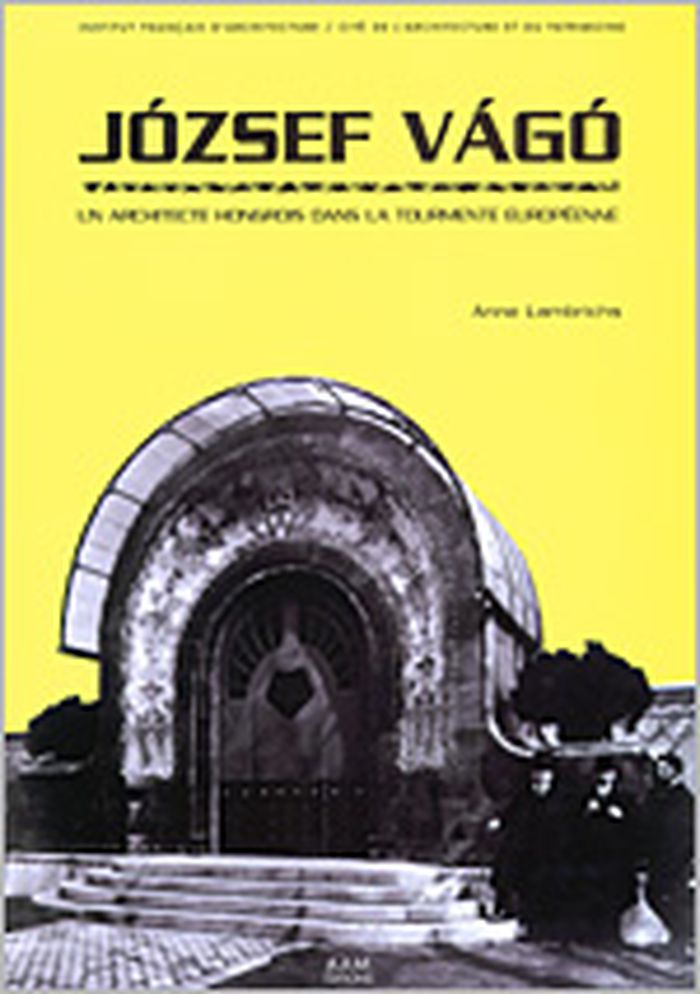
Architecte, théoricien, urbaniste et écrivain, Jozsef Vago travaille à Budapest (1900-1919, 1926-1940), à Rome (1919-1926) et à Genève (1927-1935), avant de s'établir en France (1940-1947). Jeune diplômé, il s'engage dans la Sécession hongroise fondée par Odon Lechner et s'attache, comme de nombreux architectes de sa génération, à élaborer un nouveau langage architectural national qui valorise la culture populaire. Jozsef Vago est aujourd'hui considéré comme l'une des figures de proue du renouveau architectural hongrois. Ses réalisations à Budapest entre 1903 et 1914, fleurons d'architecture " nationale " imprégnés de modernisme viennois, témoignent de son ouverture vers l'Occident et de son attention à la question sociale. Membre du Werkbund, engagé pendant la période révolutionnaire de 1918-1919, il est contraint d'émigrer en Italie lors de l'arrivée au pouvoir de l'amiral Horthy. Installé à Rome entre 1920 et 1926, il tente en vain de s'intégrer à la profession : il élabore des nouvelles typologies d'habitat social pour les cités-jardins romaines, publie de nombreux projets sous le nom de " Giuseppe Vago ", mais ne parvient à obtenir qu'une seule commande à Rome. Sans ressources, confronté à la xénophobie et au fascisme, il se réinstalle à Budapest, où il se voit empêché d'exercer par l'Ordre des architectes hongrois, créé en 1926. Sa victoire au concours du palais de la Société des Nations à Genève en 1927 inaugure une nouvelle phase de sa carrière. Ses démêlés avec ses associés - Henri-Paul Nénot, Jules Flegenheimer, Camille Lefèvre et Carlo Broggi - et avec Le Corbusier au cours de la réalisation du projet l'incitent, dans les années trente et quarante, à prendre part au débat architectural européen, à entamer une importante œuvre de critique et à élaborer une véritable philosophie de l'architecture et de l'urbanisme. Combattant les positions de l'avant-garde architecturale - et notamment de Le Corbusier -, il tente d'établir une synthèse entre les idéaux de l'Art nouveau et du modernisme, estimant que l'architecte doit s'efforcer de répondre aux aspirations sociales et économiques du Mouvement moderne sans pour autant renoncer au " superflu ", c'est-à-dire à la qualité artistique et à l'ornementation. Cette recherche, qui apparaît dans son ouvrage théorique À travers les villes (1930) et dans son projet d'urbanisation de Budapest (1933-1937), trouve son aboutissement dans son projet théorique de reconstruction opposé aux préceptes des CIAM et de la Charte d'Athènes : la Ville de l'Avenir (1940-1945)
Jozsef Vago 1877-1947 : un architecte hongrois dans la tourmente européenne
Actions:
Price:
$97.95
(available to order)
Summary:
Architecte, théoricien, urbaniste et écrivain, Jozsef Vago travaille à Budapest (1900-1919, 1926-1940), à Rome (1919-1926) et à Genève (1927-1935), avant de s'établir en France (1940-1947). Jeune diplômé, il s'engage dans la Sécession hongroise fondée par Odon Lechner et s'attache, comme de nombreux architectes de sa génération, à élaborer un nouveau langage architectural national qui valorise la culture populaire. Jozsef Vago est aujourd'hui considéré comme l'une des figures de proue du renouveau architectural hongrois. Ses réalisations à Budapest entre 1903 et 1914, fleurons d'architecture " nationale " imprégnés de modernisme viennois, témoignent de son ouverture vers l'Occident et de son attention à la question sociale. Membre du Werkbund, engagé pendant la période révolutionnaire de 1918-1919, il est contraint d'émigrer en Italie lors de l'arrivée au pouvoir de l'amiral Horthy. Installé à Rome entre 1920 et 1926, il tente en vain de s'intégrer à la profession : il élabore des nouvelles typologies d'habitat social pour les cités-jardins romaines, publie de nombreux projets sous le nom de " Giuseppe Vago ", mais ne parvient à obtenir qu'une seule commande à Rome. Sans ressources, confronté à la xénophobie et au fascisme, il se réinstalle à Budapest, où il se voit empêché d'exercer par l'Ordre des architectes hongrois, créé en 1926. Sa victoire au concours du palais de la Société des Nations à Genève en 1927 inaugure une nouvelle phase de sa carrière. Ses démêlés avec ses associés - Henri-Paul Nénot, Jules Flegenheimer, Camille Lefèvre et Carlo Broggi - et avec Le Corbusier au cours de la réalisation du projet l'incitent, dans les années trente et quarante, à prendre part au débat architectural européen, à entamer une importante œuvre de critique et à élaborer une véritable philosophie de l'architecture et de l'urbanisme. Combattant les positions de l'avant-garde architecturale - et notamment de Le Corbusier -, il tente d'établir une synthèse entre les idéaux de l'Art nouveau et du modernisme, estimant que l'architecte doit s'efforcer de répondre aux aspirations sociales et économiques du Mouvement moderne sans pour autant renoncer au " superflu ", c'est-à-dire à la qualité artistique et à l'ornementation. Cette recherche, qui apparaît dans son ouvrage théorique À travers les villes (1930) et dans son projet d'urbanisation de Budapest (1933-1937), trouve son aboutissement dans son projet théorique de reconstruction opposé aux préceptes des CIAM et de la Charte d'Athènes : la Ville de l'Avenir (1940-1945)
Form:
books
books
Publication:
March 2003, Bruxelles
March 2003, Bruxelles
Subject:
Architecture Monographs
Architecture Monographs
Form:
books
books
Price:
$74.95
(available to order)
Summary:
In the late 19th century, a centuries-old preference for highly ornamented architecture gave way to a budding Modernism of clean lines and unadorned surfaces. At the same moment, everyday objects—cups, saucers, chairs, and tables—began to receive critical attention. Alina Payne addresses this shift, arguing for a new understanding of the genealogy of architectural(...)
$74.95
(available to order)
Summary:
In the late 19th century, a centuries-old preference for highly ornamented architecture gave way to a budding Modernism of clean lines and unadorned surfaces. At the same moment, everyday objects—cups, saucers, chairs, and tables—began to receive critical attention. Alina Payne addresses this shift, arguing for a new understanding of the genealogy of architectural(...)
Title:
From ornament to object: genealogies of architectural modernism
Actions:
Price:
$74.95
(available to order)
Summary:
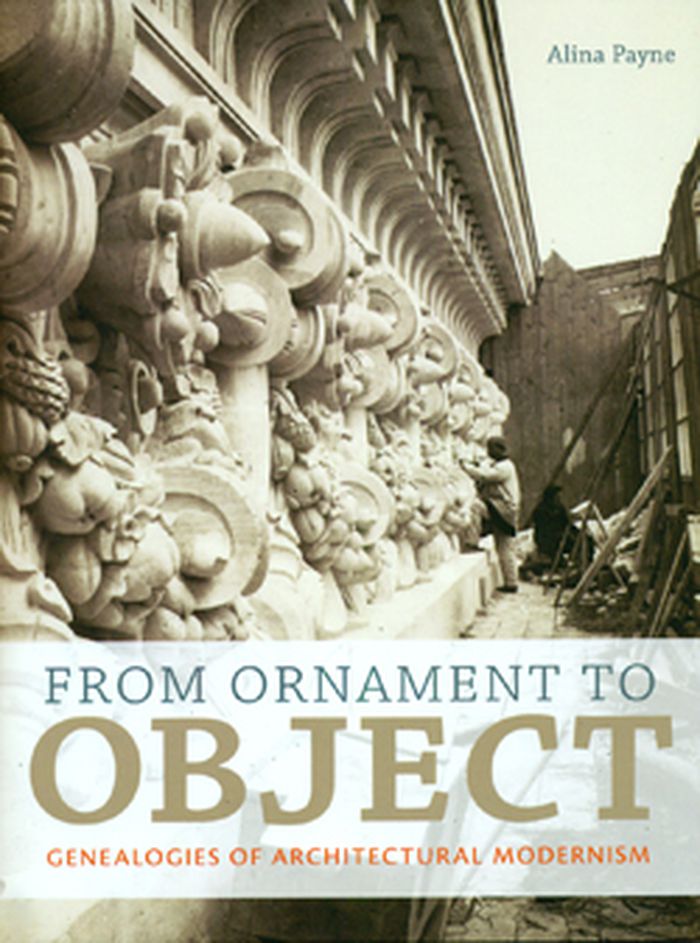
In the late 19th century, a centuries-old preference for highly ornamented architecture gave way to a budding Modernism of clean lines and unadorned surfaces. At the same moment, everyday objects—cups, saucers, chairs, and tables—began to receive critical attention. Alina Payne addresses this shift, arguing for a new understanding of the genealogy of architectural modernism: rather than the well-known story in which an absorption of technology and mass production created a radical aesthetic that broke decisively with the past, Payne argues for a more gradual shift, as the eloquence of architectural ornamentation was taken on by objects of daily use. As she demonstrates, the work of Adolf Loos and Le Corbusier should be seen as the culmination of a conversation about ornament dating as far back as the Renaissance. Payne looks beyond the usual suspects of philosophy and science to establish theoretical catalysts for the shift from ornament to object in the varied fields of anthropology and ethnology; art history and the museum; and archaeology and psychology.
From ornament to object: genealogies of architectural modernism
Actions:
Price:
$74.95
(available to order)
Summary:
In the late 19th century, a centuries-old preference for highly ornamented architecture gave way to a budding Modernism of clean lines and unadorned surfaces. At the same moment, everyday objects—cups, saucers, chairs, and tables—began to receive critical attention. Alina Payne addresses this shift, arguing for a new understanding of the genealogy of architectural modernism: rather than the well-known story in which an absorption of technology and mass production created a radical aesthetic that broke decisively with the past, Payne argues for a more gradual shift, as the eloquence of architectural ornamentation was taken on by objects of daily use. As she demonstrates, the work of Adolf Loos and Le Corbusier should be seen as the culmination of a conversation about ornament dating as far back as the Renaissance. Payne looks beyond the usual suspects of philosophy and science to establish theoretical catalysts for the shift from ornament to object in the varied fields of anthropology and ethnology; art history and the museum; and archaeology and psychology.
Form:
books
books
Publication:
July 2012
July 2012
Subject:
Architectural Theory
Architectural Theory


