


2074 Results
Form:
books
books
Actions:
Price:
$65.95
(available to order)
Summary:
Douze ans après « Ecce Logo » (Loco, 2011), Gilles Deléris et Denis Gancel poursuivent leurs réflexions sur le monde des marques, du design, et de la communication. Co-fondateurs de l’agence W réputée pour sa créativité, les auteurs proposent, définitions après définitions, un regard décalé et sans langue de bois sur la vie en agence. Les joies, les doutes, l’esprit de(...)
$65.95
(available to order)
Summary:
Douze ans après « Ecce Logo » (Loco, 2011), Gilles Deléris et Denis Gancel poursuivent leurs réflexions sur le monde des marques, du design, et de la communication. Co-fondateurs de l’agence W réputée pour sa créativité, les auteurs proposent, définitions après définitions, un regard décalé et sans langue de bois sur la vie en agence. Les joies, les doutes, l’esprit de(...)
Subject:
Graphic Design and Typography
Graphic Design and Typography
Publication:
October 2023
October 2023
Title:
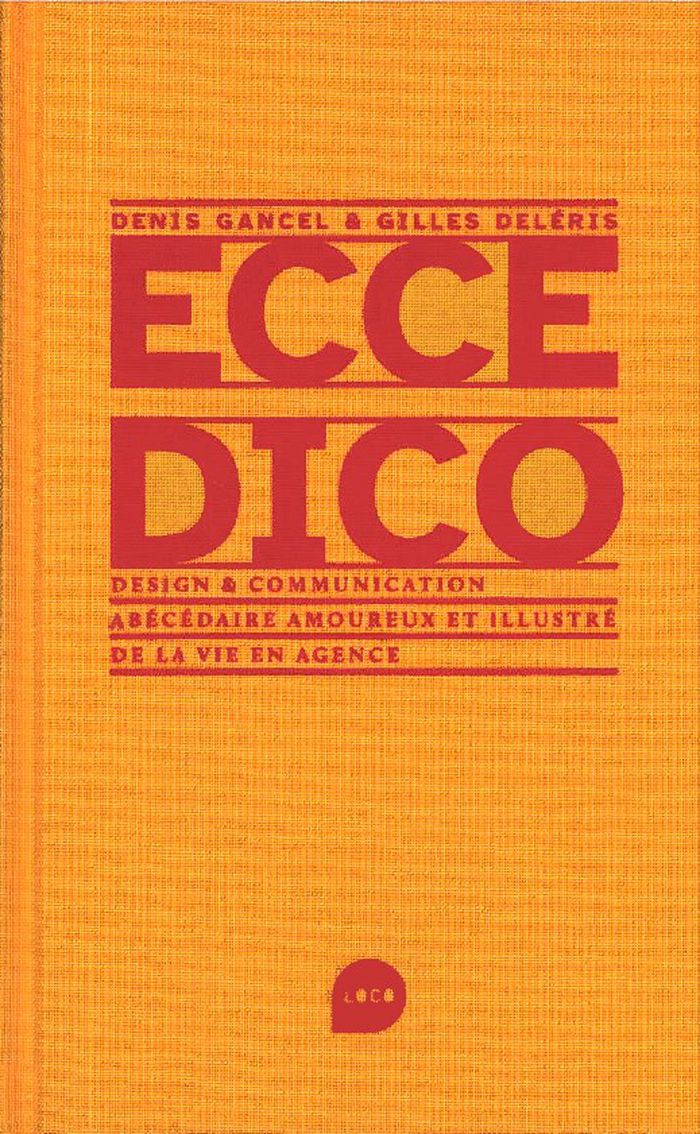
Ecce Dico : Design & communication abécédaire amoureux et illustré da la vie en agence
Actions:
Price:
$65.95
(available to order)
Summary:
Douze ans après « Ecce Logo » (Loco, 2011), Gilles Deléris et Denis Gancel poursuivent leurs réflexions sur le monde des marques, du design, et de la communication. Co-fondateurs de l’agence W réputée pour sa créativité, les auteurs proposent, définitions après définitions, un regard décalé et sans langue de bois sur la vie en agence. Les joies, les doutes, l’esprit de compagnonnage, le management, la place des femmes, le poison du harcèlement... Gilles Deléris et Denis Gancel partagent leur expérience et leur amour pour le « plus beau métier du monde après la médecine et l’architecture ». Alors qu’Ecce Logo invitait à visiter une galerie d’art contemporain, les auteurs nous conduisent cette fois à parcourir une sorte de dictionnaire fantasque, une folie en forme d’abécédaire inspirée de l’édition 1923 du Petit Larousse illustré. Douze ans après Ecce Logo (Loco, 2011), Gilles Deléris et Denis Gancel poursuivent leurs réflexions sur le monde des marques, du design, et de la communication. Co-fondateurs de l’agence W réputée pour sa créativité, les auteurs proposent, définitions après définitions, un regard décalé et sans langue de bois sur la vie en agence. Les joies, les doutes, l’esprit de compagnonnage, le management, la place des femmes, le poison du harcèlement... Gilles Deléris et Denis Gancel partagent leur expérience et leur amour pour le « plus beau métier du monde après la médecine et l’architecture ». Alors qu’Ecce Logo invitait à visiter une galerie d’art contemporain, les auteurs nous conduisent cette fois à parcourir une sorte de dictionnaire fantasque, une folie en forme d’abécédaire inspirée de l’édition 1923 du Petit Larousse illustré. Cent ans plus tard, ils conçoivent un objet original, qui fait interpréter l’ imaginaire des gravures de l’époque par la puissance de l’intelligence artificielle. Le résultat est tantôt déroutant, tantôt surprenant, parfois kitch, parfois baroque mais donne à voir une esthétique en construction. Avant de se lancer dans la lecture des textes, chacune et chacun pourra tenter de retrouver les évocations qui se cachent derrière chaque lettrine.
Ecce Dico : Design & communication abécédaire amoureux et illustré da la vie en agence
Actions:
Price:
$65.95
(available to order)
Summary:
Douze ans après « Ecce Logo » (Loco, 2011), Gilles Deléris et Denis Gancel poursuivent leurs réflexions sur le monde des marques, du design, et de la communication. Co-fondateurs de l’agence W réputée pour sa créativité, les auteurs proposent, définitions après définitions, un regard décalé et sans langue de bois sur la vie en agence. Les joies, les doutes, l’esprit de compagnonnage, le management, la place des femmes, le poison du harcèlement... Gilles Deléris et Denis Gancel partagent leur expérience et leur amour pour le « plus beau métier du monde après la médecine et l’architecture ». Alors qu’Ecce Logo invitait à visiter une galerie d’art contemporain, les auteurs nous conduisent cette fois à parcourir une sorte de dictionnaire fantasque, une folie en forme d’abécédaire inspirée de l’édition 1923 du Petit Larousse illustré. Douze ans après Ecce Logo (Loco, 2011), Gilles Deléris et Denis Gancel poursuivent leurs réflexions sur le monde des marques, du design, et de la communication. Co-fondateurs de l’agence W réputée pour sa créativité, les auteurs proposent, définitions après définitions, un regard décalé et sans langue de bois sur la vie en agence. Les joies, les doutes, l’esprit de compagnonnage, le management, la place des femmes, le poison du harcèlement... Gilles Deléris et Denis Gancel partagent leur expérience et leur amour pour le « plus beau métier du monde après la médecine et l’architecture ». Alors qu’Ecce Logo invitait à visiter une galerie d’art contemporain, les auteurs nous conduisent cette fois à parcourir une sorte de dictionnaire fantasque, une folie en forme d’abécédaire inspirée de l’édition 1923 du Petit Larousse illustré. Cent ans plus tard, ils conçoivent un objet original, qui fait interpréter l’ imaginaire des gravures de l’époque par la puissance de l’intelligence artificielle. Le résultat est tantôt déroutant, tantôt surprenant, parfois kitch, parfois baroque mais donne à voir une esthétique en construction. Avant de se lancer dans la lecture des textes, chacune et chacun pourra tenter de retrouver les évocations qui se cachent derrière chaque lettrine.
Form:
books
books
Publication:
October 2023
October 2023
Subject:
Graphic Design and Typography
Graphic Design and Typography
Form:
books
books
Actions:
Price:
$7.99
(available to order)
Summary:
The rivalry between the brilliant seventeenth-century Italian architects Gianlorenzo Bernini and Francesco Borromini is the stuff of legend. Possessed of enormous talent and ambition, these two artists -- one trained as a sculptor, the other as a stonecutter -- met as contemporaries in the building yards of St. Peter's in Rome and ended their lives as bitter enemies. Over(...)
$7.99
(available to order)
Summary:
The rivalry between the brilliant seventeenth-century Italian architects Gianlorenzo Bernini and Francesco Borromini is the stuff of legend. Possessed of enormous talent and ambition, these two artists -- one trained as a sculptor, the other as a stonecutter -- met as contemporaries in the building yards of St. Peter's in Rome and ended their lives as bitter enemies. Over(...)
Title:
The genius in the design : Bernini, Borromini, and the rivalry that transformed Rome
Actions:
Price:
$7.99
(available to order)
Summary:
The rivalry between the brilliant seventeenth-century Italian architects Gianlorenzo Bernini and Francesco Borromini is the stuff of legend. Possessed of enormous talent and ambition, these two artists -- one trained as a sculptor, the other as a stonecutter -- met as contemporaries in the building yards of St. Peter's in Rome and ended their lives as bitter enemies. Over the course of their careers they became the most celebrated architects of their era, designing some of the most beautiful buildings in the world and transforming the city of Rome. “The Genius in the Design” is an extraordinary tale of how these two men plotted, schemed, and intrigued to get the better of each other. Full of dramatic tension and great insight into personalities, acclaimed writer Jake Morrissey's engrossing and impeccably researched account also shows that this legendary rivalry defined the Baroque style that immediately succeeded the Renaissance and created the spectacular Roman cityscape of today. Almost exactly the same age -- Bernini was born at the end of 1598, Borromini nine months later -- they were as alike and as different as any two men could be, each a potent combination of passion and enterprise, energy and imperfection. Bernini was a precocious talent who as a youth caught the attention of Pope Paul V and became Rome's most celebrated artist, whose patrons included the wealthiest families in Europe. The city's greatest sculptor -- the creator of such masterpieces as Apollo and Daphne and the Ecstasy of St. Teresa -- Bernini would also have been Rome's pre-eminent architect had it not been for Francesco Borromini, the one man whose talent and virtuosity rivalled his own. In contrast to Bernini's easy grace, Borromini was an introvert with a fiery temper who bristled when anyone interfered with his vision; his temperament alienated him from prospective patrons and precipitated his tragic end. Like Mozart and Salieri, these two masters were inextricably linked, their dazzling work prodding the other to greater achievement while taking merciless advantage of each other's missteps. “The Genius in the Design” is their story, a fascinating narrative of beauty and tragedy marked at turns by personal animosity and astonishing artistic achievement.
The genius in the design : Bernini, Borromini, and the rivalry that transformed Rome
Actions:
Price:
$7.99
(available to order)
Summary:
The rivalry between the brilliant seventeenth-century Italian architects Gianlorenzo Bernini and Francesco Borromini is the stuff of legend. Possessed of enormous talent and ambition, these two artists -- one trained as a sculptor, the other as a stonecutter -- met as contemporaries in the building yards of St. Peter's in Rome and ended their lives as bitter enemies. Over the course of their careers they became the most celebrated architects of their era, designing some of the most beautiful buildings in the world and transforming the city of Rome. “The Genius in the Design” is an extraordinary tale of how these two men plotted, schemed, and intrigued to get the better of each other. Full of dramatic tension and great insight into personalities, acclaimed writer Jake Morrissey's engrossing and impeccably researched account also shows that this legendary rivalry defined the Baroque style that immediately succeeded the Renaissance and created the spectacular Roman cityscape of today. Almost exactly the same age -- Bernini was born at the end of 1598, Borromini nine months later -- they were as alike and as different as any two men could be, each a potent combination of passion and enterprise, energy and imperfection. Bernini was a precocious talent who as a youth caught the attention of Pope Paul V and became Rome's most celebrated artist, whose patrons included the wealthiest families in Europe. The city's greatest sculptor -- the creator of such masterpieces as Apollo and Daphne and the Ecstasy of St. Teresa -- Bernini would also have been Rome's pre-eminent architect had it not been for Francesco Borromini, the one man whose talent and virtuosity rivalled his own. In contrast to Bernini's easy grace, Borromini was an introvert with a fiery temper who bristled when anyone interfered with his vision; his temperament alienated him from prospective patrons and precipitated his tragic end. Like Mozart and Salieri, these two masters were inextricably linked, their dazzling work prodding the other to greater achievement while taking merciless advantage of each other's missteps. “The Genius in the Design” is their story, a fascinating narrative of beauty and tragedy marked at turns by personal animosity and astonishing artistic achievement.
Form:
books
books
Publication:
March 2005, New York
March 2005, New York
Subject:
sale books
sale books
Form:
books
books

Title:
Villa de Rome
Villa de Rome
Actions:
Price:
$94.00
(available to order)
Summary:
Publié à Paris à partir de 1809, le recueil de plans et de vues des villas de la Renaissance et de l'âge baroque de Percier et Fontaine a été soigneusement élaboré à partir des dessins réalisés avant la Révolution, alors qu'ils étaient pensionnaires à l'Académie de France à Rome. Bien que ses auteurs avaient déjà connu le succès avec leurs précédents ouvrages consacrés(...)
$94.00
(available to order)
Summary:
Publié à Paris à partir de 1809, le recueil de plans et de vues des villas de la Renaissance et de l'âge baroque de Percier et Fontaine a été soigneusement élaboré à partir des dessins réalisés avant la Révolution, alors qu'ils étaient pensionnaires à l'Académie de France à Rome. Bien que ses auteurs avaient déjà connu le succès avec leurs précédents ouvrages consacrés(...)
Subject:
History until 1900
History until 1900
Publication:
July 2007, Wavre
July 2007, Wavre
Title:
Villa de Rome
Actions:
Price:
$94.00
(available to order)
Summary:
Publié à Paris à partir de 1809, le recueil de plans et de vues des villas de la Renaissance et de l'âge baroque de Percier et Fontaine a été soigneusement élaboré à partir des dessins réalisés avant la Révolution, alors qu'ils étaient pensionnaires à l'Académie de France à Rome. Bien que ses auteurs avaient déjà connu le succès avec leurs précédents ouvrages consacrés aux palais et aux maisons de Rome (1798) et aux décorations intérieures (1802), c'est dans cette nouvelle publication qu'ils plaçaient le plus d'ambitions. Car cette suite de gravures exécutées avec le plus grand soin ne vise pas seulement à garder la mémoire de l'émerveillement éprouvé dans les jardins romains, voire de la douceur du séjour ultramontain. L'information qu'elle propose, sur des édifices de tout premier plan, est là pour soutenir la position des deux architectes dans les débats contemporains et pour étayer leur dispositif théorique. II s'agit d'abord de répondre, par de nouvelles références, au développement dans les campagnes de l'empire d'un nouveau type de demeure aristocratique, tout en offrant un antidote au goût alors en plein essor pour les jardins anglais. C'est un choix esthétique et un engagement. Cette leçon d'Italie, cette alliance de vues et de plans, est là pour démontrer que les grandes ordonnances ne s'opposent pas, bien au contraire, au pittoresque, ce qui revient à soutenir les prétentions des architectes dans le domaine de l'art des jardins, face aux succès des jardiniers et des paysagistes. Après un premier livre, qui abordait l'échelle des édifices, puis un second qui traitait de celle du détail, le troisième grand recueil de Percier et Fontaine se focalise sur les grandes compositions, qui étaient alors une des bases du savoir-faire de l'architecte et le fondement du concours du Prix de Rome. Le Choix des plus célèbres maisons de plaisance de Rome et de ses environs, qui compte parmis les plus luxueux et les plus beaux livres d'architecture français, est depuis longtemps introuvable. Cette réédition intégrale de l'édition de 1809 est la première qui rende accessible cette référence majeure pour l'histoire de l'architecture du XIXe siècle, pour l'histoire de l'art des jardins et pour l'histoire de l'enseignement à l'École des beaux-Arts.
Villa de Rome
Actions:
Price:
$94.00
(available to order)
Summary:
Publié à Paris à partir de 1809, le recueil de plans et de vues des villas de la Renaissance et de l'âge baroque de Percier et Fontaine a été soigneusement élaboré à partir des dessins réalisés avant la Révolution, alors qu'ils étaient pensionnaires à l'Académie de France à Rome. Bien que ses auteurs avaient déjà connu le succès avec leurs précédents ouvrages consacrés aux palais et aux maisons de Rome (1798) et aux décorations intérieures (1802), c'est dans cette nouvelle publication qu'ils plaçaient le plus d'ambitions. Car cette suite de gravures exécutées avec le plus grand soin ne vise pas seulement à garder la mémoire de l'émerveillement éprouvé dans les jardins romains, voire de la douceur du séjour ultramontain. L'information qu'elle propose, sur des édifices de tout premier plan, est là pour soutenir la position des deux architectes dans les débats contemporains et pour étayer leur dispositif théorique. II s'agit d'abord de répondre, par de nouvelles références, au développement dans les campagnes de l'empire d'un nouveau type de demeure aristocratique, tout en offrant un antidote au goût alors en plein essor pour les jardins anglais. C'est un choix esthétique et un engagement. Cette leçon d'Italie, cette alliance de vues et de plans, est là pour démontrer que les grandes ordonnances ne s'opposent pas, bien au contraire, au pittoresque, ce qui revient à soutenir les prétentions des architectes dans le domaine de l'art des jardins, face aux succès des jardiniers et des paysagistes. Après un premier livre, qui abordait l'échelle des édifices, puis un second qui traitait de celle du détail, le troisième grand recueil de Percier et Fontaine se focalise sur les grandes compositions, qui étaient alors une des bases du savoir-faire de l'architecte et le fondement du concours du Prix de Rome. Le Choix des plus célèbres maisons de plaisance de Rome et de ses environs, qui compte parmis les plus luxueux et les plus beaux livres d'architecture français, est depuis longtemps introuvable. Cette réédition intégrale de l'édition de 1809 est la première qui rende accessible cette référence majeure pour l'histoire de l'architecture du XIXe siècle, pour l'histoire de l'art des jardins et pour l'histoire de l'enseignement à l'École des beaux-Arts.
Form:
books
books
Publication:
July 2007, Wavre
July 2007, Wavre
Subject:
History until 1900
History until 1900
Form:
audio
audio
Description:
1 online resource.
Author:
Subject:
Publication:
[Place of publication not identified] : Lateral Addition, 2018.
[Place of publication not identified] : Lateral Addition, 2018.
Title:
June 21, 2018 : Listening for Southwest Key in San Diego.
Actions:
Description:
1 online resource.
June 21, 2018 : Listening for Southwest Key in San Diego.
Actions:
Description:
1 online resource.
Form:
audio
audio
Publication:
[Place of publication not identified] : Lateral Addition, 2018.
[Place of publication not identified] : Lateral Addition, 2018.
Author:
Subject:


