


215 Results
Form:
books
books
Actions:
Price:
$25.95
(available to order)
Summary:
We are living in the Anthropocene—an era of dramatic and violent climate change featuring warming oceans, melting icecaps, extreme weather events, habitat loss, species extinction, and more. What will life be like in a climate-changed world? In ''Tomorrow’s parties,'' science fiction authors speculate how we might be able to live and even thrive through the advancing(...)
Title:
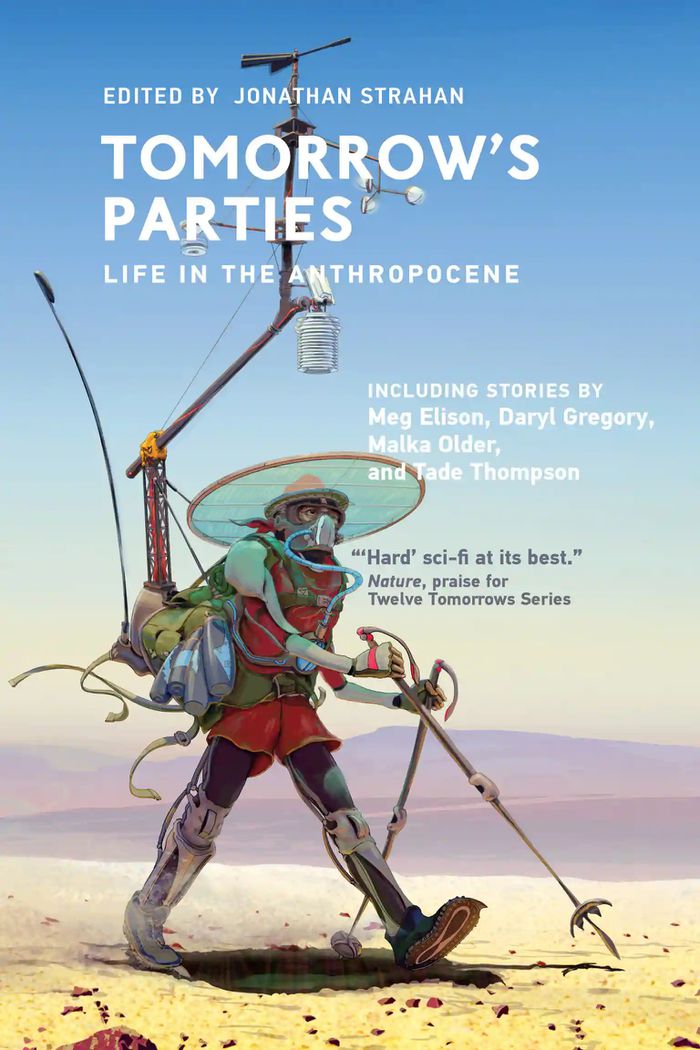
Tomorrow's parties: Life in the Anthropocene
Actions:
Price:
$25.95
(available to order)
Summary:
We are living in the Anthropocene—an era of dramatic and violent climate change featuring warming oceans, melting icecaps, extreme weather events, habitat loss, species extinction, and more. What will life be like in a climate-changed world? In ''Tomorrow’s parties,'' science fiction authors speculate how we might be able to live and even thrive through the advancing Anthropocene. In ten original stories by writers from around the world, an interview with celebrated writer Kim Stanley Robinson, and a series of intricate and elegant artworks by Sean Bodley, ''Tomorrow’s parties'' takes rational optimism as a moral imperative, or at least a pragmatic alternative to despair. In these stories—by writers from the United Kingdom, the United States, Nigeria, China, Bangladesh, and Australia—a young man steals from delivery drones; a political community lives on an island made of ocean-borne plastic waste; and a climate change denier tries to unmask ''crisis actors.'' Climate-changed life also has its pleasures and epiphanies, as when a father in Africa works to make his son’s dreams of ''Viking adventure'' a reality, and an IT professional dispatched to a distant village encounters a marvelous predigital fungal network. Contributors include Pascall Prize for Criticism winner James Bradley, Hugo Award winners Greg Egan and Sarah Gailey, Philip K Dick Award winner Meg Elison, and New York Times bestselling author Daryl Gregory.
Form:
books
books
Publication:
August 2022
August 2022
Subject:
Literature and poetry
Literature and poetry
Form:
books
books
Actions:
Holdings:
Description:
236 pages : illustrations (chiefly color) ; 30 x 37 cm
Description:
236 pages : illustrations (chiefly color) ; 30 x 37 cm
Author:
Subject:
Publication:
Göttingen, Germany : Steidl, 2018.
Göttingen, Germany : Steidl, 2018.
Title:
Anthropocene / Edward Burtynsky with Jennifer Baichwal and Nicholas de Pencier.
Actions:
Holdings:
Description:
236 pages : illustrations (chiefly color) ; 30 x 37 cm
Anthropocene / Edward Burtynsky with Jennifer Baichwal and Nicholas de Pencier.
Actions:
Holdings:
Description:
236 pages : illustrations (chiefly color) ; 30 x 37 cm
Form:
books
books
Publication:
Göttingen, Germany : Steidl, 2018.
Göttingen, Germany : Steidl, 2018.
Author:
Subject:
Form:
books
books
Actions:
Price:
$16.95
(available to order)
Summary:
Par centaines de milliers, obéissant au mot d’ordre « Sortez ! » de Hu Jintao, les Chinois se ruent vers l’Afrique. Pour le pire parfois, pour le meilleur aussi. En échange de matières premières dont le continent noir regorge (pétrole, gaz, métaux, uranium, bois, poissons), l’Empire du Milieu développe l’Afrique et l’intègre dans la mondialisation. Pékin séduit de(...)
Title:
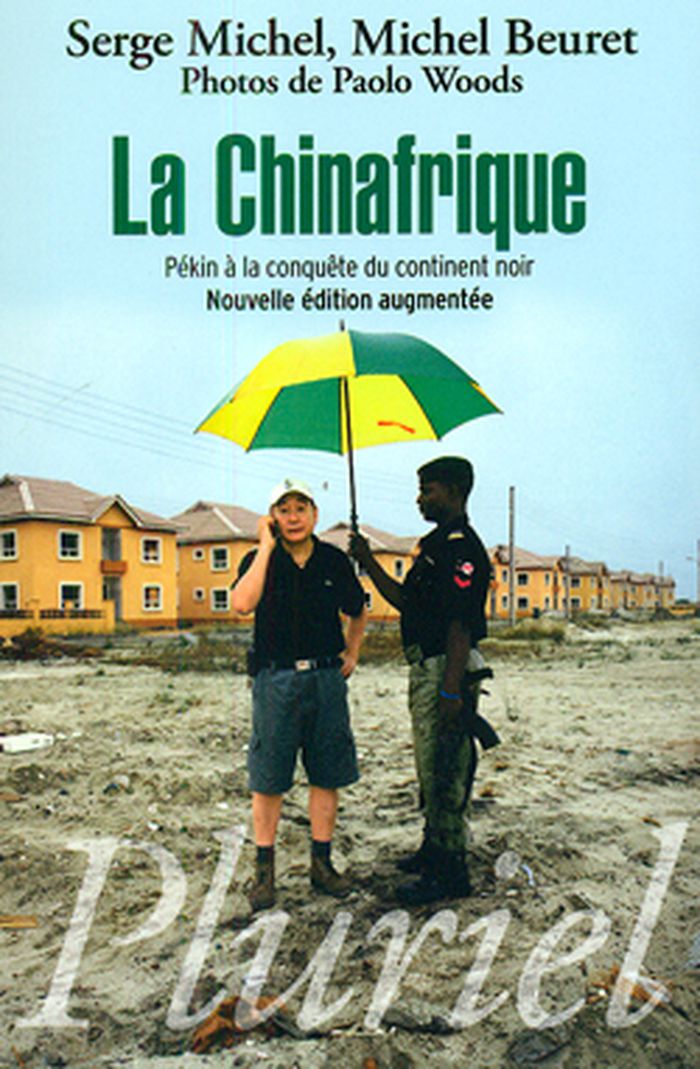
La Chinafrique : Pékin à la conquête du continent noir, nouvelle édition augmentée
Actions:
Price:
$16.95
(available to order)
Summary:
Par centaines de milliers, obéissant au mot d’ordre « Sortez ! » de Hu Jintao, les Chinois se ruent vers l’Afrique. Pour le pire parfois, pour le meilleur aussi. En échange de matières premières dont le continent noir regorge (pétrole, gaz, métaux, uranium, bois, poissons), l’Empire du Milieu développe l’Afrique et l’intègre dans la mondialisation. Pékin séduit de nombreux dictateurs – en ne posant aucune condition – avec des produits bon marché, drogue à forte accoutumance dans les pays pauvres jusque-là dépendants des produits occidentaux. Grâce à Pékin, l’Afrique, jadis victime de l’afro-pessimisme, vit un boum économique sans précédent. Pour la première fois, l’Afrique a le choix. Les Occidentaux, qui l’avaient laissé tomber, veulent y revenir. Seulement voilà, la place est souvent prise et des conflits se préparent… Qui sont ces aventuriers Chinois ? Dans quels pays vont-ils ? Pour y faire quoi ? Quel est le secret de leur succès ? Comment se passe la rencontre de ces deux mondes si différents ? Et avec quelles conséquences sur les droits de l’homme et l’environnement ? Pour répondre à ces questions, les auteurs ont parcouru quinze pays, sillonnant tout le continent à la rencontre de cette « Chinafrique », des forêts ratiboisées du Congo aux rivages venimeux du Nigeria, des sables militairement mouvants du Niger aux pipelines du Soudan, des souvenirs d’Egypte made in China aux restaurants gastronomiques de Douala, des campagnes misérables de la Chine à ce continent mystérieux qu’est l’Afrique pour les nouveaux aventuriers.
Form:
books
books
Publication:
May 2009
May 2009
Form:
books
books

Actions:
Price:
$29.95
(available to order)
Summary:
Moving the critical debate about photography away from its current Euro-American centre of gravity, "Photography’s Other Histories" breaks with the notion that photographic history is best seen as the explosion of a Western technology advanced by the work of singular individuals. This collection presents a different account, describing photography as a globally(...)
Subject:
Theory of Photography
Theory of Photography
Publication:
March 2003, Durham, N.C.
March 2003, Durham, N.C.
Title:
Photography's other histories
Actions:
Price:
$29.95
(available to order)
Summary:
Moving the critical debate about photography away from its current Euro-American centre of gravity, "Photography’s Other Histories" breaks with the notion that photographic history is best seen as the explosion of a Western technology advanced by the work of singular individuals. This collection presents a different account, describing photography as a globally disseminated and locally appropriated medium. Essays firmly grounded in photographic practice — in the actual making of pictures — suggest the extraordinary diversity of nonwestern photography "Photography’s Other Histories" explores from a variety of geographic, cultural, and historic perspectives the role of photography in raising historical consciousness. It includes two first-person pieces by indigenous Australians and one by a Seminole/Muskogee/Diné artist. Some of the essays analyze representations of colonial subjects—from the limited ways Westerners have depicted Navajos to Japanese photos recording the occupation of Manchuria and from the changing nature of the "contract" between Aboriginal subjects and photographers to the surprising range of cultural influences evident in the photographs colonialist F. R. Barton took in New Guinea in the late 1800s and early 1900s. Focusing on photographic self-fashioning and the development of vernacular modernisms, other essays highlight the visionary quality of much popular photography. Case studies centered in early-twentieth-century Peru and contemporary India, Kenya, and Nigeria chronicle the diverse practices that have flourished in postcolonial societies. "Photography’s Other Histories" recasts popular photography around the world, as not simply reproducing culture but creating it.
Form:
books
books
Publication:
March 2003, Durham, N.C.
March 2003, Durham, N.C.
Subject:
Theory of Photography
Theory of Photography
Form:
audio
audio
Title:
CAPOGIRI DEGLI DEI.
CAPOGIRI DEGLI DEI.
Actions:
Description:
1 online resource.
Author:
Subject:
Publication:
[Place of publication not identified] : EBM(T), 2015.
[Place of publication not identified] : EBM(T), 2015.
Form:
audio
audio
Publication:
[Place of publication not identified] : EBM(T), 2015.
[Place of publication not identified] : EBM(T), 2015.
Author:
Subject:


