


44178 Results
Level of archival description:
Project
Project
Title:
Leal, Porto
Leal, Porto
Actions:
Reference number:
CD034.S1.1974.PR02
Description:
This project series contains eight reproductions of drawings displayed in the exhibit to document the Leal neighbourhood, in Porto, Portugal. The exhibit text explained that the project: ... pioneered the concept of community association, with the first resident activities dating back to the early 1970s. In 1974, immediately after the revolution, the residents opposed the building of a car park that would have involved their relocation and resettlement. The project of the architect Sérgio Fernandez, which originated in a pre-revolutionary resident organization, was conceived through the dynamics of the resident process, and had a project-oriented clarity that came from an economic sense of design, adapting to the needs and political character of the intervention. (The SAAL Process, Housing in Portugal 1974–76) Sérgio Fernandez worked for SAAL/North with António Corte Real, Carlos Delfim, Emídio Fonseca, José Manuel Soares, Vítor Sinde and the residents' association Bairro do Leal, that was founded on April 30th, 1975. The first phase of the project included 16 dwellings and the second, 33 dwellings. The operation began in October 1974, with a construction date in April 1976. This project series contains reproductions of design development drawings, cadastral and implementation plans, and an axonometric view. The original drawings were produced in 1975 and were reproduced in 2015 for the exhibit.
CD034.S1.1974.PR02
Description:
This project series contains eight reproductions of drawings displayed in the exhibit to document the Leal neighbourhood, in Porto, Portugal. The exhibit text explained that the project: ... pioneered the concept of community association, with the first resident activities dating back to the early 1970s. In 1974, immediately after the revolution, the residents opposed the building of a car park that would have involved their relocation and resettlement. The project of the architect Sérgio Fernandez, which originated in a pre-revolutionary resident organization, was conceived through the dynamics of the resident process, and had a project-oriented clarity that came from an economic sense of design, adapting to the needs and political character of the intervention. (The SAAL Process, Housing in Portugal 1974–76) Sérgio Fernandez worked for SAAL/North with António Corte Real, Carlos Delfim, Emídio Fonseca, José Manuel Soares, Vítor Sinde and the residents' association Bairro do Leal, that was founded on April 30th, 1975. The first phase of the project included 16 dwellings and the second, 33 dwellings. The operation began in October 1974, with a construction date in April 1976. This project series contains reproductions of design development drawings, cadastral and implementation plans, and an axonometric view. The original drawings were produced in 1975 and were reproduced in 2015 for the exhibit.
People:
Date:
1975
1975
Title:
Leal, Porto
Actions:
CD034.S1.1974.PR02
Description:
This project series contains eight reproductions of drawings displayed in the exhibit to document the Leal neighbourhood, in Porto, Portugal. The exhibit text explained that the project: ... pioneered the concept of community association, with the first resident activities dating back to the early 1970s. In 1974, immediately after the revolution, the residents opposed the building of a car park that would have involved their relocation and resettlement. The project of the architect Sérgio Fernandez, which originated in a pre-revolutionary resident organization, was conceived through the dynamics of the resident process, and had a project-oriented clarity that came from an economic sense of design, adapting to the needs and political character of the intervention. (The SAAL Process, Housing in Portugal 1974–76) Sérgio Fernandez worked for SAAL/North with António Corte Real, Carlos Delfim, Emídio Fonseca, José Manuel Soares, Vítor Sinde and the residents' association Bairro do Leal, that was founded on April 30th, 1975. The first phase of the project included 16 dwellings and the second, 33 dwellings. The operation began in October 1974, with a construction date in April 1976. This project series contains reproductions of design development drawings, cadastral and implementation plans, and an axonometric view. The original drawings were produced in 1975 and were reproduced in 2015 for the exhibit.
Leal, Porto
Actions:
CD034.S1.1974.PR02
Description:
This project series contains eight reproductions of drawings displayed in the exhibit to document the Leal neighbourhood, in Porto, Portugal. The exhibit text explained that the project: ... pioneered the concept of community association, with the first resident activities dating back to the early 1970s. In 1974, immediately after the revolution, the residents opposed the building of a car park that would have involved their relocation and resettlement. The project of the architect Sérgio Fernandez, which originated in a pre-revolutionary resident organization, was conceived through the dynamics of the resident process, and had a project-oriented clarity that came from an economic sense of design, adapting to the needs and political character of the intervention. (The SAAL Process, Housing in Portugal 1974–76) Sérgio Fernandez worked for SAAL/North with António Corte Real, Carlos Delfim, Emídio Fonseca, José Manuel Soares, Vítor Sinde and the residents' association Bairro do Leal, that was founded on April 30th, 1975. The first phase of the project included 16 dwellings and the second, 33 dwellings. The operation began in October 1974, with a construction date in April 1976. This project series contains reproductions of design development drawings, cadastral and implementation plans, and an axonometric view. The original drawings were produced in 1975 and were reproduced in 2015 for the exhibit.
Level of archival description:
Project
Project
Date:
1975
1975
People:
Level of archival description:
Project
Project
Title:
Antas, Porto
Antas, Porto
Actions:
Reference number:
CD034.S1.1974.PR03
Description:
This project series contains reproductions of drawings and photographs displayed in the exhibit to document the Antas neighbourhood, in Porto, Portugal. The exhibit text explained that: ... the SAAL Brigade intervened at the heart of an urban area which then became subject to redevelopments after the construction of the first units. The original proposal and the completed phases contrast the scale of later operations and change the perception of the original project. Nonetheless, the architectural design addressed a difficult terrain, and maintained the specificities of the urban 'ilhas' (islands) by incorporating a vernacular character, which the residents appropriated and transformed even further overtime. (The SAAL Process, Housing in Portugal 1974–76) The project architect Pedro Ramalho worked for SAAL/North with Aires Pereira, Augusto Costa, Francisco M. Lima, José Lencastre, Lídia Costa, Pedro B. Araújo, Teresa Fonseca, Vítor Bastos and the residents' association Antas, that was founded on Septermber 1st, 1975. The first phase of the project included 32 dwellings and the second, 50 dwellings. The operation began in October 1974, with a construction date in October 1975. This project series contains reproductions of design development drawings, implementation plans, axonometric views and photographic material. The original drawings and photographs were produced in 1975 and 1976 and were reproduced in 2015 for the exhibit.
CD034.S1.1974.PR03
Description:
This project series contains reproductions of drawings and photographs displayed in the exhibit to document the Antas neighbourhood, in Porto, Portugal. The exhibit text explained that: ... the SAAL Brigade intervened at the heart of an urban area which then became subject to redevelopments after the construction of the first units. The original proposal and the completed phases contrast the scale of later operations and change the perception of the original project. Nonetheless, the architectural design addressed a difficult terrain, and maintained the specificities of the urban 'ilhas' (islands) by incorporating a vernacular character, which the residents appropriated and transformed even further overtime. (The SAAL Process, Housing in Portugal 1974–76) The project architect Pedro Ramalho worked for SAAL/North with Aires Pereira, Augusto Costa, Francisco M. Lima, José Lencastre, Lídia Costa, Pedro B. Araújo, Teresa Fonseca, Vítor Bastos and the residents' association Antas, that was founded on Septermber 1st, 1975. The first phase of the project included 32 dwellings and the second, 50 dwellings. The operation began in October 1974, with a construction date in October 1975. This project series contains reproductions of design development drawings, implementation plans, axonometric views and photographic material. The original drawings and photographs were produced in 1975 and 1976 and were reproduced in 2015 for the exhibit.
People:
Date:
1975-1976
1975-1976
Title:
Antas, Porto
Actions:
CD034.S1.1974.PR03
Description:
This project series contains reproductions of drawings and photographs displayed in the exhibit to document the Antas neighbourhood, in Porto, Portugal. The exhibit text explained that: ... the SAAL Brigade intervened at the heart of an urban area which then became subject to redevelopments after the construction of the first units. The original proposal and the completed phases contrast the scale of later operations and change the perception of the original project. Nonetheless, the architectural design addressed a difficult terrain, and maintained the specificities of the urban 'ilhas' (islands) by incorporating a vernacular character, which the residents appropriated and transformed even further overtime. (The SAAL Process, Housing in Portugal 1974–76) The project architect Pedro Ramalho worked for SAAL/North with Aires Pereira, Augusto Costa, Francisco M. Lima, José Lencastre, Lídia Costa, Pedro B. Araújo, Teresa Fonseca, Vítor Bastos and the residents' association Antas, that was founded on Septermber 1st, 1975. The first phase of the project included 32 dwellings and the second, 50 dwellings. The operation began in October 1974, with a construction date in October 1975. This project series contains reproductions of design development drawings, implementation plans, axonometric views and photographic material. The original drawings and photographs were produced in 1975 and 1976 and were reproduced in 2015 for the exhibit.
Antas, Porto
Actions:
CD034.S1.1974.PR03
Description:
This project series contains reproductions of drawings and photographs displayed in the exhibit to document the Antas neighbourhood, in Porto, Portugal. The exhibit text explained that: ... the SAAL Brigade intervened at the heart of an urban area which then became subject to redevelopments after the construction of the first units. The original proposal and the completed phases contrast the scale of later operations and change the perception of the original project. Nonetheless, the architectural design addressed a difficult terrain, and maintained the specificities of the urban 'ilhas' (islands) by incorporating a vernacular character, which the residents appropriated and transformed even further overtime. (The SAAL Process, Housing in Portugal 1974–76) The project architect Pedro Ramalho worked for SAAL/North with Aires Pereira, Augusto Costa, Francisco M. Lima, José Lencastre, Lídia Costa, Pedro B. Araújo, Teresa Fonseca, Vítor Bastos and the residents' association Antas, that was founded on Septermber 1st, 1975. The first phase of the project included 32 dwellings and the second, 50 dwellings. The operation began in October 1974, with a construction date in October 1975. This project series contains reproductions of design development drawings, implementation plans, axonometric views and photographic material. The original drawings and photographs were produced in 1975 and 1976 and were reproduced in 2015 for the exhibit.
Level of archival description:
Project
Project
Date:
1975-1976
1975-1976
People:
Level of archival description:
Project
Project
Actions:
Reference number:
AP164.S1.2005.D1
Description:
The project series documents the renovation of the Télévision Suisse Romande (TSR) tower in Geneva, Switzerland. There were two competition finalists: Abalos & Herreros received the second phase of the project which was not realised. The firm identified this project as number 197. "The project approaches the two presented problems in a single way: the image change of the existing complex and the extension of the floor area at the roof top. […] [A] single type of curtain wall has been developed with windows of reasonable shape and format which curve at the top floor to take advantage of the maximum volume allowed by local building laws, generating an image of the building which is completely different than the actual one. The use of silk printed glass in the whole building, with motives from plants, creates an impression from the interior to be situated in a garden. At the same time the exterior appearance underlines the building’s singularity at the pedestrian level. […] The created extension of the building has a trae [sic] singular shape which one day could host a possible showroom or multifunctional rooms or as executive floor.” (ARCH270975) Abalos & Herreros worked with Blaise Sahy. Documenting the project are conceptual, design development, presentation and working drawings, digital, graphic, presentation and reference materials, correspondence, notes, and a model.
AP164.S1.2005.D1
Description:
The project series documents the renovation of the Télévision Suisse Romande (TSR) tower in Geneva, Switzerland. There were two competition finalists: Abalos & Herreros received the second phase of the project which was not realised. The firm identified this project as number 197. "The project approaches the two presented problems in a single way: the image change of the existing complex and the extension of the floor area at the roof top. […] [A] single type of curtain wall has been developed with windows of reasonable shape and format which curve at the top floor to take advantage of the maximum volume allowed by local building laws, generating an image of the building which is completely different than the actual one. The use of silk printed glass in the whole building, with motives from plants, creates an impression from the interior to be situated in a garden. At the same time the exterior appearance underlines the building’s singularity at the pedestrian level. […] The created extension of the building has a trae [sic] singular shape which one day could host a possible showroom or multifunctional rooms or as executive floor.” (ARCH270975) Abalos & Herreros worked with Blaise Sahy. Documenting the project are conceptual, design development, presentation and working drawings, digital, graphic, presentation and reference materials, correspondence, notes, and a model.
People:
Date:
1967-1973, 1996-2005, predominant 2004-2005
1967-1973, 1996-2005, predominant 2004-2005
Title:
Tour TSR, Geneva, Switzerland (2005)
Actions:
AP164.S1.2005.D1
Description:
The project series documents the renovation of the Télévision Suisse Romande (TSR) tower in Geneva, Switzerland. There were two competition finalists: Abalos & Herreros received the second phase of the project which was not realised. The firm identified this project as number 197. "The project approaches the two presented problems in a single way: the image change of the existing complex and the extension of the floor area at the roof top. […] [A] single type of curtain wall has been developed with windows of reasonable shape and format which curve at the top floor to take advantage of the maximum volume allowed by local building laws, generating an image of the building which is completely different than the actual one. The use of silk printed glass in the whole building, with motives from plants, creates an impression from the interior to be situated in a garden. At the same time the exterior appearance underlines the building’s singularity at the pedestrian level. […] The created extension of the building has a trae [sic] singular shape which one day could host a possible showroom or multifunctional rooms or as executive floor.” (ARCH270975) Abalos & Herreros worked with Blaise Sahy. Documenting the project are conceptual, design development, presentation and working drawings, digital, graphic, presentation and reference materials, correspondence, notes, and a model.
Tour TSR, Geneva, Switzerland (2005)
Actions:
AP164.S1.2005.D1
Description:
The project series documents the renovation of the Télévision Suisse Romande (TSR) tower in Geneva, Switzerland. There were two competition finalists: Abalos & Herreros received the second phase of the project which was not realised. The firm identified this project as number 197. "The project approaches the two presented problems in a single way: the image change of the existing complex and the extension of the floor area at the roof top. […] [A] single type of curtain wall has been developed with windows of reasonable shape and format which curve at the top floor to take advantage of the maximum volume allowed by local building laws, generating an image of the building which is completely different than the actual one. The use of silk printed glass in the whole building, with motives from plants, creates an impression from the interior to be situated in a garden. At the same time the exterior appearance underlines the building’s singularity at the pedestrian level. […] The created extension of the building has a trae [sic] singular shape which one day could host a possible showroom or multifunctional rooms or as executive floor.” (ARCH270975) Abalos & Herreros worked with Blaise Sahy. Documenting the project are conceptual, design development, presentation and working drawings, digital, graphic, presentation and reference materials, correspondence, notes, and a model.
Level of archival description:
Project
Project
Date:
1967-1973, 1996-2005, predominant 2004-2005
1967-1973, 1996-2005, predominant 2004-2005
People:
Level of archival description:
Project
Project
Actions:
Reference number:
AP154.S1.1979.PR01
Description:
Project series AP154.S1.1979.PR01, George & Annette Murphy Center at Asphalt Green, New York, N.Y. (1979), documents an executed project to recycle a municipal asphalt plant into a youth sports and arts center. Clients for the project were the New York City Department of General Services and the Neighborhood Committee for the Asphalt Green, chaired by Dr. George Murphy. The asphalt plant was a parabolic structure built in the 1940s by the firm Kahn and Jacobs. Pasanella + Klein worked on the adaptive reuse project with HOK, successors to Kahn and Jacobs. The transformed interior includes two gymnasia of different sizes, a running track, art and photography studios, offices, lockers, showers and a theatre. The design includes an on-site total energy plant. The project series consists of presentation drawings. References: Kerr, Laurie. "Back to the future", Oculus, v. 64, no. 7/8 (March/April 2002), p. 7-8. Dixon, John Morris. "25-year watch", Oculus, v. 71, issue 1 (spring 2009) Doubilet, Susan. "Arch support", Progressive architecture, v. 66, no. 11 (Nov. 1985), p. 101 Architektur + Wettbewerbe, 127 (Sept. 1986), p. 16-17
AP154.S1.1979.PR01
Description:
Project series AP154.S1.1979.PR01, George & Annette Murphy Center at Asphalt Green, New York, N.Y. (1979), documents an executed project to recycle a municipal asphalt plant into a youth sports and arts center. Clients for the project were the New York City Department of General Services and the Neighborhood Committee for the Asphalt Green, chaired by Dr. George Murphy. The asphalt plant was a parabolic structure built in the 1940s by the firm Kahn and Jacobs. Pasanella + Klein worked on the adaptive reuse project with HOK, successors to Kahn and Jacobs. The transformed interior includes two gymnasia of different sizes, a running track, art and photography studios, offices, lockers, showers and a theatre. The design includes an on-site total energy plant. The project series consists of presentation drawings. References: Kerr, Laurie. "Back to the future", Oculus, v. 64, no. 7/8 (March/April 2002), p. 7-8. Dixon, John Morris. "25-year watch", Oculus, v. 71, issue 1 (spring 2009) Doubilet, Susan. "Arch support", Progressive architecture, v. 66, no. 11 (Nov. 1985), p. 101 Architektur + Wettbewerbe, 127 (Sept. 1986), p. 16-17
People:
Date:
between 1979 and 1984?
between 1979 and 1984?
Title:
George & Annette Murphy Center at Asphalt Green, New York, N.Y. (1979)
Actions:
AP154.S1.1979.PR01
Description:
Project series AP154.S1.1979.PR01, George & Annette Murphy Center at Asphalt Green, New York, N.Y. (1979), documents an executed project to recycle a municipal asphalt plant into a youth sports and arts center. Clients for the project were the New York City Department of General Services and the Neighborhood Committee for the Asphalt Green, chaired by Dr. George Murphy. The asphalt plant was a parabolic structure built in the 1940s by the firm Kahn and Jacobs. Pasanella + Klein worked on the adaptive reuse project with HOK, successors to Kahn and Jacobs. The transformed interior includes two gymnasia of different sizes, a running track, art and photography studios, offices, lockers, showers and a theatre. The design includes an on-site total energy plant. The project series consists of presentation drawings. References: Kerr, Laurie. "Back to the future", Oculus, v. 64, no. 7/8 (March/April 2002), p. 7-8. Dixon, John Morris. "25-year watch", Oculus, v. 71, issue 1 (spring 2009) Doubilet, Susan. "Arch support", Progressive architecture, v. 66, no. 11 (Nov. 1985), p. 101 Architektur + Wettbewerbe, 127 (Sept. 1986), p. 16-17
George & Annette Murphy Center at Asphalt Green, New York, N.Y. (1979)
Actions:
AP154.S1.1979.PR01
Description:
Project series AP154.S1.1979.PR01, George & Annette Murphy Center at Asphalt Green, New York, N.Y. (1979), documents an executed project to recycle a municipal asphalt plant into a youth sports and arts center. Clients for the project were the New York City Department of General Services and the Neighborhood Committee for the Asphalt Green, chaired by Dr. George Murphy. The asphalt plant was a parabolic structure built in the 1940s by the firm Kahn and Jacobs. Pasanella + Klein worked on the adaptive reuse project with HOK, successors to Kahn and Jacobs. The transformed interior includes two gymnasia of different sizes, a running track, art and photography studios, offices, lockers, showers and a theatre. The design includes an on-site total energy plant. The project series consists of presentation drawings. References: Kerr, Laurie. "Back to the future", Oculus, v. 64, no. 7/8 (March/April 2002), p. 7-8. Dixon, John Morris. "25-year watch", Oculus, v. 71, issue 1 (spring 2009) Doubilet, Susan. "Arch support", Progressive architecture, v. 66, no. 11 (Nov. 1985), p. 101 Architektur + Wettbewerbe, 127 (Sept. 1986), p. 16-17
Level of archival description:
Project
Project
Date:
between 1979 and 1984?
between 1979 and 1984?
People:
Level of archival description:
Project
Project
Actions:
Reference number:
AP075.S1.1979.PR05
Description:
Project series documents Cornelia Hahn Oberlander's landscape project for the Discovery Parks' site on the Simon Fraser University campus, in Burnaby, British Columbia. Created in 1979, Discovery Parks is an organization with the mission to accomodate scientific and technological research activities by building and renting research installations. Initially founded by the provincial government, Discovery Parks became self-governning and independant in 1990. Oberlander worked on this project from 1979-1984 with Russell Vandiver Architects. The project consisted in creating three research building north of University Drive, in the Naheeto Park, with landscaped recreational areas between each buildings. The project was later reduce to one research building located at the corner of Nelson Way and University Drive, on the far east end of the initial site. Oberlander's landscape design consisted in trees planting along the street, the parking lot and the driveway, and creating a recreational area for staff and students. The project series contains textual records, including research, Oberlander's concept notes, project proposals, correspondence with architect and clients, specifications, and financial documents. The project series also comprises photographs and working drawings, such as proposed sites plans, site plans, grading plans, planting plans and landscape plans.
AP075.S1.1979.PR05
Description:
Project series documents Cornelia Hahn Oberlander's landscape project for the Discovery Parks' site on the Simon Fraser University campus, in Burnaby, British Columbia. Created in 1979, Discovery Parks is an organization with the mission to accomodate scientific and technological research activities by building and renting research installations. Initially founded by the provincial government, Discovery Parks became self-governning and independant in 1990. Oberlander worked on this project from 1979-1984 with Russell Vandiver Architects. The project consisted in creating three research building north of University Drive, in the Naheeto Park, with landscaped recreational areas between each buildings. The project was later reduce to one research building located at the corner of Nelson Way and University Drive, on the far east end of the initial site. Oberlander's landscape design consisted in trees planting along the street, the parking lot and the driveway, and creating a recreational area for staff and students. The project series contains textual records, including research, Oberlander's concept notes, project proposals, correspondence with architect and clients, specifications, and financial documents. The project series also comprises photographs and working drawings, such as proposed sites plans, site plans, grading plans, planting plans and landscape plans.
People:
Date:
1971-1989
1971-1989
Title:
Discovery Parks, Simon Fraser University Site, Burnaby, British Columbia (1979-1984)
Actions:
AP075.S1.1979.PR05
Description:
Project series documents Cornelia Hahn Oberlander's landscape project for the Discovery Parks' site on the Simon Fraser University campus, in Burnaby, British Columbia. Created in 1979, Discovery Parks is an organization with the mission to accomodate scientific and technological research activities by building and renting research installations. Initially founded by the provincial government, Discovery Parks became self-governning and independant in 1990. Oberlander worked on this project from 1979-1984 with Russell Vandiver Architects. The project consisted in creating three research building north of University Drive, in the Naheeto Park, with landscaped recreational areas between each buildings. The project was later reduce to one research building located at the corner of Nelson Way and University Drive, on the far east end of the initial site. Oberlander's landscape design consisted in trees planting along the street, the parking lot and the driveway, and creating a recreational area for staff and students. The project series contains textual records, including research, Oberlander's concept notes, project proposals, correspondence with architect and clients, specifications, and financial documents. The project series also comprises photographs and working drawings, such as proposed sites plans, site plans, grading plans, planting plans and landscape plans.
Discovery Parks, Simon Fraser University Site, Burnaby, British Columbia (1979-1984)
Actions:
AP075.S1.1979.PR05
Description:
Project series documents Cornelia Hahn Oberlander's landscape project for the Discovery Parks' site on the Simon Fraser University campus, in Burnaby, British Columbia. Created in 1979, Discovery Parks is an organization with the mission to accomodate scientific and technological research activities by building and renting research installations. Initially founded by the provincial government, Discovery Parks became self-governning and independant in 1990. Oberlander worked on this project from 1979-1984 with Russell Vandiver Architects. The project consisted in creating three research building north of University Drive, in the Naheeto Park, with landscaped recreational areas between each buildings. The project was later reduce to one research building located at the corner of Nelson Way and University Drive, on the far east end of the initial site. Oberlander's landscape design consisted in trees planting along the street, the parking lot and the driveway, and creating a recreational area for staff and students. The project series contains textual records, including research, Oberlander's concept notes, project proposals, correspondence with architect and clients, specifications, and financial documents. The project series also comprises photographs and working drawings, such as proposed sites plans, site plans, grading plans, planting plans and landscape plans.
Level of archival description:
Project
Project
Date:
1971-1989
1971-1989
People:
Level of archival description:
Project
Project
Actions:
Reference number:
AP075.S1.1995.PR02
Description:
Project series documents Cornelia Hahn Oberlander's project for landscape master plan of Smith College campus, Northampton, Massachusetts. Oberlander worked on this project from 1995-1997 in collaboration with Shavaun Towers from landscape architectural firm Rolland/Towers. The project required to preserve the historic landscaping, initially design by Frederick Law Olsmsted, while also taking into account future growth of the campus. In this idea Oberlander and Towers bases their landscape master plan on six key concepts: to preserve the sacred spaces of the campus, to restore Olmsted vision, to develope open spaces in an hierarchical fashion, to limite vehicular traffic and separate it from pedestrian circulation, to provide stronger pedestrian connexions and commun spaces for social interactions, and to expande and enhance the Botanic Garden on the campus. The project series contains concept notes by Oberlander, research and reference material, proposal, meetings notes, contract, correspondence, mostly with landscape architects, clients and consultants, and financial documents. The project is also documented through landscape master plans for Oberlander and Towers proposal and campus landscape plans and previous landscape working drawings used as reference.The project series also contains photographic materials, such as slides and photographs, of the college landscaping, and postcards of Smith College.
AP075.S1.1995.PR02
Description:
Project series documents Cornelia Hahn Oberlander's project for landscape master plan of Smith College campus, Northampton, Massachusetts. Oberlander worked on this project from 1995-1997 in collaboration with Shavaun Towers from landscape architectural firm Rolland/Towers. The project required to preserve the historic landscaping, initially design by Frederick Law Olsmsted, while also taking into account future growth of the campus. In this idea Oberlander and Towers bases their landscape master plan on six key concepts: to preserve the sacred spaces of the campus, to restore Olmsted vision, to develope open spaces in an hierarchical fashion, to limite vehicular traffic and separate it from pedestrian circulation, to provide stronger pedestrian connexions and commun spaces for social interactions, and to expande and enhance the Botanic Garden on the campus. The project series contains concept notes by Oberlander, research and reference material, proposal, meetings notes, contract, correspondence, mostly with landscape architects, clients and consultants, and financial documents. The project is also documented through landscape master plans for Oberlander and Towers proposal and campus landscape plans and previous landscape working drawings used as reference.The project series also contains photographic materials, such as slides and photographs, of the college landscaping, and postcards of Smith College.
People:
Date:
1974-2012
1974-2012
Title:
Smith College, Northampton, Massachusetts (1995-1997)
Actions:
AP075.S1.1995.PR02
Description:
Project series documents Cornelia Hahn Oberlander's project for landscape master plan of Smith College campus, Northampton, Massachusetts. Oberlander worked on this project from 1995-1997 in collaboration with Shavaun Towers from landscape architectural firm Rolland/Towers. The project required to preserve the historic landscaping, initially design by Frederick Law Olsmsted, while also taking into account future growth of the campus. In this idea Oberlander and Towers bases their landscape master plan on six key concepts: to preserve the sacred spaces of the campus, to restore Olmsted vision, to develope open spaces in an hierarchical fashion, to limite vehicular traffic and separate it from pedestrian circulation, to provide stronger pedestrian connexions and commun spaces for social interactions, and to expande and enhance the Botanic Garden on the campus. The project series contains concept notes by Oberlander, research and reference material, proposal, meetings notes, contract, correspondence, mostly with landscape architects, clients and consultants, and financial documents. The project is also documented through landscape master plans for Oberlander and Towers proposal and campus landscape plans and previous landscape working drawings used as reference.The project series also contains photographic materials, such as slides and photographs, of the college landscaping, and postcards of Smith College.
Smith College, Northampton, Massachusetts (1995-1997)
Actions:
AP075.S1.1995.PR02
Description:
Project series documents Cornelia Hahn Oberlander's project for landscape master plan of Smith College campus, Northampton, Massachusetts. Oberlander worked on this project from 1995-1997 in collaboration with Shavaun Towers from landscape architectural firm Rolland/Towers. The project required to preserve the historic landscaping, initially design by Frederick Law Olsmsted, while also taking into account future growth of the campus. In this idea Oberlander and Towers bases their landscape master plan on six key concepts: to preserve the sacred spaces of the campus, to restore Olmsted vision, to develope open spaces in an hierarchical fashion, to limite vehicular traffic and separate it from pedestrian circulation, to provide stronger pedestrian connexions and commun spaces for social interactions, and to expande and enhance the Botanic Garden on the campus. The project series contains concept notes by Oberlander, research and reference material, proposal, meetings notes, contract, correspondence, mostly with landscape architects, clients and consultants, and financial documents. The project is also documented through landscape master plans for Oberlander and Towers proposal and campus landscape plans and previous landscape working drawings used as reference.The project series also contains photographic materials, such as slides and photographs, of the college landscaping, and postcards of Smith College.
Level of archival description:
Project
Project
Date:
1974-2012
1974-2012
People:
Level of archival description:
Project
Project
Reference number:
AP075.S1.2000.PR01
Description:
Project series documents Cornelia Hahn Oberlander's landscape project for the Jim Everett Memorial Park, a neighbourhood park situated between Dalhousie Road, Allison Road and University Boulevard, in the University Endowment Lands (UEL) community land, in Vancouver. Oberlander worked on this project from 2000-2001. The UEL is a unincorporated community located between the City of Vancouver and the University of British Columbia. The park was planned as a recreation space for young families and children living in the University Village, a new village complex of UEL. The plants were also selected to provide interest through out the seasons with varying vegetation and flowers, and ensures low maintenance. The project series includes design development drawings and working drawings, including landscape and planting plans, presentation panels, and a presentation model. The series includes also photographs of the park during construction and once completed. The project is also documented through correspondence with clients and consultants, a project proposal by Oberlander, specifications and a contractor tender, concept notes, documentation for research, meetings notes, inspection reports and financial documents. Source: Herrington, Susan. Cornelia Hahn Oberlander: Making the Modern Landscape, University of Virginia Press, 2014, 304 pages.
AP075.S1.2000.PR01
Description:
Project series documents Cornelia Hahn Oberlander's landscape project for the Jim Everett Memorial Park, a neighbourhood park situated between Dalhousie Road, Allison Road and University Boulevard, in the University Endowment Lands (UEL) community land, in Vancouver. Oberlander worked on this project from 2000-2001. The UEL is a unincorporated community located between the City of Vancouver and the University of British Columbia. The park was planned as a recreation space for young families and children living in the University Village, a new village complex of UEL. The plants were also selected to provide interest through out the seasons with varying vegetation and flowers, and ensures low maintenance. The project series includes design development drawings and working drawings, including landscape and planting plans, presentation panels, and a presentation model. The series includes also photographs of the park during construction and once completed. The project is also documented through correspondence with clients and consultants, a project proposal by Oberlander, specifications and a contractor tender, concept notes, documentation for research, meetings notes, inspection reports and financial documents. Source: Herrington, Susan. Cornelia Hahn Oberlander: Making the Modern Landscape, University of Virginia Press, 2014, 304 pages.
People:
Date:
2000-2013
2000-2013
Title:
Jim Everett Memorial Park, Vancouver, British Columbia (2000-2001)
Actions:
AP075.S1.2000.PR01
Description:
Project series documents Cornelia Hahn Oberlander's landscape project for the Jim Everett Memorial Park, a neighbourhood park situated between Dalhousie Road, Allison Road and University Boulevard, in the University Endowment Lands (UEL) community land, in Vancouver. Oberlander worked on this project from 2000-2001. The UEL is a unincorporated community located between the City of Vancouver and the University of British Columbia. The park was planned as a recreation space for young families and children living in the University Village, a new village complex of UEL. The plants were also selected to provide interest through out the seasons with varying vegetation and flowers, and ensures low maintenance. The project series includes design development drawings and working drawings, including landscape and planting plans, presentation panels, and a presentation model. The series includes also photographs of the park during construction and once completed. The project is also documented through correspondence with clients and consultants, a project proposal by Oberlander, specifications and a contractor tender, concept notes, documentation for research, meetings notes, inspection reports and financial documents. Source: Herrington, Susan. Cornelia Hahn Oberlander: Making the Modern Landscape, University of Virginia Press, 2014, 304 pages.
Jim Everett Memorial Park, Vancouver, British Columbia (2000-2001)
Actions:
AP075.S1.2000.PR01
Description:
Project series documents Cornelia Hahn Oberlander's landscape project for the Jim Everett Memorial Park, a neighbourhood park situated between Dalhousie Road, Allison Road and University Boulevard, in the University Endowment Lands (UEL) community land, in Vancouver. Oberlander worked on this project from 2000-2001. The UEL is a unincorporated community located between the City of Vancouver and the University of British Columbia. The park was planned as a recreation space for young families and children living in the University Village, a new village complex of UEL. The plants were also selected to provide interest through out the seasons with varying vegetation and flowers, and ensures low maintenance. The project series includes design development drawings and working drawings, including landscape and planting plans, presentation panels, and a presentation model. The series includes also photographs of the park during construction and once completed. The project is also documented through correspondence with clients and consultants, a project proposal by Oberlander, specifications and a contractor tender, concept notes, documentation for research, meetings notes, inspection reports and financial documents. Source: Herrington, Susan. Cornelia Hahn Oberlander: Making the Modern Landscape, University of Virginia Press, 2014, 304 pages.
Level of archival description:
Project
Project
Date:
2000-2013
2000-2013
People:
Form:
works of art
works of art
Reference number:
DR1988:0437:049
Description:
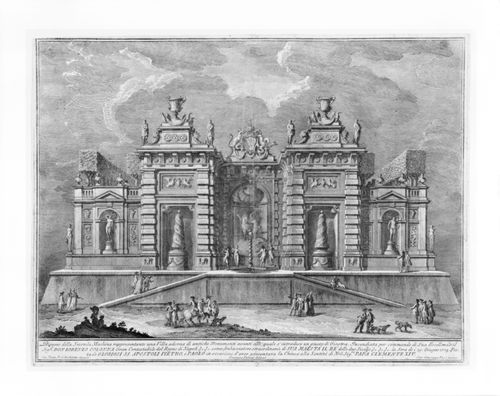
- This etching for a fireworks construction or macchina represents a villa decorated with antique statues,including busts, hermes, and full figure works.
DR1988:0437:049
Description:
- This etching for a fireworks construction or macchina represents a villa decorated with antique statues,including busts, hermes, and full figure works.
People:
Subject:
temporary architecture
temporary architecture
Date:
printed 1774
printed 1774
Title:
Etching of Posi's design for the "seconda macchina" of 1774
Actions:
DR1988:0437:049
Description:
- This etching for a fireworks construction or macchina represents a villa decorated with antique statues,including busts, hermes, and full figure works.
Etching of Posi's design for the "seconda macchina" of 1774
Actions:
DR1988:0437:049
Description:
- This etching for a fireworks construction or macchina represents a villa decorated with antique statues,including busts, hermes, and full figure works.
Form:
works of art
works of art
Date:
printed 1774
printed 1774
People:
Subject:
temporary architecture
temporary architecture
Form:
textual records
textual records
Actions:
Reference number:
ARCH277713
Description:
File's title: Certificado fin de obra, Estudio Gordillo. Contains correspondence, works completion certification, forms and pages from book of orders.
ARCH277713
Description:
File's title: Certificado fin de obra, Estudio Gordillo. Contains correspondence, works completion certification, forms and pages from book of orders.
People:
Date:
1999-2002
1999-2002
Title:
Various textual records in relation with the Colegio Oficial de Arquitectos de Madrid, Estudio Gordillo, Villanueva de la Cañada, Spain
Actions:
ARCH277713
Description:
File's title: Certificado fin de obra, Estudio Gordillo. Contains correspondence, works completion certification, forms and pages from book of orders.
Various textual records in relation with the Colegio Oficial de Arquitectos de Madrid, Estudio Gordillo, Villanueva de la Cañada, Spain
Actions:
ARCH277713
Description:
File's title: Certificado fin de obra, Estudio Gordillo. Contains correspondence, works completion certification, forms and pages from book of orders.
Form:
textual records
textual records
Date:
1999-2002
1999-2002
People:
Form:
exhibitions
exhibitions
Description:
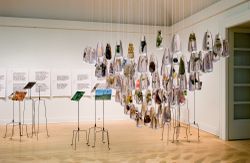
Environment: Approaches for Tomorrow broaches issues such as energy consumption and natural resources, the question of limiting humanity’s control of the environment, the search for renewable resources, and the optimal means to employ them. Through the work of French horticultural engineer and landscape architect Gilles Clément and Swiss architect Philippe Rahm, the(...)
Environment: Approaches for Tomorrow broaches issues such as energy consumption and natural resources, the question of limiting humanity’s control of the environment, the search for renewable resources, and the optimal means to employ them. Through the work of French horticultural engineer and landscape architect Gilles Clément and Swiss architect Philippe Rahm, the(...)
Location:
Main galleries
Main galleries
Date:
18 October 2006 to 10 June 2007
18 October 2006 to 10 June 2007
Title:
Environment: Approaches for Tomorrow
Actions:
Description:
Environment: Approaches for Tomorrow broaches issues such as energy consumption and natural resources, the question of limiting humanity’s control of the environment, the search for renewable resources, and the optimal means to employ them. Through the work of French horticultural engineer and landscape architect Gilles Clément and Swiss architect Philippe Rahm, the(...)
Environment: Approaches for Tomorrow
Actions:
Description:
Environment: Approaches for Tomorrow broaches issues such as energy consumption and natural resources, the question of limiting humanity’s control of the environment, the search for renewable resources, and the optimal means to employ them. Through the work of French horticultural engineer and landscape architect Gilles Clément and Swiss architect Philippe Rahm, the(...)
Form:
exhibitions
exhibitions
Date:
18 October 2006 to
10 June 2007
18 October 2006 to
10 June 2007
Location:
Main galleries
Main galleries


