


44178 Results
Form:
textual records
textual records
Actions:
Reference number:
ARCH253825
Description:
correspondence with Ministry in-charge of public works, memos, clippings, project management proposal, draft copies of report, data, research notes
ARCH253825
Description:
correspondence with Ministry in-charge of public works, memos, clippings, project management proposal, draft copies of report, data, research notes
People:
Date:
1968-1969
1968-1969
Title:
Maiquetia Airport Promotion 1968
Actions:
ARCH253825
Description:
correspondence with Ministry in-charge of public works, memos, clippings, project management proposal, draft copies of report, data, research notes
Maiquetia Airport Promotion 1968
Actions:
ARCH253825
Description:
correspondence with Ministry in-charge of public works, memos, clippings, project management proposal, draft copies of report, data, research notes
Form:
textual records
textual records
Date:
1968-1969
1968-1969
People:
Form:
drawings
drawings
Title:
Annotated sketches
Annotated sketches
Actions:
Reference number:
DR2004:1348
Description:
annotated sketches; these sketches are reproduced in 'Cedric Price: Works II' (p. 11) with the caption "looking at shopping, US"
DR2004:1348
Description:
annotated sketches; these sketches are reproduced in 'Cedric Price: Works II' (p. 11) with the caption "looking at shopping, US"
People:
Title:
Annotated sketches
Actions:
DR2004:1348
Description:
annotated sketches; these sketches are reproduced in 'Cedric Price: Works II' (p. 11) with the caption "looking at shopping, US"
Annotated sketches
Actions:
DR2004:1348
Description:
annotated sketches; these sketches are reproduced in 'Cedric Price: Works II' (p. 11) with the caption "looking at shopping, US"
Form:
drawings
drawings
People:
Form:
drawings
drawings
Actions:
Reference number:
ARCH3131
Description:
Détails de la plate-forme pour les trois dômes de la salle des pas perdus, détail de l'appui de la fenêtre no 23 / Union Architectural Iron Works, Montréal et atelier non identifié.
ARCH3131
Description:
Détails de la plate-forme pour les trois dômes de la salle des pas perdus, détail de l'appui de la fenêtre no 23 / Union Architectural Iron Works, Montréal et atelier non identifié.
People:
Date:
circa 1920
circa 1920
Title:
Details de la salle des pas perdus et détails de fenêtres
Actions:
ARCH3131
Description:
Détails de la plate-forme pour les trois dômes de la salle des pas perdus, détail de l'appui de la fenêtre no 23 / Union Architectural Iron Works, Montréal et atelier non identifié.
Details de la salle des pas perdus et détails de fenêtres
Actions:
ARCH3131
Description:
Détails de la plate-forme pour les trois dômes de la salle des pas perdus, détail de l'appui de la fenêtre no 23 / Union Architectural Iron Works, Montréal et atelier non identifié.
Form:
drawings
drawings
Date:
circa 1920
circa 1920
People:
Form:
photographs
photographs
Actions:
Reference number:
ARCH269095
Description:
Épreuves commandées par Jacqueline Jeanneret. Prints commissioned by Jacqueline Jeanneret.
ARCH269095
Description:
Épreuves commandées par Jacqueline Jeanneret. Prints commissioned by Jacqueline Jeanneret.
People:
Date:
between 1950 and 1966
between 1950 and 1966
Title:
Photographs of everyday life in Chandigarh, India
Actions:
ARCH269095
Description:
Épreuves commandées par Jacqueline Jeanneret. Prints commissioned by Jacqueline Jeanneret.
Photographs of everyday life in Chandigarh, India
Actions:
ARCH269095
Description:
Épreuves commandées par Jacqueline Jeanneret. Prints commissioned by Jacqueline Jeanneret.
Form:
photographs
photographs
Date:
between 1950 and 1966
between 1950 and 1966
People:
Level of archival description:
Series
Series
Title:
Photographic material
Photographic material
Reference number:
AP165.S4
Description:
Professional photographs of works and promotional photographic material showing images of works (toys, prototypes, models, built works) and of installations, and Hoberman's portraits, not dated and 1998, 2000. Material relates also to events Disney and LA Party, 1992; The Toy Fair, 1993; Iris Dome model in progress, 1993; Building MOMA exhibition, 1994, RCCL Icosaedron, 2000; Expo pre-installation at Liberty Science Centre, 2000.
AP165.S4
Description:
Professional photographs of works and promotional photographic material showing images of works (toys, prototypes, models, built works) and of installations, and Hoberman's portraits, not dated and 1998, 2000. Material relates also to events Disney and LA Party, 1992; The Toy Fair, 1993; Iris Dome model in progress, 1993; Building MOMA exhibition, 1994, RCCL Icosaedron, 2000; Expo pre-installation at Liberty Science Centre, 2000.
People:
Date:
1977-2003, predominant 1989-2003
1977-2003, predominant 1989-2003
Title:
Photographic material
Actions:
AP165.S4
Description:
Professional photographs of works and promotional photographic material showing images of works (toys, prototypes, models, built works) and of installations, and Hoberman's portraits, not dated and 1998, 2000. Material relates also to events Disney and LA Party, 1992; The Toy Fair, 1993; Iris Dome model in progress, 1993; Building MOMA exhibition, 1994, RCCL Icosaedron, 2000; Expo pre-installation at Liberty Science Centre, 2000.
Photographic material
Actions:
AP165.S4
Description:
Professional photographs of works and promotional photographic material showing images of works (toys, prototypes, models, built works) and of installations, and Hoberman's portraits, not dated and 1998, 2000. Material relates also to events Disney and LA Party, 1992; The Toy Fair, 1993; Iris Dome model in progress, 1993; Building MOMA exhibition, 1994, RCCL Icosaedron, 2000; Expo pre-installation at Liberty Science Centre, 2000.
Level of archival description:
Series 4
Series 4
Date:
1977-2003, predominant 1989-2003
1977-2003, predominant 1989-2003
People:
Level of archival description:
Project
Project
Actions:
Reference number:
AP143.S4.D108
Description:
The project series documents the executed project for Cites of Artificial Excavation, Madrid, Spain. Material in was produced between 1994 and 1995. In 1993, the CCA invited Peter Eisenman to design an installation for the exhibition 'Cities of Artificial Excavation: The Work of Peter Eisenman, 1978-1988'. The exhibition was presented at the CCA from 2 March to 29 May 1994. The drawings and models in this project series document the development of Eisenman's installation design from late 1993 through March 1994, as well as the various processes used by the architect in his investigation of the 'Cities of Artificial Excavation'. Eisenman uses a computer to superimpose, distort and multiply a Greek cross, while simultaneously modifying its plan and section. The computer enables the architect to generate geometric figures that are extremely difficult to produce by traditional means. It also constitutes a new phase in Eisenman's research into the depersonalization of the creative process, a central concern of his 'Cities of Artificial Excavation' (1978-1988). The Greek cross was one of the elements of the grid developed for the 'Museum of Artifical Excavation', and part of the project he submitted for the Internationale Bauausstellung in Berlin (1980-1986). The project series contains material by Eisenman's office including material for schemes A and B, the first and second proposals for the installation, as well as material for the exhibition installation. Material for scheme A includes conceptual drawings (DR1994:0030:001-005), hardline design development drawings (DR1994:0030:006-011), design development computer-aided drawings (DR1994:0030:012-027), and fully developed drawings (DR1994:0030:028-034). Material for scheme B, a design which is closer to the final project, includes hardline drawings (DR1994:0030:035-044) and computer-aided drawings (DR1994:0030:045-069). Material for the exhibition installation includes: computer-aided drawings (DR1994:0030:070-196) which were generated to construct models for the installation, notably a preliminary model (DR1994:0035) and the final model (DR1994:0036) which was used for planning the exhibition layout; hardline drawings which are the final drawings for the installation (DR1994:0030:262-265); a preliminary exhibition layout (DR1994:0030:280); and Iris colour prints of computer-aided conceptual axonometrics (DR1994:0030:281-282). Three working models show different stages of the design development (DR1994:0031 - DR1994:0034). Also included are photographs of the completed installation by Richard Pare (DR1994:0037:001-028), fragments of the installation preserved after its demolition (DR1994:0038:001-0028), and paint samples (DR1994:0038:035-037). The project series contains design development drawings, working drawings, photographic materials, publication drawings, reference drawings, textual records, and models.
AP143.S4.D108
Description:
The project series documents the executed project for Cites of Artificial Excavation, Madrid, Spain. Material in was produced between 1994 and 1995. In 1993, the CCA invited Peter Eisenman to design an installation for the exhibition 'Cities of Artificial Excavation: The Work of Peter Eisenman, 1978-1988'. The exhibition was presented at the CCA from 2 March to 29 May 1994. The drawings and models in this project series document the development of Eisenman's installation design from late 1993 through March 1994, as well as the various processes used by the architect in his investigation of the 'Cities of Artificial Excavation'. Eisenman uses a computer to superimpose, distort and multiply a Greek cross, while simultaneously modifying its plan and section. The computer enables the architect to generate geometric figures that are extremely difficult to produce by traditional means. It also constitutes a new phase in Eisenman's research into the depersonalization of the creative process, a central concern of his 'Cities of Artificial Excavation' (1978-1988). The Greek cross was one of the elements of the grid developed for the 'Museum of Artifical Excavation', and part of the project he submitted for the Internationale Bauausstellung in Berlin (1980-1986). The project series contains material by Eisenman's office including material for schemes A and B, the first and second proposals for the installation, as well as material for the exhibition installation. Material for scheme A includes conceptual drawings (DR1994:0030:001-005), hardline design development drawings (DR1994:0030:006-011), design development computer-aided drawings (DR1994:0030:012-027), and fully developed drawings (DR1994:0030:028-034). Material for scheme B, a design which is closer to the final project, includes hardline drawings (DR1994:0030:035-044) and computer-aided drawings (DR1994:0030:045-069). Material for the exhibition installation includes: computer-aided drawings (DR1994:0030:070-196) which were generated to construct models for the installation, notably a preliminary model (DR1994:0035) and the final model (DR1994:0036) which was used for planning the exhibition layout; hardline drawings which are the final drawings for the installation (DR1994:0030:262-265); a preliminary exhibition layout (DR1994:0030:280); and Iris colour prints of computer-aided conceptual axonometrics (DR1994:0030:281-282). Three working models show different stages of the design development (DR1994:0031 - DR1994:0034). Also included are photographs of the completed installation by Richard Pare (DR1994:0037:001-028), fragments of the installation preserved after its demolition (DR1994:0038:001-0028), and paint samples (DR1994:0038:035-037). The project series contains design development drawings, working drawings, photographic materials, publication drawings, reference drawings, textual records, and models.
People:
Date:
1994-1995
1994-1995
Title:
Cities of Artificial Excavation, Madrid
Actions:
AP143.S4.D108
Description:
The project series documents the executed project for Cites of Artificial Excavation, Madrid, Spain. Material in was produced between 1994 and 1995. In 1993, the CCA invited Peter Eisenman to design an installation for the exhibition 'Cities of Artificial Excavation: The Work of Peter Eisenman, 1978-1988'. The exhibition was presented at the CCA from 2 March to 29 May 1994. The drawings and models in this project series document the development of Eisenman's installation design from late 1993 through March 1994, as well as the various processes used by the architect in his investigation of the 'Cities of Artificial Excavation'. Eisenman uses a computer to superimpose, distort and multiply a Greek cross, while simultaneously modifying its plan and section. The computer enables the architect to generate geometric figures that are extremely difficult to produce by traditional means. It also constitutes a new phase in Eisenman's research into the depersonalization of the creative process, a central concern of his 'Cities of Artificial Excavation' (1978-1988). The Greek cross was one of the elements of the grid developed for the 'Museum of Artifical Excavation', and part of the project he submitted for the Internationale Bauausstellung in Berlin (1980-1986). The project series contains material by Eisenman's office including material for schemes A and B, the first and second proposals for the installation, as well as material for the exhibition installation. Material for scheme A includes conceptual drawings (DR1994:0030:001-005), hardline design development drawings (DR1994:0030:006-011), design development computer-aided drawings (DR1994:0030:012-027), and fully developed drawings (DR1994:0030:028-034). Material for scheme B, a design which is closer to the final project, includes hardline drawings (DR1994:0030:035-044) and computer-aided drawings (DR1994:0030:045-069). Material for the exhibition installation includes: computer-aided drawings (DR1994:0030:070-196) which were generated to construct models for the installation, notably a preliminary model (DR1994:0035) and the final model (DR1994:0036) which was used for planning the exhibition layout; hardline drawings which are the final drawings for the installation (DR1994:0030:262-265); a preliminary exhibition layout (DR1994:0030:280); and Iris colour prints of computer-aided conceptual axonometrics (DR1994:0030:281-282). Three working models show different stages of the design development (DR1994:0031 - DR1994:0034). Also included are photographs of the completed installation by Richard Pare (DR1994:0037:001-028), fragments of the installation preserved after its demolition (DR1994:0038:001-0028), and paint samples (DR1994:0038:035-037). The project series contains design development drawings, working drawings, photographic materials, publication drawings, reference drawings, textual records, and models.
Cities of Artificial Excavation, Madrid
Actions:
AP143.S4.D108
Description:
The project series documents the executed project for Cites of Artificial Excavation, Madrid, Spain. Material in was produced between 1994 and 1995. In 1993, the CCA invited Peter Eisenman to design an installation for the exhibition 'Cities of Artificial Excavation: The Work of Peter Eisenman, 1978-1988'. The exhibition was presented at the CCA from 2 March to 29 May 1994. The drawings and models in this project series document the development of Eisenman's installation design from late 1993 through March 1994, as well as the various processes used by the architect in his investigation of the 'Cities of Artificial Excavation'. Eisenman uses a computer to superimpose, distort and multiply a Greek cross, while simultaneously modifying its plan and section. The computer enables the architect to generate geometric figures that are extremely difficult to produce by traditional means. It also constitutes a new phase in Eisenman's research into the depersonalization of the creative process, a central concern of his 'Cities of Artificial Excavation' (1978-1988). The Greek cross was one of the elements of the grid developed for the 'Museum of Artifical Excavation', and part of the project he submitted for the Internationale Bauausstellung in Berlin (1980-1986). The project series contains material by Eisenman's office including material for schemes A and B, the first and second proposals for the installation, as well as material for the exhibition installation. Material for scheme A includes conceptual drawings (DR1994:0030:001-005), hardline design development drawings (DR1994:0030:006-011), design development computer-aided drawings (DR1994:0030:012-027), and fully developed drawings (DR1994:0030:028-034). Material for scheme B, a design which is closer to the final project, includes hardline drawings (DR1994:0030:035-044) and computer-aided drawings (DR1994:0030:045-069). Material for the exhibition installation includes: computer-aided drawings (DR1994:0030:070-196) which were generated to construct models for the installation, notably a preliminary model (DR1994:0035) and the final model (DR1994:0036) which was used for planning the exhibition layout; hardline drawings which are the final drawings for the installation (DR1994:0030:262-265); a preliminary exhibition layout (DR1994:0030:280); and Iris colour prints of computer-aided conceptual axonometrics (DR1994:0030:281-282). Three working models show different stages of the design development (DR1994:0031 - DR1994:0034). Also included are photographs of the completed installation by Richard Pare (DR1994:0037:001-028), fragments of the installation preserved after its demolition (DR1994:0038:001-0028), and paint samples (DR1994:0038:035-037). The project series contains design development drawings, working drawings, photographic materials, publication drawings, reference drawings, textual records, and models.
Level of archival description:
File 108
File 108
Date:
1994-1995
1994-1995
People:
Form:
exhibitions
exhibitions

Actions:
Description:
In 1973, following the strikes that beset the British construction industry during the early 1970s, Alistair McAlpine commissioned a design program for his construction company, Sir Robert McAlpine Sons, that aimed to increase production efficiency and improve labour relations. Cedric Price’s proposal took the format of a two-volume report and a Portable Enclosures(...)
In 1973, following the strikes that beset the British construction industry during the early 1970s, Alistair McAlpine commissioned a design program for his construction company, Sir Robert McAlpine Sons, that aimed to increase production efficiency and improve labour relations. Cedric Price’s proposal took the format of a two-volume report and a Portable Enclosures(...)
Date:
9 February 2017 to 14 May 2017
9 February 2017 to 14 May 2017
Title:
What About Happiness on the Building Site?
Actions:
Description:
In 1973, following the strikes that beset the British construction industry during the early 1970s, Alistair McAlpine commissioned a design program for his construction company, Sir Robert McAlpine Sons, that aimed to increase production efficiency and improve labour relations. Cedric Price’s proposal took the format of a two-volume report and a Portable Enclosures(...)
What About Happiness on the Building Site?
Actions:
Description:
In 1973, following the strikes that beset the British construction industry during the early 1970s, Alistair McAlpine commissioned a design program for his construction company, Sir Robert McAlpine Sons, that aimed to increase production efficiency and improve labour relations. Cedric Price’s proposal took the format of a two-volume report and a Portable Enclosures(...)
Form:
exhibitions
exhibitions
Date:
9 February 2017 to
14 May 2017
9 February 2017 to
14 May 2017
Form:
events
events

Actions:
Description:
In conjunction with the exhibition The Other Architect, Todd Rouhe and Rachel Himmelfarb of common room present the groups collaborative working process: This question—what’s the problem?—is central to how common room works. The question defines a process of searching, experiencing, interacting, and communicating that not only informs how we understand architecture and(...)
In conjunction with the exhibition The Other Architect, Todd Rouhe and Rachel Himmelfarb of common room present the groups collaborative working process: This question—what’s the problem?—is central to how common room works. The question defines a process of searching, experiencing, interacting, and communicating that not only informs how we understand architecture and(...)
Location:
Paul-Desmarais Theatre
Paul-Desmarais Theatre
Date:
19 November 2015
19 November 2015
Title:
common room: What's the Problem?
Actions:
Description:
In conjunction with the exhibition The Other Architect, Todd Rouhe and Rachel Himmelfarb of common room present the groups collaborative working process: This question—what’s the problem?—is central to how common room works. The question defines a process of searching, experiencing, interacting, and communicating that not only informs how we understand architecture and(...)
common room: What's the Problem?
Actions:
Description:
In conjunction with the exhibition The Other Architect, Todd Rouhe and Rachel Himmelfarb of common room present the groups collaborative working process: This question—what’s the problem?—is central to how common room works. The question defines a process of searching, experiencing, interacting, and communicating that not only informs how we understand architecture and(...)
Form:
events
events
Date:
19 November 2015
19 November 2015
Location:
Paul-Desmarais Theatre
Paul-Desmarais Theatre
Form:
events
events
Actions:
Description:
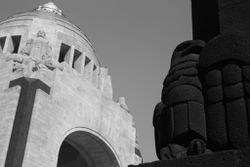
Visiting scholar Adam Morton presents his research: Under capitalism, how is space organized in our everyday lives through the streets we walk, the monuments we visit, and the places where we meet? This talk presents the making of modern state space in Mexico through the perspective of a spatial political economy. It will draw on my ongoing research on the production of(...)
Visiting scholar Adam Morton presents his research: Under capitalism, how is space organized in our everyday lives through the streets we walk, the monuments we visit, and the places where we meet? This talk presents the making of modern state space in Mexico through the perspective of a spatial political economy. It will draw on my ongoing research on the production of(...)
Location:
Shaughnessy House
Shaughnessy House
Date:
22 June 2017, 6pm
22 June 2017, 6pm
Title:
Visiting Scholar Seminar: Adam Morton
Actions:
Description:
Visiting scholar Adam Morton presents his research: Under capitalism, how is space organized in our everyday lives through the streets we walk, the monuments we visit, and the places where we meet? This talk presents the making of modern state space in Mexico through the perspective of a spatial political economy. It will draw on my ongoing research on the production of(...)
Visiting Scholar Seminar: Adam Morton
Actions:
Description:
Visiting scholar Adam Morton presents his research: Under capitalism, how is space organized in our everyday lives through the streets we walk, the monuments we visit, and the places where we meet? This talk presents the making of modern state space in Mexico through the perspective of a spatial political economy. It will draw on my ongoing research on the production of(...)
Form:
events
events
Date:
22 June 2017
6pm
22 June 2017
6pm
Location:
Shaughnessy House
Shaughnessy House
Level of archival description:
Project
Project
Actions:
Reference number:
AP046.S1.1983.PR02
Description:
This project documents Rose’s involvement with the design phase of the Old Port of Montreal Master Plan, Montréal, Québec and consists mainly of sketches, studies and presentation drawings for the redevelopment project with very few as built or architectural plans. The project materials reflect a Romantic design aesthetic and landscape development through numerous architectural design drawings for public amenities such as park benches, pedestrian walkways, various lighting sources, pavilions and fountains. This project also includes some of Rose’s submissions to the Faubourg Quebec development project which ran concurrent with the Old Port project. For the redevelopment of the Old Port of Montréal, Master Plan, Rose worked with the following firms: Cardinal Hardy e Associes, Chan Krieger & Associates, and Jodoin Lamarre Pratt. Rose was awarded a Progressive Architecture Urban Design Award (1992) and a Prix d’excellence for Urban Design from the Ordre des architectes du Québec (1993) for the realization of this urban project. The textual records in this project include budgets, correspondence, consultation documents, and intra office communiques as well as extensive research material on the history of the Old Port of Montreal including reproductions of historical photographs. The photographs in this project largely reflect the condition of the Old Port and Rue de la Commune prior to redevelopment and were used for reference and in presentation materials.
AP046.S1.1983.PR02
Description:
This project documents Rose’s involvement with the design phase of the Old Port of Montreal Master Plan, Montréal, Québec and consists mainly of sketches, studies and presentation drawings for the redevelopment project with very few as built or architectural plans. The project materials reflect a Romantic design aesthetic and landscape development through numerous architectural design drawings for public amenities such as park benches, pedestrian walkways, various lighting sources, pavilions and fountains. This project also includes some of Rose’s submissions to the Faubourg Quebec development project which ran concurrent with the Old Port project. For the redevelopment of the Old Port of Montréal, Master Plan, Rose worked with the following firms: Cardinal Hardy e Associes, Chan Krieger & Associates, and Jodoin Lamarre Pratt. Rose was awarded a Progressive Architecture Urban Design Award (1992) and a Prix d’excellence for Urban Design from the Ordre des architectes du Québec (1993) for the realization of this urban project. The textual records in this project include budgets, correspondence, consultation documents, and intra office communiques as well as extensive research material on the history of the Old Port of Montreal including reproductions of historical photographs. The photographs in this project largely reflect the condition of the Old Port and Rue de la Commune prior to redevelopment and were used for reference and in presentation materials.
People:
Date:
1983-1992
1983-1992
Title:
Old Port of Montreal Master Plan, Montréal, Québec
Actions:
AP046.S1.1983.PR02
Description:
This project documents Rose’s involvement with the design phase of the Old Port of Montreal Master Plan, Montréal, Québec and consists mainly of sketches, studies and presentation drawings for the redevelopment project with very few as built or architectural plans. The project materials reflect a Romantic design aesthetic and landscape development through numerous architectural design drawings for public amenities such as park benches, pedestrian walkways, various lighting sources, pavilions and fountains. This project also includes some of Rose’s submissions to the Faubourg Quebec development project which ran concurrent with the Old Port project. For the redevelopment of the Old Port of Montréal, Master Plan, Rose worked with the following firms: Cardinal Hardy e Associes, Chan Krieger & Associates, and Jodoin Lamarre Pratt. Rose was awarded a Progressive Architecture Urban Design Award (1992) and a Prix d’excellence for Urban Design from the Ordre des architectes du Québec (1993) for the realization of this urban project. The textual records in this project include budgets, correspondence, consultation documents, and intra office communiques as well as extensive research material on the history of the Old Port of Montreal including reproductions of historical photographs. The photographs in this project largely reflect the condition of the Old Port and Rue de la Commune prior to redevelopment and were used for reference and in presentation materials.
Old Port of Montreal Master Plan, Montréal, Québec
Actions:
AP046.S1.1983.PR02
Description:
This project documents Rose’s involvement with the design phase of the Old Port of Montreal Master Plan, Montréal, Québec and consists mainly of sketches, studies and presentation drawings for the redevelopment project with very few as built or architectural plans. The project materials reflect a Romantic design aesthetic and landscape development through numerous architectural design drawings for public amenities such as park benches, pedestrian walkways, various lighting sources, pavilions and fountains. This project also includes some of Rose’s submissions to the Faubourg Quebec development project which ran concurrent with the Old Port project. For the redevelopment of the Old Port of Montréal, Master Plan, Rose worked with the following firms: Cardinal Hardy e Associes, Chan Krieger & Associates, and Jodoin Lamarre Pratt. Rose was awarded a Progressive Architecture Urban Design Award (1992) and a Prix d’excellence for Urban Design from the Ordre des architectes du Québec (1993) for the realization of this urban project. The textual records in this project include budgets, correspondence, consultation documents, and intra office communiques as well as extensive research material on the history of the Old Port of Montreal including reproductions of historical photographs. The photographs in this project largely reflect the condition of the Old Port and Rue de la Commune prior to redevelopment and were used for reference and in presentation materials.
Level of archival description:
Project
Project
Date:
1983-1992
1983-1992
People:


