


29901 Results
Form:
films
films
Title:
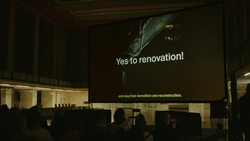
To Build Law
To Build Law
Actions:
Description:
To Build Law is the second chapter of Groundwork, a three-part film and exhibition series exploring the conceptual development and field research of contemporary architects cultivating alternative modes of practice.
To Build Law is the second chapter of Groundwork, a three-part film and exhibition series exploring the conceptual development and field research of contemporary architects cultivating alternative modes of practice.
Keyword(s):
Berlin, HouseEurope!, bplus, Arno Brandlhuber, Francesco Garutti, To Build Law, groundwork, ecology
Berlin, HouseEurope!, bplus, Arno Brandlhuber, Francesco Garutti, To Build Law, groundwork, ecology
Date:
2024
2024
Title:
To Build Law
Actions:
Description:
To Build Law is the second chapter of Groundwork, a three-part film and exhibition series exploring the conceptual development and field research of contemporary architects cultivating alternative modes of practice.
To Build Law
Actions:
Description:
To Build Law is the second chapter of Groundwork, a three-part film and exhibition series exploring the conceptual development and field research of contemporary architects cultivating alternative modes of practice.
Form:
films
films
Date:
2024 to
2024
2024 to
2024
Keyword(s):
Berlin, HouseEurope!, bplus, Arno Brandlhuber, Francesco Garutti, To Build Law, groundwork, ecology
Berlin, HouseEurope!, bplus, Arno Brandlhuber, Francesco Garutti, To Build Law, groundwork, ecology
Title:
Sculpture/Nature
Sculpture/Nature
Actions:
Reference number:
PH2006:0272
Description:
This is a catalogue for the exhibition "Sculpture/Nature", held at the Centre d'Arts Plastique Contemporains de Bordeaux, between 1 May - 1 July 1978, in which Gordon Matta-Clark's work was exhibited.
PH2006:0272
Description:
This is a catalogue for the exhibition "Sculpture/Nature", held at the Centre d'Arts Plastique Contemporains de Bordeaux, between 1 May - 1 July 1978, in which Gordon Matta-Clark's work was exhibited.
People:
Date:
published 1978
published 1978
Title:
Sculpture/Nature
Actions:
PH2006:0272
Description:
This is a catalogue for the exhibition "Sculpture/Nature", held at the Centre d'Arts Plastique Contemporains de Bordeaux, between 1 May - 1 July 1978, in which Gordon Matta-Clark's work was exhibited.
Sculpture/Nature
Actions:
PH2006:0272
Description:
This is a catalogue for the exhibition "Sculpture/Nature", held at the Centre d'Arts Plastique Contemporains de Bordeaux, between 1 May - 1 July 1978, in which Gordon Matta-Clark's work was exhibited.
Date:
published 1978
published 1978
People:
Form:
books
books
Title:
Stones
Stones
Actions:
Reference number:
PH2023:0012
Description:
Copy of the mock-up for the book "Stones," which was commissioned by the CCA for the exhibition The Lives of Documents—Photography as Project, on view from 3 May 2023 to 7 April 2024.
PH2023:0012
Description:
Copy of the mock-up for the book "Stones," which was commissioned by the CCA for the exhibition The Lives of Documents—Photography as Project, on view from 3 May 2023 to 7 April 2024.
People:
Date:
2023
2023
Title:
Stones
Actions:
PH2023:0012
Description:
Copy of the mock-up for the book "Stones," which was commissioned by the CCA for the exhibition The Lives of Documents—Photography as Project, on view from 3 May 2023 to 7 April 2024.
Stones
Actions:
PH2023:0012
Description:
Copy of the mock-up for the book "Stones," which was commissioned by the CCA for the exhibition The Lives of Documents—Photography as Project, on view from 3 May 2023 to 7 April 2024.
Form:
books
books
Date:
2023
2023
People:
Form:
archives
Level of archival description:
Fonds
archives
Level of archival description:
Fonds
Title:
Myron Goldsmith fonds
Myron Goldsmith fonds
Reference number:
AP032
Synopsis:
The Myron Goldsmith fonds consists primarily of 30.4 metres of textual documents, including notebooks, research and reading notes, travel journals, documentation files, correspondence, sketchbooks and personal and office papers. There are also 2,800 original drawings and prints, 10,000 photographs and slides, and 5 architectural models. The material ranges in date from c.1933 to 1996. In shedding light on Goldsmith's student years and working career, the fonds' rich collection of documents also provides material on activities in the architectural profession, architectural education, and architectural and engineering theory and building techniques through the 1940s to the 1990s.
AP032
Synopsis:
The Myron Goldsmith fonds consists primarily of 30.4 metres of textual documents, including notebooks, research and reading notes, travel journals, documentation files, correspondence, sketchbooks and personal and office papers. There are also 2,800 original drawings and prints, 10,000 photographs and slides, and 5 architectural models. The material ranges in date from c.1933 to 1996. In shedding light on Goldsmith's student years and working career, the fonds' rich collection of documents also provides material on activities in the architectural profession, architectural education, and architectural and engineering theory and building techniques through the 1940s to the 1990s.
People:
Date:
1933-1996
1933-1996
Title:
Myron Goldsmith fonds
Actions:
AP032
Synopsis:
The Myron Goldsmith fonds consists primarily of 30.4 metres of textual documents, including notebooks, research and reading notes, travel journals, documentation files, correspondence, sketchbooks and personal and office papers. There are also 2,800 original drawings and prints, 10,000 photographs and slides, and 5 architectural models. The material ranges in date from c.1933 to 1996. In shedding light on Goldsmith's student years and working career, the fonds' rich collection of documents also provides material on activities in the architectural profession, architectural education, and architectural and engineering theory and building techniques through the 1940s to the 1990s.
Myron Goldsmith fonds
Actions:
AP032
Synopsis:
The Myron Goldsmith fonds consists primarily of 30.4 metres of textual documents, including notebooks, research and reading notes, travel journals, documentation files, correspondence, sketchbooks and personal and office papers. There are also 2,800 original drawings and prints, 10,000 photographs and slides, and 5 architectural models. The material ranges in date from c.1933 to 1996. In shedding light on Goldsmith's student years and working career, the fonds' rich collection of documents also provides material on activities in the architectural profession, architectural education, and architectural and engineering theory and building techniques through the 1940s to the 1990s.
Form:
archives
Level of archival description:
Fonds
archives
Level of archival description:
Fonds
Date:
1933-1996
1933-1996
People:
Level of archival description:
Project
Project
Reference number:
AP164.S1.2002.D16
Description:
The project series documents the competition entry for the development of the International fair of the South, in the municipality of Getafe, Spain. The firm identified this project as number 159a. “The project puts the emphasis on two esencial [sic] questions: on the one hand a system which allows to resolve the fair’s pavillons simple and elegantly joining criteria of light, structure and water in a system of constructive rationality and average economy. On the other han[d a]n organization of the public and constructed space in phases which allow to understand the technology area of the south as something complete and shaped since the first of them has been developed. The proposed exhibition pavillions [sic] come from a technical reasoning based in the balance of structural width, central light and drainage of the roof, a result of several projects of similar scale which the office has developed in the last years.” (ARCH270975) Abalos & Herreros initially grouped this project with the competition Fira 2000 - Barcelona (AP164.S1.2002.D14). Documenting the project are presentation drawings, project descriptions, correspondence, studies, competition documents and specifications.
AP164.S1.2002.D16
Description:
The project series documents the competition entry for the development of the International fair of the South, in the municipality of Getafe, Spain. The firm identified this project as number 159a. “The project puts the emphasis on two esencial [sic] questions: on the one hand a system which allows to resolve the fair’s pavillons simple and elegantly joining criteria of light, structure and water in a system of constructive rationality and average economy. On the other han[d a]n organization of the public and constructed space in phases which allow to understand the technology area of the south as something complete and shaped since the first of them has been developed. The proposed exhibition pavillions [sic] come from a technical reasoning based in the balance of structural width, central light and drainage of the roof, a result of several projects of similar scale which the office has developed in the last years.” (ARCH270975) Abalos & Herreros initially grouped this project with the competition Fira 2000 - Barcelona (AP164.S1.2002.D14). Documenting the project are presentation drawings, project descriptions, correspondence, studies, competition documents and specifications.
People:
Date:
circa 2002-2003
circa 2002-2003
Title:
Fisur-Getafe (Concurso), Getafe, Spain (2002)
Actions:
AP164.S1.2002.D16
Description:
The project series documents the competition entry for the development of the International fair of the South, in the municipality of Getafe, Spain. The firm identified this project as number 159a. “The project puts the emphasis on two esencial [sic] questions: on the one hand a system which allows to resolve the fair’s pavillons simple and elegantly joining criteria of light, structure and water in a system of constructive rationality and average economy. On the other han[d a]n organization of the public and constructed space in phases which allow to understand the technology area of the south as something complete and shaped since the first of them has been developed. The proposed exhibition pavillions [sic] come from a technical reasoning based in the balance of structural width, central light and drainage of the roof, a result of several projects of similar scale which the office has developed in the last years.” (ARCH270975) Abalos & Herreros initially grouped this project with the competition Fira 2000 - Barcelona (AP164.S1.2002.D14). Documenting the project are presentation drawings, project descriptions, correspondence, studies, competition documents and specifications.
Fisur-Getafe (Concurso), Getafe, Spain (2002)
Actions:
AP164.S1.2002.D16
Description:
The project series documents the competition entry for the development of the International fair of the South, in the municipality of Getafe, Spain. The firm identified this project as number 159a. “The project puts the emphasis on two esencial [sic] questions: on the one hand a system which allows to resolve the fair’s pavillons simple and elegantly joining criteria of light, structure and water in a system of constructive rationality and average economy. On the other han[d a]n organization of the public and constructed space in phases which allow to understand the technology area of the south as something complete and shaped since the first of them has been developed. The proposed exhibition pavillions [sic] come from a technical reasoning based in the balance of structural width, central light and drainage of the roof, a result of several projects of similar scale which the office has developed in the last years.” (ARCH270975) Abalos & Herreros initially grouped this project with the competition Fira 2000 - Barcelona (AP164.S1.2002.D14). Documenting the project are presentation drawings, project descriptions, correspondence, studies, competition documents and specifications.
Level of archival description:
Project
Project
Date:
circa 2002-2003
circa 2002-2003
People:
Level of archival description:
Series
Series
Title:
Architectural projects
Architectural projects
Reference number:
AP180.S1
Description:
This series documents the architectural projects of Umberto Riva from the 1960s to the mid-2000s. Most of these projects were undertaken for sites in Italy, with the exception of Apartment Mieli (1994) in the United States and a project for a new settlement in the Oued Touil valley, Algeria (1980). The series contains original drawings and some reprographic copies for various private residences, such as Casa Frea (1983) and Casa Insinga (1987) in Milan. Riva's projects for industrial buildings are also represented, for example his work for the thermoelectric power plant Centrale Edison in Torviscosa, Italy (2003). Also documented are Riva's designs for public spaces, such as his work for the Piazza San Nazaro (1989) in Milan and proposals for the redevelopment of historical neighbourhoods in Otranto (1987) and in Binago (1988), as well as designs for shops and private entreprises. Furthermore, this series contains materials related to redesigns for gallery spaces, such as redesigns for the Centro Palladio in Vicenza (1999) and the Palazzo dell'Arte in Milan (1995). Projects for exhibition installations by Riva are arranged in series AP180.S3.
AP180.S1
Description:
This series documents the architectural projects of Umberto Riva from the 1960s to the mid-2000s. Most of these projects were undertaken for sites in Italy, with the exception of Apartment Mieli (1994) in the United States and a project for a new settlement in the Oued Touil valley, Algeria (1980). The series contains original drawings and some reprographic copies for various private residences, such as Casa Frea (1983) and Casa Insinga (1987) in Milan. Riva's projects for industrial buildings are also represented, for example his work for the thermoelectric power plant Centrale Edison in Torviscosa, Italy (2003). Also documented are Riva's designs for public spaces, such as his work for the Piazza San Nazaro (1989) in Milan and proposals for the redevelopment of historical neighbourhoods in Otranto (1987) and in Binago (1988), as well as designs for shops and private entreprises. Furthermore, this series contains materials related to redesigns for gallery spaces, such as redesigns for the Centro Palladio in Vicenza (1999) and the Palazzo dell'Arte in Milan (1995). Projects for exhibition installations by Riva are arranged in series AP180.S3.
People:
Date:
1960-2007
1960-2007
Title:
Architectural projects
Actions:
AP180.S1
Description:
This series documents the architectural projects of Umberto Riva from the 1960s to the mid-2000s. Most of these projects were undertaken for sites in Italy, with the exception of Apartment Mieli (1994) in the United States and a project for a new settlement in the Oued Touil valley, Algeria (1980). The series contains original drawings and some reprographic copies for various private residences, such as Casa Frea (1983) and Casa Insinga (1987) in Milan. Riva's projects for industrial buildings are also represented, for example his work for the thermoelectric power plant Centrale Edison in Torviscosa, Italy (2003). Also documented are Riva's designs for public spaces, such as his work for the Piazza San Nazaro (1989) in Milan and proposals for the redevelopment of historical neighbourhoods in Otranto (1987) and in Binago (1988), as well as designs for shops and private entreprises. Furthermore, this series contains materials related to redesigns for gallery spaces, such as redesigns for the Centro Palladio in Vicenza (1999) and the Palazzo dell'Arte in Milan (1995). Projects for exhibition installations by Riva are arranged in series AP180.S3.
Architectural projects
Actions:
AP180.S1
Description:
This series documents the architectural projects of Umberto Riva from the 1960s to the mid-2000s. Most of these projects were undertaken for sites in Italy, with the exception of Apartment Mieli (1994) in the United States and a project for a new settlement in the Oued Touil valley, Algeria (1980). The series contains original drawings and some reprographic copies for various private residences, such as Casa Frea (1983) and Casa Insinga (1987) in Milan. Riva's projects for industrial buildings are also represented, for example his work for the thermoelectric power plant Centrale Edison in Torviscosa, Italy (2003). Also documented are Riva's designs for public spaces, such as his work for the Piazza San Nazaro (1989) in Milan and proposals for the redevelopment of historical neighbourhoods in Otranto (1987) and in Binago (1988), as well as designs for shops and private entreprises. Furthermore, this series contains materials related to redesigns for gallery spaces, such as redesigns for the Centro Palladio in Vicenza (1999) and the Palazzo dell'Arte in Milan (1995). Projects for exhibition installations by Riva are arranged in series AP180.S3.
Level of archival description:
Series
Series
Date:
1960-2007
1960-2007
People:
Form:
textual records
textual records
Actions:
Reference number:
DR2012:0012:088:026
Description:
File containing documents in English, including personal correspondence between Melvin Charney and his family, an exhibition catalogue for selected works by Jewish artists, and Melvin Charney's American social security card.
DR2012:0012:088:026
Description:
File containing documents in English, including personal correspondence between Melvin Charney and his family, an exhibition catalogue for selected works by Jewish artists, and Melvin Charney's American social security card.
People:
Date:
1958-1964
1958-1964
Title:
Personnal correspondence of Melvin Charney with family
Actions:
DR2012:0012:088:026
Description:
File containing documents in English, including personal correspondence between Melvin Charney and his family, an exhibition catalogue for selected works by Jewish artists, and Melvin Charney's American social security card.
Personnal correspondence of Melvin Charney with family
Actions:
DR2012:0012:088:026
Description:
File containing documents in English, including personal correspondence between Melvin Charney and his family, an exhibition catalogue for selected works by Jewish artists, and Melvin Charney's American social security card.
Form:
textual records
textual records
Date:
1958-1964
1958-1964
People:
Form:
exhibitions
exhibitions

Actions:
Description:
During the Second World War, exhibitions and publications played a critical role in the war effort. They were organized internationally as moments of reflection and propaganda, productions of a disciplinary approach to architecture and urban design. This display springs from Jean-Louis Cohen’s research for Architecture in Uniform: Designing and Building for the Second(...)
During the Second World War, exhibitions and publications played a critical role in the war effort. They were organized internationally as moments of reflection and propaganda, productions of a disciplinary approach to architecture and urban design. This display springs from Jean-Louis Cohen’s research for Architecture in Uniform: Designing and Building for the Second(...)
Location:
Hall cases
Hall cases
Date:
13 April 2011 to 18 September 2011
13 April 2011 to 18 September 2011
Title:
A Paper War: Pictures and words, 1939-1945
Actions:
Description:
During the Second World War, exhibitions and publications played a critical role in the war effort. They were organized internationally as moments of reflection and propaganda, productions of a disciplinary approach to architecture and urban design. This display springs from Jean-Louis Cohen’s research for Architecture in Uniform: Designing and Building for the Second(...)
A Paper War: Pictures and words, 1939-1945
Actions:
Description:
During the Second World War, exhibitions and publications played a critical role in the war effort. They were organized internationally as moments of reflection and propaganda, productions of a disciplinary approach to architecture and urban design. This display springs from Jean-Louis Cohen’s research for Architecture in Uniform: Designing and Building for the Second(...)
Form:
exhibitions
exhibitions
Date:
13 April 2011 to
18 September 2011
13 April 2011 to
18 September 2011
Location:
Hall cases
Hall cases
Form:
events
events
Actions:
Description:
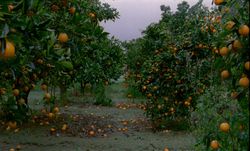
As part of our exhibition The fortune of the city is that it has never been perfect, Cinéma Public presents a series of three evenings in Parc Baile bringing together film screenings and workshops.
As part of our exhibition The fortune of the city is that it has never been perfect, Cinéma Public presents a series of three evenings in Parc Baile bringing together film screenings and workshops.
Location:
Parc Baile
Parc Baile
Date:
27 August 2026
27 August 2026
Title:
Ciné-Façade: Inhabiting the Imperfect
Actions:
Description:
As part of our exhibition The fortune of the city is that it has never been perfect, Cinéma Public presents a series of three evenings in Parc Baile bringing together film screenings and workshops.
Ciné-Façade: Inhabiting the Imperfect
Actions:
Description:
As part of our exhibition The fortune of the city is that it has never been perfect, Cinéma Public presents a series of three evenings in Parc Baile bringing together film screenings and workshops.
Form:
events
events
Date:
27 August 2026
27 August 2026
Location:
Parc Baile
Parc Baile
Form:
archives
Level of archival description:
Fonds
archives
Level of archival description:
Fonds
Title:
Aditya Prakash fonds
Aditya Prakash fonds
Reference number:
AP206
Synopsis:
The Aditya Prakash fonds documents the professional practice of modernist Indian architect Aditya Prakash from his studies in London in 1947 to his death in 2008. His seminal work as a junior architect on the Chandigarh Capitol Project in the 1950s is recorded along with documentation from his solo career after 1960, including approximately 82 architectural projects. His professional work as an artist, photographer, writer, academic and theatre enthusiast are also well documented through drawings, photographic materials and textual records.
AP206
Synopsis:
The Aditya Prakash fonds documents the professional practice of modernist Indian architect Aditya Prakash from his studies in London in 1947 to his death in 2008. His seminal work as a junior architect on the Chandigarh Capitol Project in the 1950s is recorded along with documentation from his solo career after 1960, including approximately 82 architectural projects. His professional work as an artist, photographer, writer, academic and theatre enthusiast are also well documented through drawings, photographic materials and textual records.
People:
Date:
1947-2008
1947-2008
Title:
Aditya Prakash fonds
Actions:
AP206
Synopsis:
The Aditya Prakash fonds documents the professional practice of modernist Indian architect Aditya Prakash from his studies in London in 1947 to his death in 2008. His seminal work as a junior architect on the Chandigarh Capitol Project in the 1950s is recorded along with documentation from his solo career after 1960, including approximately 82 architectural projects. His professional work as an artist, photographer, writer, academic and theatre enthusiast are also well documented through drawings, photographic materials and textual records.
Aditya Prakash fonds
Actions:
AP206
Synopsis:
The Aditya Prakash fonds documents the professional practice of modernist Indian architect Aditya Prakash from his studies in London in 1947 to his death in 2008. His seminal work as a junior architect on the Chandigarh Capitol Project in the 1950s is recorded along with documentation from his solo career after 1960, including approximately 82 architectural projects. His professional work as an artist, photographer, writer, academic and theatre enthusiast are also well documented through drawings, photographic materials and textual records.
Form:
archives
Level of archival description:
Fonds
archives
Level of archival description:
Fonds
Date:
1947-2008
1947-2008
People:


