


3077 Results
Level of archival description:
Project
Project
Actions:
Reference number:
AP018.S1.1976.PR13
Description:
This project series documents the site development of an office building for J. Douglas Crashley in downtown Toronto from 1976-1977. The office identified the project number as 7618. During this time, J. Douglas Crashley, a prominent Toronto entrepreneur, sought to develop an office building in downtown Toronto. The site was located at the corner of Front and York Streets, with the project consisting of a proposed eight storey office building with retail spaces and underground parking. This site development also proposed connections to nearby attractions such as the CN Tower, Union Station and Congress Centre. The project is often referred to as the Walker House Hotel, due to the fact that it was the building located on the property at this time. Three years earlier, in 1973, J.D. Crashley had commissioned a site investigation of various locations in downtown Toronto for his office building, including this site, which was completed under a different project number assigned by the office (see project series AP018.S1.1973.PR13, also described in this fonds). The project is recorded through correspondence dating from 1977.
AP018.S1.1976.PR13
Description:
This project series documents the site development of an office building for J. Douglas Crashley in downtown Toronto from 1976-1977. The office identified the project number as 7618. During this time, J. Douglas Crashley, a prominent Toronto entrepreneur, sought to develop an office building in downtown Toronto. The site was located at the corner of Front and York Streets, with the project consisting of a proposed eight storey office building with retail spaces and underground parking. This site development also proposed connections to nearby attractions such as the CN Tower, Union Station and Congress Centre. The project is often referred to as the Walker House Hotel, due to the fact that it was the building located on the property at this time. Three years earlier, in 1973, J.D. Crashley had commissioned a site investigation of various locations in downtown Toronto for his office building, including this site, which was completed under a different project number assigned by the office (see project series AP018.S1.1973.PR13, also described in this fonds). The project is recorded through correspondence dating from 1977.
People:
Date:
1977
1977
Title:
Office Building for J.D. Crashley, Site Development, Toronto (1976-1977)
Actions:
AP018.S1.1976.PR13
Description:
This project series documents the site development of an office building for J. Douglas Crashley in downtown Toronto from 1976-1977. The office identified the project number as 7618. During this time, J. Douglas Crashley, a prominent Toronto entrepreneur, sought to develop an office building in downtown Toronto. The site was located at the corner of Front and York Streets, with the project consisting of a proposed eight storey office building with retail spaces and underground parking. This site development also proposed connections to nearby attractions such as the CN Tower, Union Station and Congress Centre. The project is often referred to as the Walker House Hotel, due to the fact that it was the building located on the property at this time. Three years earlier, in 1973, J.D. Crashley had commissioned a site investigation of various locations in downtown Toronto for his office building, including this site, which was completed under a different project number assigned by the office (see project series AP018.S1.1973.PR13, also described in this fonds). The project is recorded through correspondence dating from 1977.
Office Building for J.D. Crashley, Site Development, Toronto (1976-1977)
Actions:
AP018.S1.1976.PR13
Description:
This project series documents the site development of an office building for J. Douglas Crashley in downtown Toronto from 1976-1977. The office identified the project number as 7618. During this time, J. Douglas Crashley, a prominent Toronto entrepreneur, sought to develop an office building in downtown Toronto. The site was located at the corner of Front and York Streets, with the project consisting of a proposed eight storey office building with retail spaces and underground parking. This site development also proposed connections to nearby attractions such as the CN Tower, Union Station and Congress Centre. The project is often referred to as the Walker House Hotel, due to the fact that it was the building located on the property at this time. Three years earlier, in 1973, J.D. Crashley had commissioned a site investigation of various locations in downtown Toronto for his office building, including this site, which was completed under a different project number assigned by the office (see project series AP018.S1.1973.PR13, also described in this fonds). The project is recorded through correspondence dating from 1977.
Level of archival description:
Project
Project
Date:
1977
1977
People:
Level of archival description:
Project
Project
Title:
Winnipeg Project
Winnipeg Project
Actions:
Reference number:
AP022.S1.1969.PR08
Description:
File documents a central core complex of multiple towers on a city block (not built) , Winnipeg, Manitoba. File contains design development drawings and rextual records.
AP022.S1.1969.PR08
Description:
File documents a central core complex of multiple towers on a city block (not built) , Winnipeg, Manitoba. File contains design development drawings and rextual records.
People:
Date:
1969-1971
1969-1971
Title:
Winnipeg Project
Actions:
AP022.S1.1969.PR08
Description:
File documents a central core complex of multiple towers on a city block (not built) , Winnipeg, Manitoba. File contains design development drawings and rextual records.
Winnipeg Project
Actions:
AP022.S1.1969.PR08
Description:
File documents a central core complex of multiple towers on a city block (not built) , Winnipeg, Manitoba. File contains design development drawings and rextual records.
Level of archival description:
Project
Project
Date:
1969-1971
1969-1971
People:
Form:
works of art
works of art
Title:
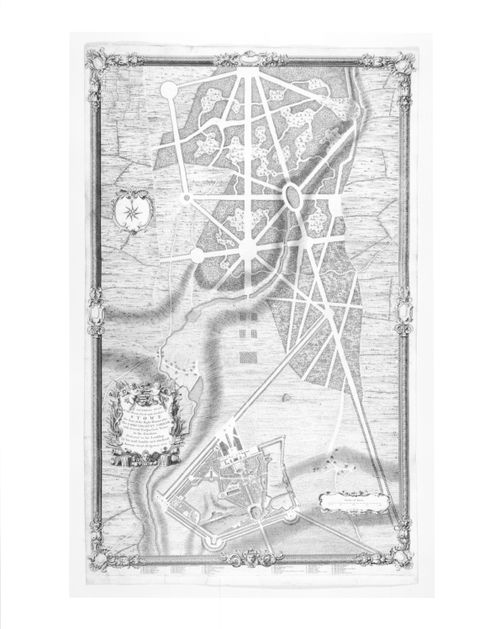
General plan of Stowe
General plan of Stowe
Actions:
Reference number:
DR1982:0096:001
Description:
- A plan (with legend) of Stowe gardens (defined by an irregular pentagon at the bottom of the print), together with the layout of the forest garden stretching north beyond the garden boundry and containing long intersecting rides cut through the woodlands. An elaborate cartouche (lower left), formed of military paraphernalia, encloses a dedication to Viscount Cobham, owner of the property. - The marbled and leather-edged portfolio in which the prints were acquired is stored separately in a solander box (size IV).
DR1982:0096:001
Description:
- A plan (with legend) of Stowe gardens (defined by an irregular pentagon at the bottom of the print), together with the layout of the forest garden stretching north beyond the garden boundry and containing long intersecting rides cut through the woodlands. An elaborate cartouche (lower left), formed of military paraphernalia, encloses a dedication to Viscount Cobham, owner of the property. - The marbled and leather-edged portfolio in which the prints were acquired is stored separately in a solander box (size IV).
People:
Subject:
architecture, landscape architecture
architecture, landscape architecture
Date:
designed ca. 1738
designed ca. 1738
Title:
General plan of Stowe
Actions:
DR1982:0096:001
Description:
- A plan (with legend) of Stowe gardens (defined by an irregular pentagon at the bottom of the print), together with the layout of the forest garden stretching north beyond the garden boundry and containing long intersecting rides cut through the woodlands. An elaborate cartouche (lower left), formed of military paraphernalia, encloses a dedication to Viscount Cobham, owner of the property. - The marbled and leather-edged portfolio in which the prints were acquired is stored separately in a solander box (size IV).
General plan of Stowe
Actions:
DR1982:0096:001
Description:
- A plan (with legend) of Stowe gardens (defined by an irregular pentagon at the bottom of the print), together with the layout of the forest garden stretching north beyond the garden boundry and containing long intersecting rides cut through the woodlands. An elaborate cartouche (lower left), formed of military paraphernalia, encloses a dedication to Viscount Cobham, owner of the property. - The marbled and leather-edged portfolio in which the prints were acquired is stored separately in a solander box (size IV).
Form:
works of art
works of art
Date:
designed ca. 1738
designed ca. 1738
People:
Subject:
architecture, landscape architecture
architecture, landscape architecture
Level of archival description:
Project
Project
Title:
Residence of Mr. and Mrs. C. M. Black, Alterations and Additions, North York, Ontario (1980-1982)
Residence of Mr. and Mrs. C. M. Black, Alterations and Additions, North York, Ontario (1980-1982)
Actions:
Reference number:
AP018.S1.1980.PR05
Description:
This project series documents alterations and additions to the home of Conrad and Shirley Black in North York, Ontario from 1980-1982. The office identified the project number as 8007. This project consisted of extensive alterations to the interior of the four-floor Black residence, as well as additions on all sides of the exterior facade. This project also included landscaping to the surrounding property. The extended exterior was finished in brick. Alterations and upgrades were made to almost every room in the house. The project is recorded through drawings, photographic materials and textual records dating from 1980-1984. The majority of original drawings show elevations and brick coursing plans for the new exterior. Photographic materials show the exterior of the residence before the project, as well as construction progress photos during the project. The textual records include correspondence, contract data, site and meeting reports, tender documents, design consultancy records, financial records, supplementary instructions, change orders, specifications and project notebooks. Box AP018.S1.1980.PR07.008 contains an index to the textual materials, which was created by the office.
AP018.S1.1980.PR05
Description:
This project series documents alterations and additions to the home of Conrad and Shirley Black in North York, Ontario from 1980-1982. The office identified the project number as 8007. This project consisted of extensive alterations to the interior of the four-floor Black residence, as well as additions on all sides of the exterior facade. This project also included landscaping to the surrounding property. The extended exterior was finished in brick. Alterations and upgrades were made to almost every room in the house. The project is recorded through drawings, photographic materials and textual records dating from 1980-1984. The majority of original drawings show elevations and brick coursing plans for the new exterior. Photographic materials show the exterior of the residence before the project, as well as construction progress photos during the project. The textual records include correspondence, contract data, site and meeting reports, tender documents, design consultancy records, financial records, supplementary instructions, change orders, specifications and project notebooks. Box AP018.S1.1980.PR07.008 contains an index to the textual materials, which was created by the office.
People:
Date:
1980-1984
1980-1984
Title:
Residence of Mr. and Mrs. C. M. Black, Alterations and Additions, North York, Ontario (1980-1982)
Actions:
AP018.S1.1980.PR05
Description:
This project series documents alterations and additions to the home of Conrad and Shirley Black in North York, Ontario from 1980-1982. The office identified the project number as 8007. This project consisted of extensive alterations to the interior of the four-floor Black residence, as well as additions on all sides of the exterior facade. This project also included landscaping to the surrounding property. The extended exterior was finished in brick. Alterations and upgrades were made to almost every room in the house. The project is recorded through drawings, photographic materials and textual records dating from 1980-1984. The majority of original drawings show elevations and brick coursing plans for the new exterior. Photographic materials show the exterior of the residence before the project, as well as construction progress photos during the project. The textual records include correspondence, contract data, site and meeting reports, tender documents, design consultancy records, financial records, supplementary instructions, change orders, specifications and project notebooks. Box AP018.S1.1980.PR07.008 contains an index to the textual materials, which was created by the office.
Residence of Mr. and Mrs. C. M. Black, Alterations and Additions, North York, Ontario (1980-1982)
Actions:
AP018.S1.1980.PR05
Description:
This project series documents alterations and additions to the home of Conrad and Shirley Black in North York, Ontario from 1980-1982. The office identified the project number as 8007. This project consisted of extensive alterations to the interior of the four-floor Black residence, as well as additions on all sides of the exterior facade. This project also included landscaping to the surrounding property. The extended exterior was finished in brick. Alterations and upgrades were made to almost every room in the house. The project is recorded through drawings, photographic materials and textual records dating from 1980-1984. The majority of original drawings show elevations and brick coursing plans for the new exterior. Photographic materials show the exterior of the residence before the project, as well as construction progress photos during the project. The textual records include correspondence, contract data, site and meeting reports, tender documents, design consultancy records, financial records, supplementary instructions, change orders, specifications and project notebooks. Box AP018.S1.1980.PR07.008 contains an index to the textual materials, which was created by the office.
Level of archival description:
Project
Project
Date:
1980-1984
1980-1984
People:
Level of archival description:
Project
Project
Actions:
Reference number:
AP056.S1.1997.PR09
Description:
This project series documents the Sheff Residence at 105 Glen Road in Toronto from 1997-2001. The office identified the project number as 9727. This project consisted of a large home for architect Gerald Sheff and his wife Shanitha Kachan. The work included the demolition of a single-storey dwelling already on the property to create a roughly 7,900 square foot, mixed-level home. This project investigated multiple schemes for the residence, which looked at different room configurations and placements, different building heights, and different levels of finish for certain rooms. Built overlooking a ravine, the house had a stone veneer exterior with accents of wood siding and large glass windows. The home had a maximum height of two-storeys with a basement and included a swimming pool and backyard deck. This residence won the Ontario Association of Architect's Award of Excellence in 2003. The project is recorded through a model and drawings dating from 1996-2000. The majority of the drawings are sketches, but plans, elevations, sections, perspectives and details are included. There are also many drawings of furnishings including closets, benches and custom furniture.
AP056.S1.1997.PR09
Description:
This project series documents the Sheff Residence at 105 Glen Road in Toronto from 1997-2001. The office identified the project number as 9727. This project consisted of a large home for architect Gerald Sheff and his wife Shanitha Kachan. The work included the demolition of a single-storey dwelling already on the property to create a roughly 7,900 square foot, mixed-level home. This project investigated multiple schemes for the residence, which looked at different room configurations and placements, different building heights, and different levels of finish for certain rooms. Built overlooking a ravine, the house had a stone veneer exterior with accents of wood siding and large glass windows. The home had a maximum height of two-storeys with a basement and included a swimming pool and backyard deck. This residence won the Ontario Association of Architect's Award of Excellence in 2003. The project is recorded through a model and drawings dating from 1996-2000. The majority of the drawings are sketches, but plans, elevations, sections, perspectives and details are included. There are also many drawings of furnishings including closets, benches and custom furniture.
People:
Date:
1996-2000
1996-2000
Title:
Sheff Residence, Toronto (1997-2001)
Actions:
AP056.S1.1997.PR09
Description:
This project series documents the Sheff Residence at 105 Glen Road in Toronto from 1997-2001. The office identified the project number as 9727. This project consisted of a large home for architect Gerald Sheff and his wife Shanitha Kachan. The work included the demolition of a single-storey dwelling already on the property to create a roughly 7,900 square foot, mixed-level home. This project investigated multiple schemes for the residence, which looked at different room configurations and placements, different building heights, and different levels of finish for certain rooms. Built overlooking a ravine, the house had a stone veneer exterior with accents of wood siding and large glass windows. The home had a maximum height of two-storeys with a basement and included a swimming pool and backyard deck. This residence won the Ontario Association of Architect's Award of Excellence in 2003. The project is recorded through a model and drawings dating from 1996-2000. The majority of the drawings are sketches, but plans, elevations, sections, perspectives and details are included. There are also many drawings of furnishings including closets, benches and custom furniture.
Sheff Residence, Toronto (1997-2001)
Actions:
AP056.S1.1997.PR09
Description:
This project series documents the Sheff Residence at 105 Glen Road in Toronto from 1997-2001. The office identified the project number as 9727. This project consisted of a large home for architect Gerald Sheff and his wife Shanitha Kachan. The work included the demolition of a single-storey dwelling already on the property to create a roughly 7,900 square foot, mixed-level home. This project investigated multiple schemes for the residence, which looked at different room configurations and placements, different building heights, and different levels of finish for certain rooms. Built overlooking a ravine, the house had a stone veneer exterior with accents of wood siding and large glass windows. The home had a maximum height of two-storeys with a basement and included a swimming pool and backyard deck. This residence won the Ontario Association of Architect's Award of Excellence in 2003. The project is recorded through a model and drawings dating from 1996-2000. The majority of the drawings are sketches, but plans, elevations, sections, perspectives and details are included. There are also many drawings of furnishings including closets, benches and custom furniture.
Level of archival description:
Project
Project
Date:
1996-2000
1996-2000
People:
Form:
articles
articles
Actions:
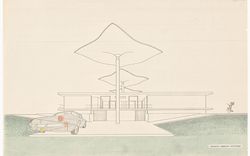
A selection of drawings of the Casa Desmarás by Amancio Williams
Title:
An Umbrella Can Also Be a House
A selection of drawings of the Casa Desmarás by Amancio Williams
Actions:
An Umbrella Can Also Be a House
A selection of drawings of the Casa Desmarás by Amancio Williams
Actions:
Level of archival description:
Project
Project
Actions:
Reference number:
AP022.S1.1988.PR03
Description:
File documents a phased office complex of six buildings, Brimley Road, Scarborough, Ontario. File contains design development drawings (including photographs).
AP022.S1.1988.PR03
Description:
File documents a phased office complex of six buildings, Brimley Road, Scarborough, Ontario. File contains design development drawings (including photographs).
People:
Date:
1988-1989
1988-1989
Title:
Transmetro Office Building Development
Actions:
AP022.S1.1988.PR03
Description:
File documents a phased office complex of six buildings, Brimley Road, Scarborough, Ontario. File contains design development drawings (including photographs).
Transmetro Office Building Development
Actions:
AP022.S1.1988.PR03
Description:
File documents a phased office complex of six buildings, Brimley Road, Scarborough, Ontario. File contains design development drawings (including photographs).
Level of archival description:
Project
Project
Date:
1988-1989
1988-1989
People:
Level of archival description:
Project
Project
Actions:
Reference number:
AP056.S1.1992.PR02
Description:
This project series documents the federal women's prison in Kitchener, Ontario, now called The Grand Valley Institution for Women, from 1992-1994. The office identified the project number as 9227. This project, built for Public Works Canada and Correctional Services Canada, consisted of a large, main prison building with nine small cottages lining the property. The main building included the admission and discharge area, food services, recreation spaces and spirituality centre, as well as an area for prisoners requiring enhanced security. The spirituality room was a window-rimmed rotunda that pierced the slanted roof of the main stucco building. The smaller cottages were wood-sided with aluminum windows and could house eight people. While many were built to house eight prisoners, some designs replaced prisoner's rooms with children's bedrooms for inmates who had children staying with them. There was also a large, green space in the centre of all the buildings, with plans to build a baseball diamond, daycare building and an additional cottage in the future. The project is recorded through drawings dating from1992-1995. The drawings and mostly originals and include site surveys, sketches, plans, elevations, sections, perspectives, details and axonometric drawings.
AP056.S1.1992.PR02
Description:
This project series documents the federal women's prison in Kitchener, Ontario, now called The Grand Valley Institution for Women, from 1992-1994. The office identified the project number as 9227. This project, built for Public Works Canada and Correctional Services Canada, consisted of a large, main prison building with nine small cottages lining the property. The main building included the admission and discharge area, food services, recreation spaces and spirituality centre, as well as an area for prisoners requiring enhanced security. The spirituality room was a window-rimmed rotunda that pierced the slanted roof of the main stucco building. The smaller cottages were wood-sided with aluminum windows and could house eight people. While many were built to house eight prisoners, some designs replaced prisoner's rooms with children's bedrooms for inmates who had children staying with them. There was also a large, green space in the centre of all the buildings, with plans to build a baseball diamond, daycare building and an additional cottage in the future. The project is recorded through drawings dating from1992-1995. The drawings and mostly originals and include site surveys, sketches, plans, elevations, sections, perspectives, details and axonometric drawings.
People:
Date:
1992-1995
1992-1995
Title:
Regional Facility for Federally Sentenced Women, Kitchener, Ontario (1992-1994)
Actions:
AP056.S1.1992.PR02
Description:
This project series documents the federal women's prison in Kitchener, Ontario, now called The Grand Valley Institution for Women, from 1992-1994. The office identified the project number as 9227. This project, built for Public Works Canada and Correctional Services Canada, consisted of a large, main prison building with nine small cottages lining the property. The main building included the admission and discharge area, food services, recreation spaces and spirituality centre, as well as an area for prisoners requiring enhanced security. The spirituality room was a window-rimmed rotunda that pierced the slanted roof of the main stucco building. The smaller cottages were wood-sided with aluminum windows and could house eight people. While many were built to house eight prisoners, some designs replaced prisoner's rooms with children's bedrooms for inmates who had children staying with them. There was also a large, green space in the centre of all the buildings, with plans to build a baseball diamond, daycare building and an additional cottage in the future. The project is recorded through drawings dating from1992-1995. The drawings and mostly originals and include site surveys, sketches, plans, elevations, sections, perspectives, details and axonometric drawings.
Regional Facility for Federally Sentenced Women, Kitchener, Ontario (1992-1994)
Actions:
AP056.S1.1992.PR02
Description:
This project series documents the federal women's prison in Kitchener, Ontario, now called The Grand Valley Institution for Women, from 1992-1994. The office identified the project number as 9227. This project, built for Public Works Canada and Correctional Services Canada, consisted of a large, main prison building with nine small cottages lining the property. The main building included the admission and discharge area, food services, recreation spaces and spirituality centre, as well as an area for prisoners requiring enhanced security. The spirituality room was a window-rimmed rotunda that pierced the slanted roof of the main stucco building. The smaller cottages were wood-sided with aluminum windows and could house eight people. While many were built to house eight prisoners, some designs replaced prisoner's rooms with children's bedrooms for inmates who had children staying with them. There was also a large, green space in the centre of all the buildings, with plans to build a baseball diamond, daycare building and an additional cottage in the future. The project is recorded through drawings dating from1992-1995. The drawings and mostly originals and include site surveys, sketches, plans, elevations, sections, perspectives, details and axonometric drawings.
Level of archival description:
Project
Project
Date:
1992-1995
1992-1995
People:
Level of archival description:
Project
Project
Title:
Entre deux rues, Montréal
Entre deux rues, Montréal
Actions:
Reference number:
AP027.S1.D59
Description:
Proposed commercial infill concept for the development of the city block bounded by Sherbrooke St., de la Montagne St., de Maisonneuve Ouest Blvd., and Crescent St. in Montréal. The design was specific to the site, but developed to apply to any area where there was economic pressure to intensify land use and where the buildings warranted preservation. The plan featured a multi-level galleria over the lane and an extension of the rear of existing properties to connect with it.
AP027.S1.D59
Description:
Proposed commercial infill concept for the development of the city block bounded by Sherbrooke St., de la Montagne St., de Maisonneuve Ouest Blvd., and Crescent St. in Montréal. The design was specific to the site, but developed to apply to any area where there was economic pressure to intensify land use and where the buildings warranted preservation. The plan featured a multi-level galleria over the lane and an extension of the rear of existing properties to connect with it.
People:
Subject:
urban planning
urban planning
Date:
1971-1972
1971-1972
Title:
Entre deux rues, Montréal
Actions:
AP027.S1.D59
Description:
Proposed commercial infill concept for the development of the city block bounded by Sherbrooke St., de la Montagne St., de Maisonneuve Ouest Blvd., and Crescent St. in Montréal. The design was specific to the site, but developed to apply to any area where there was economic pressure to intensify land use and where the buildings warranted preservation. The plan featured a multi-level galleria over the lane and an extension of the rear of existing properties to connect with it.
Entre deux rues, Montréal
Actions:
AP027.S1.D59
Description:
Proposed commercial infill concept for the development of the city block bounded by Sherbrooke St., de la Montagne St., de Maisonneuve Ouest Blvd., and Crescent St. in Montréal. The design was specific to the site, but developed to apply to any area where there was economic pressure to intensify land use and where the buildings warranted preservation. The plan featured a multi-level galleria over the lane and an extension of the rear of existing properties to connect with it.
Level of archival description:
File 59
File 59
Date:
1971-1972
1971-1972
People:
Subject:
urban planning
urban planning
Level of archival description:
Series
Series
Actions:
Reference number:
AP179.S1
Description:
Series 1, Casa La Roca, Caracas, Venezuela, 1995 – 2001, documents the development of a project (unrealized) for a residential home situated among the hills at the southern edge of Caracas. The majority of records were produced between 1995 and 1997. The series consists of sketches, drawings and reprographic copies for the conceptual and design development phases of the project, a wood model and model pieces, photographs of the site, and textual records including correspondence and zoning records. The series also contains an oversized banner printed with an image of the model that was featured in the Fabrications exhibition at the Museum of Modern Art, New York, in 1998, as well as plans for the show. The digital material in this series consists of an animated rendering of the brick patio wall and photographs of the physical drawings and the model for Casa La Roca. The name of the project, Casa la Roca (in English, “the rock house”), is derived from a large mass of rock that occupies the back of the property. The design utilizes the presence of the rock, in combination with sliding glass doors and windows, to create an “outdoor room” that functions both as a living space and back yard. The design also incorporates the nature of the site through the use of materials such as terracotta block, brick, and tile.
AP179.S1
Description:
Series 1, Casa La Roca, Caracas, Venezuela, 1995 – 2001, documents the development of a project (unrealized) for a residential home situated among the hills at the southern edge of Caracas. The majority of records were produced between 1995 and 1997. The series consists of sketches, drawings and reprographic copies for the conceptual and design development phases of the project, a wood model and model pieces, photographs of the site, and textual records including correspondence and zoning records. The series also contains an oversized banner printed with an image of the model that was featured in the Fabrications exhibition at the Museum of Modern Art, New York, in 1998, as well as plans for the show. The digital material in this series consists of an animated rendering of the brick patio wall and photographs of the physical drawings and the model for Casa La Roca. The name of the project, Casa la Roca (in English, “the rock house”), is derived from a large mass of rock that occupies the back of the property. The design utilizes the presence of the rock, in combination with sliding glass doors and windows, to create an “outdoor room” that functions both as a living space and back yard. The design also incorporates the nature of the site through the use of materials such as terracotta block, brick, and tile.
People:
Date:
1995 - 2001
1995 - 2001
Title:
Casa La Roca, Caracas, Venezuela (1995 - 2001)
Actions:
AP179.S1
Description:
Series 1, Casa La Roca, Caracas, Venezuela, 1995 – 2001, documents the development of a project (unrealized) for a residential home situated among the hills at the southern edge of Caracas. The majority of records were produced between 1995 and 1997. The series consists of sketches, drawings and reprographic copies for the conceptual and design development phases of the project, a wood model and model pieces, photographs of the site, and textual records including correspondence and zoning records. The series also contains an oversized banner printed with an image of the model that was featured in the Fabrications exhibition at the Museum of Modern Art, New York, in 1998, as well as plans for the show. The digital material in this series consists of an animated rendering of the brick patio wall and photographs of the physical drawings and the model for Casa La Roca. The name of the project, Casa la Roca (in English, “the rock house”), is derived from a large mass of rock that occupies the back of the property. The design utilizes the presence of the rock, in combination with sliding glass doors and windows, to create an “outdoor room” that functions both as a living space and back yard. The design also incorporates the nature of the site through the use of materials such as terracotta block, brick, and tile.
Casa La Roca, Caracas, Venezuela (1995 - 2001)
Actions:
AP179.S1
Description:
Series 1, Casa La Roca, Caracas, Venezuela, 1995 – 2001, documents the development of a project (unrealized) for a residential home situated among the hills at the southern edge of Caracas. The majority of records were produced between 1995 and 1997. The series consists of sketches, drawings and reprographic copies for the conceptual and design development phases of the project, a wood model and model pieces, photographs of the site, and textual records including correspondence and zoning records. The series also contains an oversized banner printed with an image of the model that was featured in the Fabrications exhibition at the Museum of Modern Art, New York, in 1998, as well as plans for the show. The digital material in this series consists of an animated rendering of the brick patio wall and photographs of the physical drawings and the model for Casa La Roca. The name of the project, Casa la Roca (in English, “the rock house”), is derived from a large mass of rock that occupies the back of the property. The design utilizes the presence of the rock, in combination with sliding glass doors and windows, to create an “outdoor room” that functions both as a living space and back yard. The design also incorporates the nature of the site through the use of materials such as terracotta block, brick, and tile.
Level of archival description:
Series
Series
Date:
1995 - 2001
1995 - 2001
People:


