


2298 Results
Form:
books
books
Actions:
Price:
$37.95
(available to order)
Summary:
The idea of fashion under socialism conjures up images of babushka headscarves and black market blue jeans. And yet, as Djurdja Bartlett shows in this groundbreaking book, the socialist East had an intimate relationship with fashion. Official antagonism—which cast fashion as frivolous and antirevolutionary—eventually gave way to grudging acceptance and creeping(...)
$37.95
(available to order)
Summary:
The idea of fashion under socialism conjures up images of babushka headscarves and black market blue jeans. And yet, as Djurdja Bartlett shows in this groundbreaking book, the socialist East had an intimate relationship with fashion. Official antagonism—which cast fashion as frivolous and antirevolutionary—eventually gave way to grudging acceptance and creeping(...)
Title:
Fashion East : the spectre that haunted socialism
Actions:
Price:
$37.95
(available to order)
Summary:
The idea of fashion under socialism conjures up images of babushka headscarves and black market blue jeans. And yet, as Djurdja Bartlett shows in this groundbreaking book, the socialist East had an intimate relationship with fashion. Official antagonism—which cast fashion as frivolous and antirevolutionary—eventually gave way to grudging acceptance and creeping consumerism. Bartlett outlines three phases in socialist fashion, and illustrates them with abundant images from magazines of the period: postrevolutionary utopian dress, official state-sanctioned socialist fashion, and samizdat-style everyday fashion. Utopian dress, ranging from the geometric abstraction of the constructivists under Bolshevism in the Soviet Union to the no-frills desexualized uniform of a factory worker in Czechoslovakia, reflected the revolutionary urge for a clean break with the past. The highly centralized socialist fashion system, part of Stalinist industrialization, offered official prototypes of high fashion that were never available in stores—mythical images of smart and luxurious dresses that symbolized the economic progress that socialist regimes dreamed of. Everyday fashion, starting in the 1950s, was an unofficial, do-it-yourself enterprise: Western fashions obtained through semiclandestine channels or sewn at home. The state tolerated the demand for Western fashion, promising the burgeoning middle class consumer goods in exchange for political loyalty. Bartlett traces the progress of socialist fashion in the Soviet Union, Czechoslovakia, Hungary, East Germany, Poland, and Yugoslavia, drawing on state-sponsored socialist women’s magazines, etiquette books, socialist manuals on dress, private archives, and her own interviews with designers, fashion editors, and other key figures. Fashion, she suggests, with all its ephemerality and dynamism, was in perpetual conflict with the socialist regimes’ fear of change and need for control. It was, to echo the famous first sentence from the Communist Manifesto, the spectre that haunted socialism until the end.
Fashion East : the spectre that haunted socialism
Actions:
Price:
$37.95
(available to order)
Summary:
The idea of fashion under socialism conjures up images of babushka headscarves and black market blue jeans. And yet, as Djurdja Bartlett shows in this groundbreaking book, the socialist East had an intimate relationship with fashion. Official antagonism—which cast fashion as frivolous and antirevolutionary—eventually gave way to grudging acceptance and creeping consumerism. Bartlett outlines three phases in socialist fashion, and illustrates them with abundant images from magazines of the period: postrevolutionary utopian dress, official state-sanctioned socialist fashion, and samizdat-style everyday fashion. Utopian dress, ranging from the geometric abstraction of the constructivists under Bolshevism in the Soviet Union to the no-frills desexualized uniform of a factory worker in Czechoslovakia, reflected the revolutionary urge for a clean break with the past. The highly centralized socialist fashion system, part of Stalinist industrialization, offered official prototypes of high fashion that were never available in stores—mythical images of smart and luxurious dresses that symbolized the economic progress that socialist regimes dreamed of. Everyday fashion, starting in the 1950s, was an unofficial, do-it-yourself enterprise: Western fashions obtained through semiclandestine channels or sewn at home. The state tolerated the demand for Western fashion, promising the burgeoning middle class consumer goods in exchange for political loyalty. Bartlett traces the progress of socialist fashion in the Soviet Union, Czechoslovakia, Hungary, East Germany, Poland, and Yugoslavia, drawing on state-sponsored socialist women’s magazines, etiquette books, socialist manuals on dress, private archives, and her own interviews with designers, fashion editors, and other key figures. Fashion, she suggests, with all its ephemerality and dynamism, was in perpetual conflict with the socialist regimes’ fear of change and need for control. It was, to echo the famous first sentence from the Communist Manifesto, the spectre that haunted socialism until the end.
Form:
books
books
Publication:
October 2010
October 2010
Subject:
Fashion Design
Fashion Design
Form:
books
books
Actions:
Holdings:
Description:
214 pages : illustrations ; 23 cm.
Description:
214 pages : illustrations ; 23 cm.
Author:
Subject:
Publication:
Montreuil : Éditions B42, 2026.
Montreuil : Éditions B42, 2026.
Title:
Toxicité coloniale : documenter le paysage radioactif dans le Sahara / Samia Henni ; traduit de l'anglais par Marc Saint-Upéry.
Actions:
Holdings:
Description:
214 pages : illustrations ; 23 cm.
Toxicité coloniale : documenter le paysage radioactif dans le Sahara / Samia Henni ; traduit de l'anglais par Marc Saint-Upéry.
Actions:
Holdings:
Description:
214 pages : illustrations ; 23 cm.
Form:
books
books
Publication:
Montreuil : Éditions B42, 2026.
Montreuil : Éditions B42, 2026.
Author:
Subject:
Form:
books
books
Actions:
Holdings:
Description:
ix, 107 pages : illustrations (some color) ; 29 x 31 cm
Description:
ix, 107 pages : illustrations (some color) ; 29 x 31 cm
Author:
Subject:
Publication:
Los Angeles, Calif. : Getty Research Institute, ©2010.
Los Angeles, Calif. : Getty Research Institute, ©2010.
Title:
Printing the grand manner : Charles Le Brun and monumental prints in the age of Louis XIV / Louis Marchesano and Christian Michel.
Actions:
Holdings:
Description:
ix, 107 pages : illustrations (some color) ; 29 x 31 cm
Printing the grand manner : Charles Le Brun and monumental prints in the age of Louis XIV / Louis Marchesano and Christian Michel.
Actions:
Holdings:
Description:
ix, 107 pages : illustrations (some color) ; 29 x 31 cm
Form:
books
books
Publication:
Los Angeles, Calif. : Getty Research Institute, ©2010.
Los Angeles, Calif. : Getty Research Institute, ©2010.
Author:
Subject:
Form:
books
books

Actions:
Price:
$28.00
(available in store)
Summary:
Over the past several decades, globalization has homogenized what we eat, and done so ruthlessly. The numbers are stark: Of the roughly six thousand different plants once consumed by human beings, only nine remain major staples today. Just three of these—rice, wheat, and corn—now provide fifty percent of all our calories.The source of much of the world’s food—seeds—is(...)
$28.00
(available in store)
Summary:
Over the past several decades, globalization has homogenized what we eat, and done so ruthlessly. The numbers are stark: Of the roughly six thousand different plants once consumed by human beings, only nine remain major staples today. Just three of these—rice, wheat, and corn—now provide fifty percent of all our calories.The source of much of the world’s food—seeds—is(...)
Title:
Eating to extinction: the world's rarest foods and why we need to save them
Actions:
Price:
$28.00
(available in store)
Summary:
Over the past several decades, globalization has homogenized what we eat, and done so ruthlessly. The numbers are stark: Of the roughly six thousand different plants once consumed by human beings, only nine remain major staples today. Just three of these—rice, wheat, and corn—now provide fifty percent of all our calories.The source of much of the world’s food—seeds—is mostly in the control of just four corporations. Ninety-five percent of milk consumed in the United States comes from a single breed of cow. Half of all the world’s cheese is made with bacteria or enzymes made by one company. And one in four beers drunk around the world is the product of one brewer. When we lose diversity and foods become endangered, we not only risk the loss of traditional foodways, but also of flavors, smells, and textures that may never be experienced again. And the consolidation of our food has other steep costs, including a lack of resilience in the face of climate change, pests, and parasites. Our food monoculture is a threat to our health—and to the planet. In ''Eating to Extinction'', the BBC food journalist Dan Saladino travels the world to experience and document our most at-risk foods before it’s too late. He tells the fascinating stories of the people who continue to cultivate, forage, hunt, cook, and consume what the rest of us have forgotten or didn’t even know existed. Take honey—not the familiar product sold in plastic bottles, but the wild honey gathered by the Hadza people of East Africa, whose diet consists of eight hundred different plants and animals and who communicate with birds in order to locate bees’ nests. Or consider murnong—once the staple food of Aboriginal Australians, this small root vegetable with the sweet taste of coconut is undergoing a revival after nearly being driven to extinction. And in Sierra Leone, there are just a few surviving stenophylla trees, a plant species now considered crucial to the future of coffee.
Eating to extinction: the world's rarest foods and why we need to save them
Actions:
Price:
$28.00
(available in store)
Summary:
Over the past several decades, globalization has homogenized what we eat, and done so ruthlessly. The numbers are stark: Of the roughly six thousand different plants once consumed by human beings, only nine remain major staples today. Just three of these—rice, wheat, and corn—now provide fifty percent of all our calories.The source of much of the world’s food—seeds—is mostly in the control of just four corporations. Ninety-five percent of milk consumed in the United States comes from a single breed of cow. Half of all the world’s cheese is made with bacteria or enzymes made by one company. And one in four beers drunk around the world is the product of one brewer. When we lose diversity and foods become endangered, we not only risk the loss of traditional foodways, but also of flavors, smells, and textures that may never be experienced again. And the consolidation of our food has other steep costs, including a lack of resilience in the face of climate change, pests, and parasites. Our food monoculture is a threat to our health—and to the planet. In ''Eating to Extinction'', the BBC food journalist Dan Saladino travels the world to experience and document our most at-risk foods before it’s too late. He tells the fascinating stories of the people who continue to cultivate, forage, hunt, cook, and consume what the rest of us have forgotten or didn’t even know existed. Take honey—not the familiar product sold in plastic bottles, but the wild honey gathered by the Hadza people of East Africa, whose diet consists of eight hundred different plants and animals and who communicate with birds in order to locate bees’ nests. Or consider murnong—once the staple food of Aboriginal Australians, this small root vegetable with the sweet taste of coconut is undergoing a revival after nearly being driven to extinction. And in Sierra Leone, there are just a few surviving stenophylla trees, a plant species now considered crucial to the future of coffee.
Form:
books
books
Publication:
January 2023
January 2023
Subject:
Food
Food
Form:
books
books
Holdings:
Description:
52 p. : ill., plans ; 25 cm.
Description:
52 p. : ill., plans ; 25 cm.
Author:
Subject:
Publication:
[Ottawa?] : Canadian Farm Building Plan Service, [1968] (Ottawa : Roger Duhamel, F.R.S.C., Queen's Printer and Controller of Stationery)
[Ottawa?] : Canadian Farm Building Plan Service, [1968] (Ottawa : Roger Duhamel, F.R.S.C., Queen's Printer and Controller of Stationery)
Title:
Dairy cattle, housing and equipment : catalogue of plans.
Actions:
Holdings:
Description:
52 p. : ill., plans ; 25 cm.
Dairy cattle, housing and equipment : catalogue of plans.
Actions:
Holdings:
Description:
52 p. : ill., plans ; 25 cm.
Form:
books
books
Publication:
[Ottawa?] : Canadian Farm Building Plan Service, [1968] (Ottawa : Roger Duhamel, F.R.S.C., Queen's Printer and Controller of Stationery)
[Ottawa?] : Canadian Farm Building Plan Service, [1968] (Ottawa : Roger Duhamel, F.R.S.C., Queen's Printer and Controller of Stationery)
Author:
Subject:
Form:
books
books
Title:
Culture Wars : documents from the recent controversies in the arts / edited by Richard Bolton.
Culture Wars : documents from the recent controversies in the arts / edited by Richard Bolton.
Actions:
Holdings:
Description:
xviii, 363 pages : illustrations ; 24 cm
Description:
xviii, 363 pages : illustrations ; 24 cm
Author:
Subject:
Publication:
New York : New Press, 1992.
New York : New Press, 1992.
Title:
Culture Wars : documents from the recent controversies in the arts / edited by Richard Bolton.
Actions:
Holdings:
Description:
xviii, 363 pages : illustrations ; 24 cm
Culture Wars : documents from the recent controversies in the arts / edited by Richard Bolton.
Actions:
Holdings:
Description:
xviii, 363 pages : illustrations ; 24 cm
Form:
books
books
Publication:
New York : New Press, 1992.
New York : New Press, 1992.
Author:
Subject:
Form:
books
books
Actions:
Holdings:
Description:
2 volumes (880 pages) : illustrations (some color) ; 23 cm
Description:
2 volumes (880 pages) : illustrations (some color) ; 23 cm
Author:
Subject:
Publication:
Paris : Editions du Regard, ©1990.
Paris : Editions du Regard, ©1990.
Title:
VHUTEMAS : Moscou, 1920-1930 / S. Khan-Magomedov ; traduit du russe par Joëlle Aubert-Yong, Nikita Krivocheine, Jean-Claude Marcadé ; sous le contrôle de l'auteur et de Arlette Barré-Despond, en collaboration avec Joëlle Aubert-Yong ; textes et iconographie établis, présentés et annotés par Arlette Barré-Despond.
Actions:
Holdings:
Description:
2 volumes (880 pages) : illustrations (some color) ; 23 cm
VHUTEMAS : Moscou, 1920-1930 / S. Khan-Magomedov ; traduit du russe par Joëlle Aubert-Yong, Nikita Krivocheine, Jean-Claude Marcadé ; sous le contrôle de l'auteur et de Arlette Barré-Despond, en collaboration avec Joëlle Aubert-Yong ; textes et iconographie établis, présentés et annotés par Arlette Barré-Despond.
Actions:
Holdings:
Description:
2 volumes (880 pages) : illustrations (some color) ; 23 cm
Form:
books
books
Publication:
Paris : Editions du Regard, ©1990.
Paris : Editions du Regard, ©1990.
Author:
Subject:
Form:
audio
audio
Actions:
Description:
1 online resource.
Author:
Subject:
Publication:
[Place of publication not identified] : Lateral Addition, 2018.
[Place of publication not identified] : Lateral Addition, 2018.
Form:
audio
audio
Publication:
[Place of publication not identified] : Lateral Addition, 2018.
[Place of publication not identified] : Lateral Addition, 2018.
Author:
Subject:
Form:
books
books
Actions:
Price:
$59.95
(available to order)
Summary:
The book reproduces a series of the collages made by David Wild. Their subject is modern architecture in the first half of the twentieth century: in the Netherlands, in Russia, and in the work of Le Corbusier. The method of the book is to show a collage on a right-hand page; then on the facing page is a (...)
$59.95
(available to order)
Summary:
The book reproduces a series of the collages made by David Wild. Their subject is modern architecture in the first half of the twentieth century: in the Netherlands, in Russia, and in the work of Le Corbusier. The method of the book is to show a collage on a right-hand page; then on the facing page is a (...)
Title:
Fragments of utopia: collage reflections of heroic modernism
Actions:
Price:
$59.95
(available to order)
Summary:
The book reproduces a series of the collages made by David Wild. Their subject is modern architecture in the first half of the twentieth century: in the Netherlands, in Russia, and in the work of Le Corbusier. The method of the book is to show a collage on a right-hand page; then on the facing page is a prose commentary by Wild and supporting smaller images. Introducing the book, David Wild explains that the impulse for this work lies in the aftermath of a fire in his house: his scorched books lent themselves to collage. He goes on to sketch the cultural-political climate in Britain over the last 40 years: the backdrop to his work as an architect and (less directly) to this book. In the opening section on the Netherlands, the leading theme is an architecture of social equity and continuity. Rooted in old cultural traditions, and in the particular ‘football-pitch’ landscape of the country, modern architecture could realise some of its dreams in everyday buildings. Postage stamps play an active part in many of the book’s collages, and especially in this section: the design of stamps flourished in the Netherlands, through the enlightened patronage of the Dutch post office — with several architects designing stamps too. Politics and history come to prominence in the Russian section, as a motivating force in the work of the early 1920s, and then as a heavy burden — with the onset of totalitarian control and repression. At the centre of the discussion here is the architecture of constructivism: formally brilliant, but with a clear social programme. Flight and the exploration of space are recurring topics in this section, as another and particularly Russian dimension of utopian striving The work of Le Corbusier, in Europe, North and South America, Russia and India, is treated in the third section. Le Corbusier is presented as a brilliant artist, a master architect of the greatest skill and the greatest ambition — and without scruple in pursuing commissions. The images and text follow him into the years after the Second World War, culminating in the work in India. Here there is a vision of another kind of politics, of co-operation and non-violence.
Fragments of utopia: collage reflections of heroic modernism
Actions:
Price:
$59.95
(available to order)
Summary:
The book reproduces a series of the collages made by David Wild. Their subject is modern architecture in the first half of the twentieth century: in the Netherlands, in Russia, and in the work of Le Corbusier. The method of the book is to show a collage on a right-hand page; then on the facing page is a prose commentary by Wild and supporting smaller images. Introducing the book, David Wild explains that the impulse for this work lies in the aftermath of a fire in his house: his scorched books lent themselves to collage. He goes on to sketch the cultural-political climate in Britain over the last 40 years: the backdrop to his work as an architect and (less directly) to this book. In the opening section on the Netherlands, the leading theme is an architecture of social equity and continuity. Rooted in old cultural traditions, and in the particular ‘football-pitch’ landscape of the country, modern architecture could realise some of its dreams in everyday buildings. Postage stamps play an active part in many of the book’s collages, and especially in this section: the design of stamps flourished in the Netherlands, through the enlightened patronage of the Dutch post office — with several architects designing stamps too. Politics and history come to prominence in the Russian section, as a motivating force in the work of the early 1920s, and then as a heavy burden — with the onset of totalitarian control and repression. At the centre of the discussion here is the architecture of constructivism: formally brilliant, but with a clear social programme. Flight and the exploration of space are recurring topics in this section, as another and particularly Russian dimension of utopian striving The work of Le Corbusier, in Europe, North and South America, Russia and India, is treated in the third section. Le Corbusier is presented as a brilliant artist, a master architect of the greatest skill and the greatest ambition — and without scruple in pursuing commissions. The images and text follow him into the years after the Second World War, culminating in the work in India. Here there is a vision of another kind of politics, of co-operation and non-violence.
Form:
books
books
Publication:
January 1900, London
January 1900, London
Subject:
Graphic Designers, Monographs
Graphic Designers, Monographs
Form:
books
books
Title:
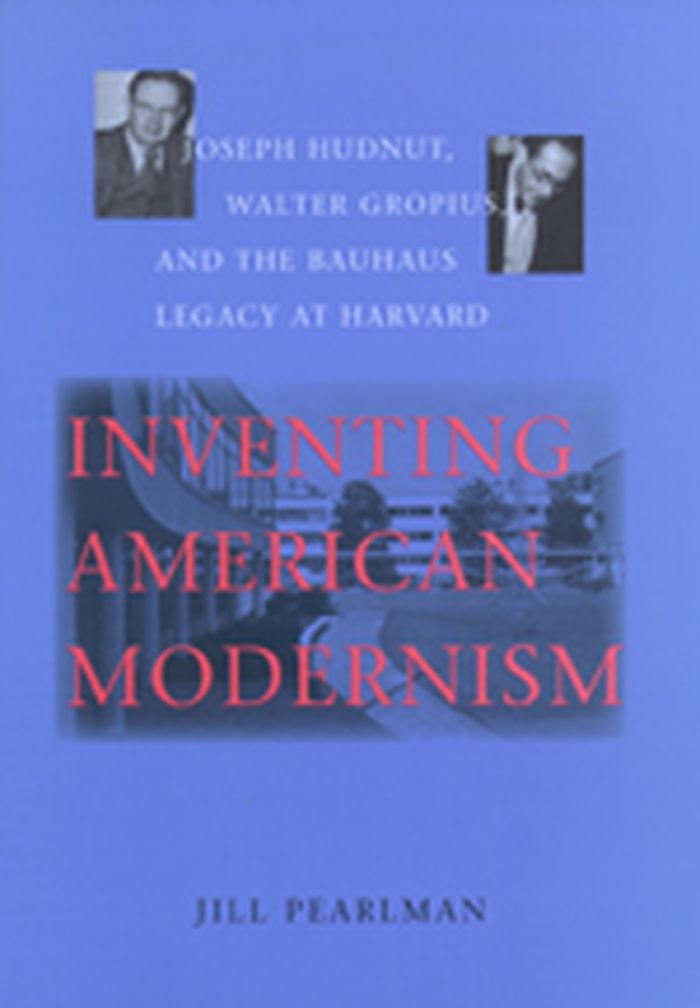
Inventing American modernism : Joseph Hudnut, Walter Gropius, and the Bauhaus legacy at Harvard
Inventing American modernism : Joseph Hudnut, Walter Gropius, and the Bauhaus legacy at Harvard
Actions:
Price:
$50.00
(available to order)
Summary:
From the late 1930s to the early 1950s, the Harvard Graduate School of Design played a crucial role in shaping a new modern architecture and the modern city. Architects, planners, teachers, and students from all over the world looked to the new GSD, with its celebrated faculty and curriculum, for the path to modern design. While the school’s significance is widely(...)
$50.00
(available to order)
Summary:
From the late 1930s to the early 1950s, the Harvard Graduate School of Design played a crucial role in shaping a new modern architecture and the modern city. Architects, planners, teachers, and students from all over the world looked to the new GSD, with its celebrated faculty and curriculum, for the path to modern design. While the school’s significance is widely(...)
Subject:
Architecture since 1900, Europe
Architecture since 1900, Europe
Publication:
April 2007, Charlottesville, London
April 2007, Charlottesville, London
Title:
Inventing American modernism : Joseph Hudnut, Walter Gropius, and the Bauhaus legacy at Harvard
Actions:
Price:
$50.00
(available to order)
Summary:
From the late 1930s to the early 1950s, the Harvard Graduate School of Design played a crucial role in shaping a new modern architecture and the modern city. Architects, planners, teachers, and students from all over the world looked to the new GSD, with its celebrated faculty and curriculum, for the path to modern design. While the school’s significance is widely recognized by architectural historians, most studies have concentrated on the Bauhaus founder Walter Gropius and his transformation of Harvard's old Beaux-Arts School of Architecture into a "Harvard-Bauhaus," a radically new school with a single outlook. In "Inventing American modernism", Jill Pearlman argues that Gropius did not effect these changes alone and, further, that the GSD was not merely an offshoot of the Bauhaus. She offers a crucial missing piece to the story — and to the history of modern architecture — by focusing on Joseph Hudnut, the school’s dean and founder. After heading the architecture school at the University of Virginia, and then at Columbia University, Hudnut created the GSD at Harvard in 1936, before Gropius was appointed, and he headed the school until 1953, the year after Gropius resigned. From the beginning, Hudnut gave the GSD its modern pedagogical direction, and he continued to oversee its curriculum and staffing for the next seventeen years. Although originally an admirer of Gropius's work and theories, Hudnut came to clash with him over the control of the direction of modern architecture and planning in the United States Gropius won the battle, but Pearlman shows that, had the GSD followed the path Hudnut wanted, modern architecture and the modern city might well have been different. In his role as public intellectual, Hudnut wielded an influence that reached outside the university, distinguished by his encouraging people to participate in the architectural and urbanistic matters that affected their lives. A story involving European modernists such as Marcel Breuer, Martin Wagner, and Christopher Tunnard, as well as a number of other architects, city planners, and landscape architects, this book is more than the study of a single school; it is a look at the origins of modernism at a defining moment in the history of twentieth-century architecture.
Inventing American modernism : Joseph Hudnut, Walter Gropius, and the Bauhaus legacy at Harvard
Actions:
Price:
$50.00
(available to order)
Summary:
From the late 1930s to the early 1950s, the Harvard Graduate School of Design played a crucial role in shaping a new modern architecture and the modern city. Architects, planners, teachers, and students from all over the world looked to the new GSD, with its celebrated faculty and curriculum, for the path to modern design. While the school’s significance is widely recognized by architectural historians, most studies have concentrated on the Bauhaus founder Walter Gropius and his transformation of Harvard's old Beaux-Arts School of Architecture into a "Harvard-Bauhaus," a radically new school with a single outlook. In "Inventing American modernism", Jill Pearlman argues that Gropius did not effect these changes alone and, further, that the GSD was not merely an offshoot of the Bauhaus. She offers a crucial missing piece to the story — and to the history of modern architecture — by focusing on Joseph Hudnut, the school’s dean and founder. After heading the architecture school at the University of Virginia, and then at Columbia University, Hudnut created the GSD at Harvard in 1936, before Gropius was appointed, and he headed the school until 1953, the year after Gropius resigned. From the beginning, Hudnut gave the GSD its modern pedagogical direction, and he continued to oversee its curriculum and staffing for the next seventeen years. Although originally an admirer of Gropius's work and theories, Hudnut came to clash with him over the control of the direction of modern architecture and planning in the United States Gropius won the battle, but Pearlman shows that, had the GSD followed the path Hudnut wanted, modern architecture and the modern city might well have been different. In his role as public intellectual, Hudnut wielded an influence that reached outside the university, distinguished by his encouraging people to participate in the architectural and urbanistic matters that affected their lives. A story involving European modernists such as Marcel Breuer, Martin Wagner, and Christopher Tunnard, as well as a number of other architects, city planners, and landscape architects, this book is more than the study of a single school; it is a look at the origins of modernism at a defining moment in the history of twentieth-century architecture.
Form:
books
books
Publication:
April 2007, Charlottesville, London
April 2007, Charlottesville, London
Subject:
Architecture since 1900, Europe
Architecture since 1900, Europe


