


234 Results
Form:
books
books
Actions:
Price:
$50.00
(available to order)
Summary:
The work of Bart Prince is recognized internationally for both its seminal creative vision and for carrying on an American tradition of individualism in architecture originating with Louis Sullivan, Frank Lloyd Wright, and Bruce Goff. Prince shares with these pioneers a fundamental way of thinking about modern American architecture, which in his work he has combined with(...)
$50.00
(available to order)
Summary:
The work of Bart Prince is recognized internationally for both its seminal creative vision and for carrying on an American tradition of individualism in architecture originating with Louis Sullivan, Frank Lloyd Wright, and Bruce Goff. Prince shares with these pioneers a fundamental way of thinking about modern American architecture, which in his work he has combined with(...)
Title:
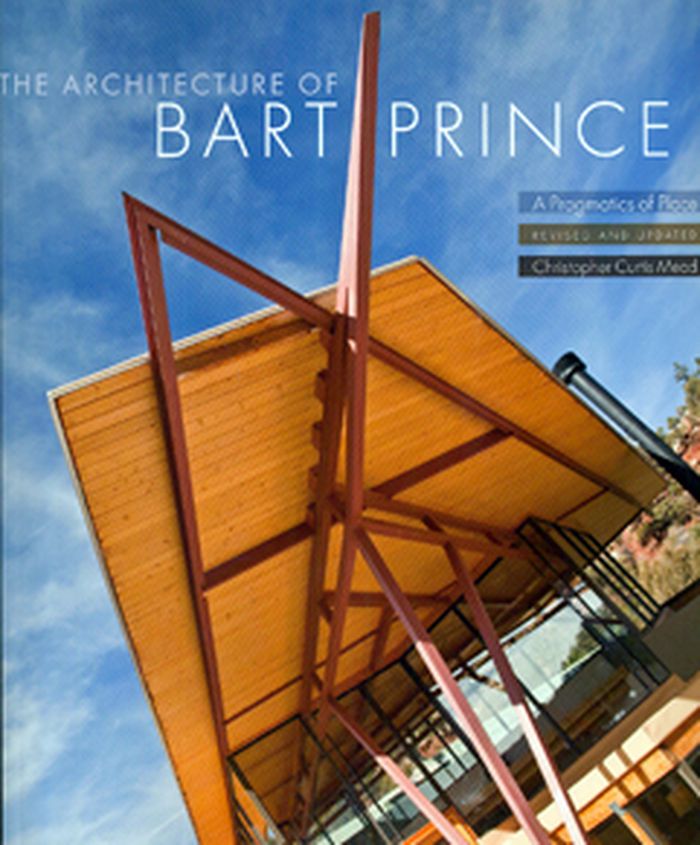
The architecture of Bart Prince
Actions:
Price:
$50.00
(available to order)
Summary:
The work of Bart Prince is recognized internationally for both its seminal creative vision and for carrying on an American tradition of individualism in architecture originating with Louis Sullivan, Frank Lloyd Wright, and Bruce Goff. Prince shares with these pioneers a fundamental way of thinking about modern American architecture, which in his work he has combined with a firm belief in the experiential impact of a building to render a contemporary style all his own. Originally published a decade ago, this updated version includes five new houses, demonstrating the architect’s maturing style and continued commitment to creating transcendent experiences in manipulated space. Stunning photographs and floor plans bring the reader as close as possible to experiencing these uniquely formed, magnificent buildings. A remarkable collaboration between the author, the photographer, and the architect, The Architecture of Bart Prince is the only comprehensive introduction to one of the most creative architects practicing in America today.
The architecture of Bart Prince
Actions:
Price:
$50.00
(available to order)
Summary:
The work of Bart Prince is recognized internationally for both its seminal creative vision and for carrying on an American tradition of individualism in architecture originating with Louis Sullivan, Frank Lloyd Wright, and Bruce Goff. Prince shares with these pioneers a fundamental way of thinking about modern American architecture, which in his work he has combined with a firm belief in the experiential impact of a building to render a contemporary style all his own. Originally published a decade ago, this updated version includes five new houses, demonstrating the architect’s maturing style and continued commitment to creating transcendent experiences in manipulated space. Stunning photographs and floor plans bring the reader as close as possible to experiencing these uniquely formed, magnificent buildings. A remarkable collaboration between the author, the photographer, and the architect, The Architecture of Bart Prince is the only comprehensive introduction to one of the most creative architects practicing in America today.
Form:
books
books
Publication:
April 2010
April 2010
Subject:
Architecture Monographs
Architecture Monographs
Form:
books
books
Actions:
Price:
$90.00
(available to order)
Summary:
Chicago is universally recognized as the cradle of modern architecture. It is known worldwide for the development, beginning in the late 1800s, of the renowned "Chicago School" of commercial building. In the early 1900s, Chicago saw the birth of Wright's "Prairie School" of residential design, which gave rise to the modern, open-plan house we know today. Other(...)
$90.00
(available to order)
Summary:
Chicago is universally recognized as the cradle of modern architecture. It is known worldwide for the development, beginning in the late 1800s, of the renowned "Chicago School" of commercial building. In the early 1900s, Chicago saw the birth of Wright's "Prairie School" of residential design, which gave rise to the modern, open-plan house we know today. Other(...)
Subject:
Architecture since 1900, Europe
Architecture since 1900, Europe
Publication:
June 2004, New York
June 2004, New York
Title:
Masterpieces of Chicago architecture
Actions:
Price:
$90.00
(available to order)
Summary:
Chicago is universally recognized as the cradle of modern architecture. It is known worldwide for the development, beginning in the late 1800s, of the renowned "Chicago School" of commercial building. In the early 1900s, Chicago saw the birth of Wright's "Prairie School" of residential design, which gave rise to the modern, open-plan house we know today. Other world-renowned architects were also based in Chicago, such as Louis Sullivan, who designed the Chicago Stock Exchange, and Daniel Burnham, architect of the famous Rookery Building of the 1890s. The 1940s were to see the completion of Mies van der Rohe's revolutionary Illinois Institute of Technology and his astonishing Lake Shore Drive apartment buildings. Skidmore Owings & Merrill's landmark Inland Steel Building was finished in 1954, their John Hancock Center in 1970, and their Sears Tower in 1974. Philip Johnson and John Burgee's 190 South LaSalle Street office tower went up in 1987. The 200 illustrations in this volume all come from The Art Institute of Chicago's repository of 150,000 architectural drawings, vintage photographs, models, and building fragments, which comprise one of the most important such archives.
Masterpieces of Chicago architecture
Actions:
Price:
$90.00
(available to order)
Summary:
Chicago is universally recognized as the cradle of modern architecture. It is known worldwide for the development, beginning in the late 1800s, of the renowned "Chicago School" of commercial building. In the early 1900s, Chicago saw the birth of Wright's "Prairie School" of residential design, which gave rise to the modern, open-plan house we know today. Other world-renowned architects were also based in Chicago, such as Louis Sullivan, who designed the Chicago Stock Exchange, and Daniel Burnham, architect of the famous Rookery Building of the 1890s. The 1940s were to see the completion of Mies van der Rohe's revolutionary Illinois Institute of Technology and his astonishing Lake Shore Drive apartment buildings. Skidmore Owings & Merrill's landmark Inland Steel Building was finished in 1954, their John Hancock Center in 1970, and their Sears Tower in 1974. Philip Johnson and John Burgee's 190 South LaSalle Street office tower went up in 1987. The 200 illustrations in this volume all come from The Art Institute of Chicago's repository of 150,000 architectural drawings, vintage photographs, models, and building fragments, which comprise one of the most important such archives.
Form:
books
books
Publication:
June 2004, New York
June 2004, New York
Subject:
Architecture since 1900, Europe
Architecture since 1900, Europe
Form:
books
books
Title:
Nietzsche for architects
Nietzsche for architects
Actions:
Price:
$48.95
(available to order)
Summary:
Nietzsche’s philosophy is provocative and complex and has been hugely influential on modern intellectual history and European culture. But his critical approach and writing style invites misunderstandings, sometimes with disastrous consequences. His ideas—or those loosely associated with him—are often briefly cited in scholarly studies in architectural theory and history.(...)
$48.95
(available to order)
Summary:
Nietzsche’s philosophy is provocative and complex and has been hugely influential on modern intellectual history and European culture. But his critical approach and writing style invites misunderstandings, sometimes with disastrous consequences. His ideas—or those loosely associated with him—are often briefly cited in scholarly studies in architectural theory and history.(...)
Title:
Nietzsche for architects
Actions:
Price:
$48.95
(available to order)
Summary:
Nietzsche’s philosophy is provocative and complex and has been hugely influential on modern intellectual history and European culture. But his critical approach and writing style invites misunderstandings, sometimes with disastrous consequences. His ideas—or those loosely associated with him—are often briefly cited in scholarly studies in architectural theory and history. His ideas are thought to have influenced the theories and designs of such iconic architects as Le Corbusier, Henry van de Velde, Bruno Taut, Louis H. Sullivan, Lebbeus Woods, and Peter Eisenman, as well as competing approaches to architecture and design, such as those adopted by the Bauhaus School and the Nazis. In the bewildering array of architectural positions that lay claim to Nietzsche as an influence, how can we begin to make sense of Nietzsche’s own approach to architecture? And how can we identify within his complex philosophy the key ideas and themes we require to make sense of his contribution to architecture? This first introduction to Nietzsche’s philosophy written specifically for architects locates his evaluation of appropriate and inappropriate architecture in the body of his writings and presents a clear overview of Nietzsche’s insights into architectural design alongside his advice for architects and designers.
Nietzsche for architects
Actions:
Price:
$48.95
(available to order)
Summary:
Nietzsche’s philosophy is provocative and complex and has been hugely influential on modern intellectual history and European culture. But his critical approach and writing style invites misunderstandings, sometimes with disastrous consequences. His ideas—or those loosely associated with him—are often briefly cited in scholarly studies in architectural theory and history. His ideas are thought to have influenced the theories and designs of such iconic architects as Le Corbusier, Henry van de Velde, Bruno Taut, Louis H. Sullivan, Lebbeus Woods, and Peter Eisenman, as well as competing approaches to architecture and design, such as those adopted by the Bauhaus School and the Nazis. In the bewildering array of architectural positions that lay claim to Nietzsche as an influence, how can we begin to make sense of Nietzsche’s own approach to architecture? And how can we identify within his complex philosophy the key ideas and themes we require to make sense of his contribution to architecture? This first introduction to Nietzsche’s philosophy written specifically for architects locates his evaluation of appropriate and inappropriate architecture in the body of his writings and presents a clear overview of Nietzsche’s insights into architectural design alongside his advice for architects and designers.
Form:
books
books
Publication:
November 2025
November 2025
Subject:
Critical Theory
Critical Theory
Form:
books
books
Price:
$52.00
(available to order)
Summary:
An expanded and updated edition of a classic study of the history of modern design. One of the most widely read books on modern design, Nikolaus Pevsner’s landmark work today remains as stimulating as it was when first published in 1936. This expanded edition of Pioneers of Modern Design provides Pevsner’s original text along with significant new and updated(...)
$52.00
(available to order)
Summary:
An expanded and updated edition of a classic study of the history of modern design. One of the most widely read books on modern design, Nikolaus Pevsner’s landmark work today remains as stimulating as it was when first published in 1936. This expanded edition of Pioneers of Modern Design provides Pevsner’s original text along with significant new and updated(...)
Title:
Pioneers of modern design from William Morris to Walter Gropius
Actions:
Price:
$52.00
(available to order)
Summary:
An expanded and updated edition of a classic study of the history of modern design. One of the most widely read books on modern design, Nikolaus Pevsner’s landmark work today remains as stimulating as it was when first published in 1936. This expanded edition of Pioneers of Modern Design provides Pevsner’s original text along with significant new and updated information, enhancing Pevsner’s illuminating account of the roots of Modernism. The book now offers many beautiful colour illustrations; biographies and bibliographies of all major figures; illustrated short essays on key themes, movements, and individuals; a critique of Pevsner’s analysis from today’s perspective; examples of works after 1914 (where the original study ended); a biography detailing Pevsner’s life and achievements; and much more. Pevsner saw Modernism as a synthesis of three main sources: William Morris and his followers, the work of nineteenth-century engineers, and Art Nouveau. The author considers the role of these sources in the work of early Modernists and looks at such masters of the movement as C.F.A. Voysey and Charles Rennie Mackintosh in Britain, Louis Sullivan and Frank Lloyd Wright in America, and Adolf Loos and Otto Wagner in Vienna. The account concludes with a discussion of the radical break with the past represented by the design work of Walter Gropius and his future Bauhaus colleagues.
Pioneers of modern design from William Morris to Walter Gropius
Actions:
Price:
$52.00
(available to order)
Summary:
An expanded and updated edition of a classic study of the history of modern design. One of the most widely read books on modern design, Nikolaus Pevsner’s landmark work today remains as stimulating as it was when first published in 1936. This expanded edition of Pioneers of Modern Design provides Pevsner’s original text along with significant new and updated information, enhancing Pevsner’s illuminating account of the roots of Modernism. The book now offers many beautiful colour illustrations; biographies and bibliographies of all major figures; illustrated short essays on key themes, movements, and individuals; a critique of Pevsner’s analysis from today’s perspective; examples of works after 1914 (where the original study ended); a biography detailing Pevsner’s life and achievements; and much more. Pevsner saw Modernism as a synthesis of three main sources: William Morris and his followers, the work of nineteenth-century engineers, and Art Nouveau. The author considers the role of these sources in the work of early Modernists and looks at such masters of the movement as C.F.A. Voysey and Charles Rennie Mackintosh in Britain, Louis Sullivan and Frank Lloyd Wright in America, and Adolf Loos and Otto Wagner in Vienna. The account concludes with a discussion of the radical break with the past represented by the design work of Walter Gropius and his future Bauhaus colleagues.
Form:
books
books
Publication:
March 2005, New Haven
March 2005, New Haven
Subject:
Interior Design
Interior Design


