


241 Results
Form:
books
books

Price:
$15.95
(available to order)
Summary:
En 2008, la crise des subprimes a durement frappé des individus et des familles entières, jetés à la rue. Ils auraient pu rester sur place, en attendant que le vent tourne à nouveau. Ils ont préféré investir leurs derniers dollars dans l'aménagement d'un van customisé et se mettre en route. Ils sont devenus des migrants dans leur propre pays, à la fois libres d'aller où(...)
$15.95
(available to order)
Summary:
En 2008, la crise des subprimes a durement frappé des individus et des familles entières, jetés à la rue. Ils auraient pu rester sur place, en attendant que le vent tourne à nouveau. Ils ont préféré investir leurs derniers dollars dans l'aménagement d'un van customisé et se mettre en route. Ils sont devenus des migrants dans leur propre pays, à la fois libres d'aller où(...)
Title:
Nomadland
Actions:
Price:
$15.95
(available to order)
Summary:
En 2008, la crise des subprimes a durement frappé des individus et des familles entières, jetés à la rue. Ils auraient pu rester sur place, en attendant que le vent tourne à nouveau. Ils ont préféré investir leurs derniers dollars dans l'aménagement d'un van customisé et se mettre en route. Ils sont devenus des migrants dans leur propre pays, à la fois libres d'aller où ils le désirent et victimes désignées pour ceux qui veulent profiter d'une main-d'oeuvre docile et bon marché : entrepôts Amazon, parcs d'attractions, campings... Pendant trois ans, Jessica Bruder a suivi les pas de ces « hobos » d'un genre nouveau, telle l'incroyable Linda May, 69 ans, qui rêve de bâtir sa propre géonef pour y couler des jours heureux.
Nomadland
Actions:
Price:
$15.95
(available to order)
Summary:
En 2008, la crise des subprimes a durement frappé des individus et des familles entières, jetés à la rue. Ils auraient pu rester sur place, en attendant que le vent tourne à nouveau. Ils ont préféré investir leurs derniers dollars dans l'aménagement d'un van customisé et se mettre en route. Ils sont devenus des migrants dans leur propre pays, à la fois libres d'aller où ils le désirent et victimes désignées pour ceux qui veulent profiter d'une main-d'oeuvre docile et bon marché : entrepôts Amazon, parcs d'attractions, campings... Pendant trois ans, Jessica Bruder a suivi les pas de ces « hobos » d'un genre nouveau, telle l'incroyable Linda May, 69 ans, qui rêve de bâtir sa propre géonef pour y couler des jours heureux.
Form:
books
books
Publication:
May 2020
May 2020
Subject:
Social
Social
Form:
books
books

Price:
$21.95
(available to order)
Summary:
Google, Facebook, Amazon, mais aussi les banques et les assureurs : la constitution d’énormes bases de données (les « big data ») confère une place de plus en plus centrale aux algorithmes. L’ambition de ce livre est de montrer comment ces nouvelles techniques de calcul bouleversent notre société. À travers le classement de l’information, la personnalisation publicitaire,(...)
$21.95
(available to order)
Summary:
Google, Facebook, Amazon, mais aussi les banques et les assureurs : la constitution d’énormes bases de données (les « big data ») confère une place de plus en plus centrale aux algorithmes. L’ambition de ce livre est de montrer comment ces nouvelles techniques de calcul bouleversent notre société. À travers le classement de l’information, la personnalisation publicitaire,(...)
Publication:
November 2015
November 2015
Title:
À quoi rêvent les algorithmes. Nos vies à l'heure des big data
Actions:
Price:
$21.95
(available to order)
Summary:
Google, Facebook, Amazon, mais aussi les banques et les assureurs : la constitution d’énormes bases de données (les « big data ») confère une place de plus en plus centrale aux algorithmes. L’ambition de ce livre est de montrer comment ces nouvelles techniques de calcul bouleversent notre société. À travers le classement de l’information, la personnalisation publicitaire, la recommandation de produits, le ciblage des comportements ou l’orientation des déplacements, les méga-calculateurs sont en train de s’immiscer, de plus en plus intimement, dans la vie des individus. Or, loin d’être de simples outils techniques, les algorithmes véhiculent un projet politique. Comprendre leur logique, les valeurs et le type de société qu’ils promeuvent, c’est donner aux internautes les moyens de reprendre du pouvoir dans la société des calculs.
À quoi rêvent les algorithmes. Nos vies à l'heure des big data
Actions:
Price:
$21.95
(available to order)
Summary:
Google, Facebook, Amazon, mais aussi les banques et les assureurs : la constitution d’énormes bases de données (les « big data ») confère une place de plus en plus centrale aux algorithmes. L’ambition de ce livre est de montrer comment ces nouvelles techniques de calcul bouleversent notre société. À travers le classement de l’information, la personnalisation publicitaire, la recommandation de produits, le ciblage des comportements ou l’orientation des déplacements, les méga-calculateurs sont en train de s’immiscer, de plus en plus intimement, dans la vie des individus. Or, loin d’être de simples outils techniques, les algorithmes véhiculent un projet politique. Comprendre leur logique, les valeurs et le type de société qu’ils promeuvent, c’est donner aux internautes les moyens de reprendre du pouvoir dans la société des calculs.
Form:
books
books
Publication:
November 2015
November 2015
Form:
books
books
Title:
Halka / Haiti: 18°48'05
Halka / Haiti: 18°48'05
Actions:
Price:
$46.50
(available to order)
Summary:
The Polish Pavilion at the 56th Venice Biennale will have the pleasure of presenting a panoramic film projection of the opera Halka by Stanislaw Moniuszko, as it was staged in February for the inhabitants of Cazale, a village situated in the mountains of Haiti. The winners of this year's contest for the official Polish representation in Venice, artists C.T. Jasper and(...)
$46.50
(available to order)
Summary:
The Polish Pavilion at the 56th Venice Biennale will have the pleasure of presenting a panoramic film projection of the opera Halka by Stanislaw Moniuszko, as it was staged in February for the inhabitants of Cazale, a village situated in the mountains of Haiti. The winners of this year's contest for the official Polish representation in Venice, artists C.T. Jasper and(...)
Title:
Halka / Haiti: 18°48'05
Actions:
Price:
$46.50
(available to order)
Summary:
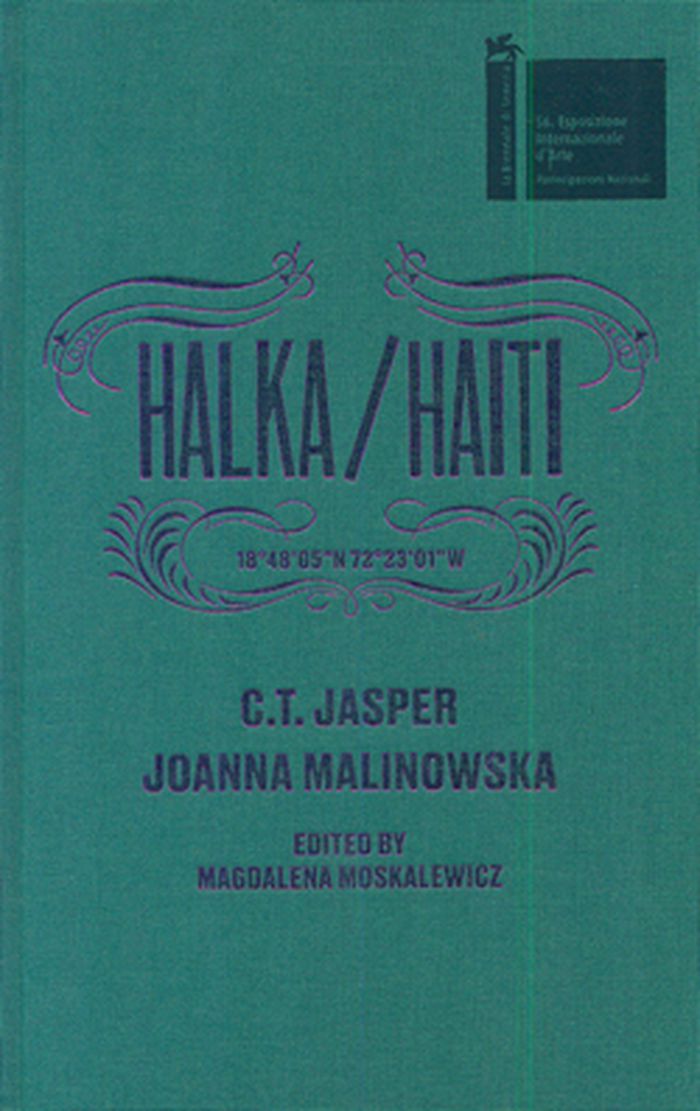
The Polish Pavilion at the 56th Venice Biennale will have the pleasure of presenting a panoramic film projection of the opera Halka by Stanislaw Moniuszko, as it was staged in February for the inhabitants of Cazale, a village situated in the mountains of Haiti. The winners of this year's contest for the official Polish representation in Venice, artists C.T. Jasper and Joanna Malinowska and curator Magdalena Moskalewicz, decided to stage the opera in Haiti inspired by the mad plan of Werner Herzog's Fitzcarraldo, who wanted to build an opera house in the Amazon. Fascinated by Fitzcarraldo's faith in the universal power of opera, but not uncritical of the colonizing aspect of his actions, they decided to reveal and undercut its romanticism by confronting a set of very specific geographic, historical, and sociopolitical realities.
Halka / Haiti: 18°48'05
Actions:
Price:
$46.50
(available to order)
Summary:
The Polish Pavilion at the 56th Venice Biennale will have the pleasure of presenting a panoramic film projection of the opera Halka by Stanislaw Moniuszko, as it was staged in February for the inhabitants of Cazale, a village situated in the mountains of Haiti. The winners of this year's contest for the official Polish representation in Venice, artists C.T. Jasper and Joanna Malinowska and curator Magdalena Moskalewicz, decided to stage the opera in Haiti inspired by the mad plan of Werner Herzog's Fitzcarraldo, who wanted to build an opera house in the Amazon. Fascinated by Fitzcarraldo's faith in the universal power of opera, but not uncritical of the colonizing aspect of his actions, they decided to reveal and undercut its romanticism by confronting a set of very specific geographic, historical, and sociopolitical realities.
Form:
books
books
Publication:
July 2015
July 2015
Subject:
Art Theory
Art Theory
Form:
books
books
Actions:
Price:
$83.00
(available to order)
Summary:
The modernist parks and gardens of Brazilian landscape architect and garden designer Roberto Burle Marx (1909–1994) earned him awards, widespread acclaim, and international fame. Over a 60-year career, he designed more than 2,000 gardens worldwide, the most famous of which are those he created in collaboration with the architect Oscar Niemeyer for Brasília. Although he is(...)
$83.00
(available to order)
Summary:
The modernist parks and gardens of Brazilian landscape architect and garden designer Roberto Burle Marx (1909–1994) earned him awards, widespread acclaim, and international fame. Over a 60-year career, he designed more than 2,000 gardens worldwide, the most famous of which are those he created in collaboration with the architect Oscar Niemeyer for Brasília. Although he is(...)
Subject:
Landscape Architecture, Monographs
Landscape Architecture, Monographs
Publication:
February 2016
February 2016
Title:
Roberto Burle Marx: Brazilian Modernist
Actions:
Price:
$83.00
(available to order)
Summary:
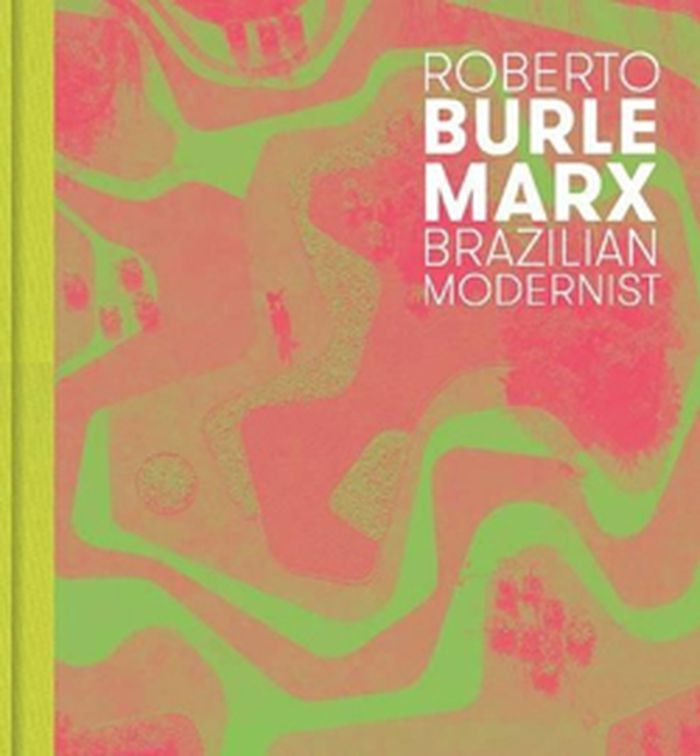
The modernist parks and gardens of Brazilian landscape architect and garden designer Roberto Burle Marx (1909–1994) earned him awards, widespread acclaim, and international fame. Over a 60-year career, he designed more than 2,000 gardens worldwide, the most famous of which are those he created in collaboration with the architect Oscar Niemeyer for Brasília. Although he is best known for his landscape work, Burle Marx was a prolific artist in a variety of media, and his larger body of work—which includes paintings, drawings, tile mosaics, sculpture, textile design, jewelry, theater costumes, and more—is critical to understanding his importance as a modernist. An avid horticulturalist, he was among the first to denounce deforestation in the Amazon region; he also discovered over thirty species of Brazilian flora, which bear his name.
Roberto Burle Marx: Brazilian Modernist
Actions:
Price:
$83.00
(available to order)
Summary:
The modernist parks and gardens of Brazilian landscape architect and garden designer Roberto Burle Marx (1909–1994) earned him awards, widespread acclaim, and international fame. Over a 60-year career, he designed more than 2,000 gardens worldwide, the most famous of which are those he created in collaboration with the architect Oscar Niemeyer for Brasília. Although he is best known for his landscape work, Burle Marx was a prolific artist in a variety of media, and his larger body of work—which includes paintings, drawings, tile mosaics, sculpture, textile design, jewelry, theater costumes, and more—is critical to understanding his importance as a modernist. An avid horticulturalist, he was among the first to denounce deforestation in the Amazon region; he also discovered over thirty species of Brazilian flora, which bear his name.
Form:
books
books
Publication:
February 2016
February 2016
Subject:
Landscape Architecture, Monographs
Landscape Architecture, Monographs
Form:
books
books

Actions:
Price:
$20.00
(available in store)
Summary:
Ce sont les nouveaux grands seigneurs de notre temps. Les GAFAM (Google, Apple, Facebook, Amazon, Microsoft) et autres plateformes (Airbnb, Uber et Netflix) règnent sans partage sur un empire numérique qui transcende les frontières nationales, au mépris de la souveraineté des États et de leurs législations. Épidémie de fausses nouvelles, polarisation des débats, contrôle(...)
$20.00
(available in store)
Summary:
Ce sont les nouveaux grands seigneurs de notre temps. Les GAFAM (Google, Apple, Facebook, Amazon, Microsoft) et autres plateformes (Airbnb, Uber et Netflix) règnent sans partage sur un empire numérique qui transcende les frontières nationales, au mépris de la souveraineté des États et de leurs législations. Épidémie de fausses nouvelles, polarisation des débats, contrôle(...)
Publication:
April 2022
April 2022
Title:
Les barbares numériques : Résister à l'invasion des GAFAM
Actions:
Price:
$20.00
(available in store)
Summary:
Ce sont les nouveaux grands seigneurs de notre temps. Les GAFAM (Google, Apple, Facebook, Amazon, Microsoft) et autres plateformes (Airbnb, Uber et Netflix) règnent sans partage sur un empire numérique qui transcende les frontières nationales, au mépris de la souveraineté des États et de leurs législations. Épidémie de fausses nouvelles, polarisation des débats, contrôle des données personnelles, surconsommation énergétique et pollution atmosphérique… Ces barbares numériques représentent une véritable menace pour la démocratie. Devant la passivité de nos gouvernements, à Québec comme à Ottawa, Alain Saulnier lance un appel à la résistance. Pour l’ancien directeur de l’information de Radio-Canada, il est urgent d’établir l’équité fiscale, de protéger les droits d’auteur et de moderniser tout l’écosystème numérique. Il en va de la survie de nos médias, de notre langue et de notre culture françaises en Amérique du Nord.
Les barbares numériques : Résister à l'invasion des GAFAM
Actions:
Price:
$20.00
(available in store)
Summary:
Ce sont les nouveaux grands seigneurs de notre temps. Les GAFAM (Google, Apple, Facebook, Amazon, Microsoft) et autres plateformes (Airbnb, Uber et Netflix) règnent sans partage sur un empire numérique qui transcende les frontières nationales, au mépris de la souveraineté des États et de leurs législations. Épidémie de fausses nouvelles, polarisation des débats, contrôle des données personnelles, surconsommation énergétique et pollution atmosphérique… Ces barbares numériques représentent une véritable menace pour la démocratie. Devant la passivité de nos gouvernements, à Québec comme à Ottawa, Alain Saulnier lance un appel à la résistance. Pour l’ancien directeur de l’information de Radio-Canada, il est urgent d’établir l’équité fiscale, de protéger les droits d’auteur et de moderniser tout l’écosystème numérique. Il en va de la survie de nos médias, de notre langue et de notre culture françaises en Amérique du Nord.
Form:
books
books
Publication:
April 2022
April 2022
Form:
books
books

Title:
Crystallography
Crystallography
Actions:
Price:
$16.95
(available to order)
Summary:
Crystallography’ means the study of crystals, but also, taken literally, ‘lucid writing.’ The book exists in the intersection of poetry and science, exploring the relationship between language and crystals – looking at language as a crystal, a space in which the chaos of individual parts align to expose a perfect formation of structure. As Bök himself says, ‘a word is a(...)
$16.95
(available to order)
Summary:
Crystallography’ means the study of crystals, but also, taken literally, ‘lucid writing.’ The book exists in the intersection of poetry and science, exploring the relationship between language and crystals – looking at language as a crystal, a space in which the chaos of individual parts align to expose a perfect formation of structure. As Bök himself says, ‘a word is a(...)
Title:
Crystallography
Actions:
Price:
$16.95
(available to order)
Summary:
Crystallography’ means the study of crystals, but also, taken literally, ‘lucid writing.’ The book exists in the intersection of poetry and science, exploring the relationship between language and crystals – looking at language as a crystal, a space in which the chaos of individual parts align to expose a perfect formation of structure. As Bök himself says, ‘a word is a bit of crystal in formation,’ suggesting there is a space in which words, like crystals, can resonate pure form. Christian Bök is the author of Eunoia, winner of the 2002 Griffin Prize for Poetic Excellence. Bök has created artiflcial languages for two television shows: Gene Roddenberry’s Earth: Final Confiict and Peter Benchley’s Amazon. His conceptual artworks (which include books built out of Rubik cubes and Lego bricks) have appeared at the Marianne Boesky Gallery in New York. He teaches Canadian Literature at York University.
Crystallography
Actions:
Price:
$16.95
(available to order)
Summary:
Crystallography’ means the study of crystals, but also, taken literally, ‘lucid writing.’ The book exists in the intersection of poetry and science, exploring the relationship between language and crystals – looking at language as a crystal, a space in which the chaos of individual parts align to expose a perfect formation of structure. As Bök himself says, ‘a word is a bit of crystal in formation,’ suggesting there is a space in which words, like crystals, can resonate pure form. Christian Bök is the author of Eunoia, winner of the 2002 Griffin Prize for Poetic Excellence. Bök has created artiflcial languages for two television shows: Gene Roddenberry’s Earth: Final Confiict and Peter Benchley’s Amazon. His conceptual artworks (which include books built out of Rubik cubes and Lego bricks) have appeared at the Marianne Boesky Gallery in New York. He teaches Canadian Literature at York University.
Form:
books
books
Publication:
June 2003, Toronto
June 2003, Toronto
Subject:
Architecture in Canada
Architecture in Canada
Form:
books
books
Price:
$43.95
(available in store)
Summary:
Changing the world is difficult. One reason is that the most important problems, like climate change, racism, and poverty, are structural. They emerge from our collective practices: laws, economies, history, culture, norms, and built environments. The dilemma is that there is no way to make structural change without individual people making different—more(...)
$43.95
(available in store)
Summary:
Changing the world is difficult. One reason is that the most important problems, like climate change, racism, and poverty, are structural. They emerge from our collective practices: laws, economies, history, culture, norms, and built environments. The dilemma is that there is no way to make structural change without individual people making different—more(...)
Title:
Somebody should do something: How anyone can help create social change
Actions:
Price:
$43.95
(available in store)
Summary:
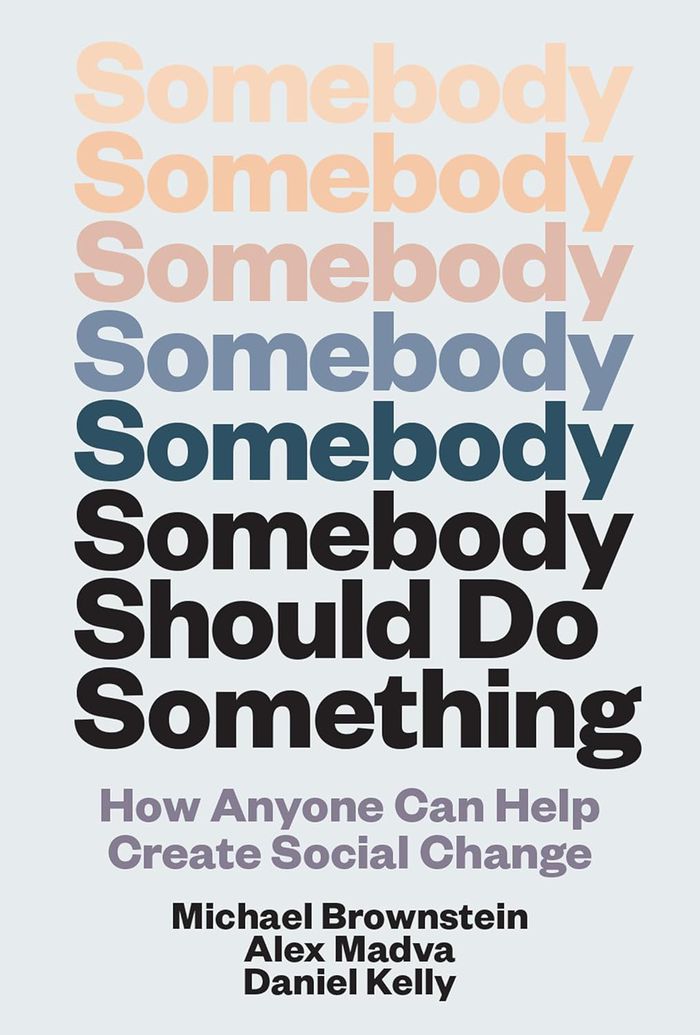
Changing the world is difficult. One reason is that the most important problems, like climate change, racism, and poverty, are structural. They emerge from our collective practices: laws, economies, history, culture, norms, and built environments. The dilemma is that there is no way to make structural change without individual people making different—more structure-facing—decisions. In ''Somebody Should Do Something'', Michael Brownstein, Alex Madva, and Daniel Kelly show us how we can connect our personal choices to structural change and why individual choices matter, though not in the way people usually think. The authors paint a new picture of how social change happens, arguing that our most powerful personal choices are those that springboard us into working together with others—warehouse worker Chris Smalls’s unionization at Amazon is one powerful example. Taking inspiration from the writer Bill McKibben, they stress how one “important thing an individual can do is be somewhat less of an individual.”
Somebody should do something: How anyone can help create social change
Actions:
Price:
$43.95
(available in store)
Summary:
Changing the world is difficult. One reason is that the most important problems, like climate change, racism, and poverty, are structural. They emerge from our collective practices: laws, economies, history, culture, norms, and built environments. The dilemma is that there is no way to make structural change without individual people making different—more structure-facing—decisions. In ''Somebody Should Do Something'', Michael Brownstein, Alex Madva, and Daniel Kelly show us how we can connect our personal choices to structural change and why individual choices matter, though not in the way people usually think. The authors paint a new picture of how social change happens, arguing that our most powerful personal choices are those that springboard us into working together with others—warehouse worker Chris Smalls’s unionization at Amazon is one powerful example. Taking inspiration from the writer Bill McKibben, they stress how one “important thing an individual can do is be somewhat less of an individual.”
Form:
books
books
Publication:
September 2025
September 2025
Subject:
Social
Social
Form:
books
books
Actions:
Price:
$44.95
(available to order)
Summary:
Danielle Aubert's Library of The Dispossessed examines the lived experience of one hundred used copies of "The Dispossessed", a 1974 science fiction novel by Ursula Le Guin. It takes the form of polyphonic group readings (during which each reader is reading from a different copy of the Library), a book of readers' marks, and an instrumental interpretation of the markings,(...)
$44.95
(available to order)
Summary:
Danielle Aubert's Library of The Dispossessed examines the lived experience of one hundred used copies of "The Dispossessed", a 1974 science fiction novel by Ursula Le Guin. It takes the form of polyphonic group readings (during which each reader is reading from a different copy of the Library), a book of readers' marks, and an instrumental interpretation of the markings,(...)
Title:
Danielle Aubert: Marking the dispossessed
Actions:
Price:
$44.95
(available to order)
Summary:
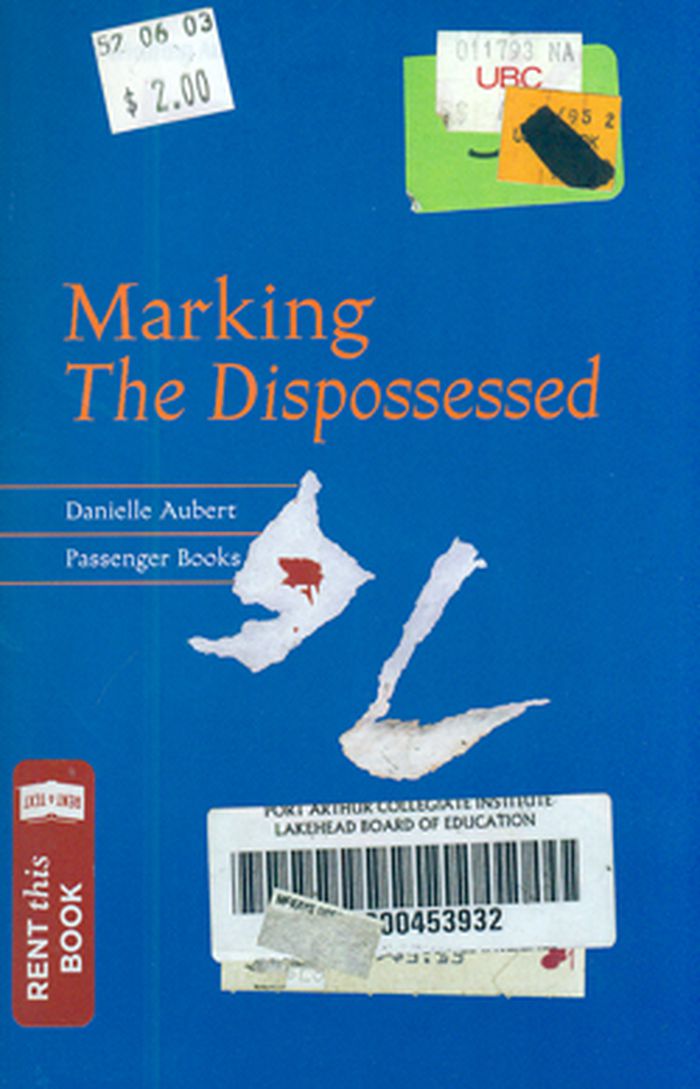
Danielle Aubert's Library of The Dispossessed examines the lived experience of one hundred used copies of "The Dispossessed", a 1974 science fiction novel by Ursula Le Guin. It takes the form of polyphonic group readings (during which each reader is reading from a different copy of the Library), a book of readers' marks, and an instrumental interpretation of the markings, composed by Jason Treuting of So Percussion and Mobius Percussion. The used, mass market paperback has little value. This particular volume — "The Dispossessed" — is available cheaply or for free as an e-book (Amazon), audio book (Audible), PDF or TeX file (Anarchist Library). Most of the books collected for The Library of the Dispossessed were purchased from online resellers. They are marked by previous owners (New Tecumseth Public Library, Kate Wilkins, Lee W. Smith); bear messages from past readers (“good move!,” “I’m going to vomit,” “don’t ever let yourself be owned”); and carry miscellaneous scraps of paper (a boarding pass, a reminder to pick up Jess at 9:00).
Danielle Aubert: Marking the dispossessed
Actions:
Price:
$44.95
(available to order)
Summary:
Danielle Aubert's Library of The Dispossessed examines the lived experience of one hundred used copies of "The Dispossessed", a 1974 science fiction novel by Ursula Le Guin. It takes the form of polyphonic group readings (during which each reader is reading from a different copy of the Library), a book of readers' marks, and an instrumental interpretation of the markings, composed by Jason Treuting of So Percussion and Mobius Percussion. The used, mass market paperback has little value. This particular volume — "The Dispossessed" — is available cheaply or for free as an e-book (Amazon), audio book (Audible), PDF or TeX file (Anarchist Library). Most of the books collected for The Library of the Dispossessed were purchased from online resellers. They are marked by previous owners (New Tecumseth Public Library, Kate Wilkins, Lee W. Smith); bear messages from past readers (“good move!,” “I’m going to vomit,” “don’t ever let yourself be owned”); and carry miscellaneous scraps of paper (a boarding pass, a reminder to pick up Jess at 9:00).
Form:
books
books
Publication:
July 2015
July 2015
Subject:
Contemporary Art Monographs
Contemporary Art Monographs
Form:
books
books

Price:
$50.95
(available to order)
Summary:
In this sweeping chronicle of guaraná—a glossy-leaved Amazonian vine packed with more caffeine than any other plant—Seth Garfield develops a wide-ranging approach to the history of Brazil itself. The story begins with guaraná as the pre-Columbian cultivar of the Sateré-Mawé people in the Lower Amazon region, where it figured centrally in the Indigenous nation's origin(...)
$50.95
(available to order)
Summary:
In this sweeping chronicle of guaraná—a glossy-leaved Amazonian vine packed with more caffeine than any other plant—Seth Garfield develops a wide-ranging approach to the history of Brazil itself. The story begins with guaraná as the pre-Columbian cultivar of the Sateré-Mawé people in the Lower Amazon region, where it figured centrally in the Indigenous nation's origin(...)
Title:
Guaraná: How Brazil Embraced the World's Most Caffeine-Rich Plant
Actions:
Price:
$50.95
(available to order)
Summary:
In this sweeping chronicle of guaraná—a glossy-leaved Amazonian vine packed with more caffeine than any other plant—Seth Garfield develops a wide-ranging approach to the history of Brazil itself. The story begins with guaraná as the pre-Columbian cultivar of the Sateré-Mawé people in the Lower Amazon region, where it figured centrally in the Indigenous nation's origin stories, dietary regimes, and communal ceremonies. During subsequent centuries of Portuguese colonialism and Brazilian rule, guaraná was reformulated by settlers, scientists, folklorists, food technologists, and marketers. Whether in search of pleasure, profits, professional distinction, or patriotic markers, promoters imparted new meanings to guaraná and found new uses for it. Today, it is the namesake ingredient of a multibillion-dollar soft drink industry and a beloved national symbol. Guaraná’s journey elucidates human impacts on Amazonian ecosystems; the circulation of knowledge, goods, and power; and the promise of modernity in Latin America's largest nation. For Garfield, the beverage's history reveals not only the structuring of inequalities in Brazil but also the mythmaking and ordering of social practices that constitute so-called traditional and modern societies.
Guaraná: How Brazil Embraced the World's Most Caffeine-Rich Plant
Actions:
Price:
$50.95
(available to order)
Summary:
In this sweeping chronicle of guaraná—a glossy-leaved Amazonian vine packed with more caffeine than any other plant—Seth Garfield develops a wide-ranging approach to the history of Brazil itself. The story begins with guaraná as the pre-Columbian cultivar of the Sateré-Mawé people in the Lower Amazon region, where it figured centrally in the Indigenous nation's origin stories, dietary regimes, and communal ceremonies. During subsequent centuries of Portuguese colonialism and Brazilian rule, guaraná was reformulated by settlers, scientists, folklorists, food technologists, and marketers. Whether in search of pleasure, profits, professional distinction, or patriotic markers, promoters imparted new meanings to guaraná and found new uses for it. Today, it is the namesake ingredient of a multibillion-dollar soft drink industry and a beloved national symbol. Guaraná’s journey elucidates human impacts on Amazonian ecosystems; the circulation of knowledge, goods, and power; and the promise of modernity in Latin America's largest nation. For Garfield, the beverage's history reveals not only the structuring of inequalities in Brazil but also the mythmaking and ordering of social practices that constitute so-called traditional and modern societies.
Form:
books
books
Publication:
July 2025
July 2025
Subject:
Food
Food
Form:
books
books
Price:
$49.95
(available to order)
Summary:
''Cloud-to-ground'' is the scientific term for lightning that strikes directly into the ground. Cloud-to-ground, published in conjunction with the Israeli pavilion at the 18th International Architecture Exhibition of the Venice Biennale, investigates the shifts in political power structure that result from the wide-spread use of cloud technology: the storage, processing,(...)
$49.95
(available to order)
Summary:
''Cloud-to-ground'' is the scientific term for lightning that strikes directly into the ground. Cloud-to-ground, published in conjunction with the Israeli pavilion at the 18th International Architecture Exhibition of the Venice Biennale, investigates the shifts in political power structure that result from the wide-spread use of cloud technology: the storage, processing,(...)
Title:
Cloud-to-ground.Israel pavillion, Venice Architecture Biennale
Actions:
Price:
$49.95
(available to order)
Summary:
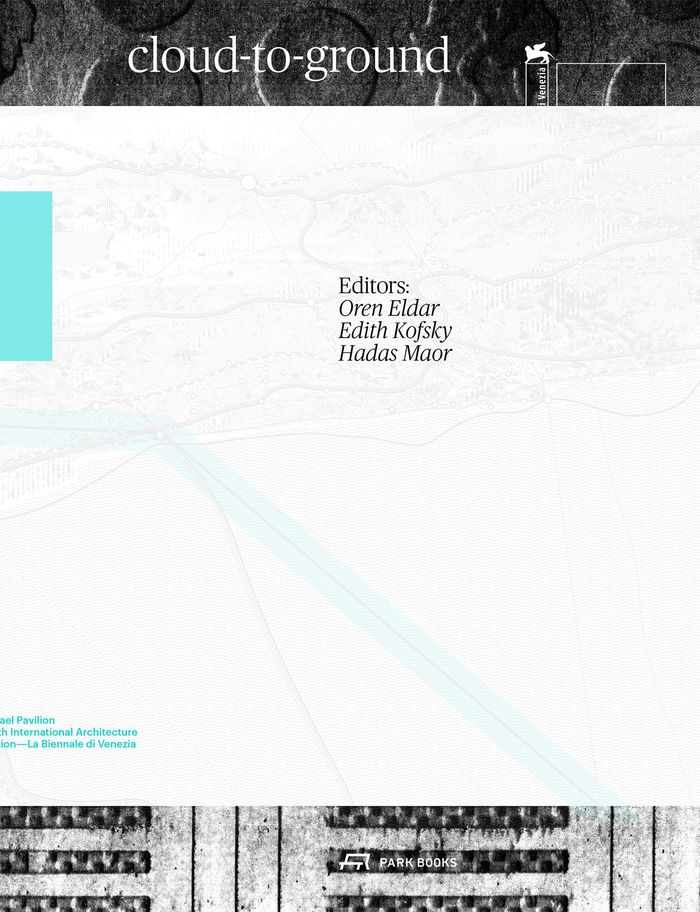
''Cloud-to-ground'' is the scientific term for lightning that strikes directly into the ground. Cloud-to-ground, published in conjunction with the Israeli pavilion at the 18th International Architecture Exhibition of the Venice Biennale, investigates the shifts in political power structure that result from the wide-spread use of cloud technology: the storage, processing, and analysis of inconceivable amounts of data in computer “clouds.” The focus is on major infrastructure projects currently underway in Israel and the Middle East region. These include Nimbus, a major cloud project pursued by the Israeli government for which Google and Amazon are building new powerful data centers, and the Blue Raman fiber-optic cable across the Negev Desert, also laid by Google, which will bypass Egypt on its way from India to Europe and at the same time revive the ancient trade routes that passed through this country. ''Cloud-to-ground'' also documents the decommissioning and demolition of countless telephone exchanges in Israel’s cities that have become obsolete. It thus brings to attention the physical nature of these largely ignored “black box” structures and connects them to the history of the Middle East and recent developments in global communication technology. Essays by prominent Israeli scholars are complemented by numerous photographs, sketches, and archival documents, as well as a newly compiled index of 140 telephone exchanges in Israel.
Cloud-to-ground.Israel pavillion, Venice Architecture Biennale
Actions:
Price:
$49.95
(available to order)
Summary:
''Cloud-to-ground'' is the scientific term for lightning that strikes directly into the ground. Cloud-to-ground, published in conjunction with the Israeli pavilion at the 18th International Architecture Exhibition of the Venice Biennale, investigates the shifts in political power structure that result from the wide-spread use of cloud technology: the storage, processing, and analysis of inconceivable amounts of data in computer “clouds.” The focus is on major infrastructure projects currently underway in Israel and the Middle East region. These include Nimbus, a major cloud project pursued by the Israeli government for which Google and Amazon are building new powerful data centers, and the Blue Raman fiber-optic cable across the Negev Desert, also laid by Google, which will bypass Egypt on its way from India to Europe and at the same time revive the ancient trade routes that passed through this country. ''Cloud-to-ground'' also documents the decommissioning and demolition of countless telephone exchanges in Israel’s cities that have become obsolete. It thus brings to attention the physical nature of these largely ignored “black box” structures and connects them to the history of the Middle East and recent developments in global communication technology. Essays by prominent Israeli scholars are complemented by numerous photographs, sketches, and archival documents, as well as a newly compiled index of 140 telephone exchanges in Israel.
Form:
books
books
Publication:
September 2023
September 2023
Subject:
Biennial
Biennial


