


12071 Results
Form:
books
books
Actions:
Price:
$97.95
(available to order)
Summary:
Architecte, théoricien, urbaniste et écrivain, Jozsef Vago travaille à Budapest (1900-1919, 1926-1940), à Rome (1919-1926) et à Genève (1927-1935), avant de s'établir en France (1940-1947). Jeune diplômé, il s'engage dans la Sécession hongroise fondée par Odon Lechner et s'attache, comme de nombreux architectes de sa génération, à élaborer un nouveau langage architectural(...)
$97.95
(available to order)
Summary:
Architecte, théoricien, urbaniste et écrivain, Jozsef Vago travaille à Budapest (1900-1919, 1926-1940), à Rome (1919-1926) et à Genève (1927-1935), avant de s'établir en France (1940-1947). Jeune diplômé, il s'engage dans la Sécession hongroise fondée par Odon Lechner et s'attache, comme de nombreux architectes de sa génération, à élaborer un nouveau langage architectural(...)
Title:
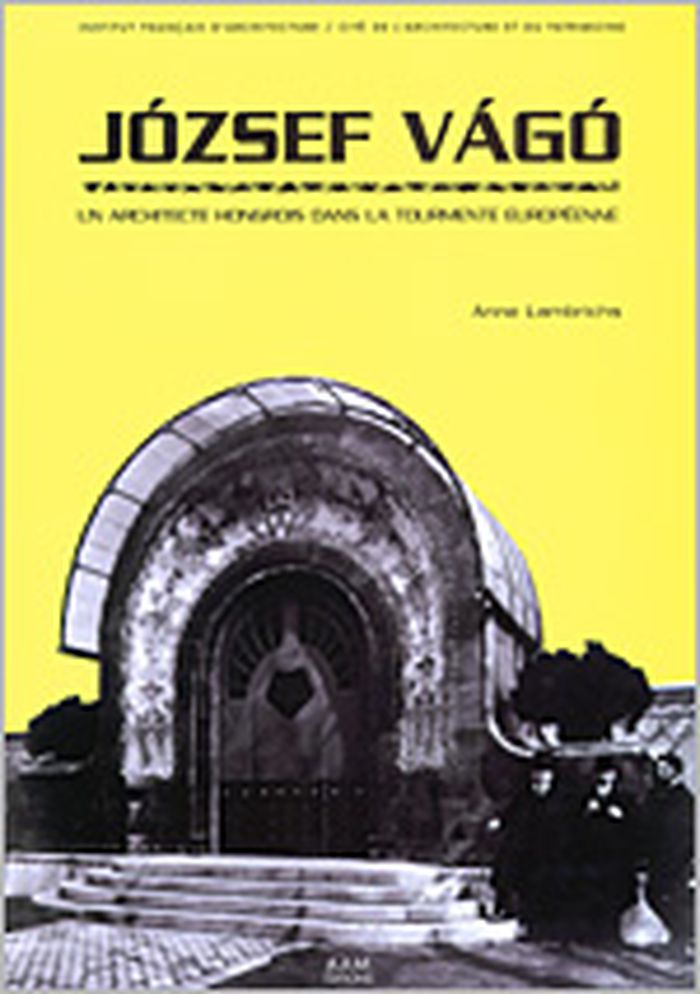
Jozsef Vago 1877-1947 : un architecte hongrois dans la tourmente européenne
Actions:
Price:
$97.95
(available to order)
Summary:
Architecte, théoricien, urbaniste et écrivain, Jozsef Vago travaille à Budapest (1900-1919, 1926-1940), à Rome (1919-1926) et à Genève (1927-1935), avant de s'établir en France (1940-1947). Jeune diplômé, il s'engage dans la Sécession hongroise fondée par Odon Lechner et s'attache, comme de nombreux architectes de sa génération, à élaborer un nouveau langage architectural national qui valorise la culture populaire. Jozsef Vago est aujourd'hui considéré comme l'une des figures de proue du renouveau architectural hongrois. Ses réalisations à Budapest entre 1903 et 1914, fleurons d'architecture " nationale " imprégnés de modernisme viennois, témoignent de son ouverture vers l'Occident et de son attention à la question sociale. Membre du Werkbund, engagé pendant la période révolutionnaire de 1918-1919, il est contraint d'émigrer en Italie lors de l'arrivée au pouvoir de l'amiral Horthy. Installé à Rome entre 1920 et 1926, il tente en vain de s'intégrer à la profession : il élabore des nouvelles typologies d'habitat social pour les cités-jardins romaines, publie de nombreux projets sous le nom de " Giuseppe Vago ", mais ne parvient à obtenir qu'une seule commande à Rome. Sans ressources, confronté à la xénophobie et au fascisme, il se réinstalle à Budapest, où il se voit empêché d'exercer par l'Ordre des architectes hongrois, créé en 1926. Sa victoire au concours du palais de la Société des Nations à Genève en 1927 inaugure une nouvelle phase de sa carrière. Ses démêlés avec ses associés - Henri-Paul Nénot, Jules Flegenheimer, Camille Lefèvre et Carlo Broggi - et avec Le Corbusier au cours de la réalisation du projet l'incitent, dans les années trente et quarante, à prendre part au débat architectural européen, à entamer une importante œuvre de critique et à élaborer une véritable philosophie de l'architecture et de l'urbanisme. Combattant les positions de l'avant-garde architecturale - et notamment de Le Corbusier -, il tente d'établir une synthèse entre les idéaux de l'Art nouveau et du modernisme, estimant que l'architecte doit s'efforcer de répondre aux aspirations sociales et économiques du Mouvement moderne sans pour autant renoncer au " superflu ", c'est-à-dire à la qualité artistique et à l'ornementation. Cette recherche, qui apparaît dans son ouvrage théorique À travers les villes (1930) et dans son projet d'urbanisation de Budapest (1933-1937), trouve son aboutissement dans son projet théorique de reconstruction opposé aux préceptes des CIAM et de la Charte d'Athènes : la Ville de l'Avenir (1940-1945)
Jozsef Vago 1877-1947 : un architecte hongrois dans la tourmente européenne
Actions:
Price:
$97.95
(available to order)
Summary:
Architecte, théoricien, urbaniste et écrivain, Jozsef Vago travaille à Budapest (1900-1919, 1926-1940), à Rome (1919-1926) et à Genève (1927-1935), avant de s'établir en France (1940-1947). Jeune diplômé, il s'engage dans la Sécession hongroise fondée par Odon Lechner et s'attache, comme de nombreux architectes de sa génération, à élaborer un nouveau langage architectural national qui valorise la culture populaire. Jozsef Vago est aujourd'hui considéré comme l'une des figures de proue du renouveau architectural hongrois. Ses réalisations à Budapest entre 1903 et 1914, fleurons d'architecture " nationale " imprégnés de modernisme viennois, témoignent de son ouverture vers l'Occident et de son attention à la question sociale. Membre du Werkbund, engagé pendant la période révolutionnaire de 1918-1919, il est contraint d'émigrer en Italie lors de l'arrivée au pouvoir de l'amiral Horthy. Installé à Rome entre 1920 et 1926, il tente en vain de s'intégrer à la profession : il élabore des nouvelles typologies d'habitat social pour les cités-jardins romaines, publie de nombreux projets sous le nom de " Giuseppe Vago ", mais ne parvient à obtenir qu'une seule commande à Rome. Sans ressources, confronté à la xénophobie et au fascisme, il se réinstalle à Budapest, où il se voit empêché d'exercer par l'Ordre des architectes hongrois, créé en 1926. Sa victoire au concours du palais de la Société des Nations à Genève en 1927 inaugure une nouvelle phase de sa carrière. Ses démêlés avec ses associés - Henri-Paul Nénot, Jules Flegenheimer, Camille Lefèvre et Carlo Broggi - et avec Le Corbusier au cours de la réalisation du projet l'incitent, dans les années trente et quarante, à prendre part au débat architectural européen, à entamer une importante œuvre de critique et à élaborer une véritable philosophie de l'architecture et de l'urbanisme. Combattant les positions de l'avant-garde architecturale - et notamment de Le Corbusier -, il tente d'établir une synthèse entre les idéaux de l'Art nouveau et du modernisme, estimant que l'architecte doit s'efforcer de répondre aux aspirations sociales et économiques du Mouvement moderne sans pour autant renoncer au " superflu ", c'est-à-dire à la qualité artistique et à l'ornementation. Cette recherche, qui apparaît dans son ouvrage théorique À travers les villes (1930) et dans son projet d'urbanisation de Budapest (1933-1937), trouve son aboutissement dans son projet théorique de reconstruction opposé aux préceptes des CIAM et de la Charte d'Athènes : la Ville de l'Avenir (1940-1945)
Form:
books
books
Publication:
March 2003, Bruxelles
March 2003, Bruxelles
Subject:
Architecture Monographs
Architecture Monographs
Form:
books
books
Actions:
Price:
$55.00
(available to order)
Summary:
In this collection of idiosyncratic lessons, architect and teacher Pier Paolo Tamburelli engages with the very foundations of architecture, proposing a series of new and open-ended perspectives on how we build the world. Developed for the ''Grundkurs'', or ''basic course'', at Vienna Technical University, Tamburelli’s lessons are presented through the annotated sketches(...)
$55.00
(available to order)
Summary:
In this collection of idiosyncratic lessons, architect and teacher Pier Paolo Tamburelli engages with the very foundations of architecture, proposing a series of new and open-ended perspectives on how we build the world. Developed for the ''Grundkurs'', or ''basic course'', at Vienna Technical University, Tamburelli’s lessons are presented through the annotated sketches(...)
Title:
Grundkurs: What is architecture about?
Actions:
Price:
$55.00
(available to order)
Summary:
In this collection of idiosyncratic lessons, architect and teacher Pier Paolo Tamburelli engages with the very foundations of architecture, proposing a series of new and open-ended perspectives on how we build the world. Developed for the ''Grundkurs'', or ''basic course'', at Vienna Technical University, Tamburelli’s lessons are presented through the annotated sketches that form the basis of his lectures – variously rough and precise, sarcastic and sincere, and always uniquely expressive. This volume is a rich visual sourcebook of architectural ideas that form an accessible and discursive introduction to the discipline – one which pauses on the road to grand theories to learn from the intuitive processes of notetaking, drawing, and association. Tamburelli’s lessons are based around a series of dialectic couples, including Roof/Wall, Shelter/Memory, and Language/Action. The pairs are experimental and often provocative, offering a framework to be used to climb in the direction of architecture. Tamburelli trusts in the capacity of images to suspend the restraints of more rigorous theoretical approaches, embraces the flexible wisdom of the note, and relishes the intrigue of the cryptic messages we leave for ourselves. Reproduced here in their entirety, these eight lessons offer countless routes towards, through, and around architecture, providing newcomers and experts alike with an intimate and refreshing encounter with a millennia-old discipline.
Grundkurs: What is architecture about?
Actions:
Price:
$55.00
(available to order)
Summary:
In this collection of idiosyncratic lessons, architect and teacher Pier Paolo Tamburelli engages with the very foundations of architecture, proposing a series of new and open-ended perspectives on how we build the world. Developed for the ''Grundkurs'', or ''basic course'', at Vienna Technical University, Tamburelli’s lessons are presented through the annotated sketches that form the basis of his lectures – variously rough and precise, sarcastic and sincere, and always uniquely expressive. This volume is a rich visual sourcebook of architectural ideas that form an accessible and discursive introduction to the discipline – one which pauses on the road to grand theories to learn from the intuitive processes of notetaking, drawing, and association. Tamburelli’s lessons are based around a series of dialectic couples, including Roof/Wall, Shelter/Memory, and Language/Action. The pairs are experimental and often provocative, offering a framework to be used to climb in the direction of architecture. Tamburelli trusts in the capacity of images to suspend the restraints of more rigorous theoretical approaches, embraces the flexible wisdom of the note, and relishes the intrigue of the cryptic messages we leave for ourselves. Reproduced here in their entirety, these eight lessons offer countless routes towards, through, and around architecture, providing newcomers and experts alike with an intimate and refreshing encounter with a millennia-old discipline.
Form:
books
books
Publication:
March 2023
March 2023
Subject:
Architectural Theory
Architectural Theory
Form:
books
books
Actions:
Price:
$110.00
(available to order)
Summary:
This book offers a comprehensive look at the extraordinary range of Roche’s built work, from his corporate commissions for more than thirty-eight headquarters for such companies as Aetna, Conoco, General Foods, John Deere, Merck, and Union Carbide, to his master plans of major universities and museums, including the Metropolitan Museum of Art, the American Museum of(...)
$110.00
(available to order)
Summary:
This book offers a comprehensive look at the extraordinary range of Roche’s built work, from his corporate commissions for more than thirty-eight headquarters for such companies as Aetna, Conoco, General Foods, John Deere, Merck, and Union Carbide, to his master plans of major universities and museums, including the Metropolitan Museum of Art, the American Museum of(...)
Title:
Kevin Roche : architecture as environment
Actions:
Price:
$110.00
(available to order)
Summary:
This book offers a comprehensive look at the extraordinary range of Roche’s built work, from his corporate commissions for more than thirty-eight headquarters for such companies as Aetna, Conoco, General Foods, John Deere, Merck, and Union Carbide, to his master plans of major universities and museums, including the Metropolitan Museum of Art, the American Museum of Natural History, and the Central Park Zoo. The book extends to Roche's most recent projects, including recently completed headquarters for Banco Santander in Spain, Bouygues in Paris, and a national convention center in Dublin.
Kevin Roche : architecture as environment
Actions:
Price:
$110.00
(available to order)
Summary:
This book offers a comprehensive look at the extraordinary range of Roche’s built work, from his corporate commissions for more than thirty-eight headquarters for such companies as Aetna, Conoco, General Foods, John Deere, Merck, and Union Carbide, to his master plans of major universities and museums, including the Metropolitan Museum of Art, the American Museum of Natural History, and the Central Park Zoo. The book extends to Roche's most recent projects, including recently completed headquarters for Banco Santander in Spain, Bouygues in Paris, and a national convention center in Dublin.
Form:
books
books
Publication:
February 2011
February 2011
Subject:
Architecture Monographs
Architecture Monographs
Form:
books
books

Actions:
Price:
$89.95
(available to order)
Summary:
The work of New Mexico architect Antoine Predock is known around the world. In 2006, the American Institute of Architects awarded Predock its Gold Medal, the highest honor it can bestow on an individual, aligning him with such celebrated modern architects as Frank Lloyd Wright, Le Corbusier, and Louis Kahn. In Roadcut, architectural historian Christopher Curtis Mead(...)
$89.95
(available to order)
Summary:
The work of New Mexico architect Antoine Predock is known around the world. In 2006, the American Institute of Architects awarded Predock its Gold Medal, the highest honor it can bestow on an individual, aligning him with such celebrated modern architects as Frank Lloyd Wright, Le Corbusier, and Louis Kahn. In Roadcut, architectural historian Christopher Curtis Mead(...)
Title:
Roadcut: Architecture of Antoine Predock
Actions:
Price:
$89.95
(available to order)
Summary:
The work of New Mexico architect Antoine Predock is known around the world. In 2006, the American Institute of Architects awarded Predock its Gold Medal, the highest honor it can bestow on an individual, aligning him with such celebrated modern architects as Frank Lloyd Wright, Le Corbusier, and Louis Kahn. In Roadcut, architectural historian Christopher Curtis Mead traces Predock's development over forty years from early work in Albuquerque--the housing complex La Luz and the Rio Grande Nature Center--to twenty-first-century projects like Winnipeg's Canadian Museum for Human Rights. Mead also gives special attention to the Nelson Fine Arts Center in Tempe, Arizona, the American Heritage Center and University Art Museum at the University of Wyoming, the Turtle Creek House in Dallas, the Austin City Hall and Public Plaza in Texas, and George Pearl Hall at the University of New Mexico.
Roadcut: Architecture of Antoine Predock
Actions:
Price:
$89.95
(available to order)
Summary:
The work of New Mexico architect Antoine Predock is known around the world. In 2006, the American Institute of Architects awarded Predock its Gold Medal, the highest honor it can bestow on an individual, aligning him with such celebrated modern architects as Frank Lloyd Wright, Le Corbusier, and Louis Kahn. In Roadcut, architectural historian Christopher Curtis Mead traces Predock's development over forty years from early work in Albuquerque--the housing complex La Luz and the Rio Grande Nature Center--to twenty-first-century projects like Winnipeg's Canadian Museum for Human Rights. Mead also gives special attention to the Nelson Fine Arts Center in Tempe, Arizona, the American Heritage Center and University Art Museum at the University of Wyoming, the Turtle Creek House in Dallas, the Austin City Hall and Public Plaza in Texas, and George Pearl Hall at the University of New Mexico.
Form:
books
books
Publication:
April 2011
April 2011
Subject:
Architecture Monographs
Architecture Monographs
Form:
books
books
Actions:
Price:
$95.00
(available to order)
Summary:
This publication traces the interaction between culture and politics as reflected in Canadian architecture and the infrastructure of ordinary life, from the first contacts between indigenous peoples and European missionaries to the construction of big-box shopping centres in postmodern cities. Whether focusing on Jesuit perceptions of New France, the construction of(...)
$95.00
(available to order)
Summary:
This publication traces the interaction between culture and politics as reflected in Canadian architecture and the infrastructure of ordinary life, from the first contacts between indigenous peoples and European missionaries to the construction of big-box shopping centres in postmodern cities. Whether focusing on Jesuit perceptions of New France, the construction of(...)
Title:
Architecture and the Canadian fabric
Actions:
Price:
$95.00
(available to order)
Summary:
This publication traces the interaction between culture and politics as reflected in Canadian architecture and the infrastructure of ordinary life, from the first contacts between indigenous peoples and European missionaries to the construction of big-box shopping centres in postmodern cities. Whether focusing on Jesuit perceptions of New France, the construction of Toronto’s St. James Cathedral or Canada’s first Parliament, Brutalism in Canadian architecture, or the ideas of Marshall McLuhan and Arthur Erickson, these essays showcase ways of thinking about the built environment that extend beyond considerations of authorship and style to address the influence of cultural politics and insights from race and gender studies and from postcolonial and spatial theory.
Architecture and the Canadian fabric
Actions:
Price:
$95.00
(available to order)
Summary:
This publication traces the interaction between culture and politics as reflected in Canadian architecture and the infrastructure of ordinary life, from the first contacts between indigenous peoples and European missionaries to the construction of big-box shopping centres in postmodern cities. Whether focusing on Jesuit perceptions of New France, the construction of Toronto’s St. James Cathedral or Canada’s first Parliament, Brutalism in Canadian architecture, or the ideas of Marshall McLuhan and Arthur Erickson, these essays showcase ways of thinking about the built environment that extend beyond considerations of authorship and style to address the influence of cultural politics and insights from race and gender studies and from postcolonial and spatial theory.
Form:
books
books
Publication:
October 2011
October 2011
Subject:
Architecture in Canada
Architecture in Canada
Form:
books
books
Price:
$33.95
(available in store)
Summary:
Peut-on être architecte sans avoir lu Heidegger ? Peut-on bâtir au sens vrai sans avoir approché la pensée, complexe et profonde, de l’auteur, en 1951, de l’essai « Bâtir, habiter, penser » ? La question peut sembler incongrue ; elle s’impose pourtant comme une évidence à la lecture de ce livre. Partant du fait qu’il ne suffit pas d’être abrité pour habiter, différence(...)
$33.95
(available in store)
Summary:
Peut-on être architecte sans avoir lu Heidegger ? Peut-on bâtir au sens vrai sans avoir approché la pensée, complexe et profonde, de l’auteur, en 1951, de l’essai « Bâtir, habiter, penser » ? La question peut sembler incongrue ; elle s’impose pourtant comme une évidence à la lecture de ce livre. Partant du fait qu’il ne suffit pas d’être abrité pour habiter, différence(...)
Title:
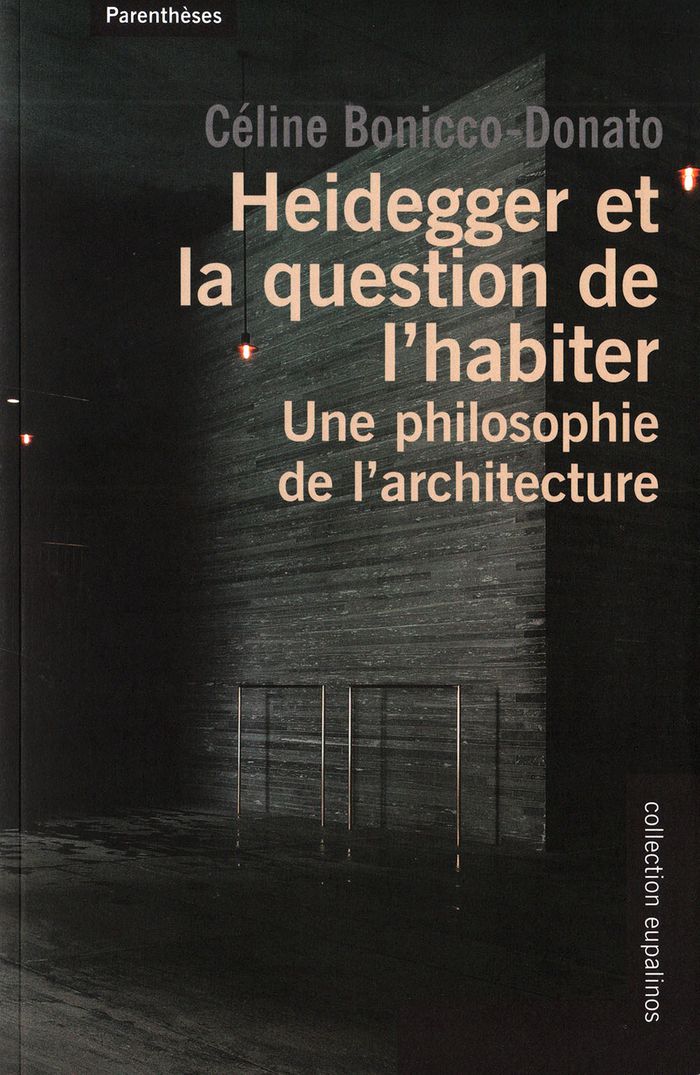
Heidegger et la question de l'habiter : une philosophie de l'architecture
Actions:
Price:
$33.95
(available in store)
Summary:
Peut-on être architecte sans avoir lu Heidegger ? Peut-on bâtir au sens vrai sans avoir approché la pensée, complexe et profonde, de l’auteur, en 1951, de l’essai « Bâtir, habiter, penser » ? La question peut sembler incongrue ; elle s’impose pourtant comme une évidence à la lecture de ce livre. Partant du fait qu’il ne suffit pas d’être abrité pour habiter, différence primordiale que Heidegger établit tandis que l’Allemagne de l’après-guerre construit à tout-va, c’est à la question de l’être de l’homme qu’il en vient. Et, au fil de sa réflexion, l’architecte, que le philosophe appelle à être jardinier du monde, se révèle être un protagoniste clé de l’accomplissement de l’existence humaine. La dissection méthodique et éclairante du raisonnement heideggérien opérée ici a le mérite de ne pas s’adresser aux seuls philosophes ; tout architecte ou apprenti architecte y trouvera matière à nourrir à la fois sa sensibilité intime et sa pratique.
Heidegger et la question de l'habiter : une philosophie de l'architecture
Actions:
Price:
$33.95
(available in store)
Summary:
Peut-on être architecte sans avoir lu Heidegger ? Peut-on bâtir au sens vrai sans avoir approché la pensée, complexe et profonde, de l’auteur, en 1951, de l’essai « Bâtir, habiter, penser » ? La question peut sembler incongrue ; elle s’impose pourtant comme une évidence à la lecture de ce livre. Partant du fait qu’il ne suffit pas d’être abrité pour habiter, différence primordiale que Heidegger établit tandis que l’Allemagne de l’après-guerre construit à tout-va, c’est à la question de l’être de l’homme qu’il en vient. Et, au fil de sa réflexion, l’architecte, que le philosophe appelle à être jardinier du monde, se révèle être un protagoniste clé de l’accomplissement de l’existence humaine. La dissection méthodique et éclairante du raisonnement heideggérien opérée ici a le mérite de ne pas s’adresser aux seuls philosophes ; tout architecte ou apprenti architecte y trouvera matière à nourrir à la fois sa sensibilité intime et sa pratique.
Form:
books
books
Publication:
June 2019
June 2019
Subject:
Architectural Theory
Architectural Theory
Form:
books
books
Actions:
Price:
$36.00
(available to order)
Summary:
With today's ecological imperatives, contemporary architecture faces its greatest challenges since Modernism. In 2009, Denmark hosted an international summit on climate and sustainability. The Louisiana Museum is supporting this event with a major exhibition, The Future Has Arrived: Architecture for a Sustainable World, the second show in the series The Frontiers of(...)
$36.00
(available to order)
Summary:
With today's ecological imperatives, contemporary architecture faces its greatest challenges since Modernism. In 2009, Denmark hosted an international summit on climate and sustainability. The Louisiana Museum is supporting this event with a major exhibition, The Future Has Arrived: Architecture for a Sustainable World, the second show in the series The Frontiers of(...)
Title:
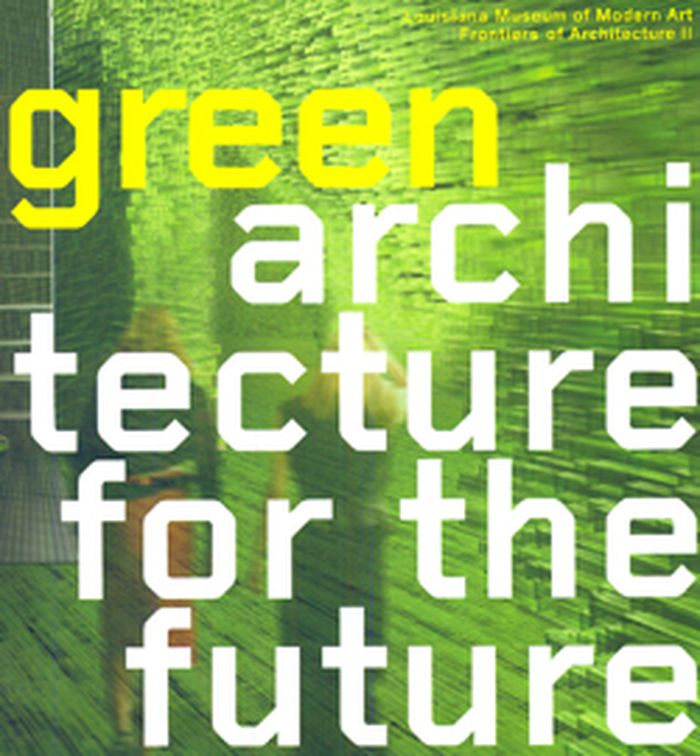
Green architecture for the future
Actions:
Price:
$36.00
(available to order)
Summary:
With today's ecological imperatives, contemporary architecture faces its greatest challenges since Modernism. In 2009, Denmark hosted an international summit on climate and sustainability. The Louisiana Museum is supporting this event with a major exhibition, The Future Has Arrived: Architecture for a Sustainable World, the second show in the series The Frontiers of Architecture. This exhibition catalogue presents a spectrum of new visions for sustainable global development, based upon the three parameters of economy, environment and social change, with essays by German architect Wilfried Wang, Danish philosopher Ole Thyssen and interviews with Ecosistema Urbano, Foster & Partners, Philippe Rahm and R(n).
Green architecture for the future
Actions:
Price:
$36.00
(available to order)
Summary:
With today's ecological imperatives, contemporary architecture faces its greatest challenges since Modernism. In 2009, Denmark hosted an international summit on climate and sustainability. The Louisiana Museum is supporting this event with a major exhibition, The Future Has Arrived: Architecture for a Sustainable World, the second show in the series The Frontiers of Architecture. This exhibition catalogue presents a spectrum of new visions for sustainable global development, based upon the three parameters of economy, environment and social change, with essays by German architect Wilfried Wang, Danish philosopher Ole Thyssen and interviews with Ecosistema Urbano, Foster & Partners, Philippe Rahm and R(n).
Form:
books
books
Publication:
December 2009
December 2009
Subject:
Green Architecture
Green Architecture
Form:
books
books
Actions:
Price:
$45.00
(available to order)
Summary:
Depuis l'apparition des piscines dans les demeures modernes, dont la villa Noailles constitue elle-même un exemple notoire, jusqu'aux expérimentations les plus contemporaines, l'exposition retrace les dispositifs architecturaux mis en oeuvre pour se baigner. L'exposition aborde également les formes vernaculaires et industrielles des piscines privées, que les innovations(...)
$45.00
(available to order)
Summary:
Depuis l'apparition des piscines dans les demeures modernes, dont la villa Noailles constitue elle-même un exemple notoire, jusqu'aux expérimentations les plus contemporaines, l'exposition retrace les dispositifs architecturaux mis en oeuvre pour se baigner. L'exposition aborde également les formes vernaculaires et industrielles des piscines privées, que les innovations(...)
Title:
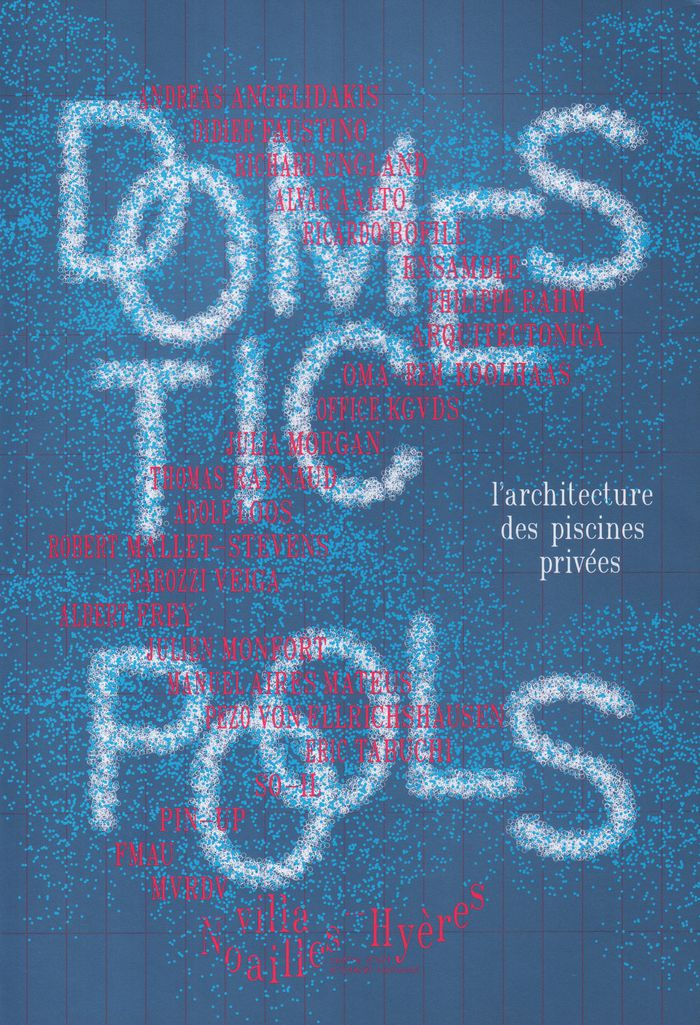
Domestic pools : l'architecture des piscines privées
Actions:
Price:
$45.00
(available to order)
Summary:
Depuis l'apparition des piscines dans les demeures modernes, dont la villa Noailles constitue elle-même un exemple notoire, jusqu'aux expérimentations les plus contemporaines, l'exposition retrace les dispositifs architecturaux mis en oeuvre pour se baigner. L'exposition aborde également les formes vernaculaires et industrielles des piscines privées, que les innovations techniques ont progressivement rendues accessibles aux classes moyennes. En se focalisant exclusivement sur cette pièce nouvelle qui marque l'architecture domestique du XXe siècle, l'exposition explore les cultures et les représentations que les piscines privées ont construites.
Domestic pools : l'architecture des piscines privées
Actions:
Price:
$45.00
(available to order)
Summary:
Depuis l'apparition des piscines dans les demeures modernes, dont la villa Noailles constitue elle-même un exemple notoire, jusqu'aux expérimentations les plus contemporaines, l'exposition retrace les dispositifs architecturaux mis en oeuvre pour se baigner. L'exposition aborde également les formes vernaculaires et industrielles des piscines privées, que les innovations techniques ont progressivement rendues accessibles aux classes moyennes. En se focalisant exclusivement sur cette pièce nouvelle qui marque l'architecture domestique du XXe siècle, l'exposition explore les cultures et les représentations que les piscines privées ont construites.
Form:
books
books
Publication:
March 2018
March 2018
Subject:
Residential Architecture
Residential Architecture
Form:
books
books
Actions:
Price:
$29.95
(available to order)
Summary:
Publié sous la direction de Jean-Louis Cohen, cet ouvrage est le premier de la nouvelle collection « Recherche & architecture », éditée par le Bureau de la recherche architecturale, urbaine et paysagère (Braup), du ministère de la Culture. La politique du Braup vise à soutenir les publications scientifiques issues des unités de recherche des Écoles nationales supérieures(...)
$29.95
(available to order)
Summary:
Publié sous la direction de Jean-Louis Cohen, cet ouvrage est le premier de la nouvelle collection « Recherche & architecture », éditée par le Bureau de la recherche architecturale, urbaine et paysagère (Braup), du ministère de la Culture. La politique du Braup vise à soutenir les publications scientifiques issues des unités de recherche des Écoles nationales supérieures(...)
Title:
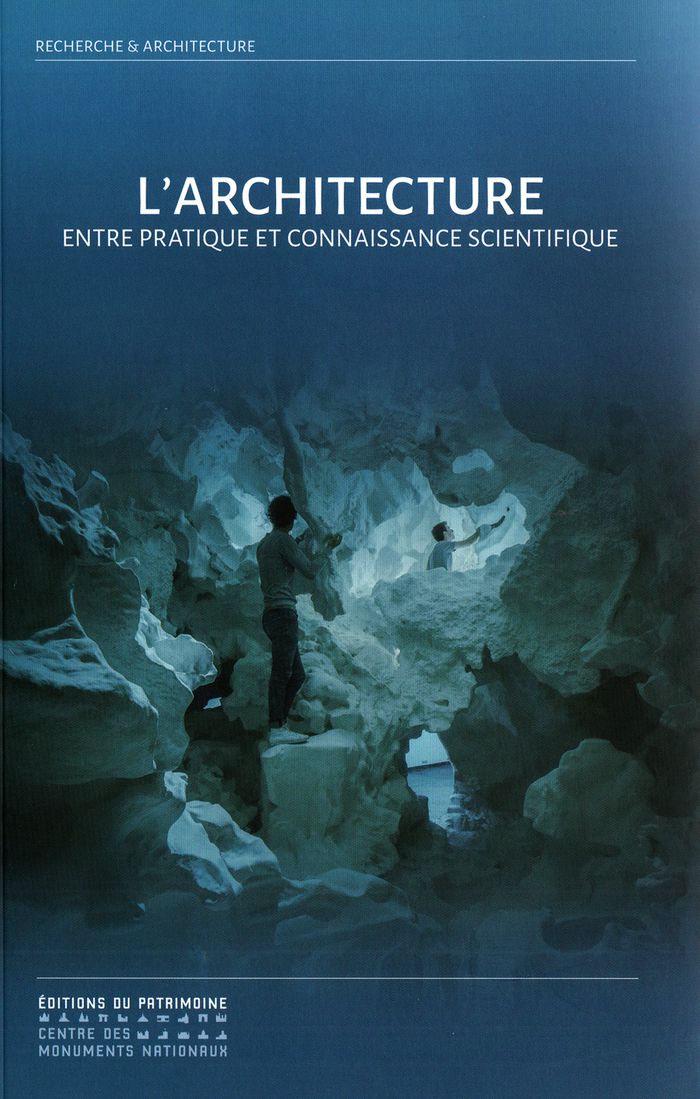
L'architecture entre pratique et connaissance scientifique
Actions:
Price:
$29.95
(available to order)
Summary:
Publié sous la direction de Jean-Louis Cohen, cet ouvrage est le premier de la nouvelle collection « Recherche & architecture », éditée par le Bureau de la recherche architecturale, urbaine et paysagère (Braup), du ministère de la Culture. La politique du Braup vise à soutenir les publications scientifiques issues des unités de recherche des Écoles nationales supérieures en architecture. Ces publications proviennent de rapports de recherche, de thèses de doctorat ou de colloques organisés par les écoles et sont destinées à la communauté scientifique, aux étudiants, aux professionnels ou à un public plus large encore. L’objectif étant d’assurer une visibilité aux recherches menées dans les écoles et de participer à la reconnaissance de l’architecture en tant que discipline.
L'architecture entre pratique et connaissance scientifique
Actions:
Price:
$29.95
(available to order)
Summary:
Publié sous la direction de Jean-Louis Cohen, cet ouvrage est le premier de la nouvelle collection « Recherche & architecture », éditée par le Bureau de la recherche architecturale, urbaine et paysagère (Braup), du ministère de la Culture. La politique du Braup vise à soutenir les publications scientifiques issues des unités de recherche des Écoles nationales supérieures en architecture. Ces publications proviennent de rapports de recherche, de thèses de doctorat ou de colloques organisés par les écoles et sont destinées à la communauté scientifique, aux étudiants, aux professionnels ou à un public plus large encore. L’objectif étant d’assurer une visibilité aux recherches menées dans les écoles et de participer à la reconnaissance de l’architecture en tant que discipline.
Form:
books
books
Publication:
September 2018
September 2018
Subject:
Architectural Theory
Architectural Theory
Form:
books
books
Actions:
Price:
$41.95
(available to order)
Summary:
'Authorship' critically examines emergent themes in contemporary architecture by revisiting the seemingly defunct notion of design authorship. As we revel in the death of the master architect, how do we come to terms with the shifting role of creativity in architecture’s cultural production? In 'Authorship', a cross-disciplinary group of designers and scholars explores(...)
$41.95
(available to order)
Summary:
'Authorship' critically examines emergent themes in contemporary architecture by revisiting the seemingly defunct notion of design authorship. As we revel in the death of the master architect, how do we come to terms with the shifting role of creativity in architecture’s cultural production? In 'Authorship', a cross-disciplinary group of designers and scholars explores(...)
Title:
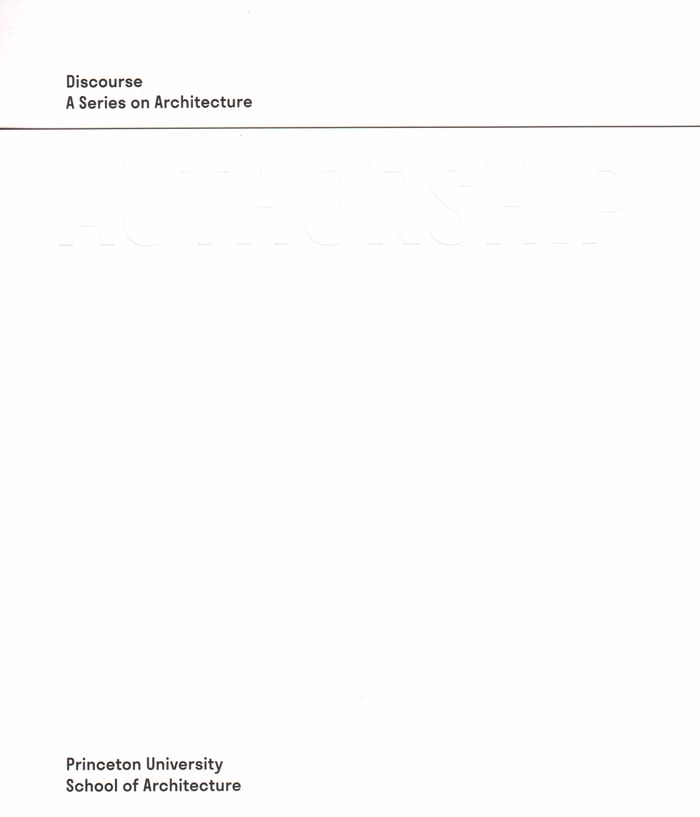
Authorship. Discourse, a series on architecture
Actions:
Price:
$41.95
(available to order)
Summary:
'Authorship' critically examines emergent themes in contemporary architecture by revisiting the seemingly defunct notion of design authorship. As we revel in the death of the master architect, how do we come to terms with the shifting role of creativity in architecture’s cultural production? In 'Authorship', a cross-disciplinary group of designers and scholars explores this topic through a myriad of lenses.
Authorship. Discourse, a series on architecture
Actions:
Price:
$41.95
(available to order)
Summary:
'Authorship' critically examines emergent themes in contemporary architecture by revisiting the seemingly defunct notion of design authorship. As we revel in the death of the master architect, how do we come to terms with the shifting role of creativity in architecture’s cultural production? In 'Authorship', a cross-disciplinary group of designers and scholars explores this topic through a myriad of lenses.
Form:
books
books
Publication:
January 2019
January 2019
Subject:
Architectural Theory
Architectural Theory


