


2576 Results
Form:
books
books
Actions:
Price:
$39.50
(available to order)
Summary:
The early twentieth century was a time of extraordinary change in Europe. War and revolution shattered the traditional cohesion of European civilisation, while the machine age brought mass production and distribution and a new sense of internationalism. This ‘heroic’ period of modernity found particularly forceful expression in graphic design and photomontage throughout(...)
$39.50
(available to order)
Summary:
The early twentieth century was a time of extraordinary change in Europe. War and revolution shattered the traditional cohesion of European civilisation, while the machine age brought mass production and distribution and a new sense of internationalism. This ‘heroic’ period of modernity found particularly forceful expression in graphic design and photomontage throughout(...)
Subject:
Graphic Design and Typography
Graphic Design and Typography
Publication:
October 2004, London
October 2004, London
Title:
Avant-garde graphics 1918- 1934
Actions:
Price:
$39.50
(available to order)
Summary:
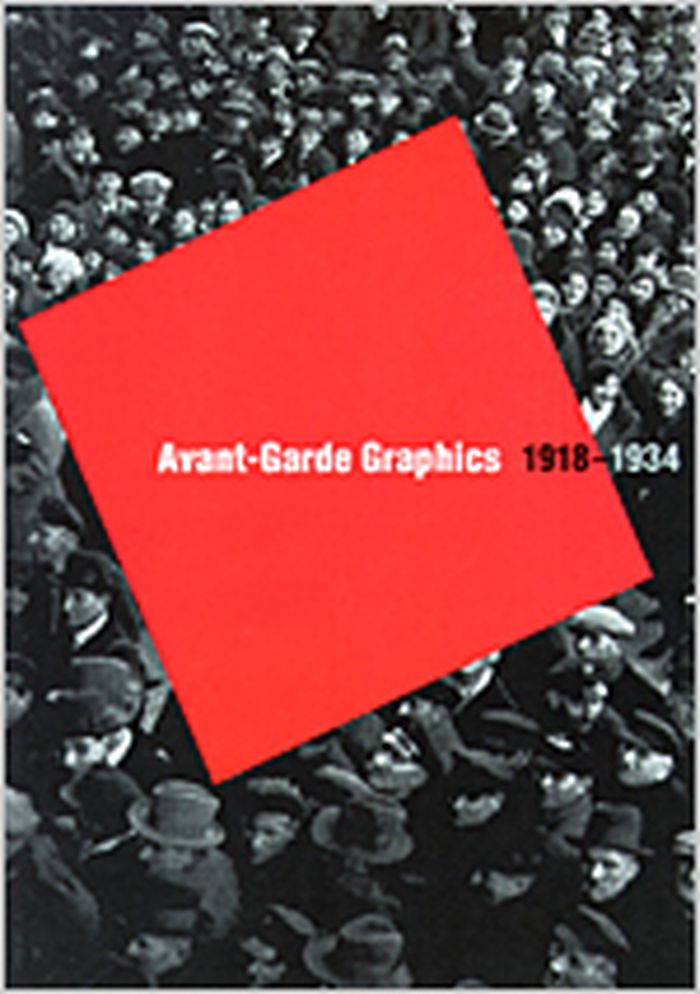
The early twentieth century was a time of extraordinary change in Europe. War and revolution shattered the traditional cohesion of European civilisation, while the machine age brought mass production and distribution and a new sense of internationalism. This ‘heroic’ period of modernity found particularly forceful expression in graphic design and photomontage throughout Europe, where new techniques allowed a fusion of typography, painting and photography, evoking the dynamism and fragmentation of cinema. "Avant-garde Graphics: 1918 – 34" showcases the work of many of the leading practitioners of the Modern movement, from Italian Futurists, the Dutch members of De Stijl and the German Bauhaus, to the Constructivists of Russia and central Europe. Drawn from the collection of Merrill C. Berman, one of the greatest collections of twentieth-century graphic art in the world, this book features colour reproductions of original posters, prints, book designs and political and commercial ephemera, together with original designers’ layouts and photomontages.
Avant-garde graphics 1918- 1934
Actions:
Price:
$39.50
(available to order)
Summary:
The early twentieth century was a time of extraordinary change in Europe. War and revolution shattered the traditional cohesion of European civilisation, while the machine age brought mass production and distribution and a new sense of internationalism. This ‘heroic’ period of modernity found particularly forceful expression in graphic design and photomontage throughout Europe, where new techniques allowed a fusion of typography, painting and photography, evoking the dynamism and fragmentation of cinema. "Avant-garde Graphics: 1918 – 34" showcases the work of many of the leading practitioners of the Modern movement, from Italian Futurists, the Dutch members of De Stijl and the German Bauhaus, to the Constructivists of Russia and central Europe. Drawn from the collection of Merrill C. Berman, one of the greatest collections of twentieth-century graphic art in the world, this book features colour reproductions of original posters, prints, book designs and political and commercial ephemera, together with original designers’ layouts and photomontages.
Form:
books
books
Publication:
October 2004, London
October 2004, London
Subject:
Graphic Design and Typography
Graphic Design and Typography
Form:
books
books

Actions:
Price:
$50.00
(available to order)
Summary:
During the 18th century a remarkable group of women formed the Bluestocking Salon, where women and men met to debate contemporary ideas and promote the life of the mind. Together, these cultural innovators helped forge new roles for women as influential thinkers, writers, and artists, and their creative achievements were publicly celebrated. Richly illustrated(...)
$50.00
(available to order)
Summary:
During the 18th century a remarkable group of women formed the Bluestocking Salon, where women and men met to debate contemporary ideas and promote the life of the mind. Together, these cultural innovators helped forge new roles for women as influential thinkers, writers, and artists, and their creative achievements were publicly celebrated. Richly illustrated(...)
Subject:
History until 1900
History until 1900
Publication:
June 2008, New Haven, London
June 2008, New Haven, London
Title:
Brilliant women : 18th-century bluestockings
Actions:
Price:
$50.00
(available to order)
Summary:
During the 18th century a remarkable group of women formed the Bluestocking Salon, where women and men met to debate contemporary ideas and promote the life of the mind. Together, these cultural innovators helped forge new roles for women as influential thinkers, writers, and artists, and their creative achievements were publicly celebrated. Richly illustrated with portraits, prints, and personal artifacts, "Brilliant women" tells the story of this fascinating group of women. The authors chart the changing fortunes of the female intellectual and explore how a number of bluestocking women, such as artist Angelica Kauffmann, historian Catharine Macaulay, and early feminist Mary Wollstonecraft, used portraiture to advance their work and their reputations in a period framed by the Enlightenment and the French Revolution. "Brilliant women" pays tribute to the friendships and achievements of these bluestocking women, presenting new information on the range of cultural activities in which they were engaged, as well as celebrating their legacy.
Brilliant women : 18th-century bluestockings
Actions:
Price:
$50.00
(available to order)
Summary:
During the 18th century a remarkable group of women formed the Bluestocking Salon, where women and men met to debate contemporary ideas and promote the life of the mind. Together, these cultural innovators helped forge new roles for women as influential thinkers, writers, and artists, and their creative achievements were publicly celebrated. Richly illustrated with portraits, prints, and personal artifacts, "Brilliant women" tells the story of this fascinating group of women. The authors chart the changing fortunes of the female intellectual and explore how a number of bluestocking women, such as artist Angelica Kauffmann, historian Catharine Macaulay, and early feminist Mary Wollstonecraft, used portraiture to advance their work and their reputations in a period framed by the Enlightenment and the French Revolution. "Brilliant women" pays tribute to the friendships and achievements of these bluestocking women, presenting new information on the range of cultural activities in which they were engaged, as well as celebrating their legacy.
Form:
books
books
Publication:
June 2008, New Haven, London
June 2008, New Haven, London
Subject:
History until 1900
History until 1900
Form:
books
books
Actions:
Price:
$54.95
(available in store)
Summary:
The moment human fingertips lifted from the ground, upright walking became a privilege rather than a mere posture. The liberated hands could now be used to create tools for defense and hunting. The pupils’ gazes shifted from a level view to a downward perspective, a physical change that also translated into an awareness that overlooked other species. The spine, situated(...)
$54.95
(available in store)
Summary:
The moment human fingertips lifted from the ground, upright walking became a privilege rather than a mere posture. The liberated hands could now be used to create tools for defense and hunting. The pupils’ gazes shifted from a level view to a downward perspective, a physical change that also translated into an awareness that overlooked other species. The spine, situated(...)
Title:
te magazine no.4: Spinal Memory
Actions:
Price:
$54.95
(available in store)
Summary:
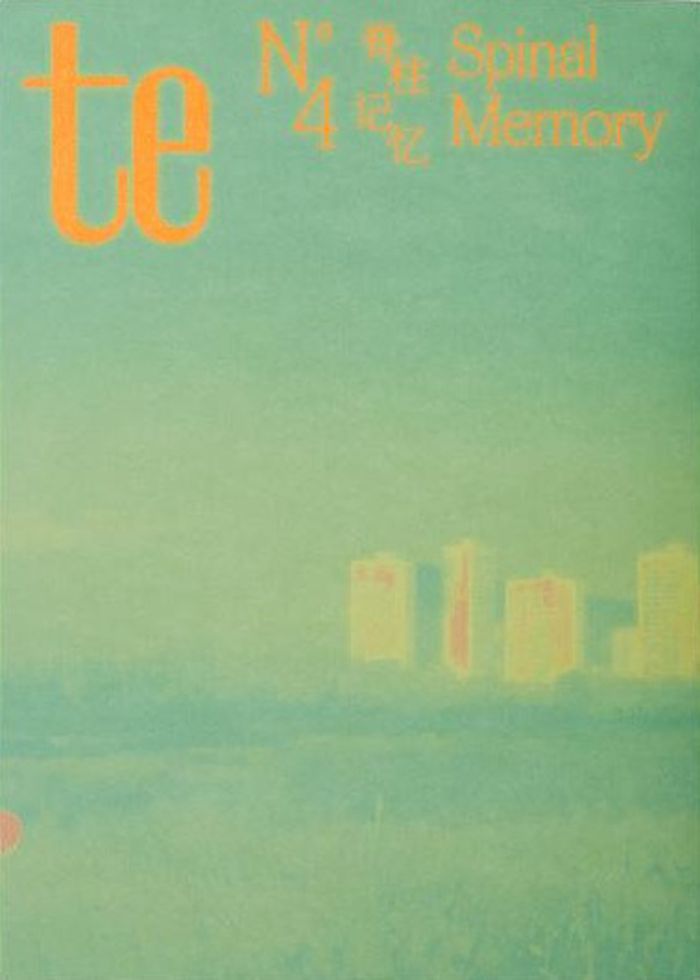
The moment human fingertips lifted from the ground, upright walking became a privilege rather than a mere posture. The liberated hands could now be used to create tools for defense and hunting. The pupils’ gazes shifted from a level view to a downward perspective, a physical change that also translated into an awareness that overlooked other species. The spine, situated at the center of the human body, acts like a covert ruler, measuring the scale of evolution and supporting the illusion of being "human-centric." Thus, humans stand, placing themselves far above all other creatures. Following this profound gestural revolution came the imagination and manipulation of non-human animals (the Others), turning them into livestock and companions, as their wildness was rewritten as docility. Their bodies became resources to be medicated and refined, transforming into instruments for milk and nutritious meat production. They became basic knowledge and research data, linking humanity’s ever-expanding and illusory colonial territories.
te magazine no.4: Spinal Memory
Actions:
Price:
$54.95
(available in store)
Summary:
The moment human fingertips lifted from the ground, upright walking became a privilege rather than a mere posture. The liberated hands could now be used to create tools for defense and hunting. The pupils’ gazes shifted from a level view to a downward perspective, a physical change that also translated into an awareness that overlooked other species. The spine, situated at the center of the human body, acts like a covert ruler, measuring the scale of evolution and supporting the illusion of being "human-centric." Thus, humans stand, placing themselves far above all other creatures. Following this profound gestural revolution came the imagination and manipulation of non-human animals (the Others), turning them into livestock and companions, as their wildness was rewritten as docility. Their bodies became resources to be medicated and refined, transforming into instruments for milk and nutritious meat production. They became basic knowledge and research data, linking humanity’s ever-expanding and illusory colonial territories.
Form:
books
books
Publication:
May 2026
May 2026
Subject:
Magazines
Magazines
Form:
books
books
Actions:
Price:
$34.50
(available in store)
Summary:
This book offers a comprehensive account of modern Spanish culture, tracing its dramatic and often unexpected development from its beginnings after the Revolution of 1868 to the present day. Specially-commissioned essays by leading experts provide analyses of the historical and political background of modern Spain, the culture of the major autonomous regions (notably(...)
$34.50
(available in store)
Summary:
This book offers a comprehensive account of modern Spanish culture, tracing its dramatic and often unexpected development from its beginnings after the Revolution of 1868 to the present day. Specially-commissioned essays by leading experts provide analyses of the historical and political background of modern Spain, the culture of the major autonomous regions (notably(...)
Title:
The Cambridge companion to modern Spanish culture
Actions:
Price:
$34.50
(available in store)
Summary:
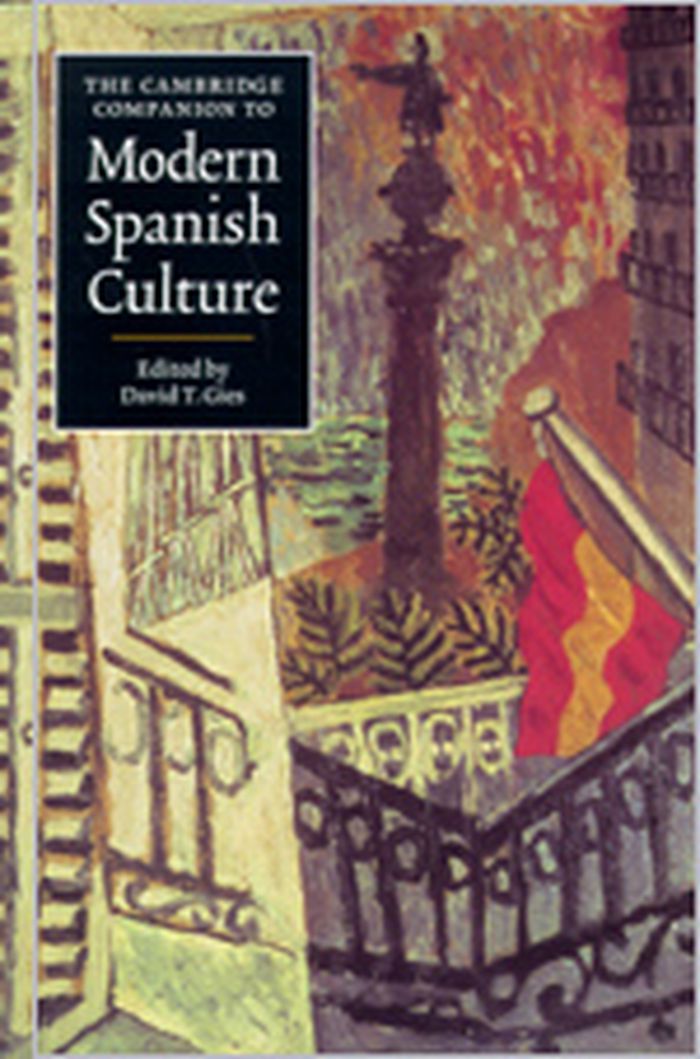
This book offers a comprehensive account of modern Spanish culture, tracing its dramatic and often unexpected development from its beginnings after the Revolution of 1868 to the present day. Specially-commissioned essays by leading experts provide analyses of the historical and political background of modern Spain, the culture of the major autonomous regions (notably Castile, Catalonia, and the Basque Country), and the country’s literature: narrative, poetry, theatre and the essay. Spain’s recent development is divided into three main phases: from 1868 to the outbreak of the Spanish Civil War; the period of the dictatorship of Francisco Franco; and the post-Franco arrival of democracy. The concept of ‘Spanish culture’ is investigated, and there are studies of Spanish painting and sculpture, architecture, cinema, dance, music, and the modern media. A chronology and guides to further reading are provided, making the volume an invaluable introduction to the politics, literature and culture of modern Spain.
The Cambridge companion to modern Spanish culture
Actions:
Price:
$34.50
(available in store)
Summary:
This book offers a comprehensive account of modern Spanish culture, tracing its dramatic and often unexpected development from its beginnings after the Revolution of 1868 to the present day. Specially-commissioned essays by leading experts provide analyses of the historical and political background of modern Spain, the culture of the major autonomous regions (notably Castile, Catalonia, and the Basque Country), and the country’s literature: narrative, poetry, theatre and the essay. Spain’s recent development is divided into three main phases: from 1868 to the outbreak of the Spanish Civil War; the period of the dictatorship of Francisco Franco; and the post-Franco arrival of democracy. The concept of ‘Spanish culture’ is investigated, and there are studies of Spanish painting and sculpture, architecture, cinema, dance, music, and the modern media. A chronology and guides to further reading are provided, making the volume an invaluable introduction to the politics, literature and culture of modern Spain.
Form:
books
books
Publication:
January 1999, Cambridge
January 1999, Cambridge
Subject:
Architecture since 1900, Europe
Architecture since 1900, Europe
Form:
books
books

Actions:
Price:
$56.00
(available to order)
Summary:
The French rust belt, the area that runs from Firminy through Saint-Etienne all the way to Lyon, was regarded for a long time as a thriving region. The industrial revolution in France began in the valleys between the Loire and Rhône rivers. This led to a process of exploitation and deformation of the landscape, signs of which are still visible today. For more than forty(...)
$56.00
(available to order)
Summary:
The French rust belt, the area that runs from Firminy through Saint-Etienne all the way to Lyon, was regarded for a long time as a thriving region. The industrial revolution in France began in the valleys between the Loire and Rhône rivers. This led to a process of exploitation and deformation of the landscape, signs of which are still visible today. For more than forty(...)
Subject:
Photography monographs
Photography monographs
Publication:
April 2024
April 2024
Title:
Nicolas Giraud & Bertrand Stofleth: The Valley, an archaeology in photographs
Actions:
Price:
$56.00
(available to order)
Summary:
The French rust belt, the area that runs from Firminy through Saint-Etienne all the way to Lyon, was regarded for a long time as a thriving region. The industrial revolution in France began in the valleys between the Loire and Rhône rivers. This led to a process of exploitation and deformation of the landscape, signs of which are still visible today. For more than forty years, the region, like other former industrial sites, has suffered from unemployment and a population exodus. Looking at the long-term photographic study by Nicolas Giraud and Bertrand Stofleth, it is evident that this is now the reality wherever neoliberalism has cut its swathe through industrial communities. Once industry has retreated, the landscapes that are left behind all look fairly similar. In visual terms, there is no great difference between Saint-Etienne and Suhl in Thuringia, for example. In ''La Vallée'', Giraud and Stofleth’s photographs enter into a dialogue with texts by authors from a variety of disciplines.
Nicolas Giraud & Bertrand Stofleth: The Valley, an archaeology in photographs
Actions:
Price:
$56.00
(available to order)
Summary:
The French rust belt, the area that runs from Firminy through Saint-Etienne all the way to Lyon, was regarded for a long time as a thriving region. The industrial revolution in France began in the valleys between the Loire and Rhône rivers. This led to a process of exploitation and deformation of the landscape, signs of which are still visible today. For more than forty years, the region, like other former industrial sites, has suffered from unemployment and a population exodus. Looking at the long-term photographic study by Nicolas Giraud and Bertrand Stofleth, it is evident that this is now the reality wherever neoliberalism has cut its swathe through industrial communities. Once industry has retreated, the landscapes that are left behind all look fairly similar. In visual terms, there is no great difference between Saint-Etienne and Suhl in Thuringia, for example. In ''La Vallée'', Giraud and Stofleth’s photographs enter into a dialogue with texts by authors from a variety of disciplines.
Form:
books
books
Publication:
April 2024
April 2024
Subject:
Photography monographs
Photography monographs
Form:
books
books

Price:
$49.00
(available in store)
Summary:
ove & Lightning: A Collection of Queer and Feminist Manifestos is a thematically ordered, inconclusive collection of queer, feminist and queer-feminist manifestos. Girls Like Us Magazine and author Sarah van Binsbergen have composed a publication showcasing the different forms a manifesto might have, from classical, activist formats to more poetic, associative texts. The(...)
$49.00
(available in store)
Summary:
ove & Lightning: A Collection of Queer and Feminist Manifestos is a thematically ordered, inconclusive collection of queer, feminist and queer-feminist manifestos. Girls Like Us Magazine and author Sarah van Binsbergen have composed a publication showcasing the different forms a manifesto might have, from classical, activist formats to more poetic, associative texts. The(...)
Subject:
Social
Social
Publication:
November 2025
November 2025
Title:
Love and Lightning : A Collection of Queer-Feminist Manifestos
Actions:
Price:
$49.00
(available in store)
Summary:
ove & Lightning: A Collection of Queer and Feminist Manifestos is a thematically ordered, inconclusive collection of queer, feminist and queer-feminist manifestos. Girls Like Us Magazine and author Sarah van Binsbergen have composed a publication showcasing the different forms a manifesto might have, from classical, activist formats to more poetic, associative texts. The manifestos highlighted in this book cross borders, forms and disciplines, refuse binary logics, transcend our concepts of time and space and surpass the neoliberal logic. Love & Lightning does not claim to be a complete anthology, but it rather aims to show the myriad of ways manifestos can be composed, and what their legacy until this day is. It presents manifestos from 1851 until now, divided into eleven chapters, introduced in their socio-historical and geographical contexts, with many from Asia, Africa, Latin-America. Not only does this publication give new insight in the style of the manifesto, it aims to emancipate the reader to propose their own revolution, whether big or small.
Love and Lightning : A Collection of Queer-Feminist Manifestos
Actions:
Price:
$49.00
(available in store)
Summary:
ove & Lightning: A Collection of Queer and Feminist Manifestos is a thematically ordered, inconclusive collection of queer, feminist and queer-feminist manifestos. Girls Like Us Magazine and author Sarah van Binsbergen have composed a publication showcasing the different forms a manifesto might have, from classical, activist formats to more poetic, associative texts. The manifestos highlighted in this book cross borders, forms and disciplines, refuse binary logics, transcend our concepts of time and space and surpass the neoliberal logic. Love & Lightning does not claim to be a complete anthology, but it rather aims to show the myriad of ways manifestos can be composed, and what their legacy until this day is. It presents manifestos from 1851 until now, divided into eleven chapters, introduced in their socio-historical and geographical contexts, with many from Asia, Africa, Latin-America. Not only does this publication give new insight in the style of the manifesto, it aims to emancipate the reader to propose their own revolution, whether big or small.
Form:
books
books
Publication:
November 2025
November 2025
Subject:
Social
Social
Form:
journals and magazines
journals and magazines
Actions:
Price:
$16.95
(available in store)
Summary:
For this 63rd issue, The Funambulist teamed-up with Tunisian anthropologist and visual artist Myriam Amri and invites you to "Follow the money." In it, the issue enters the crevices of a capitalist system and trace it back to its central nodes: property, land, capital, and class. It reads how money is central to colonial and imperial projects, but also how sovereignty and(...)
$16.95
(available in store)
Summary:
For this 63rd issue, The Funambulist teamed-up with Tunisian anthropologist and visual artist Myriam Amri and invites you to "Follow the money." In it, the issue enters the crevices of a capitalist system and trace it back to its central nodes: property, land, capital, and class. It reads how money is central to colonial and imperial projects, but also how sovereignty and(...)
Title:
The Funambulist n.63 : follow the money
Actions:
Price:
$16.95
(available in store)
Summary:
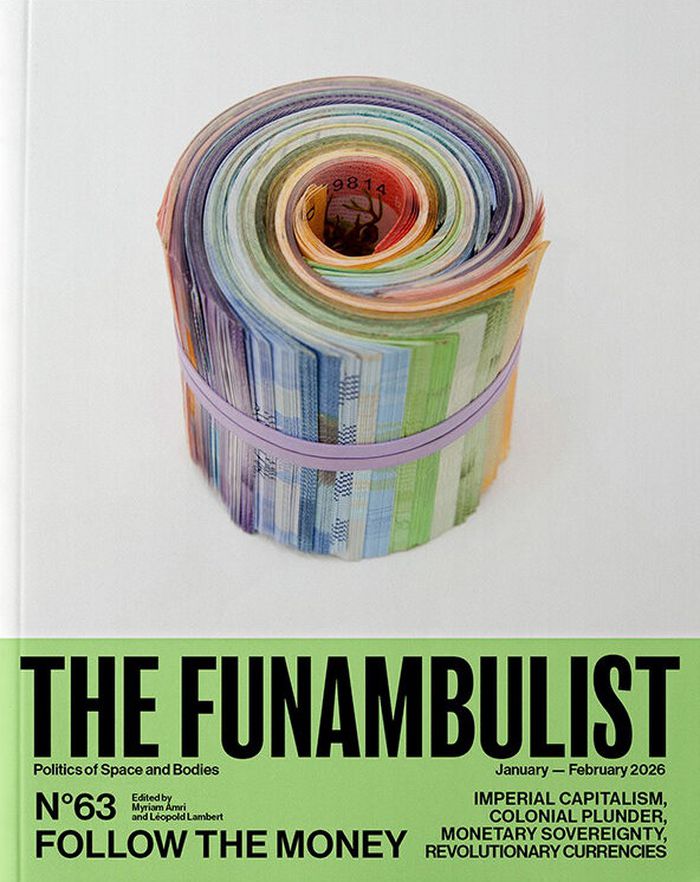
For this 63rd issue, The Funambulist teamed-up with Tunisian anthropologist and visual artist Myriam Amri and invites you to "Follow the money." In it, the issue enters the crevices of a capitalist system and trace it back to its central nodes: property, land, capital, and class. It reads how money is central to colonial and imperial projects, but also how sovereignty and the liberation of our monetary imaginary can be tools of emancipation. From the CFA franc (Ndongo Samba Sylla, Moses März) to the US dollar (Lily H. Chumley) or the Palestinian Pound (Hicham Safieddine), The Funambulist navigates monetary politics around the world, and more specifically in Sudan (Nisrin Elamin & Laleh Khalili), Puerto Rico (Roque Salas Rivera) or Brazil (Cho). The issue also contains a board game entitled "You’ve Got Yourselves a Revolution, Now What?" imagined by the issue editors Myriam Amri and Léopold Lambert and designed by Aude Abou Nasr. As for the cover, it features an artwork by Adriana Martínez Barón.
The Funambulist n.63 : follow the money
Actions:
Price:
$16.95
(available in store)
Summary:
For this 63rd issue, The Funambulist teamed-up with Tunisian anthropologist and visual artist Myriam Amri and invites you to "Follow the money." In it, the issue enters the crevices of a capitalist system and trace it back to its central nodes: property, land, capital, and class. It reads how money is central to colonial and imperial projects, but also how sovereignty and the liberation of our monetary imaginary can be tools of emancipation. From the CFA franc (Ndongo Samba Sylla, Moses März) to the US dollar (Lily H. Chumley) or the Palestinian Pound (Hicham Safieddine), The Funambulist navigates monetary politics around the world, and more specifically in Sudan (Nisrin Elamin & Laleh Khalili), Puerto Rico (Roque Salas Rivera) or Brazil (Cho). The issue also contains a board game entitled "You’ve Got Yourselves a Revolution, Now What?" imagined by the issue editors Myriam Amri and Léopold Lambert and designed by Aude Abou Nasr. As for the cover, it features an artwork by Adriana Martínez Barón.
Form:
journals and magazines
journals and magazines
Publication:
January 2026
January 2026
Subject:
Magazines
Magazines
Form:
books
books
Actions:
Price:
$38.95
(available to order)
Summary:
During US colonial rule in the Philippines, reinforced concrete was used to the near exclusion of all other building materials. In Concrete Colonialism , Diana Jean S. Martinez examines the motivations for and lasting effects of this forgotten colonial policy. Arguing that the pervasive use of reinforced concrete technologies revolutionized techniques of imperial(...)
$38.95
(available to order)
Summary:
During US colonial rule in the Philippines, reinforced concrete was used to the near exclusion of all other building materials. In Concrete Colonialism , Diana Jean S. Martinez examines the motivations for and lasting effects of this forgotten colonial policy. Arguing that the pervasive use of reinforced concrete technologies revolutionized techniques of imperial(...)
Title:
Concrete colonialism: Architecture, urbanism, and the US imperial project in the Philippines
Actions:
Price:
$38.95
(available to order)
Summary:
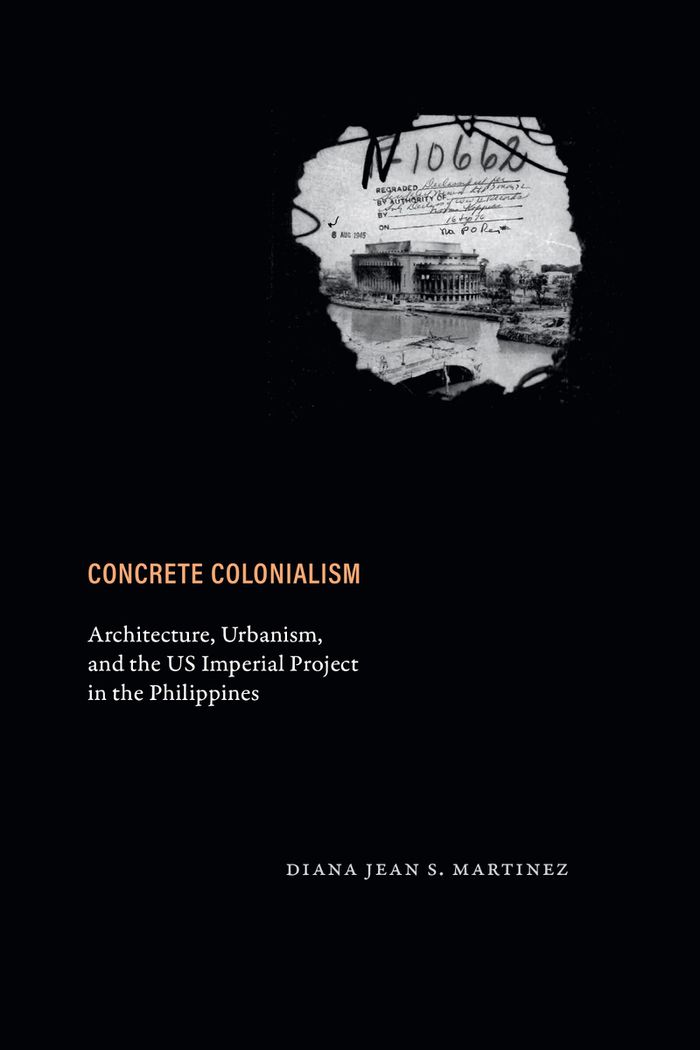
During US colonial rule in the Philippines, reinforced concrete was used to the near exclusion of all other building materials. In Concrete Colonialism , Diana Jean S. Martinez examines the motivations for and lasting effects of this forgotten colonial policy. Arguing that the pervasive use of reinforced concrete technologies revolutionized techniques of imperial conquest, Martinez shows how concrete reshaped colonialism as a project that sought durable change through the reformation of environments, colonial society, and racialized biologies. Martinez locates the origins of this material revolution in the development of Chicago, highlighting how building this urban center atop exceptionally challenging geology made it possible to transform diverse global ecologies. She details how the material's stability, plasticity, strength, and other qualities served the shifting imperatives of the US colonial regime, playing a central role in defending territory, controlling disease, and constructing monuments to nation and empire. By describing a world irreversibly remade, Martinez urges readers to consider how colonialism persists--in concrete forms--despite claims of its conclusion.
Concrete colonialism: Architecture, urbanism, and the US imperial project in the Philippines
Actions:
Price:
$38.95
(available to order)
Summary:
During US colonial rule in the Philippines, reinforced concrete was used to the near exclusion of all other building materials. In Concrete Colonialism , Diana Jean S. Martinez examines the motivations for and lasting effects of this forgotten colonial policy. Arguing that the pervasive use of reinforced concrete technologies revolutionized techniques of imperial conquest, Martinez shows how concrete reshaped colonialism as a project that sought durable change through the reformation of environments, colonial society, and racialized biologies. Martinez locates the origins of this material revolution in the development of Chicago, highlighting how building this urban center atop exceptionally challenging geology made it possible to transform diverse global ecologies. She details how the material's stability, plasticity, strength, and other qualities served the shifting imperatives of the US colonial regime, playing a central role in defending territory, controlling disease, and constructing monuments to nation and empire. By describing a world irreversibly remade, Martinez urges readers to consider how colonialism persists--in concrete forms--despite claims of its conclusion.
Form:
books
books
Publication:
October 2025
October 2025
Subject:
Architectural Theory
Architectural Theory
Form:
books
books
Title:
The fragility of plaster
The fragility of plaster
Actions:
Price:
$17.95
(available to order)
Summary:
The distant past is commonly characterized in terms of dominant materials of the time – the Stone Age, the Bronze Age, the Iron Age, etc. Since the dawn of writing, however, characterizing eras in terms of materials has fallen by the wayside, and yet materials have continued to exert a powerful influence on our collective imagination. Viewed from this perspective, France(...)
$17.95
(available to order)
Summary:
The distant past is commonly characterized in terms of dominant materials of the time – the Stone Age, the Bronze Age, the Iron Age, etc. Since the dawn of writing, however, characterizing eras in terms of materials has fallen by the wayside, and yet materials have continued to exert a powerful influence on our collective imagination. Viewed from this perspective, France(...)
Title:
The fragility of plaster
Actions:
Price:
$17.95
(available to order)
Summary:
The distant past is commonly characterized in terms of dominant materials of the time – the Stone Age, the Bronze Age, the Iron Age, etc. Since the dawn of writing, however, characterizing eras in terms of materials has fallen by the wayside, and yet materials have continued to exert a powerful influence on our collective imagination. Viewed from this perspective, France in the period from 1815 to 1855 could be seen as the half-century of plaster. After the French Revolution, plaster was used for a great variety of things: building, moulding, sculpting, decorating. Cheap and easy to use, plaster was everywhere, from Napoleon’s death mask to household ornaments, from walls to elaborate mouldings. Plaster was king – but a fragile king that easily crumbled and fell apart. The age of plaster was also the reign of the ephemeral and the transient, the vulgar and the eclectic, and the men and women of the time struggled to maintain stability and continuity with the past.
The fragility of plaster
Actions:
Price:
$17.95
(available to order)
Summary:
The distant past is commonly characterized in terms of dominant materials of the time – the Stone Age, the Bronze Age, the Iron Age, etc. Since the dawn of writing, however, characterizing eras in terms of materials has fallen by the wayside, and yet materials have continued to exert a powerful influence on our collective imagination. Viewed from this perspective, France in the period from 1815 to 1855 could be seen as the half-century of plaster. After the French Revolution, plaster was used for a great variety of things: building, moulding, sculpting, decorating. Cheap and easy to use, plaster was everywhere, from Napoleon’s death mask to household ornaments, from walls to elaborate mouldings. Plaster was king – but a fragile king that easily crumbled and fell apart. The age of plaster was also the reign of the ephemeral and the transient, the vulgar and the eclectic, and the men and women of the time struggled to maintain stability and continuity with the past.
Form:
books
books
Publication:
July 2025
July 2025
Subject:
Art Theory
Art Theory
Form:
books
books
Actions:
Price:
$81.50
(available to order)
Summary:
During the years after the September Revolution of 1868, Barcelona experienced tremendous industrial growth and emerged as the most politically and culturally progressive city in Spain. "Barcelona and Modernity" examines this remarkable seventy-one-year period, when Barcelona also reigned as one of the most dynamic centres of modernist art and architecture in Europe.(...)
$81.50
(available to order)
Summary:
During the years after the September Revolution of 1868, Barcelona experienced tremendous industrial growth and emerged as the most politically and culturally progressive city in Spain. "Barcelona and Modernity" examines this remarkable seventy-one-year period, when Barcelona also reigned as one of the most dynamic centres of modernist art and architecture in Europe.(...)
Subject:
Architecture since 1900, Europe
Architecture since 1900, Europe
Publication:
November 2006, New Haven / London
November 2006, New Haven / London
Title:
Barcelona and Modernity : Picasso, Gaudi, Miro, Dali
Actions:
Price:
$81.50
(available to order)
Summary:
During the years after the September Revolution of 1868, Barcelona experienced tremendous industrial growth and emerged as the most politically and culturally progressive city in Spain. "Barcelona and Modernity" examines this remarkable seventy-one-year period, when Barcelona also reigned as one of the most dynamic centres of modernist art and architecture in Europe. Focusing on the Catalan Renaixença, Modernisme, Noucentisme, avant-garde movements of the early 20th century, and artistic reactions to the Spanish Civil War, essays by an extraordinary team of scholars offer new insights into the work of such Catalan artists as Antoni Gaudí, Pablo Picasso, Joan Miró, and Salvador Dalí, among others, by setting them in context with the art of their teachers, colleagues, and rivals. With approximately 350 works in a variety of media—painting, sculpture, photography, furniture, decorative arts, and architectural design — this book also explores how Catalan artists derived inspiration from local traditions while contributing their own innovations to international modernism.
Barcelona and Modernity : Picasso, Gaudi, Miro, Dali
Actions:
Price:
$81.50
(available to order)
Summary:
During the years after the September Revolution of 1868, Barcelona experienced tremendous industrial growth and emerged as the most politically and culturally progressive city in Spain. "Barcelona and Modernity" examines this remarkable seventy-one-year period, when Barcelona also reigned as one of the most dynamic centres of modernist art and architecture in Europe. Focusing on the Catalan Renaixença, Modernisme, Noucentisme, avant-garde movements of the early 20th century, and artistic reactions to the Spanish Civil War, essays by an extraordinary team of scholars offer new insights into the work of such Catalan artists as Antoni Gaudí, Pablo Picasso, Joan Miró, and Salvador Dalí, among others, by setting them in context with the art of their teachers, colleagues, and rivals. With approximately 350 works in a variety of media—painting, sculpture, photography, furniture, decorative arts, and architectural design — this book also explores how Catalan artists derived inspiration from local traditions while contributing their own innovations to international modernism.
Form:
books
books
Publication:
November 2006, New Haven / London
November 2006, New Haven / London
Subject:
Architecture since 1900, Europe
Architecture since 1900, Europe


