


57161 Results
Form:
drawings
drawings
Actions:
Reference number:
DR1960:0021
Description:
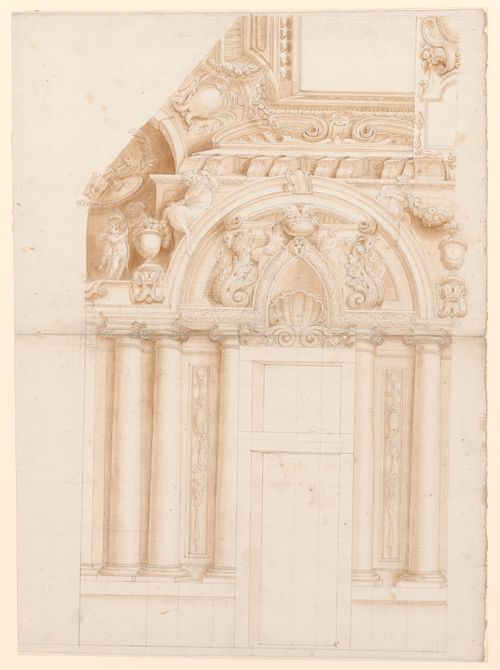
- This drawing, by an unknown Italian artist, active probably in the area of Bologna in the last half of the 17th century, illustrates some of the conventions of quadratura design - the art of illusionistic wall and ceiling painting - that evolved during that century. Part of a wall and adjacent ceiling are shown as one continuous unfurling of space on a flat sheet of paper. The curve between the vertical and diagonal lines at the left-hand edge of the design indicate a modest coving. Around and above a doorway several ionic columns support an arch and archivolt which is decorated with acanthus leaves, putti, ram's head, and urn below, and satyrs, putti, garlands and urns above. A cornice, cartouche, balustrade, and scrolled pediment complete the decorations.
DR1960:0021
Description:
- This drawing, by an unknown Italian artist, active probably in the area of Bologna in the last half of the 17th century, illustrates some of the conventions of quadratura design - the art of illusionistic wall and ceiling painting - that evolved during that century. Part of a wall and adjacent ceiling are shown as one continuous unfurling of space on a flat sheet of paper. The curve between the vertical and diagonal lines at the left-hand edge of the design indicate a modest coving. Around and above a doorway several ionic columns support an arch and archivolt which is decorated with acanthus leaves, putti, ram's head, and urn below, and satyrs, putti, garlands and urns above. A cornice, cartouche, balustrade, and scrolled pediment complete the decorations.
People:
Subject:
interior design
interior design
Date:
ca. 1675-1725
ca. 1675-1725
Title:
Quadratura drawing for door-frame and surround
Actions:
DR1960:0021
Description:
- This drawing, by an unknown Italian artist, active probably in the area of Bologna in the last half of the 17th century, illustrates some of the conventions of quadratura design - the art of illusionistic wall and ceiling painting - that evolved during that century. Part of a wall and adjacent ceiling are shown as one continuous unfurling of space on a flat sheet of paper. The curve between the vertical and diagonal lines at the left-hand edge of the design indicate a modest coving. Around and above a doorway several ionic columns support an arch and archivolt which is decorated with acanthus leaves, putti, ram's head, and urn below, and satyrs, putti, garlands and urns above. A cornice, cartouche, balustrade, and scrolled pediment complete the decorations.
Quadratura drawing for door-frame and surround
Actions:
DR1960:0021
Description:
- This drawing, by an unknown Italian artist, active probably in the area of Bologna in the last half of the 17th century, illustrates some of the conventions of quadratura design - the art of illusionistic wall and ceiling painting - that evolved during that century. Part of a wall and adjacent ceiling are shown as one continuous unfurling of space on a flat sheet of paper. The curve between the vertical and diagonal lines at the left-hand edge of the design indicate a modest coving. Around and above a doorway several ionic columns support an arch and archivolt which is decorated with acanthus leaves, putti, ram's head, and urn below, and satyrs, putti, garlands and urns above. A cornice, cartouche, balustrade, and scrolled pediment complete the decorations.
Form:
drawings
drawings
Date:
ca. 1675-1725
ca. 1675-1725
People:
Subject:
interior design
interior design
Form:
archives
Level of archival description:
Fonds
archives
Level of archival description:
Fonds
Title:
Joseph Rykwert fonds
Joseph Rykwert fonds
Reference number:
AP209
Synopsis:
The Joseph Rykwert fonds, 1928-2022, documents Joseph Rykwert’s career as an architectural historian, author and professor. The fonds includes the records for over a dozen monographs written between the mid-1960s and the mid-2010s as well as edited works and articles, and details his teaching and lecturing activities from the 1960s onwards in universities in Europe and the United States. The records highlight Joseph Rykwert’s multidisciplinary approach, which involved archaeology, anthropology and psychoanalysis in his study of the history and theory of architecture and of the urban form. The fonds is composed of textual records, publications and ephemera, and of photographs including multiple albums and a large number of slides; the fonds also documents Joseph Rykwert’s career as an independent designer through drawings realized between the late 1940s and the late 1970s.
AP209
Synopsis:
The Joseph Rykwert fonds, 1928-2022, documents Joseph Rykwert’s career as an architectural historian, author and professor. The fonds includes the records for over a dozen monographs written between the mid-1960s and the mid-2010s as well as edited works and articles, and details his teaching and lecturing activities from the 1960s onwards in universities in Europe and the United States. The records highlight Joseph Rykwert’s multidisciplinary approach, which involved archaeology, anthropology and psychoanalysis in his study of the history and theory of architecture and of the urban form. The fonds is composed of textual records, publications and ephemera, and of photographs including multiple albums and a large number of slides; the fonds also documents Joseph Rykwert’s career as an independent designer through drawings realized between the late 1940s and the late 1970s.
People:
Date:
1928-2022
1928-2022
Title:
Joseph Rykwert fonds
Actions:
AP209
Synopsis:
The Joseph Rykwert fonds, 1928-2022, documents Joseph Rykwert’s career as an architectural historian, author and professor. The fonds includes the records for over a dozen monographs written between the mid-1960s and the mid-2010s as well as edited works and articles, and details his teaching and lecturing activities from the 1960s onwards in universities in Europe and the United States. The records highlight Joseph Rykwert’s multidisciplinary approach, which involved archaeology, anthropology and psychoanalysis in his study of the history and theory of architecture and of the urban form. The fonds is composed of textual records, publications and ephemera, and of photographs including multiple albums and a large number of slides; the fonds also documents Joseph Rykwert’s career as an independent designer through drawings realized between the late 1940s and the late 1970s.
Joseph Rykwert fonds
Actions:
AP209
Synopsis:
The Joseph Rykwert fonds, 1928-2022, documents Joseph Rykwert’s career as an architectural historian, author and professor. The fonds includes the records for over a dozen monographs written between the mid-1960s and the mid-2010s as well as edited works and articles, and details his teaching and lecturing activities from the 1960s onwards in universities in Europe and the United States. The records highlight Joseph Rykwert’s multidisciplinary approach, which involved archaeology, anthropology and psychoanalysis in his study of the history and theory of architecture and of the urban form. The fonds is composed of textual records, publications and ephemera, and of photographs including multiple albums and a large number of slides; the fonds also documents Joseph Rykwert’s career as an independent designer through drawings realized between the late 1940s and the late 1970s.
Form:
archives
Level of archival description:
Fonds
archives
Level of archival description:
Fonds
Date:
1928-2022
1928-2022
People:
Form:
archives
Level of archival description:
Collection
archives
Level of archival description:
Collection
Title:
Eero Saarinen collection
Eero Saarinen collection
Reference number:
AP159
Synopsis:
The Eero Saarinen Collection documents eight built projects undertaken between 1956 and 1964. The IBM Exhibition Pavilion for the New York World's Fair was undertaken in association with Charles Eames. Eero Saarinen died before this project got underway and was carried out by his successor firm, led by Kevin Roche.
AP159
Synopsis:
The Eero Saarinen Collection documents eight built projects undertaken between 1956 and 1964. The IBM Exhibition Pavilion for the New York World's Fair was undertaken in association with Charles Eames. Eero Saarinen died before this project got underway and was carried out by his successor firm, led by Kevin Roche.
People:
Date:
1956-1964
1956-1964
Title:
Eero Saarinen collection
Actions:
AP159
Synopsis:
The Eero Saarinen Collection documents eight built projects undertaken between 1956 and 1964. The IBM Exhibition Pavilion for the New York World's Fair was undertaken in association with Charles Eames. Eero Saarinen died before this project got underway and was carried out by his successor firm, led by Kevin Roche.
Eero Saarinen collection
Actions:
AP159
Synopsis:
The Eero Saarinen Collection documents eight built projects undertaken between 1956 and 1964. The IBM Exhibition Pavilion for the New York World's Fair was undertaken in association with Charles Eames. Eero Saarinen died before this project got underway and was carried out by his successor firm, led by Kevin Roche.
Form:
archives
Level of archival description:
Collection
archives
Level of archival description:
Collection
Date:
1956-1964
1956-1964
People:
Form:
archives
Level of archival description:
Fonds
archives
Level of archival description:
Fonds
Title:
John Hejduk fonds
John Hejduk fonds
Reference number:
AP145
Synopsis:
The John Hejduk fonds documents the professional practice of architect John Hejduk. Drawings of nearly every project by Hejduk are present, with many of his most significant architectural, exhibition, and publishing projects particularly well represented. Material in this fonds was produced between 1947 and 2000.
AP145
Synopsis:
The John Hejduk fonds documents the professional practice of architect John Hejduk. Drawings of nearly every project by Hejduk are present, with many of his most significant architectural, exhibition, and publishing projects particularly well represented. Material in this fonds was produced between 1947 and 2000.
People:
Date:
1947-2000, predominant 1947-1996
1947-2000, predominant 1947-1996
Title:
John Hejduk fonds
Actions:
AP145
Synopsis:
The John Hejduk fonds documents the professional practice of architect John Hejduk. Drawings of nearly every project by Hejduk are present, with many of his most significant architectural, exhibition, and publishing projects particularly well represented. Material in this fonds was produced between 1947 and 2000.
John Hejduk fonds
Actions:
AP145
Synopsis:
The John Hejduk fonds documents the professional practice of architect John Hejduk. Drawings of nearly every project by Hejduk are present, with many of his most significant architectural, exhibition, and publishing projects particularly well represented. Material in this fonds was produced between 1947 and 2000.
Form:
archives
Level of archival description:
Fonds
archives
Level of archival description:
Fonds
Date:
1947-2000, predominant 1947-1996
1947-2000, predominant 1947-1996
People:
Form:
events
events
Actions:
Description:
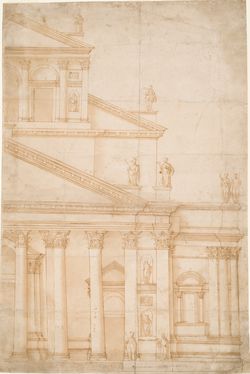
The history of architecture addresses the relationships between spaces, buildings, urban geometries, and social practices—it tells us how an experience of space corresponds to an experience of the world. To this end, this lecture will analyze the sixteenth-century debate around the completion of the facade of the Basilica of San Petronio in Bologna, partially built in the(...)
The history of architecture addresses the relationships between spaces, buildings, urban geometries, and social practices—it tells us how an experience of space corresponds to an experience of the world. To this end, this lecture will analyze the sixteenth-century debate around the completion of the facade of the Basilica of San Petronio in Bologna, partially built in the(...)
Location:
Paul Desmarais Theatre Keyword(s):
Guido Beltramini, church of San Petronio, Bologna, Andrea Palladio, Baldassare Peruzzi, Giacomo da Vignola
Paul Desmarais Theatre Keyword(s):
Guido Beltramini, church of San Petronio, Bologna, Andrea Palladio, Baldassare Peruzzi, Giacomo da Vignola
Date:
5 October 2017, 6:30pm
5 October 2017, 6:30pm
Title:
Guido Beltramini, what was history for patrons and architects in Bologna in 1579?
Actions:
Description:
The history of architecture addresses the relationships between spaces, buildings, urban geometries, and social practices—it tells us how an experience of space corresponds to an experience of the world. To this end, this lecture will analyze the sixteenth-century debate around the completion of the facade of the Basilica of San Petronio in Bologna, partially built in the(...)
Guido Beltramini, what was history for patrons and architects in Bologna in 1579?
Actions:
Description:
The history of architecture addresses the relationships between spaces, buildings, urban geometries, and social practices—it tells us how an experience of space corresponds to an experience of the world. To this end, this lecture will analyze the sixteenth-century debate around the completion of the facade of the Basilica of San Petronio in Bologna, partially built in the(...)
Form:
events
events
Date:
5 October 2017
6:30pm
5 October 2017
6:30pm
Location:
Paul Desmarais Theatre Keyword(s):
Guido Beltramini, church of San Petronio, Bologna, Andrea Palladio, Baldassare Peruzzi, Giacomo da Vignola
Paul Desmarais Theatre Keyword(s):
Guido Beltramini, church of San Petronio, Bologna, Andrea Palladio, Baldassare Peruzzi, Giacomo da Vignola
Form:
photographs
photographs
Actions:
Reference number:
DR2012:0012:083:001
Description:
Ring binder containing slides, including those related to the following projects: - Modern art (9 slides); - Fuller dome at McGill University 1956 (4 slides); - Le rapport Charney 1972 (8 slides); - Architectural models, drawings and photographs, including works by John M. Johansen (26 slides); - Architectural models, drawings and photographs of école Notre-Dame des Laurentides, by Melvin Charney 1965-1966 (34 slides); - Une histoire 1973-1975 (134 slides, 10 appear to be duplicates); - Maisons de la rue Sherbrooke 1976 (40 slides, 13 appear to be duplicates); - Fragments series (35 slides including: Wall facade (18 slides), Maison de Rivière-des-Prairies (9 slides) and Garage Lennoxville (8 slides); - Painted photographs series: The house in St. Bonaventure 1978 (10 slides).
DR2012:0012:083:001
Description:
Ring binder containing slides, including those related to the following projects: - Modern art (9 slides); - Fuller dome at McGill University 1956 (4 slides); - Le rapport Charney 1972 (8 slides); - Architectural models, drawings and photographs, including works by John M. Johansen (26 slides); - Architectural models, drawings and photographs of école Notre-Dame des Laurentides, by Melvin Charney 1965-1966 (34 slides); - Une histoire 1973-1975 (134 slides, 10 appear to be duplicates); - Maisons de la rue Sherbrooke 1976 (40 slides, 13 appear to be duplicates); - Fragments series (35 slides including: Wall facade (18 slides), Maison de Rivière-des-Prairies (9 slides) and Garage Lennoxville (8 slides); - Painted photographs series: The house in St. Bonaventure 1978 (10 slides).
People:
Date:
1956-1980, predominant 1965-1979
1956-1980, predominant 1965-1979
Title:
Slides of Melvin Charney's artworks
Actions:
DR2012:0012:083:001
Description:
Ring binder containing slides, including those related to the following projects: - Modern art (9 slides); - Fuller dome at McGill University 1956 (4 slides); - Le rapport Charney 1972 (8 slides); - Architectural models, drawings and photographs, including works by John M. Johansen (26 slides); - Architectural models, drawings and photographs of école Notre-Dame des Laurentides, by Melvin Charney 1965-1966 (34 slides); - Une histoire 1973-1975 (134 slides, 10 appear to be duplicates); - Maisons de la rue Sherbrooke 1976 (40 slides, 13 appear to be duplicates); - Fragments series (35 slides including: Wall facade (18 slides), Maison de Rivière-des-Prairies (9 slides) and Garage Lennoxville (8 slides); - Painted photographs series: The house in St. Bonaventure 1978 (10 slides).
Slides of Melvin Charney's artworks
Actions:
DR2012:0012:083:001
Description:
Ring binder containing slides, including those related to the following projects: - Modern art (9 slides); - Fuller dome at McGill University 1956 (4 slides); - Le rapport Charney 1972 (8 slides); - Architectural models, drawings and photographs, including works by John M. Johansen (26 slides); - Architectural models, drawings and photographs of école Notre-Dame des Laurentides, by Melvin Charney 1965-1966 (34 slides); - Une histoire 1973-1975 (134 slides, 10 appear to be duplicates); - Maisons de la rue Sherbrooke 1976 (40 slides, 13 appear to be duplicates); - Fragments series (35 slides including: Wall facade (18 slides), Maison de Rivière-des-Prairies (9 slides) and Garage Lennoxville (8 slides); - Painted photographs series: The house in St. Bonaventure 1978 (10 slides).
Form:
photographs
photographs
Date:
1956-1980, predominant 1965-1979
1956-1980, predominant 1965-1979
People:
Form:
textual records
textual records
Reference number:
AP197.S1.SS9.002
Description:
This box is comprised of notes, drafts, articles, interviews, conference addresses by Kenneth Frampton. The materials are organized alphabetically by either title or the architect's last name, from A-FO. Subjects and architects explored in these texts include: the Patkau Architects's Agosta House; Tadao Ando; Demetri and Suzana Antonakakis; ULM; architectural design; architecture as a humanistic discipline; architecture vs. art; Hannah Arendt; Wiel Arets; Emre Arolat; the avant-garde; Barcelona; basque architecture; Anatole de Baudot; Salvatore Bisogni; Mario Botta; the British Library; Angelo Bucci; William Butterfield; James Carpenter; la Casa Cooper; Alan Colquhuon; Casco Centrale; Charles Correa; constructivism; Czech architecture; the Duetsche Werkbund; developments in contemporary architecture; architectural education; Peter Eisenman; Shushei Endo; English architecture; and Arthur Erikson.
AP197.S1.SS9.002
Description:
This box is comprised of notes, drafts, articles, interviews, conference addresses by Kenneth Frampton. The materials are organized alphabetically by either title or the architect's last name, from A-FO. Subjects and architects explored in these texts include: the Patkau Architects's Agosta House; Tadao Ando; Demetri and Suzana Antonakakis; ULM; architectural design; architecture as a humanistic discipline; architecture vs. art; Hannah Arendt; Wiel Arets; Emre Arolat; the avant-garde; Barcelona; basque architecture; Anatole de Baudot; Salvatore Bisogni; Mario Botta; the British Library; Angelo Bucci; William Butterfield; James Carpenter; la Casa Cooper; Alan Colquhuon; Casco Centrale; Charles Correa; constructivism; Czech architecture; the Duetsche Werkbund; developments in contemporary architecture; architectural education; Peter Eisenman; Shushei Endo; English architecture; and Arthur Erikson.
People:
Date:
1965-2015
1965-2015
Title:
Kenneth Frampton texts, articles and notes A-FO
Actions:
AP197.S1.SS9.002
Description:
This box is comprised of notes, drafts, articles, interviews, conference addresses by Kenneth Frampton. The materials are organized alphabetically by either title or the architect's last name, from A-FO. Subjects and architects explored in these texts include: the Patkau Architects's Agosta House; Tadao Ando; Demetri and Suzana Antonakakis; ULM; architectural design; architecture as a humanistic discipline; architecture vs. art; Hannah Arendt; Wiel Arets; Emre Arolat; the avant-garde; Barcelona; basque architecture; Anatole de Baudot; Salvatore Bisogni; Mario Botta; the British Library; Angelo Bucci; William Butterfield; James Carpenter; la Casa Cooper; Alan Colquhuon; Casco Centrale; Charles Correa; constructivism; Czech architecture; the Duetsche Werkbund; developments in contemporary architecture; architectural education; Peter Eisenman; Shushei Endo; English architecture; and Arthur Erikson.
Kenneth Frampton texts, articles and notes A-FO
Actions:
AP197.S1.SS9.002
Description:
This box is comprised of notes, drafts, articles, interviews, conference addresses by Kenneth Frampton. The materials are organized alphabetically by either title or the architect's last name, from A-FO. Subjects and architects explored in these texts include: the Patkau Architects's Agosta House; Tadao Ando; Demetri and Suzana Antonakakis; ULM; architectural design; architecture as a humanistic discipline; architecture vs. art; Hannah Arendt; Wiel Arets; Emre Arolat; the avant-garde; Barcelona; basque architecture; Anatole de Baudot; Salvatore Bisogni; Mario Botta; the British Library; Angelo Bucci; William Butterfield; James Carpenter; la Casa Cooper; Alan Colquhuon; Casco Centrale; Charles Correa; constructivism; Czech architecture; the Duetsche Werkbund; developments in contemporary architecture; architectural education; Peter Eisenman; Shushei Endo; English architecture; and Arthur Erikson.
Form:
textual records
textual records
Date:
1965-2015
1965-2015
People:
Level of archival description:
Sub-series
Sub-series
Actions:
Reference number:
AP018.S1.1980.PR09.SS1
Description:
This project series documents the design and construction of an office building for Marathon Realty in Toronto at the corner of York and Front Streets from 1980-1983. The office identified the project number as 8009. The project consisted of two nineteen storey towers with stainless steel and glass exteriors connected by a glass atrium on each floor. Owned and commissioned by Marathon Realty, the majority of the building’s space was designed for rental. Due to this, the design was highly modular with no interior walls on most floors. Each floor was approximately 18,000 square feet. The ground floor consisted of a lobby, a bank and a restaurant. At the beginning of this project, the project was named Marathon Realty Office Building, Front and York Streets. Soon after, the office building became known as University Place, which it is often referred to as in these materials. Eventually, the building would become the headquarters of CitiBank and renamed Citigroup Place. The project is recorded through drawings, photographs, textual records and other materials dating from 1980-1987. The majority of the drawings are located within the textual records and show the design of building details. Other drawings include site surveys, design development drawings, presentation drawings, and construction drawings. The photographs show construction progress, tests, models, and the finished project. The textual records contain the project proposal, contracts, client and contractor correspondence, inter-office memos, meeting minutes, financial records, change orders, supplementary instructions, specifications, detail planning, artist’s portfolios for the building’s art competition, site inspection reports, and schedules. File AP018.S1.1980.PR09.004 contains an index to the textual records, which was created by the office. The CCA also holds materials for a subproject under this project series, which document the installation of signs to the top of the building after the building's construction (AP018.S1.1980.PR09.SS1). Subproject materials are viewed separately from the project due to the different project numbers originally assigned by the office.
AP018.S1.1980.PR09.SS1
Description:
This project series documents the design and construction of an office building for Marathon Realty in Toronto at the corner of York and Front Streets from 1980-1983. The office identified the project number as 8009. The project consisted of two nineteen storey towers with stainless steel and glass exteriors connected by a glass atrium on each floor. Owned and commissioned by Marathon Realty, the majority of the building’s space was designed for rental. Due to this, the design was highly modular with no interior walls on most floors. Each floor was approximately 18,000 square feet. The ground floor consisted of a lobby, a bank and a restaurant. At the beginning of this project, the project was named Marathon Realty Office Building, Front and York Streets. Soon after, the office building became known as University Place, which it is often referred to as in these materials. Eventually, the building would become the headquarters of CitiBank and renamed Citigroup Place. The project is recorded through drawings, photographs, textual records and other materials dating from 1980-1987. The majority of the drawings are located within the textual records and show the design of building details. Other drawings include site surveys, design development drawings, presentation drawings, and construction drawings. The photographs show construction progress, tests, models, and the finished project. The textual records contain the project proposal, contracts, client and contractor correspondence, inter-office memos, meeting minutes, financial records, change orders, supplementary instructions, specifications, detail planning, artist’s portfolios for the building’s art competition, site inspection reports, and schedules. File AP018.S1.1980.PR09.004 contains an index to the textual records, which was created by the office. The CCA also holds materials for a subproject under this project series, which document the installation of signs to the top of the building after the building's construction (AP018.S1.1980.PR09.SS1). Subproject materials are viewed separately from the project due to the different project numbers originally assigned by the office.
People:
Date:
1980-1987
1980-1987
Title:
University Place Building, Front and York Streets, Toronto (1980-1987)
Actions:
AP018.S1.1980.PR09.SS1
Description:
This project series documents the design and construction of an office building for Marathon Realty in Toronto at the corner of York and Front Streets from 1980-1983. The office identified the project number as 8009. The project consisted of two nineteen storey towers with stainless steel and glass exteriors connected by a glass atrium on each floor. Owned and commissioned by Marathon Realty, the majority of the building’s space was designed for rental. Due to this, the design was highly modular with no interior walls on most floors. Each floor was approximately 18,000 square feet. The ground floor consisted of a lobby, a bank and a restaurant. At the beginning of this project, the project was named Marathon Realty Office Building, Front and York Streets. Soon after, the office building became known as University Place, which it is often referred to as in these materials. Eventually, the building would become the headquarters of CitiBank and renamed Citigroup Place. The project is recorded through drawings, photographs, textual records and other materials dating from 1980-1987. The majority of the drawings are located within the textual records and show the design of building details. Other drawings include site surveys, design development drawings, presentation drawings, and construction drawings. The photographs show construction progress, tests, models, and the finished project. The textual records contain the project proposal, contracts, client and contractor correspondence, inter-office memos, meeting minutes, financial records, change orders, supplementary instructions, specifications, detail planning, artist’s portfolios for the building’s art competition, site inspection reports, and schedules. File AP018.S1.1980.PR09.004 contains an index to the textual records, which was created by the office. The CCA also holds materials for a subproject under this project series, which document the installation of signs to the top of the building after the building's construction (AP018.S1.1980.PR09.SS1). Subproject materials are viewed separately from the project due to the different project numbers originally assigned by the office.
University Place Building, Front and York Streets, Toronto (1980-1987)
Actions:
AP018.S1.1980.PR09.SS1
Description:
This project series documents the design and construction of an office building for Marathon Realty in Toronto at the corner of York and Front Streets from 1980-1983. The office identified the project number as 8009. The project consisted of two nineteen storey towers with stainless steel and glass exteriors connected by a glass atrium on each floor. Owned and commissioned by Marathon Realty, the majority of the building’s space was designed for rental. Due to this, the design was highly modular with no interior walls on most floors. Each floor was approximately 18,000 square feet. The ground floor consisted of a lobby, a bank and a restaurant. At the beginning of this project, the project was named Marathon Realty Office Building, Front and York Streets. Soon after, the office building became known as University Place, which it is often referred to as in these materials. Eventually, the building would become the headquarters of CitiBank and renamed Citigroup Place. The project is recorded through drawings, photographs, textual records and other materials dating from 1980-1987. The majority of the drawings are located within the textual records and show the design of building details. Other drawings include site surveys, design development drawings, presentation drawings, and construction drawings. The photographs show construction progress, tests, models, and the finished project. The textual records contain the project proposal, contracts, client and contractor correspondence, inter-office memos, meeting minutes, financial records, change orders, supplementary instructions, specifications, detail planning, artist’s portfolios for the building’s art competition, site inspection reports, and schedules. File AP018.S1.1980.PR09.004 contains an index to the textual records, which was created by the office. The CCA also holds materials for a subproject under this project series, which document the installation of signs to the top of the building after the building's construction (AP018.S1.1980.PR09.SS1). Subproject materials are viewed separately from the project due to the different project numbers originally assigned by the office.
Level of archival description:
Project
Project
Date:
1980-1987
1980-1987
People:
Form:
archives
Level of archival description:
Fonds
archives
Level of archival description:
Fonds
Title:
Lars Spuybroek fonds
Lars Spuybroek fonds
Reference number:
AP173
Synopsis:
The Lars Spuybroek fonds documents the professional practice of architect Lars Spuybroek from his early projects in the 1990s to projects undertaken with his firm NOX from 1995 to 2010. The majority of the documents in the fonds consist of photographic materials, drawings and textual records relating to over 70 projects, such as the H2Oexpo in Neeltje Jans Island, Netherlands (1997), the Maison Folie in Nantes, France (2001) and the D-Tower in Doetinchem, Netherlands (2004).
AP173
Synopsis:
The Lars Spuybroek fonds documents the professional practice of architect Lars Spuybroek from his early projects in the 1990s to projects undertaken with his firm NOX from 1995 to 2010. The majority of the documents in the fonds consist of photographic materials, drawings and textual records relating to over 70 projects, such as the H2Oexpo in Neeltje Jans Island, Netherlands (1997), the Maison Folie in Nantes, France (2001) and the D-Tower in Doetinchem, Netherlands (2004).
People:
Date:
1980s-2010
1980s-2010
Title:
Lars Spuybroek fonds
Actions:
AP173
Synopsis:
The Lars Spuybroek fonds documents the professional practice of architect Lars Spuybroek from his early projects in the 1990s to projects undertaken with his firm NOX from 1995 to 2010. The majority of the documents in the fonds consist of photographic materials, drawings and textual records relating to over 70 projects, such as the H2Oexpo in Neeltje Jans Island, Netherlands (1997), the Maison Folie in Nantes, France (2001) and the D-Tower in Doetinchem, Netherlands (2004).
Lars Spuybroek fonds
Actions:
AP173
Synopsis:
The Lars Spuybroek fonds documents the professional practice of architect Lars Spuybroek from his early projects in the 1990s to projects undertaken with his firm NOX from 1995 to 2010. The majority of the documents in the fonds consist of photographic materials, drawings and textual records relating to over 70 projects, such as the H2Oexpo in Neeltje Jans Island, Netherlands (1997), the Maison Folie in Nantes, France (2001) and the D-Tower in Doetinchem, Netherlands (2004).
Form:
archives
Level of archival description:
Fonds
archives
Level of archival description:
Fonds
Date:
1980s-2010
1980s-2010
People:
Form:
exhibitions
exhibitions
Actions:
Description:
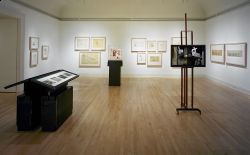
The exhibition addresses a central and timely aspect of the work of Carlo Scarpa: its distinctive approach to contending with the layers of history that mark the fabric of a city and a building. In addressing Scarpa’s ability to weave new work into, and often out of, the disparate fragments of the old, Carlo Scarpa, Architect: Intervening with History begins to unravel(...)
The exhibition addresses a central and timely aspect of the work of Carlo Scarpa: its distinctive approach to contending with the layers of history that mark the fabric of a city and a building. In addressing Scarpa’s ability to weave new work into, and often out of, the disparate fragments of the old, Carlo Scarpa, Architect: Intervening with History begins to unravel(...)
Location:
Main galleries
Main galleries
Date:
26 May 1999 to 31 October 1999
26 May 1999 to 31 October 1999
Title:
Carlo Scarpa, Architect: Intervening with History
Actions:
Description:
The exhibition addresses a central and timely aspect of the work of Carlo Scarpa: its distinctive approach to contending with the layers of history that mark the fabric of a city and a building. In addressing Scarpa’s ability to weave new work into, and often out of, the disparate fragments of the old, Carlo Scarpa, Architect: Intervening with History begins to unravel(...)
Carlo Scarpa, Architect: Intervening with History
Actions:
Description:
The exhibition addresses a central and timely aspect of the work of Carlo Scarpa: its distinctive approach to contending with the layers of history that mark the fabric of a city and a building. In addressing Scarpa’s ability to weave new work into, and often out of, the disparate fragments of the old, Carlo Scarpa, Architect: Intervening with History begins to unravel(...)
Form:
exhibitions
exhibitions
Date:
26 May 1999 to
31 October 1999
26 May 1999 to
31 October 1999
Location:
Main galleries
Main galleries


