


2644 Results
Form:
books
books
Actions:
Holdings:
Description:
192 pages : illustrations, color maps ; 28 cm
Description:
192 pages : illustrations, color maps ; 28 cm
Author:
Subject:
Publication:
New York : Rizzoli : Distributed to the U.S. trade by Random House, 2010.
New York : Rizzoli : Distributed to the U.S. trade by Random House, 2010.
Title:
Los Angeles in maps / Glen Creason ; foreword by D.J. Waldie ; with contributions by Dydia DeLyser [and others].
Actions:
Holdings:
Description:
192 pages : illustrations, color maps ; 28 cm
Los Angeles in maps / Glen Creason ; foreword by D.J. Waldie ; with contributions by Dydia DeLyser [and others].
Actions:
Holdings:
Description:
192 pages : illustrations, color maps ; 28 cm
Form:
books
books
Publication:
New York : Rizzoli : Distributed to the U.S. trade by Random House, 2010.
New York : Rizzoli : Distributed to the U.S. trade by Random House, 2010.
Author:
Subject:
Form:
books
books
Actions:
Price:
$31.25
(available to order)
Summary:
"Sowing Empire" identifies the cultivation and landscaping of colonies as one of the primary ways imperial nations justified their empires. Planting and transplanting, seeding and reshaping - the landscaping practices that emerged in the eighteenth century - are inextricable from the contested terrain of empire within which they operated. From the plantations of the(...)
$31.25
(available to order)
Summary:
"Sowing Empire" identifies the cultivation and landscaping of colonies as one of the primary ways imperial nations justified their empires. Planting and transplanting, seeding and reshaping - the landscaping practices that emerged in the eighteenth century - are inextricable from the contested terrain of empire within which they operated. From the plantations of the(...)
Title:
Sowing empire : landscape and colonization
Actions:
Price:
$31.25
(available to order)
Summary:
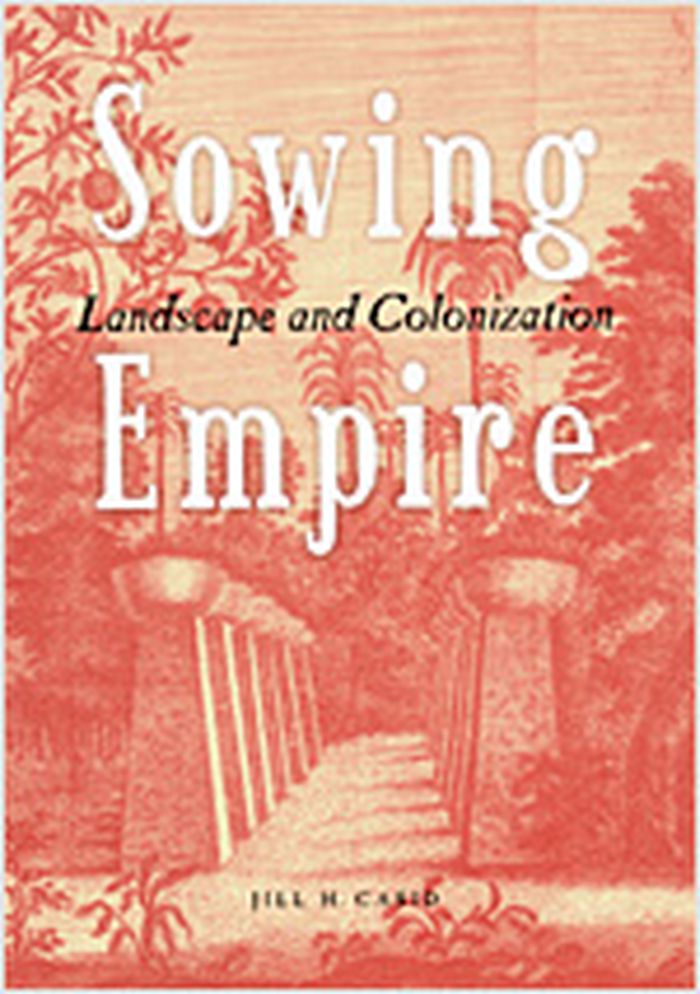
"Sowing Empire" identifies the cultivation and landscaping of colonies as one of the primary ways imperial nations justified their empires. Planting and transplanting, seeding and reshaping - the landscaping practices that emerged in the eighteenth century - are inextricable from the contested terrain of empire within which they operated. From the plantations of the “nabobs” to the island gardens of narrative fiction, from William Beckford’s estate at Fonthill to Marie Antoinette’s ornamented farm, "Sowing Empire" considers imperial relandscaping - its patriarchal organization, heterosexual reproduction, and slavery - and how it contributed to the construction of imperial power. At the same time, the book shows how these picturesque landscapes and sugar plantations contained within them the seeds of resistance - how, for instance, slave gardens and the Afro-Caribbean practice of Vodou threatened authority and created new possibilities for once again transforming the landscape. In an ambitious work of wide-ranging literary, visual, and historical allusion, Jill H. Casid examines how landscaping functioned in an imperial mode that defined and remade the “heartlands” of nations as well as the contact zones and colonial peripheries in the West and East Indies. Revealing the colonial landscape as far more than an agricultural system - as a means of regulating national, sexual, and gender identities - Casid also traces how the circulation of plants and hybridity influenced agriculture and landscaping on European soil and how colonial contacts materially shaped what we take as “European.” Utilizing a wide range of both visual and written sources - maps, literature, and travel writing - this book is interdisciplinary in its methodology and in its scope. Sowing Empire explores how postcolonial and queer studies can alter art history and visual studies and, in turn, what close attention to the visual may offer to both postcolonial theorizing and historically and materially based colonial cultural studies.
Sowing empire : landscape and colonization
Actions:
Price:
$31.25
(available to order)
Summary:
"Sowing Empire" identifies the cultivation and landscaping of colonies as one of the primary ways imperial nations justified their empires. Planting and transplanting, seeding and reshaping - the landscaping practices that emerged in the eighteenth century - are inextricable from the contested terrain of empire within which they operated. From the plantations of the “nabobs” to the island gardens of narrative fiction, from William Beckford’s estate at Fonthill to Marie Antoinette’s ornamented farm, "Sowing Empire" considers imperial relandscaping - its patriarchal organization, heterosexual reproduction, and slavery - and how it contributed to the construction of imperial power. At the same time, the book shows how these picturesque landscapes and sugar plantations contained within them the seeds of resistance - how, for instance, slave gardens and the Afro-Caribbean practice of Vodou threatened authority and created new possibilities for once again transforming the landscape. In an ambitious work of wide-ranging literary, visual, and historical allusion, Jill H. Casid examines how landscaping functioned in an imperial mode that defined and remade the “heartlands” of nations as well as the contact zones and colonial peripheries in the West and East Indies. Revealing the colonial landscape as far more than an agricultural system - as a means of regulating national, sexual, and gender identities - Casid also traces how the circulation of plants and hybridity influenced agriculture and landscaping on European soil and how colonial contacts materially shaped what we take as “European.” Utilizing a wide range of both visual and written sources - maps, literature, and travel writing - this book is interdisciplinary in its methodology and in its scope. Sowing Empire explores how postcolonial and queer studies can alter art history and visual studies and, in turn, what close attention to the visual may offer to both postcolonial theorizing and historically and materially based colonial cultural studies.
Form:
books
books
Publication:
January 2005, Minneapolis
January 2005, Minneapolis
Subject:
Landscape Theory
Landscape Theory
Form:
books
books
Actions:
Holdings:
Description:
56 pages : color illustrations, maps ; 30 cm.
Description:
56 pages : color illustrations, maps ; 30 cm.
Author:
Subject:
Publication:
Paris : Somogy, [2010]
Paris : Somogy, [2010]
Title:
Hanoï : rêves d'Occident en Extrême-Orient, Viêt-Nam / textes, Virginie Malherbe ; avec la collaboration de Caroline Herbelin ; photographies, Stéphane Asseline.
Actions:
Holdings:
Description:
56 pages : color illustrations, maps ; 30 cm.
Hanoï : rêves d'Occident en Extrême-Orient, Viêt-Nam / textes, Virginie Malherbe ; avec la collaboration de Caroline Herbelin ; photographies, Stéphane Asseline.
Actions:
Holdings:
Description:
56 pages : color illustrations, maps ; 30 cm.
Form:
books
books
Publication:
Paris : Somogy, [2010]
Paris : Somogy, [2010]
Author:
Subject:
Form:
books
books
Title:
Legorreta guide
Legorreta guide
Actions:
Price:
$40.00
(available in store)
Summary:
An icon of Mexican architecture alongside Luis Barragán, Ricardo Legorreta (1931–2011) founded Legorreta Arquitectos in the 1960s, creating what Kenneth Frampton called a"critical regionalism," expressed in the revival of colonial typologies and intensive use of color. This book offers a guide to his main achievements.
$40.00
(available in store)
Summary:
An icon of Mexican architecture alongside Luis Barragán, Ricardo Legorreta (1931–2011) founded Legorreta Arquitectos in the 1960s, creating what Kenneth Frampton called a"critical regionalism," expressed in the revival of colonial typologies and intensive use of color. This book offers a guide to his main achievements.
Title:
Legorreta guide
Actions:
Price:
$40.00
(available in store)
Summary:
An icon of Mexican architecture alongside Luis Barragán, Ricardo Legorreta (1931–2011) founded Legorreta Arquitectos in the 1960s, creating what Kenneth Frampton called a"critical regionalism," expressed in the revival of colonial typologies and intensive use of color. This book offers a guide to his main achievements.
Legorreta guide
Actions:
Price:
$40.00
(available in store)
Summary:
An icon of Mexican architecture alongside Luis Barragán, Ricardo Legorreta (1931–2011) founded Legorreta Arquitectos in the 1960s, creating what Kenneth Frampton called a"critical regionalism," expressed in the revival of colonial typologies and intensive use of color. This book offers a guide to his main achievements.
Form:
books
books
Publication:
February 2019
February 2019
Subject:
Architecture Monographs
Architecture Monographs
Form:
books
books
Title:
Cabin Fever
Cabin Fever
Actions:
Price:
$72.50
(available to order)
Summary:
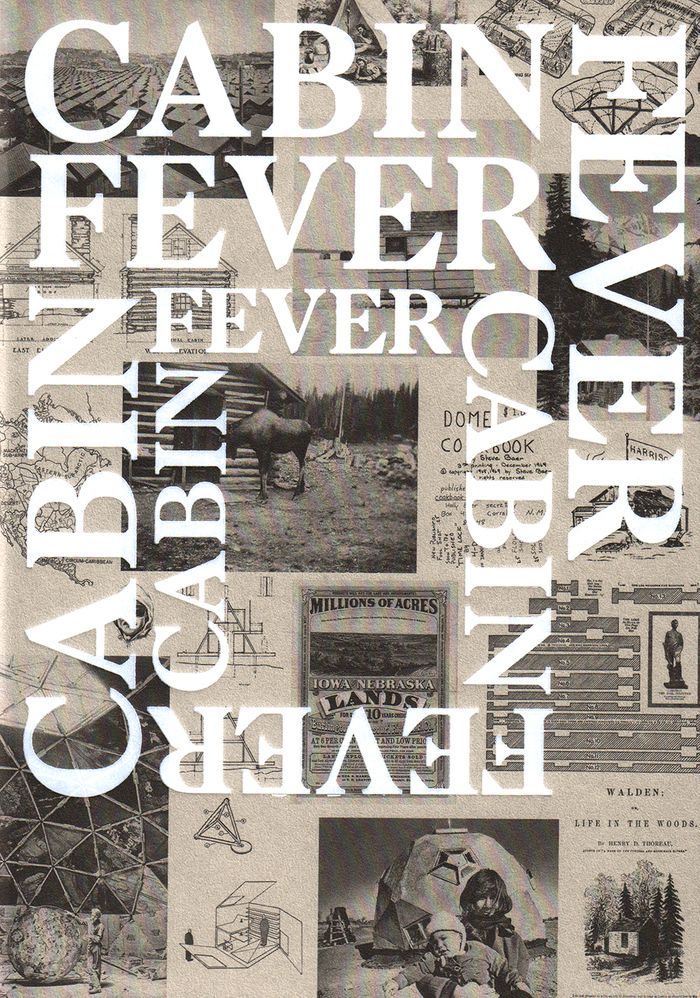
''Cabin Fever'' traces the course of the cabin in North America- from the simple architecture of colonial settlements to contemporary interpretations feverishly circulated across the Internet- showing how this humble architectural form has been appropriated for its symbolic value and helped shape a larger cultural identity.
$72.50
(available to order)
Summary:
''Cabin Fever'' traces the course of the cabin in North America- from the simple architecture of colonial settlements to contemporary interpretations feverishly circulated across the Internet- showing how this humble architectural form has been appropriated for its symbolic value and helped shape a larger cultural identity.
Subject:
Commercial interiors, Building types
Commercial interiors, Building types
Publication:
August 2018
August 2018
Title:
Cabin Fever
Actions:
Price:
$72.50
(available to order)
Summary:
''Cabin Fever'' traces the course of the cabin in North America- from the simple architecture of colonial settlements to contemporary interpretations feverishly circulated across the Internet- showing how this humble architectural form has been appropriated for its symbolic value and helped shape a larger cultural identity.
Cabin Fever
Actions:
Price:
$72.50
(available to order)
Summary:
''Cabin Fever'' traces the course of the cabin in North America- from the simple architecture of colonial settlements to contemporary interpretations feverishly circulated across the Internet- showing how this humble architectural form has been appropriated for its symbolic value and helped shape a larger cultural identity.
Form:
books
books
Publication:
August 2018
August 2018
Subject:
Commercial interiors, Building types
Commercial interiors, Building types
Form:
books
books
Actions:
Holdings:
Description:
491 pages : illustrations (some color) ; 23 cm
Description:
491 pages : illustrations (some color) ; 23 cm
Author:
Subject:
Publication:
[Place of publication not identified] : iwalewabooks, 2022
[Place of publication not identified] : iwalewabooks, 2022
Title:
Das Bauhaus verfehlen = Missing the Bauhaus / edited by Alexander Opper, Katharina Fink, Nadine Siegert.
Actions:
Holdings:
Description:
491 pages : illustrations (some color) ; 23 cm
Das Bauhaus verfehlen = Missing the Bauhaus / edited by Alexander Opper, Katharina Fink, Nadine Siegert.
Actions:
Holdings:
Description:
491 pages : illustrations (some color) ; 23 cm
Form:
books
books
Publication:
[Place of publication not identified] : iwalewabooks, 2022
[Place of publication not identified] : iwalewabooks, 2022
Author:
Subject:
Form:
journals and magazines
journals and magazines
Price:
$19.95
(available in store)
Summary:
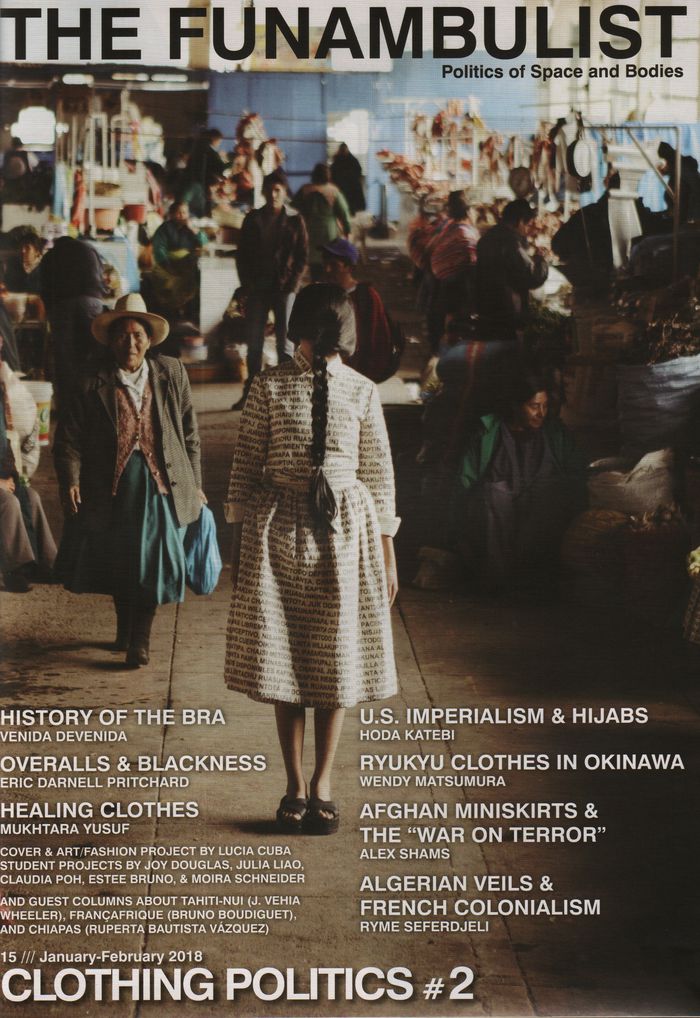
''Clothing Politics #2'' is the sequel of the third issue of The Funambulist, published two years earlier. The articles and projects presented in this issue feature instances of clothing that act as subversions of the gendered, colonial, racialized, and/or ableist normative contexts in which they are respectively worn.
$19.95
(available in store)
Summary:
''Clothing Politics #2'' is the sequel of the third issue of The Funambulist, published two years earlier. The articles and projects presented in this issue feature instances of clothing that act as subversions of the gendered, colonial, racialized, and/or ableist normative contexts in which they are respectively worn.
Title:
The Funambulist 15, Clothing politics #2. January-February 2018
Actions:
Price:
$19.95
(available in store)
Summary:
''Clothing Politics #2'' is the sequel of the third issue of The Funambulist, published two years earlier. The articles and projects presented in this issue feature instances of clothing that act as subversions of the gendered, colonial, racialized, and/or ableist normative contexts in which they are respectively worn.
The Funambulist 15, Clothing politics #2. January-February 2018
Actions:
Price:
$19.95
(available in store)
Summary:
''Clothing Politics #2'' is the sequel of the third issue of The Funambulist, published two years earlier. The articles and projects presented in this issue feature instances of clothing that act as subversions of the gendered, colonial, racialized, and/or ableist normative contexts in which they are respectively worn.
Form:
journals and magazines
journals and magazines
Publication:
January 2018
January 2018
Subject:
Magazines
Magazines
Form:
journals and magazines
journals and magazines
Actions:
Price:
$19.95
(available in store)
Summary:
The Funambulist, issue 20. ''Settler Colonialism in Turtle Island'' is a first ever issue of The Funambulist that was guest-edited. This issue was edited by Turtle Island Indigenous scholars and activists Melanie K. Yazzie and Nick Estes (who had contributed twice to the magazine in the past). The issue proposes several facets of Indigenous struggles in Turtle Island(...)
$19.95
(available in store)
Summary:
The Funambulist, issue 20. ''Settler Colonialism in Turtle Island'' is a first ever issue of The Funambulist that was guest-edited. This issue was edited by Turtle Island Indigenous scholars and activists Melanie K. Yazzie and Nick Estes (who had contributed twice to the magazine in the past). The issue proposes several facets of Indigenous struggles in Turtle Island(...)
Title:
The Funambulist 20, November/December
Actions:
Price:
$19.95
(available in store)
Summary:
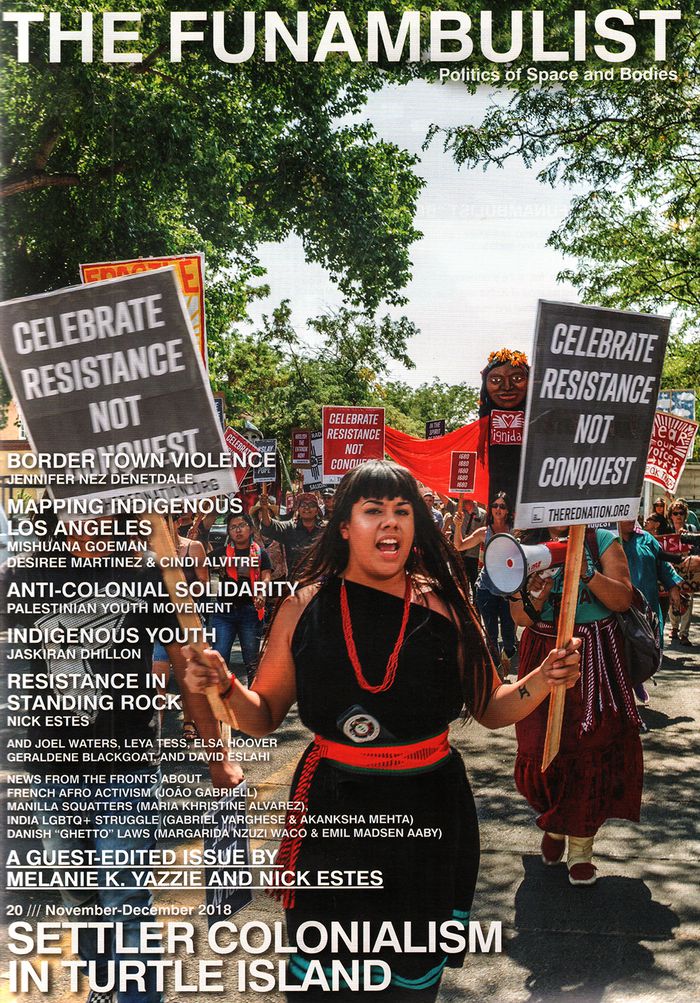
The Funambulist, issue 20. ''Settler Colonialism in Turtle Island'' is a first ever issue of The Funambulist that was guest-edited. This issue was edited by Turtle Island Indigenous scholars and activists Melanie K. Yazzie and Nick Estes (who had contributed twice to the magazine in the past). The issue proposes several facets of Indigenous struggles in Turtle Island (what many people call ''North America''.) Most of them depict Native lives in spaces that are not the reservations where the colonial narrative usually situates them. Whether in large cities such as Los Angeles or Saskatoon, or settler border towns in the periphery of reservations, the urban dimension of the first half of the dossier is omnipresent. The second half is dedicated to various forms of Indigenous resistance through space-making, anti-colonial solidarities, representative transgression, or architecture researches/projects.
The Funambulist 20, November/December
Actions:
Price:
$19.95
(available in store)
Summary:
The Funambulist, issue 20. ''Settler Colonialism in Turtle Island'' is a first ever issue of The Funambulist that was guest-edited. This issue was edited by Turtle Island Indigenous scholars and activists Melanie K. Yazzie and Nick Estes (who had contributed twice to the magazine in the past). The issue proposes several facets of Indigenous struggles in Turtle Island (what many people call ''North America''.) Most of them depict Native lives in spaces that are not the reservations where the colonial narrative usually situates them. Whether in large cities such as Los Angeles or Saskatoon, or settler border towns in the periphery of reservations, the urban dimension of the first half of the dossier is omnipresent. The second half is dedicated to various forms of Indigenous resistance through space-making, anti-colonial solidarities, representative transgression, or architecture researches/projects.
Form:
journals and magazines
journals and magazines
Publication:
November 2018
November 2018
Subject:
Magazines
Magazines
Form:
journals and magazines
journals and magazines
Actions:
Price:
$18.50
(available to order)
Summary:
22 GAMMA Grid, 1953. The End of CIAM and the Bidonvilles of Casablanca For a short time in the 1950s the planning practices of European architects in North Africa and their studies of everyday life in the bidonvilles were of central importance in the CIAM debates about a redefinition of the modern movement. In spite of their great interest in the reality of life in(...)
$18.50
(available to order)
Summary:
22 GAMMA Grid, 1953. The End of CIAM and the Bidonvilles of Casablanca For a short time in the 1950s the planning practices of European architects in North Africa and their studies of everyday life in the bidonvilles were of central importance in the CIAM debates about a redefinition of the modern movement. In spite of their great interest in the reality of life in(...)
Title:
Anarchitektur: produktion und gebrauch gebauter umwelt
Actions:
Price:
$18.50
(available to order)
Summary:
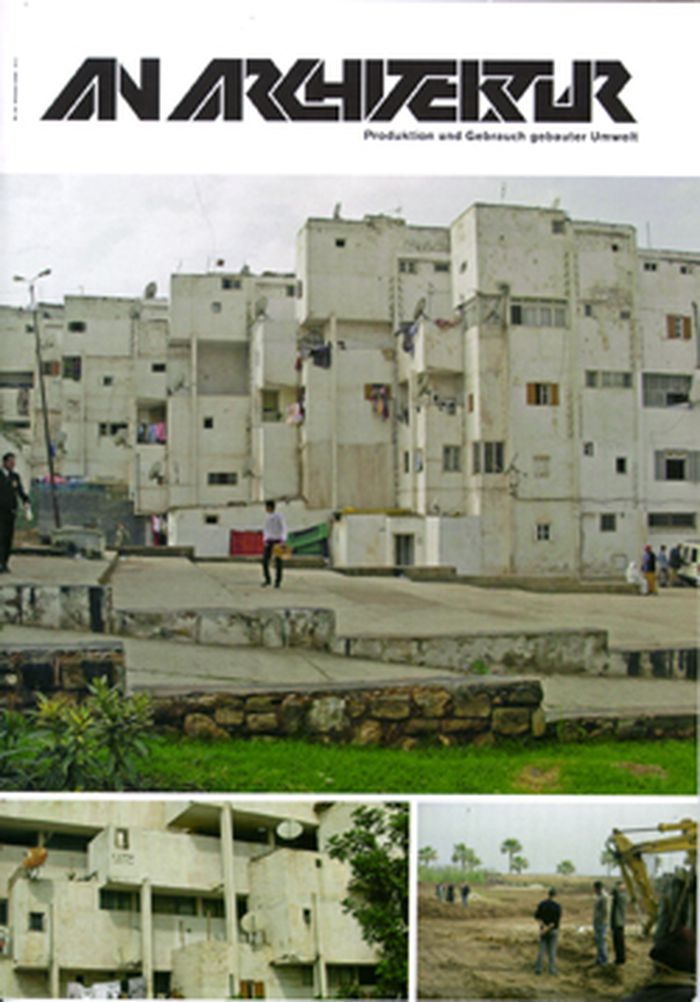
22 GAMMA Grid, 1953. The End of CIAM and the Bidonvilles of Casablanca For a short time in the 1950s the planning practices of European architects in North Africa and their studies of everyday life in the bidonvilles were of central importance in the CIAM debates about a redefinition of the modern movement. In spite of their great interest in the reality of life in Casablanca´s bidonvilles as analyzed in the GAMMA grid, the architects ignored the colonial conditions of their research: the repressive nature of the regime as well as the anti-colonial struggles. While opening up a discussion about an architecture that includes the local and thinks about processes and users, this study is also exemplary for the dilemma of post-war modernism, that of giving mainly aesthetic answers to social and political questions.
Anarchitektur: produktion und gebrauch gebauter umwelt
Actions:
Price:
$18.50
(available to order)
Summary:
22 GAMMA Grid, 1953. The End of CIAM and the Bidonvilles of Casablanca For a short time in the 1950s the planning practices of European architects in North Africa and their studies of everyday life in the bidonvilles were of central importance in the CIAM debates about a redefinition of the modern movement. In spite of their great interest in the reality of life in Casablanca´s bidonvilles as analyzed in the GAMMA grid, the architects ignored the colonial conditions of their research: the repressive nature of the regime as well as the anti-colonial struggles. While opening up a discussion about an architecture that includes the local and thinks about processes and users, this study is also exemplary for the dilemma of post-war modernism, that of giving mainly aesthetic answers to social and political questions.
Form:
journals and magazines
journals and magazines
Publication:
November 2008, Berlin
November 2008, Berlin
Subject:
Magazines
Magazines
Form:
books
books
Actions:
Price:
$39.95
(available to order)
Summary:
In ''¡Presente!: the politics of presence'' Diana Taylor asks what it means to be physically and politically present in situations where it seems that nothing can be done. As much an act, a word, an attitude, a theoretical intervention, and a performance pedagogy, Taylor maps ''¡Presente!'' at work in scenarios ranging from conquest, through colonial enactments and(...)
$39.95
(available to order)
Summary:
In ''¡Presente!: the politics of presence'' Diana Taylor asks what it means to be physically and politically present in situations where it seems that nothing can be done. As much an act, a word, an attitude, a theoretical intervention, and a performance pedagogy, Taylor maps ''¡Presente!'' at work in scenarios ranging from conquest, through colonial enactments and(...)
Title:
¡Presente!: the politics of presence
Actions:
Price:
$39.95
(available to order)
Summary:
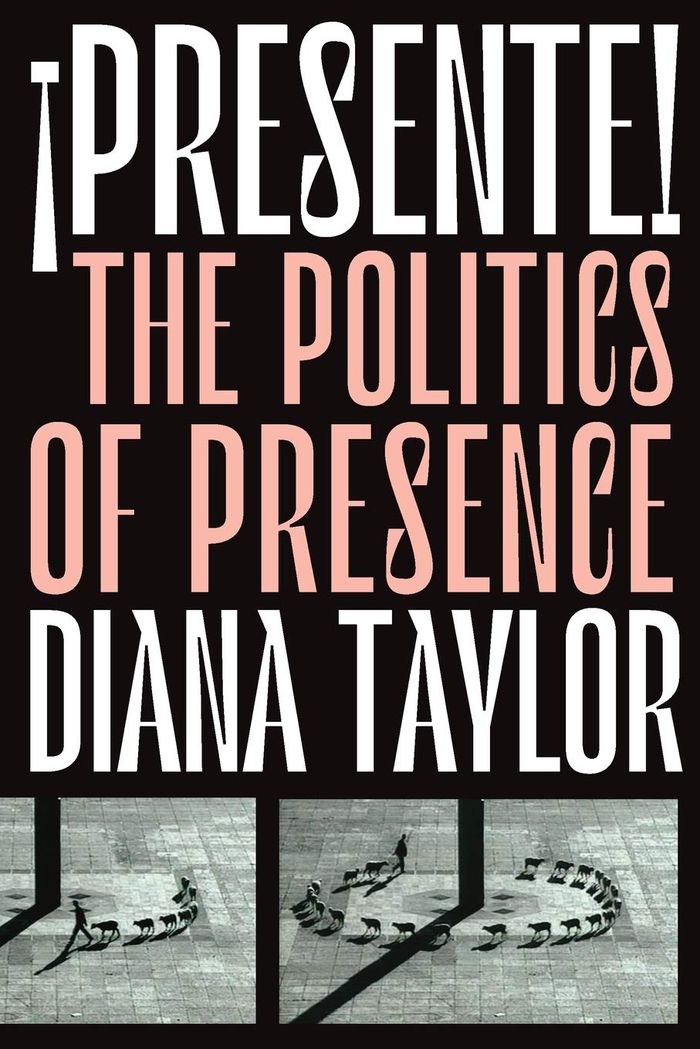
In ''¡Presente!: the politics of presence'' Diana Taylor asks what it means to be physically and politically present in situations where it seems that nothing can be done. As much an act, a word, an attitude, a theoretical intervention, and a performance pedagogy, Taylor maps ''¡Presente!'' at work in scenarios ranging from conquest, through colonial enactments and resistance movements, to present moments of capitalist extractivism and forced migration in the Americas. ''¡Presente!''—present among, with, and to; a walking and talking with others; an ontological and epistemic reflection on presence and subjectivity as participatory and relational, founded on mutual recognition—requires rethinking and unlearning in ways that challenge colonial epistemologies. Showing how knowledge is not something to be harvested but a process of being, knowing, and acting with others, Taylor models a way for scholarship to be present in political struggles.
¡Presente!: the politics of presence
Actions:
Price:
$39.95
(available to order)
Summary:
In ''¡Presente!: the politics of presence'' Diana Taylor asks what it means to be physically and politically present in situations where it seems that nothing can be done. As much an act, a word, an attitude, a theoretical intervention, and a performance pedagogy, Taylor maps ''¡Presente!'' at work in scenarios ranging from conquest, through colonial enactments and resistance movements, to present moments of capitalist extractivism and forced migration in the Americas. ''¡Presente!''—present among, with, and to; a walking and talking with others; an ontological and epistemic reflection on presence and subjectivity as participatory and relational, founded on mutual recognition—requires rethinking and unlearning in ways that challenge colonial epistemologies. Showing how knowledge is not something to be harvested but a process of being, knowing, and acting with others, Taylor models a way for scholarship to be present in political struggles.
Form:
books
books
Publication:
July 2020
July 2020
Subject:
Critical Theory
Critical Theory


