


2688 Results
Form:
books
books
Actions:
Price:
$34.99
(available to order)
Summary:
Author Alain de Botton considers how our private homes and public edifices influence how we feel, and how we could build dwellings in which we would stand a better chance of happiness. In this look at how we shape, and are shaped by, our surroundings, Alain de Botton applies Stendhal’s motto that “Beauty is the promise of happiness” to the spaces we inhabit daily. Why(...)
$34.99
(available to order)
Summary:
Author Alain de Botton considers how our private homes and public edifices influence how we feel, and how we could build dwellings in which we would stand a better chance of happiness. In this look at how we shape, and are shaped by, our surroundings, Alain de Botton applies Stendhal’s motto that “Beauty is the promise of happiness” to the spaces we inhabit daily. Why(...)
Title:
The architecture of happiness
Actions:
Price:
$34.99
(available to order)
Summary:
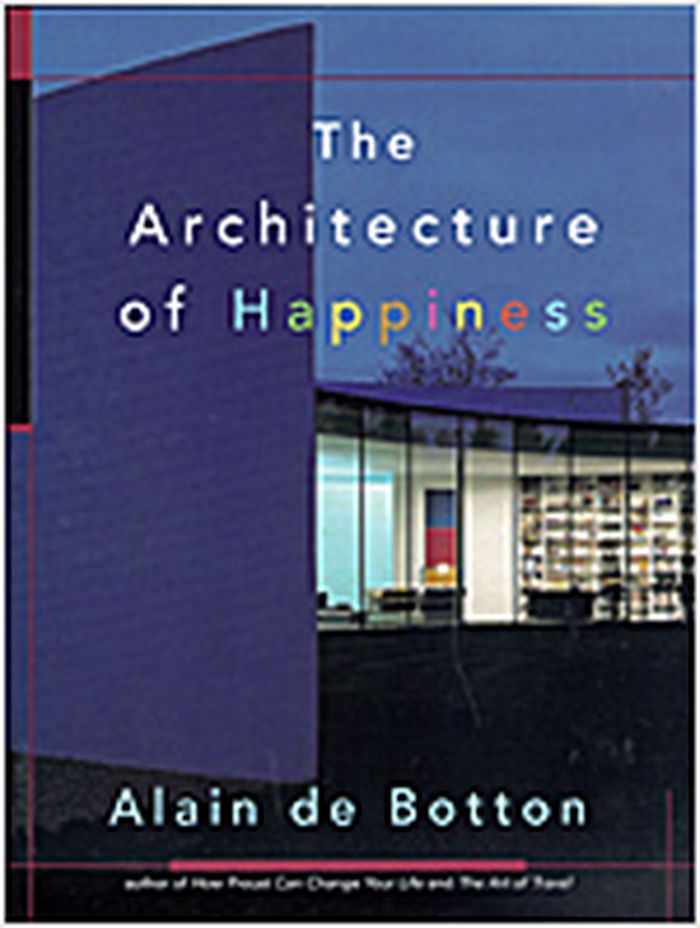
Author Alain de Botton considers how our private homes and public edifices influence how we feel, and how we could build dwellings in which we would stand a better chance of happiness. In this look at how we shape, and are shaped by, our surroundings, Alain de Botton applies Stendhal’s motto that “Beauty is the promise of happiness” to the spaces we inhabit daily. Why should we pay attention to what architecture has to say to us? de Botton asks. de Botton traces how human needs and desires have been served by styles of architecture, from stately Classical to minimalist Modern, arguing that the stylistic choices of a society can represent both its cherished ideals and the qualities it desperately lacks. On an individual level, de Botton has deep sympathy for our need to see our selves reflected in our surroundings; he demonstrates how buildings — just like friends — can serve as guardians of our identity. Worrying about the shape of our sofa or the colour of our walls might seem self-indulgent, but de Botton considers the hopes and fears we have for our homes at a new level of depth and insight. When shopping for furniture or remodelling the kitchen, we don’t just consider functionality but also the major questions of aesthetics and the philosophy of art: What is beauty? Can beautiful surroundings make us good? Can beauty bring happiness? The buildings we find beautiful, de Botton concludes, are those that represent our ideas of a meaningful life.
The architecture of happiness
Actions:
Price:
$34.99
(available to order)
Summary:
Author Alain de Botton considers how our private homes and public edifices influence how we feel, and how we could build dwellings in which we would stand a better chance of happiness. In this look at how we shape, and are shaped by, our surroundings, Alain de Botton applies Stendhal’s motto that “Beauty is the promise of happiness” to the spaces we inhabit daily. Why should we pay attention to what architecture has to say to us? de Botton asks. de Botton traces how human needs and desires have been served by styles of architecture, from stately Classical to minimalist Modern, arguing that the stylistic choices of a society can represent both its cherished ideals and the qualities it desperately lacks. On an individual level, de Botton has deep sympathy for our need to see our selves reflected in our surroundings; he demonstrates how buildings — just like friends — can serve as guardians of our identity. Worrying about the shape of our sofa or the colour of our walls might seem self-indulgent, but de Botton considers the hopes and fears we have for our homes at a new level of depth and insight. When shopping for furniture or remodelling the kitchen, we don’t just consider functionality but also the major questions of aesthetics and the philosophy of art: What is beauty? Can beautiful surroundings make us good? Can beauty bring happiness? The buildings we find beautiful, de Botton concludes, are those that represent our ideas of a meaningful life.
Form:
books
books
Publication:
September 2006, Toronto
September 2006, Toronto
Subject:
Architectural Theory
Architectural Theory
Form:
books
books
Actions:
Price:
$95.00
(available to order)
Summary:
The recent works of the acclaimed Swiss architect are presented in this monograph on his world-renowned work and previously unpublished plans. Mario Botta's buildings are characterized by simple, geometric shapes that juxtapose lightness and weight. This richly illustrated monograph examines Botta's most recent examples on this theme, as seen in the Kyobo Tower in Seoul,(...)
$95.00
(available to order)
Summary:
The recent works of the acclaimed Swiss architect are presented in this monograph on his world-renowned work and previously unpublished plans. Mario Botta's buildings are characterized by simple, geometric shapes that juxtapose lightness and weight. This richly illustrated monograph examines Botta's most recent examples on this theme, as seen in the Kyobo Tower in Seoul,(...)
Title:
Mario Botta : light and gravity, architecture 1993-2003
Actions:
Price:
$95.00
(available to order)
Summary:
The recent works of the acclaimed Swiss architect are presented in this monograph on his world-renowned work and previously unpublished plans. Mario Botta's buildings are characterized by simple, geometric shapes that juxtapose lightness and weight. This richly illustrated monograph examines Botta's most recent examples on this theme, as seen in the Kyobo Tower in Seoul, the San Francisco Museum of Modern Art, the Jean Tinguely Museum in Basel, and the Cymbalista Synagogue in Tel Aviv. Hundreds of photographs, sketches, and plans illustrate the architect's desire to create structures that adhere to and complement their locations, and show how his choice of materials emphasizes craftsmanship and geometric order. Botta's finished buildings are examined alongside plans which never saw completion, demonstrating the extraordinary creative process of this modern visionary.
Mario Botta : light and gravity, architecture 1993-2003
Actions:
Price:
$95.00
(available to order)
Summary:
The recent works of the acclaimed Swiss architect are presented in this monograph on his world-renowned work and previously unpublished plans. Mario Botta's buildings are characterized by simple, geometric shapes that juxtapose lightness and weight. This richly illustrated monograph examines Botta's most recent examples on this theme, as seen in the Kyobo Tower in Seoul, the San Francisco Museum of Modern Art, the Jean Tinguely Museum in Basel, and the Cymbalista Synagogue in Tel Aviv. Hundreds of photographs, sketches, and plans illustrate the architect's desire to create structures that adhere to and complement their locations, and show how his choice of materials emphasizes craftsmanship and geometric order. Botta's finished buildings are examined alongside plans which never saw completion, demonstrating the extraordinary creative process of this modern visionary.
Form:
books
books
Publication:
October 2004, Munich
October 2004, Munich
Subject:
Architecture Monographs
Architecture Monographs
Form:
journals and magazines
journals and magazines
Actions:
Price:
$162.00
(available in store)
Summary:
The architects of Studio Macías Peredo, based in Guadalajara and led by Salvador Macías Corona, Magui Peredo Arenas, and Diego Quirarte Contreras, believe that the act of designing is inseparable from the act of remembering. Architecture is a living testimony to the culture of a place. The studio is greatly influenced by pre-Hispanic architecture, archaeology, and Mexican(...)
$162.00
(available in store)
Summary:
The architects of Studio Macías Peredo, based in Guadalajara and led by Salvador Macías Corona, Magui Peredo Arenas, and Diego Quirarte Contreras, believe that the act of designing is inseparable from the act of remembering. Architecture is a living testimony to the culture of a place. The studio is greatly influenced by pre-Hispanic architecture, archaeology, and Mexican(...)
Title:
El Croquis 225: Macias Peredo
Actions:
Price:
$162.00
(available in store)
Summary:
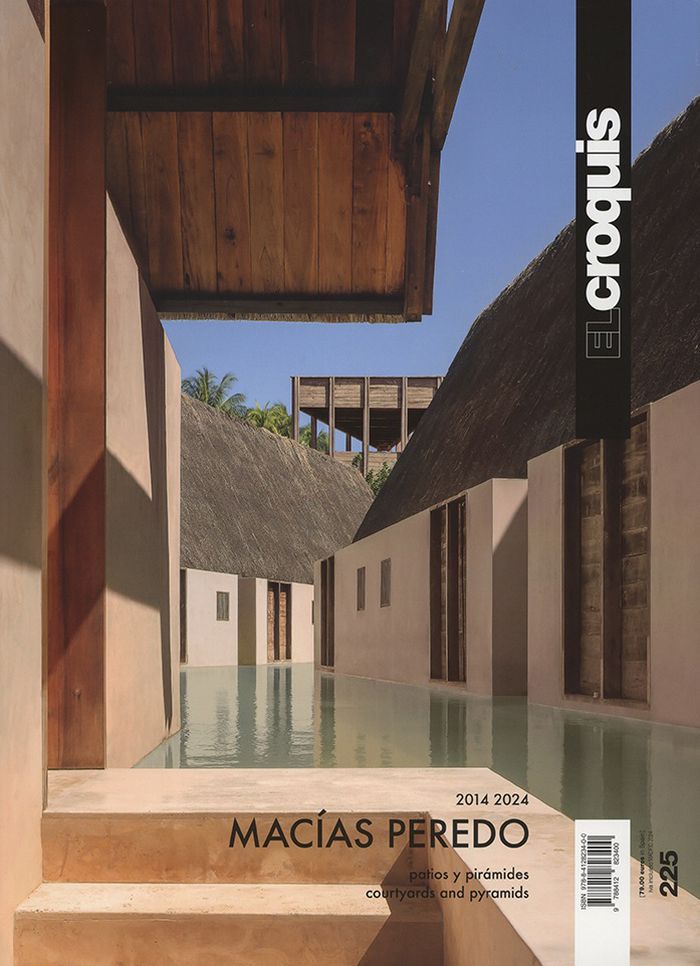
The architects of Studio Macías Peredo, based in Guadalajara and led by Salvador Macías Corona, Magui Peredo Arenas, and Diego Quirarte Contreras, believe that the act of designing is inseparable from the act of remembering. Architecture is a living testimony to the culture of a place. The studio is greatly influenced by pre-Hispanic architecture, archaeology, and Mexican colonial styles, and the partners travel extensively, studying vernacular and modern buildings throughout Mexico in order to grasp how they work. This issue presents their work from 2014 to 2024, including the Punta Caliza Hotel, Izamal Water Garden, and tropical residential complexes.
El Croquis 225: Macias Peredo
Actions:
Price:
$162.00
(available in store)
Summary:
The architects of Studio Macías Peredo, based in Guadalajara and led by Salvador Macías Corona, Magui Peredo Arenas, and Diego Quirarte Contreras, believe that the act of designing is inseparable from the act of remembering. Architecture is a living testimony to the culture of a place. The studio is greatly influenced by pre-Hispanic architecture, archaeology, and Mexican colonial styles, and the partners travel extensively, studying vernacular and modern buildings throughout Mexico in order to grasp how they work. This issue presents their work from 2014 to 2024, including the Punta Caliza Hotel, Izamal Water Garden, and tropical residential complexes.
Form:
journals and magazines
journals and magazines
Publication:
March 2024
March 2024
Subject:
Magazines
Magazines
Form:
books
books

Actions:
Price:
$13.99
(available to order)
Summary:
"Aesop’s Anthropology" is a guide for thinking through the perplexing predicaments and encounters that arise as the line between human and nonhuman shifts in modern life. Recognizing that culture is not unique to humans, John Hartigan Jr. asks what we can learn about culture from other species. He pursues a variety of philosophical and scientific ideas about what it means(...)
$13.99
(available to order)
Summary:
"Aesop’s Anthropology" is a guide for thinking through the perplexing predicaments and encounters that arise as the line between human and nonhuman shifts in modern life. Recognizing that culture is not unique to humans, John Hartigan Jr. asks what we can learn about culture from other species. He pursues a variety of philosophical and scientific ideas about what it means(...)
Title:
Aesop's anthropology: A multispecies approach
Actions:
Price:
$13.99
(available to order)
Summary:
"Aesop’s Anthropology" is a guide for thinking through the perplexing predicaments and encounters that arise as the line between human and nonhuman shifts in modern life. Recognizing that culture is not unique to humans, John Hartigan Jr. asks what we can learn about culture from other species. He pursues a variety of philosophical and scientific ideas about what it means to be social using cultural dynamics to rethink what we assume makes humans special and different from other forms of life. Through an interlinked series of brief essays, Hartigan explores how we can think differently about being human.
Aesop's anthropology: A multispecies approach
Actions:
Price:
$13.99
(available to order)
Summary:
"Aesop’s Anthropology" is a guide for thinking through the perplexing predicaments and encounters that arise as the line between human and nonhuman shifts in modern life. Recognizing that culture is not unique to humans, John Hartigan Jr. asks what we can learn about culture from other species. He pursues a variety of philosophical and scientific ideas about what it means to be social using cultural dynamics to rethink what we assume makes humans special and different from other forms of life. Through an interlinked series of brief essays, Hartigan explores how we can think differently about being human.
Form:
books
books
Publication:
October 2014
October 2014
Subject:
Social
Social
Form:
books
books
Actions:
Price:
$89.95
(available to order)
Summary:
''Inverse Utopia'' looks at urbanism from the perspective of modernism and postmodernism, as well as at how commercialization has transformed the modern city. In his earlier book ''Ladders'' (1997), the author described the emergence of the cul-de-sac as a typical manifestation of this trend. In this new book, ''Inverse Utopia'', Pope argues for the development of(...)
$89.95
(available to order)
Summary:
''Inverse Utopia'' looks at urbanism from the perspective of modernism and postmodernism, as well as at how commercialization has transformed the modern city. In his earlier book ''Ladders'' (1997), the author described the emergence of the cul-de-sac as a typical manifestation of this trend. In this new book, ''Inverse Utopia'', Pope argues for the development of(...)
Title:
Inverse utopia: Urbanism and the great acceleration
Actions:
Price:
$89.95
(available to order)
Summary:
''Inverse Utopia'' looks at urbanism from the perspective of modernism and postmodernism, as well as at how commercialization has transformed the modern city. In his earlier book ''Ladders'' (1997), the author described the emergence of the cul-de-sac as a typical manifestation of this trend. In this new book, ''Inverse Utopia'', Pope argues for the development of architectural and urban forms that respond to contemporary ecological and social challenges. The title refers to a statement by the philosopher Günther Anders: whereas utopians are unable to make the things they imagine, others are unable to imagine the things they make.
Inverse utopia: Urbanism and the great acceleration
Actions:
Price:
$89.95
(available to order)
Summary:
''Inverse Utopia'' looks at urbanism from the perspective of modernism and postmodernism, as well as at how commercialization has transformed the modern city. In his earlier book ''Ladders'' (1997), the author described the emergence of the cul-de-sac as a typical manifestation of this trend. In this new book, ''Inverse Utopia'', Pope argues for the development of architectural and urban forms that respond to contemporary ecological and social challenges. The title refers to a statement by the philosopher Günther Anders: whereas utopians are unable to make the things they imagine, others are unable to imagine the things they make.
Form:
books
books
Publication:
May 2025
May 2025
Subject:
Urban Theory
Urban Theory
Form:
books
books
Title:
World without words
World without words
Actions:
Price:
$46.95
(available to order)
Summary:
"World Without Words" provides evidence that images and graphic information are doing the work that words used to do. It is a voyage through the 'visual shorthand' of modern life. Michael Evamy investigates the ways in which accepted graphic systems are transformed by different cultures or individuals, and spotlights examples of wordless designs from around the world.(...)
$46.95
(available to order)
Summary:
"World Without Words" provides evidence that images and graphic information are doing the work that words used to do. It is a voyage through the 'visual shorthand' of modern life. Michael Evamy investigates the ways in which accepted graphic systems are transformed by different cultures or individuals, and spotlights examples of wordless designs from around the world.(...)
Title:
World without words
Actions:
Price:
$46.95
(available to order)
Summary:
"World Without Words" provides evidence that images and graphic information are doing the work that words used to do. It is a voyage through the 'visual shorthand' of modern life. Michael Evamy investigates the ways in which accepted graphic systems are transformed by different cultures or individuals, and spotlights examples of wordless designs from around the world. The book also examines how artists and activists are coming to terms with our visual culture through their work, finding innovative new applications for the text-free graphic image. This book identifies vital currents in the graphic communication of brands, facts, public information and private conversation.
World without words
Actions:
Price:
$46.95
(available to order)
Summary:
"World Without Words" provides evidence that images and graphic information are doing the work that words used to do. It is a voyage through the 'visual shorthand' of modern life. Michael Evamy investigates the ways in which accepted graphic systems are transformed by different cultures or individuals, and spotlights examples of wordless designs from around the world. The book also examines how artists and activists are coming to terms with our visual culture through their work, finding innovative new applications for the text-free graphic image. This book identifies vital currents in the graphic communication of brands, facts, public information and private conversation.
Form:
books
books
Publication:
October 2003, New York
October 2003, New York
Subject:
Graphic Design and Typography
Graphic Design and Typography
Form:
books
books
Actions:
Price:
$36.50
(available to order)
Summary:
What good is design? In a world facing social unrest, political tribalism, and impending ecological doom, Tomás Maldonado poses philosophical inquiries into the role design plays during a moment of crisis and analyzes what “design” might mean as an ever-enlarging compass beyond stylization of specific objects. He discusses how design is both influenced by and central to(...)
$36.50
(available to order)
Summary:
What good is design? In a world facing social unrest, political tribalism, and impending ecological doom, Tomás Maldonado poses philosophical inquiries into the role design plays during a moment of crisis and analyzes what “design” might mean as an ever-enlarging compass beyond stylization of specific objects. He discusses how design is both influenced by and central to(...)
Title:
Design, nature and revolution: towards a critical ecology
Actions:
Price:
$36.50
(available to order)
Summary:
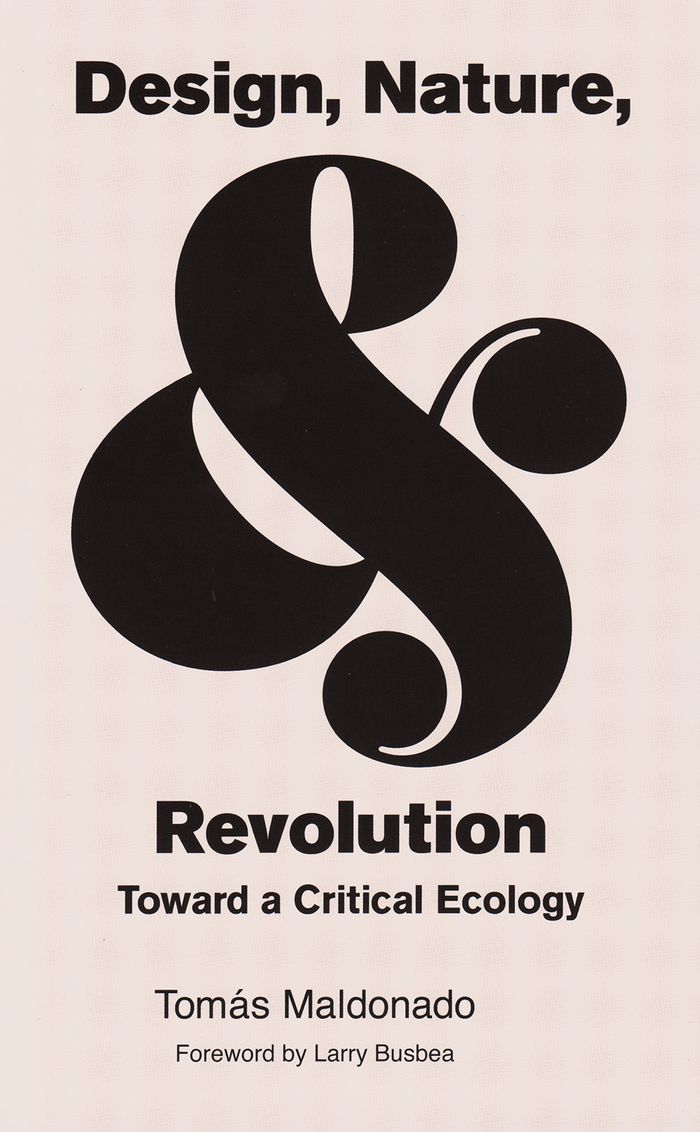
What good is design? In a world facing social unrest, political tribalism, and impending ecological doom, Tomás Maldonado poses philosophical inquiries into the role design plays during a moment of crisis and analyzes what “design” might mean as an ever-enlarging compass beyond stylization of specific objects. He discusses how design is both influenced by and central to ecological crisis. Written as a kind of obituary to the Modern movement’s wave of failed “concrete utopias,” Maldonado combines philosophy, sociology, radical countercultural thought, and the ecological sciences into a polemic that recenters design in the human environment.
Design, nature and revolution: towards a critical ecology
Actions:
Price:
$36.50
(available to order)
Summary:
What good is design? In a world facing social unrest, political tribalism, and impending ecological doom, Tomás Maldonado poses philosophical inquiries into the role design plays during a moment of crisis and analyzes what “design” might mean as an ever-enlarging compass beyond stylization of specific objects. He discusses how design is both influenced by and central to ecological crisis. Written as a kind of obituary to the Modern movement’s wave of failed “concrete utopias,” Maldonado combines philosophy, sociology, radical countercultural thought, and the ecological sciences into a polemic that recenters design in the human environment.
Form:
books
books
Publication:
April 2019
April 2019
Subject:
Design Theory
Design Theory
Form:
books
books
Price:
$18.95
(available to order)
Summary:
This book offers 20 perfect solutions for maximum utilization of minimum space. It is a special challenge to every architect or designer to figure out maximum utilization of minimum space. Trying to make apartments seem brighter and bigger demands a high creativity and great imagination. This compilation of 20 new small apartments from all over the world will be of(...)
$18.95
(available to order)
Summary:
This book offers 20 perfect solutions for maximum utilization of minimum space. It is a special challenge to every architect or designer to figure out maximum utilization of minimum space. Trying to make apartments seem brighter and bigger demands a high creativity and great imagination. This compilation of 20 new small apartments from all over the world will be of(...)
Title:
New small apartments, nouveaux petits appartements, neue kleine apartments
Actions:
Price:
$18.95
(available to order)
Summary:
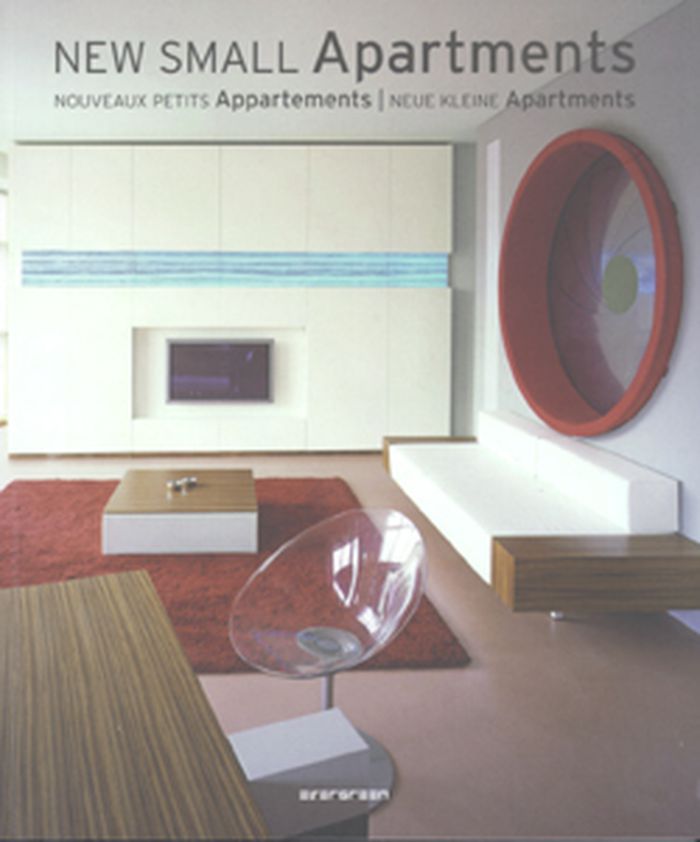
This book offers 20 perfect solutions for maximum utilization of minimum space. It is a special challenge to every architect or designer to figure out maximum utilization of minimum space. Trying to make apartments seem brighter and bigger demands a high creativity and great imagination. This compilation of 20 new small apartments from all over the world will be of interest not only to architects and designers but also to residents of modern cities. It thereby presents a basic tool for understanding how architects, designers, or owners of small apartments approach a project involving minimal living space.
New small apartments, nouveaux petits appartements, neue kleine apartments
Actions:
Price:
$18.95
(available to order)
Summary:
This book offers 20 perfect solutions for maximum utilization of minimum space. It is a special challenge to every architect or designer to figure out maximum utilization of minimum space. Trying to make apartments seem brighter and bigger demands a high creativity and great imagination. This compilation of 20 new small apartments from all over the world will be of interest not only to architects and designers but also to residents of modern cities. It thereby presents a basic tool for understanding how architects, designers, or owners of small apartments approach a project involving minimal living space.
Form:
books
books
Publication:
December 2008, Köln
December 2008, Köln
Subject:
Residential Architecture
Residential Architecture
Form:
books
books
Actions:
Price:
$41.99
(available to order)
Summary:
The concept "Typophoto", the synthesis of photography and typography, was coined by renowned Bauhaus artist and theorist László Moholy-Nagy and played a foundational role in the modernist graphic design movement known as the New Typography. Jessica D. Brier examines how Typophoto was embraced by early graphic designers—a group who ultimately reinvented photography as a(...)
$41.99
(available to order)
Summary:
The concept "Typophoto", the synthesis of photography and typography, was coined by renowned Bauhaus artist and theorist László Moholy-Nagy and played a foundational role in the modernist graphic design movement known as the New Typography. Jessica D. Brier examines how Typophoto was embraced by early graphic designers—a group who ultimately reinvented photography as a(...)
Title:
Typophoto: New typography and the reinvention of photography
Actions:
Price:
$41.99
(available to order)
Summary:
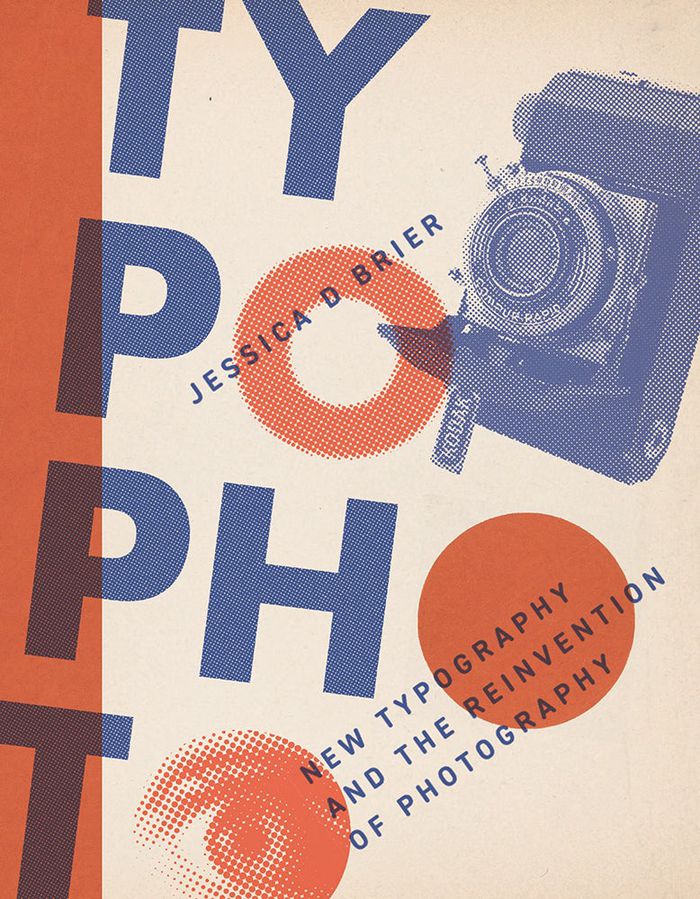
The concept "Typophoto", the synthesis of photography and typography, was coined by renowned Bauhaus artist and theorist László Moholy-Nagy and played a foundational role in the modernist graphic design movement known as the New Typography. Jessica D. Brier examines how Typophoto was embraced by early graphic designers—a group who ultimately reinvented photography as a tool of modern consumerism. "Typophoto" embodied designers’ belief in photography as an efficient form of visual communication, merging the material and the visual by abstracting both typographic and photographic form and transmuting photography into graphic material through the halftone process.
Typophoto: New typography and the reinvention of photography
Actions:
Price:
$41.99
(available to order)
Summary:
The concept "Typophoto", the synthesis of photography and typography, was coined by renowned Bauhaus artist and theorist László Moholy-Nagy and played a foundational role in the modernist graphic design movement known as the New Typography. Jessica D. Brier examines how Typophoto was embraced by early graphic designers—a group who ultimately reinvented photography as a tool of modern consumerism. "Typophoto" embodied designers’ belief in photography as an efficient form of visual communication, merging the material and the visual by abstracting both typographic and photographic form and transmuting photography into graphic material through the halftone process.
Form:
books
books
Publication:
April 2025
April 2025
Subject:
Theory of Photography
Theory of Photography
Form:
books
books
Price:
$61.95
(available in store)
Summary:
Gleaned from texts written from the 1970s onwards, this volume collects practical information on the construction of roofs and shelters that were intended to meet the material needs of impoverished peoples in the Global South. It is representative of architect Yona Friedman’s foresight in those years, as he had already decided to focus his interventions on how to include(...)
$61.95
(available in store)
Summary:
Gleaned from texts written from the 1970s onwards, this volume collects practical information on the construction of roofs and shelters that were intended to meet the material needs of impoverished peoples in the Global South. It is representative of architect Yona Friedman’s foresight in those years, as he had already decided to focus his interventions on how to include(...)
Title:
Roofs: local materials, simple technology, sophisticated ideas
Actions:
Price:
$61.95
(available in store)
Summary:
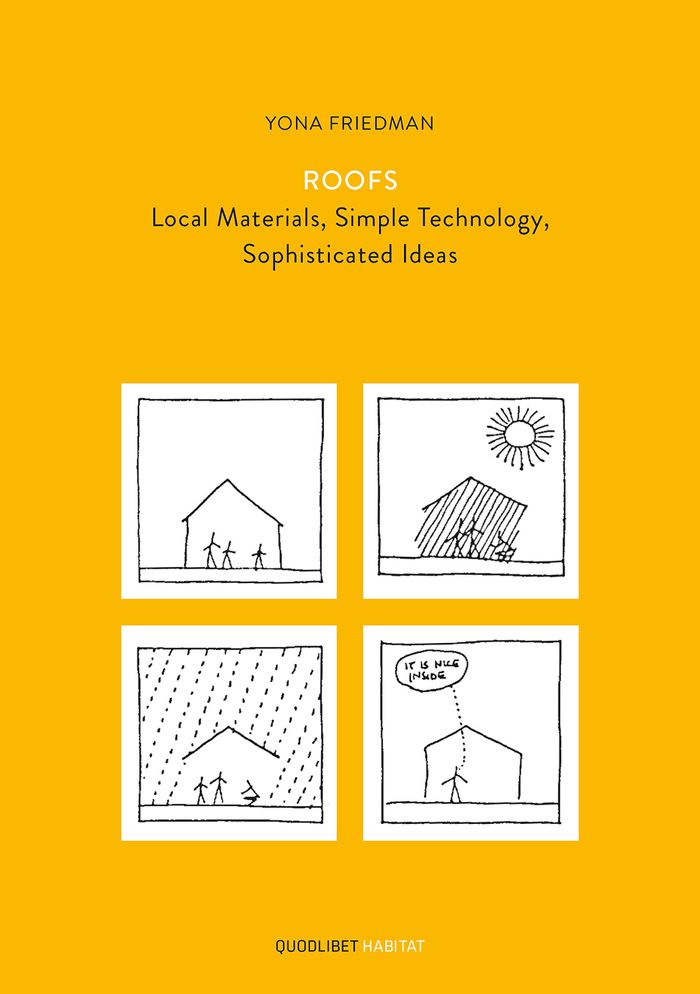
Gleaned from texts written from the 1970s onwards, this volume collects practical information on the construction of roofs and shelters that were intended to meet the material needs of impoverished peoples in the Global South. It is representative of architect Yona Friedman’s foresight in those years, as he had already decided to focus his interventions on how to include the inhabitants in the design of their habitat and dwellings. Besides being tested for UNESCO, Friedman’s manuals include essential 'blackboard' sketches. Ultimately, ''Roofs'' highlights the fact that the various issues facing modern cities are the result of irresponsible attitudes towards our planet.
Roofs: local materials, simple technology, sophisticated ideas
Actions:
Price:
$61.95
(available in store)
Summary:
Gleaned from texts written from the 1970s onwards, this volume collects practical information on the construction of roofs and shelters that were intended to meet the material needs of impoverished peoples in the Global South. It is representative of architect Yona Friedman’s foresight in those years, as he had already decided to focus his interventions on how to include the inhabitants in the design of their habitat and dwellings. Besides being tested for UNESCO, Friedman’s manuals include essential 'blackboard' sketches. Ultimately, ''Roofs'' highlights the fact that the various issues facing modern cities are the result of irresponsible attitudes towards our planet.
Form:
books
books
Publication:
January 2019
January 2019
Subject:
Architecture Monographs
Architecture Monographs


