


2688 Results
Form:
books
books
Actions:
Price:
$66.00
(available to order)
Summary:
Contemporary urban development is increasingly characterized by a reliance on diagrams to convey the rational statistical point of view of the professional urban planner. In his new book Urbanisms architect Steven Holl suggests that just as modern medicine has recognized the power of the irrational psyche urban planners need to realize that the experiential power of(...)
$66.00
(available to order)
Summary:
Contemporary urban development is increasingly characterized by a reliance on diagrams to convey the rational statistical point of view of the professional urban planner. In his new book Urbanisms architect Steven Holl suggests that just as modern medicine has recognized the power of the irrational psyche urban planners need to realize that the experiential power of(...)
Title:
Urbanisms: working with doubt
Actions:
Price:
$66.00
(available to order)
Summary:
Contemporary urban development is increasingly characterized by a reliance on diagrams to convey the rational statistical point of view of the professional urban planner. In his new book Urbanisms architect Steven Holl suggests that just as modern medicine has recognized the power of the irrational psyche urban planners need to realize that the experiential power of cities cannot be completely rationalized and must be studied subjectively. With a selection of urban and architectural projects from his thirty year practice Holl stretches urban planning into the domain of uncertainty. Analyzing a wide range of matters from everyday experiences to spatial data Urbanisms examines how perception and the senses are intertwined with the material space and light of urban form
Urbanisms: working with doubt
Actions:
Price:
$66.00
(available to order)
Summary:
Contemporary urban development is increasingly characterized by a reliance on diagrams to convey the rational statistical point of view of the professional urban planner. In his new book Urbanisms architect Steven Holl suggests that just as modern medicine has recognized the power of the irrational psyche urban planners need to realize that the experiential power of cities cannot be completely rationalized and must be studied subjectively. With a selection of urban and architectural projects from his thirty year practice Holl stretches urban planning into the domain of uncertainty. Analyzing a wide range of matters from everyday experiences to spatial data Urbanisms examines how perception and the senses are intertwined with the material space and light of urban form
Form:
books
books
Publication:
December 2008
December 2008
Subject:
Architecture Monographs
Architecture Monographs
Form:
books
books
Actions:
Price:
$22.50
(available to order)
Summary:
1917: the year a series of rebellions toppled three centuries of autocratic rule and placed a group of political radicals in charge of a world power. Here, suddenly, was the first modern socialist state, '' a kingdom more bright that any heaven had to offer.'' But the dream was short-lived, bringing in its wake seventy years of conflict and instability that nearly ended(...)
$22.50
(available to order)
Summary:
1917: the year a series of rebellions toppled three centuries of autocratic rule and placed a group of political radicals in charge of a world power. Here, suddenly, was the first modern socialist state, '' a kingdom more bright that any heaven had to offer.'' But the dream was short-lived, bringing in its wake seventy years of conflict and instability that nearly ended(...)
Title:
The Russian Revolution: a beginner's guide
Actions:
Price:
$22.50
(available to order)
Summary:
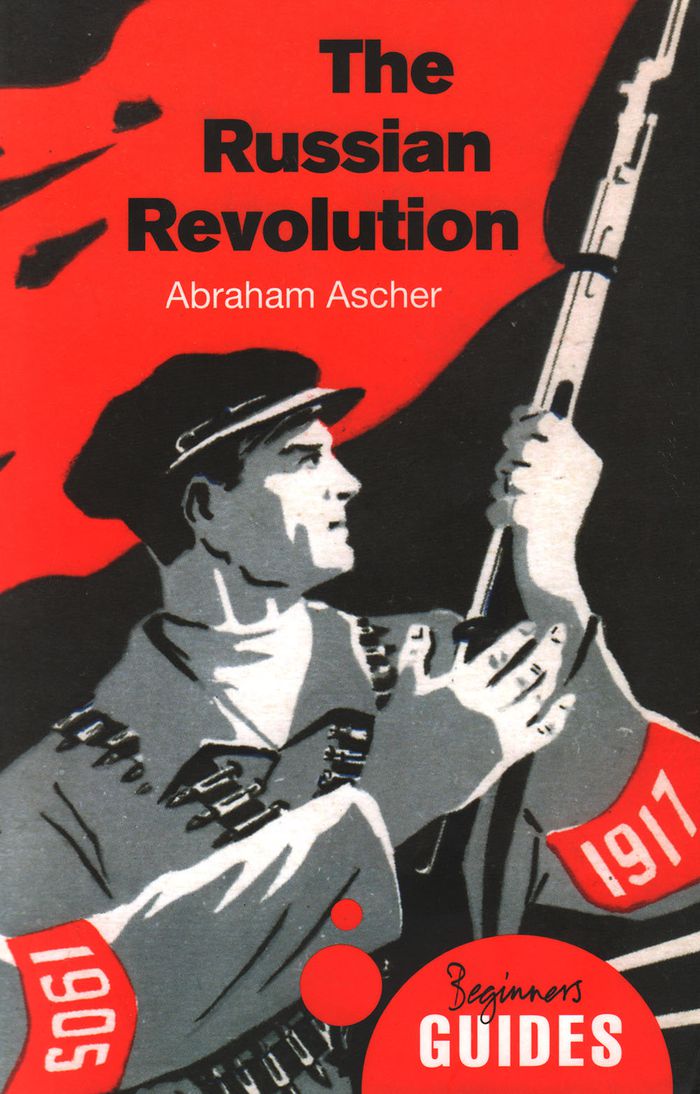
1917: the year a series of rebellions toppled three centuries of autocratic rule and placed a group of political radicals in charge of a world power. Here, suddenly, was the first modern socialist state, '' a kingdom more bright that any heaven had to offer.'' But the dream was short-lived, bringing in its wake seventy years of conflict and instability that nearly ended in nuclear war. How could such a revolution take place and what caused it to go so very wrong? Presenting a uniquely long view of events, Abraham Ascher takes readers from the seeds of revolution in the 1880s right through to Stalin’s state terror and the power of the communist legacy in Russia today.
The Russian Revolution: a beginner's guide
Actions:
Price:
$22.50
(available to order)
Summary:
1917: the year a series of rebellions toppled three centuries of autocratic rule and placed a group of political radicals in charge of a world power. Here, suddenly, was the first modern socialist state, '' a kingdom more bright that any heaven had to offer.'' But the dream was short-lived, bringing in its wake seventy years of conflict and instability that nearly ended in nuclear war. How could such a revolution take place and what caused it to go so very wrong? Presenting a uniquely long view of events, Abraham Ascher takes readers from the seeds of revolution in the 1880s right through to Stalin’s state terror and the power of the communist legacy in Russia today.
Form:
books
books
Publication:
April 2014
April 2014
Subject:
Current Exhibitions
Current Exhibitions
Form:
books
books

Actions:
Price:
$39.95
(available to order)
Summary:
The creation of pleasant living environments that avoid the simple container of human beings and build spaces of coexistence receptive to the needs of users has been one of the objectives of architectural practice for decades. The projects presented in this book are magnificent recent examples of how architecture can create attractive residential buildings aware of their(...)
$39.95
(available to order)
Summary:
The creation of pleasant living environments that avoid the simple container of human beings and build spaces of coexistence receptive to the needs of users has been one of the objectives of architectural practice for decades. The projects presented in this book are magnificent recent examples of how architecture can create attractive residential buildings aware of their(...)
Title:
Eco-cities: new healthy architecture
Actions:
Price:
$39.95
(available to order)
Summary:
The creation of pleasant living environments that avoid the simple container of human beings and build spaces of coexistence receptive to the needs of users has been one of the objectives of architectural practice for decades. The projects presented in this book are magnificent recent examples of how architecture can create attractive residential buildings aware of their social function, promoting interaction between users and the harmonious relationship of the community with its natural and urban environment. Likewise, all of them transmit a great sensitivity towards issues such as sustainability, eco efficiency or the integration and conservation of historical and industrial heritage, using construction methods ranging from traditional techniques to the most modern parametric design systems.
Eco-cities: new healthy architecture
Actions:
Price:
$39.95
(available to order)
Summary:
The creation of pleasant living environments that avoid the simple container of human beings and build spaces of coexistence receptive to the needs of users has been one of the objectives of architectural practice for decades. The projects presented in this book are magnificent recent examples of how architecture can create attractive residential buildings aware of their social function, promoting interaction between users and the harmonious relationship of the community with its natural and urban environment. Likewise, all of them transmit a great sensitivity towards issues such as sustainability, eco efficiency or the integration and conservation of historical and industrial heritage, using construction methods ranging from traditional techniques to the most modern parametric design systems.
Form:
books
books
Publication:
January 2023
January 2023
Subject:
Urban Theory
Urban Theory
Form:
books
books
Title:
Team 10: an archival history
Team 10: an archival history
Actions:
Price:
$87.50
(available to order)
Summary:
This account recuperates the lost history of the emergence of the Team 10 from CIAM in the period between 1947 and 1959, how it was represented in the early 1960s, and echoed in one way or another ever since. Telling the story of the early Team 10 thinking shifts the importance of the group from its better known projects of the 1960s and 70s to the theoretically vigorous(...)
$87.50
(available to order)
Summary:
This account recuperates the lost history of the emergence of the Team 10 from CIAM in the period between 1947 and 1959, how it was represented in the early 1960s, and echoed in one way or another ever since. Telling the story of the early Team 10 thinking shifts the importance of the group from its better known projects of the 1960s and 70s to the theoretically vigorous(...)
Title:
Team 10: an archival history
Actions:
Price:
$87.50
(available to order)
Summary:
This account recuperates the lost history of the emergence of the Team 10 from CIAM in the period between 1947 and 1959, how it was represented in the early 1960s, and echoed in one way or another ever since. Telling the story of the early Team 10 thinking shifts the importance of the group from its better known projects of the 1960s and 70s to the theoretically vigorous period of the 1940s and 50s. This “other” story of the debates about the future of town planning reveals the ruptures and continuities between the CIAM generations and Team 10 members themselves, and reveals a more extensive critique of developing modern architecture at mid-century than has hitherto been recognized.
Team 10: an archival history
Actions:
Price:
$87.50
(available to order)
Summary:
This account recuperates the lost history of the emergence of the Team 10 from CIAM in the period between 1947 and 1959, how it was represented in the early 1960s, and echoed in one way or another ever since. Telling the story of the early Team 10 thinking shifts the importance of the group from its better known projects of the 1960s and 70s to the theoretically vigorous period of the 1940s and 50s. This “other” story of the debates about the future of town planning reveals the ruptures and continuities between the CIAM generations and Team 10 members themselves, and reveals a more extensive critique of developing modern architecture at mid-century than has hitherto been recognized.
Form:
books
books
Publication:
May 2013
May 2013
Subject:
Architecture Monographs
Architecture Monographs
Form:
books
books
Actions:
Price:
$85.00
(available to order)
Summary:
Paul Ott is one of the most prominent modern European architectural photographers. Ott’s images always convey more than the pure physiognomy of the buildings he photographs. In free photo series, he explores the structures that influence how we perceive our surroundings at least as much as does the architects’ skill: anonymous agricultural buildings, skyscrapers and their(...)
$85.00
(available to order)
Summary:
Paul Ott is one of the most prominent modern European architectural photographers. Ott’s images always convey more than the pure physiognomy of the buildings he photographs. In free photo series, he explores the structures that influence how we perceive our surroundings at least as much as does the architects’ skill: anonymous agricultural buildings, skyscrapers and their(...)
Title:
Paul Ott: photography about architecture
Actions:
Price:
$85.00
(available to order)
Summary:
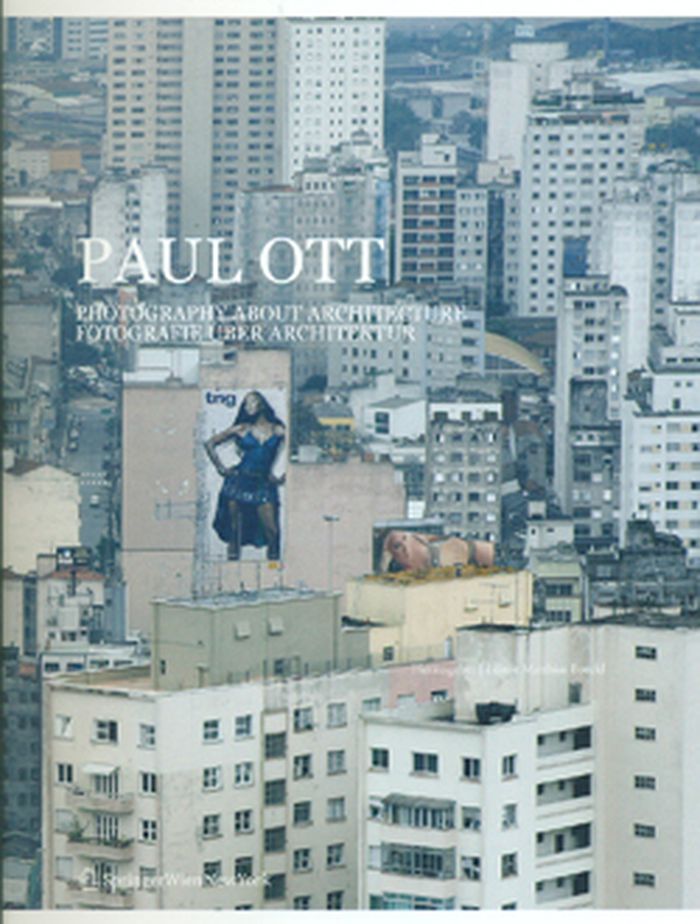
Paul Ott is one of the most prominent modern European architectural photographers. Ott’s images always convey more than the pure physiognomy of the buildings he photographs. In free photo series, he explores the structures that influence how we perceive our surroundings at least as much as does the architects’ skill: anonymous agricultural buildings, skyscrapers and their fates, and the dramatic backdrops provided by mega-cities like Sao Paolo. This book offers a representative cross-section of Paul Ott’s photographic oeuvre and also makes readers aware that the shaping of our surroundings is to a great extent also based on “learned,” mediated images of and in architecture. Four essays examine his work from the perspectives of art theory and architecture.
Paul Ott: photography about architecture
Actions:
Price:
$85.00
(available to order)
Summary:
Paul Ott is one of the most prominent modern European architectural photographers. Ott’s images always convey more than the pure physiognomy of the buildings he photographs. In free photo series, he explores the structures that influence how we perceive our surroundings at least as much as does the architects’ skill: anonymous agricultural buildings, skyscrapers and their fates, and the dramatic backdrops provided by mega-cities like Sao Paolo. This book offers a representative cross-section of Paul Ott’s photographic oeuvre and also makes readers aware that the shaping of our surroundings is to a great extent also based on “learned,” mediated images of and in architecture. Four essays examine his work from the perspectives of art theory and architecture.
Form:
books
books
Publication:
November 2011
November 2011
Subject:
Photography monographs
Photography monographs
Form:
audio
audio
Actions:
Description:
1 online resource.
Author:
Subject:
Publication:
[Place of publication not identified] : Lateral Addition, 2018.
[Place of publication not identified] : Lateral Addition, 2018.
Form:
audio
audio
Publication:
[Place of publication not identified] : Lateral Addition, 2018.
[Place of publication not identified] : Lateral Addition, 2018.
Author:
Subject:
Form:
books
books
Price:
$50.00
(available to order)
Summary:
Daring, bold, dramatic, towering, impossibly glamorous: this is how we imagine New York in its golden age, and this is how Samuel H. Gottscho, the preeminent architectural photographer of his generation, captured it. Through his lens, New York of the 1930s became the quintessential modern metropolis, a round-the-clock city in which night was as charismatic as day.(...)
$50.00
(available to order)
Summary:
Daring, bold, dramatic, towering, impossibly glamorous: this is how we imagine New York in its golden age, and this is how Samuel H. Gottscho, the preeminent architectural photographer of his generation, captured it. Through his lens, New York of the 1930s became the quintessential modern metropolis, a round-the-clock city in which night was as charismatic as day.(...)
Title:
The mythic city : photographs of New York by Samuel H. Gottscho, 1925-1940
Actions:
Price:
$50.00
(available to order)
Summary:
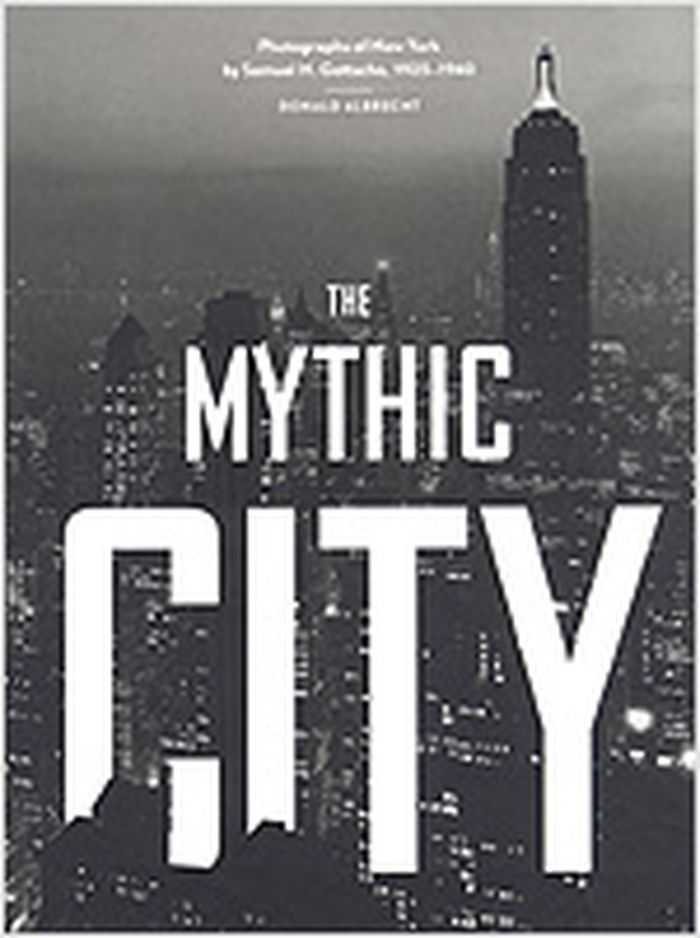
Daring, bold, dramatic, towering, impossibly glamorous: this is how we imagine New York in its golden age, and this is how Samuel H. Gottscho, the preeminent architectural photographer of his generation, captured it. Through his lens, New York of the 1930s became the quintessential modern metropolis, a round-the-clock city in which night was as charismatic as day. Rigorously editing out the Depression-weary city's more seamy aspects—its tenement slums, breadlines, and soup kitchens—Gottscho presented a dreamlike Gotham of skyscrapers and penthouse luxury that literally and figuratively glowed with glamour's sheen. His gimlet eye focused on the bold interplay of sun and shadow, dramatizing the chiseled forms of Manhattan's signature skyline and bridges. The Empire State and Chrysler buildings, Rockefeller Center, the Plaza, the George Washington Bridge—Gottscho brought them all to sparkling life. In this book, historian Donald Albrecht presents 175 of Gottscho's images of the city, from the Battery to Harlem. An introductory essay tells the story of this photographer, describing his working methods and philosophy, while placing his work in the broader context of photographic history.
The mythic city : photographs of New York by Samuel H. Gottscho, 1925-1940
Actions:
Price:
$50.00
(available to order)
Summary:
Daring, bold, dramatic, towering, impossibly glamorous: this is how we imagine New York in its golden age, and this is how Samuel H. Gottscho, the preeminent architectural photographer of his generation, captured it. Through his lens, New York of the 1930s became the quintessential modern metropolis, a round-the-clock city in which night was as charismatic as day. Rigorously editing out the Depression-weary city's more seamy aspects—its tenement slums, breadlines, and soup kitchens—Gottscho presented a dreamlike Gotham of skyscrapers and penthouse luxury that literally and figuratively glowed with glamour's sheen. His gimlet eye focused on the bold interplay of sun and shadow, dramatizing the chiseled forms of Manhattan's signature skyline and bridges. The Empire State and Chrysler buildings, Rockefeller Center, the Plaza, the George Washington Bridge—Gottscho brought them all to sparkling life. In this book, historian Donald Albrecht presents 175 of Gottscho's images of the city, from the Battery to Harlem. An introductory essay tells the story of this photographer, describing his working methods and philosophy, while placing his work in the broader context of photographic history.
Form:
books
books
Publication:
October 2005, New York
October 2005, New York
Subject:
Photography monographs
Photography monographs
Form:
books
books
Actions:
Price:
$65.50
(available to order)
Summary:
The evolution of Jo Nagasaka’s design process is unveiled in a unique publication about his practice. This book tells the story of Schemata Architects, encapsulating the essence of the studio’s work. Highlighting methods and processes through a series of essays, the designer offers insight into how concepts were developed in order to realise the wide-ranging portfolio of(...)
$65.50
(available to order)
Summary:
The evolution of Jo Nagasaka’s design process is unveiled in a unique publication about his practice. This book tells the story of Schemata Architects, encapsulating the essence of the studio’s work. Highlighting methods and processes through a series of essays, the designer offers insight into how concepts were developed in order to realise the wide-ranging portfolio of(...)
Title:
Jo Nagasaka, Schemata Architects: objects and spaces
Actions:
Price:
$65.50
(available to order)
Summary:
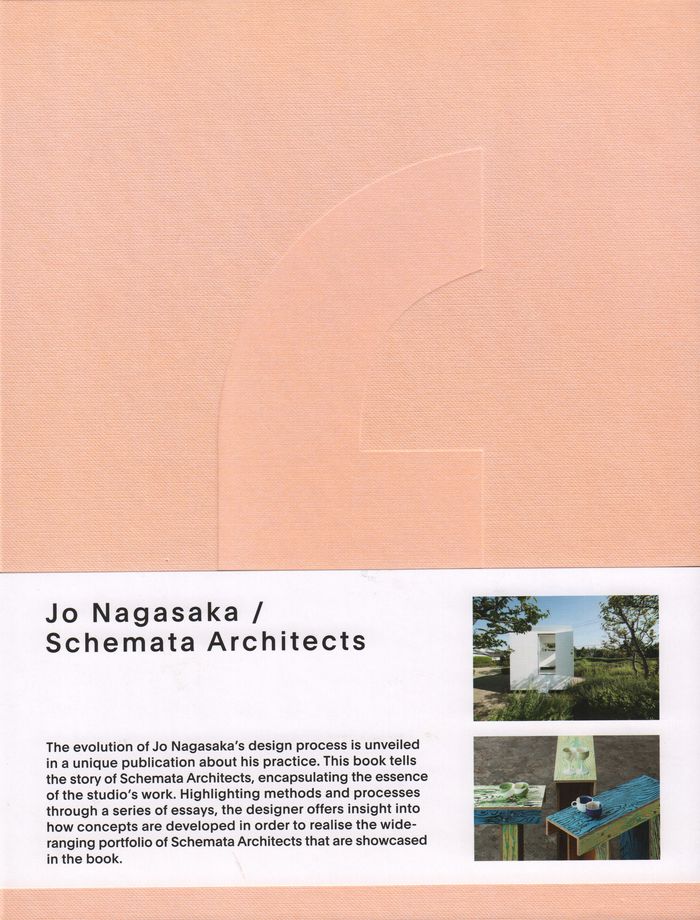
The evolution of Jo Nagasaka’s design process is unveiled in a unique publication about his practice. This book tells the story of Schemata Architects, encapsulating the essence of the studio’s work. Highlighting methods and processes through a series of essays, the designer offers insight into how concepts were developed in order to realise the wide-ranging portfolio of Schemata Architects that are showcased in the book. Nagasaka’s focus is often drawn to tired, found objects or unused spaces. Through investigations to seek modern solutions and pioneering re-purposing techniques, he manages to transform interiors and breathe life back into objects. His projects range from large-scale installations and interactive interior environments to smaller-scale products. Revealing insights into his way of working, the book highlights new findings about how the designer is able to capture the essence of his thoughts and relate the key aspects of a project in creative and innovative ways. The articles emphasise the designer's concepts, giving unique insight into the firm's process from the designer’s perspective.
Jo Nagasaka, Schemata Architects: objects and spaces
Actions:
Price:
$65.50
(available to order)
Summary:
The evolution of Jo Nagasaka’s design process is unveiled in a unique publication about his practice. This book tells the story of Schemata Architects, encapsulating the essence of the studio’s work. Highlighting methods and processes through a series of essays, the designer offers insight into how concepts were developed in order to realise the wide-ranging portfolio of Schemata Architects that are showcased in the book. Nagasaka’s focus is often drawn to tired, found objects or unused spaces. Through investigations to seek modern solutions and pioneering re-purposing techniques, he manages to transform interiors and breathe life back into objects. His projects range from large-scale installations and interactive interior environments to smaller-scale products. Revealing insights into his way of working, the book highlights new findings about how the designer is able to capture the essence of his thoughts and relate the key aspects of a project in creative and innovative ways. The articles emphasise the designer's concepts, giving unique insight into the firm's process from the designer’s perspective.
Form:
books
books
Publication:
May 2017
May 2017
Subject:
Architecture Monographs
Architecture Monographs
Form:
books
books
Actions:
Price:
$31.50
(available to order)
Summary:
Frank Lloyd Wright’s Larkin building has become an icon of modern architecture. And the fact that it was demolished only forty-six years after its 1904 completion makes Jack Quinan’s study of the building — which housed a Buffalo, New York, soap company — all the more valuable. Quinan’s history draws on engineering documents, personal accounts of the building, and(...)
$31.50
(available to order)
Summary:
Frank Lloyd Wright’s Larkin building has become an icon of modern architecture. And the fact that it was demolished only forty-six years after its 1904 completion makes Jack Quinan’s study of the building — which housed a Buffalo, New York, soap company — all the more valuable. Quinan’s history draws on engineering documents, personal accounts of the building, and(...)
Title:
Frank Lloyd Wright's Larkin building : myth and fact
Actions:
Price:
$31.50
(available to order)
Summary:
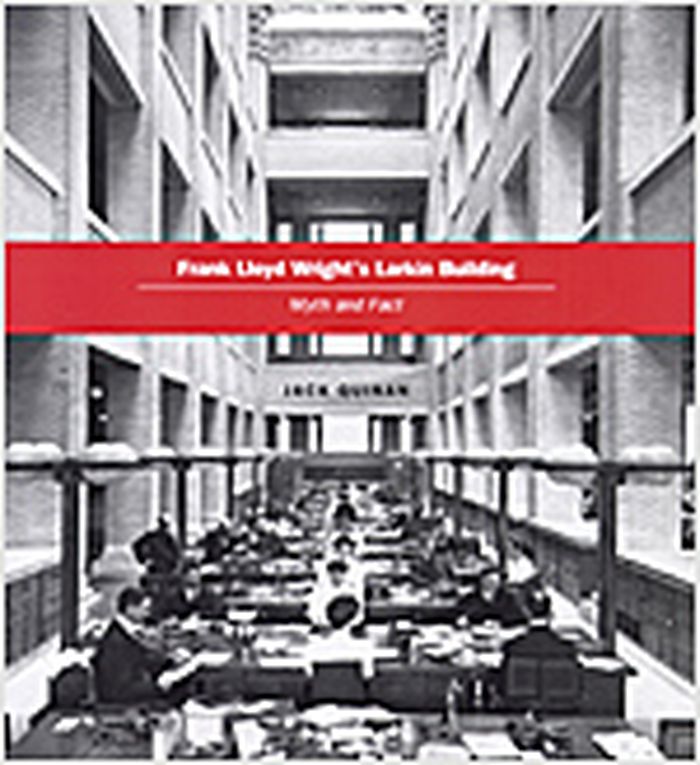
Frank Lloyd Wright’s Larkin building has become an icon of modern architecture. And the fact that it was demolished only forty-six years after its 1904 completion makes Jack Quinan’s study of the building — which housed a Buffalo, New York, soap company — all the more valuable. Quinan’s history draws on engineering documents, personal accounts of the building, and other papers he acquired from the family of Darwin D. Martin, a Larkin executive who proposed commissioning Wright to design the company’s offices. With access to these rare sources, Quinan reveals how a young Wright landed the commission and traces the evolution of his cutting-edge plans. Quinan then takes Wright studies to a new level, examining the Larkin building as a structure at the center of economic and personal relationships. Illustrated with more than one hundred photographs, floor plans, maps, and diagrams, Frank Lloyd Wright’s Larkin Building provides a concise but complete record of how the building was conceived, built, evaluated, and finally demolished in what has been called a tragic loss for American architecture.
Frank Lloyd Wright's Larkin building : myth and fact
Actions:
Price:
$31.50
(available to order)
Summary:
Frank Lloyd Wright’s Larkin building has become an icon of modern architecture. And the fact that it was demolished only forty-six years after its 1904 completion makes Jack Quinan’s study of the building — which housed a Buffalo, New York, soap company — all the more valuable. Quinan’s history draws on engineering documents, personal accounts of the building, and other papers he acquired from the family of Darwin D. Martin, a Larkin executive who proposed commissioning Wright to design the company’s offices. With access to these rare sources, Quinan reveals how a young Wright landed the commission and traces the evolution of his cutting-edge plans. Quinan then takes Wright studies to a new level, examining the Larkin building as a structure at the center of economic and personal relationships. Illustrated with more than one hundred photographs, floor plans, maps, and diagrams, Frank Lloyd Wright’s Larkin Building provides a concise but complete record of how the building was conceived, built, evaluated, and finally demolished in what has been called a tragic loss for American architecture.
Form:
books
books
Publication:
May 2006, Chicago, London
May 2006, Chicago, London
Subject:
Architecture Monographs
Architecture Monographs
Form:
books
books
Actions:
Price:
$79.95
(available to order)
Summary:
Although both are central to architecture, siting and construction are often treated as separate domains. In "Uncommon Ground", David Leatherbarrow illuminates their relationship, focusing on the years between 1930 and 1960, when utopian ideas about the role of technology in (...)
$79.95
(available to order)
Summary:
Although both are central to architecture, siting and construction are often treated as separate domains. In "Uncommon Ground", David Leatherbarrow illuminates their relationship, focusing on the years between 1930 and 1960, when utopian ideas about the role of technology in (...)
Title:
Uncommon ground : architecture, technology. and topography
Actions:
Price:
$79.95
(available to order)
Summary:
Although both are central to architecture, siting and construction are often treated as separate domains. In "Uncommon Ground", David Leatherbarrow illuminates their relationship, focusing on the years between 1930 and 1960, when utopian ideas about the role of technology in building gave way to an awareness of its disruptive impact on cities and culture. He examines the work of three architects, Richard Neutra, Antonin Raymond, and Aris Konstantinidis, who practiced in the United States, Japan, and Greece respectively. Leatherbarrow rejects the assumption that buildings of the modern period, particularly those that used the latest technology, were designed without regard to their surroundings. Although the prefabricated elements used in the buildings were designed independent of siting considerations, architects used these elements to modulate the environment. Leatherbarrow shows how the role of walls, the traditional element of architectural definition and platform partition, became less significant than that of the platforms themselves, the floors, ceilings, and intermediate levels. He shows how frontality was replaced by the building's four-sided extension into its surroundings, resulting in frontal configurations previously characteristic of the back. Arguing that the boundary between inside and outside was radically redefined, Leatherbarrow challenges cherished notions about the autonomy of the architectural object and about regional coherence. Modern architectural topography, he suggests, is an interplay of buildings, landscapes, and cities, as well as the humans who use them. The conflict between technological progress and cultural continuity, Leatherbarrow claims, exists only in theory, not in the real world of architecture. He argues that the act of building is not a matter of restoring regional identity by re-creating familiar signs, but of incorporating construction into the process of topography's perpetual becoming.
Uncommon ground : architecture, technology. and topography
Actions:
Price:
$79.95
(available to order)
Summary:
Although both are central to architecture, siting and construction are often treated as separate domains. In "Uncommon Ground", David Leatherbarrow illuminates their relationship, focusing on the years between 1930 and 1960, when utopian ideas about the role of technology in building gave way to an awareness of its disruptive impact on cities and culture. He examines the work of three architects, Richard Neutra, Antonin Raymond, and Aris Konstantinidis, who practiced in the United States, Japan, and Greece respectively. Leatherbarrow rejects the assumption that buildings of the modern period, particularly those that used the latest technology, were designed without regard to their surroundings. Although the prefabricated elements used in the buildings were designed independent of siting considerations, architects used these elements to modulate the environment. Leatherbarrow shows how the role of walls, the traditional element of architectural definition and platform partition, became less significant than that of the platforms themselves, the floors, ceilings, and intermediate levels. He shows how frontality was replaced by the building's four-sided extension into its surroundings, resulting in frontal configurations previously characteristic of the back. Arguing that the boundary between inside and outside was radically redefined, Leatherbarrow challenges cherished notions about the autonomy of the architectural object and about regional coherence. Modern architectural topography, he suggests, is an interplay of buildings, landscapes, and cities, as well as the humans who use them. The conflict between technological progress and cultural continuity, Leatherbarrow claims, exists only in theory, not in the real world of architecture. He argues that the act of building is not a matter of restoring regional identity by re-creating familiar signs, but of incorporating construction into the process of topography's perpetual becoming.
Form:
books
books
Publication:
May 2002, Cambridge, Mass.
May 2002, Cambridge, Mass.
Subject:
Architectural Theory
Architectural Theory


