


316 Results
Form:
books
books
Title:
Greg Lynn : form
Greg Lynn : form
Actions:
Price:
$71.00
(available to order)
Summary:
Greg Lynn has defined how designers and architects use computers as a medium, operating in an expanded field that fuses cutting-edge technology, contemporary art, and science fiction aesthetics with architectural form. With contributions by : J. G. Ballard, Chris Bangle, Rene Daalder, Sonia Eram, Imaginary Forces, Brian C. Goodwin, Jeffrey Kipnis, Sylvia Lavin, Ross(...)
$71.00
(available to order)
Summary:
Greg Lynn has defined how designers and architects use computers as a medium, operating in an expanded field that fuses cutting-edge technology, contemporary art, and science fiction aesthetics with architectural form. With contributions by : J. G. Ballard, Chris Bangle, Rene Daalder, Sonia Eram, Imaginary Forces, Brian C. Goodwin, Jeffrey Kipnis, Sylvia Lavin, Ross(...)
Subject:
Architecture Monographs
Architecture Monographs
Publication:
November 2008, New York
November 2008, New York
Title:
Greg Lynn : form
Actions:
Price:
$71.00
(available to order)
Summary:
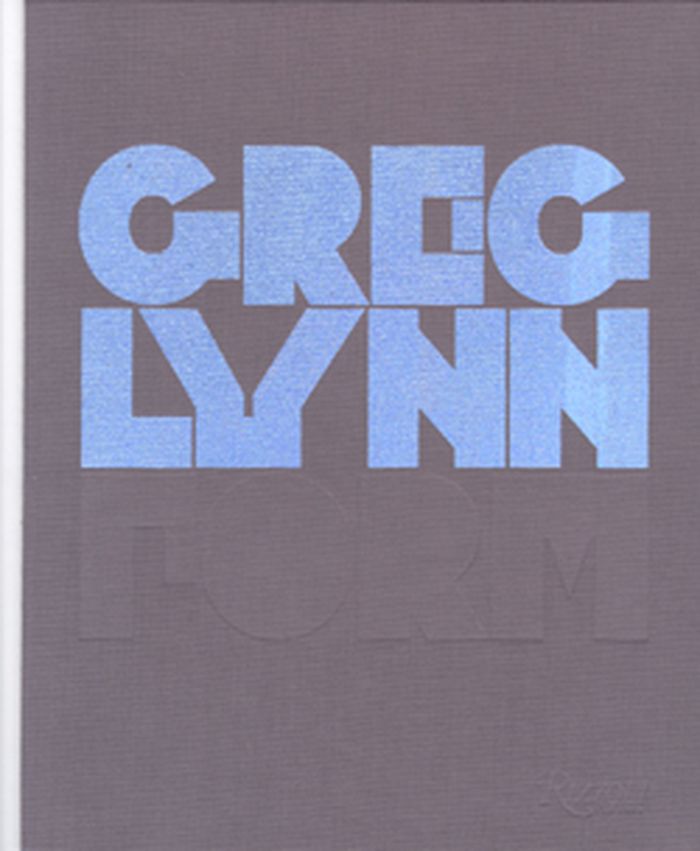
Greg Lynn has defined how designers and architects use computers as a medium, operating in an expanded field that fuses cutting-edge technology, contemporary art, and science fiction aesthetics with architectural form. With contributions by : J. G. Ballard, Chris Bangle, Rene Daalder, Sonia Eram, Imaginary Forces, Brian C. Goodwin, Jeffrey Kipnis, Sylvia Lavin, Ross Lovegrove, Ari Marcopoulos, Peter Schroder, and Bruce Sterling.
Greg Lynn : form
Actions:
Price:
$71.00
(available to order)
Summary:
Greg Lynn has defined how designers and architects use computers as a medium, operating in an expanded field that fuses cutting-edge technology, contemporary art, and science fiction aesthetics with architectural form. With contributions by : J. G. Ballard, Chris Bangle, Rene Daalder, Sonia Eram, Imaginary Forces, Brian C. Goodwin, Jeffrey Kipnis, Sylvia Lavin, Ross Lovegrove, Ari Marcopoulos, Peter Schroder, and Bruce Sterling.
Form:
books
books
Publication:
November 2008, New York
November 2008, New York
Subject:
Architecture Monographs
Architecture Monographs
Form:
books
books
Actions:
Description:
1 online resource (245 pages) : illustrations ;
Author:
Subject:
Publication:
Brooklyn, New York : punctum books, 2015., ©2015
Brooklyn, New York : punctum books, 2015., ©2015
Title:
The Funambulist papers volume 2 : 26 guest writers essays for The Funambolist / curated and edited by Léopold Lambert.
Actions:
Description:
1 online resource (245 pages) : illustrations ;
The Funambulist papers volume 2 : 26 guest writers essays for The Funambolist / curated and edited by Léopold Lambert.
Actions:
Description:
1 online resource (245 pages) : illustrations ;
Form:
books
books
Publication:
Brooklyn, New York : punctum books, 2015., ©2015
Brooklyn, New York : punctum books, 2015., ©2015
Author:
Subject:
Form:
books
books
Actions:
Price:
$115.00
(available to order)
Summary:
This is a conceptual journey through Joep van Lieshout’s radical thought experiments. The art and design produced by the artist’s studio go beyond aesthetic objects, becoming functional tools for an alternative way of life. The book is like an architectural blueprint for an imaginary house. Readers can wander from one room to another, where each space has specific,(...)
$115.00
(available to order)
Summary:
This is a conceptual journey through Joep van Lieshout’s radical thought experiments. The art and design produced by the artist’s studio go beyond aesthetic objects, becoming functional tools for an alternative way of life. The book is like an architectural blueprint for an imaginary house. Readers can wander from one room to another, where each space has specific,(...)
Title:
Atelier Van Lieshout: Bad ideas for good living
Actions:
Price:
$115.00
(available to order)
Summary:
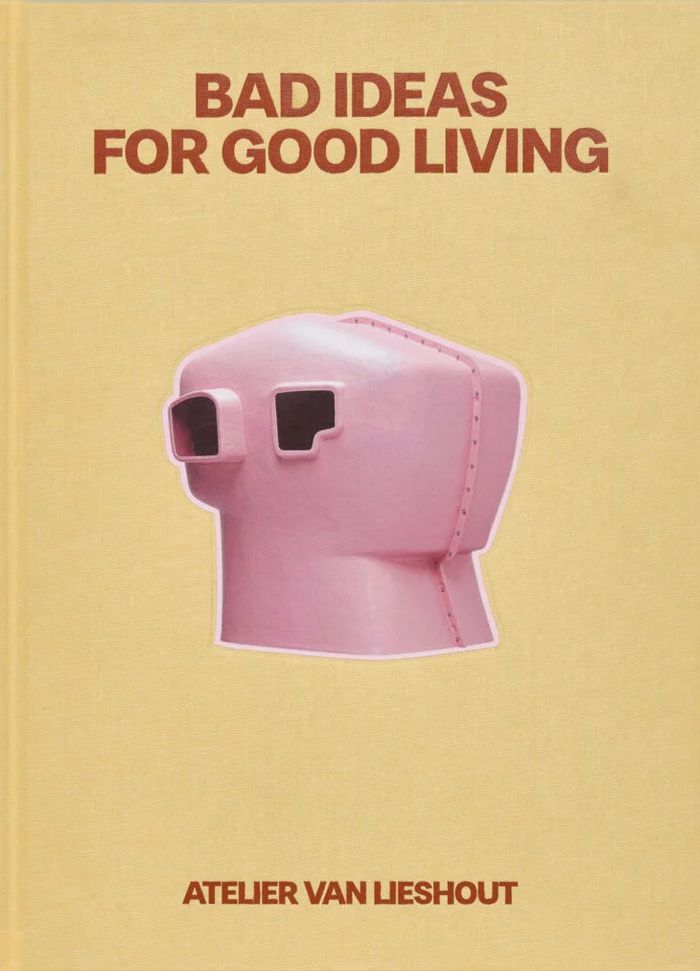
This is a conceptual journey through Joep van Lieshout’s radical thought experiments. The art and design produced by the artist’s studio go beyond aesthetic objects, becoming functional tools for an alternative way of life. The book is like an architectural blueprint for an imaginary house. Readers can wander from one room to another, where each space has specific, logical, aesthetical, surprising, and also sometimes unsettling elements. In this way the works are a test – an invitation to look past the initial shock the viewer might experience. This imaginary house does not tell us how to live, but teaches that we must consciously think about the way we organise our lives.
Atelier Van Lieshout: Bad ideas for good living
Actions:
Price:
$115.00
(available to order)
Summary:
This is a conceptual journey through Joep van Lieshout’s radical thought experiments. The art and design produced by the artist’s studio go beyond aesthetic objects, becoming functional tools for an alternative way of life. The book is like an architectural blueprint for an imaginary house. Readers can wander from one room to another, where each space has specific, logical, aesthetical, surprising, and also sometimes unsettling elements. In this way the works are a test – an invitation to look past the initial shock the viewer might experience. This imaginary house does not tell us how to live, but teaches that we must consciously think about the way we organise our lives.
Form:
books
books
Publication:
October 2025
October 2025
Subject:
Design Monographs
Design Monographs
Form:
books
books
Title:
Belgium new architecture 3
Belgium new architecture 3
Actions:
Price:
$92.95
(available to order)
Summary:
The third volume of this series combines architectural projects from all three regions of Belgium and highlights the continuing importance of a young and diverse generation of architects. In total 65 buildings and public projects are surveyed, ranging from commercial and residential developments to educational facilities and imaginary spaces. Each project is accompanied(...)
$92.95
(available to order)
Summary:
The third volume of this series combines architectural projects from all three regions of Belgium and highlights the continuing importance of a young and diverse generation of architects. In total 65 buildings and public projects are surveyed, ranging from commercial and residential developments to educational facilities and imaginary spaces. Each project is accompanied(...)
Subject:
Architecture since 1900, Europe
Architecture since 1900, Europe
Publication:
January 2006, Bruxelles
January 2006, Bruxelles
Title:
Belgium new architecture 3
Actions:
Price:
$92.95
(available to order)
Summary:
The third volume of this series combines architectural projects from all three regions of Belgium and highlights the continuing importance of a young and diverse generation of architects. In total 65 buildings and public projects are surveyed, ranging from commercial and residential developments to educational facilities and imaginary spaces. Each project is accompanied by a plan, elevation, images and text.
Belgium new architecture 3
Actions:
Price:
$92.95
(available to order)
Summary:
The third volume of this series combines architectural projects from all three regions of Belgium and highlights the continuing importance of a young and diverse generation of architects. In total 65 buildings and public projects are surveyed, ranging from commercial and residential developments to educational facilities and imaginary spaces. Each project is accompanied by a plan, elevation, images and text.
Form:
books
books
Publication:
January 2006, Bruxelles
January 2006, Bruxelles
Subject:
Architecture since 1900, Europe
Architecture since 1900, Europe
Form:
books
books
Actions:
Holdings:
Description:
xiv, 476 pages : illustrations ; 26 cm.
Description:
xiv, 476 pages : illustrations ; 26 cm.
Author:
Subject:
Publication:
New York : Fordham University Press, 2014.
New York : Fordham University Press, 2014.
Title:
Sabato Rodia's Towers in Watts : art, migrations, development / edited by Luisa Del Giudice.
Actions:
Holdings:
Description:
xiv, 476 pages : illustrations ; 26 cm.
Sabato Rodia's Towers in Watts : art, migrations, development / edited by Luisa Del Giudice.
Actions:
Holdings:
Description:
xiv, 476 pages : illustrations ; 26 cm.
Form:
books
books
Publication:
New York : Fordham University Press, 2014.
New York : Fordham University Press, 2014.
Author:
Subject:
Form:
books
books
Price:
$27.95
(available to order)
Summary:
What would it mean today to think or to imagine, to design or to construct, in relation not to things made" but to "things in the making"? This question, first posed by the philosopher William James, was the point of departure for "The Pragmatist Imagination." The volume brings together position statements, theoretical speculations, and critical commentary by 33 leading(...)
$27.95
(available to order)
Summary:
What would it mean today to think or to imagine, to design or to construct, in relation not to things made" but to "things in the making"? This question, first posed by the philosopher William James, was the point of departure for "The Pragmatist Imagination." The volume brings together position statements, theoretical speculations, and critical commentary by 33 leading(...)
Title:
The pragmatist imagination: thinking about things in the making
Actions:
Price:
$27.95
(available to order)
Summary:
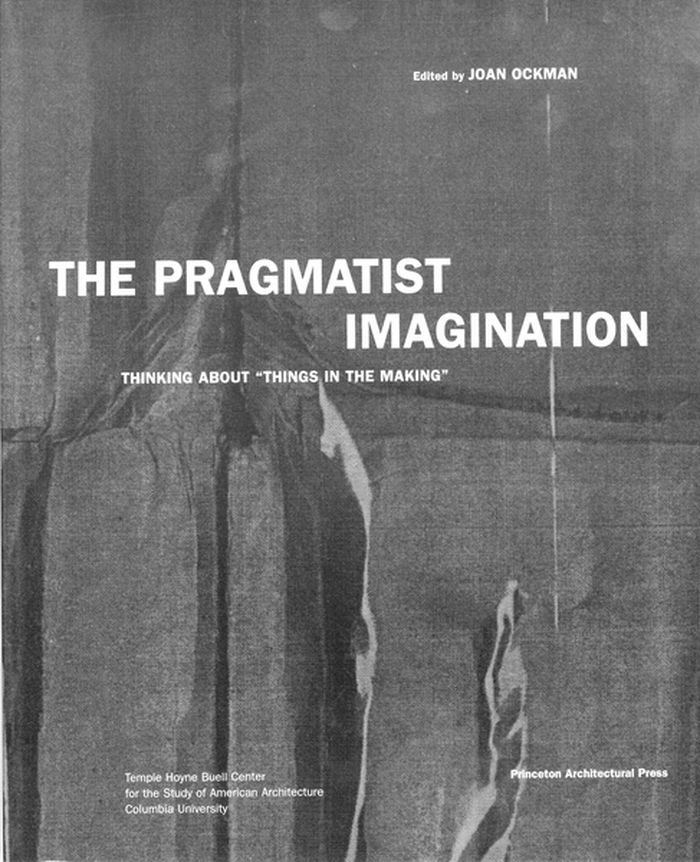
What would it mean today to think or to imagine, to design or to construct, in relation not to things made" but to "things in the making"? This question, first posed by the philosopher William James, was the point of departure for "The Pragmatist Imagination." The volume brings together position statements, theoretical speculations, and critical commentary by 33 leading thinkers and makers from over a dozen disciplines. Based on the proceedings of an international workshop held at Columbia University under the auspices of the Buell Center for the Study of American Architecture in spring 2000, a preamble to the much-ballyhooed conference at the Museum of Modern Art in November, 2000, the contributions traverse a set of burning questions about the future, ranging from the relationship between art and experience to the impact of new technologies on human consciousness, from transformations in everyday life to problems of public space, and from the destiny of the nation-state toemergent forms of transnationalism.
The pragmatist imagination: thinking about things in the making
Actions:
Price:
$27.95
(available to order)
Summary:
What would it mean today to think or to imagine, to design or to construct, in relation not to things made" but to "things in the making"? This question, first posed by the philosopher William James, was the point of departure for "The Pragmatist Imagination." The volume brings together position statements, theoretical speculations, and critical commentary by 33 leading thinkers and makers from over a dozen disciplines. Based on the proceedings of an international workshop held at Columbia University under the auspices of the Buell Center for the Study of American Architecture in spring 2000, a preamble to the much-ballyhooed conference at the Museum of Modern Art in November, 2000, the contributions traverse a set of burning questions about the future, ranging from the relationship between art and experience to the impact of new technologies on human consciousness, from transformations in everyday life to problems of public space, and from the destiny of the nation-state toemergent forms of transnationalism.
Form:
books
books
Publication:
September 2001
September 2001
Subject:
Architecture and the imaginary
Architecture and the imaginary
Form:
books
books
Actions:
Price:
$44.25
(available to order)
Summary:
The towns and cities that we inhabit are the survivors of a much larger world that was never built--of visions of the future that remain on paper due to lack of funds, political changes, or because they were technically ahead of their time. How might the world look today had the realities of history been different? And how close will the architecture of the future be to(...)
$44.25
(available to order)
Summary:
The towns and cities that we inhabit are the survivors of a much larger world that was never built--of visions of the future that remain on paper due to lack of funds, political changes, or because they were technically ahead of their time. How might the world look today had the realities of history been different? And how close will the architecture of the future be to(...)
Subject:
Architecture and the imaginary
Architecture and the imaginary
Publication:
May 2004, London
May 2004, London
Title:
Fantasy architecture 1500-2036
Actions:
Price:
$44.25
(available to order)
Summary:
The towns and cities that we inhabit are the survivors of a much larger world that was never built--of visions of the future that remain on paper due to lack of funds, political changes, or because they were technically ahead of their time. How might the world look today had the realities of history been different? And how close will the architecture of the future be to that already familiar from science fiction films and the fantastic virtual environments of computer games? "Fantasy Architecture" proposes answers to these questions by focusing on 130 imagined buildings, structures, and schemes from the late medieval period to the present. Artists and architects include Robert Adam, Archigram, Charles Barry, Étienne-Louis Boullée, William Chambers, FAT, Foreign Office Architects, Foster and Partners, Ernö Goldfinger, Louis Hellman, Inigo Jones, Berthold Lubetkin, Edwin Lutyens, Eric Mendelsohn, Nils Norman, Claes Oldenburg, Joseph Paxton, Sir John Soane, Softroom and Paolo Soleri.~Essayists include Neil Bingham, previously Assistant Curator of the Royal Institute of British Architecture (RIBA) Drawings Collections, London and author of monographs on Christopher Nicholson and C.A. Busby; Clare Carolin, Exhibitions Curator at the Hayward Gallery in London; Rob Wilson, Curator at the RIBA Gallery; and architect Peter Cook, professor at the Bartlett School of Architecture and former member of the group Archigram, who offers a personal text.
Fantasy architecture 1500-2036
Actions:
Price:
$44.25
(available to order)
Summary:
The towns and cities that we inhabit are the survivors of a much larger world that was never built--of visions of the future that remain on paper due to lack of funds, political changes, or because they were technically ahead of their time. How might the world look today had the realities of history been different? And how close will the architecture of the future be to that already familiar from science fiction films and the fantastic virtual environments of computer games? "Fantasy Architecture" proposes answers to these questions by focusing on 130 imagined buildings, structures, and schemes from the late medieval period to the present. Artists and architects include Robert Adam, Archigram, Charles Barry, Étienne-Louis Boullée, William Chambers, FAT, Foreign Office Architects, Foster and Partners, Ernö Goldfinger, Louis Hellman, Inigo Jones, Berthold Lubetkin, Edwin Lutyens, Eric Mendelsohn, Nils Norman, Claes Oldenburg, Joseph Paxton, Sir John Soane, Softroom and Paolo Soleri.~Essayists include Neil Bingham, previously Assistant Curator of the Royal Institute of British Architecture (RIBA) Drawings Collections, London and author of monographs on Christopher Nicholson and C.A. Busby; Clare Carolin, Exhibitions Curator at the Hayward Gallery in London; Rob Wilson, Curator at the RIBA Gallery; and architect Peter Cook, professor at the Bartlett School of Architecture and former member of the group Archigram, who offers a personal text.
Form:
books
books
Publication:
May 2004, London
May 2004, London
Subject:
Architecture and the imaginary
Architecture and the imaginary
Form:
books
books
Title:
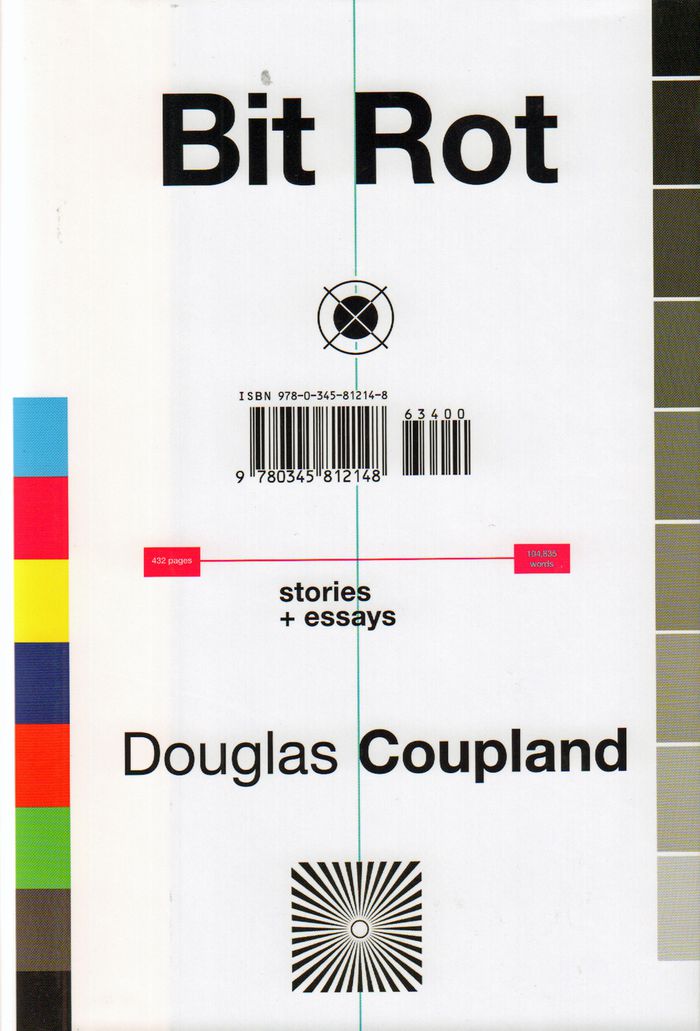
Bit Rot: stories and essays
Bit Rot: stories and essays
Actions:
Price:
$34.00
(available to order)
Summary:
A thought-provoking, binge-worthy new collection of essays, stories, and musings from Douglas Coupland, Bit Rot explores the different ways in which twentieth-century notions of the future are being shredded, and it is a literary gem of the digital age. “Bit rot” is a term used in digital archiving to describe the way digital files can spontaneously and quickly decompose.(...)
$34.00
(available to order)
Summary:
A thought-provoking, binge-worthy new collection of essays, stories, and musings from Douglas Coupland, Bit Rot explores the different ways in which twentieth-century notions of the future are being shredded, and it is a literary gem of the digital age. “Bit rot” is a term used in digital archiving to describe the way digital files can spontaneously and quickly decompose.(...)
Title:
Bit Rot: stories and essays
Actions:
Price:
$34.00
(available to order)
Summary:
A thought-provoking, binge-worthy new collection of essays, stories, and musings from Douglas Coupland, Bit Rot explores the different ways in which twentieth-century notions of the future are being shredded, and it is a literary gem of the digital age. “Bit rot” is a term used in digital archiving to describe the way digital files can spontaneously and quickly decompose. As Douglas Coupland writes, “Bit rot also describes the way my brain has been feeling since 2000, as I shed older and weaker neurons and connections and enhance new and unexpected ones.” "Bit Rot" the book is a fascinating meditation on the ways in which humanity tries to make sense of our shifting consciousness. Coupland, just like the Internet, mixes forms to achieve his ends. Short fiction is interspersed with essays on all aspects of modern life. The result is addictively satisfying for Coupland’s established fanbase hungry for his observations about our world, and a revelation to new readers of his work. For almost three decades, his unique pattern recognition has powered his fiction, his phrase-making, and his visual art.
Bit Rot: stories and essays
Actions:
Price:
$34.00
(available to order)
Summary:
A thought-provoking, binge-worthy new collection of essays, stories, and musings from Douglas Coupland, Bit Rot explores the different ways in which twentieth-century notions of the future are being shredded, and it is a literary gem of the digital age. “Bit rot” is a term used in digital archiving to describe the way digital files can spontaneously and quickly decompose. As Douglas Coupland writes, “Bit rot also describes the way my brain has been feeling since 2000, as I shed older and weaker neurons and connections and enhance new and unexpected ones.” "Bit Rot" the book is a fascinating meditation on the ways in which humanity tries to make sense of our shifting consciousness. Coupland, just like the Internet, mixes forms to achieve his ends. Short fiction is interspersed with essays on all aspects of modern life. The result is addictively satisfying for Coupland’s established fanbase hungry for his observations about our world, and a revelation to new readers of his work. For almost three decades, his unique pattern recognition has powered his fiction, his phrase-making, and his visual art.
Form:
books
books
Publication:
March 2017
March 2017
Subject:
Architecture and the imaginary
Architecture and the imaginary
Form:
books
books
Actions:
Price:
$21.95
(available to order)
Summary:
De A, comme Abaton, à Z, comme Zuy, voici qu'un dictionnaire nous offre la plus merveilleuse des invitation au voyage. A partir des univers que de tous temps se plurent à inventer les ecrivains du monde entier, Alberto Manguel et Gianni Guadalupi, forts de leur conviction que la fiction est réalité, ont recensé lieux imaginaires et sites chimériques. Ils en rappellent la(...)
$21.95
(available to order)
Summary:
De A, comme Abaton, à Z, comme Zuy, voici qu'un dictionnaire nous offre la plus merveilleuse des invitation au voyage. A partir des univers que de tous temps se plurent à inventer les ecrivains du monde entier, Alberto Manguel et Gianni Guadalupi, forts de leur conviction que la fiction est réalité, ont recensé lieux imaginaires et sites chimériques. Ils en rappellent la(...)
Subject:
Architecture and the imaginary
Architecture and the imaginary
Publication:
January 1900, Paris
January 1900, Paris
Title:
Dictionnaire des lieux imaginaires
Actions:
Price:
$21.95
(available to order)
Summary:
De A, comme Abaton, à Z, comme Zuy, voici qu'un dictionnaire nous offre la plus merveilleuse des invitation au voyage. A partir des univers que de tous temps se plurent à inventer les ecrivains du monde entier, Alberto Manguel et Gianni Guadalupi, forts de leur conviction que la fiction est réalité, ont recensé lieux imaginaires et sites chimériques. Ils en rappellent la situation géographique, la topographie, le climat, la faune et la flore, les formes de gouvernement, les transports et moyens de communication, les moeurs et les coutumes locales, les curiosités touristiques ou les spécialités locales... Rien n'étant inventé, on pourra vérifier dans les textes cités l'exactitude de toutes ces informations, qu'enrichissent par ailleurs " les indispensables " du genre : cartes, plans, dessins, assortis de conseils pratiques, si utiles au voyageur... Recensés avec une extrême rigueur mais loin de tout souci d'exhaustivité, les auteurs et les ouvrages cités ont été choisis selon la seule règle du plaisir. Chaque article de ce dictionnaire, s'il invite à un voyage passionnant à travers l'un ou l'autre des lieux imaginaires, est également prétexte à découvrir - ou à redécouvrir - comme autant d'îles au trésor, des oeuvres illustres ou plus secrètes. Aussi, comment ne pas engager le lecteur a suivre sans délai cette recommandation d'Italo Calvino : " Dans la Bibliothèque du Superflu dont j'aimerais qu'elle trouve toujours une place sur nos étagères, ce Dictionnaire des lieux imaginaires est, sans l'ombre d'un doute, un ouvrage dont la consultation est indispensable " ? --Ce texte fait référence à une édition épuisée ou non disponible de ce titre.
Dictionnaire des lieux imaginaires
Actions:
Price:
$21.95
(available to order)
Summary:
De A, comme Abaton, à Z, comme Zuy, voici qu'un dictionnaire nous offre la plus merveilleuse des invitation au voyage. A partir des univers que de tous temps se plurent à inventer les ecrivains du monde entier, Alberto Manguel et Gianni Guadalupi, forts de leur conviction que la fiction est réalité, ont recensé lieux imaginaires et sites chimériques. Ils en rappellent la situation géographique, la topographie, le climat, la faune et la flore, les formes de gouvernement, les transports et moyens de communication, les moeurs et les coutumes locales, les curiosités touristiques ou les spécialités locales... Rien n'étant inventé, on pourra vérifier dans les textes cités l'exactitude de toutes ces informations, qu'enrichissent par ailleurs " les indispensables " du genre : cartes, plans, dessins, assortis de conseils pratiques, si utiles au voyageur... Recensés avec une extrême rigueur mais loin de tout souci d'exhaustivité, les auteurs et les ouvrages cités ont été choisis selon la seule règle du plaisir. Chaque article de ce dictionnaire, s'il invite à un voyage passionnant à travers l'un ou l'autre des lieux imaginaires, est également prétexte à découvrir - ou à redécouvrir - comme autant d'îles au trésor, des oeuvres illustres ou plus secrètes. Aussi, comment ne pas engager le lecteur a suivre sans délai cette recommandation d'Italo Calvino : " Dans la Bibliothèque du Superflu dont j'aimerais qu'elle trouve toujours une place sur nos étagères, ce Dictionnaire des lieux imaginaires est, sans l'ombre d'un doute, un ouvrage dont la consultation est indispensable " ? --Ce texte fait référence à une édition épuisée ou non disponible de ce titre.
Form:
books
books
Publication:
January 1900, Paris
January 1900, Paris
Subject:
Architecture and the imaginary
Architecture and the imaginary
Form:
books
books
Price:
$32.50
(available to order)
Summary:
Geography and Vision is a series of personal reflections by leading cultural geographer, Denis Cosgrove, on the complex connections between seeing, imagining and representing the world geographically. Ranging historically from the sixteenth century to the present day, the essays include reflections upon discovery and the role of imagination in giving it meaning;(...)
$32.50
(available to order)
Summary:
Geography and Vision is a series of personal reflections by leading cultural geographer, Denis Cosgrove, on the complex connections between seeing, imagining and representing the world geographically. Ranging historically from the sixteenth century to the present day, the essays include reflections upon discovery and the role of imagination in giving it meaning;(...)
Subject:
Architecture and the imaginary
Architecture and the imaginary
Publication:
January 1900, London, New York
January 1900, London, New York
Title:
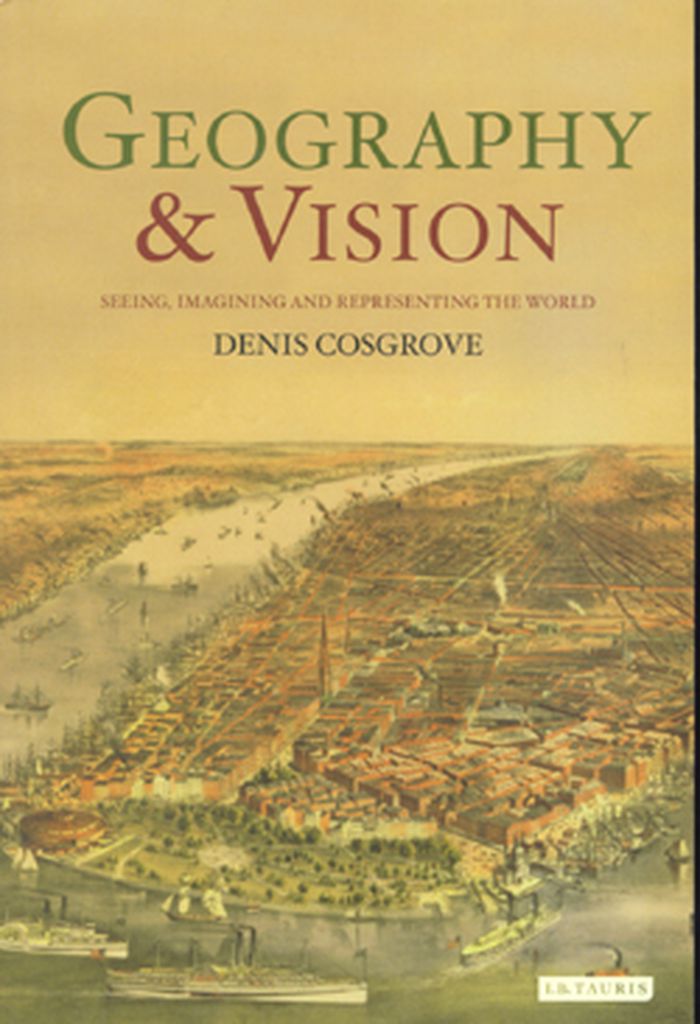
Geography & vision: seeing, imagining and representing the world
Actions:
Price:
$32.50
(available to order)
Summary:
Geography and Vision is a series of personal reflections by leading cultural geographer, Denis Cosgrove, on the complex connections between seeing, imagining and representing the world geographically. Ranging historically from the sixteenth century to the present day, the essays include reflections upon discovery and the role of imagination in giving it meaning; colonisation and sixteenth century gardening; the shaping of American landscapes; wilderness, imperial mappings and masculinity; urban cartography and utopian visions; conceptions of the Pacific; the cartography of John Ruskin; and the imaginative grip of the Equator. Extensively illustrated, this engaging work reveals the richness and complexity of the geographical imagination as expressed over the past five centuries.
Geography & vision: seeing, imagining and representing the world
Actions:
Price:
$32.50
(available to order)
Summary:
Geography and Vision is a series of personal reflections by leading cultural geographer, Denis Cosgrove, on the complex connections between seeing, imagining and representing the world geographically. Ranging historically from the sixteenth century to the present day, the essays include reflections upon discovery and the role of imagination in giving it meaning; colonisation and sixteenth century gardening; the shaping of American landscapes; wilderness, imperial mappings and masculinity; urban cartography and utopian visions; conceptions of the Pacific; the cartography of John Ruskin; and the imaginative grip of the Equator. Extensively illustrated, this engaging work reveals the richness and complexity of the geographical imagination as expressed over the past five centuries.
Form:
books
books
Publication:
January 1900, London, New York
January 1900, London, New York
Subject:
Architecture and the imaginary
Architecture and the imaginary


