


5493 Results
Form:
drawings
drawings
Title:
Album of competition drawings for a municipal slaughterhouse, route Royale, Saint-Germain-en-Laye
Album of competition drawings for a municipal slaughterhouse, route Royale, Saint-Germain-en-Laye
Actions:
Reference number:
DR1974:0002:023:001-012
Description:
- This album contains the complete set of ten presentation drawings that Charles Rohault de Fleury submitted to the competition for a municipal slaughterhouse sponsored by the Conseil Municipal de la Ville de Saint-Germain-en-Laye. The album also includes a pamphlet which describes the official programmes for the slaughterhouse competition as well as a competition for the restoration of the parish church (DR1974:0002:023:001). Rohault de Fleury submitted the following drawings according to programme guidelines: a general site plan at a scale of 2 mm to the meter (DR1974:0002:023:003); sections and elevations showing the project as a whole on all the main façades and axes, at a scale of 5 mm to the meter (DR1974:0002:023:004 - DR1974:0002:023:006); plans, elevations, and sections of the main buildings, at a scale of 1 cm to the meter (DR1974:0002:023:007 - DR1974:0002:023:011); and details for the buildings, machinery, and decoration, at a scale of 2 cm to the meter (DR1974:0002:023:012). The major components of the slaughterhouse - "les étaux des bouchers", "les bouveries", "les porcheries", and the administrative buildings - are composed of two buildings, identical on the exterior, but which vary according to function on the interior. The drawings indicate the proposed construction materials including a facing of rough stone for the walls, squared stone for the quoins, wood for the doors, metal for the gabled roofs, brick for the chimneys, and paved floors for areas coming into contact with the slaughtered animals ("les étaux des bouchers" and parts of the "porcherie").
DR1974:0002:023:001-012
Description:
- This album contains the complete set of ten presentation drawings that Charles Rohault de Fleury submitted to the competition for a municipal slaughterhouse sponsored by the Conseil Municipal de la Ville de Saint-Germain-en-Laye. The album also includes a pamphlet which describes the official programmes for the slaughterhouse competition as well as a competition for the restoration of the parish church (DR1974:0002:023:001). Rohault de Fleury submitted the following drawings according to programme guidelines: a general site plan at a scale of 2 mm to the meter (DR1974:0002:023:003); sections and elevations showing the project as a whole on all the main façades and axes, at a scale of 5 mm to the meter (DR1974:0002:023:004 - DR1974:0002:023:006); plans, elevations, and sections of the main buildings, at a scale of 1 cm to the meter (DR1974:0002:023:007 - DR1974:0002:023:011); and details for the buildings, machinery, and decoration, at a scale of 2 cm to the meter (DR1974:0002:023:012). The major components of the slaughterhouse - "les étaux des bouchers", "les bouveries", "les porcheries", and the administrative buildings - are composed of two buildings, identical on the exterior, but which vary according to function on the interior. The drawings indicate the proposed construction materials including a facing of rough stone for the walls, squared stone for the quoins, wood for the doors, metal for the gabled roofs, brick for the chimneys, and paved floors for areas coming into contact with the slaughtered animals ("les étaux des bouchers" and parts of the "porcherie").
People:
Subject:
architecture
architecture
Date:
drawings executed 20 January or 31 January 1847
drawings executed 20 January or 31 January 1847
Title:
Album of competition drawings for a municipal slaughterhouse, route Royale, Saint-Germain-en-Laye
Actions:
DR1974:0002:023:001-012
Description:
- This album contains the complete set of ten presentation drawings that Charles Rohault de Fleury submitted to the competition for a municipal slaughterhouse sponsored by the Conseil Municipal de la Ville de Saint-Germain-en-Laye. The album also includes a pamphlet which describes the official programmes for the slaughterhouse competition as well as a competition for the restoration of the parish church (DR1974:0002:023:001). Rohault de Fleury submitted the following drawings according to programme guidelines: a general site plan at a scale of 2 mm to the meter (DR1974:0002:023:003); sections and elevations showing the project as a whole on all the main façades and axes, at a scale of 5 mm to the meter (DR1974:0002:023:004 - DR1974:0002:023:006); plans, elevations, and sections of the main buildings, at a scale of 1 cm to the meter (DR1974:0002:023:007 - DR1974:0002:023:011); and details for the buildings, machinery, and decoration, at a scale of 2 cm to the meter (DR1974:0002:023:012). The major components of the slaughterhouse - "les étaux des bouchers", "les bouveries", "les porcheries", and the administrative buildings - are composed of two buildings, identical on the exterior, but which vary according to function on the interior. The drawings indicate the proposed construction materials including a facing of rough stone for the walls, squared stone for the quoins, wood for the doors, metal for the gabled roofs, brick for the chimneys, and paved floors for areas coming into contact with the slaughtered animals ("les étaux des bouchers" and parts of the "porcherie").
Album of competition drawings for a municipal slaughterhouse, route Royale, Saint-Germain-en-Laye
Actions:
DR1974:0002:023:001-012
Description:
- This album contains the complete set of ten presentation drawings that Charles Rohault de Fleury submitted to the competition for a municipal slaughterhouse sponsored by the Conseil Municipal de la Ville de Saint-Germain-en-Laye. The album also includes a pamphlet which describes the official programmes for the slaughterhouse competition as well as a competition for the restoration of the parish church (DR1974:0002:023:001). Rohault de Fleury submitted the following drawings according to programme guidelines: a general site plan at a scale of 2 mm to the meter (DR1974:0002:023:003); sections and elevations showing the project as a whole on all the main façades and axes, at a scale of 5 mm to the meter (DR1974:0002:023:004 - DR1974:0002:023:006); plans, elevations, and sections of the main buildings, at a scale of 1 cm to the meter (DR1974:0002:023:007 - DR1974:0002:023:011); and details for the buildings, machinery, and decoration, at a scale of 2 cm to the meter (DR1974:0002:023:012). The major components of the slaughterhouse - "les étaux des bouchers", "les bouveries", "les porcheries", and the administrative buildings - are composed of two buildings, identical on the exterior, but which vary according to function on the interior. The drawings indicate the proposed construction materials including a facing of rough stone for the walls, squared stone for the quoins, wood for the doors, metal for the gabled roofs, brick for the chimneys, and paved floors for areas coming into contact with the slaughtered animals ("les étaux des bouchers" and parts of the "porcherie").
Form:
drawings
drawings
Date:
drawings executed 20 January or 31 January 1847
drawings executed 20 January or 31 January 1847
People:
Subject:
architecture
architecture
Level of archival description:
Sub-series
Sub-series
Title:
Opera Houses
Opera Houses
Reference number:
CI001.S2.D3
Description:
Charles Rohault de Fleury's sustained involvement with the design of opera houses began with his appointment in 1846 as official architect of the existing Salle Le Pelletier, home to the *Paris Opera, and continued until an open competition was called in 1860 (Charles Garnier won this competition). During this period Rohault de Fleury submitted numerous proposals to replace theprovisional Salle Le Pelletier with a structure more appropriate to the grandeur and importance of France's national opera company. The CCA collection contains four projects related to his work for the Paris opera: two early projects (1846 and 1847) and one later one (1859) for a newopera house, and a portfolio of lithographs and drawings related to alterations and repairs to Salle Le Pelletier (1850-1854). The collection also includes Charles' earliest theatre project, a comprehensive plan for an opera house and surrounding infrastructure for the Theatre Royal Italien opera company (1838-1840), and an album containing drawings and prints of antique and contemporary theatres (1839-1854?). Charles' first project was for the Theatre Royal Italien opera company whose previous home, the Salle Favart, had burned down on the night of January 14 1838. The CCA collection contains an album of presentation drawings for a new theatre located on rue de la Paix with boutiques in the adjacent 'passages' (DR1974:0002:019:001-023). A second album consists of site plans including proposed 'maisons à loyers' (apartment buildings) and documents relating to the cost estimates and rental income for the entire project (DR1974:0002:036:001-016). The architectural style and interior arrangement of the theatre is heavily indebted to Francois Debret's Salle Le Pelletier. Charles' originality lies more in his conception of the social and economic role of the theatre in relation and integration, to its surrounding urban fabric. An explanation of the entire Theatre Royal Italien project, and Charles' role as architect in it, is found in two proposal letters (located in the Avery Library, Columbia University, NY) written by the entrepreneur Eugene Lecomte to the Minister of the Interior, Comte Duchatel, on May 15 and October 31 1839 (1). Charles' album of drawings at the CCA for the theatre and some of the cost and rental estimates are probably presentation copies directly related to the first letter, and most likely submitted to the Minister of the Interior. Charles' project was never executed, and the Italian opera company eventualy found a permanent home in the existing Salle Ventadour (1841). However, the inclusive nature of the Théâtre Royal Italien proposal, with its stress on urban development and contextuality, continued to play a seminal role in his later Paris Opera projects. Upon replacing Francois Debret as architect of Salle Le Pelletier in 1846, Charles proposed nine possible locations (site plans) for a new opera house for the Paris Opera (*Academie Royale de Musique) and, in the following year (1847) prepared a portfolio of drawings for the actual structure with an accompanying seven-page manuscript describing the project. Although executed in successive years, the site plans and 1847 drawings are conceptually related. Both components were undertaken in response to offical interest in a public competition that was never implemented (2)(3). The CCA has two sets of the nine site plans proposed in 1846 (DR1974:0002:036:001-016), one containing transfer lithographed site plans with a written analysis and cost estimate for each of the proposed locations, and the other with only the site plans (similar sets are located in the 'Archives Nationales' in France). They indicate that Charles, (heavily influenced by his Théâtre Royal Italien project) preferred the Rue de la Paix location (siteplan #3) for the new opera house. Although site plan number six, Boulevard des Capucines, was not favoured at this date, it is highly prophetic as it was the location officially chosen in 1860 for the new opera house. Apparently unique to the CCA collection is the 1847 manuscript and portfolio of drawings for the proposed opera house (DR1974:0002:036:001-016). The manuscript is both an indepth review of the requirements for a national opera house and a guide to his portfolio of drawings. Charles' conception and design continued to be strongly influenced by Debret's Salle Lepelletier, as well as his own Théâtre Italien project, and various antique and contemporary opera houses and theatres. Many of the French and Italian sources mentioned in the manuscript are collected in an album (DR1974:0002:010:001-048) as references for his own designs (4). As official architect of Salle Le pelletier, Charles was also responsible for repairs, restorations, and alterations to the existing structure. The drawings and transfer lithographs in the CCA collection (DR1974:0002:036:001-016) are primarily dated 1854, and relate to documented repair and restoration projects undertaken during this period (5)(6). The CCA collection has the presentation drawings and lithographs for the later 1859 project (DR1974:0002:027:001-027) for the Paris opera (*Theatre Imperiale de l'opera) that were sent to Achille Fould, the Minister of State. This project is probably a counterpart to a similiar one that he submitted to the Prefect of the Seine, Baron Haussmann, in the same year (7). Site plans show the opera house on an irregular polygonal site facing Boulevard des Capucines. The placement of the 'maisons à loyers' on the rear of the site reflects Charles' continued emphasis on integrating his opera projects into the surrounding urban context. In 1859, it appeared that Charles was favoured to build the new opera house. But late in the following year, a public competition was called in which Charles Garnier emerged as the victor. Although Charles did not build the final structure, his numerous projects, as exemplified in the CCA collection, were of prime importance in determining the location, configuration, and plan of the Place de l'Opera (8). * The 'Paris Opera' was France's national opera, and thus its name changed numerous times throughout its history according to altering perceptions of its role in French culture and/or changes in political regimes. For reasons of clarity, the national opera will be referred to as the Paris Opera. The names indicated in brackets with a star refer to the proper name of the opera company at the date of the project. (1) Eugene Le Comte, "Projet de Salle rue de la Paix, pour le Théâtre Royal Italien: Lettres à Monsieur le Ministre de l'Intérieur, en date des 15 mai et 31octobre 1839" (Paris: P. Dupont, 1839). (2) Christopher Curtis Mead, "Charles Garnier's Paris Opera and the Renaissance of Classicism in Nineteenth century French Architecture", 3 vols. (PhD thesis; Philadelphia: University of Pennsylvania, 1986), p. 234 and p. 956, fn. 30. (3) Monika Steinhauser, "Die Architektur des Pariser Oper" (Munich: Prestel Verlag, 1969), p. 45, fns. 143 and 144. (4) Barry Bergdoll, "Charles Rohault de Fleury: Part Three: Theatres and the Opera house", 'CCA Research Report', n.d., p. 3. (5) Larousse XIXth Century, s.v. "Rohault de Fleury, Charles". (6) Mead, p. 238. (7) Oeuvres de C. Rohault de Fleury, architecte" (Paris: Librarie centrale d'architecture, 1884).. (8) Macmillan, s.v. "Rohault de Fleury Familly".
CI001.S2.D3
Description:
Charles Rohault de Fleury's sustained involvement with the design of opera houses began with his appointment in 1846 as official architect of the existing Salle Le Pelletier, home to the *Paris Opera, and continued until an open competition was called in 1860 (Charles Garnier won this competition). During this period Rohault de Fleury submitted numerous proposals to replace theprovisional Salle Le Pelletier with a structure more appropriate to the grandeur and importance of France's national opera company. The CCA collection contains four projects related to his work for the Paris opera: two early projects (1846 and 1847) and one later one (1859) for a newopera house, and a portfolio of lithographs and drawings related to alterations and repairs to Salle Le Pelletier (1850-1854). The collection also includes Charles' earliest theatre project, a comprehensive plan for an opera house and surrounding infrastructure for the Theatre Royal Italien opera company (1838-1840), and an album containing drawings and prints of antique and contemporary theatres (1839-1854?). Charles' first project was for the Theatre Royal Italien opera company whose previous home, the Salle Favart, had burned down on the night of January 14 1838. The CCA collection contains an album of presentation drawings for a new theatre located on rue de la Paix with boutiques in the adjacent 'passages' (DR1974:0002:019:001-023). A second album consists of site plans including proposed 'maisons à loyers' (apartment buildings) and documents relating to the cost estimates and rental income for the entire project (DR1974:0002:036:001-016). The architectural style and interior arrangement of the theatre is heavily indebted to Francois Debret's Salle Le Pelletier. Charles' originality lies more in his conception of the social and economic role of the theatre in relation and integration, to its surrounding urban fabric. An explanation of the entire Theatre Royal Italien project, and Charles' role as architect in it, is found in two proposal letters (located in the Avery Library, Columbia University, NY) written by the entrepreneur Eugene Lecomte to the Minister of the Interior, Comte Duchatel, on May 15 and October 31 1839 (1). Charles' album of drawings at the CCA for the theatre and some of the cost and rental estimates are probably presentation copies directly related to the first letter, and most likely submitted to the Minister of the Interior. Charles' project was never executed, and the Italian opera company eventualy found a permanent home in the existing Salle Ventadour (1841). However, the inclusive nature of the Théâtre Royal Italien proposal, with its stress on urban development and contextuality, continued to play a seminal role in his later Paris Opera projects. Upon replacing Francois Debret as architect of Salle Le Pelletier in 1846, Charles proposed nine possible locations (site plans) for a new opera house for the Paris Opera (*Academie Royale de Musique) and, in the following year (1847) prepared a portfolio of drawings for the actual structure with an accompanying seven-page manuscript describing the project. Although executed in successive years, the site plans and 1847 drawings are conceptually related. Both components were undertaken in response to offical interest in a public competition that was never implemented (2)(3). The CCA has two sets of the nine site plans proposed in 1846 (DR1974:0002:036:001-016), one containing transfer lithographed site plans with a written analysis and cost estimate for each of the proposed locations, and the other with only the site plans (similar sets are located in the 'Archives Nationales' in France). They indicate that Charles, (heavily influenced by his Théâtre Royal Italien project) preferred the Rue de la Paix location (siteplan #3) for the new opera house. Although site plan number six, Boulevard des Capucines, was not favoured at this date, it is highly prophetic as it was the location officially chosen in 1860 for the new opera house. Apparently unique to the CCA collection is the 1847 manuscript and portfolio of drawings for the proposed opera house (DR1974:0002:036:001-016). The manuscript is both an indepth review of the requirements for a national opera house and a guide to his portfolio of drawings. Charles' conception and design continued to be strongly influenced by Debret's Salle Lepelletier, as well as his own Théâtre Italien project, and various antique and contemporary opera houses and theatres. Many of the French and Italian sources mentioned in the manuscript are collected in an album (DR1974:0002:010:001-048) as references for his own designs (4). As official architect of Salle Le pelletier, Charles was also responsible for repairs, restorations, and alterations to the existing structure. The drawings and transfer lithographs in the CCA collection (DR1974:0002:036:001-016) are primarily dated 1854, and relate to documented repair and restoration projects undertaken during this period (5)(6). The CCA collection has the presentation drawings and lithographs for the later 1859 project (DR1974:0002:027:001-027) for the Paris opera (*Theatre Imperiale de l'opera) that were sent to Achille Fould, the Minister of State. This project is probably a counterpart to a similiar one that he submitted to the Prefect of the Seine, Baron Haussmann, in the same year (7). Site plans show the opera house on an irregular polygonal site facing Boulevard des Capucines. The placement of the 'maisons à loyers' on the rear of the site reflects Charles' continued emphasis on integrating his opera projects into the surrounding urban context. In 1859, it appeared that Charles was favoured to build the new opera house. But late in the following year, a public competition was called in which Charles Garnier emerged as the victor. Although Charles did not build the final structure, his numerous projects, as exemplified in the CCA collection, were of prime importance in determining the location, configuration, and plan of the Place de l'Opera (8). * The 'Paris Opera' was France's national opera, and thus its name changed numerous times throughout its history according to altering perceptions of its role in French culture and/or changes in political regimes. For reasons of clarity, the national opera will be referred to as the Paris Opera. The names indicated in brackets with a star refer to the proper name of the opera company at the date of the project. (1) Eugene Le Comte, "Projet de Salle rue de la Paix, pour le Théâtre Royal Italien: Lettres à Monsieur le Ministre de l'Intérieur, en date des 15 mai et 31octobre 1839" (Paris: P. Dupont, 1839). (2) Christopher Curtis Mead, "Charles Garnier's Paris Opera and the Renaissance of Classicism in Nineteenth century French Architecture", 3 vols. (PhD thesis; Philadelphia: University of Pennsylvania, 1986), p. 234 and p. 956, fn. 30. (3) Monika Steinhauser, "Die Architektur des Pariser Oper" (Munich: Prestel Verlag, 1969), p. 45, fns. 143 and 144. (4) Barry Bergdoll, "Charles Rohault de Fleury: Part Three: Theatres and the Opera house", 'CCA Research Report', n.d., p. 3. (5) Larousse XIXth Century, s.v. "Rohault de Fleury, Charles". (6) Mead, p. 238. (7) Oeuvres de C. Rohault de Fleury, architecte" (Paris: Librarie centrale d'architecture, 1884).. (8) Macmillan, s.v. "Rohault de Fleury Familly".
People:
Date:
1717-1868
1717-1868
Title:
Opera Houses
CI001.S2.D3
Description:
Charles Rohault de Fleury's sustained involvement with the design of opera houses began with his appointment in 1846 as official architect of the existing Salle Le Pelletier, home to the *Paris Opera, and continued until an open competition was called in 1860 (Charles Garnier won this competition). During this period Rohault de Fleury submitted numerous proposals to replace theprovisional Salle Le Pelletier with a structure more appropriate to the grandeur and importance of France's national opera company. The CCA collection contains four projects related to his work for the Paris opera: two early projects (1846 and 1847) and one later one (1859) for a newopera house, and a portfolio of lithographs and drawings related to alterations and repairs to Salle Le Pelletier (1850-1854). The collection also includes Charles' earliest theatre project, a comprehensive plan for an opera house and surrounding infrastructure for the Theatre Royal Italien opera company (1838-1840), and an album containing drawings and prints of antique and contemporary theatres (1839-1854?). Charles' first project was for the Theatre Royal Italien opera company whose previous home, the Salle Favart, had burned down on the night of January 14 1838. The CCA collection contains an album of presentation drawings for a new theatre located on rue de la Paix with boutiques in the adjacent 'passages' (DR1974:0002:019:001-023). A second album consists of site plans including proposed 'maisons à loyers' (apartment buildings) and documents relating to the cost estimates and rental income for the entire project (DR1974:0002:036:001-016). The architectural style and interior arrangement of the theatre is heavily indebted to Francois Debret's Salle Le Pelletier. Charles' originality lies more in his conception of the social and economic role of the theatre in relation and integration, to its surrounding urban fabric. An explanation of the entire Theatre Royal Italien project, and Charles' role as architect in it, is found in two proposal letters (located in the Avery Library, Columbia University, NY) written by the entrepreneur Eugene Lecomte to the Minister of the Interior, Comte Duchatel, on May 15 and October 31 1839 (1). Charles' album of drawings at the CCA for the theatre and some of the cost and rental estimates are probably presentation copies directly related to the first letter, and most likely submitted to the Minister of the Interior. Charles' project was never executed, and the Italian opera company eventualy found a permanent home in the existing Salle Ventadour (1841). However, the inclusive nature of the Théâtre Royal Italien proposal, with its stress on urban development and contextuality, continued to play a seminal role in his later Paris Opera projects. Upon replacing Francois Debret as architect of Salle Le Pelletier in 1846, Charles proposed nine possible locations (site plans) for a new opera house for the Paris Opera (*Academie Royale de Musique) and, in the following year (1847) prepared a portfolio of drawings for the actual structure with an accompanying seven-page manuscript describing the project. Although executed in successive years, the site plans and 1847 drawings are conceptually related. Both components were undertaken in response to offical interest in a public competition that was never implemented (2)(3). The CCA has two sets of the nine site plans proposed in 1846 (DR1974:0002:036:001-016), one containing transfer lithographed site plans with a written analysis and cost estimate for each of the proposed locations, and the other with only the site plans (similar sets are located in the 'Archives Nationales' in France). They indicate that Charles, (heavily influenced by his Théâtre Royal Italien project) preferred the Rue de la Paix location (siteplan #3) for the new opera house. Although site plan number six, Boulevard des Capucines, was not favoured at this date, it is highly prophetic as it was the location officially chosen in 1860 for the new opera house. Apparently unique to the CCA collection is the 1847 manuscript and portfolio of drawings for the proposed opera house (DR1974:0002:036:001-016). The manuscript is both an indepth review of the requirements for a national opera house and a guide to his portfolio of drawings. Charles' conception and design continued to be strongly influenced by Debret's Salle Lepelletier, as well as his own Théâtre Italien project, and various antique and contemporary opera houses and theatres. Many of the French and Italian sources mentioned in the manuscript are collected in an album (DR1974:0002:010:001-048) as references for his own designs (4). As official architect of Salle Le pelletier, Charles was also responsible for repairs, restorations, and alterations to the existing structure. The drawings and transfer lithographs in the CCA collection (DR1974:0002:036:001-016) are primarily dated 1854, and relate to documented repair and restoration projects undertaken during this period (5)(6). The CCA collection has the presentation drawings and lithographs for the later 1859 project (DR1974:0002:027:001-027) for the Paris opera (*Theatre Imperiale de l'opera) that were sent to Achille Fould, the Minister of State. This project is probably a counterpart to a similiar one that he submitted to the Prefect of the Seine, Baron Haussmann, in the same year (7). Site plans show the opera house on an irregular polygonal site facing Boulevard des Capucines. The placement of the 'maisons à loyers' on the rear of the site reflects Charles' continued emphasis on integrating his opera projects into the surrounding urban context. In 1859, it appeared that Charles was favoured to build the new opera house. But late in the following year, a public competition was called in which Charles Garnier emerged as the victor. Although Charles did not build the final structure, his numerous projects, as exemplified in the CCA collection, were of prime importance in determining the location, configuration, and plan of the Place de l'Opera (8). * The 'Paris Opera' was France's national opera, and thus its name changed numerous times throughout its history according to altering perceptions of its role in French culture and/or changes in political regimes. For reasons of clarity, the national opera will be referred to as the Paris Opera. The names indicated in brackets with a star refer to the proper name of the opera company at the date of the project. (1) Eugene Le Comte, "Projet de Salle rue de la Paix, pour le Théâtre Royal Italien: Lettres à Monsieur le Ministre de l'Intérieur, en date des 15 mai et 31octobre 1839" (Paris: P. Dupont, 1839). (2) Christopher Curtis Mead, "Charles Garnier's Paris Opera and the Renaissance of Classicism in Nineteenth century French Architecture", 3 vols. (PhD thesis; Philadelphia: University of Pennsylvania, 1986), p. 234 and p. 956, fn. 30. (3) Monika Steinhauser, "Die Architektur des Pariser Oper" (Munich: Prestel Verlag, 1969), p. 45, fns. 143 and 144. (4) Barry Bergdoll, "Charles Rohault de Fleury: Part Three: Theatres and the Opera house", 'CCA Research Report', n.d., p. 3. (5) Larousse XIXth Century, s.v. "Rohault de Fleury, Charles". (6) Mead, p. 238. (7) Oeuvres de C. Rohault de Fleury, architecte" (Paris: Librarie centrale d'architecture, 1884).. (8) Macmillan, s.v. "Rohault de Fleury Familly".
Opera Houses
CI001.S2.D3
Description:
Charles Rohault de Fleury's sustained involvement with the design of opera houses began with his appointment in 1846 as official architect of the existing Salle Le Pelletier, home to the *Paris Opera, and continued until an open competition was called in 1860 (Charles Garnier won this competition). During this period Rohault de Fleury submitted numerous proposals to replace theprovisional Salle Le Pelletier with a structure more appropriate to the grandeur and importance of France's national opera company. The CCA collection contains four projects related to his work for the Paris opera: two early projects (1846 and 1847) and one later one (1859) for a newopera house, and a portfolio of lithographs and drawings related to alterations and repairs to Salle Le Pelletier (1850-1854). The collection also includes Charles' earliest theatre project, a comprehensive plan for an opera house and surrounding infrastructure for the Theatre Royal Italien opera company (1838-1840), and an album containing drawings and prints of antique and contemporary theatres (1839-1854?). Charles' first project was for the Theatre Royal Italien opera company whose previous home, the Salle Favart, had burned down on the night of January 14 1838. The CCA collection contains an album of presentation drawings for a new theatre located on rue de la Paix with boutiques in the adjacent 'passages' (DR1974:0002:019:001-023). A second album consists of site plans including proposed 'maisons à loyers' (apartment buildings) and documents relating to the cost estimates and rental income for the entire project (DR1974:0002:036:001-016). The architectural style and interior arrangement of the theatre is heavily indebted to Francois Debret's Salle Le Pelletier. Charles' originality lies more in his conception of the social and economic role of the theatre in relation and integration, to its surrounding urban fabric. An explanation of the entire Theatre Royal Italien project, and Charles' role as architect in it, is found in two proposal letters (located in the Avery Library, Columbia University, NY) written by the entrepreneur Eugene Lecomte to the Minister of the Interior, Comte Duchatel, on May 15 and October 31 1839 (1). Charles' album of drawings at the CCA for the theatre and some of the cost and rental estimates are probably presentation copies directly related to the first letter, and most likely submitted to the Minister of the Interior. Charles' project was never executed, and the Italian opera company eventualy found a permanent home in the existing Salle Ventadour (1841). However, the inclusive nature of the Théâtre Royal Italien proposal, with its stress on urban development and contextuality, continued to play a seminal role in his later Paris Opera projects. Upon replacing Francois Debret as architect of Salle Le Pelletier in 1846, Charles proposed nine possible locations (site plans) for a new opera house for the Paris Opera (*Academie Royale de Musique) and, in the following year (1847) prepared a portfolio of drawings for the actual structure with an accompanying seven-page manuscript describing the project. Although executed in successive years, the site plans and 1847 drawings are conceptually related. Both components were undertaken in response to offical interest in a public competition that was never implemented (2)(3). The CCA has two sets of the nine site plans proposed in 1846 (DR1974:0002:036:001-016), one containing transfer lithographed site plans with a written analysis and cost estimate for each of the proposed locations, and the other with only the site plans (similar sets are located in the 'Archives Nationales' in France). They indicate that Charles, (heavily influenced by his Théâtre Royal Italien project) preferred the Rue de la Paix location (siteplan #3) for the new opera house. Although site plan number six, Boulevard des Capucines, was not favoured at this date, it is highly prophetic as it was the location officially chosen in 1860 for the new opera house. Apparently unique to the CCA collection is the 1847 manuscript and portfolio of drawings for the proposed opera house (DR1974:0002:036:001-016). The manuscript is both an indepth review of the requirements for a national opera house and a guide to his portfolio of drawings. Charles' conception and design continued to be strongly influenced by Debret's Salle Lepelletier, as well as his own Théâtre Italien project, and various antique and contemporary opera houses and theatres. Many of the French and Italian sources mentioned in the manuscript are collected in an album (DR1974:0002:010:001-048) as references for his own designs (4). As official architect of Salle Le pelletier, Charles was also responsible for repairs, restorations, and alterations to the existing structure. The drawings and transfer lithographs in the CCA collection (DR1974:0002:036:001-016) are primarily dated 1854, and relate to documented repair and restoration projects undertaken during this period (5)(6). The CCA collection has the presentation drawings and lithographs for the later 1859 project (DR1974:0002:027:001-027) for the Paris opera (*Theatre Imperiale de l'opera) that were sent to Achille Fould, the Minister of State. This project is probably a counterpart to a similiar one that he submitted to the Prefect of the Seine, Baron Haussmann, in the same year (7). Site plans show the opera house on an irregular polygonal site facing Boulevard des Capucines. The placement of the 'maisons à loyers' on the rear of the site reflects Charles' continued emphasis on integrating his opera projects into the surrounding urban context. In 1859, it appeared that Charles was favoured to build the new opera house. But late in the following year, a public competition was called in which Charles Garnier emerged as the victor. Although Charles did not build the final structure, his numerous projects, as exemplified in the CCA collection, were of prime importance in determining the location, configuration, and plan of the Place de l'Opera (8). * The 'Paris Opera' was France's national opera, and thus its name changed numerous times throughout its history according to altering perceptions of its role in French culture and/or changes in political regimes. For reasons of clarity, the national opera will be referred to as the Paris Opera. The names indicated in brackets with a star refer to the proper name of the opera company at the date of the project. (1) Eugene Le Comte, "Projet de Salle rue de la Paix, pour le Théâtre Royal Italien: Lettres à Monsieur le Ministre de l'Intérieur, en date des 15 mai et 31octobre 1839" (Paris: P. Dupont, 1839). (2) Christopher Curtis Mead, "Charles Garnier's Paris Opera and the Renaissance of Classicism in Nineteenth century French Architecture", 3 vols. (PhD thesis; Philadelphia: University of Pennsylvania, 1986), p. 234 and p. 956, fn. 30. (3) Monika Steinhauser, "Die Architektur des Pariser Oper" (Munich: Prestel Verlag, 1969), p. 45, fns. 143 and 144. (4) Barry Bergdoll, "Charles Rohault de Fleury: Part Three: Theatres and the Opera house", 'CCA Research Report', n.d., p. 3. (5) Larousse XIXth Century, s.v. "Rohault de Fleury, Charles". (6) Mead, p. 238. (7) Oeuvres de C. Rohault de Fleury, architecte" (Paris: Librarie centrale d'architecture, 1884).. (8) Macmillan, s.v. "Rohault de Fleury Familly".
Level of archival description:
File 3
File 3
Date:
1717-1868
1717-1868
People:
Form:
drawings
drawings
Actions:
Reference number:
DR1974:0002:035:001-034
Description:
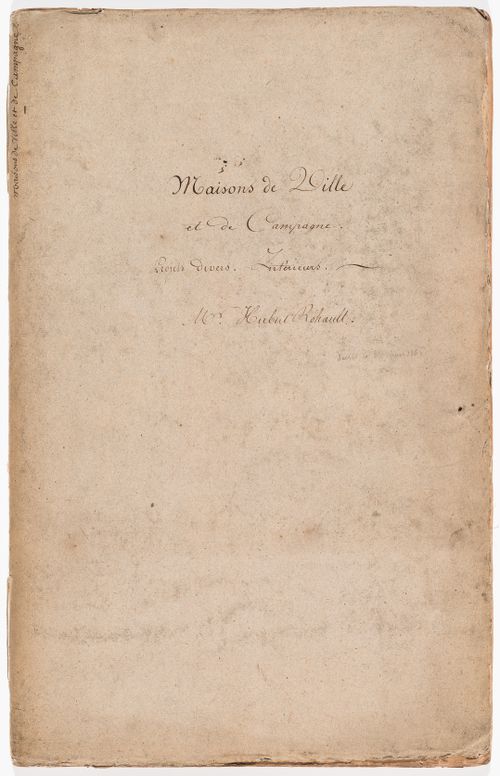
- This album consists primarily of preliminary and design development drawings for diverse projects - mostly domestic - from the early years of Hubert Rohault de Fleury's career. Some of the fifteen more finished drawings in wash and watercolour are probably presentation drawings. Many of the drawings are inscribed with illegible or partially legible notations concerning the project's location, client, date and other particulars. There are seven drawings for a house on rue d'Aguesseau, Paris, probably the Rohault de Fleury family residence (DR1974:0002:035:002 - DR1974:OOO2:035:006 R/V) and several drawings for a house for Rohault de Fleury's uncle on rue Saint-Romain, Paris (DR1974:0002:035:012 V). Several drawings are after plates published in Durand's "Précis des Leçons d'architecture données à l'école Royale Polytechnique (1802-1805)": plans on drawings DR1974:0002:035:011 V, DR1974:0002:035:012 R are adapted from plate 25 and combined with façades designed by Rohault de Fleury, and drawing DR1974:0002:035:013 R is based on an engraving by Charles-Pierre-Joseph Normand (pl. 23) of Hôtel Lathuille in Paris which was designed by Jean-Nicolas-Louis Durand (1788). Perspective sketches and plans are included for the restoration of a château in Rocheux [?] for M. le Trône (DR1974:0002:035:017 R) and for the renovation for the house at Domaine de la Vallée (DR1974:0002:035:020). The drawing for a country villa was executed in 1804, while Rohault de Fleury was in Rome studying at the French Academy (DR1974:0002:035:021 R). The conceptual drawing of a small "orchestre" and the elevations of a gallery and portico gate are inscribed "Jardin du Frascati", and are perhaps travel sketches or projects executed while Rohault de Fleury was in Rome (DR1974:0002:035:032 V, DR1974:002:035:033 R, and DR1974:0002:035:034). Also included in the album are two plans for part of the Passage du saumon in Paris (DR1974:0002:035:014 R), a plan, elevation and section for a rustic pavilion for M. Abrial (DR1974:0002:035:024 V), a plan for a shepherd's house in St. Cueufin [?] (DR1974:0002:035:021 V), a house for M. Quitton in Paris (DR1974:0002:035:026 - DR1974:0002:035:027), a section, elevation and plan for a sheepfold (DR1974:0002:035:033 V) and a perspective for a rustic cabin (DR1974:0002:035:034). The album also contains a number of drawings for Empire-style interior design projects: interior wall elevations, furniture drawings, and plans, elevations and perspectives for a bed alcove.
DR1974:0002:035:001-034
Description:
- This album consists primarily of preliminary and design development drawings for diverse projects - mostly domestic - from the early years of Hubert Rohault de Fleury's career. Some of the fifteen more finished drawings in wash and watercolour are probably presentation drawings. Many of the drawings are inscribed with illegible or partially legible notations concerning the project's location, client, date and other particulars. There are seven drawings for a house on rue d'Aguesseau, Paris, probably the Rohault de Fleury family residence (DR1974:0002:035:002 - DR1974:OOO2:035:006 R/V) and several drawings for a house for Rohault de Fleury's uncle on rue Saint-Romain, Paris (DR1974:0002:035:012 V). Several drawings are after plates published in Durand's "Précis des Leçons d'architecture données à l'école Royale Polytechnique (1802-1805)": plans on drawings DR1974:0002:035:011 V, DR1974:0002:035:012 R are adapted from plate 25 and combined with façades designed by Rohault de Fleury, and drawing DR1974:0002:035:013 R is based on an engraving by Charles-Pierre-Joseph Normand (pl. 23) of Hôtel Lathuille in Paris which was designed by Jean-Nicolas-Louis Durand (1788). Perspective sketches and plans are included for the restoration of a château in Rocheux [?] for M. le Trône (DR1974:0002:035:017 R) and for the renovation for the house at Domaine de la Vallée (DR1974:0002:035:020). The drawing for a country villa was executed in 1804, while Rohault de Fleury was in Rome studying at the French Academy (DR1974:0002:035:021 R). The conceptual drawing of a small "orchestre" and the elevations of a gallery and portico gate are inscribed "Jardin du Frascati", and are perhaps travel sketches or projects executed while Rohault de Fleury was in Rome (DR1974:0002:035:032 V, DR1974:002:035:033 R, and DR1974:0002:035:034). Also included in the album are two plans for part of the Passage du saumon in Paris (DR1974:0002:035:014 R), a plan, elevation and section for a rustic pavilion for M. Abrial (DR1974:0002:035:024 V), a plan for a shepherd's house in St. Cueufin [?] (DR1974:0002:035:021 V), a house for M. Quitton in Paris (DR1974:0002:035:026 - DR1974:0002:035:027), a section, elevation and plan for a sheepfold (DR1974:0002:035:033 V) and a perspective for a rustic cabin (DR1974:0002:035:034). The album also contains a number of drawings for Empire-style interior design projects: interior wall elevations, furniture drawings, and plans, elevations and perspectives for a bed alcove.
People:
Subject:
architecture, landscape architecture, interior design
architecture, landscape architecture, interior design
Date:
early 19th century
early 19th century
Title:
Album of drawings, mostly for French town and country houses, including some drawings for interiors and furniture, and one drawing for the Passage du saumon, Paris
Actions:
DR1974:0002:035:001-034
Description:
- This album consists primarily of preliminary and design development drawings for diverse projects - mostly domestic - from the early years of Hubert Rohault de Fleury's career. Some of the fifteen more finished drawings in wash and watercolour are probably presentation drawings. Many of the drawings are inscribed with illegible or partially legible notations concerning the project's location, client, date and other particulars. There are seven drawings for a house on rue d'Aguesseau, Paris, probably the Rohault de Fleury family residence (DR1974:0002:035:002 - DR1974:OOO2:035:006 R/V) and several drawings for a house for Rohault de Fleury's uncle on rue Saint-Romain, Paris (DR1974:0002:035:012 V). Several drawings are after plates published in Durand's "Précis des Leçons d'architecture données à l'école Royale Polytechnique (1802-1805)": plans on drawings DR1974:0002:035:011 V, DR1974:0002:035:012 R are adapted from plate 25 and combined with façades designed by Rohault de Fleury, and drawing DR1974:0002:035:013 R is based on an engraving by Charles-Pierre-Joseph Normand (pl. 23) of Hôtel Lathuille in Paris which was designed by Jean-Nicolas-Louis Durand (1788). Perspective sketches and plans are included for the restoration of a château in Rocheux [?] for M. le Trône (DR1974:0002:035:017 R) and for the renovation for the house at Domaine de la Vallée (DR1974:0002:035:020). The drawing for a country villa was executed in 1804, while Rohault de Fleury was in Rome studying at the French Academy (DR1974:0002:035:021 R). The conceptual drawing of a small "orchestre" and the elevations of a gallery and portico gate are inscribed "Jardin du Frascati", and are perhaps travel sketches or projects executed while Rohault de Fleury was in Rome (DR1974:0002:035:032 V, DR1974:002:035:033 R, and DR1974:0002:035:034). Also included in the album are two plans for part of the Passage du saumon in Paris (DR1974:0002:035:014 R), a plan, elevation and section for a rustic pavilion for M. Abrial (DR1974:0002:035:024 V), a plan for a shepherd's house in St. Cueufin [?] (DR1974:0002:035:021 V), a house for M. Quitton in Paris (DR1974:0002:035:026 - DR1974:0002:035:027), a section, elevation and plan for a sheepfold (DR1974:0002:035:033 V) and a perspective for a rustic cabin (DR1974:0002:035:034). The album also contains a number of drawings for Empire-style interior design projects: interior wall elevations, furniture drawings, and plans, elevations and perspectives for a bed alcove.
Album of drawings, mostly for French town and country houses, including some drawings for interiors and furniture, and one drawing for the Passage du saumon, Paris
Actions:
DR1974:0002:035:001-034
Description:
- This album consists primarily of preliminary and design development drawings for diverse projects - mostly domestic - from the early years of Hubert Rohault de Fleury's career. Some of the fifteen more finished drawings in wash and watercolour are probably presentation drawings. Many of the drawings are inscribed with illegible or partially legible notations concerning the project's location, client, date and other particulars. There are seven drawings for a house on rue d'Aguesseau, Paris, probably the Rohault de Fleury family residence (DR1974:0002:035:002 - DR1974:OOO2:035:006 R/V) and several drawings for a house for Rohault de Fleury's uncle on rue Saint-Romain, Paris (DR1974:0002:035:012 V). Several drawings are after plates published in Durand's "Précis des Leçons d'architecture données à l'école Royale Polytechnique (1802-1805)": plans on drawings DR1974:0002:035:011 V, DR1974:0002:035:012 R are adapted from plate 25 and combined with façades designed by Rohault de Fleury, and drawing DR1974:0002:035:013 R is based on an engraving by Charles-Pierre-Joseph Normand (pl. 23) of Hôtel Lathuille in Paris which was designed by Jean-Nicolas-Louis Durand (1788). Perspective sketches and plans are included for the restoration of a château in Rocheux [?] for M. le Trône (DR1974:0002:035:017 R) and for the renovation for the house at Domaine de la Vallée (DR1974:0002:035:020). The drawing for a country villa was executed in 1804, while Rohault de Fleury was in Rome studying at the French Academy (DR1974:0002:035:021 R). The conceptual drawing of a small "orchestre" and the elevations of a gallery and portico gate are inscribed "Jardin du Frascati", and are perhaps travel sketches or projects executed while Rohault de Fleury was in Rome (DR1974:0002:035:032 V, DR1974:002:035:033 R, and DR1974:0002:035:034). Also included in the album are two plans for part of the Passage du saumon in Paris (DR1974:0002:035:014 R), a plan, elevation and section for a rustic pavilion for M. Abrial (DR1974:0002:035:024 V), a plan for a shepherd's house in St. Cueufin [?] (DR1974:0002:035:021 V), a house for M. Quitton in Paris (DR1974:0002:035:026 - DR1974:0002:035:027), a section, elevation and plan for a sheepfold (DR1974:0002:035:033 V) and a perspective for a rustic cabin (DR1974:0002:035:034). The album also contains a number of drawings for Empire-style interior design projects: interior wall elevations, furniture drawings, and plans, elevations and perspectives for a bed alcove.
Form:
drawings
drawings
Date:
early 19th century
early 19th century
People:
Subject:
architecture, landscape architecture, interior design
architecture, landscape architecture, interior design
Level of archival description:
Project
Project
Reference number:
AP178.S1.1988.PR07
Description:
This project series documents the Reconstrução do Chiado in Lisbon, Portugal. The office's archives identified this project as 58/80. The office assigned the dates 1988-1998 for this project. Chiado is a historic district in the center of Lisbon, Portugal, and a linchpin between the Baixa Pombalina and the Bairro Alto Hill. After a devastating earthquake in 1755, the city was rebuilt and reorganized by military architects and engineers. The Pombaline style, specific to Lisbon, includes pre-fabricated anti-seismic structure and sober style. On August 25, 1988, a fire started in one of the oldest department stores of Lisbon, the Grandella building, damaging partially or totally seventeen buildings, between the Rua Do Carmo, Rua Nova do Almada and Rua Garret. Álvaro Siza was selected by the mayor of Lisbon, Nuno Krus Abecasis, to reorganize and rebuild the district. After public consultations, it was decided to maintain the historic image of the Chiado by restoring the façades and ornamentations. Adjustments by Siza include introducing residential and cultural functions to the district, with the exception of the Grandes Armazéns building and the Grandella building, which had their own program. As Siza said himself: "It’s not about drawing a new section of the city, but rather just introducing corrections and adjustments, reinforce the whole city." Siza started to work on the layout plan in January 1989 and presented it to the municipal authorities of Lisbon in April 1990. The reconstruction of the Chiado had several goals, but there were two general concepts behind his plan. The aesthetic aspect of the program included restorations of buildings to reinstitute the historical spirit of the district. The spatial reorganization, in a really Siza way, focused on finding architectural solutions that would bring more functionality to the city. The idea was to think of the reconstruction in relation with the urban revitalization of the Baixa Pombalina and to maintain as much as possible the patrimonial value of the district. Siza's intentions were to stimulate the commercial and residential functions of the district, which was on the decline over the last years prior to the fire. Some of the measures taken were: improving the traffic fluidity; creating parking spaces for the future residents and shopkeepers, improving the access to stores and others facilities, creating a staired passageway between Rua do Crucifixo and Rua Nova do Almada, and a pedestrian passageway between the rear of those buildings giving onto Rua Garret and Rua Do Carmo. They also studied the integration of a subway station to the district. Municipal authorities decided to rebuild or restore the original facades, reorganize the interior and improve the safety of the buildings. The biggest challenge was to convert the Grandes Armazéns do Chiado into a hotel and rebuild the Grandella with its original 20th century façade, while rethinking the interior division(s?) in order to add different functions to the building, including offices and leisure and cultural facilities. The reconstruction plan was divided into six distinct blocks: Bloco A, Bloco B, Bloco C, Bloco D, Bloco E, and Bloco F. Each Block includes several buildings and each was individually numbered. The first three blocks (A, B, C) were the most damaged, and required massive work, stonework, technical and mechanical work, replacing doors and windows, as well as repainting, repaving, and restoring decorative elements. Reconstruction for Blocks D, E, and F, which are less documented in the fonds, focused on making changes that complemented the neighboring building. Siza also worked specifically on the Edifício Castro e Melo, Câmara Chaves, Edifício Leonel, Edifício Grandella, and Recuperaçäo do Edifício dos Grandes Armazéns. The rest of the buildings were restored by other architects and firms. "Chiado" is often referring to two different things: the districts between the Baixa Pombalina and the Bairro Alto Hill, as well as a building, also known as the Hotel do Chiado. To avoid confusion, in this finding aid the term "Chiado" is always referring to the district, and the Chiado building will be referred to as the Grandes Armazéns do Chiado building. To fully understand the nature of the project, it is important to comprehend the reconstruction of the Chiado as a whole project, rather than as individual components. Siza himself saw the Chiado as one big building. Bloco A (plots 7,8,9,10,11 and 20) Bloco B (plots 12, 13, 14/15 and 16) Bloco C (plots 2, 3 and 6) Bloco D (plots 4 and 5) Bloco E (plots 1,17,18 and 19) This project series includes eleven subseries : Subseries 1) AP178.S1.1988.PR07.SS1 Master plans and exterior spaces, Reconstruction of Chiado, 2) AP178.S1.1988.PR07.SS2 Bloco A, 3) AP178.S1.1988.PR07.SS3 Edificio Camara Chaves building, 4) AP178.S1.1988.PR07.SS4 Edifício Castro e Melo, 5) AP178.S1.1988.PR07.SS5 Bloco B, 6) AP178.S1.1988.PR07.SS6– Bloco, B Chiado, Edifício Leonel, Lisboa, Portugal (1988-1998), 7) AP178.S1.1988.PR07.SS7 Bloco C, 8) AP178.S1.1988.PR07.SS8 - Bloco C, Chiado, Recuperaçäo do Edifício Grandella, 9) AP178.S1.1988.PR07.SS9 - Bloco C, Chiado, Recuperaçäo do Edifício dos Grandes Armazéns, 10) AP178.S1.1988.PR07.SS10 Ligacao Pedonal do Patio B, 11) AP178.S1.1988.PR07.SS11 Chiado, Estação de Metropolitano Baixa Chiado. It is important to note that the project AP178.S1.1994.PR08 Renovação do Elevador de Santa Justa, Chiado, 1994 is also related to the Reconstruction of the Chiado. All documentation for this project series, including the project subseries, has been kept together to maintain the office's arrangement.
AP178.S1.1988.PR07
Description:
This project series documents the Reconstrução do Chiado in Lisbon, Portugal. The office's archives identified this project as 58/80. The office assigned the dates 1988-1998 for this project. Chiado is a historic district in the center of Lisbon, Portugal, and a linchpin between the Baixa Pombalina and the Bairro Alto Hill. After a devastating earthquake in 1755, the city was rebuilt and reorganized by military architects and engineers. The Pombaline style, specific to Lisbon, includes pre-fabricated anti-seismic structure and sober style. On August 25, 1988, a fire started in one of the oldest department stores of Lisbon, the Grandella building, damaging partially or totally seventeen buildings, between the Rua Do Carmo, Rua Nova do Almada and Rua Garret. Álvaro Siza was selected by the mayor of Lisbon, Nuno Krus Abecasis, to reorganize and rebuild the district. After public consultations, it was decided to maintain the historic image of the Chiado by restoring the façades and ornamentations. Adjustments by Siza include introducing residential and cultural functions to the district, with the exception of the Grandes Armazéns building and the Grandella building, which had their own program. As Siza said himself: "It’s not about drawing a new section of the city, but rather just introducing corrections and adjustments, reinforce the whole city." Siza started to work on the layout plan in January 1989 and presented it to the municipal authorities of Lisbon in April 1990. The reconstruction of the Chiado had several goals, but there were two general concepts behind his plan. The aesthetic aspect of the program included restorations of buildings to reinstitute the historical spirit of the district. The spatial reorganization, in a really Siza way, focused on finding architectural solutions that would bring more functionality to the city. The idea was to think of the reconstruction in relation with the urban revitalization of the Baixa Pombalina and to maintain as much as possible the patrimonial value of the district. Siza's intentions were to stimulate the commercial and residential functions of the district, which was on the decline over the last years prior to the fire. Some of the measures taken were: improving the traffic fluidity; creating parking spaces for the future residents and shopkeepers, improving the access to stores and others facilities, creating a staired passageway between Rua do Crucifixo and Rua Nova do Almada, and a pedestrian passageway between the rear of those buildings giving onto Rua Garret and Rua Do Carmo. They also studied the integration of a subway station to the district. Municipal authorities decided to rebuild or restore the original facades, reorganize the interior and improve the safety of the buildings. The biggest challenge was to convert the Grandes Armazéns do Chiado into a hotel and rebuild the Grandella with its original 20th century façade, while rethinking the interior division(s?) in order to add different functions to the building, including offices and leisure and cultural facilities. The reconstruction plan was divided into six distinct blocks: Bloco A, Bloco B, Bloco C, Bloco D, Bloco E, and Bloco F. Each Block includes several buildings and each was individually numbered. The first three blocks (A, B, C) were the most damaged, and required massive work, stonework, technical and mechanical work, replacing doors and windows, as well as repainting, repaving, and restoring decorative elements. Reconstruction for Blocks D, E, and F, which are less documented in the fonds, focused on making changes that complemented the neighboring building. Siza also worked specifically on the Edifício Castro e Melo, Câmara Chaves, Edifício Leonel, Edifício Grandella, and Recuperaçäo do Edifício dos Grandes Armazéns. The rest of the buildings were restored by other architects and firms. "Chiado" is often referring to two different things: the districts between the Baixa Pombalina and the Bairro Alto Hill, as well as a building, also known as the Hotel do Chiado. To avoid confusion, in this finding aid the term "Chiado" is always referring to the district, and the Chiado building will be referred to as the Grandes Armazéns do Chiado building. To fully understand the nature of the project, it is important to comprehend the reconstruction of the Chiado as a whole project, rather than as individual components. Siza himself saw the Chiado as one big building. Bloco A (plots 7,8,9,10,11 and 20) Bloco B (plots 12, 13, 14/15 and 16) Bloco C (plots 2, 3 and 6) Bloco D (plots 4 and 5) Bloco E (plots 1,17,18 and 19) This project series includes eleven subseries : Subseries 1) AP178.S1.1988.PR07.SS1 Master plans and exterior spaces, Reconstruction of Chiado, 2) AP178.S1.1988.PR07.SS2 Bloco A, 3) AP178.S1.1988.PR07.SS3 Edificio Camara Chaves building, 4) AP178.S1.1988.PR07.SS4 Edifício Castro e Melo, 5) AP178.S1.1988.PR07.SS5 Bloco B, 6) AP178.S1.1988.PR07.SS6– Bloco, B Chiado, Edifício Leonel, Lisboa, Portugal (1988-1998), 7) AP178.S1.1988.PR07.SS7 Bloco C, 8) AP178.S1.1988.PR07.SS8 - Bloco C, Chiado, Recuperaçäo do Edifício Grandella, 9) AP178.S1.1988.PR07.SS9 - Bloco C, Chiado, Recuperaçäo do Edifício dos Grandes Armazéns, 10) AP178.S1.1988.PR07.SS10 Ligacao Pedonal do Patio B, 11) AP178.S1.1988.PR07.SS11 Chiado, Estação de Metropolitano Baixa Chiado. It is important to note that the project AP178.S1.1994.PR08 Renovação do Elevador de Santa Justa, Chiado, 1994 is also related to the Reconstruction of the Chiado. All documentation for this project series, including the project subseries, has been kept together to maintain the office's arrangement.
People:
Date:
1942-2012
1942-2012
Title:
Reconstrução do Chiado [Reconstruction of the Chiado area], Lisbon, Portugal (1988-1998)
Actions:
AP178.S1.1988.PR07
Description:
This project series documents the Reconstrução do Chiado in Lisbon, Portugal. The office's archives identified this project as 58/80. The office assigned the dates 1988-1998 for this project. Chiado is a historic district in the center of Lisbon, Portugal, and a linchpin between the Baixa Pombalina and the Bairro Alto Hill. After a devastating earthquake in 1755, the city was rebuilt and reorganized by military architects and engineers. The Pombaline style, specific to Lisbon, includes pre-fabricated anti-seismic structure and sober style. On August 25, 1988, a fire started in one of the oldest department stores of Lisbon, the Grandella building, damaging partially or totally seventeen buildings, between the Rua Do Carmo, Rua Nova do Almada and Rua Garret. Álvaro Siza was selected by the mayor of Lisbon, Nuno Krus Abecasis, to reorganize and rebuild the district. After public consultations, it was decided to maintain the historic image of the Chiado by restoring the façades and ornamentations. Adjustments by Siza include introducing residential and cultural functions to the district, with the exception of the Grandes Armazéns building and the Grandella building, which had their own program. As Siza said himself: "It’s not about drawing a new section of the city, but rather just introducing corrections and adjustments, reinforce the whole city." Siza started to work on the layout plan in January 1989 and presented it to the municipal authorities of Lisbon in April 1990. The reconstruction of the Chiado had several goals, but there were two general concepts behind his plan. The aesthetic aspect of the program included restorations of buildings to reinstitute the historical spirit of the district. The spatial reorganization, in a really Siza way, focused on finding architectural solutions that would bring more functionality to the city. The idea was to think of the reconstruction in relation with the urban revitalization of the Baixa Pombalina and to maintain as much as possible the patrimonial value of the district. Siza's intentions were to stimulate the commercial and residential functions of the district, which was on the decline over the last years prior to the fire. Some of the measures taken were: improving the traffic fluidity; creating parking spaces for the future residents and shopkeepers, improving the access to stores and others facilities, creating a staired passageway between Rua do Crucifixo and Rua Nova do Almada, and a pedestrian passageway between the rear of those buildings giving onto Rua Garret and Rua Do Carmo. They also studied the integration of a subway station to the district. Municipal authorities decided to rebuild or restore the original facades, reorganize the interior and improve the safety of the buildings. The biggest challenge was to convert the Grandes Armazéns do Chiado into a hotel and rebuild the Grandella with its original 20th century façade, while rethinking the interior division(s?) in order to add different functions to the building, including offices and leisure and cultural facilities. The reconstruction plan was divided into six distinct blocks: Bloco A, Bloco B, Bloco C, Bloco D, Bloco E, and Bloco F. Each Block includes several buildings and each was individually numbered. The first three blocks (A, B, C) were the most damaged, and required massive work, stonework, technical and mechanical work, replacing doors and windows, as well as repainting, repaving, and restoring decorative elements. Reconstruction for Blocks D, E, and F, which are less documented in the fonds, focused on making changes that complemented the neighboring building. Siza also worked specifically on the Edifício Castro e Melo, Câmara Chaves, Edifício Leonel, Edifício Grandella, and Recuperaçäo do Edifício dos Grandes Armazéns. The rest of the buildings were restored by other architects and firms. "Chiado" is often referring to two different things: the districts between the Baixa Pombalina and the Bairro Alto Hill, as well as a building, also known as the Hotel do Chiado. To avoid confusion, in this finding aid the term "Chiado" is always referring to the district, and the Chiado building will be referred to as the Grandes Armazéns do Chiado building. To fully understand the nature of the project, it is important to comprehend the reconstruction of the Chiado as a whole project, rather than as individual components. Siza himself saw the Chiado as one big building. Bloco A (plots 7,8,9,10,11 and 20) Bloco B (plots 12, 13, 14/15 and 16) Bloco C (plots 2, 3 and 6) Bloco D (plots 4 and 5) Bloco E (plots 1,17,18 and 19) This project series includes eleven subseries : Subseries 1) AP178.S1.1988.PR07.SS1 Master plans and exterior spaces, Reconstruction of Chiado, 2) AP178.S1.1988.PR07.SS2 Bloco A, 3) AP178.S1.1988.PR07.SS3 Edificio Camara Chaves building, 4) AP178.S1.1988.PR07.SS4 Edifício Castro e Melo, 5) AP178.S1.1988.PR07.SS5 Bloco B, 6) AP178.S1.1988.PR07.SS6– Bloco, B Chiado, Edifício Leonel, Lisboa, Portugal (1988-1998), 7) AP178.S1.1988.PR07.SS7 Bloco C, 8) AP178.S1.1988.PR07.SS8 - Bloco C, Chiado, Recuperaçäo do Edifício Grandella, 9) AP178.S1.1988.PR07.SS9 - Bloco C, Chiado, Recuperaçäo do Edifício dos Grandes Armazéns, 10) AP178.S1.1988.PR07.SS10 Ligacao Pedonal do Patio B, 11) AP178.S1.1988.PR07.SS11 Chiado, Estação de Metropolitano Baixa Chiado. It is important to note that the project AP178.S1.1994.PR08 Renovação do Elevador de Santa Justa, Chiado, 1994 is also related to the Reconstruction of the Chiado. All documentation for this project series, including the project subseries, has been kept together to maintain the office's arrangement.
Reconstrução do Chiado [Reconstruction of the Chiado area], Lisbon, Portugal (1988-1998)
Actions:
AP178.S1.1988.PR07
Description:
This project series documents the Reconstrução do Chiado in Lisbon, Portugal. The office's archives identified this project as 58/80. The office assigned the dates 1988-1998 for this project. Chiado is a historic district in the center of Lisbon, Portugal, and a linchpin between the Baixa Pombalina and the Bairro Alto Hill. After a devastating earthquake in 1755, the city was rebuilt and reorganized by military architects and engineers. The Pombaline style, specific to Lisbon, includes pre-fabricated anti-seismic structure and sober style. On August 25, 1988, a fire started in one of the oldest department stores of Lisbon, the Grandella building, damaging partially or totally seventeen buildings, between the Rua Do Carmo, Rua Nova do Almada and Rua Garret. Álvaro Siza was selected by the mayor of Lisbon, Nuno Krus Abecasis, to reorganize and rebuild the district. After public consultations, it was decided to maintain the historic image of the Chiado by restoring the façades and ornamentations. Adjustments by Siza include introducing residential and cultural functions to the district, with the exception of the Grandes Armazéns building and the Grandella building, which had their own program. As Siza said himself: "It’s not about drawing a new section of the city, but rather just introducing corrections and adjustments, reinforce the whole city." Siza started to work on the layout plan in January 1989 and presented it to the municipal authorities of Lisbon in April 1990. The reconstruction of the Chiado had several goals, but there were two general concepts behind his plan. The aesthetic aspect of the program included restorations of buildings to reinstitute the historical spirit of the district. The spatial reorganization, in a really Siza way, focused on finding architectural solutions that would bring more functionality to the city. The idea was to think of the reconstruction in relation with the urban revitalization of the Baixa Pombalina and to maintain as much as possible the patrimonial value of the district. Siza's intentions were to stimulate the commercial and residential functions of the district, which was on the decline over the last years prior to the fire. Some of the measures taken were: improving the traffic fluidity; creating parking spaces for the future residents and shopkeepers, improving the access to stores and others facilities, creating a staired passageway between Rua do Crucifixo and Rua Nova do Almada, and a pedestrian passageway between the rear of those buildings giving onto Rua Garret and Rua Do Carmo. They also studied the integration of a subway station to the district. Municipal authorities decided to rebuild or restore the original facades, reorganize the interior and improve the safety of the buildings. The biggest challenge was to convert the Grandes Armazéns do Chiado into a hotel and rebuild the Grandella with its original 20th century façade, while rethinking the interior division(s?) in order to add different functions to the building, including offices and leisure and cultural facilities. The reconstruction plan was divided into six distinct blocks: Bloco A, Bloco B, Bloco C, Bloco D, Bloco E, and Bloco F. Each Block includes several buildings and each was individually numbered. The first three blocks (A, B, C) were the most damaged, and required massive work, stonework, technical and mechanical work, replacing doors and windows, as well as repainting, repaving, and restoring decorative elements. Reconstruction for Blocks D, E, and F, which are less documented in the fonds, focused on making changes that complemented the neighboring building. Siza also worked specifically on the Edifício Castro e Melo, Câmara Chaves, Edifício Leonel, Edifício Grandella, and Recuperaçäo do Edifício dos Grandes Armazéns. The rest of the buildings were restored by other architects and firms. "Chiado" is often referring to two different things: the districts between the Baixa Pombalina and the Bairro Alto Hill, as well as a building, also known as the Hotel do Chiado. To avoid confusion, in this finding aid the term "Chiado" is always referring to the district, and the Chiado building will be referred to as the Grandes Armazéns do Chiado building. To fully understand the nature of the project, it is important to comprehend the reconstruction of the Chiado as a whole project, rather than as individual components. Siza himself saw the Chiado as one big building. Bloco A (plots 7,8,9,10,11 and 20) Bloco B (plots 12, 13, 14/15 and 16) Bloco C (plots 2, 3 and 6) Bloco D (plots 4 and 5) Bloco E (plots 1,17,18 and 19) This project series includes eleven subseries : Subseries 1) AP178.S1.1988.PR07.SS1 Master plans and exterior spaces, Reconstruction of Chiado, 2) AP178.S1.1988.PR07.SS2 Bloco A, 3) AP178.S1.1988.PR07.SS3 Edificio Camara Chaves building, 4) AP178.S1.1988.PR07.SS4 Edifício Castro e Melo, 5) AP178.S1.1988.PR07.SS5 Bloco B, 6) AP178.S1.1988.PR07.SS6– Bloco, B Chiado, Edifício Leonel, Lisboa, Portugal (1988-1998), 7) AP178.S1.1988.PR07.SS7 Bloco C, 8) AP178.S1.1988.PR07.SS8 - Bloco C, Chiado, Recuperaçäo do Edifício Grandella, 9) AP178.S1.1988.PR07.SS9 - Bloco C, Chiado, Recuperaçäo do Edifício dos Grandes Armazéns, 10) AP178.S1.1988.PR07.SS10 Ligacao Pedonal do Patio B, 11) AP178.S1.1988.PR07.SS11 Chiado, Estação de Metropolitano Baixa Chiado. It is important to note that the project AP178.S1.1994.PR08 Renovação do Elevador de Santa Justa, Chiado, 1994 is also related to the Reconstruction of the Chiado. All documentation for this project series, including the project subseries, has been kept together to maintain the office's arrangement.
Level of archival description:
Project
Project
Date:
1942-2012
1942-2012
People:
Title:
Opera 1854
Opera 1854
Actions:
Reference number:
DR1974:0002:036:014:001-022
Description:
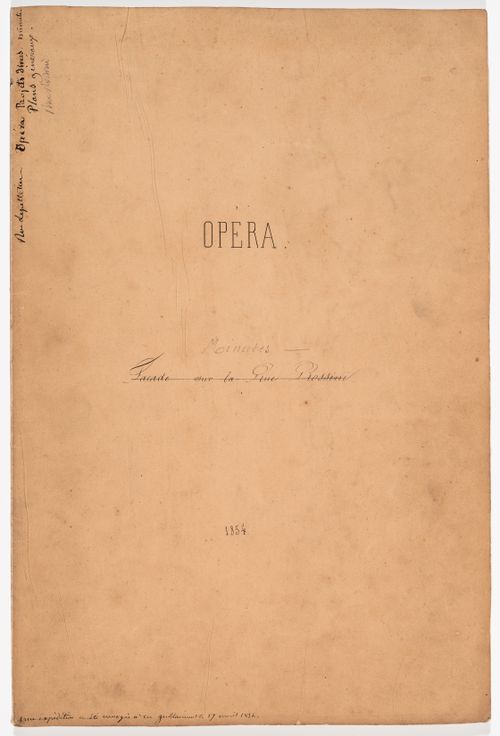
- Portfolio DR1974:0002:036:014:001 R/V-022 contains drawings and transfer lithographs of plans, elevations and sections for the proposed alterations and/or record drawings for/of Salle Le Peletier. Transfer lithographs DR1974:0002:036:014:009 - DR1974:0002:036:014:011 are elevations for proposed alterations to the courtyard façades at the rear of the opera house facing rue Drouot, and drawings DR1974:0002:036:014:012 and DR1974:0002:036:014:013 are for proposed alterations to the left wing of the rear façade of the opera facing rue Drouot. Two transfer lithographs record the side elevation facing rue Rossini and a proposed alternate design (DR1974:0002:036:014:003 and DR1974:0002:036:018). One transfer lithograph of plans, elevations and sections is for planned restorations to the "fermes supportant la planchers de la scene" and one lithograph shows plans for repairs to the gas pipes (DR1974:0002:036:014:019 - DR1974:0002:036:014:020). Two lithographs of plans are for seating arrangements in the auditorium (DR1974:0002:036:014:021 - DR1974:0002:036:014:022). Three individual records also probably relate to Salle Le Peletier: a transfer lithograph of the "rez-de-chaussée" (DR1974:0002:036:014:010), an engraving of the "plancher inférieur du dessous" (DR1974:0002:036:014:011), and a drawing showing elevation, section and details for a covered gallery (DR1974:0002:036:014:012).
DR1974:0002:036:014:001-022
Description:
- Portfolio DR1974:0002:036:014:001 R/V-022 contains drawings and transfer lithographs of plans, elevations and sections for the proposed alterations and/or record drawings for/of Salle Le Peletier. Transfer lithographs DR1974:0002:036:014:009 - DR1974:0002:036:014:011 are elevations for proposed alterations to the courtyard façades at the rear of the opera house facing rue Drouot, and drawings DR1974:0002:036:014:012 and DR1974:0002:036:014:013 are for proposed alterations to the left wing of the rear façade of the opera facing rue Drouot. Two transfer lithographs record the side elevation facing rue Rossini and a proposed alternate design (DR1974:0002:036:014:003 and DR1974:0002:036:018). One transfer lithograph of plans, elevations and sections is for planned restorations to the "fermes supportant la planchers de la scene" and one lithograph shows plans for repairs to the gas pipes (DR1974:0002:036:014:019 - DR1974:0002:036:014:020). Two lithographs of plans are for seating arrangements in the auditorium (DR1974:0002:036:014:021 - DR1974:0002:036:014:022). Three individual records also probably relate to Salle Le Peletier: a transfer lithograph of the "rez-de-chaussée" (DR1974:0002:036:014:010), an engraving of the "plancher inférieur du dessous" (DR1974:0002:036:014:011), and a drawing showing elevation, section and details for a covered gallery (DR1974:0002:036:014:012).
People:
Date:
1854
1854
Title:
Opera 1854
Actions:
DR1974:0002:036:014:001-022
Description:
- Portfolio DR1974:0002:036:014:001 R/V-022 contains drawings and transfer lithographs of plans, elevations and sections for the proposed alterations and/or record drawings for/of Salle Le Peletier. Transfer lithographs DR1974:0002:036:014:009 - DR1974:0002:036:014:011 are elevations for proposed alterations to the courtyard façades at the rear of the opera house facing rue Drouot, and drawings DR1974:0002:036:014:012 and DR1974:0002:036:014:013 are for proposed alterations to the left wing of the rear façade of the opera facing rue Drouot. Two transfer lithographs record the side elevation facing rue Rossini and a proposed alternate design (DR1974:0002:036:014:003 and DR1974:0002:036:018). One transfer lithograph of plans, elevations and sections is for planned restorations to the "fermes supportant la planchers de la scene" and one lithograph shows plans for repairs to the gas pipes (DR1974:0002:036:014:019 - DR1974:0002:036:014:020). Two lithographs of plans are for seating arrangements in the auditorium (DR1974:0002:036:014:021 - DR1974:0002:036:014:022). Three individual records also probably relate to Salle Le Peletier: a transfer lithograph of the "rez-de-chaussée" (DR1974:0002:036:014:010), an engraving of the "plancher inférieur du dessous" (DR1974:0002:036:014:011), and a drawing showing elevation, section and details for a covered gallery (DR1974:0002:036:014:012).
Opera 1854
Actions:
DR1974:0002:036:014:001-022
Description:
- Portfolio DR1974:0002:036:014:001 R/V-022 contains drawings and transfer lithographs of plans, elevations and sections for the proposed alterations and/or record drawings for/of Salle Le Peletier. Transfer lithographs DR1974:0002:036:014:009 - DR1974:0002:036:014:011 are elevations for proposed alterations to the courtyard façades at the rear of the opera house facing rue Drouot, and drawings DR1974:0002:036:014:012 and DR1974:0002:036:014:013 are for proposed alterations to the left wing of the rear façade of the opera facing rue Drouot. Two transfer lithographs record the side elevation facing rue Rossini and a proposed alternate design (DR1974:0002:036:014:003 and DR1974:0002:036:018). One transfer lithograph of plans, elevations and sections is for planned restorations to the "fermes supportant la planchers de la scene" and one lithograph shows plans for repairs to the gas pipes (DR1974:0002:036:014:019 - DR1974:0002:036:014:020). Two lithographs of plans are for seating arrangements in the auditorium (DR1974:0002:036:014:021 - DR1974:0002:036:014:022). Three individual records also probably relate to Salle Le Peletier: a transfer lithograph of the "rez-de-chaussée" (DR1974:0002:036:014:010), an engraving of the "plancher inférieur du dessous" (DR1974:0002:036:014:011), and a drawing showing elevation, section and details for a covered gallery (DR1974:0002:036:014:012).
Date:
1854
1854
People:
Form:
journals and magazines
journals and magazines
Title:
Ecological restoration.
Ecological restoration.
Actions:
Author:
Subject:
Publication:
Madison, WI : University of Wisconsin Press
Madison, WI : University of Wisconsin Press
Form:
journals and magazines
journals and magazines
Publication:
Madison, WI : University of Wisconsin Press
Madison, WI : University of Wisconsin Press
Author:
Subject:
Form:
journals and magazines
journals and magazines
Title:
Restoration.
Restoration.
Actions:
Description:
1 online resource
Author:
Subject:
Publication:
Knoxville, TN : University of Tennessee
Knoxville, TN : University of Tennessee
Form:
journals and magazines
journals and magazines
Publication:
Knoxville, TN : University of Tennessee
Knoxville, TN : University of Tennessee
Author:
Subject:
Form:
books
books
Actions:
Holdings:
Description:
164 pages, 16 unnumbered pages of plates : illustrations ; 23 cm
Description:
164 pages, 16 unnumbered pages of plates : illustrations ; 23 cm
Author:
Subject:
Publication:
Oslo : Universitetsforlaget, ©1976.
Oslo : Universitetsforlaget, ©1976.
Title:
Restoration and anti-restoration : a study in English restoration philosophy / Stephan Tschudi-Madsen.
Actions:
Holdings:
Description:
164 pages, 16 unnumbered pages of plates : illustrations ; 23 cm
Restoration and anti-restoration : a study in English restoration philosophy / Stephan Tschudi-Madsen.
Actions:
Holdings:
Description:
164 pages, 16 unnumbered pages of plates : illustrations ; 23 cm
Form:
books
books
Publication:
Oslo : Universitetsforlaget, ©1976.
Oslo : Universitetsforlaget, ©1976.
Author:
Subject:
Form:
journals and magazines
journals and magazines
Title:
Restoration quarterly.
Restoration quarterly.
Actions:
Holdings:
Description:
volumes : illustrations ; 28 cm
Description:
volumes : illustrations ; 28 cm
Author:
Subject:
Publication:
New York, N.Y. : EverGreene Painting Studios
New York, N.Y. : EverGreene Painting Studios
Form:
journals and magazines
journals and magazines
Publication:
New York, N.Y. : EverGreene Painting Studios
New York, N.Y. : EverGreene Painting Studios
Author:
Subject:
Form:
books
books
Holdings:
Description:
vi, 280 pages : illustrations (some color) ; 27 cm
Description:
vi, 280 pages : illustrations (some color) ; 27 cm
Author:
Subject:
Publication:
London : Michael Joseph in association with the Royal Collection, 1997.
London : Michael Joseph in association with the Royal Collection, 1997.
Title:
Restoration : the rebuilding of Windsor Castle / Adam Nicolson.
Actions:
Holdings:
Description:
vi, 280 pages : illustrations (some color) ; 27 cm
Restoration : the rebuilding of Windsor Castle / Adam Nicolson.
Actions:
Holdings:
Description:
vi, 280 pages : illustrations (some color) ; 27 cm
Form:
books
books
Publication:
London : Michael Joseph in association with the Royal Collection, 1997.
London : Michael Joseph in association with the Royal Collection, 1997.
Author:
Subject:


