


12071 Results
Form:
books
books
Actions:
Price:
$79.95
(available to order)
Summary:
Although both are central to architecture, siting and construction are often treated as separate domains. In "Uncommon Ground", David Leatherbarrow illuminates their relationship, focusing on the years between 1930 and 1960, when utopian ideas about the role of technology in (...)
$79.95
(available to order)
Summary:
Although both are central to architecture, siting and construction are often treated as separate domains. In "Uncommon Ground", David Leatherbarrow illuminates their relationship, focusing on the years between 1930 and 1960, when utopian ideas about the role of technology in (...)
Title:
Uncommon ground : architecture, technology. and topography
Actions:
Price:
$79.95
(available to order)
Summary:
Although both are central to architecture, siting and construction are often treated as separate domains. In "Uncommon Ground", David Leatherbarrow illuminates their relationship, focusing on the years between 1930 and 1960, when utopian ideas about the role of technology in building gave way to an awareness of its disruptive impact on cities and culture. He examines the work of three architects, Richard Neutra, Antonin Raymond, and Aris Konstantinidis, who practiced in the United States, Japan, and Greece respectively. Leatherbarrow rejects the assumption that buildings of the modern period, particularly those that used the latest technology, were designed without regard to their surroundings. Although the prefabricated elements used in the buildings were designed independent of siting considerations, architects used these elements to modulate the environment. Leatherbarrow shows how the role of walls, the traditional element of architectural definition and platform partition, became less significant than that of the platforms themselves, the floors, ceilings, and intermediate levels. He shows how frontality was replaced by the building's four-sided extension into its surroundings, resulting in frontal configurations previously characteristic of the back. Arguing that the boundary between inside and outside was radically redefined, Leatherbarrow challenges cherished notions about the autonomy of the architectural object and about regional coherence. Modern architectural topography, he suggests, is an interplay of buildings, landscapes, and cities, as well as the humans who use them. The conflict between technological progress and cultural continuity, Leatherbarrow claims, exists only in theory, not in the real world of architecture. He argues that the act of building is not a matter of restoring regional identity by re-creating familiar signs, but of incorporating construction into the process of topography's perpetual becoming.
Uncommon ground : architecture, technology. and topography
Actions:
Price:
$79.95
(available to order)
Summary:
Although both are central to architecture, siting and construction are often treated as separate domains. In "Uncommon Ground", David Leatherbarrow illuminates their relationship, focusing on the years between 1930 and 1960, when utopian ideas about the role of technology in building gave way to an awareness of its disruptive impact on cities and culture. He examines the work of three architects, Richard Neutra, Antonin Raymond, and Aris Konstantinidis, who practiced in the United States, Japan, and Greece respectively. Leatherbarrow rejects the assumption that buildings of the modern period, particularly those that used the latest technology, were designed without regard to their surroundings. Although the prefabricated elements used in the buildings were designed independent of siting considerations, architects used these elements to modulate the environment. Leatherbarrow shows how the role of walls, the traditional element of architectural definition and platform partition, became less significant than that of the platforms themselves, the floors, ceilings, and intermediate levels. He shows how frontality was replaced by the building's four-sided extension into its surroundings, resulting in frontal configurations previously characteristic of the back. Arguing that the boundary between inside and outside was radically redefined, Leatherbarrow challenges cherished notions about the autonomy of the architectural object and about regional coherence. Modern architectural topography, he suggests, is an interplay of buildings, landscapes, and cities, as well as the humans who use them. The conflict between technological progress and cultural continuity, Leatherbarrow claims, exists only in theory, not in the real world of architecture. He argues that the act of building is not a matter of restoring regional identity by re-creating familiar signs, but of incorporating construction into the process of topography's perpetual becoming.
Form:
books
books
Publication:
May 2002, Cambridge, Mass.
May 2002, Cambridge, Mass.
Subject:
Architectural Theory
Architectural Theory
Form:
books
books
Price:
$39.95
(available to order)
Summary:
"Substance over Spectacle" presents the best and brightest architectural work in Canada in the last ten years, providing a representative sample of Canadian architectural practice since the early nineties, and demonstrating a specific Canadian sensibility that is unlike any architectural trend elsewhere in the world. The book also explores issues of viability,(...)
$39.95
(available to order)
Summary:
"Substance over Spectacle" presents the best and brightest architectural work in Canada in the last ten years, providing a representative sample of Canadian architectural practice since the early nineties, and demonstrating a specific Canadian sensibility that is unlike any architectural trend elsewhere in the world. The book also explores issues of viability,(...)
Title:
Substance over spectacle : contemporary Canadian architecture
Actions:
Price:
$39.95
(available to order)
Summary:
"Substance over Spectacle" presents the best and brightest architectural work in Canada in the last ten years, providing a representative sample of Canadian architectural practice since the early nineties, and demonstrating a specific Canadian sensibility that is unlike any architectural trend elsewhere in the world. The book also explores issues of viability, sustainability, community, and utility as they relate to the Canadian architectural experience. Included is the work of twenty-five architects from every area of the country, each represented by an installation of their own design and construction. In addition to photographs of the finished projects, "Substance over Spectacle" also features images of models and architectural drawings, together with analytical/critical text demonstrating the architectural ideas embedded in the work. Five essays deal with different aspects of contemporary Canadian architecture, written by some of Canada’s leading thinkers on architecture: George Baird, Sherry McKay, Marco Polo, Georges Adamczyk, and Andrew Gruft. Publication of the book coincides with an exhibition of the same name mounted by the Morris and Helen Belkin Art Gallery at the University of British Columbia, in April 2005, during the international conference of the Society of Architectural Historians, which is taking place at UBC. "Substance over Spectacle", the first national critical overview of Canadian architecture in some eighteen years, offers fresh new perspectives on how our architecture defines us as we approach the first mid-decade of the new century.
Substance over spectacle : contemporary Canadian architecture
Actions:
Price:
$39.95
(available to order)
Summary:
"Substance over Spectacle" presents the best and brightest architectural work in Canada in the last ten years, providing a representative sample of Canadian architectural practice since the early nineties, and demonstrating a specific Canadian sensibility that is unlike any architectural trend elsewhere in the world. The book also explores issues of viability, sustainability, community, and utility as they relate to the Canadian architectural experience. Included is the work of twenty-five architects from every area of the country, each represented by an installation of their own design and construction. In addition to photographs of the finished projects, "Substance over Spectacle" also features images of models and architectural drawings, together with analytical/critical text demonstrating the architectural ideas embedded in the work. Five essays deal with different aspects of contemporary Canadian architecture, written by some of Canada’s leading thinkers on architecture: George Baird, Sherry McKay, Marco Polo, Georges Adamczyk, and Andrew Gruft. Publication of the book coincides with an exhibition of the same name mounted by the Morris and Helen Belkin Art Gallery at the University of British Columbia, in April 2005, during the international conference of the Society of Architectural Historians, which is taking place at UBC. "Substance over Spectacle", the first national critical overview of Canadian architecture in some eighteen years, offers fresh new perspectives on how our architecture defines us as we approach the first mid-decade of the new century.
Form:
books
books
Publication:
May 2005, Vancouver
May 2005, Vancouver
Subject:
Architecture in Canada
Architecture in Canada
Form:
books
books
Actions:
Price:
$59.95
(available to order)
Summary:
"Why Architecture Matters" collects the best of Kamin's columns, incuding his acclaimed series advocating the intelligent development of Chicago's lakefront. The columns are organized thematically, providing an accessible and thought-provoking view of architecture in the 1990s, from soaring skyscrapers to vibrant immigrant neighborhoods, troubled public housing projects,(...)
$59.95
(available to order)
Summary:
"Why Architecture Matters" collects the best of Kamin's columns, incuding his acclaimed series advocating the intelligent development of Chicago's lakefront. The columns are organized thematically, providing an accessible and thought-provoking view of architecture in the 1990s, from soaring skyscrapers to vibrant immigrant neighborhoods, troubled public housing projects,(...)
Title:
Why architecture matters : lessons from Chicago
Actions:
Price:
$59.95
(available to order)
Summary:
"Why Architecture Matters" collects the best of Kamin's columns, incuding his acclaimed series advocating the intelligent development of Chicago's lakefront. The columns are organized thematically, providing an accessible and thought-provoking view of architecture in the 1990s, from soaring skyscrapers to vibrant immigrant neighborhoods, troubled public housing projects, and sprawling suburbs. Because Chicago serves as a barometer of national design trends, these writings shed new light on American architecture and urbanism during a decade that Kamin labels "The Nervous Nineties"--a period of unparalleled affluence and underlying anxiety, of soothing retro buildings and provocative new ones that express the frenzied state of modern life.
Why architecture matters : lessons from Chicago
Actions:
Price:
$59.95
(available to order)
Summary:
"Why Architecture Matters" collects the best of Kamin's columns, incuding his acclaimed series advocating the intelligent development of Chicago's lakefront. The columns are organized thematically, providing an accessible and thought-provoking view of architecture in the 1990s, from soaring skyscrapers to vibrant immigrant neighborhoods, troubled public housing projects, and sprawling suburbs. Because Chicago serves as a barometer of national design trends, these writings shed new light on American architecture and urbanism during a decade that Kamin labels "The Nervous Nineties"--a period of unparalleled affluence and underlying anxiety, of soothing retro buildings and provocative new ones that express the frenzied state of modern life.
Form:
books
books
Publication:
October 2001, Chicago
October 2001, Chicago
Subject:
Architectural Theory
Architectural Theory
Form:
books
books
Actions:
Price:
$58.00
(available in store)
Summary:
"Nanoarchitecture" presents eleven of John Johansen's most inspired visions: a floating conference centre, an apartment building that sprouts from the earth and grows on its own, a levitating auditorium. The projects in "Nanoarchitecture" are presented through a series of idiosyncratic models, drawings, and computer animations suggesting what it would be like to inhabit(...)
$58.00
(available in store)
Summary:
"Nanoarchitecture" presents eleven of John Johansen's most inspired visions: a floating conference centre, an apartment building that sprouts from the earth and grows on its own, a levitating auditorium. The projects in "Nanoarchitecture" are presented through a series of idiosyncratic models, drawings, and computer animations suggesting what it would be like to inhabit(...)
Title:
Nanoarchitecture : a new species of architecture
Actions:
Price:
$58.00
(available in store)
Summary:
"Nanoarchitecture" presents eleven of John Johansen's most inspired visions: a floating conference centre, an apartment building that sprouts from the earth and grows on its own, a levitating auditorium. The projects in "Nanoarchitecture" are presented through a series of idiosyncratic models, drawings, and computer animations suggesting what it would be like to inhabit these fantastic spaces.
Nanoarchitecture : a new species of architecture
Actions:
Price:
$58.00
(available in store)
Summary:
"Nanoarchitecture" presents eleven of John Johansen's most inspired visions: a floating conference centre, an apartment building that sprouts from the earth and grows on its own, a levitating auditorium. The projects in "Nanoarchitecture" are presented through a series of idiosyncratic models, drawings, and computer animations suggesting what it would be like to inhabit these fantastic spaces.
Form:
books
books
Publication:
March 2002, New York
March 2002, New York
Subject:
Architecture Monographs
Architecture Monographs
Form:
books
books
Actions:
Price:
$76.54
(available to order)
Summary:
The issues of the organic/inorganic, animate/inanimate and natural/technological are of paramount importance in the field of architecture both in current discussions about digital architecture and in classical debates from Vitruvius onwards. This book investigates the complex relationship of architecture to biological life, providing theoretical and historical(...)
$76.54
(available to order)
Summary:
The issues of the organic/inorganic, animate/inanimate and natural/technological are of paramount importance in the field of architecture both in current discussions about digital architecture and in classical debates from Vitruvius onwards. This book investigates the complex relationship of architecture to biological life, providing theoretical and historical(...)
Title:
Architecture, animal, human : the asymetrical condition
Actions:
Price:
$76.54
(available to order)
Summary:
The issues of the organic/inorganic, animate/inanimate and natural/technological are of paramount importance in the field of architecture both in current discussions about digital architecture and in classical debates from Vitruvius onwards. This book investigates the complex relationship of architecture to biological life, providing theoretical and historical underpinnings for a variety of contemporary debates in and around architecture. With discussion focussed on the Renaissance, the eighteenth-century and the late twentieth-century, this book will have a broad appeal to those with interest within and beyond architecture.
Architecture, animal, human : the asymetrical condition
Actions:
Price:
$76.54
(available to order)
Summary:
The issues of the organic/inorganic, animate/inanimate and natural/technological are of paramount importance in the field of architecture both in current discussions about digital architecture and in classical debates from Vitruvius onwards. This book investigates the complex relationship of architecture to biological life, providing theoretical and historical underpinnings for a variety of contemporary debates in and around architecture. With discussion focussed on the Renaissance, the eighteenth-century and the late twentieth-century, this book will have a broad appeal to those with interest within and beyond architecture.
Form:
books
books
Publication:
October 2005, London
October 2005, London
Subject:
Architectural Theory
Architectural Theory
Form:
books
books

Actions:
Price:
$32.00
(available to order)
Summary:
Take Rem Koolhaas’s lauded new Seattle Public Library, and remove it from its context. Would it be as beautiful? Would it lose something of its meaning (not to mention the books off the shelves), if you picked it up and placed it elsewhere? Is it even possible for a building to have no relation whatsoever to the place where it is erected? Is it pointless to talk about(...)
$32.00
(available to order)
Summary:
Take Rem Koolhaas’s lauded new Seattle Public Library, and remove it from its context. Would it be as beautiful? Would it lose something of its meaning (not to mention the books off the shelves), if you picked it up and placed it elsewhere? Is it even possible for a building to have no relation whatsoever to the place where it is erected? Is it pointless to talk about(...)
Title:
Open house : towards a new architecture
Actions:
Price:
$32.00
(available to order)
Summary:
Take Rem Koolhaas’s lauded new Seattle Public Library, and remove it from its context. Would it be as beautiful? Would it lose something of its meaning (not to mention the books off the shelves), if you picked it up and placed it elsewhere? Is it even possible for a building to have no relation whatsoever to the place where it is erected? Is it pointless to talk about architecture as a pure intellectual enterprise, without grounding it in its surroundings? These are among the important questions raised by the German architecture scholar Florentine Sack in this exploration of the philosophical, aesthetic, and subjective links between a building and its environment. Drawing upon traditions as old as that of the Japanese house through models of classical Western modernism, she brings the notion of unity to bear on contemporary architecture, referring to exemplary buildings by Koolhaas, Herzog & de Meuron, Peter Zumthor, Kazuyo Sejima, Ryue Nishizawa, and many others.
Open house : towards a new architecture
Actions:
Price:
$32.00
(available to order)
Summary:
Take Rem Koolhaas’s lauded new Seattle Public Library, and remove it from its context. Would it be as beautiful? Would it lose something of its meaning (not to mention the books off the shelves), if you picked it up and placed it elsewhere? Is it even possible for a building to have no relation whatsoever to the place where it is erected? Is it pointless to talk about architecture as a pure intellectual enterprise, without grounding it in its surroundings? These are among the important questions raised by the German architecture scholar Florentine Sack in this exploration of the philosophical, aesthetic, and subjective links between a building and its environment. Drawing upon traditions as old as that of the Japanese house through models of classical Western modernism, she brings the notion of unity to bear on contemporary architecture, referring to exemplary buildings by Koolhaas, Herzog & de Meuron, Peter Zumthor, Kazuyo Sejima, Ryue Nishizawa, and many others.
Form:
books
books
Publication:
October 2005, Berlin
October 2005, Berlin
Subject:
Residential Architecture
Residential Architecture
Form:
books
books
Actions:
Price:
$170.00
(available to order)
Summary:
A trailblazing original, Predock was his own tour de force. In his work, steel, glass, and concrete were combined with natural materials to celebrate modern life. Initially considered a regionalist architect—one who had captured the power of the desert—he went on to re-establish the importance of place in architecture in the tradition of Frank Lloyd Wright, Luis Barragan,(...)
$170.00
(available to order)
Summary:
A trailblazing original, Predock was his own tour de force. In his work, steel, glass, and concrete were combined with natural materials to celebrate modern life. Initially considered a regionalist architect—one who had captured the power of the desert—he went on to re-establish the importance of place in architecture in the tradition of Frank Lloyd Wright, Luis Barragan,(...)
Title:
Antoine Predock: 65 years of architecture
Actions:
Price:
$170.00
(available to order)
Summary:
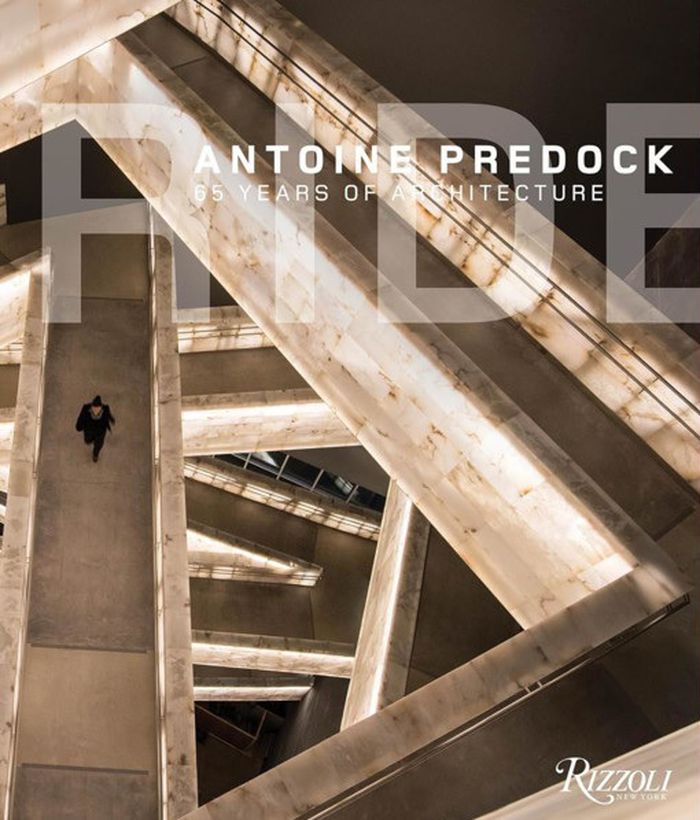
A trailblazing original, Predock was his own tour de force. In his work, steel, glass, and concrete were combined with natural materials to celebrate modern life. Initially considered a regionalist architect—one who had captured the power of the desert—he went on to re-establish the importance of place in architecture in the tradition of Frank Lloyd Wright, Luis Barragan, and Louis Kahn. He made experience—what Kahn would have called spiritual experience—once again important in architecture. Featuring the wide range of Predock’s designed and built structures, including houses, schools, hotels, parks, theaters, nature centers, and more, this is an all-encompassing career/life “memoirograph.” It charts the architect’s journey from his beginnings, to his early days as a professional starting his own studio with the groundbreaking La Luz Community project, up to the present day, including the landmark Canadian Museum for Human Rights. The chronological presentation includes Predock’s travel, travel sketches, and kinesthetic pursuits, encapsulating a life in architecture.
Antoine Predock: 65 years of architecture
Actions:
Price:
$170.00
(available to order)
Summary:
A trailblazing original, Predock was his own tour de force. In his work, steel, glass, and concrete were combined with natural materials to celebrate modern life. Initially considered a regionalist architect—one who had captured the power of the desert—he went on to re-establish the importance of place in architecture in the tradition of Frank Lloyd Wright, Luis Barragan, and Louis Kahn. He made experience—what Kahn would have called spiritual experience—once again important in architecture. Featuring the wide range of Predock’s designed and built structures, including houses, schools, hotels, parks, theaters, nature centers, and more, this is an all-encompassing career/life “memoirograph.” It charts the architect’s journey from his beginnings, to his early days as a professional starting his own studio with the groundbreaking La Luz Community project, up to the present day, including the landmark Canadian Museum for Human Rights. The chronological presentation includes Predock’s travel, travel sketches, and kinesthetic pursuits, encapsulating a life in architecture.
Form:
books
books
Publication:
April 2024
April 2024
Subject:
Architecture Monographs
Architecture Monographs
Form:
books
books
Actions:
Price:
$68.50
(available in store)
Summary:
A complex bamboo pyramid to block a busy crossing in London. A maze of 'mini Stonehenge' brick structures to hinder government crackdowns in Hong Kong. The takeover of a Dallas highway to create a temporary public square. Architects have often used their skills in struggles for civil rights, gender equality and climate justice. Illuminating the role that design has played(...)
$68.50
(available in store)
Summary:
A complex bamboo pyramid to block a busy crossing in London. A maze of 'mini Stonehenge' brick structures to hinder government crackdowns in Hong Kong. The takeover of a Dallas highway to create a temporary public square. Architects have often used their skills in struggles for civil rights, gender equality and climate justice. Illuminating the role that design has played(...)
Title:
Protest architecture: Structures of civil resistance
Actions:
Price:
$68.50
(available in store)
Summary:
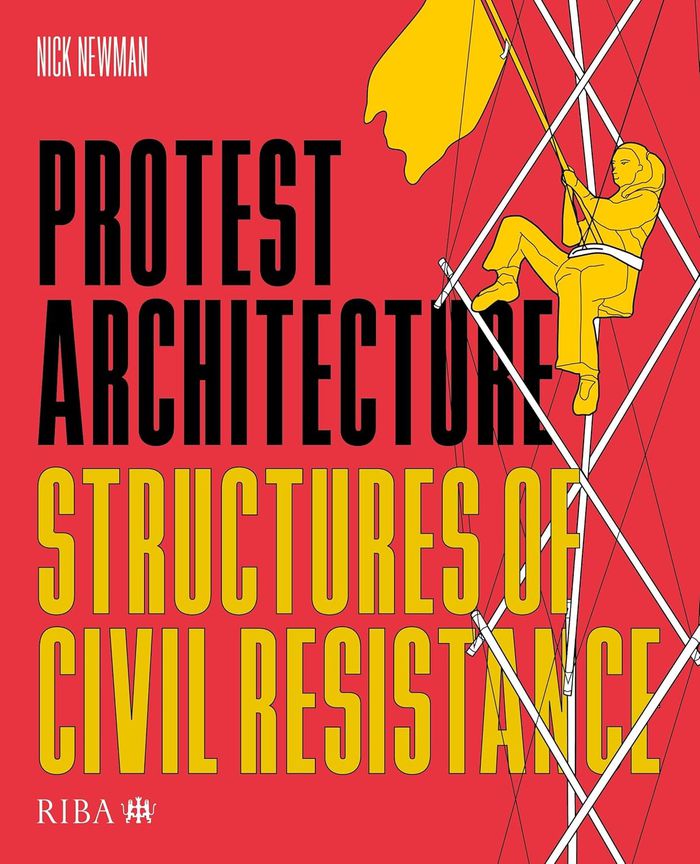
A complex bamboo pyramid to block a busy crossing in London. A maze of 'mini Stonehenge' brick structures to hinder government crackdowns in Hong Kong. The takeover of a Dallas highway to create a temporary public square. Architects have often used their skills in struggles for civil rights, gender equality and climate justice. Illuminating the role that design has played in protest movements, Nick Newman explores the colliding worlds of architecture and activism through the stories of those who have built for change. Using historic and contemporary examples, Protest Architecture analyses the design problems and solutions faced by protestors on the streets through detailed drawings, photography and expert insight. From beacons to barricades, towers to treehouses, this unique design typology demonstrates architectural influence over moments of societal change. This is a retelling of protest history through the eyes of an architect.
Protest architecture: Structures of civil resistance
Actions:
Price:
$68.50
(available in store)
Summary:
A complex bamboo pyramid to block a busy crossing in London. A maze of 'mini Stonehenge' brick structures to hinder government crackdowns in Hong Kong. The takeover of a Dallas highway to create a temporary public square. Architects have often used their skills in struggles for civil rights, gender equality and climate justice. Illuminating the role that design has played in protest movements, Nick Newman explores the colliding worlds of architecture and activism through the stories of those who have built for change. Using historic and contemporary examples, Protest Architecture analyses the design problems and solutions faced by protestors on the streets through detailed drawings, photography and expert insight. From beacons to barricades, towers to treehouses, this unique design typology demonstrates architectural influence over moments of societal change. This is a retelling of protest history through the eyes of an architect.
Form:
books
books
Publication:
July 2024
July 2024
Subject:
Architectural Theory
Architectural Theory
Form:
books
books
Actions:
Price:
$62.00
(available to order)
Summary:
When we look at trees, we see a form of natural architecture, and yet we have seemingly always exploited trees to make new buildings of our own. Whereas a tree creates its own structure, humans generally destroy other things to build, with increasingly disastrous consequences. In "Botanical architecture", Paul Dobraszczyk looks closely at how elements of plants—seeds,(...)
$62.00
(available to order)
Summary:
When we look at trees, we see a form of natural architecture, and yet we have seemingly always exploited trees to make new buildings of our own. Whereas a tree creates its own structure, humans generally destroy other things to build, with increasingly disastrous consequences. In "Botanical architecture", Paul Dobraszczyk looks closely at how elements of plants—seeds,(...)
Title:
Botanical architecture: Plants, buildings and us
Actions:
Price:
$62.00
(available to order)
Summary:
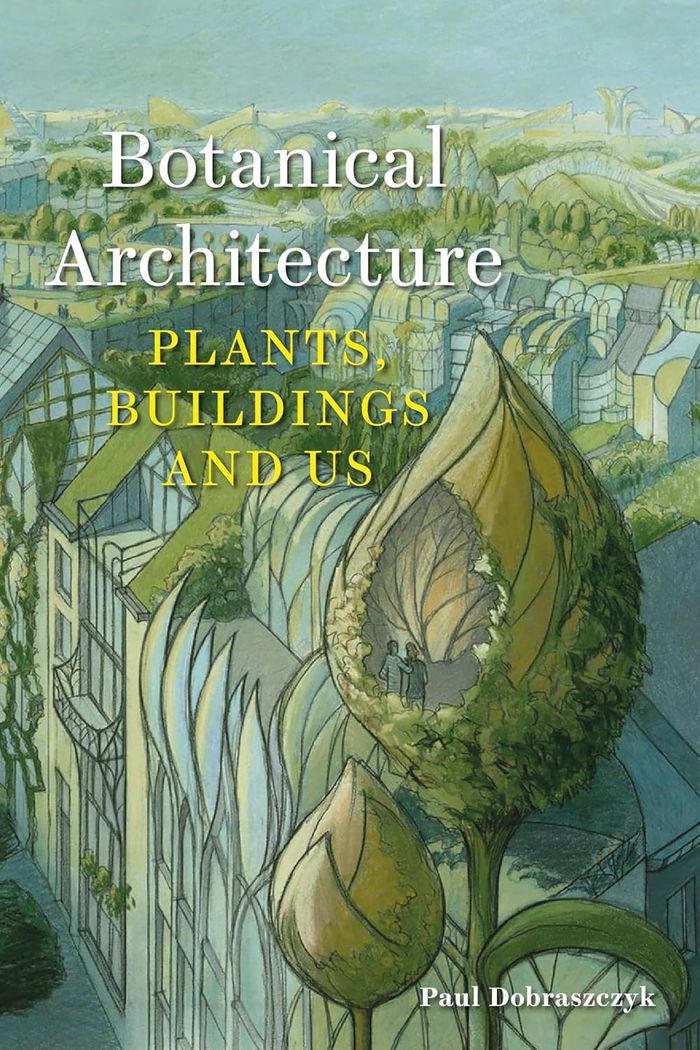
When we look at trees, we see a form of natural architecture, and yet we have seemingly always exploited trees to make new buildings of our own. Whereas a tree creates its own structure, humans generally destroy other things to build, with increasingly disastrous consequences. In "Botanical architecture", Paul Dobraszczyk looks closely at how elements of plants—seeds, roots, trunks, branches, leaves, flowers, and canopies—compare with and constitute human-made buildings. Given the omnipresence of plant life in and around our structures, Dobraszczyk argues that we ought to build as much for plants as for ourselves, understanding that our lives are always totally dependent on theirs. "Botanical architecture" offers a provocative and original take on the relationship between ecology and architecture.
Botanical architecture: Plants, buildings and us
Actions:
Price:
$62.00
(available to order)
Summary:
When we look at trees, we see a form of natural architecture, and yet we have seemingly always exploited trees to make new buildings of our own. Whereas a tree creates its own structure, humans generally destroy other things to build, with increasingly disastrous consequences. In "Botanical architecture", Paul Dobraszczyk looks closely at how elements of plants—seeds, roots, trunks, branches, leaves, flowers, and canopies—compare with and constitute human-made buildings. Given the omnipresence of plant life in and around our structures, Dobraszczyk argues that we ought to build as much for plants as for ourselves, understanding that our lives are always totally dependent on theirs. "Botanical architecture" offers a provocative and original take on the relationship between ecology and architecture.
Form:
books
books
Publication:
December 2024
December 2024
Subject:
Green Architecture
Green Architecture
Form:
books
books
Actions:
Price:
$88.00
(available to order)
Summary:
Acclaimed Los Angeles architect Franklin D. Israel (1945–1996) created innovative residential projects and office interiors that made him one of the most talked-about designers of his generation. In this vivid account, architectural historian Todd Gannon draws on archival resources, analyses of Israel’s buildings, and recent interviews with the architect’s colleagues,(...)
$88.00
(available to order)
Summary:
Acclaimed Los Angeles architect Franklin D. Israel (1945–1996) created innovative residential projects and office interiors that made him one of the most talked-about designers of his generation. In this vivid account, architectural historian Todd Gannon draws on archival resources, analyses of Israel’s buildings, and recent interviews with the architect’s colleagues,(...)
Title:
Franklin D. Israel: A life in architecture
Actions:
Price:
$88.00
(available to order)
Summary:
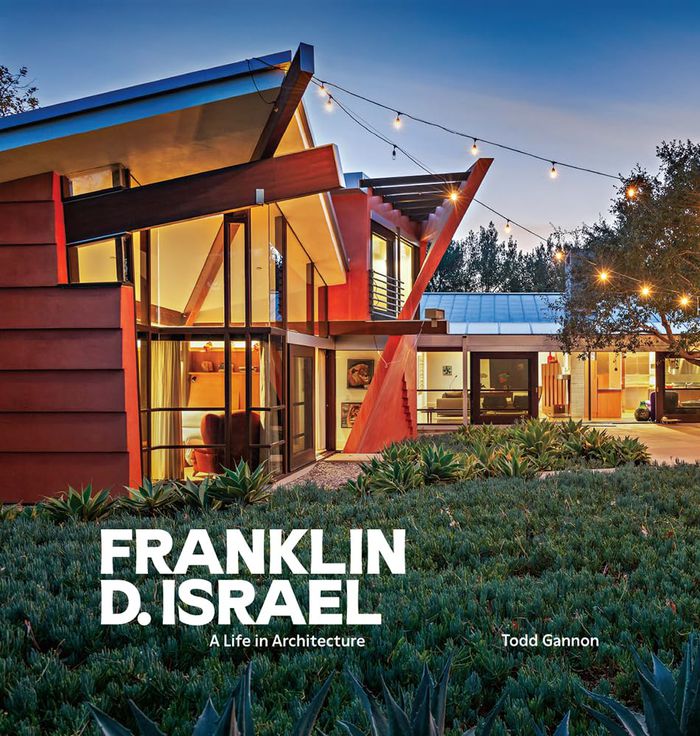
Acclaimed Los Angeles architect Franklin D. Israel (1945–1996) created innovative residential projects and office interiors that made him one of the most talked-about designers of his generation. In this vivid account, architectural historian Todd Gannon draws on archival resources, analyses of Israel’s buildings, and recent interviews with the architect’s colleagues, clients, and contemporaries, including Frank Gehry, Thom Mayne, and Robert A. M. Stern. Gannon traces Israel’s development from his early years and career on the East Coast to his formative world travels and residence at the American Academy in Rome. The author guides readers through the Los Angeles architectural context, Israel’s influential teaching at UCLA, his dalliance with Hollywood, and the personal motivations behind his architecture and design work—all aspects of an influential career that was cut short by his death from AIDS-related complications at the age of fifty.
Franklin D. Israel: A life in architecture
Actions:
Price:
$88.00
(available to order)
Summary:
Acclaimed Los Angeles architect Franklin D. Israel (1945–1996) created innovative residential projects and office interiors that made him one of the most talked-about designers of his generation. In this vivid account, architectural historian Todd Gannon draws on archival resources, analyses of Israel’s buildings, and recent interviews with the architect’s colleagues, clients, and contemporaries, including Frank Gehry, Thom Mayne, and Robert A. M. Stern. Gannon traces Israel’s development from his early years and career on the East Coast to his formative world travels and residence at the American Academy in Rome. The author guides readers through the Los Angeles architectural context, Israel’s influential teaching at UCLA, his dalliance with Hollywood, and the personal motivations behind his architecture and design work—all aspects of an influential career that was cut short by his death from AIDS-related complications at the age of fifty.
Form:
books
books
Publication:
February 2025
February 2025
Subject:
Architecture Monographs
Architecture Monographs


