


2689 Results
Form:
books
books
Price:
$85.00
(available to order)
Summary:
A guide to the physical construction of buildings from the 1840s to the present, "Historical Building Construction" uses narrative, drawings, and photographs to describe the development of masonry, wood, and steel construction, modern curtain walls and concrete slabs, and the use of cast iron and patented floor construction. It provides case histories to show how(...)
$85.00
(available to order)
Summary:
A guide to the physical construction of buildings from the 1840s to the present, "Historical Building Construction" uses narrative, drawings, and photographs to describe the development of masonry, wood, and steel construction, modern curtain walls and concrete slabs, and the use of cast iron and patented floor construction. It provides case histories to show how(...)
Publication:
June 1995, New York
June 1995, New York
Title:
Historical building construction : design, materials & technology
Actions:
Price:
$85.00
(available to order)
Summary:
A guide to the physical construction of buildings from the 1840s to the present, "Historical Building Construction" uses narrative, drawings, and photographs to describe the development of masonry, wood, and steel construction, modern curtain walls and concrete slabs, and the use of cast iron and patented floor construction. It provides case histories to show how this information is applied to actual projects, ranging from brownstones to skyscrapers. In order to show a consistent and well-documented set of examples evolving in chronological order, New York City is used as model, since many examples of obsolete forms are still available for examination. The general information given applies, with few exceptions, to buildings of the same types built all over the United States during the same period, and these are referenced as needed.
Historical building construction : design, materials & technology
Actions:
Price:
$85.00
(available to order)
Summary:
A guide to the physical construction of buildings from the 1840s to the present, "Historical Building Construction" uses narrative, drawings, and photographs to describe the development of masonry, wood, and steel construction, modern curtain walls and concrete slabs, and the use of cast iron and patented floor construction. It provides case histories to show how this information is applied to actual projects, ranging from brownstones to skyscrapers. In order to show a consistent and well-documented set of examples evolving in chronological order, New York City is used as model, since many examples of obsolete forms are still available for examination. The general information given applies, with few exceptions, to buildings of the same types built all over the United States during the same period, and these are referenced as needed.
Form:
books
books
Publication:
June 1995, New York
June 1995, New York
Form:
books
books
Actions:
Price:
$34.95
(available in store)
Summary:
Villa Savoye is an icon of modern architecture. But who were Eugénie and Pierre Savoye, who had the house built between 1928 and 1930? Why did they commission Le Corbusier? And how did they live in the country house they dubbed "Villa les Heures Claires"? Their grandson Jean-Marc Savoye tells the story of the villa and its residents using rare documents and family(...)
$34.95
(available in store)
Summary:
Villa Savoye is an icon of modern architecture. But who were Eugénie and Pierre Savoye, who had the house built between 1928 and 1930? Why did they commission Le Corbusier? And how did they live in the country house they dubbed "Villa les Heures Claires"? Their grandson Jean-Marc Savoye tells the story of the villa and its residents using rare documents and family(...)
Publication:
April 2020
April 2020
Title:
The sunny days of Villa Savoye
Actions:
Price:
$34.95
(available in store)
Summary:
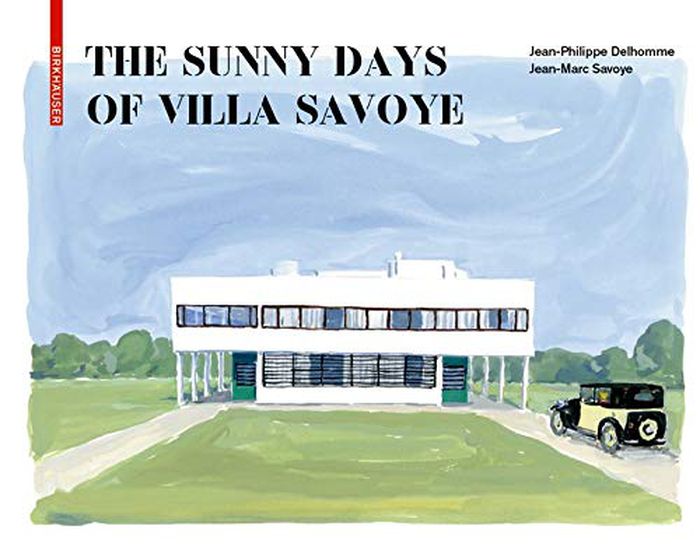
Villa Savoye is an icon of modern architecture. But who were Eugénie and Pierre Savoye, who had the house built between 1928 and 1930? Why did they commission Le Corbusier? And how did they live in the country house they dubbed "Villa les Heures Claires"? Their grandson Jean-Marc Savoye tells the story of the villa and its residents using rare documents and family memories. In his pictures, illustrator Jean-Philippe Delhomme, long fascinated by the building, brings to life the construction site, everyday life, the war period, its use as a barn, and its rescue from demolition. In 1965, Le Corbusier lived to see Villa Savoye declared a monument; in 2016 it earned a spot on the UNESCO World Heritage list and now welcomes 40,000 visitors each year.
The sunny days of Villa Savoye
Actions:
Price:
$34.95
(available in store)
Summary:
Villa Savoye is an icon of modern architecture. But who were Eugénie and Pierre Savoye, who had the house built between 1928 and 1930? Why did they commission Le Corbusier? And how did they live in the country house they dubbed "Villa les Heures Claires"? Their grandson Jean-Marc Savoye tells the story of the villa and its residents using rare documents and family memories. In his pictures, illustrator Jean-Philippe Delhomme, long fascinated by the building, brings to life the construction site, everyday life, the war period, its use as a barn, and its rescue from demolition. In 1965, Le Corbusier lived to see Villa Savoye declared a monument; in 2016 it earned a spot on the UNESCO World Heritage list and now welcomes 40,000 visitors each year.
Form:
books
books
Publication:
April 2020
April 2020
Form:
books
books
Price:
$69.95
(available to order)
Summary:
This volume considers how contemporary photographers have responded to the US military’s impact on the domestic environment since the 1970s, a dynamic period for environmental activism as well as for photography. This catalogue presents a lively range of voices at the intersection of art, environmentalism, militarism, photography, and politics. Alongside interviews with(...)
$69.95
(available to order)
Summary:
This volume considers how contemporary photographers have responded to the US military’s impact on the domestic environment since the 1970s, a dynamic period for environmental activism as well as for photography. This catalogue presents a lively range of voices at the intersection of art, environmentalism, militarism, photography, and politics. Alongside interviews with(...)
Title:
Devour the land: War and american landscape photography since 1970
Actions:
Price:
$69.95
(available to order)
Summary:
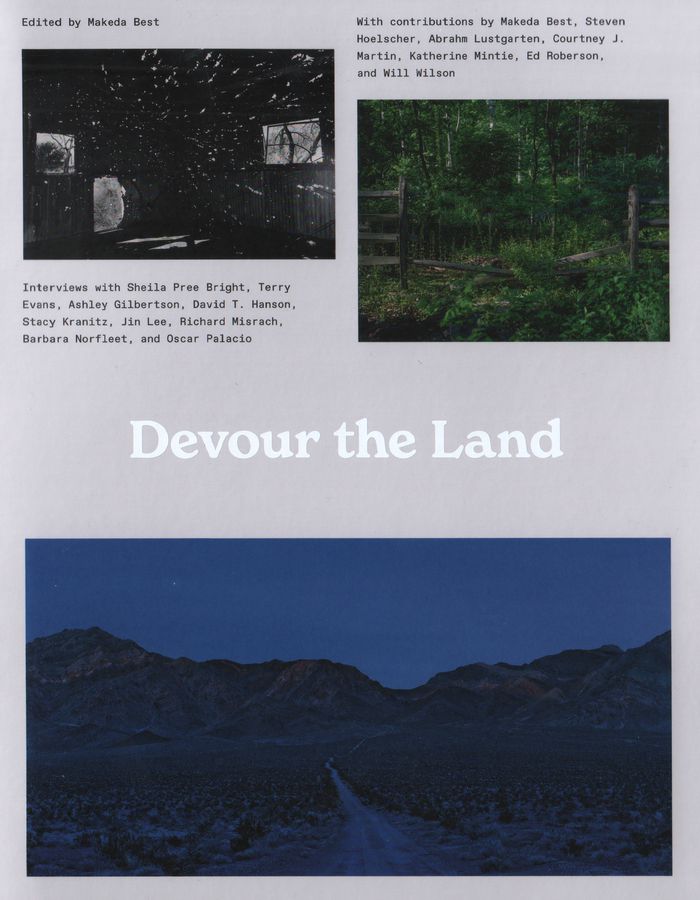
This volume considers how contemporary photographers have responded to the US military’s impact on the domestic environment since the 1970s, a dynamic period for environmental activism as well as for photography. This catalogue presents a lively range of voices at the intersection of art, environmentalism, militarism, photography, and politics. Alongside interviews with prominent contemporary artists working in the landscape photography tradition, the images speak to photographers’ varied motivations, personal experiences, and artistic approaches. The result is a surprising picture of the ways violence and warfare surround us. Although most modern combat has taken place abroad, the US domestic landscape bears the footprint of armed conflict—much of the environmental damage we live with today was caused by our own military and the expansive network of industries supporting its work.
Devour the land: War and american landscape photography since 1970
Actions:
Price:
$69.95
(available to order)
Summary:
This volume considers how contemporary photographers have responded to the US military’s impact on the domestic environment since the 1970s, a dynamic period for environmental activism as well as for photography. This catalogue presents a lively range of voices at the intersection of art, environmentalism, militarism, photography, and politics. Alongside interviews with prominent contemporary artists working in the landscape photography tradition, the images speak to photographers’ varied motivations, personal experiences, and artistic approaches. The result is a surprising picture of the ways violence and warfare surround us. Although most modern combat has taken place abroad, the US domestic landscape bears the footprint of armed conflict—much of the environmental damage we live with today was caused by our own military and the expansive network of industries supporting its work.
Form:
books
books
Publication:
January 2022
January 2022
Subject:
Photography by Region
Photography by Region
Form:
books
books
Price:
$45.00
(available to order)
Summary:
This publication showcases how, at the outset of the 21st century, classical and vernacular traditions are flourishing as a modern phenomena, practiced by a wide spectrum of architectural firms, scholars, students, universities and institutions. The 'New Palladians' are dedicated to the highest standards of craftsmanship and design, and to the very best ecological(...)
$45.00
(available to order)
Summary:
This publication showcases how, at the outset of the 21st century, classical and vernacular traditions are flourishing as a modern phenomena, practiced by a wide spectrum of architectural firms, scholars, students, universities and institutions. The 'New Palladians' are dedicated to the highest standards of craftsmanship and design, and to the very best ecological(...)
Title:
New Palladians: modernity and sustainability for 21st century architecture
Actions:
Price:
$45.00
(available to order)
Summary:
This publication showcases how, at the outset of the 21st century, classical and vernacular traditions are flourishing as a modern phenomena, practiced by a wide spectrum of architectural firms, scholars, students, universities and institutions. The 'New Palladians' are dedicated to the highest standards of craftsmanship and design, and to the very best ecological building and sustainable urbanism. The reference to Palladio is to engage him as a model of professional integrity and building expertise that encompasses the dimensions and dialectics of cities, the countryside and nature. The efficient didactic nature of Palladio's work and its contextual adaptability, has favoured the flourishing of Palladian architecture throughout the world. This book features the latest architectural and urban projects from forty-eight of the most important classical architects in the world today.
New Palladians: modernity and sustainability for 21st century architecture
Actions:
Price:
$45.00
(available to order)
Summary:
This publication showcases how, at the outset of the 21st century, classical and vernacular traditions are flourishing as a modern phenomena, practiced by a wide spectrum of architectural firms, scholars, students, universities and institutions. The 'New Palladians' are dedicated to the highest standards of craftsmanship and design, and to the very best ecological building and sustainable urbanism. The reference to Palladio is to engage him as a model of professional integrity and building expertise that encompasses the dimensions and dialectics of cities, the countryside and nature. The efficient didactic nature of Palladio's work and its contextual adaptability, has favoured the flourishing of Palladian architecture throughout the world. This book features the latest architectural and urban projects from forty-eight of the most important classical architects in the world today.
Form:
books
books
Publication:
September 2010
September 2010
Subject:
Contemporary Architecture
Contemporary Architecture
Form:
books
books
Title:
Architecture of thought
Architecture of thought
Actions:
Price:
$42.00
(available in store)
Summary:
In Architecture of Thought, Andrzej Piotrowski maps and conceptually explores material practices of the past, showing how physical artifacts and visual environments manifest culturally rooted modes of thought and participate in the most nuanced processes of negotiations and ideological exchanges. Combining design thinking with academic methods of inquiry, Piotrowski(...)
$42.00
(available in store)
Summary:
In Architecture of Thought, Andrzej Piotrowski maps and conceptually explores material practices of the past, showing how physical artifacts and visual environments manifest culturally rooted modes of thought and participate in the most nuanced processes of negotiations and ideological exchanges. Combining design thinking with academic methods of inquiry, Piotrowski(...)
Title:
Architecture of thought
Actions:
Price:
$42.00
(available in store)
Summary:
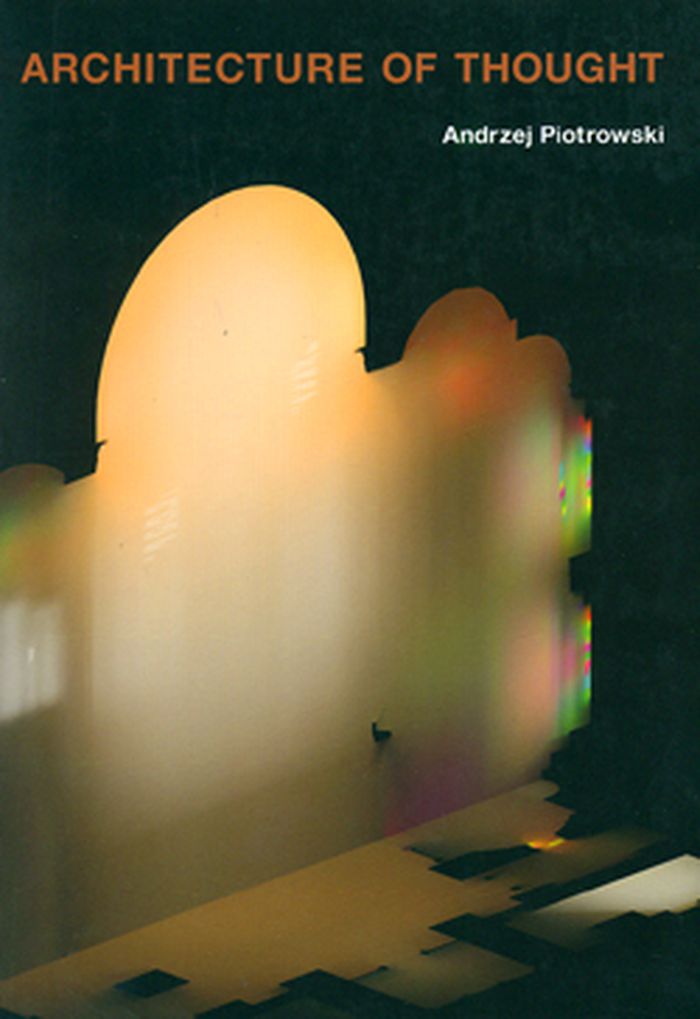
In Architecture of Thought, Andrzej Piotrowski maps and conceptually explores material practices of the past, showing how physical artifacts and visual environments manifest culturally rooted modes of thought and participate in the most nuanced processes of negotiations and ideological exchanges. Combining design thinking with academic methods of inquiry, Piotrowski traces ancient to modern architectural histories and—through critical readings of select buildings—examines the role of nonverbal exchanges in the development of an accumulated Western identity. Operating from the assertion that buildings are the most permanent record of unself-conscious beliefs and attitudes, it discusses Byzantium and the West after iconoclasm, the conquest and colonization of Mesoamerica, the Reformation and Counter-Reformation in Eastern Europe, the rise of the culture of consumerism in Victorian England, and High Modernism as its consequence.
Architecture of thought
Actions:
Price:
$42.00
(available in store)
Summary:
In Architecture of Thought, Andrzej Piotrowski maps and conceptually explores material practices of the past, showing how physical artifacts and visual environments manifest culturally rooted modes of thought and participate in the most nuanced processes of negotiations and ideological exchanges. Combining design thinking with academic methods of inquiry, Piotrowski traces ancient to modern architectural histories and—through critical readings of select buildings—examines the role of nonverbal exchanges in the development of an accumulated Western identity. Operating from the assertion that buildings are the most permanent record of unself-conscious beliefs and attitudes, it discusses Byzantium and the West after iconoclasm, the conquest and colonization of Mesoamerica, the Reformation and Counter-Reformation in Eastern Europe, the rise of the culture of consumerism in Victorian England, and High Modernism as its consequence.
Form:
books
books
Publication:
May 2011
May 2011
Subject:
Architectural Theory
Architectural Theory
Form:
books
books
Title:
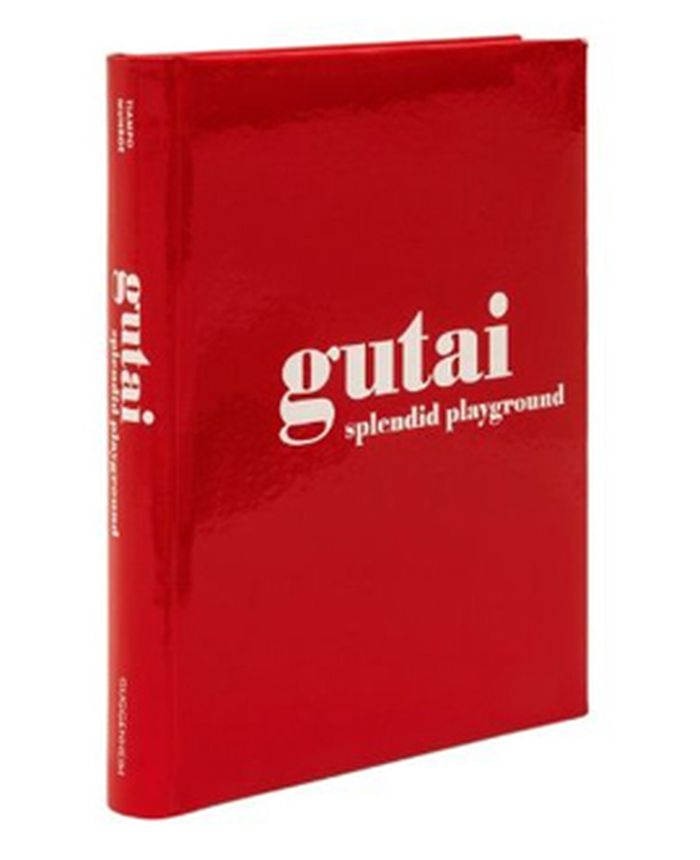
Gutai: splendid playground
Gutai: splendid playground
Actions:
Price:
$65.00
(available to order)
Summary:
Gutai: Splendid Playground surveys the influential Japanese collective and artistic movement. This exhibition catalogue aims to demonstrate the range of bold and innovative creativity present in the avant-garde movement, to examine the aesthetic strategies in the cultural, social and political context of postwar Japan and the West, and to further establish Gutai in an(...)
$65.00
(available to order)
Summary:
Gutai: Splendid Playground surveys the influential Japanese collective and artistic movement. This exhibition catalogue aims to demonstrate the range of bold and innovative creativity present in the avant-garde movement, to examine the aesthetic strategies in the cultural, social and political context of postwar Japan and the West, and to further establish Gutai in an(...)
Title:
Gutai: splendid playground
Actions:
Price:
$65.00
(available to order)
Summary:
Gutai: Splendid Playground surveys the influential Japanese collective and artistic movement. This exhibition catalogue aims to demonstrate the range of bold and innovative creativity present in the avant-garde movement, to examine the aesthetic strategies in the cultural, social and political context of postwar Japan and the West, and to further establish Gutai in an expanded, transnational history and critical discourse of modern art. Organized thematically and chronologically to explore Gutai’s unique approach to materials, concepts, process, performativity and enviroment, this publication investigates the group’s radical experimentation across a range of media and styles, and demonstrates how individual artists pushed the limits of what art could be or mean in a post-atomic era. The range includes painting, conceptual art, performance, film, installation art, sound art, interactive art, light art and kinetic art.
Gutai: splendid playground
Actions:
Price:
$65.00
(available to order)
Summary:
Gutai: Splendid Playground surveys the influential Japanese collective and artistic movement. This exhibition catalogue aims to demonstrate the range of bold and innovative creativity present in the avant-garde movement, to examine the aesthetic strategies in the cultural, social and political context of postwar Japan and the West, and to further establish Gutai in an expanded, transnational history and critical discourse of modern art. Organized thematically and chronologically to explore Gutai’s unique approach to materials, concepts, process, performativity and enviroment, this publication investigates the group’s radical experimentation across a range of media and styles, and demonstrates how individual artists pushed the limits of what art could be or mean in a post-atomic era. The range includes painting, conceptual art, performance, film, installation art, sound art, interactive art, light art and kinetic art.
Form:
books
books
Publication:
February 2013
February 2013
Form:
books
books
Price:
$62.95
(available to order)
Summary:
Houses for a New World is the first comprehensive history of this uniquely American form of domestic architecture and urbanism. Between 1945 and 1965, more than thirteen million houses--most of them in new ranch and split-level styles--were constructed on large expanses of land outside city centers, providing homes for the country's rapidly expanding population.(...)
$62.95
(available to order)
Summary:
Houses for a New World is the first comprehensive history of this uniquely American form of domestic architecture and urbanism. Between 1945 and 1965, more than thirteen million houses--most of them in new ranch and split-level styles--were constructed on large expanses of land outside city centers, providing homes for the country's rapidly expanding population.(...)
Title:
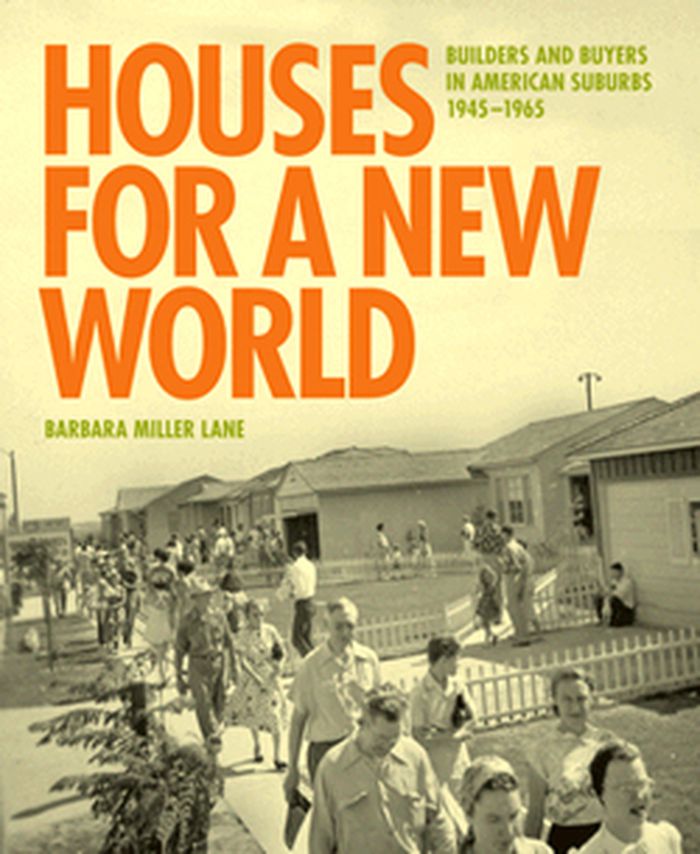
Houses for a new world: builders and buyers in american suburds 1945-1965
Actions:
Price:
$62.95
(available to order)
Summary:
Houses for a New World is the first comprehensive history of this uniquely American form of domestic architecture and urbanism. Between 1945 and 1965, more than thirteen million houses--most of them in new ranch and split-level styles--were constructed on large expanses of land outside city centers, providing homes for the country's rapidly expanding population. Focusing on twelve developments in the suburbs of Boston, Philadelphia, Chicago, and Los Angeles, Barbara Miller Lane tells the story of the collaborations between builders and buyers, showing how both wanted houses and communities that espoused a modern way of life--informal, democratic, multiethnic, and devoted to improving the lives of their children. The resulting houses differed dramatically from both the European International Style and older forms of American domestic architecture.
Houses for a new world: builders and buyers in american suburds 1945-1965
Actions:
Price:
$62.95
(available to order)
Summary:
Houses for a New World is the first comprehensive history of this uniquely American form of domestic architecture and urbanism. Between 1945 and 1965, more than thirteen million houses--most of them in new ranch and split-level styles--were constructed on large expanses of land outside city centers, providing homes for the country's rapidly expanding population. Focusing on twelve developments in the suburbs of Boston, Philadelphia, Chicago, and Los Angeles, Barbara Miller Lane tells the story of the collaborations between builders and buyers, showing how both wanted houses and communities that espoused a modern way of life--informal, democratic, multiethnic, and devoted to improving the lives of their children. The resulting houses differed dramatically from both the European International Style and older forms of American domestic architecture.
Form:
books
books
Publication:
October 2015
October 2015
Subject:
Urban Theory
Urban Theory
Form:
books
books
Actions:
Price:
$93.50
(available to order)
Summary:
American Art Museum Architecture: Documents and Design explores all aspects of, and approaches to, museum architecture—the aesthetic, the practical, the innovative, and the functional. Architectural historian Eric M. Wolf delves into the archives of some of the country’s premier institutions not only to explore the design decisions made at their founding, but also to(...)
$93.50
(available to order)
Summary:
American Art Museum Architecture: Documents and Design explores all aspects of, and approaches to, museum architecture—the aesthetic, the practical, the innovative, and the functional. Architectural historian Eric M. Wolf delves into the archives of some of the country’s premier institutions not only to explore the design decisions made at their founding, but also to(...)
Title:
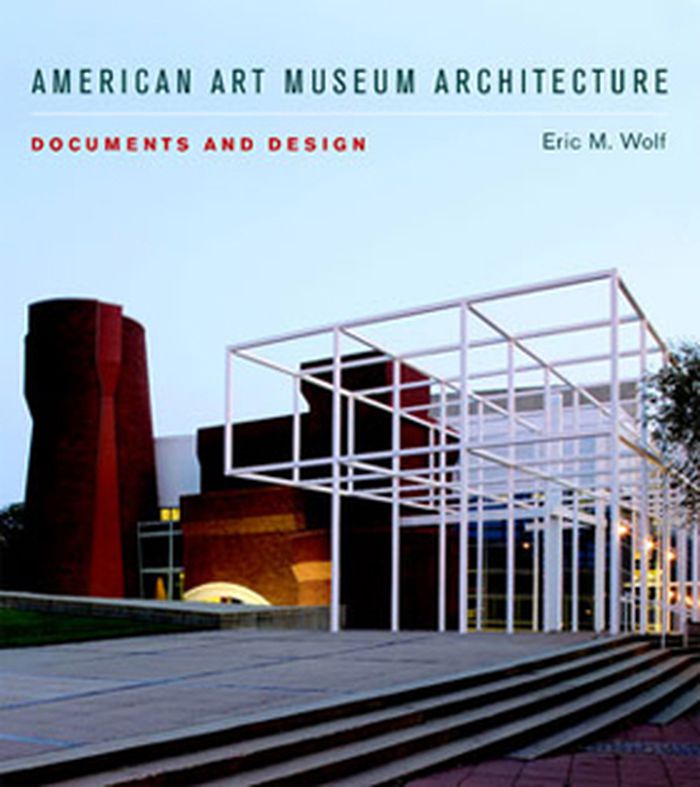
American art museum architecture
Actions:
Price:
$93.50
(available to order)
Summary:
American Art Museum Architecture: Documents and Design explores all aspects of, and approaches to, museum architecture—the aesthetic, the practical, the innovative, and the functional. Architectural historian Eric M. Wolf delves into the archives of some of the country’s premier institutions not only to explore the design decisions made at their founding, but also to understand how those institutions have continued to evolve along with their collections, up to the present day. Wolf examines the gradual development of six major museums: the Frick Collection, the Museum of Modern Art, and the Whitney Museum of American Art in New York; the Menil Collection in Houston, the Georgia O’Keefe Museum in Santa Fe, and the Art Institute of Chicago. He explains how each museum was originally conceived, how the architecture reflected or modified that original conception, and how the buildings have been reconsidered or revised in later years, as the nature of art, art display, and museum-going has evolved.
American art museum architecture
Actions:
Price:
$93.50
(available to order)
Summary:
American Art Museum Architecture: Documents and Design explores all aspects of, and approaches to, museum architecture—the aesthetic, the practical, the innovative, and the functional. Architectural historian Eric M. Wolf delves into the archives of some of the country’s premier institutions not only to explore the design decisions made at their founding, but also to understand how those institutions have continued to evolve along with their collections, up to the present day. Wolf examines the gradual development of six major museums: the Frick Collection, the Museum of Modern Art, and the Whitney Museum of American Art in New York; the Menil Collection in Houston, the Georgia O’Keefe Museum in Santa Fe, and the Art Institute of Chicago. He explains how each museum was originally conceived, how the architecture reflected or modified that original conception, and how the buildings have been reconsidered or revised in later years, as the nature of art, art display, and museum-going has evolved.
Form:
books
books
Publication:
July 2010
July 2010
Subject:
Museums and Universal Exhibitions
Museums and Universal Exhibitions
Form:
books
books
Price:
$40.00
(available to order)
Summary:
One of the delights of life is the discovery and rediscovery of patterns of order and beauty in nature—designs revealed by slicing through a head of cabbage or an orange, the forms of shells and butterfly wings. These images are awesome not just for their beauty alone, but because they suggest an order underlying their growth, a harmony existing in nature. What does it(...)
$40.00
(available to order)
Summary:
One of the delights of life is the discovery and rediscovery of patterns of order and beauty in nature—designs revealed by slicing through a head of cabbage or an orange, the forms of shells and butterfly wings. These images are awesome not just for their beauty alone, but because they suggest an order underlying their growth, a harmony existing in nature. What does it(...)
Publication:
January 1900, Boston, London
January 1900, Boston, London
Title:
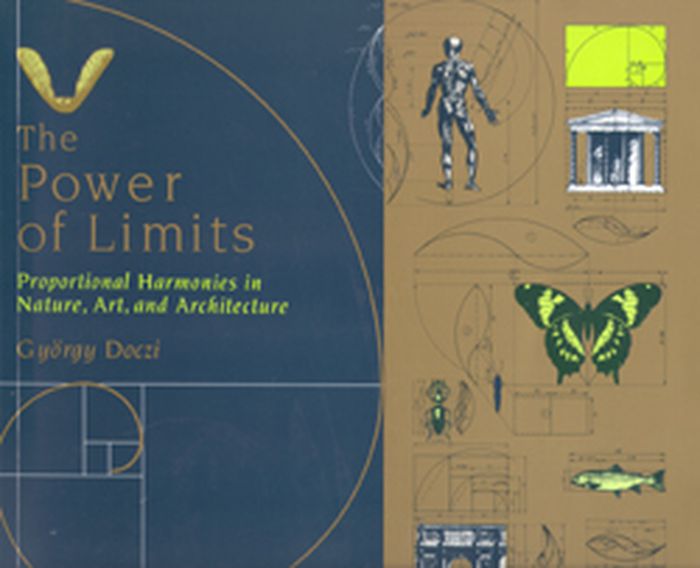
Power of limits: Proportional harmonies in nature, art and architecture
Actions:
Price:
$40.00
(available to order)
Summary:
One of the delights of life is the discovery and rediscovery of patterns of order and beauty in nature—designs revealed by slicing through a head of cabbage or an orange, the forms of shells and butterfly wings. These images are awesome not just for their beauty alone, but because they suggest an order underlying their growth, a harmony existing in nature. What does it mean that such an order exists; how far does it extend? The Power of Limits was inspired by those simple discoveries of harmony. The author went on to investigate and measure hundreds of patterns—ancient and modern, minute and vast. His discovery, vividly illustrated here, is that certain proportions occur over and over again in all these forms. Patterns are also repeated in how things grow and are made—by the dynamic union of opposites—as demonstrated by the spirals that move in opposite directions in the growth of a plant. The joining of unity and diversity in the discipline of proportional limitations creates forms that are beautiful to us because they embody the principles of the cosmic order of which we are a part; conversely, the limitlessness of that order is revealed by the strictness of its forms. The author shows how we, as humans, are included in the universal harmony of form, and suggests that the union of complementary opposites may be a way to extend that harmony to the psychological and social realms as well.
Power of limits: Proportional harmonies in nature, art and architecture
Actions:
Price:
$40.00
(available to order)
Summary:
One of the delights of life is the discovery and rediscovery of patterns of order and beauty in nature—designs revealed by slicing through a head of cabbage or an orange, the forms of shells and butterfly wings. These images are awesome not just for their beauty alone, but because they suggest an order underlying their growth, a harmony existing in nature. What does it mean that such an order exists; how far does it extend? The Power of Limits was inspired by those simple discoveries of harmony. The author went on to investigate and measure hundreds of patterns—ancient and modern, minute and vast. His discovery, vividly illustrated here, is that certain proportions occur over and over again in all these forms. Patterns are also repeated in how things grow and are made—by the dynamic union of opposites—as demonstrated by the spirals that move in opposite directions in the growth of a plant. The joining of unity and diversity in the discipline of proportional limitations creates forms that are beautiful to us because they embody the principles of the cosmic order of which we are a part; conversely, the limitlessness of that order is revealed by the strictness of its forms. The author shows how we, as humans, are included in the universal harmony of form, and suggests that the union of complementary opposites may be a way to extend that harmony to the psychological and social realms as well.
Form:
books
books
Publication:
January 1900, Boston, London
January 1900, Boston, London
Form:
audio
audio
Description:
1 online resource.
Author:
Subject:
Publication:
[Place of publication not identified] : Lateral Addition, 2018.
[Place of publication not identified] : Lateral Addition, 2018.
Title:
June 21, 2018 : Listening for Southwest Key in San Diego.
Actions:
Description:
1 online resource.
June 21, 2018 : Listening for Southwest Key in San Diego.
Actions:
Description:
1 online resource.
Form:
audio
audio
Publication:
[Place of publication not identified] : Lateral Addition, 2018.
[Place of publication not identified] : Lateral Addition, 2018.
Author:
Subject:


