


2644 Results
Form:
books
books
Actions:
Price:
$68.00
(available to order)
Summary:
Known for her monumental wooden wall pieces and outdoor sculptures, Louise Nevelson (1899–1988) was a towering figure in twentieth-century American art. A more nuanced picture of Nevelson emerges in ''The world outside: Louise Nevelson at midcentury''. Discussions about Nevelson’s early involvement with modern dance and subsequent immersion in avant-garde theater bring(...)
$68.00
(available to order)
Summary:
Known for her monumental wooden wall pieces and outdoor sculptures, Louise Nevelson (1899–1988) was a towering figure in twentieth-century American art. A more nuanced picture of Nevelson emerges in ''The world outside: Louise Nevelson at midcentury''. Discussions about Nevelson’s early involvement with modern dance and subsequent immersion in avant-garde theater bring(...)
Title:
The world outside: Louise Nevelson at midcentury
Actions:
Price:
$68.00
(available to order)
Summary:
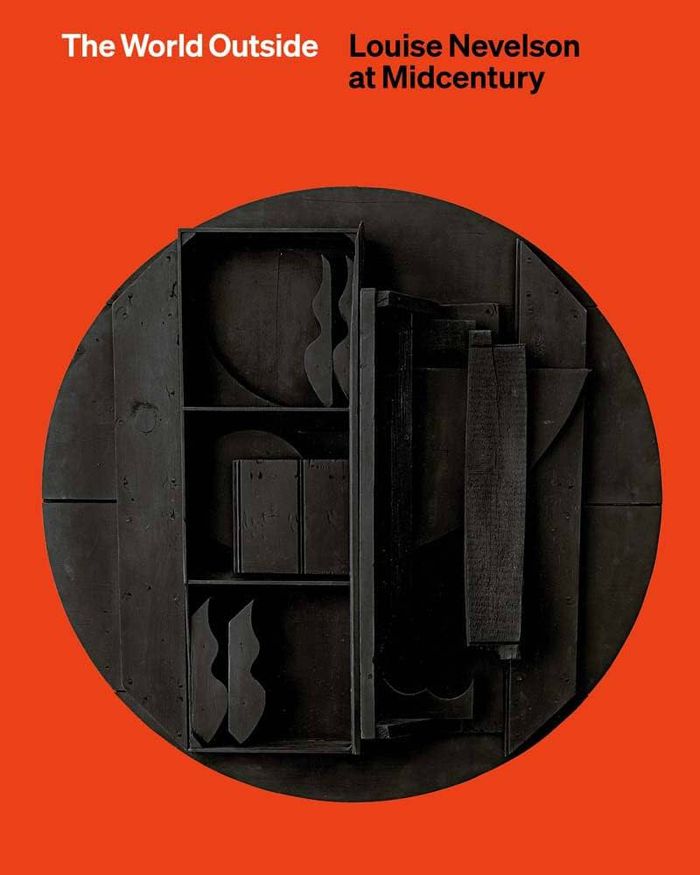
Known for her monumental wooden wall pieces and outdoor sculptures, Louise Nevelson (1899–1988) was a towering figure in twentieth-century American art. A more nuanced picture of Nevelson emerges in ''The world outside: Louise Nevelson at midcentury''. Discussions about Nevelson’s early involvement with modern dance and subsequent immersion in avant-garde theater bring new understandings of her drawings and sculptures. A reframing of her travels to Mexico and Guatemala in the early 1950s demonstrates, for the first time, how colonial archaeology haunted her visual language for decades. Other little-known facets of Nevelson’s life—her interest in folk art, architecture, and period furniture—open up a conversation about the artist’s approach to America’s past material culture.The book also reconsiders Nevelson’s work in the context of the environmental movement. Additionally, three contemporary artists relate Nevelson’s role in their careers and lives, a local expert describes her roots and relationship to Maine, and the artist’s granddaughter shares thoughts on Nevelson’s spirituality.
The world outside: Louise Nevelson at midcentury
Actions:
Price:
$68.00
(available to order)
Summary:
Known for her monumental wooden wall pieces and outdoor sculptures, Louise Nevelson (1899–1988) was a towering figure in twentieth-century American art. A more nuanced picture of Nevelson emerges in ''The world outside: Louise Nevelson at midcentury''. Discussions about Nevelson’s early involvement with modern dance and subsequent immersion in avant-garde theater bring new understandings of her drawings and sculptures. A reframing of her travels to Mexico and Guatemala in the early 1950s demonstrates, for the first time, how colonial archaeology haunted her visual language for decades. Other little-known facets of Nevelson’s life—her interest in folk art, architecture, and period furniture—open up a conversation about the artist’s approach to America’s past material culture.The book also reconsiders Nevelson’s work in the context of the environmental movement. Additionally, three contemporary artists relate Nevelson’s role in their careers and lives, a local expert describes her roots and relationship to Maine, and the artist’s granddaughter shares thoughts on Nevelson’s spirituality.
Form:
books
books
Publication:
September 2023
September 2023
Subject:
Contemporary Art Monographs
Contemporary Art Monographs
Form:
books
books
Actions:
Price:
$40.00
(available to order)
Summary:
''Humane ecology: Eight positions'' features a group of contemporary artists who consider the intertwined natural and social dimensions of environmental questions: Eddie Rodolfo Aparicio, Korakrit Arunanondchai, Carolina Caycedo, Allison Janae Hamilton, Juan Antonio Olivares, Christine Howard Sandoval, Pallavi Sen, and Kandis Williams. These artists—through their work in(...)
$40.00
(available to order)
Summary:
''Humane ecology: Eight positions'' features a group of contemporary artists who consider the intertwined natural and social dimensions of environmental questions: Eddie Rodolfo Aparicio, Korakrit Arunanondchai, Carolina Caycedo, Allison Janae Hamilton, Juan Antonio Olivares, Christine Howard Sandoval, Pallavi Sen, and Kandis Williams. These artists—through their work in(...)
Publication:
September 2023
September 2023
Title:
Humane ecology: Eight positions
Actions:
Price:
$40.00
(available to order)
Summary:
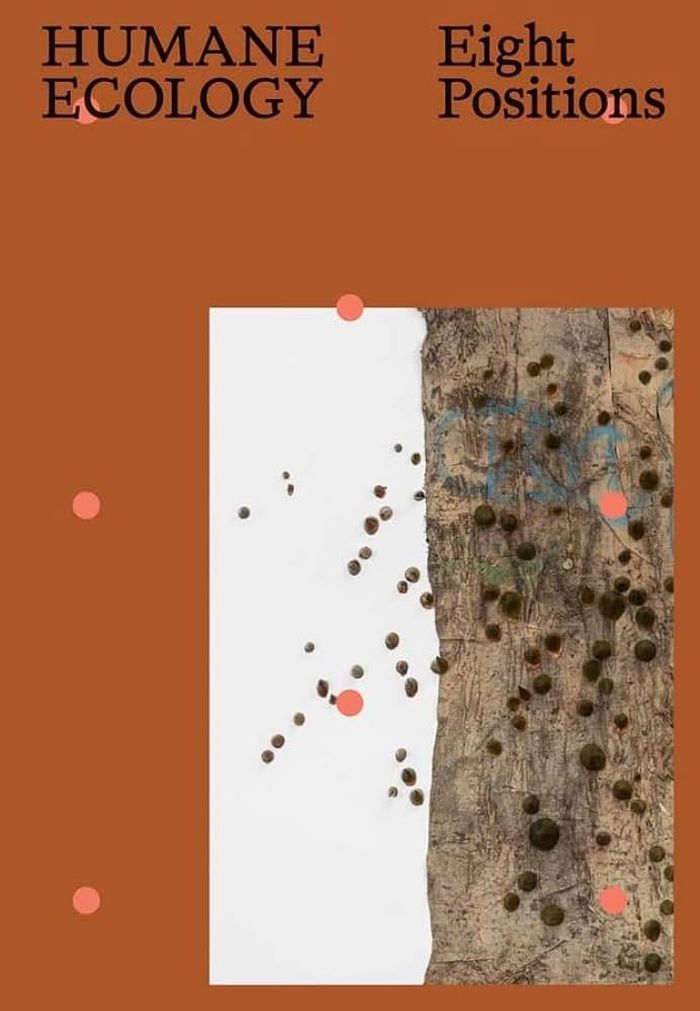
''Humane ecology: Eight positions'' features a group of contemporary artists who consider the intertwined natural and social dimensions of environmental questions: Eddie Rodolfo Aparicio, Korakrit Arunanondchai, Carolina Caycedo, Allison Janae Hamilton, Juan Antonio Olivares, Christine Howard Sandoval, Pallavi Sen, and Kandis Williams. These artists—through their work in sculpture, video, sound installation, and plantings—think in the relational terms implied by ecology, the study of how organisms relate to one another and their environment. They explore themes such as the extraction and exploitation of both places and people, kinships with the more-than-human world, and ancient traditions of relation to the land that take on new urgency and form. Against posthumanist tendencies to “decenter” the human, these artists center different humans, ones routinely excluded from dominant discourses of environmentalism. The publication presents entries on each artist in addition to scholarly essays on the exhibition concept, genealogies of land art, and settler colonial histories of the Berkshires.
Humane ecology: Eight positions
Actions:
Price:
$40.00
(available to order)
Summary:
''Humane ecology: Eight positions'' features a group of contemporary artists who consider the intertwined natural and social dimensions of environmental questions: Eddie Rodolfo Aparicio, Korakrit Arunanondchai, Carolina Caycedo, Allison Janae Hamilton, Juan Antonio Olivares, Christine Howard Sandoval, Pallavi Sen, and Kandis Williams. These artists—through their work in sculpture, video, sound installation, and plantings—think in the relational terms implied by ecology, the study of how organisms relate to one another and their environment. They explore themes such as the extraction and exploitation of both places and people, kinships with the more-than-human world, and ancient traditions of relation to the land that take on new urgency and form. Against posthumanist tendencies to “decenter” the human, these artists center different humans, ones routinely excluded from dominant discourses of environmentalism. The publication presents entries on each artist in addition to scholarly essays on the exhibition concept, genealogies of land art, and settler colonial histories of the Berkshires.
Form:
books
books
Publication:
September 2023
September 2023
Form:
books
books
Actions:
Price:
$44.00
(available to order)
Summary:
Environments associated with migration are often seen as provisional, lacking history or architecture. As Anooradha Iyer Siddiqi demonstrates in "Architecture of migration," a refugee camp's aesthetic and material landscapes-even if born out of emergency-reveal histories, futures, politics, and rhetorics. She identifies forces of colonial and humanitarian settlement,(...)
$44.00
(available to order)
Summary:
Environments associated with migration are often seen as provisional, lacking history or architecture. As Anooradha Iyer Siddiqi demonstrates in "Architecture of migration," a refugee camp's aesthetic and material landscapes-even if born out of emergency-reveal histories, futures, politics, and rhetorics. She identifies forces of colonial and humanitarian settlement,(...)
Title:
Architecture of migration: The Dadaab Refugee Camps and Humanitarian Settlement
Actions:
Price:
$44.00
(available to order)
Summary:
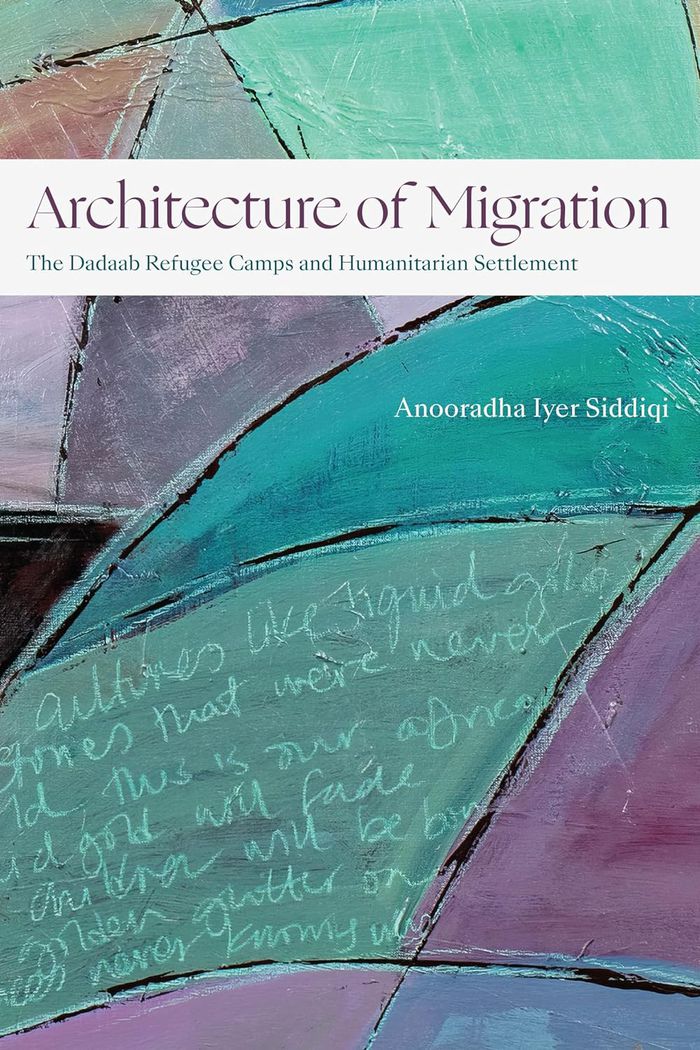
Environments associated with migration are often seen as provisional, lacking history or architecture. As Anooradha Iyer Siddiqi demonstrates in "Architecture of migration," a refugee camp's aesthetic and material landscapes-even if born out of emergency-reveal histories, futures, politics, and rhetorics. She identifies forces of colonial and humanitarian settlement, tracing spatial and racial politics in the Dadaab refugee camps established in 1991 on the Kenya-Somalia border-at once a dense setting that manifests decades of architectural, planning, and design initiatives and a much older constructed environment that reflects its own ways of knowing. She moves beyond ahistorical representations of camps and their inhabitants by constructing a material and visual archive of Dadaab, finding long migratory traditions in the architecture, spatial practices, landscapes, and iconography of refugees and humanitarians. Countering conceptualizations of refugee camps as sites of border transgression, criminality, and placelessness, Siddiqi instead theorizes them as complex settlements, ecologies, and material archives created through histories of partitions, sedentarizations, domesticities, and migrations.
Architecture of migration: The Dadaab Refugee Camps and Humanitarian Settlement
Actions:
Price:
$44.00
(available to order)
Summary:
Environments associated with migration are often seen as provisional, lacking history or architecture. As Anooradha Iyer Siddiqi demonstrates in "Architecture of migration," a refugee camp's aesthetic and material landscapes-even if born out of emergency-reveal histories, futures, politics, and rhetorics. She identifies forces of colonial and humanitarian settlement, tracing spatial and racial politics in the Dadaab refugee camps established in 1991 on the Kenya-Somalia border-at once a dense setting that manifests decades of architectural, planning, and design initiatives and a much older constructed environment that reflects its own ways of knowing. She moves beyond ahistorical representations of camps and their inhabitants by constructing a material and visual archive of Dadaab, finding long migratory traditions in the architecture, spatial practices, landscapes, and iconography of refugees and humanitarians. Countering conceptualizations of refugee camps as sites of border transgression, criminality, and placelessness, Siddiqi instead theorizes them as complex settlements, ecologies, and material archives created through histories of partitions, sedentarizations, domesticities, and migrations.
Form:
books
books
Publication:
January 2024
January 2024
Subject:
Architectural Theory
Architectural Theory
Form:
books
books
Actions:
Price:
$79.00
(available to order)
Summary:
Long Island’s North Fork is a pastoral quilt of vineyards and farms by the sea. To the north are the sandy beaches of Long Island Sound and to the south a collection of harbors and fishing villages overlooking Peconic Bay. Stretching out some thirty miles from the mainland, this narrow peninsula is a place of serenity and beauty. Photographer Jake Rajs has captured(...)
$79.00
(available to order)
Summary:
Long Island’s North Fork is a pastoral quilt of vineyards and farms by the sea. To the north are the sandy beaches of Long Island Sound and to the south a collection of harbors and fishing villages overlooking Peconic Bay. Stretching out some thirty miles from the mainland, this narrow peninsula is a place of serenity and beauty. Photographer Jake Rajs has captured(...)
Title:
Between sea and sky : landscapes of Long Island's North Fort
Actions:
Price:
$79.00
(available to order)
Summary:
Long Island’s North Fork is a pastoral quilt of vineyards and farms by the sea. To the north are the sandy beaches of Long Island Sound and to the south a collection of harbors and fishing villages overlooking Peconic Bay. Stretching out some thirty miles from the mainland, this narrow peninsula is a place of serenity and beauty. Photographer Jake Rajs has captured the spirit of the North Fork - the glorious colors of sunrise and sunset, the calm waters, and the vast expanses of fields and wetlands. He focuses on architectural landmarks as well - the Victorian houses on Shelter Island, eighteenth-century barns, the Orient Point Lighthouse - to create a complete portrait of this unspoiled land. Complementing the visual presentation is an essay by Jesse Browner that evokes the spirit of the North Fork and its people, tracing the evolution of the land from colonial farms to the vineyards that have emerged over the past thirty years.
Between sea and sky : landscapes of Long Island's North Fort
Actions:
Price:
$79.00
(available to order)
Summary:
Long Island’s North Fork is a pastoral quilt of vineyards and farms by the sea. To the north are the sandy beaches of Long Island Sound and to the south a collection of harbors and fishing villages overlooking Peconic Bay. Stretching out some thirty miles from the mainland, this narrow peninsula is a place of serenity and beauty. Photographer Jake Rajs has captured the spirit of the North Fork - the glorious colors of sunrise and sunset, the calm waters, and the vast expanses of fields and wetlands. He focuses on architectural landmarks as well - the Victorian houses on Shelter Island, eighteenth-century barns, the Orient Point Lighthouse - to create a complete portrait of this unspoiled land. Complementing the visual presentation is an essay by Jesse Browner that evokes the spirit of the North Fork and its people, tracing the evolution of the land from colonial farms to the vineyards that have emerged over the past thirty years.
Form:
books
books
Publication:
November 2006, New York
November 2006, New York
Subject:
History until 1900
History until 1900
Form:
books
books

Price:
$51.50
(available in store)
Summary:
With more than fifty contributors, ''Indigenous critical reflections on traditional ecological knowledge'' offers important perspectives by Indigenous Peoples on Traditional Ecological Knowledge and Indigenous value systems. The book aims to educate and inspire readers about the importance of decolonizing how Indigenous Knowledges are considered and used outside of Native(...)
$51.50
(available in store)
Summary:
With more than fifty contributors, ''Indigenous critical reflections on traditional ecological knowledge'' offers important perspectives by Indigenous Peoples on Traditional Ecological Knowledge and Indigenous value systems. The book aims to educate and inspire readers about the importance of decolonizing how Indigenous Knowledges are considered and used outside of Native(...)
Title:
Indigenous critical reflections on traditional ecological knowledge
Actions:
Price:
$51.50
(available in store)
Summary:
With more than fifty contributors, ''Indigenous critical reflections on traditional ecological knowledge'' offers important perspectives by Indigenous Peoples on Traditional Ecological Knowledge and Indigenous value systems. The book aims to educate and inspire readers about the importance of decolonizing how Indigenous Knowledges are considered and used outside of Native communities. By including the work of Indigenous storytellers, poets, and scholars from around the globe, editor Lara Jacobs and chapter authors effectively explore the Indigenous value systems-relationships, reciprocity, and responsibility-that are fundamental to Indigenous Knowledge systems and cultures. Indigenous languages and positionality statements are featured for each of the contributors to frame their cultural and geographical background and to allow each Indigenous voice to lead discussions and contribute critical discourse to the literature on Indigenous Knowledges and value systems. By creating space for each of these individual voices, this volume challenges colonial extraction norms and highlights the importance of decolonial methods in understanding and protecting Indigenous Knowledges.
Indigenous critical reflections on traditional ecological knowledge
Actions:
Price:
$51.50
(available in store)
Summary:
With more than fifty contributors, ''Indigenous critical reflections on traditional ecological knowledge'' offers important perspectives by Indigenous Peoples on Traditional Ecological Knowledge and Indigenous value systems. The book aims to educate and inspire readers about the importance of decolonizing how Indigenous Knowledges are considered and used outside of Native communities. By including the work of Indigenous storytellers, poets, and scholars from around the globe, editor Lara Jacobs and chapter authors effectively explore the Indigenous value systems-relationships, reciprocity, and responsibility-that are fundamental to Indigenous Knowledge systems and cultures. Indigenous languages and positionality statements are featured for each of the contributors to frame their cultural and geographical background and to allow each Indigenous voice to lead discussions and contribute critical discourse to the literature on Indigenous Knowledges and value systems. By creating space for each of these individual voices, this volume challenges colonial extraction norms and highlights the importance of decolonial methods in understanding and protecting Indigenous Knowledges.
Form:
books
books
Publication:
June 2025
June 2025
Subject:
indigenous
indigenous
Form:
books
books

Price:
$51.95
(available to order)
Summary:
Just like the rebels in Star Wars fighting for freedom against oppressive forces, urban planner, architect and political scientist Caroline Newton was drawn to the struggles over space and rights around the world. Over the years, her work has been driven by a desire to understand – and intervene in – the spatial conditions that shape human lives and social relations.(...)
$51.95
(available to order)
Summary:
Just like the rebels in Star Wars fighting for freedom against oppressive forces, urban planner, architect and political scientist Caroline Newton was drawn to the struggles over space and rights around the world. Over the years, her work has been driven by a desire to understand – and intervene in – the spatial conditions that shape human lives and social relations.(...)
Title:
Envisioning spatial justice: Explorations, Reflections, Design
Actions:
Price:
$51.95
(available to order)
Summary:
Just like the rebels in Star Wars fighting for freedom against oppressive forces, urban planner, architect and political scientist Caroline Newton was drawn to the struggles over space and rights around the world. Over the years, her work has been driven by a desire to understand – and intervene in – the spatial conditions that shape human lives and social relations. Envisioning Spatial Justice is both a reflection and a proposition. It synthesises insights accumulated through research and teaching and from years of collaborating with students whose graduation projects placed justice at the core of their spatial investigations. Structured around theory, reflection, and design, the book explores what it means to design with justice in mind. Challenging neoliberal paradigms and drawing on feminist, post-colonial, and radical urban theory, it insists on the political power of imagination. Part provocation, part toolkit, part manifesto, "Envisioning spatial justice" speaks to urbanists, designers, educators, and activists committed to co-creating more just and inclusive futures.
Envisioning spatial justice: Explorations, Reflections, Design
Actions:
Price:
$51.95
(available to order)
Summary:
Just like the rebels in Star Wars fighting for freedom against oppressive forces, urban planner, architect and political scientist Caroline Newton was drawn to the struggles over space and rights around the world. Over the years, her work has been driven by a desire to understand – and intervene in – the spatial conditions that shape human lives and social relations. Envisioning Spatial Justice is both a reflection and a proposition. It synthesises insights accumulated through research and teaching and from years of collaborating with students whose graduation projects placed justice at the core of their spatial investigations. Structured around theory, reflection, and design, the book explores what it means to design with justice in mind. Challenging neoliberal paradigms and drawing on feminist, post-colonial, and radical urban theory, it insists on the political power of imagination. Part provocation, part toolkit, part manifesto, "Envisioning spatial justice" speaks to urbanists, designers, educators, and activists committed to co-creating more just and inclusive futures.
Form:
books
books
Publication:
June 2025
June 2025
Form:
journals and magazines
journals and magazines

Actions:
Price:
$16.95
(available in store)
Summary:
For this 63rd issue, The Funambulist teamed-up with Tunisian anthropologist and visual artist Myriam Amri and invites you to "Follow the money." In it, the issue enters the crevices of a capitalist system and trace it back to its central nodes: property, land, capital, and class. It reads how money is central to colonial and imperial projects, but also how sovereignty and(...)
$16.95
(available in store)
Summary:
For this 63rd issue, The Funambulist teamed-up with Tunisian anthropologist and visual artist Myriam Amri and invites you to "Follow the money." In it, the issue enters the crevices of a capitalist system and trace it back to its central nodes: property, land, capital, and class. It reads how money is central to colonial and imperial projects, but also how sovereignty and(...)
Title:
The Funambulist n.63 : follow the money
Actions:
Price:
$16.95
(available in store)
Summary:
For this 63rd issue, The Funambulist teamed-up with Tunisian anthropologist and visual artist Myriam Amri and invites you to "Follow the money." In it, the issue enters the crevices of a capitalist system and trace it back to its central nodes: property, land, capital, and class. It reads how money is central to colonial and imperial projects, but also how sovereignty and the liberation of our monetary imaginary can be tools of emancipation. From the CFA franc (Ndongo Samba Sylla, Moses März) to the US dollar (Lily H. Chumley) or the Palestinian Pound (Hicham Safieddine), The Funambulist navigates monetary politics around the world, and more specifically in Sudan (Nisrin Elamin & Laleh Khalili), Puerto Rico (Roque Salas Rivera) or Brazil (Cho). The issue also contains a board game entitled "You’ve Got Yourselves a Revolution, Now What?" imagined by the issue editors Myriam Amri and Léopold Lambert and designed by Aude Abou Nasr. As for the cover, it features an artwork by Adriana Martínez Barón.
The Funambulist n.63 : follow the money
Actions:
Price:
$16.95
(available in store)
Summary:
For this 63rd issue, The Funambulist teamed-up with Tunisian anthropologist and visual artist Myriam Amri and invites you to "Follow the money." In it, the issue enters the crevices of a capitalist system and trace it back to its central nodes: property, land, capital, and class. It reads how money is central to colonial and imperial projects, but also how sovereignty and the liberation of our monetary imaginary can be tools of emancipation. From the CFA franc (Ndongo Samba Sylla, Moses März) to the US dollar (Lily H. Chumley) or the Palestinian Pound (Hicham Safieddine), The Funambulist navigates monetary politics around the world, and more specifically in Sudan (Nisrin Elamin & Laleh Khalili), Puerto Rico (Roque Salas Rivera) or Brazil (Cho). The issue also contains a board game entitled "You’ve Got Yourselves a Revolution, Now What?" imagined by the issue editors Myriam Amri and Léopold Lambert and designed by Aude Abou Nasr. As for the cover, it features an artwork by Adriana Martínez Barón.
Form:
journals and magazines
journals and magazines
Publication:
January 2026
January 2026
Subject:
Magazines
Magazines
Form:
books
books
Price:
$86.50
(available to order)
Summary:
Mass-produced housing became increasingly prevalent through the second half of the twentieth century and is now found around the globe. Though its popularity and growing adoption have been primarily connected to the post–World War II housing boom, Etien Santiago weaves together architectural, construction, and sociopolitical history to reveal how its foundations were laid(...)
$86.50
(available to order)
Summary:
Mass-produced housing became increasingly prevalent through the second half of the twentieth century and is now found around the globe. Though its popularity and growing adoption have been primarily connected to the post–World War II housing boom, Etien Santiago weaves together architectural, construction, and sociopolitical history to reveal how its foundations were laid(...)
Title:
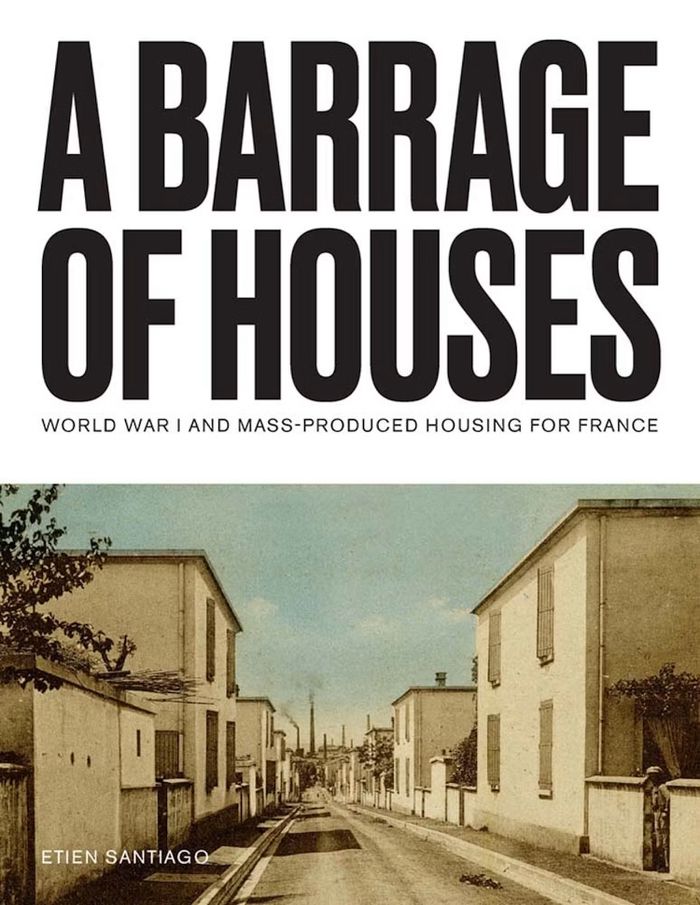
A barrage of houses: World War I and mass-produced housing for France
Actions:
Price:
$86.50
(available to order)
Summary:
Mass-produced housing became increasingly prevalent through the second half of the twentieth century and is now found around the globe. Though its popularity and growing adoption have been primarily connected to the post–World War II housing boom, Etien Santiago weaves together architectural, construction, and sociopolitical history to reveal how its foundations were laid earlier, during World War I. Prior to World War I, buildings that were made serially—quickly, cheaply, and in large numbers—were typically limited to utilitarian colonial or military applications. Such buildings were moreover assumed to be temporary. Yet the Great War shattered these assumptions, pushing architects, designers, and engineers to appropriate military advances in construction to create a new form of permanent residential architecture. A Barrage of Houses charts the rise of mass-produced dwellings in France from 1914 to the mid-1920s, as demonstrated through housing designs by Auguste and Gustave Perret, Henri Sauvage, and Le Corbusier.
A barrage of houses: World War I and mass-produced housing for France
Actions:
Price:
$86.50
(available to order)
Summary:
Mass-produced housing became increasingly prevalent through the second half of the twentieth century and is now found around the globe. Though its popularity and growing adoption have been primarily connected to the post–World War II housing boom, Etien Santiago weaves together architectural, construction, and sociopolitical history to reveal how its foundations were laid earlier, during World War I. Prior to World War I, buildings that were made serially—quickly, cheaply, and in large numbers—were typically limited to utilitarian colonial or military applications. Such buildings were moreover assumed to be temporary. Yet the Great War shattered these assumptions, pushing architects, designers, and engineers to appropriate military advances in construction to create a new form of permanent residential architecture. A Barrage of Houses charts the rise of mass-produced dwellings in France from 1914 to the mid-1920s, as demonstrated through housing designs by Auguste and Gustave Perret, Henri Sauvage, and Le Corbusier.
Form:
books
books
Publication:
August 2026
August 2026
Subject:
Collective Housing
Collective Housing
Form:
books
books

Actions:
Price:
$53.95
(available in store)
Summary:
Some of the earliest canals in colonial America, referred to as the ''Inner Passage'', were constructed by enslaved people living in the Lowcountry of South Carolina in the early 1700s. In a paradox of history, for over a hundred years enslaved Black people used these canals, constructed for white plantation owners, to travel southward to freedom in Spanish Florida. In(...)
$53.95
(available in store)
Summary:
Some of the earliest canals in colonial America, referred to as the ''Inner Passage'', were constructed by enslaved people living in the Lowcountry of South Carolina in the early 1700s. In a paradox of history, for over a hundred years enslaved Black people used these canals, constructed for white plantation owners, to travel southward to freedom in Spanish Florida. In(...)
Title:
The inner passage: An Untold story of Black resistance along a southern waterway
Actions:
Price:
$53.95
(available in store)
Summary:
Some of the earliest canals in colonial America, referred to as the ''Inner Passage'', were constructed by enslaved people living in the Lowcountry of South Carolina in the early 1700s. In a paradox of history, for over a hundred years enslaved Black people used these canals, constructed for white plantation owners, to travel southward to freedom in Spanish Florida. In this book, Virginia McGee Richards documents the lost narrative of the ''Inner Passage'' through 60 extraordinary photographs of landscapes altered by slavery and portraits of Lowcountry descendants, along with an essay describing her discovery of this untold history. In an accompanying essay, Imani Perry writes about her own journey on the ''Inner Passage'', putting Black resistance to enslavement and Southern history into an immediate context. James Estrin brings decades of insight about photography and the power of visual storytelling to his affecting foreword. Together, these words and images offer a powerful living map of history.
The inner passage: An Untold story of Black resistance along a southern waterway
Actions:
Price:
$53.95
(available in store)
Summary:
Some of the earliest canals in colonial America, referred to as the ''Inner Passage'', were constructed by enslaved people living in the Lowcountry of South Carolina in the early 1700s. In a paradox of history, for over a hundred years enslaved Black people used these canals, constructed for white plantation owners, to travel southward to freedom in Spanish Florida. In this book, Virginia McGee Richards documents the lost narrative of the ''Inner Passage'' through 60 extraordinary photographs of landscapes altered by slavery and portraits of Lowcountry descendants, along with an essay describing her discovery of this untold history. In an accompanying essay, Imani Perry writes about her own journey on the ''Inner Passage'', putting Black resistance to enslavement and Southern history into an immediate context. James Estrin brings decades of insight about photography and the power of visual storytelling to his affecting foreword. Together, these words and images offer a powerful living map of history.
Form:
books
books
Publication:
April 2026
April 2026
Subject:
Art Theory
Art Theory
Form:
books
books
Price:
$98.00
(available to order)
Summary:
The new de Young museum in San Francisco’s Golden Gate Park has been designed by the Swiss firm of Herzog & de Meuron. This book is a case study in design and urban planning, documenting the complex five-year process that has resulted in this outstanding contribution to contemporary museum architecture. Founded by San Francisco Chronicle publisher Michael de Young,(...)
$98.00
(available to order)
Summary:
The new de Young museum in San Francisco’s Golden Gate Park has been designed by the Swiss firm of Herzog & de Meuron. This book is a case study in design and urban planning, documenting the complex five-year process that has resulted in this outstanding contribution to contemporary museum architecture. Founded by San Francisco Chronicle publisher Michael de Young,(...)
Subject:
Architecture Monographs
Architecture Monographs
Publication:
October 2005, San Francisco
October 2005, San Francisco
Title:
The de Young in the 21st century : a museum by Herzog & de Meuron
Actions:
Price:
$98.00
(available to order)
Summary:
The new de Young museum in San Francisco’s Golden Gate Park has been designed by the Swiss firm of Herzog & de Meuron. This book is a case study in design and urban planning, documenting the complex five-year process that has resulted in this outstanding contribution to contemporary museum architecture. Founded by San Francisco Chronicle publisher Michael de Young, the museum's permanent collection includes the art of Africa, Oceania and traditional cultures of the Americas; American painting and sculpture from the colonial period to the present; and both Western and non-Western textiles. After the museum was damaged in a 1989 earthquake, its fate became the focus of intense public debate, in which issues of environmental sensitivity and the role of cultural institutions in urban parks were paramount. Illustrated with colour photographs as well as plans, drawings and models, this book traces the architects’ creative process in detail. Principal photography by Mark Darley.
The de Young in the 21st century : a museum by Herzog & de Meuron
Actions:
Price:
$98.00
(available to order)
Summary:
The new de Young museum in San Francisco’s Golden Gate Park has been designed by the Swiss firm of Herzog & de Meuron. This book is a case study in design and urban planning, documenting the complex five-year process that has resulted in this outstanding contribution to contemporary museum architecture. Founded by San Francisco Chronicle publisher Michael de Young, the museum's permanent collection includes the art of Africa, Oceania and traditional cultures of the Americas; American painting and sculpture from the colonial period to the present; and both Western and non-Western textiles. After the museum was damaged in a 1989 earthquake, its fate became the focus of intense public debate, in which issues of environmental sensitivity and the role of cultural institutions in urban parks were paramount. Illustrated with colour photographs as well as plans, drawings and models, this book traces the architects’ creative process in detail. Principal photography by Mark Darley.
Form:
books
books
Publication:
October 2005, San Francisco
October 2005, San Francisco
Subject:
Architecture Monographs
Architecture Monographs


