


2689 Results
Form:
books
books
Price:
$51.95
(available to order)
Summary:
The Prudential Center anchors the Boston skyline with its tall, gray tower. Though unassuming architecturally, it is a historical beacon, representing a midcentury moment when insurance companies such as Prudential were particularly aware of how their physical presence and civic engagement reflected upon their intangible product: financial security. Looking to New York's(...)
$51.95
(available to order)
Summary:
The Prudential Center anchors the Boston skyline with its tall, gray tower. Though unassuming architecturally, it is a historical beacon, representing a midcentury moment when insurance companies such as Prudential were particularly aware of how their physical presence and civic engagement reflected upon their intangible product: financial security. Looking to New York's(...)
Title:
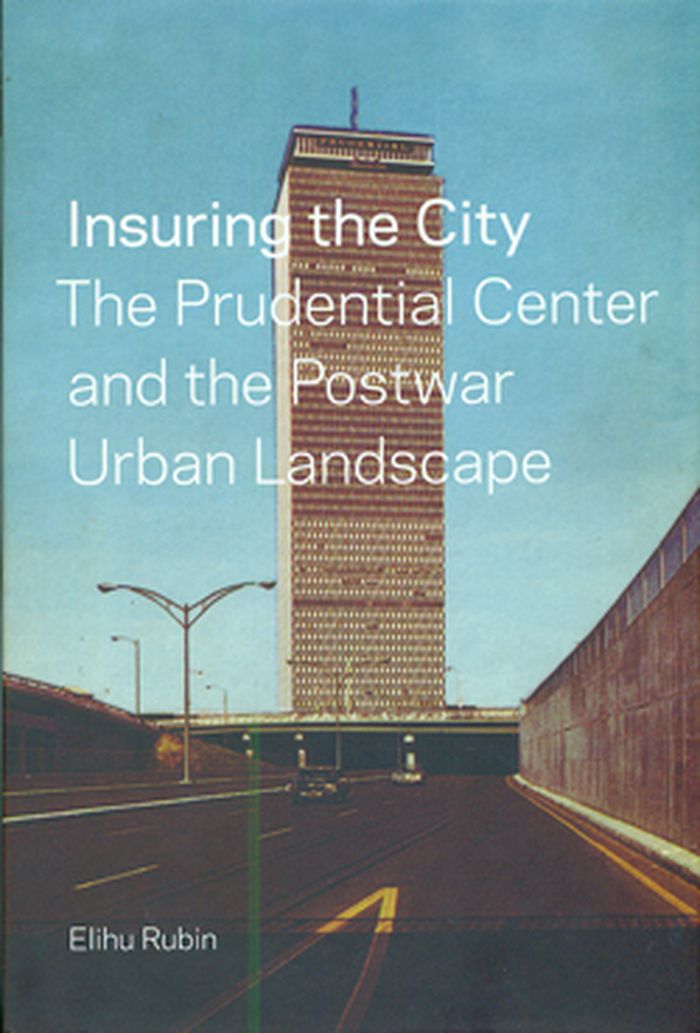
Insuring the city: the Prudential Center and the Postwar urban landscape
Actions:
Price:
$51.95
(available to order)
Summary:
The Prudential Center anchors the Boston skyline with its tall, gray tower. Though unassuming architecturally, it is a historical beacon, representing a midcentury moment when insurance companies such as Prudential were particularly aware of how their physical presence and civic engagement reflected upon their intangible product: financial security. Looking to New York's Rockefeller Center, the creators of the Prudential Center aspired to use real estate development as a tool toward civic achievement, reinvigorating central Boston and integrating a large complex of buildings with new infrastructure for the automobile. Architectural historian Elihu Rubin tells the full story of "The Pru", placing it within the political, economic, and architectural contexts of the period. The Prudential Center played a pivotal role in the economic redevelopment of Boston and was arguably one of the most significant urban developments of the 1950s and '60s. It is an important story, and one that provides great insight into the evolution of the modern city in postwar America.
Insuring the city: the Prudential Center and the Postwar urban landscape
Actions:
Price:
$51.95
(available to order)
Summary:
The Prudential Center anchors the Boston skyline with its tall, gray tower. Though unassuming architecturally, it is a historical beacon, representing a midcentury moment when insurance companies such as Prudential were particularly aware of how their physical presence and civic engagement reflected upon their intangible product: financial security. Looking to New York's Rockefeller Center, the creators of the Prudential Center aspired to use real estate development as a tool toward civic achievement, reinvigorating central Boston and integrating a large complex of buildings with new infrastructure for the automobile. Architectural historian Elihu Rubin tells the full story of "The Pru", placing it within the political, economic, and architectural contexts of the period. The Prudential Center played a pivotal role in the economic redevelopment of Boston and was arguably one of the most significant urban developments of the 1950s and '60s. It is an important story, and one that provides great insight into the evolution of the modern city in postwar America.
Form:
books
books
Publication:
May 2012
May 2012
Subject:
Urban Theory
Urban Theory
Form:
books
books
Actions:
Price:
$45.00
(available to order)
Summary:
The first treatise ever written on the sociology of cities, On the Causes of the Greatness and Magnificence of Cities (1588) marked a radical departure from previous literature on urban centres. It provided a revolutionary analysis of how cities function, and of the political, economic, demographic and geographic factors that cause their growth and decline. Noteworthy too(...)
$45.00
(available to order)
Summary:
The first treatise ever written on the sociology of cities, On the Causes of the Greatness and Magnificence of Cities (1588) marked a radical departure from previous literature on urban centres. It provided a revolutionary analysis of how cities function, and of the political, economic, demographic and geographic factors that cause their growth and decline. Noteworthy too(...)
Title:
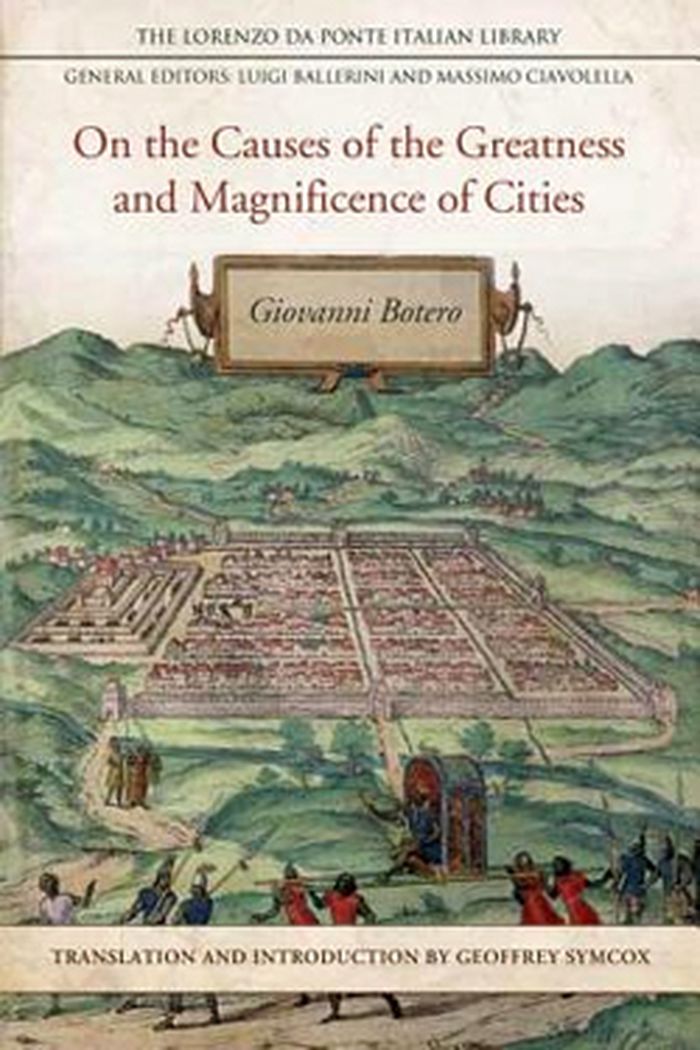
On the causes of the greatness and magnificence of cities
Actions:
Price:
$45.00
(available to order)
Summary:
The first treatise ever written on the sociology of cities, On the Causes of the Greatness and Magnificence of Cities (1588) marked a radical departure from previous literature on urban centres. It provided a revolutionary analysis of how cities function, and of the political, economic, demographic and geographic factors that cause their growth and decline. Noteworthy too is Botero’s strikingly original use of sources in his analysis: moving beyond familiar classical and biblical references, he drew groundbreaking insights from reports by travelers and missionaries about cities in the non-European world, especially in China. Though seminally important to the history of urban studies, this book has not been available in a modern translation until now. This edition of the treatise – which includes an introduction by Geoffrey W. Symcox on the intellectual context within which it was conceived – is a must-read for anyone interested in the life of cities both historical and contemporary.
On the causes of the greatness and magnificence of cities
Actions:
Price:
$45.00
(available to order)
Summary:
The first treatise ever written on the sociology of cities, On the Causes of the Greatness and Magnificence of Cities (1588) marked a radical departure from previous literature on urban centres. It provided a revolutionary analysis of how cities function, and of the political, economic, demographic and geographic factors that cause their growth and decline. Noteworthy too is Botero’s strikingly original use of sources in his analysis: moving beyond familiar classical and biblical references, he drew groundbreaking insights from reports by travelers and missionaries about cities in the non-European world, especially in China. Though seminally important to the history of urban studies, this book has not been available in a modern translation until now. This edition of the treatise – which includes an introduction by Geoffrey W. Symcox on the intellectual context within which it was conceived – is a must-read for anyone interested in the life of cities both historical and contemporary.
Form:
books
books
Publication:
December 2012
December 2012
Subject:
Urban Theory
Urban Theory
Form:
books
books
Title:
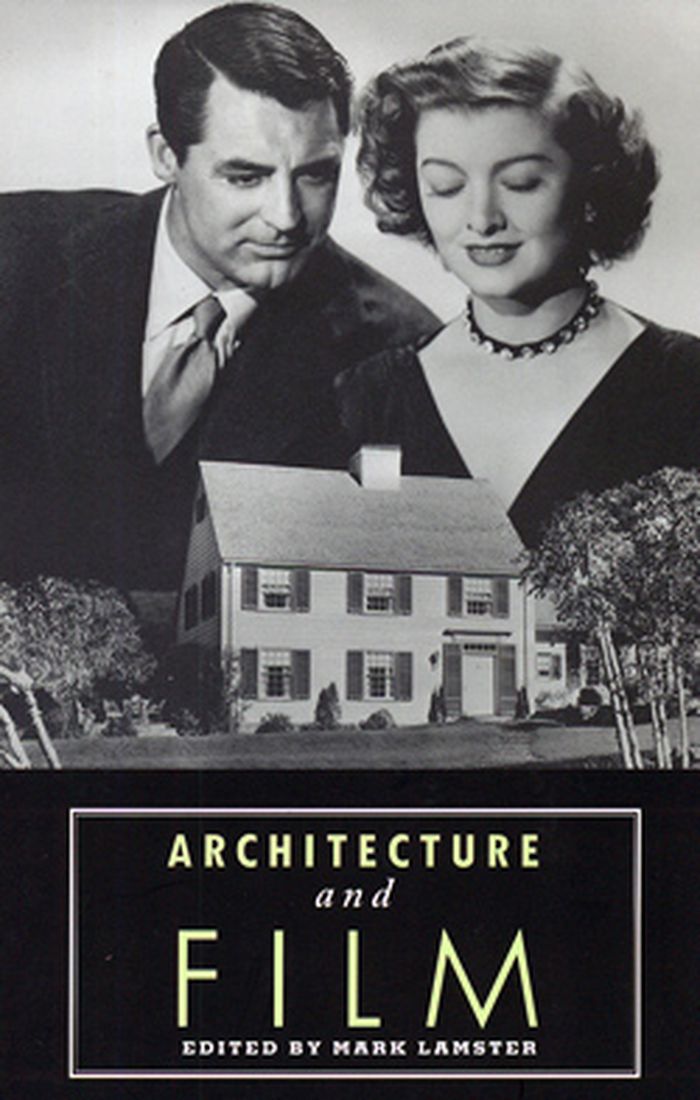
Architecture and film
Architecture and film
Actions:
Price:
$32.50
(available to order)
Summary:
"Architecture and Film" looks at the ways architecture and architects are treated on screen and, conversely, how these depictions filter and shape the ways we understand the built environment. It also examines the significant effect that the film industry has had on the (...)
$32.50
(available to order)
Summary:
"Architecture and Film" looks at the ways architecture and architects are treated on screen and, conversely, how these depictions filter and shape the ways we understand the built environment. It also examines the significant effect that the film industry has had on the (...)
Subject:
Architecture and Film, Set Design
Architecture and Film, Set Design
Publication:
February 2000, New York
February 2000, New York
Title:
Architecture and film
Actions:
Price:
$32.50
(available to order)
Summary:
"Architecture and Film" looks at the ways architecture and architects are treated on screen and, conversely, how these depictions filter and shape the ways we understand the built environment. It also examines the significant effect that the film industry has had on the American public's perception of urban, suburban, and rural spaces. Contributors to this collection of essays come from a wide range of disciplines. Nancy Levinson writes on how films from "The Fountainhead" to "Jungle Fever" have depicted architects. Eric Rosenberg looks at how architecture and spatial relations shape the Beatles films "A Hard Day's Night", "Help!", and "Let It Be". Joseph Rosa discusses why modern domestic architecture in recent Hollywood films such as "The Ice Storm", "L.A. Confidential", and "The Big Lebowski" has become synonymous with unstable inhabitants. Peter Hall discusses the history of film titling, focusing on the groundbreaking work of Saul Bass and Maurice Binder. Editor Mark Lamster examines the anti-urbanism of the Star Wars trilogy. The collection also includes the voices of those from within the film industry, who are uniquely able to provide a "behind the scenes" perspective: film editor Bob Eisenhardt comments on the making of "Concert of Wills", a documentary on the construction of the Getty Museum; and Robert Kraft focuses on his work as a location director for Diane Keaton's upcoming film about Los Angeles. Also included are interviews with David Rockwell, architect of numerous Planet Hollywood restaurants worldwide and designer of a new hall to host the Academy Awards ceremony; Kyle Kooper, who created title sequences for "Seven" and "Mission Impossible"; and motion picture art director Jan Roelfs, whose credits include "Gattaca", "Orlando", and "Little Women". Previously priced at $41.50.
Architecture and film
Actions:
Price:
$32.50
(available to order)
Summary:
"Architecture and Film" looks at the ways architecture and architects are treated on screen and, conversely, how these depictions filter and shape the ways we understand the built environment. It also examines the significant effect that the film industry has had on the American public's perception of urban, suburban, and rural spaces. Contributors to this collection of essays come from a wide range of disciplines. Nancy Levinson writes on how films from "The Fountainhead" to "Jungle Fever" have depicted architects. Eric Rosenberg looks at how architecture and spatial relations shape the Beatles films "A Hard Day's Night", "Help!", and "Let It Be". Joseph Rosa discusses why modern domestic architecture in recent Hollywood films such as "The Ice Storm", "L.A. Confidential", and "The Big Lebowski" has become synonymous with unstable inhabitants. Peter Hall discusses the history of film titling, focusing on the groundbreaking work of Saul Bass and Maurice Binder. Editor Mark Lamster examines the anti-urbanism of the Star Wars trilogy. The collection also includes the voices of those from within the film industry, who are uniquely able to provide a "behind the scenes" perspective: film editor Bob Eisenhardt comments on the making of "Concert of Wills", a documentary on the construction of the Getty Museum; and Robert Kraft focuses on his work as a location director for Diane Keaton's upcoming film about Los Angeles. Also included are interviews with David Rockwell, architect of numerous Planet Hollywood restaurants worldwide and designer of a new hall to host the Academy Awards ceremony; Kyle Kooper, who created title sequences for "Seven" and "Mission Impossible"; and motion picture art director Jan Roelfs, whose credits include "Gattaca", "Orlando", and "Little Women". Previously priced at $41.50.
Form:
books
books
Publication:
February 2000, New York
February 2000, New York
Subject:
Architecture and Film, Set Design
Architecture and Film, Set Design
Form:
books
books
Actions:
Price:
$33.50
(available to order)
Summary:
"Ken Smith landscape architect / urban projects" focuses on three prominent works in New York City : the East River Ferry Landings, P.S. 19, and a roof garden for the Museum of Modern Art. Featuring an interview with Ken Smith and extensive photographic documentation and drawings, as well as an essay by Nina Rappaport and a foreword by Peter Reed. The book reveals how(...)
$33.50
(available to order)
Summary:
"Ken Smith landscape architect / urban projects" focuses on three prominent works in New York City : the East River Ferry Landings, P.S. 19, and a roof garden for the Museum of Modern Art. Featuring an interview with Ken Smith and extensive photographic documentation and drawings, as well as an essay by Nina Rappaport and a foreword by Peter Reed. The book reveals how(...)
Subject:
Landscape Architecture, Monographs
Landscape Architecture, Monographs
Publication:
December 2005, New York
December 2005, New York
Title:
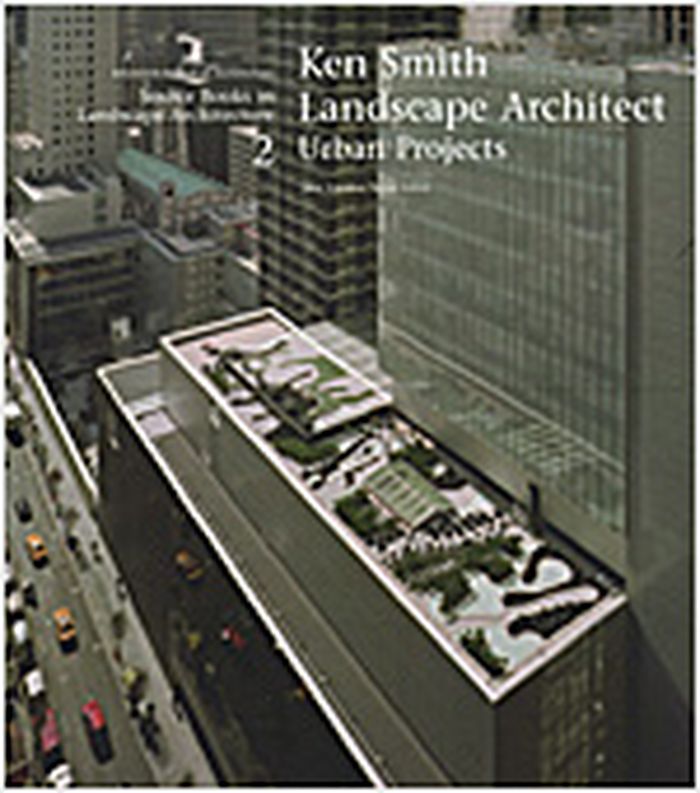
Ken Smith, landscape architect : urban projects 2
Actions:
Price:
$33.50
(available to order)
Summary:
"Ken Smith landscape architect / urban projects" focuses on three prominent works in New York City : the East River Ferry Landings, P.S. 19, and a roof garden for the Museum of Modern Art. Featuring an interview with Ken Smith and extensive photographic documentation and drawings, as well as an essay by Nina Rappaport and a foreword by Peter Reed. The book reveals how each project espresses new relationships between landscape and place within the city.
Ken Smith, landscape architect : urban projects 2
Actions:
Price:
$33.50
(available to order)
Summary:
"Ken Smith landscape architect / urban projects" focuses on three prominent works in New York City : the East River Ferry Landings, P.S. 19, and a roof garden for the Museum of Modern Art. Featuring an interview with Ken Smith and extensive photographic documentation and drawings, as well as an essay by Nina Rappaport and a foreword by Peter Reed. The book reveals how each project espresses new relationships between landscape and place within the city.
Form:
books
books
Publication:
December 2005, New York
December 2005, New York
Subject:
Landscape Architecture, Monographs
Landscape Architecture, Monographs
Form:
books
books
Title:
London : bread and circuses
London : bread and circuses
Actions:
Price:
$29.00
(available to order)
Summary:
Wherever and whenever state and church, state and autocracy, political and architectural ambition have met and loved one another hungrily, domes have raised their imperious, lofty heads. At once magnificent and messy, old-fashioned and ultra-modern, opulent and squalid, London is something of a mongrel city, cross-bred over the centuries from cut-throat commerce, high(...)
$29.00
(available to order)
Summary:
Wherever and whenever state and church, state and autocracy, political and architectural ambition have met and loved one another hungrily, domes have raised their imperious, lofty heads. At once magnificent and messy, old-fashioned and ultra-modern, opulent and squalid, London is something of a mongrel city, cross-bred over the centuries from cut-throat commerce, high(...)
Subject:
Architecture since 1900, Europe
Architecture since 1900, Europe
Publication:
November 2001, London
November 2001, London
Title:
London : bread and circuses
Actions:
Price:
$29.00
(available to order)
Summary:
Wherever and whenever state and church, state and autocracy, political and architectural ambition have met and loved one another hungrily, domes have raised their imperious, lofty heads. At once magnificent and messy, old-fashioned and ultra-modern, opulent and squalid, London is something of a mongrel city, cross-bred over the centuries from cut-throat commerce, high finance and unrestrained creativity. For all its inventiveness, however, it is now also a city unable to provide its citizens with decent public transport, housing or services, beset and betrayed by governments who take from it but refuse to give back. In the lead-up to the much-hyped Millennium, a fortune was spent on lavish building projects—giant wheels, great courts, titanic art galleries, ambitious museums, a Brobdingnagian dome—but little in the way of public services, intelligent urban planning and infrastructure except by default. Has the right kind of money been spent on the wrong sort of projects? Who, in this pluralistic age, will cut through the layers of bureaucracy to restore some of the city’s unruly splendour? In this elegant and polemical book, the architecture critic Jonathan Glancey explores London’s Millennial follies and asks how and where London might now channel its energies. Combining anecdote and analysis with a sustained critique of the way the city is governed and financed, he draws a detailed picture of the state London’s in and speculates on how it might be transformed.
London : bread and circuses
Actions:
Price:
$29.00
(available to order)
Summary:
Wherever and whenever state and church, state and autocracy, political and architectural ambition have met and loved one another hungrily, domes have raised their imperious, lofty heads. At once magnificent and messy, old-fashioned and ultra-modern, opulent and squalid, London is something of a mongrel city, cross-bred over the centuries from cut-throat commerce, high finance and unrestrained creativity. For all its inventiveness, however, it is now also a city unable to provide its citizens with decent public transport, housing or services, beset and betrayed by governments who take from it but refuse to give back. In the lead-up to the much-hyped Millennium, a fortune was spent on lavish building projects—giant wheels, great courts, titanic art galleries, ambitious museums, a Brobdingnagian dome—but little in the way of public services, intelligent urban planning and infrastructure except by default. Has the right kind of money been spent on the wrong sort of projects? Who, in this pluralistic age, will cut through the layers of bureaucracy to restore some of the city’s unruly splendour? In this elegant and polemical book, the architecture critic Jonathan Glancey explores London’s Millennial follies and asks how and where London might now channel its energies. Combining anecdote and analysis with a sustained critique of the way the city is governed and financed, he draws a detailed picture of the state London’s in and speculates on how it might be transformed.
Form:
books
books
Publication:
November 2001, London
November 2001, London
Subject:
Architecture since 1900, Europe
Architecture since 1900, Europe
Form:
books
books
Title:
The Hollywood sign
The Hollywood sign
Actions:
Price:
$27.95
(available to order)
Summary:
Hollywood's famous sign, constructed of massive white block letters set into a steep hillside, is an emblem of the movie capital it looms over and an international symbol of glamour and star power. To so many who see its image, the sign represents the earthly home of that otherwise ethereal world of fame, stardom, and celebrity -the goal of American and worldwide(...)
$27.95
(available to order)
Summary:
Hollywood's famous sign, constructed of massive white block letters set into a steep hillside, is an emblem of the movie capital it looms over and an international symbol of glamour and star power. To so many who see its image, the sign represents the earthly home of that otherwise ethereal world of fame, stardom, and celebrity -the goal of American and worldwide(...)
Title:
The Hollywood sign
Actions:
Price:
$27.95
(available to order)
Summary:
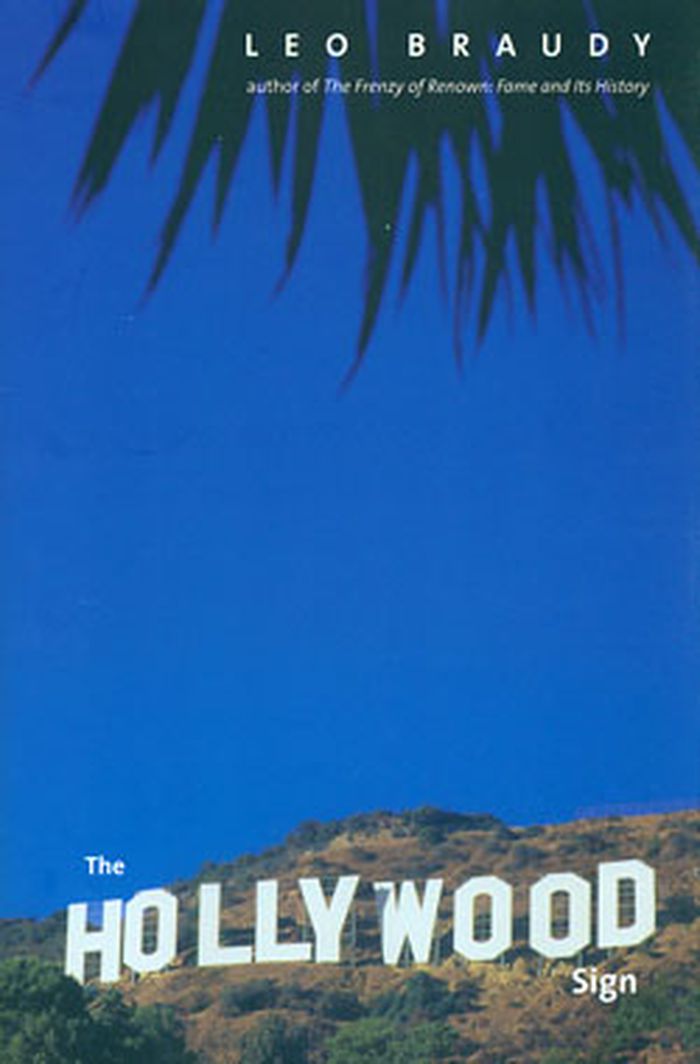
Hollywood's famous sign, constructed of massive white block letters set into a steep hillside, is an emblem of the movie capital it looms over and an international symbol of glamour and star power. To so many who see its image, the sign represents the earthly home of that otherwise ethereal world of fame, stardom, and celebrity -the goal of American and worldwide aspiration to be in the limelight, to be, like the Hollywood sign itself, instantly recognizable. How an advertisement erected in 1923, touting the real estate development Hollywoodland, took on a life of its own is a story worthy of the entertainment world that is its focus. Leo Braudy traces the remarkable history of this distinctly American landmark, which has been saved over the years by a disparate group of fans and supporters, among them Alice Cooper and Hugh Hefner, who spearheaded its reconstruction in the 1970s. He also uses the sign's history to offer an intriguing look at the rise of the movie business from its earliest, silent days through the development of the studio system that helped define modern Hollywood. Mixing social history, urban studies, literature, and film, along with forays into such topics as the lure of Hollywood for utopian communities and the development of domestic architecture in Los Angeles, The Hollywood Sign is a fascinating account of how a temporary structure has become a permanent icon of American culture.
The Hollywood sign
Actions:
Price:
$27.95
(available to order)
Summary:
Hollywood's famous sign, constructed of massive white block letters set into a steep hillside, is an emblem of the movie capital it looms over and an international symbol of glamour and star power. To so many who see its image, the sign represents the earthly home of that otherwise ethereal world of fame, stardom, and celebrity -the goal of American and worldwide aspiration to be in the limelight, to be, like the Hollywood sign itself, instantly recognizable. How an advertisement erected in 1923, touting the real estate development Hollywoodland, took on a life of its own is a story worthy of the entertainment world that is its focus. Leo Braudy traces the remarkable history of this distinctly American landmark, which has been saved over the years by a disparate group of fans and supporters, among them Alice Cooper and Hugh Hefner, who spearheaded its reconstruction in the 1970s. He also uses the sign's history to offer an intriguing look at the rise of the movie business from its earliest, silent days through the development of the studio system that helped define modern Hollywood. Mixing social history, urban studies, literature, and film, along with forays into such topics as the lure of Hollywood for utopian communities and the development of domestic architecture in Los Angeles, The Hollywood Sign is a fascinating account of how a temporary structure has become a permanent icon of American culture.
Form:
books
books
Publication:
March 2011
March 2011
Subject:
Signage
Signage
Form:
books
books
Actions:
Price:
$15.00
(available to order)
Summary:
How are you involved in the art world? Are you related to any specific scene? What would be the most productive place to present your work? What kind of curators do you like to work with, and why? What does the art market mean for your work? These are some of the questions that have been presented to every artist who has worked with Witte de With, the respected Rotterdam(...)
$15.00
(available to order)
Summary:
How are you involved in the art world? Are you related to any specific scene? What would be the most productive place to present your work? What kind of curators do you like to work with, and why? What does the art market mean for your work? These are some of the questions that have been presented to every artist who has worked with Witte de With, the respected Rotterdam(...)
Subject:
Contemporary Art Monographs
Contemporary Art Monographs
Publication:
March 2008, Rotterdam
March 2008, Rotterdam
Title:
Changing roles artists' personal views and wishes
Actions:
Price:
$15.00
(available to order)
Summary:
How are you involved in the art world? Are you related to any specific scene? What would be the most productive place to present your work? What kind of curators do you like to work with, and why? What does the art market mean for your work? These are some of the questions that have been presented to every artist who has worked with Witte de With, the respected Rotterdam contemporary art center, over the past two years. This publication reflects on the ideas behind the works that the center has shown, and allows artists to voice concerns that are rarely discussed as part of a public initiative. The participants' answers serve as a model, suggesting what roles they need institutions, curators and programs to play. Contributors include Jesper Just, Erik van Lieshout, Sarah Morris and Robin Rhode. Liam Gillick was born in Aylesbury, Great Britain, in 1964 and studied at Hertfordshire College of Art, and Goldsmiths College, London. Often combining text and installation, Gillickis work frequently investigates economics and aesthetics in modern society. A finalist for the Turner Prize in 2002, his work has appeared at Documenta in 1997 and at The Museum of Modern Art, New York in 2003, as well as in numerous solo shows worldwide. He lives and works in London and New York.
Changing roles artists' personal views and wishes
Actions:
Price:
$15.00
(available to order)
Summary:
How are you involved in the art world? Are you related to any specific scene? What would be the most productive place to present your work? What kind of curators do you like to work with, and why? What does the art market mean for your work? These are some of the questions that have been presented to every artist who has worked with Witte de With, the respected Rotterdam contemporary art center, over the past two years. This publication reflects on the ideas behind the works that the center has shown, and allows artists to voice concerns that are rarely discussed as part of a public initiative. The participants' answers serve as a model, suggesting what roles they need institutions, curators and programs to play. Contributors include Jesper Just, Erik van Lieshout, Sarah Morris and Robin Rhode. Liam Gillick was born in Aylesbury, Great Britain, in 1964 and studied at Hertfordshire College of Art, and Goldsmiths College, London. Often combining text and installation, Gillickis work frequently investigates economics and aesthetics in modern society. A finalist for the Turner Prize in 2002, his work has appeared at Documenta in 1997 and at The Museum of Modern Art, New York in 2003, as well as in numerous solo shows worldwide. He lives and works in London and New York.
Form:
books
books
Publication:
March 2008, Rotterdam
March 2008, Rotterdam
Subject:
Contemporary Art Monographs
Contemporary Art Monographs
Form:
books
books
Title:
The minimum dwelling
The minimum dwelling
Actions:
Price:
$96.00
(available in store)
Summary:
Karel Teige (1900–1951), one of the most important figures of avant-garde modernism of the 1920s and 1930s, influenced virtually every area of art, design, and urban thinking in his native Czechoslovakia. His "Minimum dwelling", originally published in Czech in 1932, and appearing now for the first time in English, is one of the landmark architectural books of the(...)
$96.00
(available in store)
Summary:
Karel Teige (1900–1951), one of the most important figures of avant-garde modernism of the 1920s and 1930s, influenced virtually every area of art, design, and urban thinking in his native Czechoslovakia. His "Minimum dwelling", originally published in Czech in 1932, and appearing now for the first time in English, is one of the landmark architectural books of the(...)
Title:
The minimum dwelling
Actions:
Price:
$96.00
(available in store)
Summary:
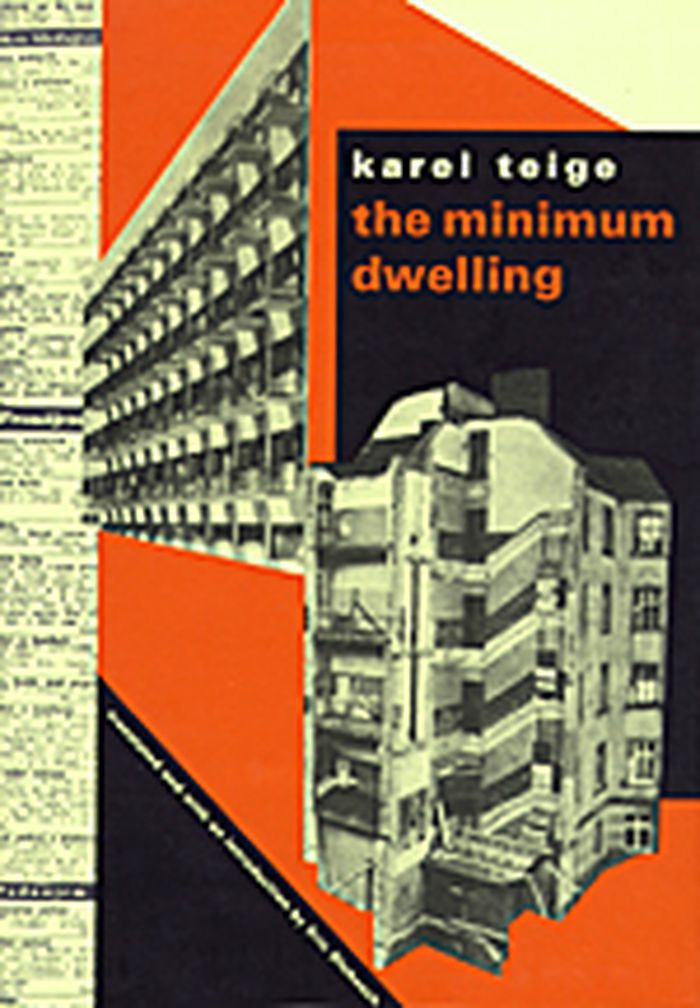
Karel Teige (1900–1951), one of the most important figures of avant-garde modernism of the 1920s and 1930s, influenced virtually every area of art, design, and urban thinking in his native Czechoslovakia. His "Minimum dwelling", originally published in Czech in 1932, and appearing now for the first time in English, is one of the landmark architectural books of the twentieth century. "The minimum dwelling" is not just a book on architecture, but also a blueprint for a new way of living. It calls for a radical rethinking of domestic space and of the role of modern architecture in the planning, design, and construction of new dwelling types for the proletariat. Teige shows how Gropius, Le Corbusier, Mies van der Rohe, and others designed little more than new versions of baroque palaces, mainly for the new financial aristocracy. Teige envisioned the minimum dwelling not as a reduced version of a bourgeois apartment or rural cottage, but as a wholly new dwelling type built on the cooperation of architects, sociologists, economists, health officials, physicians, social workers, politicians, and trade unionists. The book covers many subjects that are still of great relevance. Of particular interest are Teige’s rejection of traditional notions of the kitchen as the core of family-centered plans and of marriage as the foundation of modern cohabitation. He describes alternative lifestyles and new ways of cohabitation of sexes, generations, and classes. The detailed programmatic chapters on collective housing remain far ahead of current thinking, and his comments on collective dwelling presage communal living experiments of the 1960s and 1970s, as well as the communal facilities in contemporary condominium buildings and retirement communities. Translated and introduced by Eric Dluhosch.
The minimum dwelling
Actions:
Price:
$96.00
(available in store)
Summary:
Karel Teige (1900–1951), one of the most important figures of avant-garde modernism of the 1920s and 1930s, influenced virtually every area of art, design, and urban thinking in his native Czechoslovakia. His "Minimum dwelling", originally published in Czech in 1932, and appearing now for the first time in English, is one of the landmark architectural books of the twentieth century. "The minimum dwelling" is not just a book on architecture, but also a blueprint for a new way of living. It calls for a radical rethinking of domestic space and of the role of modern architecture in the planning, design, and construction of new dwelling types for the proletariat. Teige shows how Gropius, Le Corbusier, Mies van der Rohe, and others designed little more than new versions of baroque palaces, mainly for the new financial aristocracy. Teige envisioned the minimum dwelling not as a reduced version of a bourgeois apartment or rural cottage, but as a wholly new dwelling type built on the cooperation of architects, sociologists, economists, health officials, physicians, social workers, politicians, and trade unionists. The book covers many subjects that are still of great relevance. Of particular interest are Teige’s rejection of traditional notions of the kitchen as the core of family-centered plans and of marriage as the foundation of modern cohabitation. He describes alternative lifestyles and new ways of cohabitation of sexes, generations, and classes. The detailed programmatic chapters on collective housing remain far ahead of current thinking, and his comments on collective dwelling presage communal living experiments of the 1960s and 1970s, as well as the communal facilities in contemporary condominium buildings and retirement communities. Translated and introduced by Eric Dluhosch.
Form:
books
books
Publication:
May 2002, Cambridge, Mass.
May 2002, Cambridge, Mass.
Subject:
Architectural Theory
Architectural Theory
Form:
books
books
Actions:
Price:
$65.95
(available to order)
Summary:
Studies in Tectonic Culture is nothing less than a rethinking of the entire modern architectural tradition. The notion of tectonics as employed by Frampton -- the focus on architecture as a constructional craft -- constitutes a direct challenge to current mainstream thinking on the artistic limits of postmodernism, and suggests a convincing alternative. Indeed, Frampton(...)
$65.95
(available to order)
Summary:
Studies in Tectonic Culture is nothing less than a rethinking of the entire modern architectural tradition. The notion of tectonics as employed by Frampton -- the focus on architecture as a constructional craft -- constitutes a direct challenge to current mainstream thinking on the artistic limits of postmodernism, and suggests a convincing alternative. Indeed, Frampton(...)
Title:
Studies in tectonic culture: the poetics of construction in nineteenth and twentieth century architecture
Actions:
Price:
$65.95
(available to order)
Summary:
Studies in Tectonic Culture is nothing less than a rethinking of the entire modern architectural tradition. The notion of tectonics as employed by Frampton -- the focus on architecture as a constructional craft -- constitutes a direct challenge to current mainstream thinking on the artistic limits of postmodernism, and suggests a convincing alternative. Indeed, Frampton argues, modern architecture is invariably as much about structure and construction as it is about space and abstract form. Composed of ten essays and an epilogue that trace the history of contemporary form as an evolving poetic of structure and construction, the book's analytical framework rests on Frampton's close readings of key French and German, and English sources from the eighteenth century to the present. He clarifies the various turns that structural engineering and tectonic imagination have taken in the work of such architects as Perret, Wright, Kahn, Scarpa, and Mies, and shows how both constructional form and material character were integral to an evolving architectural expression of their work. Frampton also demonstrates that the way in which these elements are articulated from one work to the next provides a basis upon which to evaluate the works as a whole. This is especially evident in his consideration of the work of Perret, Mies, and Kahn and the continuities in their thought and attitudes that linked them to the past. Frampton considers the conscious cultivation of the tectonic tradition in architecture as an essential element in the future development of architectural form, casting a critical new light on the entire issue of modernity and on the place of much work that has passed as "avant-garde."
Studies in tectonic culture: the poetics of construction in nineteenth and twentieth century architecture
Actions:
Price:
$65.95
(available to order)
Summary:
Studies in Tectonic Culture is nothing less than a rethinking of the entire modern architectural tradition. The notion of tectonics as employed by Frampton -- the focus on architecture as a constructional craft -- constitutes a direct challenge to current mainstream thinking on the artistic limits of postmodernism, and suggests a convincing alternative. Indeed, Frampton argues, modern architecture is invariably as much about structure and construction as it is about space and abstract form. Composed of ten essays and an epilogue that trace the history of contemporary form as an evolving poetic of structure and construction, the book's analytical framework rests on Frampton's close readings of key French and German, and English sources from the eighteenth century to the present. He clarifies the various turns that structural engineering and tectonic imagination have taken in the work of such architects as Perret, Wright, Kahn, Scarpa, and Mies, and shows how both constructional form and material character were integral to an evolving architectural expression of their work. Frampton also demonstrates that the way in which these elements are articulated from one work to the next provides a basis upon which to evaluate the works as a whole. This is especially evident in his consideration of the work of Perret, Mies, and Kahn and the continuities in their thought and attitudes that linked them to the past. Frampton considers the conscious cultivation of the tectonic tradition in architecture as an essential element in the future development of architectural form, casting a critical new light on the entire issue of modernity and on the place of much work that has passed as "avant-garde."
Form:
books
books
Publication:
October 2001, Cambridge, Mass.
October 2001, Cambridge, Mass.
Subject:
Architectural Theory
Architectural Theory
Form:
books
books

Actions:
Price:
$39.95
(available to order)
Summary:
As we spend more and more of our time staring at the screens of movies, televisions, computers, and handheld devices--"windows" full of moving images, texts, and icons--how the world is framed has become as important as what is in the frame. In The Virtual Window, Anne Friedberg examines the window as metaphor, as architectural component, and as an opening to the(...)
$39.95
(available to order)
Summary:
As we spend more and more of our time staring at the screens of movies, televisions, computers, and handheld devices--"windows" full of moving images, texts, and icons--how the world is framed has become as important as what is in the frame. In The Virtual Window, Anne Friedberg examines the window as metaphor, as architectural component, and as an opening to the(...)
Title:
The virtual window : from Alberti to Microsoft
Actions:
Price:
$39.95
(available to order)
Summary:
As we spend more and more of our time staring at the screens of movies, televisions, computers, and handheld devices--"windows" full of moving images, texts, and icons--how the world is framed has become as important as what is in the frame. In The Virtual Window, Anne Friedberg examines the window as metaphor, as architectural component, and as an opening to the dematerialized reality we see on the screen. In De pictura (1435), Leon Battista Alberti famously instructed painters to consider the frame of the painting as an open window. Taking Alberti's metaphor as her starting point, Friedberg tracks shifts in the perspectival paradigm as she gives us histories of the architectural window, developments in glass and transparency, and the emerging apparatuses of photography, cinema, television, and digital imaging. Single-point perspective--Alberti's metaphorical window--has long been challenged by modern painting, modern architecture, and moving-image technologies. And yet, notes Friedberg, for most of the twentieth century the dominant form of the moving image was a single image in a single frame. The fractured modernism exemplified by cubist painting, for example, remained largely confined to experimental, avant-garde work. On the computer screen, however, where multiple "windows" coexist and overlap, perspective may have met its end. In this wide-ranging book, Friedberg considers such topics as the framed view of the camera obscura, Le Corbusier's mandates for the architectural window, Eisenstein's opinions on the shape of the movie screen, and the multiple images and nested windows commonly displayed on screens today. The Virtual Window proposes a new logic of visuality, framed and virtual: an architecture not only of space but of time.
The virtual window : from Alberti to Microsoft
Actions:
Price:
$39.95
(available to order)
Summary:
As we spend more and more of our time staring at the screens of movies, televisions, computers, and handheld devices--"windows" full of moving images, texts, and icons--how the world is framed has become as important as what is in the frame. In The Virtual Window, Anne Friedberg examines the window as metaphor, as architectural component, and as an opening to the dematerialized reality we see on the screen. In De pictura (1435), Leon Battista Alberti famously instructed painters to consider the frame of the painting as an open window. Taking Alberti's metaphor as her starting point, Friedberg tracks shifts in the perspectival paradigm as she gives us histories of the architectural window, developments in glass and transparency, and the emerging apparatuses of photography, cinema, television, and digital imaging. Single-point perspective--Alberti's metaphorical window--has long been challenged by modern painting, modern architecture, and moving-image technologies. And yet, notes Friedberg, for most of the twentieth century the dominant form of the moving image was a single image in a single frame. The fractured modernism exemplified by cubist painting, for example, remained largely confined to experimental, avant-garde work. On the computer screen, however, where multiple "windows" coexist and overlap, perspective may have met its end. In this wide-ranging book, Friedberg considers such topics as the framed view of the camera obscura, Le Corbusier's mandates for the architectural window, Eisenstein's opinions on the shape of the movie screen, and the multiple images and nested windows commonly displayed on screens today. The Virtual Window proposes a new logic of visuality, framed and virtual: an architecture not only of space but of time.
Form:
books
books
Publication:
January 2006, Cambridge
January 2006, Cambridge
Subject:
Architectural Theory
Architectural Theory


