


2644 Results
Form:
books
books
Actions:
Price:
$85.00
(available to order)
Summary:
In 1950, Indian prime minister Jawaharlal Nehru invited legendary French-Swiss architect Le Corbusier to embark on one of the greatest experiments in urban planning history: to build a new capital Chandigarh, a city whose monumental modernism promised to free India from the fetters of colonial tradition. 'six decades after its founding and on the eve of its becoming a(...)
$85.00
(available to order)
Summary:
In 1950, Indian prime minister Jawaharlal Nehru invited legendary French-Swiss architect Le Corbusier to embark on one of the greatest experiments in urban planning history: to build a new capital Chandigarh, a city whose monumental modernism promised to free India from the fetters of colonial tradition. 'six decades after its founding and on the eve of its becoming a(...)
Title:
Chandigarh revealed: Le Corbusier's city today
Actions:
Price:
$85.00
(available to order)
Summary:
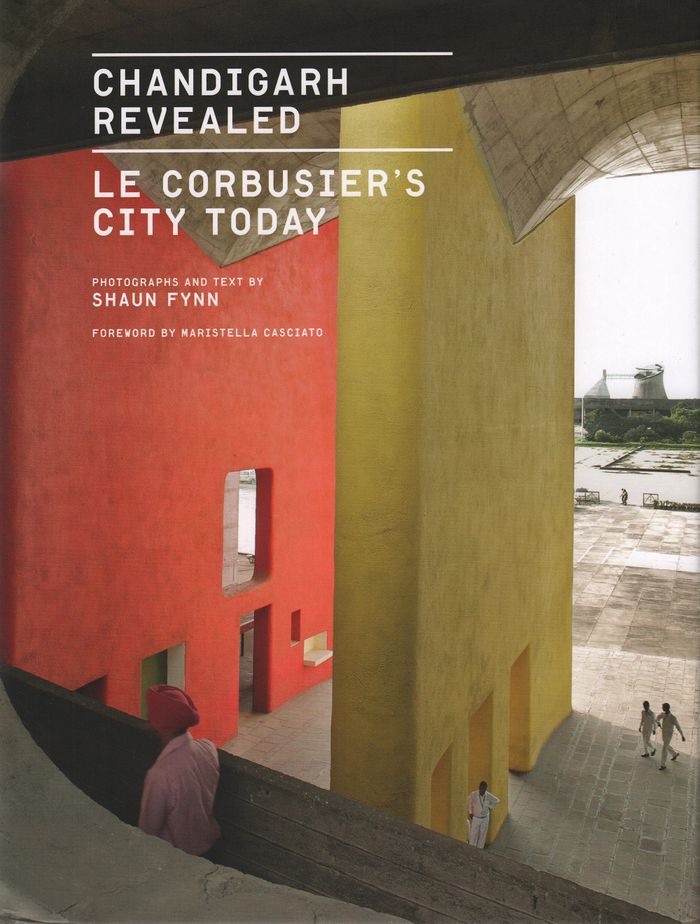
In 1950, Indian prime minister Jawaharlal Nehru invited legendary French-Swiss architect Le Corbusier to embark on one of the greatest experiments in urban planning history: to build a new capital Chandigarh, a city whose monumental modernism promised to free India from the fetters of colonial tradition. 'six decades after its founding and on the eve of its becoming a UNESCO World Heritage Site in 2016, photographer and Chandigarh resident Shaun Fynn was granted unprecedented access to turn his lens on Le Corbusier's city and capture what is rarely seen: the living metropolis behind the master plan. Fynn's captivating images of the city and its inhabitants reveal how the poetry of the architect's compositions has been shaped by the tumult of everyday life. Alongside descriptions of the city's architectural highlights, Chandigarh Revealed features a foreword by Le Corbusier authority Maristella Casciato, an essay by architectural historian Vikram ditya Prak sh, an interview with M. N. Sharma one of two surviving members of Le Corbusier's team and custom-designed maps to orient readers.
Chandigarh revealed: Le Corbusier's city today
Actions:
Price:
$85.00
(available to order)
Summary:
In 1950, Indian prime minister Jawaharlal Nehru invited legendary French-Swiss architect Le Corbusier to embark on one of the greatest experiments in urban planning history: to build a new capital Chandigarh, a city whose monumental modernism promised to free India from the fetters of colonial tradition. 'six decades after its founding and on the eve of its becoming a UNESCO World Heritage Site in 2016, photographer and Chandigarh resident Shaun Fynn was granted unprecedented access to turn his lens on Le Corbusier's city and capture what is rarely seen: the living metropolis behind the master plan. Fynn's captivating images of the city and its inhabitants reveal how the poetry of the architect's compositions has been shaped by the tumult of everyday life. Alongside descriptions of the city's architectural highlights, Chandigarh Revealed features a foreword by Le Corbusier authority Maristella Casciato, an essay by architectural historian Vikram ditya Prak sh, an interview with M. N. Sharma one of two surviving members of Le Corbusier's team and custom-designed maps to orient readers.
Form:
books
books
Publication:
April 2017
April 2017
Subject:
Architecture Monographs
Architecture Monographs
Form:
books
books
Price:
$31.50
(available to order)
Summary:
For hundreds of years, Ireland has been a testing ground for colonizing techniques. Postcolonial Dublin shows how perpetrators of colonialism have made use of urban planning and architecture to underscore and legitimate ideologies. From suburban development to building facades, the conflict between nationalists and colonialists has inscribed itself on Dublin’s landscape.(...)
$31.50
(available to order)
Summary:
For hundreds of years, Ireland has been a testing ground for colonizing techniques. Postcolonial Dublin shows how perpetrators of colonialism have made use of urban planning and architecture to underscore and legitimate ideologies. From suburban development to building facades, the conflict between nationalists and colonialists has inscribed itself on Dublin’s landscape.(...)
Title:
Postcolonial Dublin : imperial legacies and the built environment
Actions:
Price:
$31.50
(available to order)
Summary:
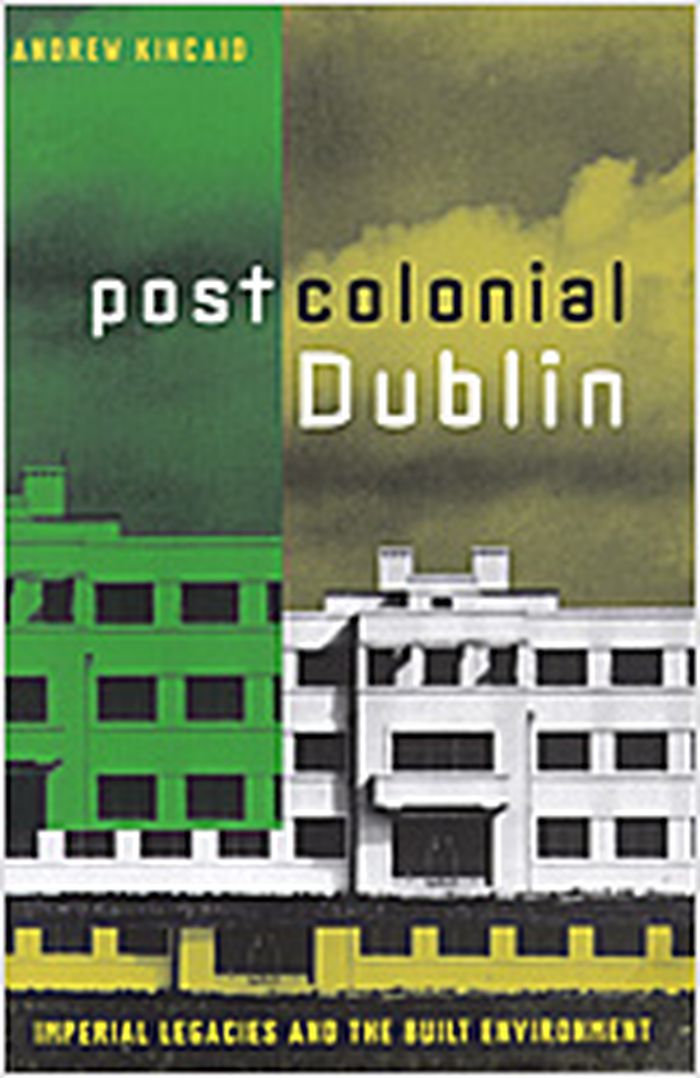
For hundreds of years, Ireland has been a testing ground for colonizing techniques. Postcolonial Dublin shows how perpetrators of colonialism have made use of urban planning and architecture to underscore and legitimate ideologies. From suburban development to building facades, the conflict between nationalists and colonialists has inscribed itself on Dublin’s landscape. Andrew Kincaid illustrates how the architecture and urban planning of Dublin have been integral to debates about nationalism, modernism, and Ireland’s relationship to the rest of the world. Looking at objects such as Londonderry’s Market House, Patrick Abercrombie’s Dublin of the Future, and the urban renewal project of today’s Temple Bar, Kincaid highlights Ireland’s colonial history and the significance of architecture in the evolution of national identity. In doing so, he demonstrates how ideology “spatializes” itself. Postcolonial Dublin engages the prevailing historical representations of Irish nationalism, arguing that the evolving city reflected a debate over who would hold the reins of power. Bringing the tools of literary criticism and postcolonial theory to bear on the field of urban studies, Kincaid places Dublin at the forefront of debates over modernism, modernity, and globalization.
Postcolonial Dublin : imperial legacies and the built environment
Actions:
Price:
$31.50
(available to order)
Summary:
For hundreds of years, Ireland has been a testing ground for colonizing techniques. Postcolonial Dublin shows how perpetrators of colonialism have made use of urban planning and architecture to underscore and legitimate ideologies. From suburban development to building facades, the conflict between nationalists and colonialists has inscribed itself on Dublin’s landscape. Andrew Kincaid illustrates how the architecture and urban planning of Dublin have been integral to debates about nationalism, modernism, and Ireland’s relationship to the rest of the world. Looking at objects such as Londonderry’s Market House, Patrick Abercrombie’s Dublin of the Future, and the urban renewal project of today’s Temple Bar, Kincaid highlights Ireland’s colonial history and the significance of architecture in the evolution of national identity. In doing so, he demonstrates how ideology “spatializes” itself. Postcolonial Dublin engages the prevailing historical representations of Irish nationalism, arguing that the evolving city reflected a debate over who would hold the reins of power. Bringing the tools of literary criticism and postcolonial theory to bear on the field of urban studies, Kincaid places Dublin at the forefront of debates over modernism, modernity, and globalization.
Form:
books
books
Publication:
May 2006, Minneapolis
May 2006, Minneapolis
Subject:
Architecture since 1900, Europe
Architecture since 1900, Europe
Form:
books
books
Actions:
Price:
$54.95
(available to order)
Summary:
In ''Of other spaces'' Foucault coined the term ''heterotopias'' to signify ''all the other real sites that can be found within the culture'' which ''are simultaneously represented, contested, and inverted.'' For Foucault, heterotopic spaces were first of all spaces of crisis, or transformative spaces, however these have given way to heterotopias of deviation and spaces(...)
$54.95
(available to order)
Summary:
In ''Of other spaces'' Foucault coined the term ''heterotopias'' to signify ''all the other real sites that can be found within the culture'' which ''are simultaneously represented, contested, and inverted.'' For Foucault, heterotopic spaces were first of all spaces of crisis, or transformative spaces, however these have given way to heterotopias of deviation and spaces(...)
Title:
Spaces of crisis and critique : heterotopias beyond Foucault
Actions:
Price:
$54.95
(available to order)
Summary:
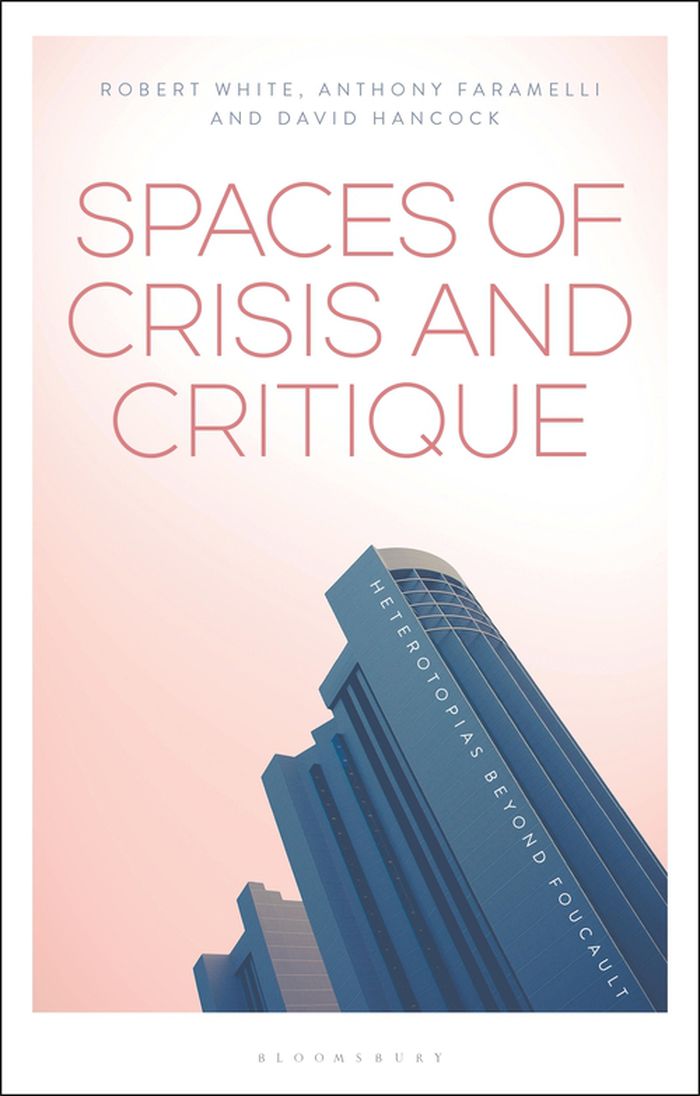
In ''Of other spaces'' Foucault coined the term ''heterotopias'' to signify ''all the other real sites that can be found within the culture'' which ''are simultaneously represented, contested, and inverted.'' For Foucault, heterotopic spaces were first of all spaces of crisis, or transformative spaces, however these have given way to heterotopias of deviation and spaces of discipline, such as psychiatric hospitals or prisons. Foucault's essay provokes us to think through how spaces of crisis and critique function to open up disruptive, subversive or minoritarian fields within philosophical, political, cultural or aesthetic discourses. This book takes this interdisciplinary and international approach to the spatial, challenging existing borders, boundaries, and horizons; from Claire Colebrook's chapter unpacking the heterotopic spaces of America and Mexico that lie beyond reductive ideological spaces of light and darkness, to a Foucauldian reading of the Zapatista resistance. With essays on politics, philosophy, literature, post-colonial studies, and aesthetics from established and emerging academics, this book answers Foucault's call to give us a better understanding of our present cultural epoch.
Spaces of crisis and critique : heterotopias beyond Foucault
Actions:
Price:
$54.95
(available to order)
Summary:
In ''Of other spaces'' Foucault coined the term ''heterotopias'' to signify ''all the other real sites that can be found within the culture'' which ''are simultaneously represented, contested, and inverted.'' For Foucault, heterotopic spaces were first of all spaces of crisis, or transformative spaces, however these have given way to heterotopias of deviation and spaces of discipline, such as psychiatric hospitals or prisons. Foucault's essay provokes us to think through how spaces of crisis and critique function to open up disruptive, subversive or minoritarian fields within philosophical, political, cultural or aesthetic discourses. This book takes this interdisciplinary and international approach to the spatial, challenging existing borders, boundaries, and horizons; from Claire Colebrook's chapter unpacking the heterotopic spaces of America and Mexico that lie beyond reductive ideological spaces of light and darkness, to a Foucauldian reading of the Zapatista resistance. With essays on politics, philosophy, literature, post-colonial studies, and aesthetics from established and emerging academics, this book answers Foucault's call to give us a better understanding of our present cultural epoch.
Form:
books
books
Publication:
March 2020
March 2020
Subject:
Critical Theory
Critical Theory
Form:
archives
archives
Actions:
Holdings:
Description:
3710 drawing(s), 15 panel(s), 10 VHS(s), 9 photograph(s), 5 model(s), 3 artefact(s), 0.23 linear meter of textual records, Prior to its transfer to the CCA from the office...
Description:
3710 drawing(s), 15 panel(s), 10 VHS(s), 9 photograph(s), 5 model(s), 3 artefact(s), 0.23 linear meter of textual records, Prior to its transfer to the CCA from the office...
Author:
Subject:
Title:
Toyo Ito & Associates, Architects fonds, 1970-2011
Actions:
Holdings:
Description:
3710 drawing(s), 15 panel(s), 10 VHS(s), 9 photograph(s), 5 model(s), 3 artefact(s), 0.23 linear meter of textual records, Prior to its transfer to the CCA from the office...
Toyo Ito & Associates, Architects fonds, 1970-2011
Actions:
Holdings:
Description:
3710 drawing(s), 15 panel(s), 10 VHS(s), 9 photograph(s), 5 model(s), 3 artefact(s), 0.23 linear meter of textual records, Prior to its transfer to the CCA from the office...
Form:
archives
archives
Author:
Subject:
Form:
books
books
Actions:
Price:
$35.00
(available in store)
Summary:
A collection of primary sources chosen by the research fellows ''Centring Africa: Postcolonial Perspectives on Architecture'', Doreen Adengo, Dele Adeyemo, Warebi Gabriel Brisibe and Ramota Obagah-Stephen, Rachel Lee and Monika Motylinska, Ikem Stanley Okoye, Cole Roskam, Lukasz Stanek, and Huda Tayob. ''Fugitive Archives'' is not a book about African architecture or(...)
$35.00
(available in store)
Summary:
A collection of primary sources chosen by the research fellows ''Centring Africa: Postcolonial Perspectives on Architecture'', Doreen Adengo, Dele Adeyemo, Warebi Gabriel Brisibe and Ramota Obagah-Stephen, Rachel Lee and Monika Motylinska, Ikem Stanley Okoye, Cole Roskam, Lukasz Stanek, and Huda Tayob. ''Fugitive Archives'' is not a book about African architecture or(...)
Title:
Fugitive Archives: A Sourcebook for Centring Africa in Histories of Architecture
Actions:
Price:
$35.00
(available in store)
Summary:
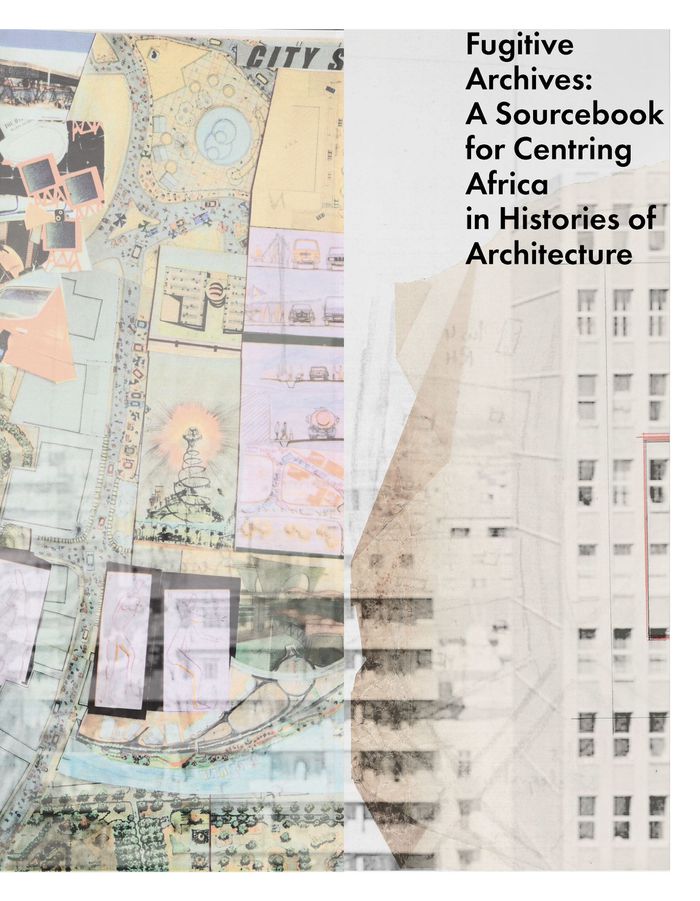
A collection of primary sources chosen by the research fellows ''Centring Africa: Postcolonial Perspectives on Architecture'', Doreen Adengo, Dele Adeyemo, Warebi Gabriel Brisibe and Ramota Obagah-Stephen, Rachel Lee and Monika Motylinska, Ikem Stanley Okoye, Cole Roskam, Lukasz Stanek, and Huda Tayob. ''Fugitive Archives'' is not a book about African architecture or its history. It is a book about the role of primary research in the work of the fellows and about how, to centre Africa in histories of modern architecture, they had to develop new ways of finding, seeing, and listening. The sources presented here are starting points for dismantling and expanding existing architectural archives, in which what is considered valuable enough to archive remains dominated by colonial or Western knowledge frameworks. Through varied media and formats, the sources multiply narratives by highlighting diverse actors, practices, and geographies—on and off the continent—implicated in the history of modern African architecture. Rather than suggesting key, but inevitably reductive, themes, this book brings the fellows and their sources into dialogue in three sections that foreground similar methods and challenges to locating, accessing, reading, and constructing otherwise fugitive archives.
Fugitive Archives: A Sourcebook for Centring Africa in Histories of Architecture
Actions:
Price:
$35.00
(available in store)
Summary:
A collection of primary sources chosen by the research fellows ''Centring Africa: Postcolonial Perspectives on Architecture'', Doreen Adengo, Dele Adeyemo, Warebi Gabriel Brisibe and Ramota Obagah-Stephen, Rachel Lee and Monika Motylinska, Ikem Stanley Okoye, Cole Roskam, Lukasz Stanek, and Huda Tayob. ''Fugitive Archives'' is not a book about African architecture or its history. It is a book about the role of primary research in the work of the fellows and about how, to centre Africa in histories of modern architecture, they had to develop new ways of finding, seeing, and listening. The sources presented here are starting points for dismantling and expanding existing architectural archives, in which what is considered valuable enough to archive remains dominated by colonial or Western knowledge frameworks. Through varied media and formats, the sources multiply narratives by highlighting diverse actors, practices, and geographies—on and off the continent—implicated in the history of modern African architecture. Rather than suggesting key, but inevitably reductive, themes, this book brings the fellows and their sources into dialogue in three sections that foreground similar methods and challenges to locating, accessing, reading, and constructing otherwise fugitive archives.
Form:
books
books
Publication:
August 2023
August 2023
Subject:
CCA Publications
CCA Publications
Form:
books
books
Price:
$26.00
(available to order)
Summary:
Personnage fascinant et méconnu, Nukishio Kizô est un précurseur du militantisme autochtone. Figure intellectuelle de la lutte pour l'émancipation, il a montré que la situation délicate dans laquelle était plongé le peuple aïnou n'était due qu'aux contraintes de toutes sortes qui lui étaient imposées. Alors qu'il n'avait que 27 ans, il publie en 1934 le présent essai qui(...)
$26.00
(available to order)
Summary:
Personnage fascinant et méconnu, Nukishio Kizô est un précurseur du militantisme autochtone. Figure intellectuelle de la lutte pour l'émancipation, il a montré que la situation délicate dans laquelle était plongé le peuple aïnou n'était due qu'aux contraintes de toutes sortes qui lui étaient imposées. Alors qu'il n'avait que 27 ans, il publie en 1934 le présent essai qui(...)
Title:
Assimilation et vestiges des Aïnous - Manifeste précurseur autochtone
Actions:
Price:
$26.00
(available to order)
Summary:
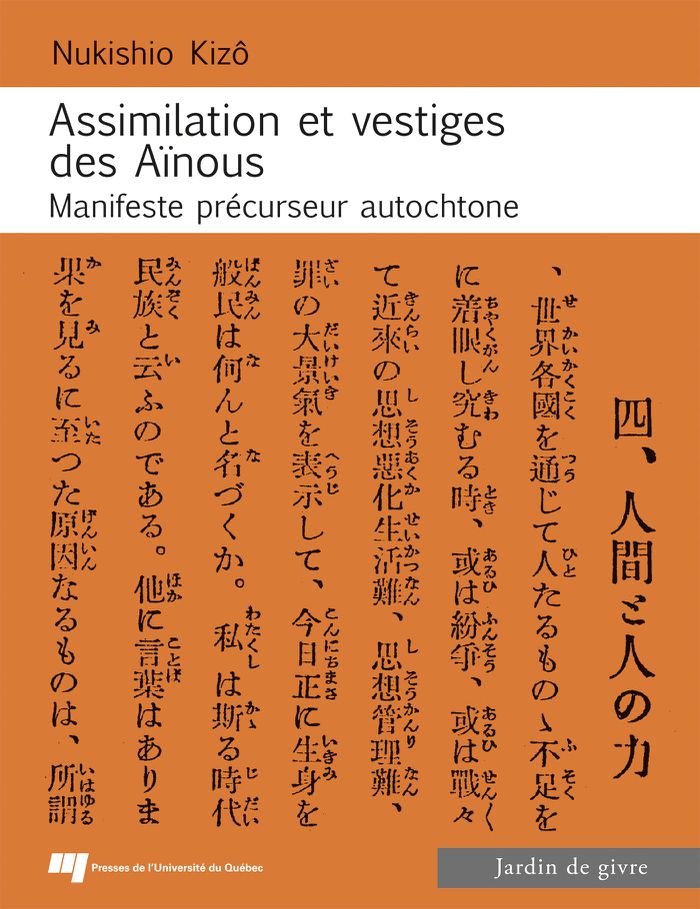
Personnage fascinant et méconnu, Nukishio Kizô est un précurseur du militantisme autochtone. Figure intellectuelle de la lutte pour l'émancipation, il a montré que la situation délicate dans laquelle était plongé le peuple aïnou n'était due qu'aux contraintes de toutes sortes qui lui étaient imposées. Alors qu'il n'avait que 27 ans, il publie en 1934 le présent essai qui témoigne de la situation des Aïnous au sein de l'Empire japonais et des politiques assimilationnistes dont ils subissent les effets. Il appelle les siens à se ressaisir pour éviter la dépossession de leurs terres natales, la disparition de leur langue, de leur culture et de leurs droits. Il dénonce la discrimination à laquelle les Aïnous doivent faire face, inscrite dans les discours et les lois japonaises. Pour les lecteurs d'aujourd'hui, cet essai apparaît comme l'une des premières dénonciations écrites de l'état de fait colonial contre un peuple autochtone, rédigée et publiée par un Autochtone. Sous son ton rationnel et modéré, Nukishio Kizô livre ainsi un témoignage troublant, mais il lance aussi un appel à la survie et à la reconnaissance. Avec une présentation de Daniel Chartier, une introduction, une chronologie et des notes de Lucien-Laurent Clercq.
Assimilation et vestiges des Aïnous - Manifeste précurseur autochtone
Actions:
Price:
$26.00
(available to order)
Summary:
Personnage fascinant et méconnu, Nukishio Kizô est un précurseur du militantisme autochtone. Figure intellectuelle de la lutte pour l'émancipation, il a montré que la situation délicate dans laquelle était plongé le peuple aïnou n'était due qu'aux contraintes de toutes sortes qui lui étaient imposées. Alors qu'il n'avait que 27 ans, il publie en 1934 le présent essai qui témoigne de la situation des Aïnous au sein de l'Empire japonais et des politiques assimilationnistes dont ils subissent les effets. Il appelle les siens à se ressaisir pour éviter la dépossession de leurs terres natales, la disparition de leur langue, de leur culture et de leurs droits. Il dénonce la discrimination à laquelle les Aïnous doivent faire face, inscrite dans les discours et les lois japonaises. Pour les lecteurs d'aujourd'hui, cet essai apparaît comme l'une des premières dénonciations écrites de l'état de fait colonial contre un peuple autochtone, rédigée et publiée par un Autochtone. Sous son ton rationnel et modéré, Nukishio Kizô livre ainsi un témoignage troublant, mais il lance aussi un appel à la survie et à la reconnaissance. Avec une présentation de Daniel Chartier, une introduction, une chronologie et des notes de Lucien-Laurent Clercq.
Form:
books
books
Publication:
February 2023
February 2023
Subject:
indigenous
indigenous
Form:
books
books
Price:
$30.00
(available to order)
Summary:
Parks are importantly fertile places to talk about land. Whether its big national parks, provincial campgrounds, isolated conservation areas, destination parks, or humble urban patches of grass, we tend to speak of parks as unqualified goods. People think of parks as public or common land, and it is a common belief that parks are the best uses of land and are good for(...)
$30.00
(available to order)
Summary:
Parks are importantly fertile places to talk about land. Whether its big national parks, provincial campgrounds, isolated conservation areas, destination parks, or humble urban patches of grass, we tend to speak of parks as unqualified goods. People think of parks as public or common land, and it is a common belief that parks are the best uses of land and are good for(...)
Title:
On this patch of grass: city parks and the politics of occupied land
Actions:
Price:
$30.00
(available to order)
Summary:
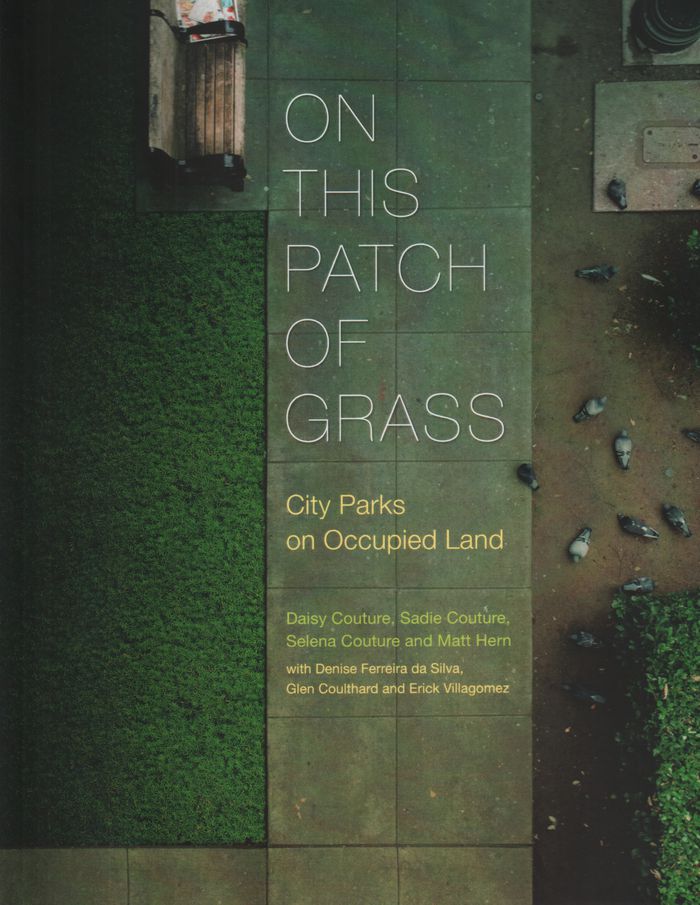
Parks are importantly fertile places to talk about land. Whether its big national parks, provincial campgrounds, isolated conservation areas, destination parks, or humble urban patches of grass, we tend to speak of parks as unqualified goods. People think of parks as public or common land, and it is a common belief that parks are the best uses of land and are good for everyone. But no park is innocent. Parks are lionized as "natural oases," and urban parks as "pure nature" in the midst of the city -- but that's absurd. Parks are as "natural" as the roads or buildings around them, and just as political. Every park in North America is performing modernity and settler colonialism everyday. Furthermore, parks are not private property, but while they are called ''public'', they are highly regulated spaces that normatively demand and closely control behaviours. Parks are a certain kind of property, and thus creations of law, and they are subject to all kinds of presumptions about what parks are for, and what kinds of people should be doing what kinds of things in them. Parks- as they are currently constituted- are colonial enterprises.
On this patch of grass: city parks and the politics of occupied land
Actions:
Price:
$30.00
(available to order)
Summary:
Parks are importantly fertile places to talk about land. Whether its big national parks, provincial campgrounds, isolated conservation areas, destination parks, or humble urban patches of grass, we tend to speak of parks as unqualified goods. People think of parks as public or common land, and it is a common belief that parks are the best uses of land and are good for everyone. But no park is innocent. Parks are lionized as "natural oases," and urban parks as "pure nature" in the midst of the city -- but that's absurd. Parks are as "natural" as the roads or buildings around them, and just as political. Every park in North America is performing modernity and settler colonialism everyday. Furthermore, parks are not private property, but while they are called ''public'', they are highly regulated spaces that normatively demand and closely control behaviours. Parks are a certain kind of property, and thus creations of law, and they are subject to all kinds of presumptions about what parks are for, and what kinds of people should be doing what kinds of things in them. Parks- as they are currently constituted- are colonial enterprises.
Form:
books
books
Publication:
November 2018
November 2018
Subject:
Landscape Theory
Landscape Theory
Form:
books
books
Actions:
Price:
$24.50
(available to order)
Summary:
Set in the long-lost City of Victoria (a fictional world similar to Hong Kong), Atlas is written from the unified perspective of future archaeologists struggling to rebuild a thrilling metropolis. Divided into four sections — “Theory,” “The City,” “Streets,” and “Signs” — the novel reimagines Victoria through maps and other historical documents and artifacts, mixing(...)
$24.50
(available to order)
Summary:
Set in the long-lost City of Victoria (a fictional world similar to Hong Kong), Atlas is written from the unified perspective of future archaeologists struggling to rebuild a thrilling metropolis. Divided into four sections — “Theory,” “The City,” “Streets,” and “Signs” — the novel reimagines Victoria through maps and other historical documents and artifacts, mixing(...)
Title:
Atlas : the archaeology of an imaginary city
Actions:
Price:
$24.50
(available to order)
Summary:
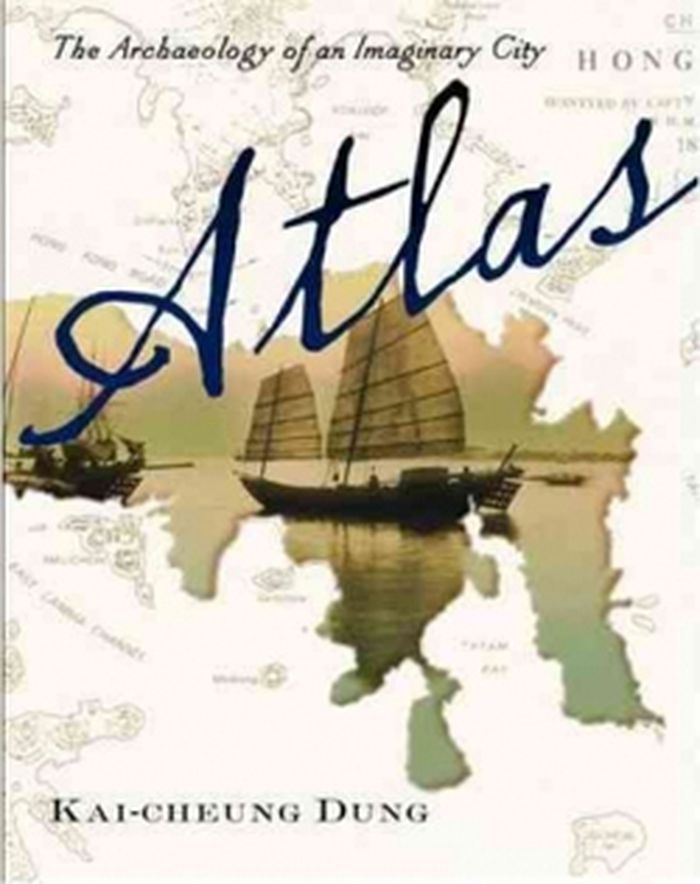
Set in the long-lost City of Victoria (a fictional world similar to Hong Kong), Atlas is written from the unified perspective of future archaeologists struggling to rebuild a thrilling metropolis. Divided into four sections — “Theory,” “The City,” “Streets,” and “Signs” — the novel reimagines Victoria through maps and other historical documents and artifacts, mixing real-world scenarios with purely imaginary people and events while incorporating anecdotes and actual and fictional social commentary and critique. Much like the quasi-fictional adventures in map-reading and remapping explored by Paul Auster, Jorge Luis Borges, and Italo Calvino, Dung Kai-cheung’s novel challenges the representation of place and history and the limits of technical and scientific media in reconstructing a history. It best exemplifies the author’s versatility and experimentation, along with China’s rapidly evolving literary culture, by blending fiction, nonfiction, and poetry in a story about succeeding and failing to recapture the things we lose. Playing with a variety of styles and subjects, Dung Kai-cheung inventively engages with the fate of Hong Kong since its British “handover” in 1997, which officially marked the end of colonial rule and the beginning of an uncharted future.
Atlas : the archaeology of an imaginary city
Actions:
Price:
$24.50
(available to order)
Summary:
Set in the long-lost City of Victoria (a fictional world similar to Hong Kong), Atlas is written from the unified perspective of future archaeologists struggling to rebuild a thrilling metropolis. Divided into four sections — “Theory,” “The City,” “Streets,” and “Signs” — the novel reimagines Victoria through maps and other historical documents and artifacts, mixing real-world scenarios with purely imaginary people and events while incorporating anecdotes and actual and fictional social commentary and critique. Much like the quasi-fictional adventures in map-reading and remapping explored by Paul Auster, Jorge Luis Borges, and Italo Calvino, Dung Kai-cheung’s novel challenges the representation of place and history and the limits of technical and scientific media in reconstructing a history. It best exemplifies the author’s versatility and experimentation, along with China’s rapidly evolving literary culture, by blending fiction, nonfiction, and poetry in a story about succeeding and failing to recapture the things we lose. Playing with a variety of styles and subjects, Dung Kai-cheung inventively engages with the fate of Hong Kong since its British “handover” in 1997, which officially marked the end of colonial rule and the beginning of an uncharted future.
Form:
books
books
Publication:
November 2012
November 2012
Subject:
Architectural Theory
Architectural Theory
Form:
books
books
Actions:
Price:
$35.95
(available to order)
Summary:
In 2016, a small protest encampment at the Standing Rock reservation in North Dakota, initially established to block construction of the Dakota Access oil pipeline, grew to be the largest Indigenous protest movement in the twenty-first century, attracting tens of thousands of Indigenous and non-Native allies from around the world. Its slogan ''Mni Wiconi''—Water is(...)
$35.95
(available to order)
Summary:
In 2016, a small protest encampment at the Standing Rock reservation in North Dakota, initially established to block construction of the Dakota Access oil pipeline, grew to be the largest Indigenous protest movement in the twenty-first century, attracting tens of thousands of Indigenous and non-Native allies from around the world. Its slogan ''Mni Wiconi''—Water is(...)
Title:
Our history is the future: Standing Rock versus the Dakota Access Pipeline, and the long tradition of indigenous resistance
Actions:
Price:
$35.95
(available to order)
Summary:
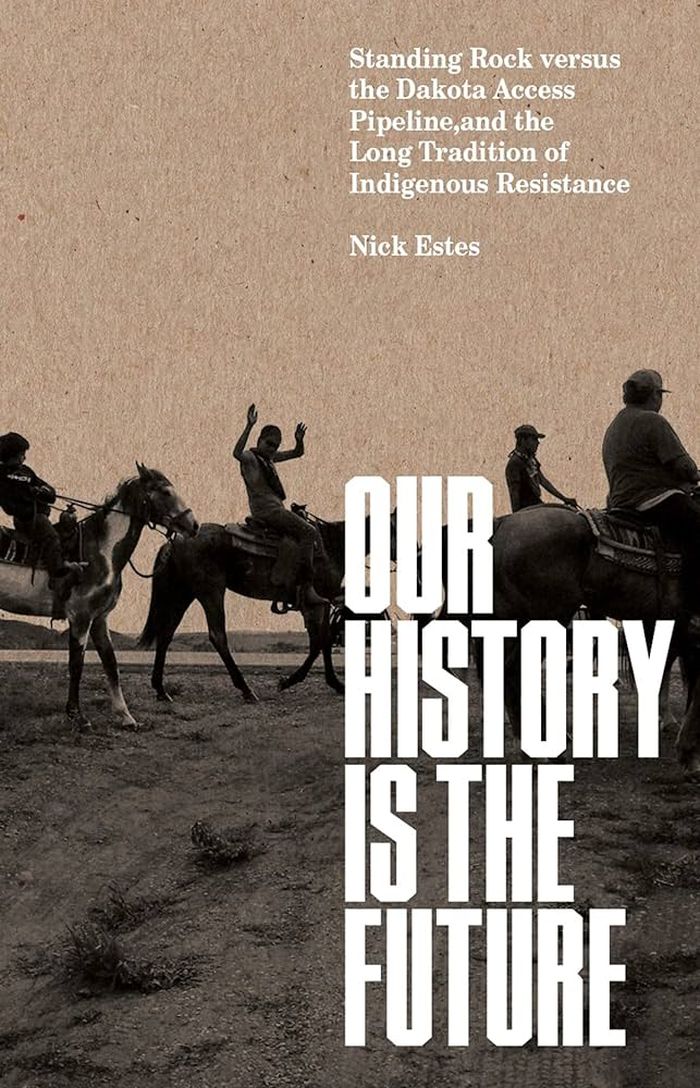
In 2016, a small protest encampment at the Standing Rock reservation in North Dakota, initially established to block construction of the Dakota Access oil pipeline, grew to be the largest Indigenous protest movement in the twenty-first century, attracting tens of thousands of Indigenous and non-Native allies from around the world. Its slogan ''Mni Wiconi''—Water is Life—was about more than just a pipeline. Water Protectors knew this battle for Native sovereignty had already been fought many times before, and that, even after the encampment was gone, their anti-colonial struggle would continue. In ''Our history is the future'', Nick Estes traces traditions of Indigenous resistance leading to the #NoDAPL movement from the days of the Missouri River trading forts through the Indian Wars, the Pick-Sloan dams, the American Indian Movement, and the campaign for Indigenous rights at the United Nations. While a historian by trade, Estes also draws on observations from the encampments and from growing up as a citizen of the Oceti Sakowin (the Nation of the Seven Council Fires), making Our History is the Future at once a work of history, a personal story, and a manifesto.
Our history is the future: Standing Rock versus the Dakota Access Pipeline, and the long tradition of indigenous resistance
Actions:
Price:
$35.95
(available to order)
Summary:
In 2016, a small protest encampment at the Standing Rock reservation in North Dakota, initially established to block construction of the Dakota Access oil pipeline, grew to be the largest Indigenous protest movement in the twenty-first century, attracting tens of thousands of Indigenous and non-Native allies from around the world. Its slogan ''Mni Wiconi''—Water is Life—was about more than just a pipeline. Water Protectors knew this battle for Native sovereignty had already been fought many times before, and that, even after the encampment was gone, their anti-colonial struggle would continue. In ''Our history is the future'', Nick Estes traces traditions of Indigenous resistance leading to the #NoDAPL movement from the days of the Missouri River trading forts through the Indian Wars, the Pick-Sloan dams, the American Indian Movement, and the campaign for Indigenous rights at the United Nations. While a historian by trade, Estes also draws on observations from the encampments and from growing up as a citizen of the Oceti Sakowin (the Nation of the Seven Council Fires), making Our History is the Future at once a work of history, a personal story, and a manifesto.
Form:
books
books
Publication:
October 2023
October 2023
Subject:
indigenous
indigenous
Form:
books
books
Title:
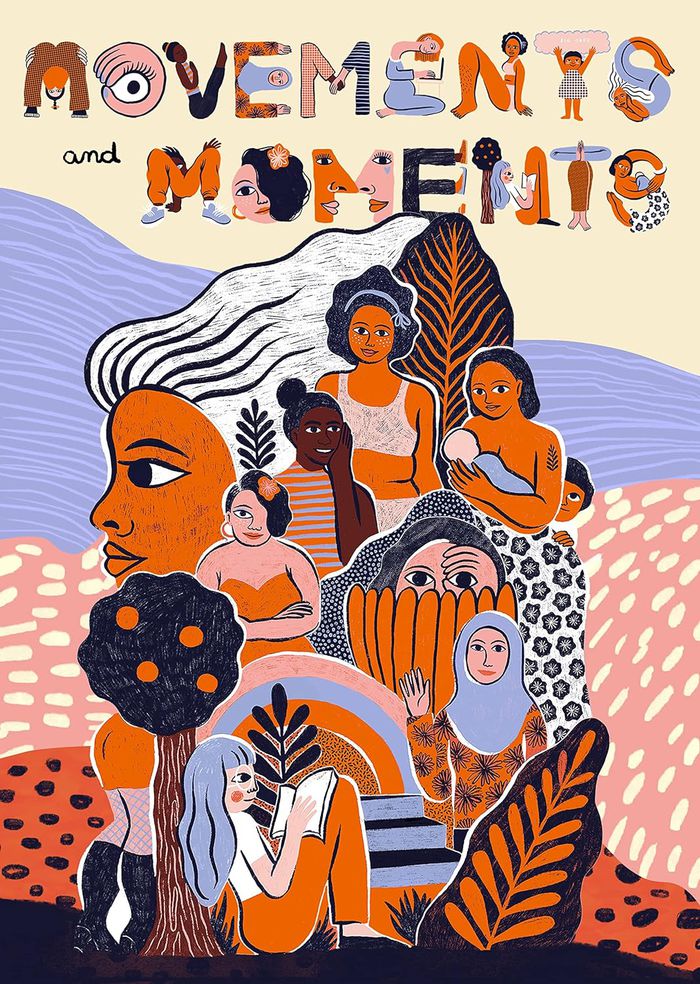
Movements & moments
Movements & moments
Actions:
Price:
$34.95
(available to order)
Summary:
In 1930s Bolivia, self-described Anarchist Cholas form a libertarian trade union. In the Northern Highlands of Vietnam, the songs of one girl’s youth lead her to a life of activism. In the Philippines, female elders from Kalinga blaze a trail when pushed into impromptu protest. Equally striking accounts from Brazil, Chile, Ecuador, India, Nepal, Peru and Thailand weave a(...)
$34.95
(available to order)
Summary:
In 1930s Bolivia, self-described Anarchist Cholas form a libertarian trade union. In the Northern Highlands of Vietnam, the songs of one girl’s youth lead her to a life of activism. In the Philippines, female elders from Kalinga blaze a trail when pushed into impromptu protest. Equally striking accounts from Brazil, Chile, Ecuador, India, Nepal, Peru and Thailand weave a(...)
Title:
Movements & moments
Actions:
Price:
$34.95
(available to order)
Summary:
In 1930s Bolivia, self-described Anarchist Cholas form a libertarian trade union. In the Northern Highlands of Vietnam, the songs of one girl’s youth lead her to a life of activism. In the Philippines, female elders from Kalinga blaze a trail when pushed into impromptu protest. Equally striking accounts from Brazil, Chile, Ecuador, India, Nepal, Peru and Thailand weave a tapestry of trauma and triumph, shedding light on not-too-distant histories otherwise overlooked. Indigenous Peoples all over the world have always had to stand their ground in the face of colonialism. While the details may differ, what these stories have in common is their commitment to resistance in a world that puts profit before respect, and western notions of progress before their own. Movements and Moments is an introductory glimpse into how Indegenous Peoples tell these stories in their own words. From Southeast Asia to South America, vibrant communities must grapple with colonial realities to assert ownership over their lands and traditions. This project was undertaken in cooperation with the Goethe-Institut Indonesien in Jakarta. These stories were selected from an open call across 42 countries to spotlight feminist movements and advocacies in the Global South.
Movements & moments
Actions:
Price:
$34.95
(available to order)
Summary:
In 1930s Bolivia, self-described Anarchist Cholas form a libertarian trade union. In the Northern Highlands of Vietnam, the songs of one girl’s youth lead her to a life of activism. In the Philippines, female elders from Kalinga blaze a trail when pushed into impromptu protest. Equally striking accounts from Brazil, Chile, Ecuador, India, Nepal, Peru and Thailand weave a tapestry of trauma and triumph, shedding light on not-too-distant histories otherwise overlooked. Indigenous Peoples all over the world have always had to stand their ground in the face of colonialism. While the details may differ, what these stories have in common is their commitment to resistance in a world that puts profit before respect, and western notions of progress before their own. Movements and Moments is an introductory glimpse into how Indegenous Peoples tell these stories in their own words. From Southeast Asia to South America, vibrant communities must grapple with colonial realities to assert ownership over their lands and traditions. This project was undertaken in cooperation with the Goethe-Institut Indonesien in Jakarta. These stories were selected from an open call across 42 countries to spotlight feminist movements and advocacies in the Global South.
Form:
books
books
Publication:
November 2022
November 2022
Subject:
Illustration
Illustration


