


2644 Results
Form:
books
books
Title:
Decolonize multiculturalism
Decolonize multiculturalism
Actions:
Price:
$24.95
(available to order)
Summary:
For those interested in continuing the struggle for decolonization, the word "multiculturalism" can seem like a sad joke. After all, institutionalized multiculturalism today is a muck of buzzwords, branding strategies, and virtue signaling that has nothing to do with real struggles against racism and colonialism. But "Decolonize multiculturalism" unearths a buried(...)
$24.95
(available to order)
Summary:
For those interested in continuing the struggle for decolonization, the word "multiculturalism" can seem like a sad joke. After all, institutionalized multiculturalism today is a muck of buzzwords, branding strategies, and virtue signaling that has nothing to do with real struggles against racism and colonialism. But "Decolonize multiculturalism" unearths a buried(...)
Title:
Decolonize multiculturalism
Actions:
Price:
$24.95
(available to order)
Summary:
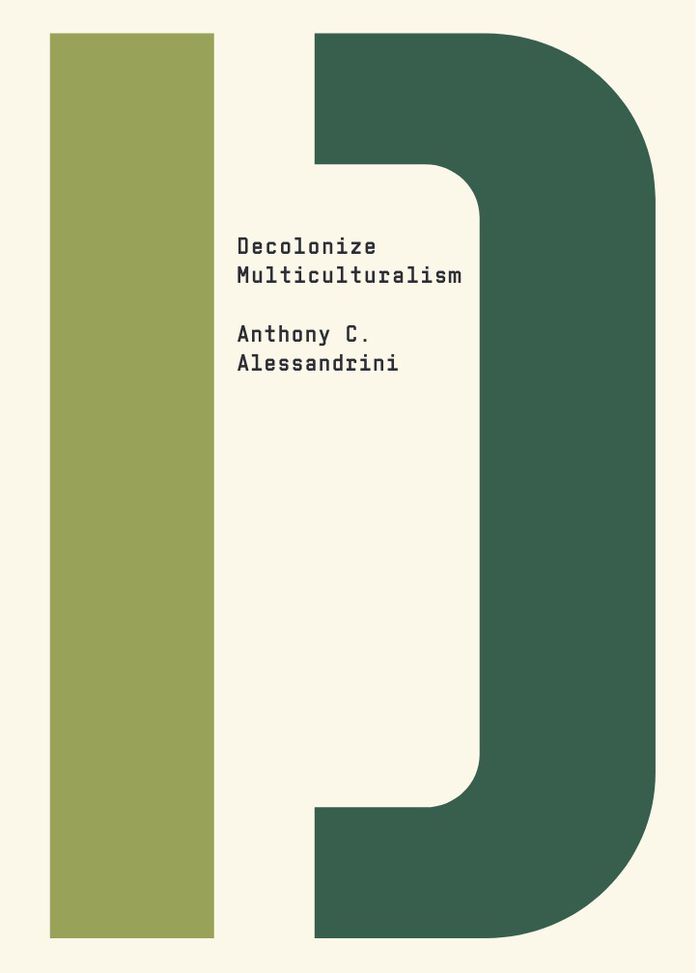
For those interested in continuing the struggle for decolonization, the word "multiculturalism" can seem like a sad joke. After all, institutionalized multiculturalism today is a muck of buzzwords, branding strategies, and virtue signaling that has nothing to do with real struggles against racism and colonialism. But "Decolonize multiculturalism" unearths a buried history. The book focuses on the student and youth movements of the 1960s and 1970s, inspired by global movements for decolonization and anti-racism, which aimed to fundamentally transform their society, as well as the fierce repression of these movements by the state, corporations, and university administrations. Part of the response has been sheer violence—campus policing, for example, only began in the ’70s, paving the way for the militarized campuses of today—with institutionalized multiculturalism acting like the velvet glove around the iron fist of state violence. And yet today’s multiculturalism also contains residues of the original radical demands of the student and youth movements that it aims to repress: to open up the university, to wrench it from its settler colonial, white supremacist, and patriarchal capitalist origins, and to transform it into a place of radical democratic possibility.
Decolonize multiculturalism
Actions:
Price:
$24.95
(available to order)
Summary:
For those interested in continuing the struggle for decolonization, the word "multiculturalism" can seem like a sad joke. After all, institutionalized multiculturalism today is a muck of buzzwords, branding strategies, and virtue signaling that has nothing to do with real struggles against racism and colonialism. But "Decolonize multiculturalism" unearths a buried history. The book focuses on the student and youth movements of the 1960s and 1970s, inspired by global movements for decolonization and anti-racism, which aimed to fundamentally transform their society, as well as the fierce repression of these movements by the state, corporations, and university administrations. Part of the response has been sheer violence—campus policing, for example, only began in the ’70s, paving the way for the militarized campuses of today—with institutionalized multiculturalism acting like the velvet glove around the iron fist of state violence. And yet today’s multiculturalism also contains residues of the original radical demands of the student and youth movements that it aims to repress: to open up the university, to wrench it from its settler colonial, white supremacist, and patriarchal capitalist origins, and to transform it into a place of radical democratic possibility.
Form:
books
books
Publication:
May 2023
May 2023
Subject:
Social
Social
Form:
books
books
Actions:
Price:
$60.00
(available to order)
Summary:
What are the unique characteristics that make a house Colonial or Craftsman, Modern or Deco, or any of the other approximately 20 styles of domestic architecture common in the United States? At a time of near-obsessive attention to home design and renovation, this compact, easily accessible guide - the only book of its kind with all colour photography - makes the(...)
$60.00
(available to order)
Summary:
What are the unique characteristics that make a house Colonial or Craftsman, Modern or Deco, or any of the other approximately 20 styles of domestic architecture common in the United States? At a time of near-obsessive attention to home design and renovation, this compact, easily accessible guide - the only book of its kind with all colour photography - makes the(...)
Title:
The Abrams guide to American house styles
Actions:
Price:
$60.00
(available to order)
Summary:
What are the unique characteristics that make a house Colonial or Craftsman, Modern or Deco, or any of the other approximately 20 styles of domestic architecture common in the United States? At a time of near-obsessive attention to home design and renovation, this compact, easily accessible guide - the only book of its kind with all colour photography - makes the identification of house styles a breeze. Each style is described by author William Morgan, a Pulitzer Prize-nominated architectural historian, in a short historical summary, alongside a list of its distinguishing features. Multiple examples of each house style are provided - the book includes 350 houses from more than 40 states - so the reader can see the region-specific variations. Complementing the beautiful colour photographs is a selection of line drawings highlighting each style's key attributes. Both at the desk and in the field, for a wide audience of discerning house hunters, homeowners, and realtors; architects, builders, and students; and the ever-increasing public with a seemingly insatiable curiosity about residential design, this elegant, informative, portable volume will be an invaluable resource for years to come.
The Abrams guide to American house styles
Actions:
Price:
$60.00
(available to order)
Summary:
What are the unique characteristics that make a house Colonial or Craftsman, Modern or Deco, or any of the other approximately 20 styles of domestic architecture common in the United States? At a time of near-obsessive attention to home design and renovation, this compact, easily accessible guide - the only book of its kind with all colour photography - makes the identification of house styles a breeze. Each style is described by author William Morgan, a Pulitzer Prize-nominated architectural historian, in a short historical summary, alongside a list of its distinguishing features. Multiple examples of each house style are provided - the book includes 350 houses from more than 40 states - so the reader can see the region-specific variations. Complementing the beautiful colour photographs is a selection of line drawings highlighting each style's key attributes. Both at the desk and in the field, for a wide audience of discerning house hunters, homeowners, and realtors; architects, builders, and students; and the ever-increasing public with a seemingly insatiable curiosity about residential design, this elegant, informative, portable volume will be an invaluable resource for years to come.
Form:
books
books
Publication:
November 2004, New York
November 2004, New York
Subject:
History until 1900
History until 1900
Form:
books
books
Actions:
Price:
$45.00
(available to order)
Summary:
As the world’s population swells and the need for sustainable ways of living grows ever more urgent and obvious, prefabricated architecture has taken center stage. Even before our current predicaments, the mass-produced, factory-made home had a distinguished history, having served as a vital precept in the development of Modern architecture. Today, with the digital(...)
$45.00
(available to order)
Summary:
As the world’s population swells and the need for sustainable ways of living grows ever more urgent and obvious, prefabricated architecture has taken center stage. Even before our current predicaments, the mass-produced, factory-made home had a distinguished history, having served as a vital precept in the development of Modern architecture. Today, with the digital(...)
Subject:
Prefabricated Architecture
Prefabricated Architecture
Publication:
August 2008, New York
August 2008, New York
Title:
Home delivery, fabricating the modern dwelling
Actions:
Price:
$45.00
(available to order)
Summary:
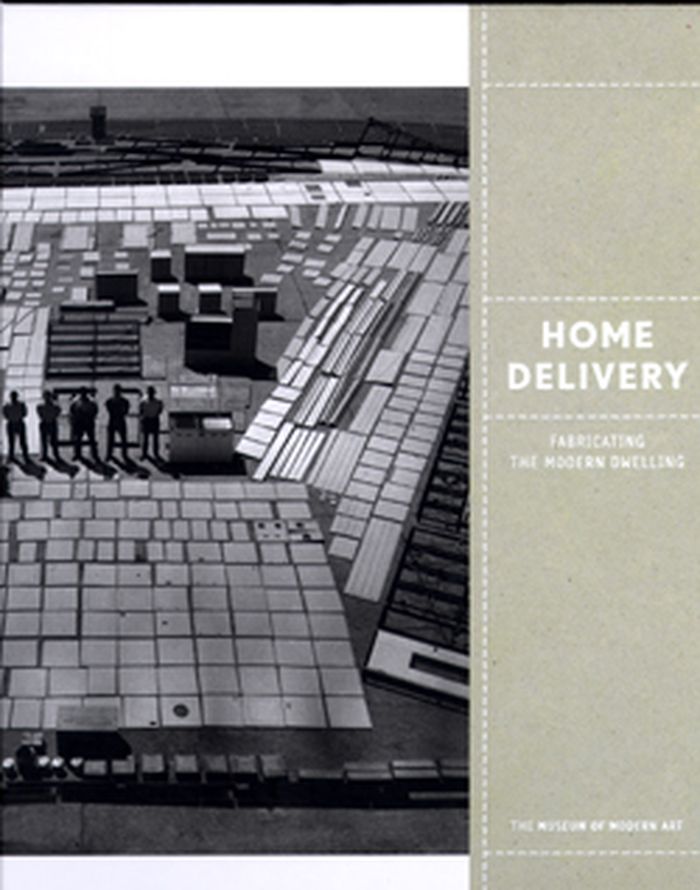
As the world’s population swells and the need for sustainable ways of living grows ever more urgent and obvious, prefabricated architecture has taken center stage. Even before our current predicaments, the mass-produced, factory-made home had a distinguished history, having served as a vital precept in the development of Modern architecture. Today, with the digital revolution reorganizing the relationship between drafting board and factory, it continues to spur innovative manufacturing and design, and its potential has clearly not yet come to fruition. Home Delivery traces the history of prefabrication in architecture, from its early roots in colonial cottages though the work of such figures as Jean Prouvé and Buckminster Fuller, and mass-produced variants such as the Lustron house, to a group of full-scale contemporary houses commissioned specifically for the MoMA exhibition that this book accompanies. In addition to an introductory essay by Barry Bergdoll, Chief Curator in the Museum’s Department of Architecture and Design, this volume contains essays on prefabricated housing in Japan and in Nordic countries by Ken Tadashi Oshima and Rasmus Waern, respectively. It also includes focused texts on approximately 40 historical projects and five commissions, as well as a bibliography.
Home delivery, fabricating the modern dwelling
Actions:
Price:
$45.00
(available to order)
Summary:
As the world’s population swells and the need for sustainable ways of living grows ever more urgent and obvious, prefabricated architecture has taken center stage. Even before our current predicaments, the mass-produced, factory-made home had a distinguished history, having served as a vital precept in the development of Modern architecture. Today, with the digital revolution reorganizing the relationship between drafting board and factory, it continues to spur innovative manufacturing and design, and its potential has clearly not yet come to fruition. Home Delivery traces the history of prefabrication in architecture, from its early roots in colonial cottages though the work of such figures as Jean Prouvé and Buckminster Fuller, and mass-produced variants such as the Lustron house, to a group of full-scale contemporary houses commissioned specifically for the MoMA exhibition that this book accompanies. In addition to an introductory essay by Barry Bergdoll, Chief Curator in the Museum’s Department of Architecture and Design, this volume contains essays on prefabricated housing in Japan and in Nordic countries by Ken Tadashi Oshima and Rasmus Waern, respectively. It also includes focused texts on approximately 40 historical projects and five commissions, as well as a bibliography.
Form:
books
books
Publication:
August 2008, New York
August 2008, New York
Subject:
Prefabricated Architecture
Prefabricated Architecture
Form:
books
books

Actions:
Price:
$24.95
(available to order)
Summary:
À la fin du XVIIIe siècle, l'Europe occidentale et les Amériques sont traversées par des mouvements de révolutions libérales et nationales. La Grande-Bretagne est alors un vaste empire colonial. Londres met en place des structures constitutionnelles et des pratiques politiques afin de maintenir sa domination. À la suite de la Révolution américaine, le régime impérial(...)
$24.95
(available to order)
Summary:
À la fin du XVIIIe siècle, l'Europe occidentale et les Amériques sont traversées par des mouvements de révolutions libérales et nationales. La Grande-Bretagne est alors un vaste empire colonial. Londres met en place des structures constitutionnelles et des pratiques politiques afin de maintenir sa domination. À la suite de la Révolution américaine, le régime impérial(...)
Title:
Les insoumis de l'empire : le refus de la domination colonale au Bas-Canada et en Irlande
Actions:
Price:
$24.95
(available to order)
Summary:
À la fin du XVIIIe siècle, l'Europe occidentale et les Amériques sont traversées par des mouvements de révolutions libérales et nationales. La Grande-Bretagne est alors un vaste empire colonial. Londres met en place des structures constitutionnelles et des pratiques politiques afin de maintenir sa domination. À la suite de la Révolution américaine, le régime impérial britannique est revu pour renforcer le rôle de l'exécutif dans l'administration des colonies. Julie Guyot illustre dans cet ouvrage l'état des rapports entre l'Angleterre et certaines nations satellites afin de pouvoir décrire les contours de l'impérialisme britannique et ainsi illustrer les enjeux démocratiques et nationalitaires. En prenant pour exemples l'Irlande et le Bas-Canada, l'auteure propose une analyse du discours public de Theobald Wolfe Tone et de Louis-Joseph Papineau, ces insoumis qui ont désiré changer le destin politique de leur «pays» respectif. Julie Guyot est professeure d'histoire au cégep Édouard-Montpetit et doctorante à l'École des études canado-irlandaises de l'Université Concordia. Ayant très tôt choisi l'histoire des idées comme approche pour étudier le parcours des peuples dépendants et les mouvements d'émancipation, les cas irlandais et bas-canadien (XVIIIe-XIXe siècles) allaient de soi.
Les insoumis de l'empire : le refus de la domination colonale au Bas-Canada et en Irlande
Actions:
Price:
$24.95
(available to order)
Summary:
À la fin du XVIIIe siècle, l'Europe occidentale et les Amériques sont traversées par des mouvements de révolutions libérales et nationales. La Grande-Bretagne est alors un vaste empire colonial. Londres met en place des structures constitutionnelles et des pratiques politiques afin de maintenir sa domination. À la suite de la Révolution américaine, le régime impérial britannique est revu pour renforcer le rôle de l'exécutif dans l'administration des colonies. Julie Guyot illustre dans cet ouvrage l'état des rapports entre l'Angleterre et certaines nations satellites afin de pouvoir décrire les contours de l'impérialisme britannique et ainsi illustrer les enjeux démocratiques et nationalitaires. En prenant pour exemples l'Irlande et le Bas-Canada, l'auteure propose une analyse du discours public de Theobald Wolfe Tone et de Louis-Joseph Papineau, ces insoumis qui ont désiré changer le destin politique de leur «pays» respectif. Julie Guyot est professeure d'histoire au cégep Édouard-Montpetit et doctorante à l'École des études canado-irlandaises de l'Université Concordia. Ayant très tôt choisi l'histoire des idées comme approche pour étudier le parcours des peuples dépendants et les mouvements d'émancipation, les cas irlandais et bas-canadien (XVIIIe-XIXe siècles) allaient de soi.
Form:
books
books
Publication:
March 2016
March 2016
Subject:
Social Studies (Québec)
Social Studies (Québec)
Form:
books
books
Title:
Oscar Niemeyer : maisons
Oscar Niemeyer : maisons
Actions:
Price:
$99.95
(available to order)
Summary:
L'œuvre d'Oscar Niemeyer a ouvert de nouvelles perspectives à l'architecture moderne du XXe siècle. Niemeyer est connu avant tout pour ses grandes réalisations institutionnelles au Brésil et en Europe. Mais un autre aspect significatif de sa carrière reste pratiquement ignoré : ses projets de résidences privées. Ce livre nous les montre, comme autant de chefs-d'œuvre(...)
$99.95
(available to order)
Summary:
L'œuvre d'Oscar Niemeyer a ouvert de nouvelles perspectives à l'architecture moderne du XXe siècle. Niemeyer est connu avant tout pour ses grandes réalisations institutionnelles au Brésil et en Europe. Mais un autre aspect significatif de sa carrière reste pratiquement ignoré : ses projets de résidences privées. Ce livre nous les montre, comme autant de chefs-d'œuvre(...)
Title:
Oscar Niemeyer : maisons
Actions:
Price:
$99.95
(available to order)
Summary:
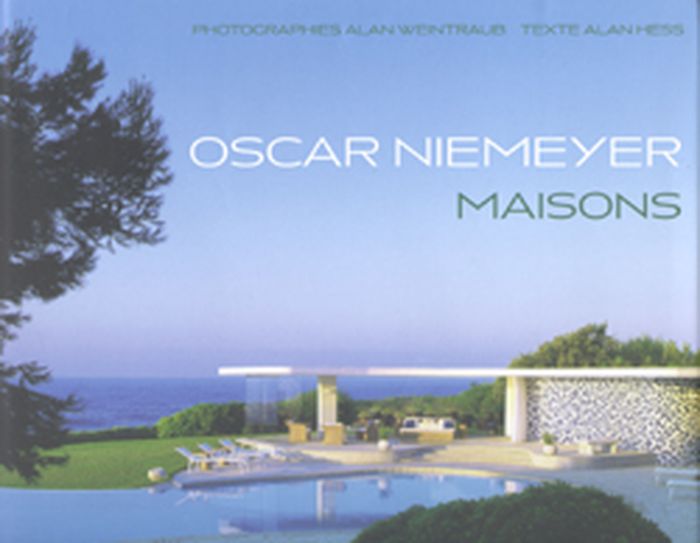
L'œuvre d'Oscar Niemeyer a ouvert de nouvelles perspectives à l'architecture moderne du XXe siècle. Niemeyer est connu avant tout pour ses grandes réalisations institutionnelles au Brésil et en Europe. Mais un autre aspect significatif de sa carrière reste pratiquement ignoré : ses projets de résidences privées. Ce livre nous les montre, comme autant de chefs-d'œuvre architecturaux méconnus. Souvent construites pour des membres de sa famille ou d'importants commanditaires (quand ce n'était pas pour lui-même), ces maisons offrent une richesse de solutions correspondant à une grande variété de sites : les pentes abruptes de Rio, les plaines de Brasilia, les plages de l'Atlantique, la forêt tropicale, les quartiers résidentiels de Rio et de São Paulo... Certaines sont de conception audacieuse, comme celle que Niemeyer a construite pour lui-même en 1953, avec son toit de béton de forme libre et ses murs de verre en arrondi. D'autres révèlent le goût de Niemeyer pour le style colonial et l'architecture traditionnelle hérités de l'occupation portugaise au Brésil. Mais la vision unificatrice de Niemeyer domine toutes ces variations, attestée par une vie de recherches et d'innovations à travers tous ses projets de maisons - construites ou non.
Oscar Niemeyer : maisons
Actions:
Price:
$99.95
(available to order)
Summary:
L'œuvre d'Oscar Niemeyer a ouvert de nouvelles perspectives à l'architecture moderne du XXe siècle. Niemeyer est connu avant tout pour ses grandes réalisations institutionnelles au Brésil et en Europe. Mais un autre aspect significatif de sa carrière reste pratiquement ignoré : ses projets de résidences privées. Ce livre nous les montre, comme autant de chefs-d'œuvre architecturaux méconnus. Souvent construites pour des membres de sa famille ou d'importants commanditaires (quand ce n'était pas pour lui-même), ces maisons offrent une richesse de solutions correspondant à une grande variété de sites : les pentes abruptes de Rio, les plaines de Brasilia, les plages de l'Atlantique, la forêt tropicale, les quartiers résidentiels de Rio et de São Paulo... Certaines sont de conception audacieuse, comme celle que Niemeyer a construite pour lui-même en 1953, avec son toit de béton de forme libre et ses murs de verre en arrondi. D'autres révèlent le goût de Niemeyer pour le style colonial et l'architecture traditionnelle hérités de l'occupation portugaise au Brésil. Mais la vision unificatrice de Niemeyer domine toutes ces variations, attestée par une vie de recherches et d'innovations à travers tous ses projets de maisons - construites ou non.
Form:
books
books
Publication:
January 2007, Arles
January 2007, Arles
Subject:
Architecture Monographs
Architecture Monographs
Form:
books
books
Actions:
Price:
$43.95
(available to order)
Summary:
Jaipur, in Rajasthan, is renowned for its palaces and museums, its craft traditions and its distinctive pink shops and houses. A planned city within walls, it was built in pre-modern times according to a distinctive Indian theory of architecture known as vastu vidya. As architecture subsequently developed in India, in response to British and latterly post-colonial(...)
$43.95
(available to order)
Summary:
Jaipur, in Rajasthan, is renowned for its palaces and museums, its craft traditions and its distinctive pink shops and houses. A planned city within walls, it was built in pre-modern times according to a distinctive Indian theory of architecture known as vastu vidya. As architecture subsequently developed in India, in response to British and latterly post-colonial(...)
Subject:
Arch Southwest Asia & North Africa
Arch Southwest Asia & North Africa
Publication:
September 2002, London
September 2002, London
Title:
Building Jaipur : the making of an Indian city
Actions:
Price:
$43.95
(available to order)
Summary:
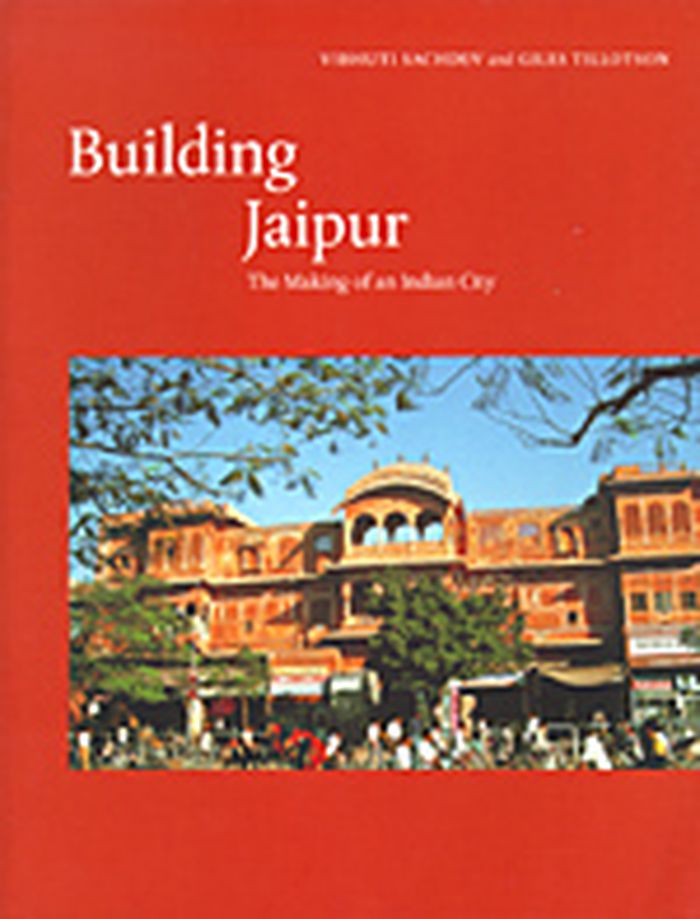
Jaipur, in Rajasthan, is renowned for its palaces and museums, its craft traditions and its distinctive pink shops and houses. A planned city within walls, it was built in pre-modern times according to a distinctive Indian theory of architecture known as vastu vidya. As architecture subsequently developed in India, in response to British and latterly post-colonial policies, this system became increasingly marginalized and fragmented, decreasingly practised and understood. Taking Jaipur as a test case, the authors use this lost tradition to explain historic Indian buildings according to the rationale of their original architects. The authors also examine the place of traditional architectural theory in a modern context – Post-Modern architecture in India has often sought to recapture a spirit of the past, and yet been reluctant to engage with traditional theory. By chronicling the gradual eclipse of Indian architectural theory, the authors explain how this reluctance arose; they also describe the need and the terms for a fresh engagement with it. The result is an architectural biography of a city, and a concise history of Indian architectural theory over the last 300 years.
Building Jaipur : the making of an Indian city
Actions:
Price:
$43.95
(available to order)
Summary:
Jaipur, in Rajasthan, is renowned for its palaces and museums, its craft traditions and its distinctive pink shops and houses. A planned city within walls, it was built in pre-modern times according to a distinctive Indian theory of architecture known as vastu vidya. As architecture subsequently developed in India, in response to British and latterly post-colonial policies, this system became increasingly marginalized and fragmented, decreasingly practised and understood. Taking Jaipur as a test case, the authors use this lost tradition to explain historic Indian buildings according to the rationale of their original architects. The authors also examine the place of traditional architectural theory in a modern context – Post-Modern architecture in India has often sought to recapture a spirit of the past, and yet been reluctant to engage with traditional theory. By chronicling the gradual eclipse of Indian architectural theory, the authors explain how this reluctance arose; they also describe the need and the terms for a fresh engagement with it. The result is an architectural biography of a city, and a concise history of Indian architectural theory over the last 300 years.
Form:
books
books
Publication:
September 2002, London
September 2002, London
Subject:
Arch Southwest Asia & North Africa
Arch Southwest Asia & North Africa
Form:
books
books
Actions:
Holdings:
Description:
480 pages illustrations, maps (1 folded) 44 color plates 32 cm
Description:
480 pages illustrations, maps (1 folded) 44 color plates 32 cm
Author:
Subject:
Publication:
New York, H.N. Abrams [1964]
New York, H.N. Abrams [1964]
Title:
5000 years of the art of Mesopotamia / Eva Strommenger, photographs by Max Hirmer. [Translated by Christina Haglund].
Actions:
Holdings:
Description:
480 pages illustrations, maps (1 folded) 44 color plates 32 cm
5000 years of the art of Mesopotamia / Eva Strommenger, photographs by Max Hirmer. [Translated by Christina Haglund].
Actions:
Holdings:
Description:
480 pages illustrations, maps (1 folded) 44 color plates 32 cm
Form:
books
books
Publication:
New York, H.N. Abrams [1964]
New York, H.N. Abrams [1964]
Author:
Subject:
Form:
books
books
Actions:
Holdings:
Description:
xxiv, 1383 pages : illustrations, maps ; 26 cm
Description:
xxiv, 1383 pages : illustrations, maps ; 26 cm
Author:
Subject:
Publication:
New York : Oxford University Press, 1999.
New York : Oxford University Press, 1999.
Title:
Gotham : a history of New York City to 1898 / Edwin G. Burrows and Mike Wallace.
Actions:
Holdings:
Description:
xxiv, 1383 pages : illustrations, maps ; 26 cm
Gotham : a history of New York City to 1898 / Edwin G. Burrows and Mike Wallace.
Actions:
Holdings:
Description:
xxiv, 1383 pages : illustrations, maps ; 26 cm
Form:
books
books
Publication:
New York : Oxford University Press, 1999.
New York : Oxford University Press, 1999.
Author:
Subject:
Form:
books
books
Actions:
Price:
$37.99
(available in store)
Summary:
In "The effluent eye," Rosemary J. Jolly argues for the decolonization of human rights, attributing their failure not simply to state and institutional malfeasance but to the very concept of human rights as anthropocentric-and, therefore, fatally shortsighted. In an engaging mix of literary and cultural criticism, Indigenous and Black critique, and substantive forays into(...)
$37.99
(available in store)
Summary:
In "The effluent eye," Rosemary J. Jolly argues for the decolonization of human rights, attributing their failure not simply to state and institutional malfeasance but to the very concept of human rights as anthropocentric-and, therefore, fatally shortsighted. In an engaging mix of literary and cultural criticism, Indigenous and Black critique, and substantive forays into(...)
Title:
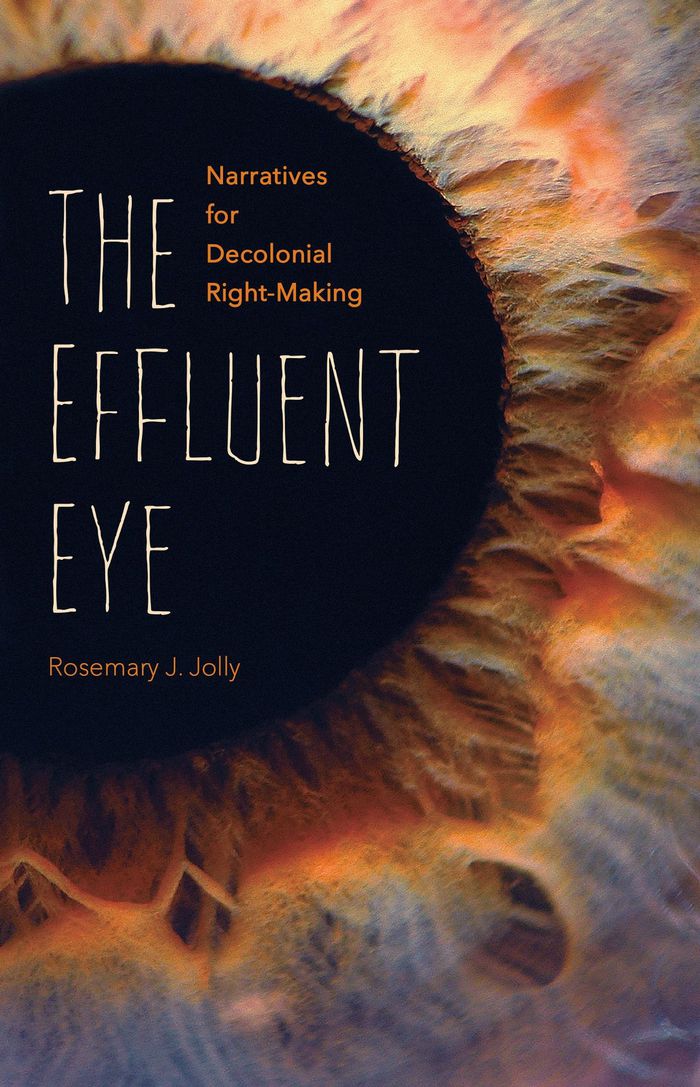
The effluent eye: Narratives for decolonial right-making
Actions:
Price:
$37.99
(available in store)
Summary:
In "The effluent eye," Rosemary J. Jolly argues for the decolonization of human rights, attributing their failure not simply to state and institutional malfeasance but to the very concept of human rights as anthropocentric-and, therefore, fatally shortsighted. In an engaging mix of literary and cultural criticism, Indigenous and Black critique, and substantive forays into the medical humanities, Jolly proposes right-making in the demise of human rights. Using what she calls an "effluent eye," Jolly draws on "Fifth Wave" structural public health to confront the concept of human rights-one of the most powerful and widely entrenched liberal ideas. She builds on Indigenous sovereignty work from authors such as Robin Wall Kimmerer, Leanne Betasamosake Simpson, and Mark Rifkin as well as the littoral development in Black studies from Christine Sharpe, Saidiya Hartman, and Tiffany Lethabo King to engage decolonial thinking on a range of urgent topics such as pandemic history and grief; gender-based violence and sexual assault; and the connections between colonial capitalism and substance abuse, the Anthropocene, and climate change. Combining witnessed experience with an array of decolonial texts, Jolly argues for an effluent form of reading that begins with the understanding that the granting of "rights" to individuals is meaningless in a world compromised by pollution, poverty, and successive pandemics.
The effluent eye: Narratives for decolonial right-making
Actions:
Price:
$37.99
(available in store)
Summary:
In "The effluent eye," Rosemary J. Jolly argues for the decolonization of human rights, attributing their failure not simply to state and institutional malfeasance but to the very concept of human rights as anthropocentric-and, therefore, fatally shortsighted. In an engaging mix of literary and cultural criticism, Indigenous and Black critique, and substantive forays into the medical humanities, Jolly proposes right-making in the demise of human rights. Using what she calls an "effluent eye," Jolly draws on "Fifth Wave" structural public health to confront the concept of human rights-one of the most powerful and widely entrenched liberal ideas. She builds on Indigenous sovereignty work from authors such as Robin Wall Kimmerer, Leanne Betasamosake Simpson, and Mark Rifkin as well as the littoral development in Black studies from Christine Sharpe, Saidiya Hartman, and Tiffany Lethabo King to engage decolonial thinking on a range of urgent topics such as pandemic history and grief; gender-based violence and sexual assault; and the connections between colonial capitalism and substance abuse, the Anthropocene, and climate change. Combining witnessed experience with an array of decolonial texts, Jolly argues for an effluent form of reading that begins with the understanding that the granting of "rights" to individuals is meaningless in a world compromised by pollution, poverty, and successive pandemics.
Form:
books
books
Publication:
January 2024
January 2024
Subject:
Critical Theory
Critical Theory
Form:
books
books
Title:
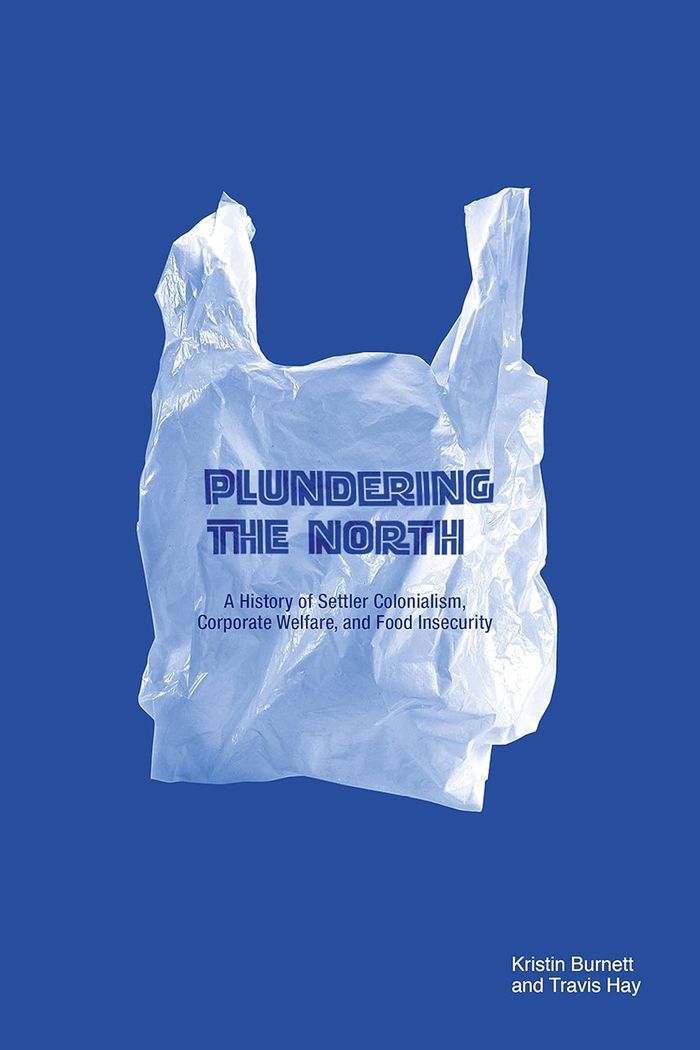
Plundering the North: A history of settler colonialism, corporate welfare, and food insecurity
Plundering the North: A history of settler colonialism, corporate welfare, and food insecurity
Actions:
Price:
$27.95
(available to order)
Summary:
Food insecurity in the North is one of Canada’s most shameful public health and human rights crises. In ''Plundering the North,'' Kristin Burnett and Travis Hay examine the disturbing mechanics behind the origins of this crisis: state and corporate intervention in northern Indigenous foodways. Despite claims to the contrary by governments, the Hudson’s Bay Company (HBC),(...)
$27.95
(available to order)
Summary:
Food insecurity in the North is one of Canada’s most shameful public health and human rights crises. In ''Plundering the North,'' Kristin Burnett and Travis Hay examine the disturbing mechanics behind the origins of this crisis: state and corporate intervention in northern Indigenous foodways. Despite claims to the contrary by governments, the Hudson’s Bay Company (HBC),(...)
Title:
Plundering the North: A history of settler colonialism, corporate welfare, and food insecurity
Actions:
Price:
$27.95
(available to order)
Summary:
Food insecurity in the North is one of Canada’s most shameful public health and human rights crises. In ''Plundering the North,'' Kristin Burnett and Travis Hay examine the disturbing mechanics behind the origins of this crisis: state and corporate intervention in northern Indigenous foodways. Despite claims to the contrary by governments, the Hudson’s Bay Company (HBC), and the contemporary North West Company (NWC), the exorbitant cost of food in the North is neither a naturally occurring phenomenon nor the result of free-market forces. Rather, inflated food prices are the direct result of government policies and corporate monopolies. Using food as a lens to track the institutional presence of the Canadian state in the North, Burnett and Hay chart the social, economic, and political changes that have taken place in northern Ontario since the 1950s. They explore the roles of state food policy and the HBC and NWC in setting up, perpetuating, and profiting from food insecurity while undermining Indigenous food sovereignties and self-determination. ''Plundering the North'' provides fresh insight into Canada’s settler colonial project by re-evaluating northern food policy and laying bare the governmental and corporate processes behind the chronic food insecurity experienced by northern Indigenous communities.
Plundering the North: A history of settler colonialism, corporate welfare, and food insecurity
Actions:
Price:
$27.95
(available to order)
Summary:
Food insecurity in the North is one of Canada’s most shameful public health and human rights crises. In ''Plundering the North,'' Kristin Burnett and Travis Hay examine the disturbing mechanics behind the origins of this crisis: state and corporate intervention in northern Indigenous foodways. Despite claims to the contrary by governments, the Hudson’s Bay Company (HBC), and the contemporary North West Company (NWC), the exorbitant cost of food in the North is neither a naturally occurring phenomenon nor the result of free-market forces. Rather, inflated food prices are the direct result of government policies and corporate monopolies. Using food as a lens to track the institutional presence of the Canadian state in the North, Burnett and Hay chart the social, economic, and political changes that have taken place in northern Ontario since the 1950s. They explore the roles of state food policy and the HBC and NWC in setting up, perpetuating, and profiting from food insecurity while undermining Indigenous food sovereignties and self-determination. ''Plundering the North'' provides fresh insight into Canada’s settler colonial project by re-evaluating northern food policy and laying bare the governmental and corporate processes behind the chronic food insecurity experienced by northern Indigenous communities.
Form:
books
books
Publication:
October 2023
October 2023
Subject:
Social
Social


