


2737 Results
Form:
books
books
Actions:
Price:
$37.95
(available to order)
Summary:
The idea of fashion under socialism conjures up images of babushka headscarves and black market blue jeans. And yet, as Djurdja Bartlett shows in this groundbreaking book, the socialist East had an intimate relationship with fashion. Official antagonism—which cast fashion as frivolous and antirevolutionary—eventually gave way to grudging acceptance and creeping(...)
Title:
Fashion East : the spectre that haunted socialism
Actions:
Price:
$37.95
(available to order)
Summary:
The idea of fashion under socialism conjures up images of babushka headscarves and black market blue jeans. And yet, as Djurdja Bartlett shows in this groundbreaking book, the socialist East had an intimate relationship with fashion. Official antagonism—which cast fashion as frivolous and antirevolutionary—eventually gave way to grudging acceptance and creeping consumerism. Bartlett outlines three phases in socialist fashion, and illustrates them with abundant images from magazines of the period: postrevolutionary utopian dress, official state-sanctioned socialist fashion, and samizdat-style everyday fashion. Utopian dress, ranging from the geometric abstraction of the constructivists under Bolshevism in the Soviet Union to the no-frills desexualized uniform of a factory worker in Czechoslovakia, reflected the revolutionary urge for a clean break with the past. The highly centralized socialist fashion system, part of Stalinist industrialization, offered official prototypes of high fashion that were never available in stores—mythical images of smart and luxurious dresses that symbolized the economic progress that socialist regimes dreamed of. Everyday fashion, starting in the 1950s, was an unofficial, do-it-yourself enterprise: Western fashions obtained through semiclandestine channels or sewn at home. The state tolerated the demand for Western fashion, promising the burgeoning middle class consumer goods in exchange for political loyalty. Bartlett traces the progress of socialist fashion in the Soviet Union, Czechoslovakia, Hungary, East Germany, Poland, and Yugoslavia, drawing on state-sponsored socialist women’s magazines, etiquette books, socialist manuals on dress, private archives, and her own interviews with designers, fashion editors, and other key figures. Fashion, she suggests, with all its ephemerality and dynamism, was in perpetual conflict with the socialist regimes’ fear of change and need for control. It was, to echo the famous first sentence from the Communist Manifesto, the spectre that haunted socialism until the end.
Form:
books
books
Publication:
October 2010
October 2010
Subject:
Fashion Design
Fashion Design
Form:
books
books
Actions:
Price:
$160.00
(available in store)
Summary:
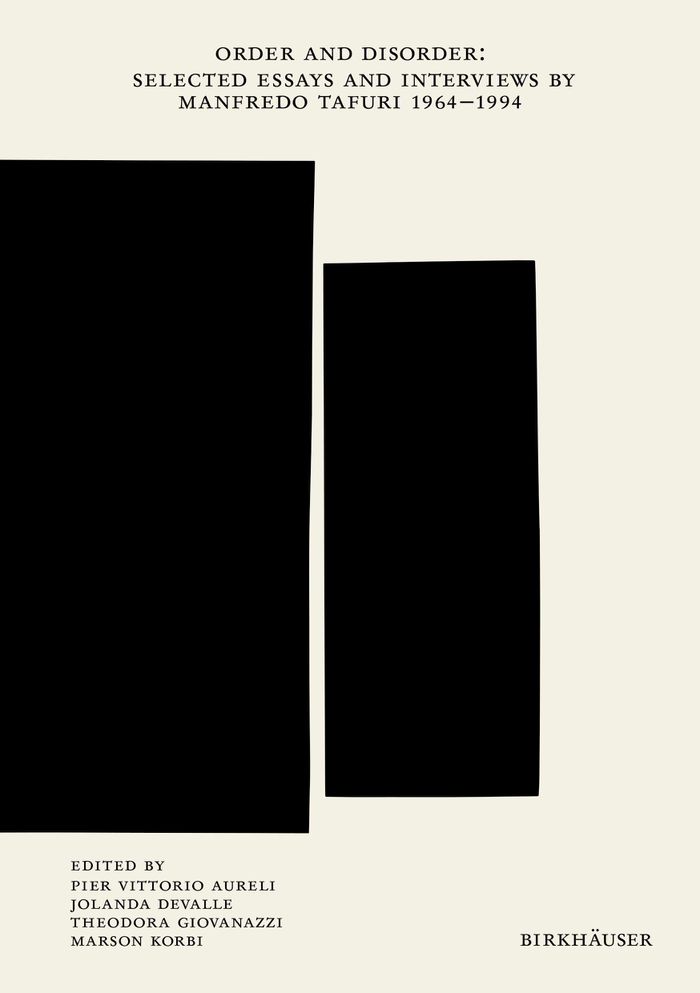
Manfredo Tafuri was one of the most influential architectural historians of the twentieth century, and his work continues to shape the landscape of architectural history and theory. This anthology presents—for the first time—a carefully curated selection of essays and interviews spanning his entire career, from 1964, the year in which Tafuri decided to focus exclusively(...)
Title:
Order and disorder: Selected essays and interviews by Manfredo Tafuri, 1964-1994
Actions:
Price:
$160.00
(available in store)
Summary:
Manfredo Tafuri was one of the most influential architectural historians of the twentieth century, and his work continues to shape the landscape of architectural history and theory. This anthology presents—for the first time—a carefully curated selection of essays and interviews spanning his entire career, from 1964, the year in which Tafuri decided to focus exclusively on architectural history, to 1994, the year of his untimely death. These texts—most translated into English for the first time—reveal the extraordinary range of Tafuri’s scholarship, ranging from topics as diverse as the critique of architectural ideology and capitalist development, to the contradictions of the Soviet avant-garde, urban strategies in renaissance Italy, social democratic planning policies, and the work of architects including Giulio Romano, Le Corbusier, Aldo Rossi, and Carlo Scarpa.
Form:
books
books
Publication:
June 2026
June 2026
Subject:
Architectural Theory
Architectural Theory
Form:
books
books
Title:
Mosca 1962
Mosca 1962
Actions:
Price:
$36.95
(available to order)
Summary:
In the summer of 1962, while still a university student of architecture, Andrea Branzi went to visit his brother Piergiorgio in Moscow, where he was working as a Rai correspondent. This was the world of the Cold War, but the "thaw" heralded by Nikita Khrushchev had somewhat loosened the grip of the Soviet regime. The young Branzi took the chance to wander around the city,(...)
Title:
Mosca 1962
Actions:
Price:
$36.95
(available to order)
Summary:
In the summer of 1962, while still a university student of architecture, Andrea Branzi went to visit his brother Piergiorgio in Moscow, where he was working as a Rai correspondent. This was the world of the Cold War, but the "thaw" heralded by Nikita Khrushchev had somewhat loosened the grip of the Soviet regime. The young Branzi took the chance to wander around the city, exploring it from top to bottom. With a curiosity for everything, he was struck by the immense size of the capital, by its new neighbourhoods, by the signs of communism and its history, by the omnipresence of the military, but also by the relaxed outlook of the youth, the department stores, the Russians' carefree relationship with nature, the innocence of the children and the widespread love of chess.
Form:
books
books
Publication:
October 2025
October 2025
Subject:
Photography monographs
Photography monographs
Form:
books
books
Title:
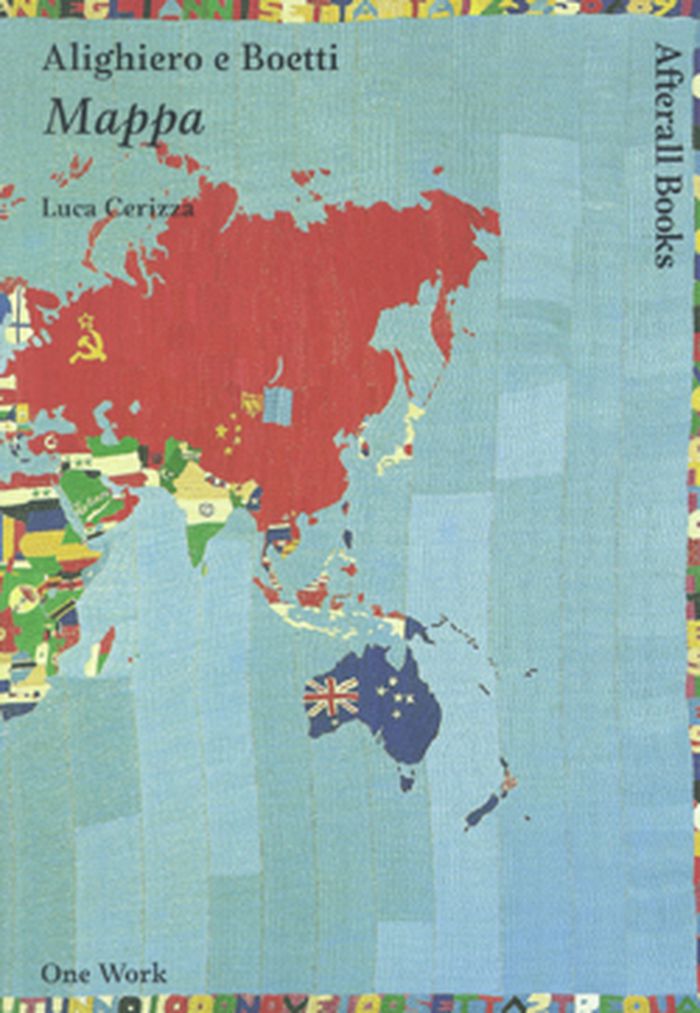
Alighiero e Boetti: mappa
Alighiero e Boetti: mappa
Actions:
Price:
$16.95
(available to order)
Summary:
In 1971 Alighiero e Boetti commissioned Afghan embroiderers to create a map of the world, with each country bearing the colours and pattern of its flag. The commission grew into a beautifully crafted, large-scale series of maps produced over a period of twenty years in Kabul, Afghanistan and Peshawar, Pakistan. Each map tracked geopolitical changes throughout the world:(...)
Title:
Alighiero e Boetti: mappa
Actions:
Price:
$16.95
(available to order)
Summary:
In 1971 Alighiero e Boetti commissioned Afghan embroiderers to create a map of the world, with each country bearing the colours and pattern of its flag. The commission grew into a beautifully crafted, large-scale series of maps produced over a period of twenty years in Kabul, Afghanistan and Peshawar, Pakistan. Each map tracked geopolitical changes throughout the world: the break-up of the Soviet Union, the unification of Germany, disputes over territories in the Middle East and regime changes in the Eurasian peninsula. In this new study, Italian curator Luca Cerizza looks at Boetti's Mappa in relation to world events and the history of map-making, as well as to the contemporary art movements of Minimalism, Conceptualism and Arte Povera. Luca Cerizza is an art historian and curator based in Berlin.
Form:
books
books
Publication:
January 1900, London
January 1900, London
Subject:
Art Theory
Art Theory
Form:
books
books
Actions:
Price:
$69.95
(available in store)
Summary:
The gifting of architecture during the Cold War was a spectacular means for socialist countries to manifest a new vision of international relations for the decolonizing world. Soviet, Eastern European, Chinese, and Cuban institutions donated factories, schools, hospitals, and housing to newly independent states in Africa and Asia, transforming cities and landscapes in(...)
Title:
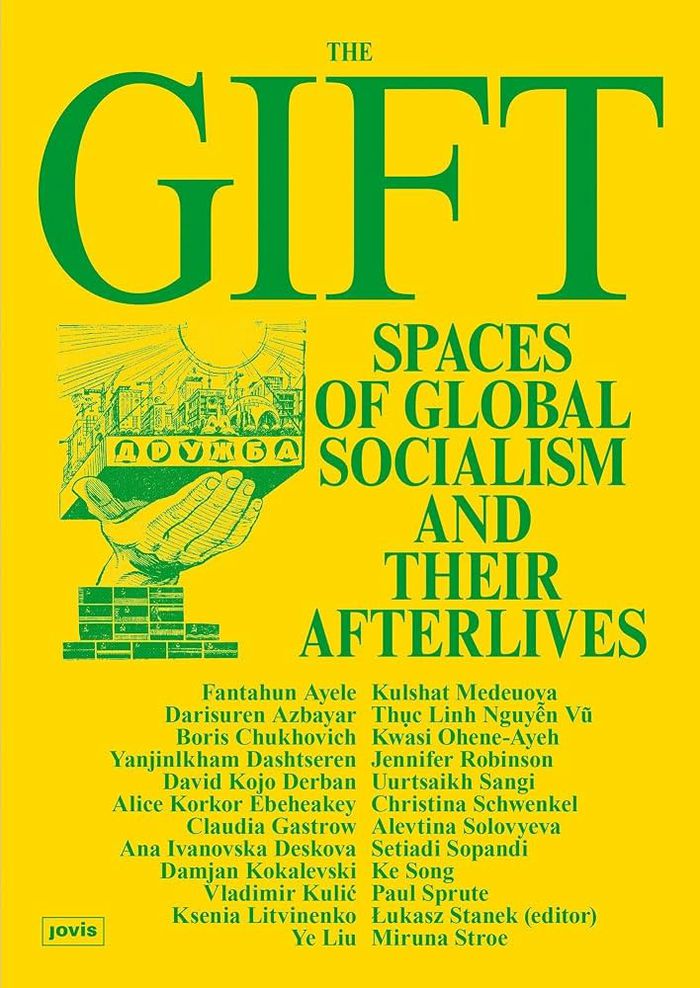
The gift: Spaces of global socialism and their afterlives
Actions:
Price:
$69.95
(available in store)
Summary:
The gifting of architecture during the Cold War was a spectacular means for socialist countries to manifest a new vision of international relations for the decolonizing world. Soviet, Eastern European, Chinese, and Cuban institutions donated factories, schools, hospitals, and housing to newly independent states in Africa and Asia, transforming cities and landscapes in Ethiopia, Ghana, Tanzania, Mongolia, Vietnam, and elsewhere. This book shows how the moral, temporal, and racial dynamics of gift-giving conditioned the design, construction, and afterlives of these buildings. It debates how the generosity and violence specific to gift exchange, and the social bonds that it creates, shaped and continue to shape everyday urbanism across Africa and Asia. By rereading these encounters, ''The Gift'' offers a uniquely differentiated genealogy of global urbanization and its architecture.
Form:
books
books
Publication:
August 2026
August 2026
Subject:
Architectural Theory
Architectural Theory
Form:
books
books
Actions:
Price:
$62.50
(available to order)
Summary:
Nikolai Vavilov anticipated the disappearance of plant diversity and within the space of a few decades through study and travel all over the world he found the means of saving it. For political and ideological reasons, Vavilov was condemned to death and left to starve in the dungeon of a Soviet prison. Gradually, on both sides of the iron curtain, his memory began to(...)
Title:
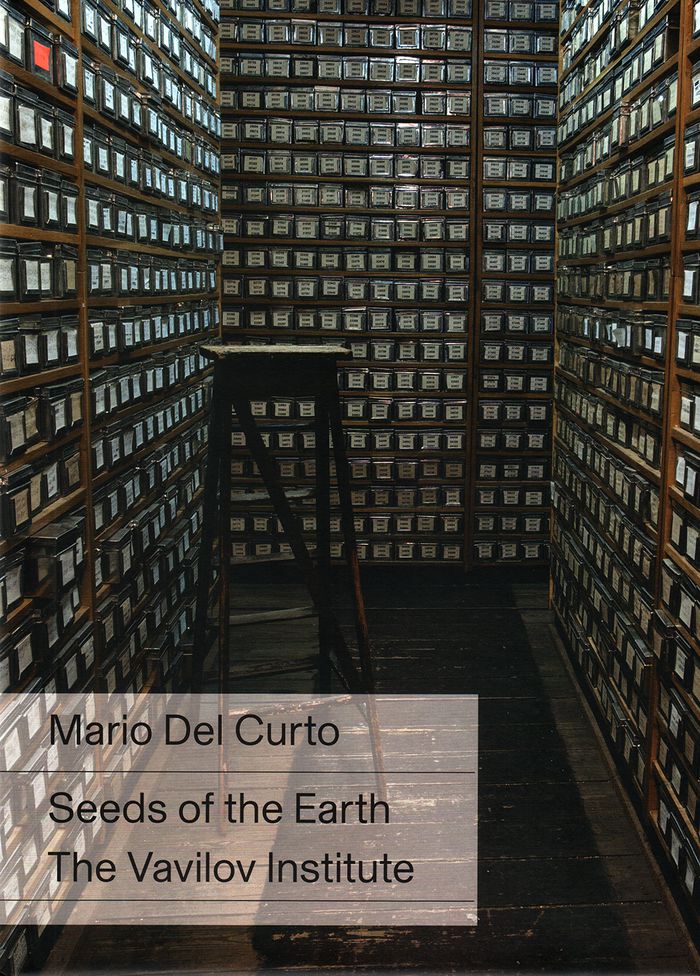
Mario del Curto: seeds of the earth
Actions:
Price:
$62.50
(available to order)
Summary:
Nikolai Vavilov anticipated the disappearance of plant diversity and within the space of a few decades through study and travel all over the world he found the means of saving it. For political and ideological reasons, Vavilov was condemned to death and left to starve in the dungeon of a Soviet prison. Gradually, on both sides of the iron curtain, his memory began to fade. One hundred years after Vavilov's first expedition, the photographer Mario Del Curto retraced his footsteps. For four years he met with those who, despite overwhelming obstacles, perpetuate Vavilov's seed prospecting, selection and conservation work in order to save the planet's staple food crops. This book is the unprecedented story of his journey to the heart of the Vavilov Institute and its twelve research stations.
Form:
books
books
Publication:
August 2017
August 2017
Subject:
Photography monographs
Photography monographs
Form:
books
books
Price:
$22.95
(available to order)
Summary:
Vladimir Sorokin’s first published novel, "The Queue," is a sly comedy about the late Soviet 'years of stagnation.' Thousands of citizens are in line for . . . nobody knows quite what, but the rumors are flying. Leather or suede? Jackets, jeans? Turkish, Swedish, maybe even American? It doesn’t matter–if anything is on sale, you better line up to buy it. Sorokin’s tour de(...)
Title:
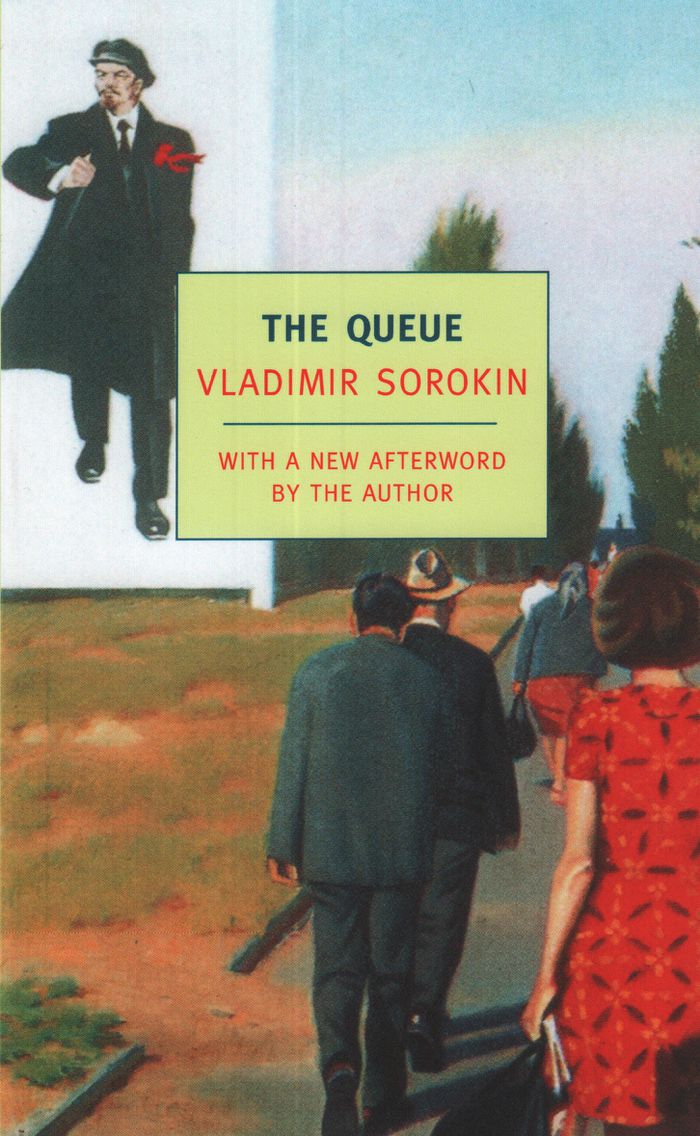
The queue
Actions:
Price:
$22.95
(available to order)
Summary:
Vladimir Sorokin’s first published novel, "The Queue," is a sly comedy about the late Soviet 'years of stagnation.' Thousands of citizens are in line for . . . nobody knows quite what, but the rumors are flying. Leather or suede? Jackets, jeans? Turkish, Swedish, maybe even American? It doesn’t matter–if anything is on sale, you better line up to buy it. Sorokin’s tour de force of ventriloquism and formal daring tells the whole story in snatches of unattributed dialogue, adding up to nothing less than the real voice of the people, overheard on the street as they joke and curse, fall in and out of love, slurp down ice cream or vodka, fill out crossword puzzles, even go to sleep and line up again in the morning as the queue drags on.
Form:
books
books
Publication:
October 2008
October 2008
Subject:
Current Exhibitions
Current Exhibitions
Form:
books
books
Actions:
Price:
$30.95
(available to order)
Summary:
In "Havana beyond the Ruins," prominent architects, scholars, and writers based in and outside of Cuba analyze how Havana has been portrayed in literature, music, and the visual arts since Soviet subsidies of Cuba ceased, and the Cuban state has re-imagined Havana as a destination for international tourists and business ventures. Cuba's capital has experienced little(...)
Title:
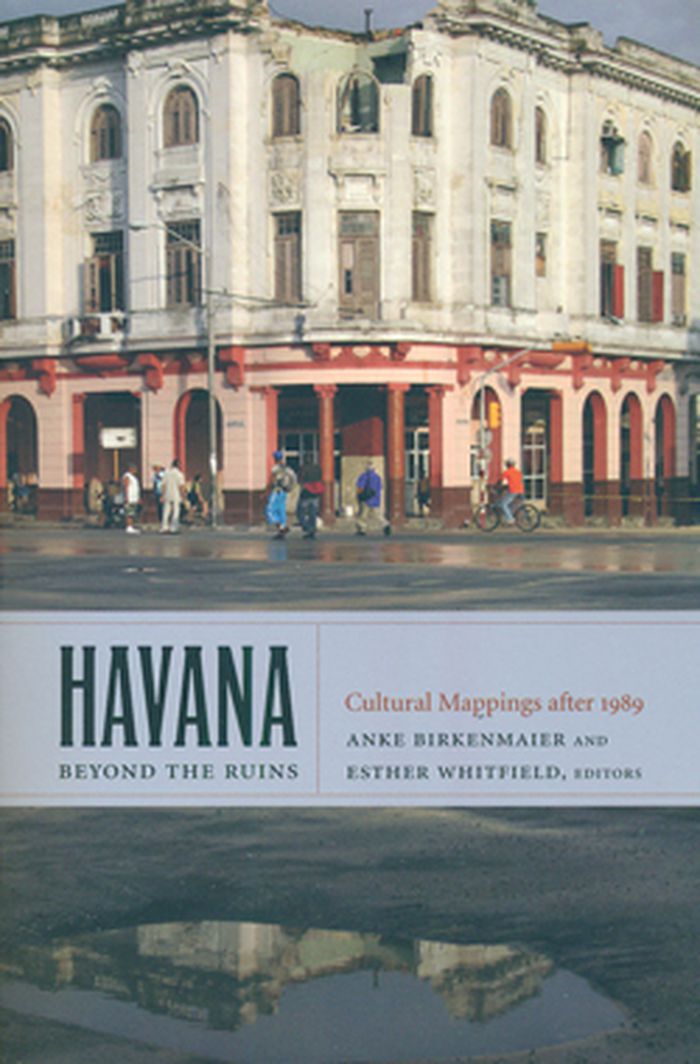
Havana, beyond the ruins: cultural mappings after 1989
Actions:
Price:
$30.95
(available to order)
Summary:
In "Havana beyond the Ruins," prominent architects, scholars, and writers based in and outside of Cuba analyze how Havana has been portrayed in literature, music, and the visual arts since Soviet subsidies of Cuba ceased, and the Cuban state has re-imagined Havana as a destination for international tourists and business ventures. Cuba's capital has experienced little construction since the revolution of 1959; many of its citizens live in poorly maintained colonial and modernist dwellings. It is this Havana--of crumbling houses, old cars, and a romantic aura of ruined hopes--that is marketed in picture books, memorabilia, and films. Bringing together assessments of the city's dwellings and urban development projects, "Havana beyond the Ruins" provides unique insights into issues of memory, citizenship, urban life, and the future of the revolution in Cuba.
Form:
books
books
Publication:
September 2011
September 2011
Subject:
Urban Theory
Urban Theory
Form:
books
books
Title:
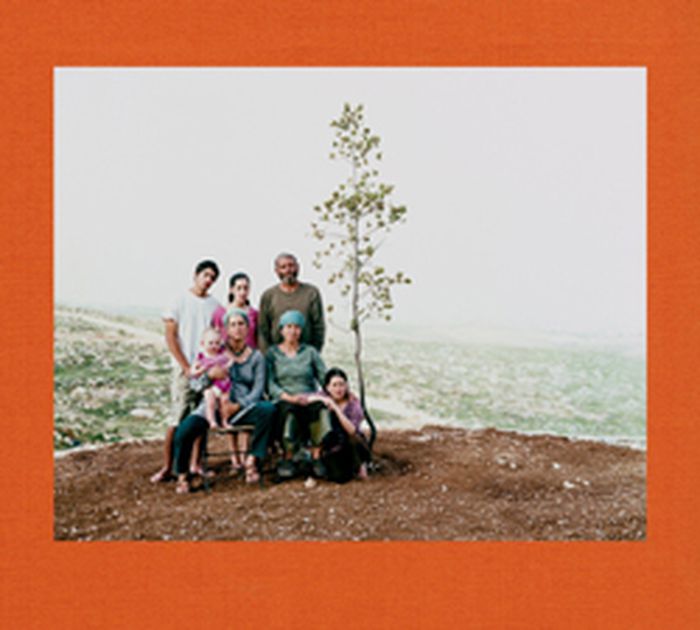
Nick Waplington: settlement
Nick Waplington: settlement
Actions:
Price:
$92.00
(available to order)
Summary:
The book investigates the topography of Jewish identity in the West Bank, which is in conflict not only with the Palestinian majority but also with mainstream Israeli society: While all the settlers are Jewish, and almost all are Israeli citizens, many are not natives of Israel. Most of the men and women photographed by Waplington are immigrants who arrived in the West(...)
Title:
Nick Waplington: settlement
Actions:
Price:
$92.00
(available to order)
Summary:
The book investigates the topography of Jewish identity in the West Bank, which is in conflict not only with the Palestinian majority but also with mainstream Israeli society: While all the settlers are Jewish, and almost all are Israeli citizens, many are not natives of Israel. Most of the men and women photographed by Waplington are immigrants who arrived in the West Bank from the United States, South Africa, Australia, the UK, the former Soviet Union, and other parts of the wider Jewish diaspora. The exact number of settlements cannot be determined with accuracy, as both construction and demolition take place regularly throughout the region. In general, however, the presence of Jewish settlers in the West Bank is entrenched, and their building projects continue with the support of the state of Israel.
Form:
books
books
Publication:
November 2014
November 2014
Subject:
Photography monographs
Photography monographs
Form:
books
books
Actions:
Price:
$66.95
(available to order)
Summary:
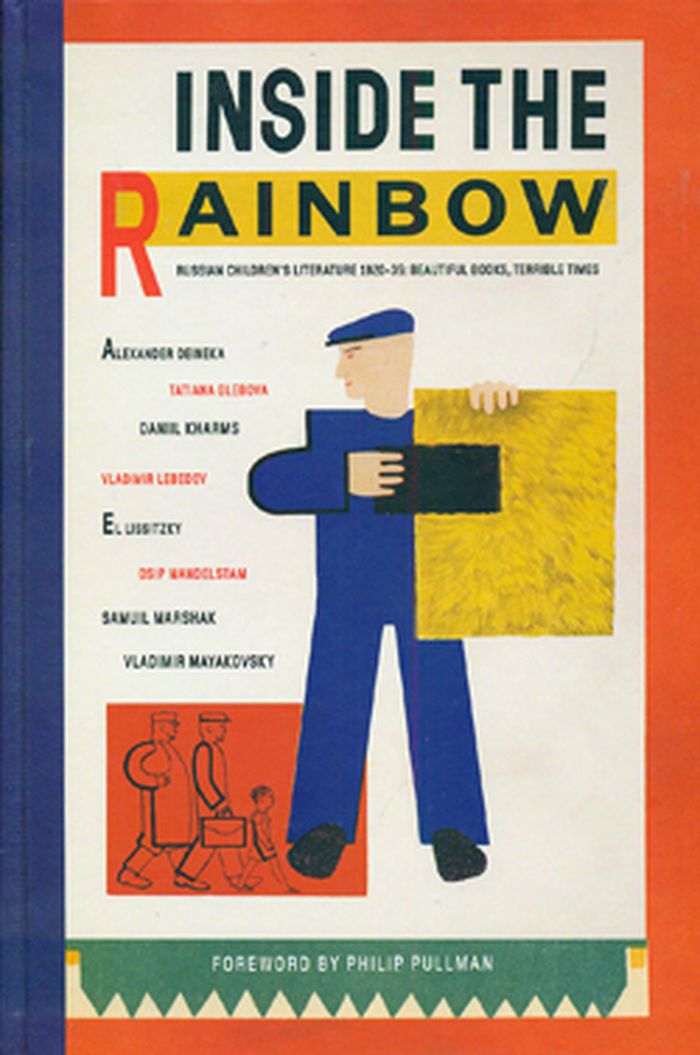
Inside The Rainbow reprints for the first time in English a unique compendium of Soviet picture books from the 1920 and 1930s. In the dark and dangerous world of revolutionary Petrograd, a group of Russian poets and artists came together to create a new kind of book for children. They dreamed of endless possibilities in a new world where children and grown-ups alike would(...)
Title:
Inside the rainbow: Russian children's literature 1920-35
Actions:
Price:
$66.95
(available to order)
Summary:
Inside The Rainbow reprints for the first time in English a unique compendium of Soviet picture books from the 1920 and 1930s. In the dark and dangerous world of revolutionary Petrograd, a group of Russian poets and artists came together to create a new kind of book for children. They dreamed of endless possibilities in a new world where children and grown-ups alike would be free from the bitterness of ignorance. For a time, when children's publications still escaped the scourge of state censorship, their books became a last haven for learning, poetic irony, burlesque and laughter. In this book 250 examples of illustration and design are complemented by some translations of poems and stories as well as texts from the victims, criminals and witnesses to the Russian revolution.
Form:
books
books
Publication:
August 2013
August 2013
Subject:
Illustration
Illustration


