


273 Results
Form:
books
books

Actions:
Price:
$72.00
(available to order)
Summary:
Little known among the general public, Alexander Henderson's work laid the foundations of the Canadian romantic landscape and its themes: the magic of winter, the endless lure of the country’s lakes and waterways, the metaphysical awe inspired by the vastness of its land and its great river. But Henderson also offered a colonial vision of the young North American city and(...)
Title:
Alexander Henderson: Art and nature
Actions:
Price:
$72.00
(available to order)
Summary:
Little known among the general public, Alexander Henderson's work laid the foundations of the Canadian romantic landscape and its themes: the magic of winter, the endless lure of the country’s lakes and waterways, the metaphysical awe inspired by the vastness of its land and its great river. But Henderson also offered a colonial vision of the young North American city and documented a number of Canada’s major railway projects. This publication accompanies the first exhibition devoted to Henderson’s entire oeuvre and focusses on photographs that highlight the tonalities, textures, and clarity characteristic of the prints of the period. Texts explore Henderson’s biography, the sources and forms of romanticism evident in his landscapes, and the genesis of his work as a process of adaptation to the New World in a context of British imperialism.
Form:
books
books
Publication:
September 2022
September 2022
Subject:
Photography monographs
Photography monographs
Form:
books
books
Price:
$24.95
(available to order)
Summary:
Drained by a half-dozen major watersheds, cut by a network of deep ravines and fronting on a Great Lake, Toronto is dominated by water. Like most cities, though, Toronto has mismanaged its water, from the decades-long transformation of the citys creeks into sewersheds to the alteration of Torontos waterfront. Recently, the trend of fettering Torontos water and putting it(...)
Subject:
Architecture in Canada
Architecture in Canada
Publication:
November 2008, Toronto
November 2008, Toronto
Title:
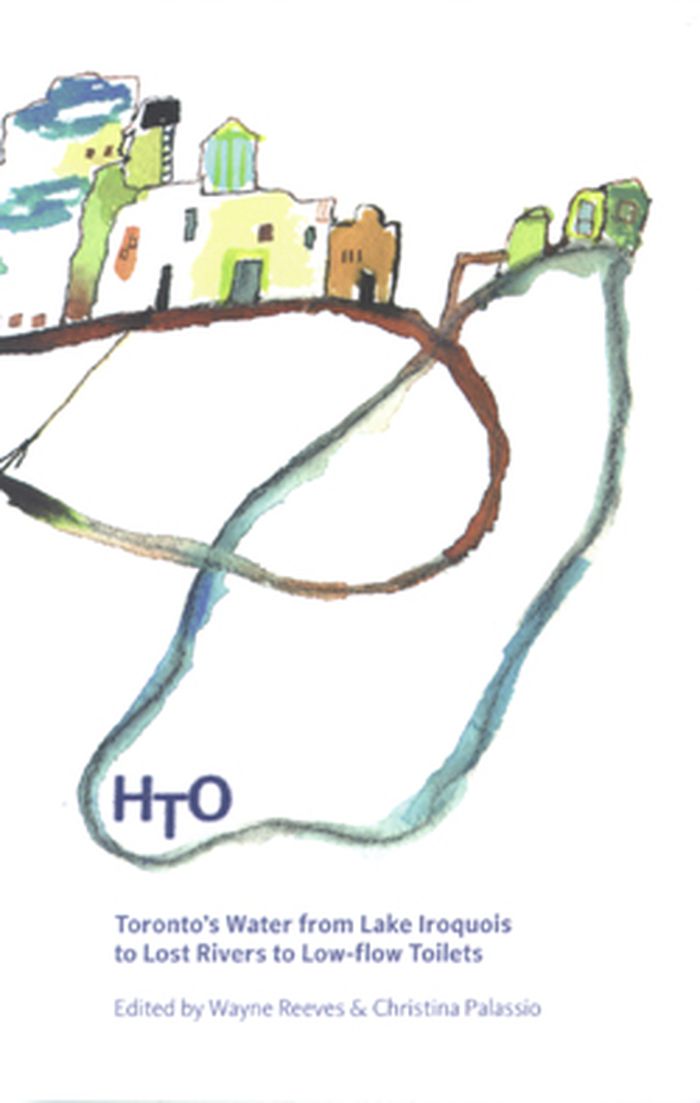
HTO Toronto's water from Lake Iroquois to lost Rivers to Low-flow toilets
Actions:
Price:
$24.95
(available to order)
Summary:
Drained by a half-dozen major watersheds, cut by a network of deep ravines and fronting on a Great Lake, Toronto is dominated by water. Like most cities, though, Toronto has mismanaged its water, from the decades-long transformation of the citys creeks into sewersheds to the alteration of Torontos waterfront. Recently, the trend of fettering Torontos water and putting it underground has been countered by persistent citizen-led efforts to recall and restore the citys surface water. In HTO: Torontos Water From Lake Iroquois to Taddle Creek and Beyond, 30 contributors examine the ever-changing interplay between nature and culture, and call into question the citys past, present and future engagement with water.
Form:
books
books
Publication:
November 2008, Toronto
November 2008, Toronto
Subject:
Architecture in Canada
Architecture in Canada
Form:
books
books
Actions:
Price:
$29.99
(available to order)
Summary:
In 1825 the Erie Canal, connecting the Atlantic with the American heartland via the Great Lakes, was completed, and in 1861 the Civil War, disrupting American unity, began. This volume examines the exhilarating period between these two far-reaching events. The(...)
Subject:
sale books
sale books
Publication:
October 2000, New York
October 2000, New York
Title:
Art and the empire city : New York, 1825-1861
Actions:
Price:
$29.99
(available to order)
Summary:
In 1825 the Erie Canal, connecting the Atlantic with the American heartland via the Great Lakes, was completed, and in 1861 the Civil War, disrupting American unity, began. This volume examines the exhilarating period between these two far-reaching events. The Erie Canal turned the port of New York into the gateway to the United States, ushering in a time of enormous growth and change for the city of New York. Still very much a work in progress, New York became both an international economic and cultural center: it was transformed into what contemporary observers variously termed the Empire City, the Great Emporium, and the Empress City of the West. The cultural component of this transformation was as significant as its economic aspect. Highly skilled artists and craftsmen working in New York, both native born and immigrant, grew in number, and institutions devoted to the arts emerged and flourished. With Broadway at its heart, the Great Emporium developed into the nation’s major manufacturing and retailing center, the depot for luxury goods made in and around the city and imported from Europe. The complex story of the proliferation of the arts in New York and the evolution of an increasingly discerning audience for those arts during the antebellum period is the focus of this book, which accompanies a major exhibition at The Metropolitan Museum of Art. In essays that will interest scholars as well as a more general audience, specialists from the Metropolitan Museum, the Museum of the City of New York, and the University of California at Berkeley bring new research and insights to bear on a broad range of subjects. Their texts offer both historical and cultural contexts and explore the city’s development as a nexus for the marketing and display of art, as well as private collecting; landscape painting viewed against the background of tourism; new departures in sculpture, architecture, and printmaking; the birth of photography; New York as a fashion center; shopping for home decorations; changing styles in furniture; and the evolution of the ceramics, glass, and silver industries. This volume is lavishly illustrated in color and black and white, providing reproductions of the more than three hundred works in the exhibition as well as comparative material. A checklist of works in the exhibition, a bibliography, and an index are included.
Form:
books
books
Publication:
October 2000, New York
October 2000, New York
Subject:
sale books
sale books


