


272 Results
Form:
books
books
Actions:
Price:
$33.95
(available to order)
Summary:
Judith Butler’s new book shows how an ethic of nonviolence must be connected to a broader political struggle for social equality. Further, it argues that nonviolence is often misunderstood as a passive practice that emanates from a calm region of the soul, or as an individualist ethical relation to existing forms of power. But, in fact, nonviolence is an ethical position(...)
$33.95
(available to order)
Summary:
Judith Butler’s new book shows how an ethic of nonviolence must be connected to a broader political struggle for social equality. Further, it argues that nonviolence is often misunderstood as a passive practice that emanates from a calm region of the soul, or as an individualist ethical relation to existing forms of power. But, in fact, nonviolence is an ethical position(...)
Title:
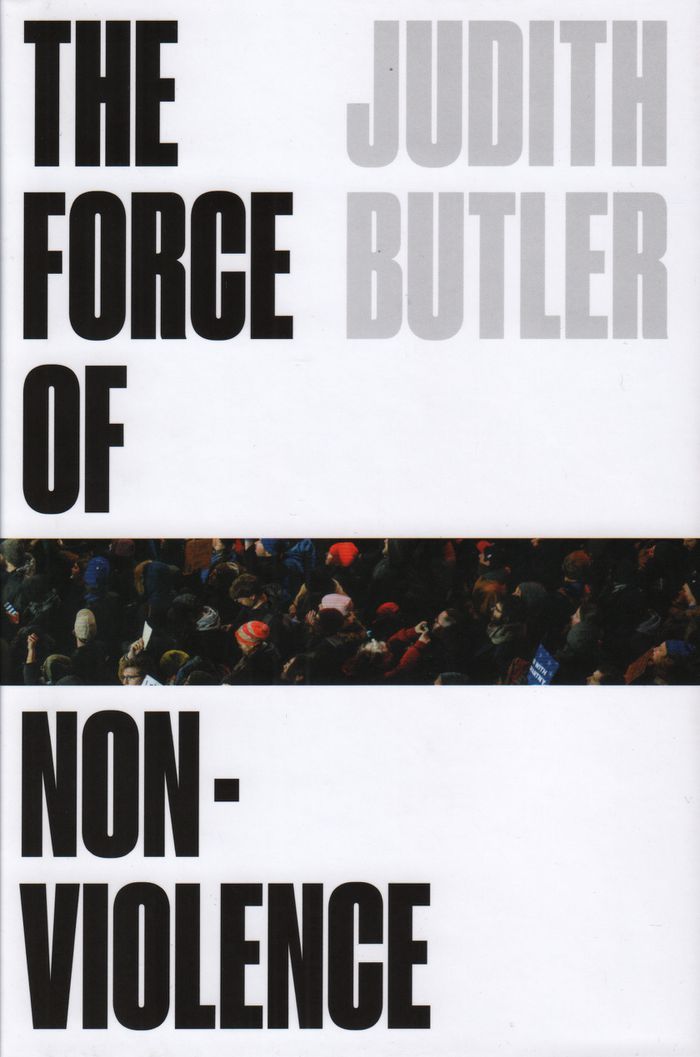
The force of non violence: the ethical in the political
Actions:
Price:
$33.95
(available to order)
Summary:
Judith Butler’s new book shows how an ethic of nonviolence must be connected to a broader political struggle for social equality. Further, it argues that nonviolence is often misunderstood as a passive practice that emanates from a calm region of the soul, or as an individualist ethical relation to existing forms of power. But, in fact, nonviolence is an ethical position found in the midst of the political field. An aggressive form of nonviolence accepts that hostility is part of our psychic constitution, but values ambivalence as a way of checking the conversion of aggression into violence. One contemporary challenge to a politics of nonviolence points out that there is a difference of opinion on what counts as violence and nonviolence. The distinction between them can be mobilized in the service of ratifying the state’s monopoly on violence. Considering nonviolence as an ethical problem within a political philosophy requires a critique of individualism as well as an understanding of the psychosocial dimensions of violence. Butler draws upon Foucault, Fanon, Freud, and Benjamin to consider how the interdiction against violence fails to include lives regarded as ungrievable. By considering how “racial phantasms” inform justifications of state and administrative violence, Butler tracks how violence is often attributed to those who are most severely exposed to its lethal effects. The struggle for nonviolence is found in movements for social transformation that reframe the grievability of lives in light of social equality and whose ethical claims follow from an insight into the interdependency of life as the basis of social and political equality.
The force of non violence: the ethical in the political
Actions:
Price:
$33.95
(available to order)
Summary:
Judith Butler’s new book shows how an ethic of nonviolence must be connected to a broader political struggle for social equality. Further, it argues that nonviolence is often misunderstood as a passive practice that emanates from a calm region of the soul, or as an individualist ethical relation to existing forms of power. But, in fact, nonviolence is an ethical position found in the midst of the political field. An aggressive form of nonviolence accepts that hostility is part of our psychic constitution, but values ambivalence as a way of checking the conversion of aggression into violence. One contemporary challenge to a politics of nonviolence points out that there is a difference of opinion on what counts as violence and nonviolence. The distinction between them can be mobilized in the service of ratifying the state’s monopoly on violence. Considering nonviolence as an ethical problem within a political philosophy requires a critique of individualism as well as an understanding of the psychosocial dimensions of violence. Butler draws upon Foucault, Fanon, Freud, and Benjamin to consider how the interdiction against violence fails to include lives regarded as ungrievable. By considering how “racial phantasms” inform justifications of state and administrative violence, Butler tracks how violence is often attributed to those who are most severely exposed to its lethal effects. The struggle for nonviolence is found in movements for social transformation that reframe the grievability of lives in light of social equality and whose ethical claims follow from an insight into the interdependency of life as the basis of social and political equality.
Form:
books
books
Publication:
February 2020
February 2020
Subject:
Social
Social
Form:
books
books
Actions:
Price:
$48.95
(available to order)
Summary:
112 Greene Street, The Kitchen, Artists Space, The Clocktower, P.S.1, Franklin Furnace, ou Fashion Moda : ces lieux nés durant la décennie 1970, et parfois toujours en activité, ont laissé une empreinte durable sur la scène artistique new-yorkaise. « Espaces alternatifs », d'abord installés dans ces quartiers industriels du sud de Manhattan qui deviendront SoHo et(...)
$48.95
(available to order)
Summary:
112 Greene Street, The Kitchen, Artists Space, The Clocktower, P.S.1, Franklin Furnace, ou Fashion Moda : ces lieux nés durant la décennie 1970, et parfois toujours en activité, ont laissé une empreinte durable sur la scène artistique new-yorkaise. « Espaces alternatifs », d'abord installés dans ces quartiers industriels du sud de Manhattan qui deviendront SoHo et(...)
Title:
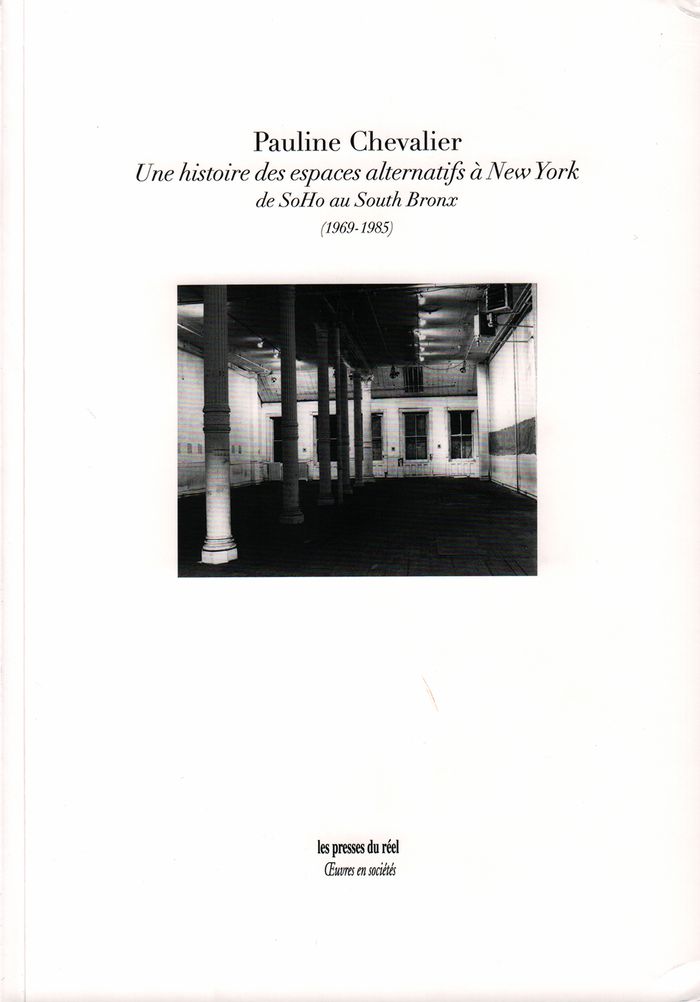
Une histoire des espaces alternatifs à New York: de SoHo au South Bronx,1969-1985
Actions:
Price:
$48.95
(available to order)
Summary:
112 Greene Street, The Kitchen, Artists Space, The Clocktower, P.S.1, Franklin Furnace, ou Fashion Moda : ces lieux nés durant la décennie 1970, et parfois toujours en activité, ont laissé une empreinte durable sur la scène artistique new-yorkaise. « Espaces alternatifs », d'abord installés dans ces quartiers industriels du sud de Manhattan qui deviendront SoHo et TriBeCa, puis dans l'East Village, le Queens, Brooklyn, ou encore le sud du Bronx, ces lieux d'exposition, de création et de sociabilité établis en marge des institutions muséales et des galeries commerciales ont favorisé l'épanouissement de nouvelles pratiques : art processuel, danse postmoderne, art vidéo, performance. C'est une enquête historique et un parcours géographique que propose l'ouvrage, mettant en lumière l'articulation entre ces pratiques et les phénomènes institutionnels, sociaux, économiques et urbains dont elles ne peuvent être dissociées. Si les installations dans les espaces bruts du 112 Greene Street ou l'exposition inaugurale de P.S.1 révèlent un engouement pour le matériau urbain, c'est aussi la place des artistes dans la ville de New York qui est alors constamment interrogée, depuis la légalisation des premiers lofts jusqu'aux critiques virulentes de la gentrification qui émanent de la communauté artistique elle-même. Alors qu'au début des années 1970 ces lieux alternatifs profitent d'un contexte économique favorable et du soutien d'une nouvelle politique culturelle fédérale et locale, le milieu des années 1980 sonne le glas d'un mouvement. « The Fun is gone » arbore la Fun Gallery à sa fermeture dans l'East Village en 1985. La scène alternative s'essouffle sous la présidence Reagan, non sans avoir nourri sa propre histoire et contribué à la constitution d'une mythologie et d'un héritage dont l'ambivalence persiste aujourd'hui.
Une histoire des espaces alternatifs à New York: de SoHo au South Bronx,1969-1985
Actions:
Price:
$48.95
(available to order)
Summary:
112 Greene Street, The Kitchen, Artists Space, The Clocktower, P.S.1, Franklin Furnace, ou Fashion Moda : ces lieux nés durant la décennie 1970, et parfois toujours en activité, ont laissé une empreinte durable sur la scène artistique new-yorkaise. « Espaces alternatifs », d'abord installés dans ces quartiers industriels du sud de Manhattan qui deviendront SoHo et TriBeCa, puis dans l'East Village, le Queens, Brooklyn, ou encore le sud du Bronx, ces lieux d'exposition, de création et de sociabilité établis en marge des institutions muséales et des galeries commerciales ont favorisé l'épanouissement de nouvelles pratiques : art processuel, danse postmoderne, art vidéo, performance. C'est une enquête historique et un parcours géographique que propose l'ouvrage, mettant en lumière l'articulation entre ces pratiques et les phénomènes institutionnels, sociaux, économiques et urbains dont elles ne peuvent être dissociées. Si les installations dans les espaces bruts du 112 Greene Street ou l'exposition inaugurale de P.S.1 révèlent un engouement pour le matériau urbain, c'est aussi la place des artistes dans la ville de New York qui est alors constamment interrogée, depuis la légalisation des premiers lofts jusqu'aux critiques virulentes de la gentrification qui émanent de la communauté artistique elle-même. Alors qu'au début des années 1970 ces lieux alternatifs profitent d'un contexte économique favorable et du soutien d'une nouvelle politique culturelle fédérale et locale, le milieu des années 1980 sonne le glas d'un mouvement. « The Fun is gone » arbore la Fun Gallery à sa fermeture dans l'East Village en 1985. La scène alternative s'essouffle sous la présidence Reagan, non sans avoir nourri sa propre histoire et contribué à la constitution d'une mythologie et d'un héritage dont l'ambivalence persiste aujourd'hui.
Form:
books
books
Publication:
July 2017
July 2017
Subject:
Art Theory
Art Theory


