


287 Results
Form:
books
books
Actions:
Price:
$39.95
(available to order)
Summary:
The preservation enterprise helps fashion the physical contours of memory in public space, and thus has the power to curate a multidimensional and inclusive representation of societal values and narratives. Increasingly, the field of preservation is being challenged to consider questions of social inclusion, of how multiple publics are—or are not—represented in heritage(...)
$39.95
(available to order)
Summary:
The preservation enterprise helps fashion the physical contours of memory in public space, and thus has the power to curate a multidimensional and inclusive representation of societal values and narratives. Increasingly, the field of preservation is being challenged to consider questions of social inclusion, of how multiple publics are—or are not—represented in heritage(...)
Title:
Preservation and social exclusion
Actions:
Price:
$39.95
(available to order)
Summary:
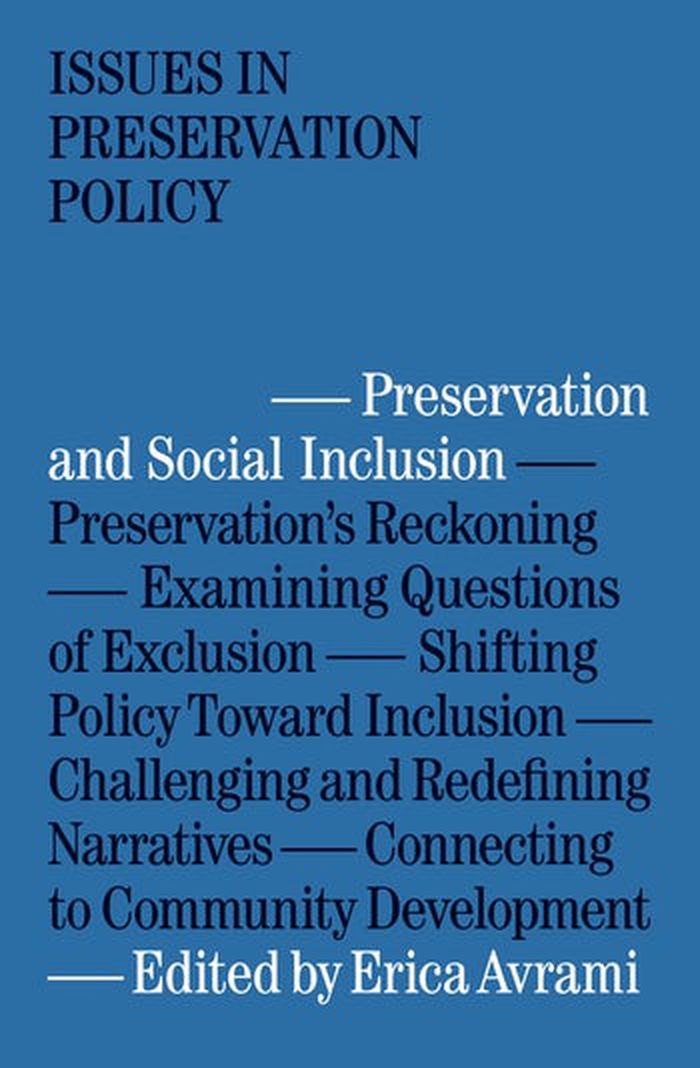
The preservation enterprise helps fashion the physical contours of memory in public space, and thus has the power to curate a multidimensional and inclusive representation of societal values and narratives. Increasingly, the field of preservation is being challenged to consider questions of social inclusion, of how multiple publics are—or are not—represented in heritage decision-making, geographies, and governance structures. Community engagement is increasingly being integrated into project-based preservation practice, but the policy toolbox has been slower to evolve. Recognizing how preservation and other land use decisions can both empower and marginalize publics compels greater reflection on preservation’s past and future and collective action beyond the project level. This requires professionals and institutions to consider systemic policy change with integrity, sensitivity, and intentionality. Bringing together a broad range of academics, historians, and practitioners, this second volume in the Issues in Preservation Policy series documents historic preservation’s progress toward inclusivity and explores further steps to be taken.
Preservation and social exclusion
Actions:
Price:
$39.95
(available to order)
Summary:
The preservation enterprise helps fashion the physical contours of memory in public space, and thus has the power to curate a multidimensional and inclusive representation of societal values and narratives. Increasingly, the field of preservation is being challenged to consider questions of social inclusion, of how multiple publics are—or are not—represented in heritage decision-making, geographies, and governance structures. Community engagement is increasingly being integrated into project-based preservation practice, but the policy toolbox has been slower to evolve. Recognizing how preservation and other land use decisions can both empower and marginalize publics compels greater reflection on preservation’s past and future and collective action beyond the project level. This requires professionals and institutions to consider systemic policy change with integrity, sensitivity, and intentionality. Bringing together a broad range of academics, historians, and practitioners, this second volume in the Issues in Preservation Policy series documents historic preservation’s progress toward inclusivity and explores further steps to be taken.
Form:
books
books
Publication:
March 2020
March 2020
Subject:
Architectural Theory
Architectural Theory
Form:
books
books
Price:
$26.99
(available to order)
Summary:
Excluded from traditional design history and educational canons that heavily favor European modernist influences, the work and experiences of Black designers have been systematically overlooked in the profession for decades. However, given the national focus on diversity, equity, and inclusion in the aftermath of the nationwide Black Lives Matter protests in the United(...)
$26.99
(available to order)
Summary:
Excluded from traditional design history and educational canons that heavily favor European modernist influences, the work and experiences of Black designers have been systematically overlooked in the profession for decades. However, given the national focus on diversity, equity, and inclusion in the aftermath of the nationwide Black Lives Matter protests in the United(...)
Subject:
Design Theory
Design Theory
Publication:
February 2022
February 2022
Title:
The black experience in design: identity, expression & reflection
Actions:
Price:
$26.99
(available to order)
Summary:
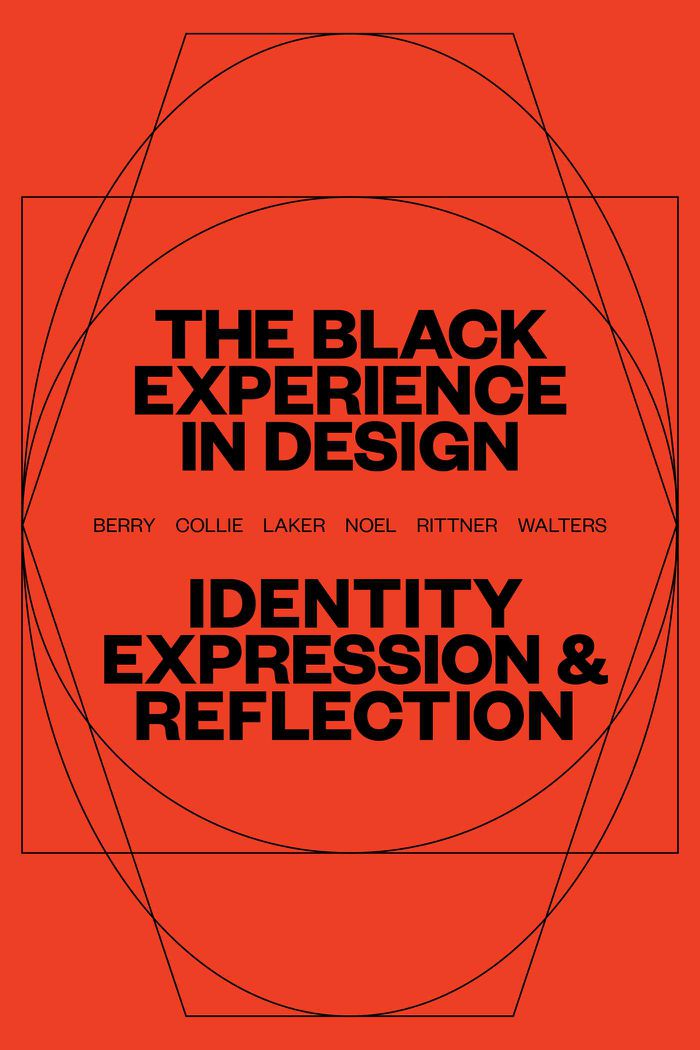
Excluded from traditional design history and educational canons that heavily favor European modernist influences, the work and experiences of Black designers have been systematically overlooked in the profession for decades. However, given the national focus on diversity, equity, and inclusion in the aftermath of the nationwide Black Lives Matter protests in the United States, educators, practitioners, and students now have the opportunity to make long-term, systemic changes in design education, research, and practice, reclaiming the contributions of Black designers in the process. This anthology centers on a range of perspectives, spotlights teaching practices, research, stories, and conversations from a Black/African diasporic lens. Through the voices represented, this text exemplifies the inherently collaborative and multidisciplinary nature of design, providing access to ideas and topics for a variety of audiences, meeting people as they are and wherever they are in their knowledge about design. Ultimately, this book serves as both inspiration and a catalyst for the next generation of creative minds tasked with imagining, shaping, and designing our future.
The black experience in design: identity, expression & reflection
Actions:
Price:
$26.99
(available to order)
Summary:
Excluded from traditional design history and educational canons that heavily favor European modernist influences, the work and experiences of Black designers have been systematically overlooked in the profession for decades. However, given the national focus on diversity, equity, and inclusion in the aftermath of the nationwide Black Lives Matter protests in the United States, educators, practitioners, and students now have the opportunity to make long-term, systemic changes in design education, research, and practice, reclaiming the contributions of Black designers in the process. This anthology centers on a range of perspectives, spotlights teaching practices, research, stories, and conversations from a Black/African diasporic lens. Through the voices represented, this text exemplifies the inherently collaborative and multidisciplinary nature of design, providing access to ideas and topics for a variety of audiences, meeting people as they are and wherever they are in their knowledge about design. Ultimately, this book serves as both inspiration and a catalyst for the next generation of creative minds tasked with imagining, shaping, and designing our future.
Form:
books
books
Publication:
February 2022
February 2022
Subject:
Design Theory
Design Theory
Form:
books
books
Actions:
Price:
$44.95
(available to order)
Summary:
Essays, projects, and interviews will examine emerging forms of sponsorship, new forms of connectivity - technological or social - that produce innovative modes of collaboration, and strategies for cultivating relationships that allow us to rethink typical hierarchies between those in power and those in service. One could argue that the profession of architecture has(...)
$44.95
(available to order)
Summary:
Essays, projects, and interviews will examine emerging forms of sponsorship, new forms of connectivity - technological or social - that produce innovative modes of collaboration, and strategies for cultivating relationships that allow us to rethink typical hierarchies between those in power and those in service. One could argue that the profession of architecture has(...)
Title:
Beyond patronage: reconsidering models of practice
Actions:
Price:
$44.95
(available to order)
Summary:
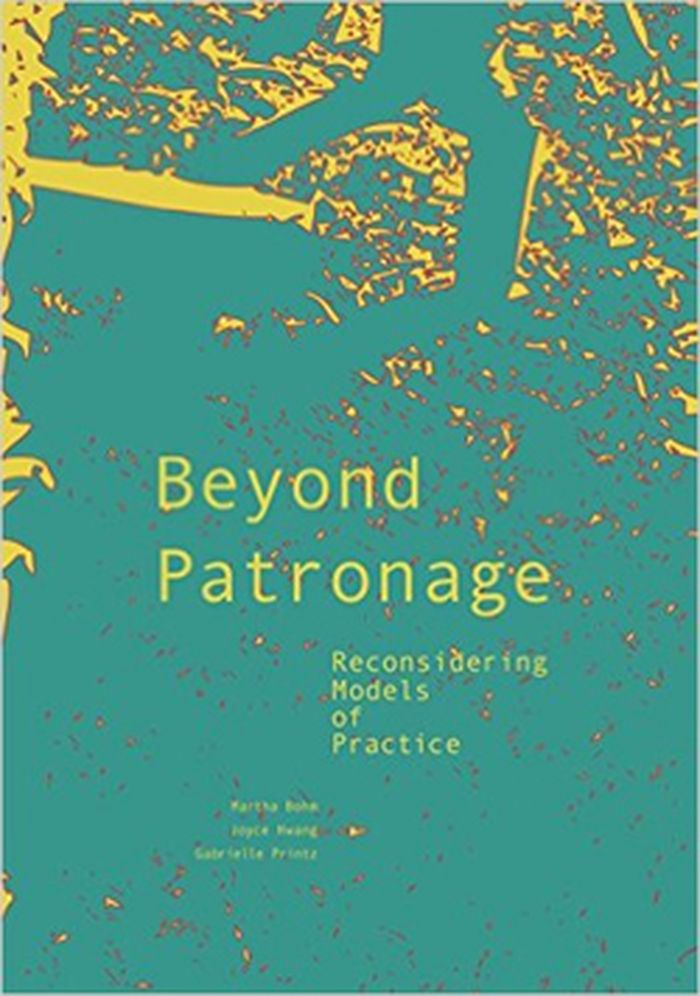
Essays, projects, and interviews will examine emerging forms of sponsorship, new forms of connectivity - technological or social - that produce innovative modes of collaboration, and strategies for cultivating relationships that allow us to rethink typical hierarchies between those in power and those in service. One could argue that the profession of architecture has traditionally been characterized by patronage. Throughout the twentieth century, private clients have enabled architects to develop and realize their most significant work. Today, the landscape of patronage is shifting. While the role of private clients is still central to the survival of the profession, an increasing number of architects and design practitioners are actively cultivating partnerships with not-for-profits, granting agencies, educational institutions, and other public organizations. How are these broader relationships redefining the role of patronage in architecture? Have our current economic, ecological, and political climates provoked architecture to confront its own priorities and assumptions? How can the practice of architecture be shaped not only through relationships of power, but also through strategies of empowerment? How are emerging practitioners today grappling with issues of inclusion and exclusion in the field?
Beyond patronage: reconsidering models of practice
Actions:
Price:
$44.95
(available to order)
Summary:
Essays, projects, and interviews will examine emerging forms of sponsorship, new forms of connectivity - technological or social - that produce innovative modes of collaboration, and strategies for cultivating relationships that allow us to rethink typical hierarchies between those in power and those in service. One could argue that the profession of architecture has traditionally been characterized by patronage. Throughout the twentieth century, private clients have enabled architects to develop and realize their most significant work. Today, the landscape of patronage is shifting. While the role of private clients is still central to the survival of the profession, an increasing number of architects and design practitioners are actively cultivating partnerships with not-for-profits, granting agencies, educational institutions, and other public organizations. How are these broader relationships redefining the role of patronage in architecture? Have our current economic, ecological, and political climates provoked architecture to confront its own priorities and assumptions? How can the practice of architecture be shaped not only through relationships of power, but also through strategies of empowerment? How are emerging practitioners today grappling with issues of inclusion and exclusion in the field?
Form:
books
books
Publication:
March 2014
March 2014
Subject:
Architectural Theory
Architectural Theory
Form:
journals and magazines
journals and magazines

Price:
$26.50
(available in store)
Summary:
''Calls for more Blackness in architecture schools can be simplistic,'' writes architect Darell Wayne Fields, guest editor of Log 57. Well-meaning equity and inclusion programs often simply ''associate the mere presence of Black bodies with institutional change.'' In Log 57, a 208-page thematic issue titled ''Black is . . . an’ Black ain’t . . .,'' 29 authors explore the(...)
$26.50
(available in store)
Summary:
''Calls for more Blackness in architecture schools can be simplistic,'' writes architect Darell Wayne Fields, guest editor of Log 57. Well-meaning equity and inclusion programs often simply ''associate the mere presence of Black bodies with institutional change.'' In Log 57, a 208-page thematic issue titled ''Black is . . . an’ Black ain’t . . .,'' 29 authors explore the(...)
Title:
Log 57
Actions:
Price:
$26.50
(available in store)
Summary:
''Calls for more Blackness in architecture schools can be simplistic,'' writes architect Darell Wayne Fields, guest editor of Log 57. Well-meaning equity and inclusion programs often simply ''associate the mere presence of Black bodies with institutional change.'' In Log 57, a 208-page thematic issue titled ''Black is . . . an’ Black ain’t . . .,'' 29 authors explore the complexities of Blackness as it relates to aesthetics and architectural pedagogy. As Fields notes, ''In calling for more Blackness, I, for one, am calling for more Black methodology. An inherent characteristic of [which] is a measurement of difference.'' To that end, Log 57 gathers essays and reflections on architectural pedagogies, both in academia and in practice, by Sean Canty, Michelle JaJa Chang, Ajay Manthripragada, and Mónica Ponce de León, among others. Projects by young designers for whom methodological concepts of Black Signification and bricolage are central are presented in a four-color section, and built works and a preservation effort channel difference as a generative force in real-world communities. ''This work demonstrates what is possible when methodological change is real,'' writes Fields. ''Real change, like Blackness, makes us nervous. Black difference, however, is revolutionary.''
Log 57
Actions:
Price:
$26.50
(available in store)
Summary:
''Calls for more Blackness in architecture schools can be simplistic,'' writes architect Darell Wayne Fields, guest editor of Log 57. Well-meaning equity and inclusion programs often simply ''associate the mere presence of Black bodies with institutional change.'' In Log 57, a 208-page thematic issue titled ''Black is . . . an’ Black ain’t . . .,'' 29 authors explore the complexities of Blackness as it relates to aesthetics and architectural pedagogy. As Fields notes, ''In calling for more Blackness, I, for one, am calling for more Black methodology. An inherent characteristic of [which] is a measurement of difference.'' To that end, Log 57 gathers essays and reflections on architectural pedagogies, both in academia and in practice, by Sean Canty, Michelle JaJa Chang, Ajay Manthripragada, and Mónica Ponce de León, among others. Projects by young designers for whom methodological concepts of Black Signification and bricolage are central are presented in a four-color section, and built works and a preservation effort channel difference as a generative force in real-world communities. ''This work demonstrates what is possible when methodological change is real,'' writes Fields. ''Real change, like Blackness, makes us nervous. Black difference, however, is revolutionary.''
Form:
journals and magazines
journals and magazines
Publication:
March 2023
March 2023
Subject:
Magazines
Magazines
Form:
books
books
Price:
$39.95
(available to order)
Summary:
''Feminist designer'' brings together a constellation of voices and perspectives to examine the intersection of design and feminist theory. For decades, the feminist refrain within design has hinged on the representation and inclusion of women in the field. This collection, edited by Alison Place, however, is a call to move beyond this narrow application. Feminist design(...)
$39.95
(available to order)
Summary:
''Feminist designer'' brings together a constellation of voices and perspectives to examine the intersection of design and feminist theory. For decades, the feminist refrain within design has hinged on the representation and inclusion of women in the field. This collection, edited by Alison Place, however, is a call to move beyond this narrow application. Feminist design(...)
Title:
Feminist designer: On the personal and the political in design
Actions:
Price:
$39.95
(available to order)
Summary:
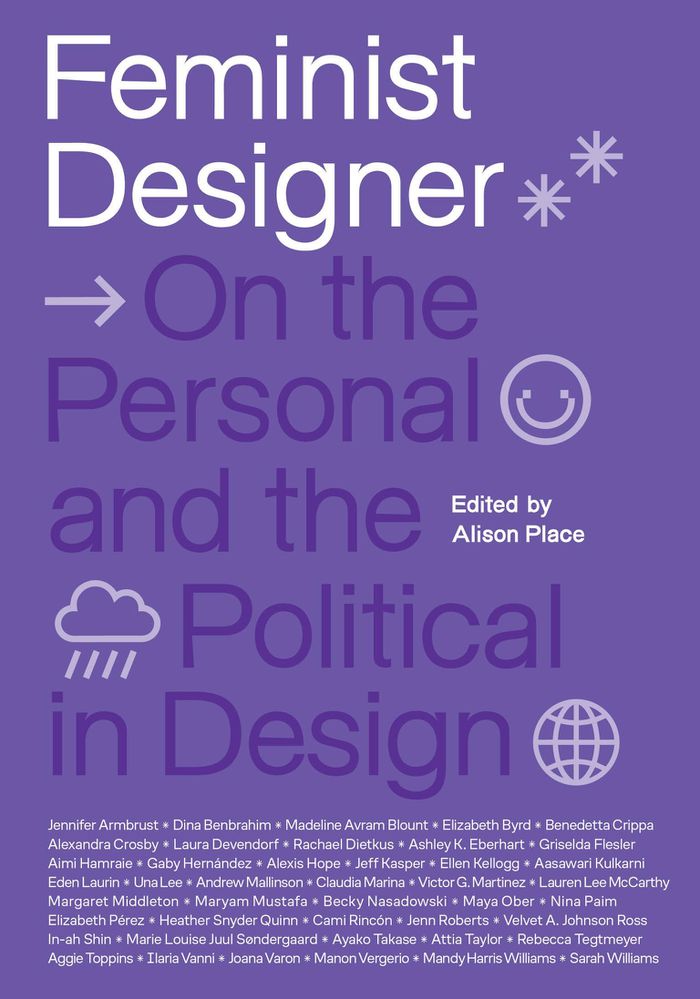
''Feminist designer'' brings together a constellation of voices and perspectives to examine the intersection of design and feminist theory. For decades, the feminist refrain within design has hinged on the representation and inclusion of women in the field. This collection, edited by Alison Place, however, is a call to move beyond this narrow application. Feminist design is not just about who does design—it is about how we do design and why. Feminist frameworks for design activism are now more relevant than ever, as they emphasize collaborative processes that aim to disrupt and dismantle power hierarchies while centering feminist ways of knowing and doing. ''Feminist designer'' contains essays, case studies, and dialogues by 43 contributors from 16 different countries. It engages a wide variety of design disciplines, from graphic design to disability design to algorithmic design, and explores key feminist themes, such as power, knowledge, care, plurality, liberation, and community. Through diverse, sometimes conflicting, intersectional perspectives, this book contributes new design methods informed by a multiplicity of feminisms that confront design’s patriarchal origins while ushering in new pathways for making critical and meaningful change.
Feminist designer: On the personal and the political in design
Actions:
Price:
$39.95
(available to order)
Summary:
''Feminist designer'' brings together a constellation of voices and perspectives to examine the intersection of design and feminist theory. For decades, the feminist refrain within design has hinged on the representation and inclusion of women in the field. This collection, edited by Alison Place, however, is a call to move beyond this narrow application. Feminist design is not just about who does design—it is about how we do design and why. Feminist frameworks for design activism are now more relevant than ever, as they emphasize collaborative processes that aim to disrupt and dismantle power hierarchies while centering feminist ways of knowing and doing. ''Feminist designer'' contains essays, case studies, and dialogues by 43 contributors from 16 different countries. It engages a wide variety of design disciplines, from graphic design to disability design to algorithmic design, and explores key feminist themes, such as power, knowledge, care, plurality, liberation, and community. Through diverse, sometimes conflicting, intersectional perspectives, this book contributes new design methods informed by a multiplicity of feminisms that confront design’s patriarchal origins while ushering in new pathways for making critical and meaningful change.
Form:
books
books
Publication:
September 2023
September 2023
Subject:
Design Theory
Design Theory
Form:
books
books
Actions:
Price:
$58.95
(available in store)
Summary:
''Who is the architect?'' explores how the figure of the architect has been constructed and challenged in recent years. Traditionally perceived as male, Western and individualistic, architects are now being urged to redefine themselves in a more diverse, inclusive manner. The publication discusses the need to challenge norms and establish caring as an essential quality in(...)
$58.95
(available in store)
Summary:
''Who is the architect?'' explores how the figure of the architect has been constructed and challenged in recent years. Traditionally perceived as male, Western and individualistic, architects are now being urged to redefine themselves in a more diverse, inclusive manner. The publication discusses the need to challenge norms and establish caring as an essential quality in(...)
Title:
Building diversity: Who is the architect?
Actions:
Price:
$58.95
(available in store)
Summary:
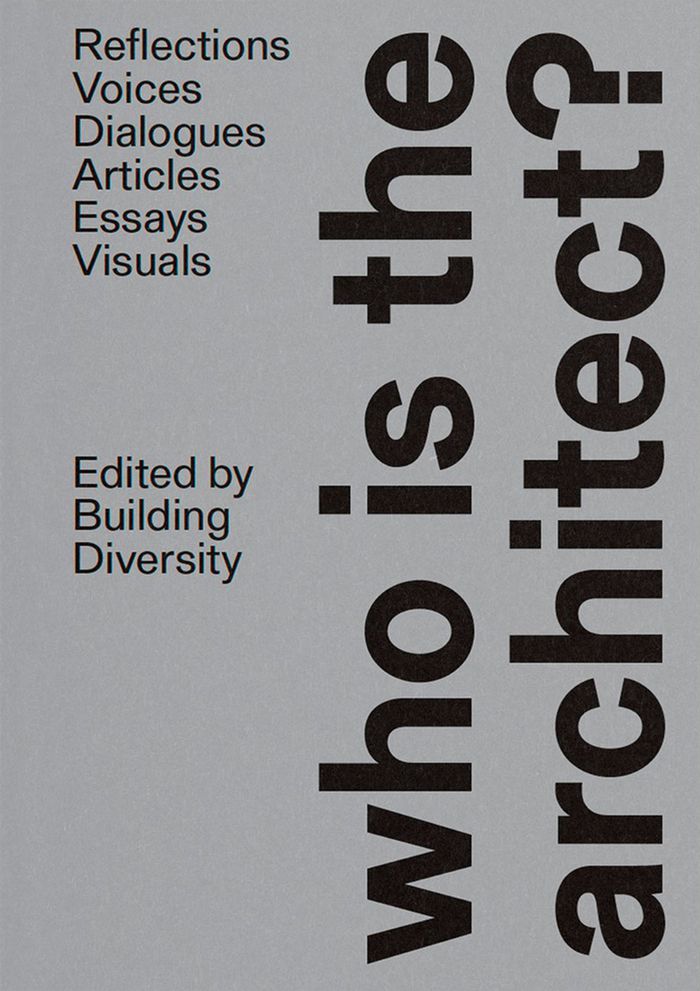
''Who is the architect?'' explores how the figure of the architect has been constructed and challenged in recent years. Traditionally perceived as male, Western and individualistic, architects are now being urged to redefine themselves in a more diverse, inclusive manner. The publication discusses the need to challenge norms and establish caring as an essential quality in the architectural discourse. With the threat of environmental collapse and other societal challenges, the need for collective teamwork and empathy has become central in establishing a common understanding that includes all beings. ''Building diversity'' aims to tackle these issues and explore topics on diversity and equality in the architectural field's past, present and future. The publication features thoughts and ideas from a broad range of countries and diverse perspectives on the architectural field, contributing to a wider dialogue about inclusion, intersectionality and progress. ''Building diversity'' is not intended to provide concrete solutions but aims to stimulate discussion and open up venues for hosting dialogues pointing to possible paths and the expansion of perspectives. It is an important contribution to the ongoing conversation about diversity and equality in the architectural field.
Building diversity: Who is the architect?
Actions:
Price:
$58.95
(available in store)
Summary:
''Who is the architect?'' explores how the figure of the architect has been constructed and challenged in recent years. Traditionally perceived as male, Western and individualistic, architects are now being urged to redefine themselves in a more diverse, inclusive manner. The publication discusses the need to challenge norms and establish caring as an essential quality in the architectural discourse. With the threat of environmental collapse and other societal challenges, the need for collective teamwork and empathy has become central in establishing a common understanding that includes all beings. ''Building diversity'' aims to tackle these issues and explore topics on diversity and equality in the architectural field's past, present and future. The publication features thoughts and ideas from a broad range of countries and diverse perspectives on the architectural field, contributing to a wider dialogue about inclusion, intersectionality and progress. ''Building diversity'' is not intended to provide concrete solutions but aims to stimulate discussion and open up venues for hosting dialogues pointing to possible paths and the expansion of perspectives. It is an important contribution to the ongoing conversation about diversity and equality in the architectural field.
Form:
books
books
Publication:
September 2023
September 2023
Subject:
Architectural Theory
Architectural Theory
Form:
books
books
Actions:
Price:
$35.00
(available in store)
Summary:
The sequel to the authors’ “Are We Human?”, this provocative book is an urgent manifesto for an alternative architectural philosophy. It treats bacteria as the real architects, construction workers, maintenance crews and inhabitants of buildings. Colomina and Wigley draw on the latest research into microbes to rethink the past and possible futures of the built(...)
$35.00
(available in store)
Summary:
The sequel to the authors’ “Are We Human?”, this provocative book is an urgent manifesto for an alternative architectural philosophy. It treats bacteria as the real architects, construction workers, maintenance crews and inhabitants of buildings. Colomina and Wigley draw on the latest research into microbes to rethink the past and possible futures of the built(...)
Title:
We the bacteria: Notes towards biotic architecture
Actions:
Price:
$35.00
(available in store)
Summary:
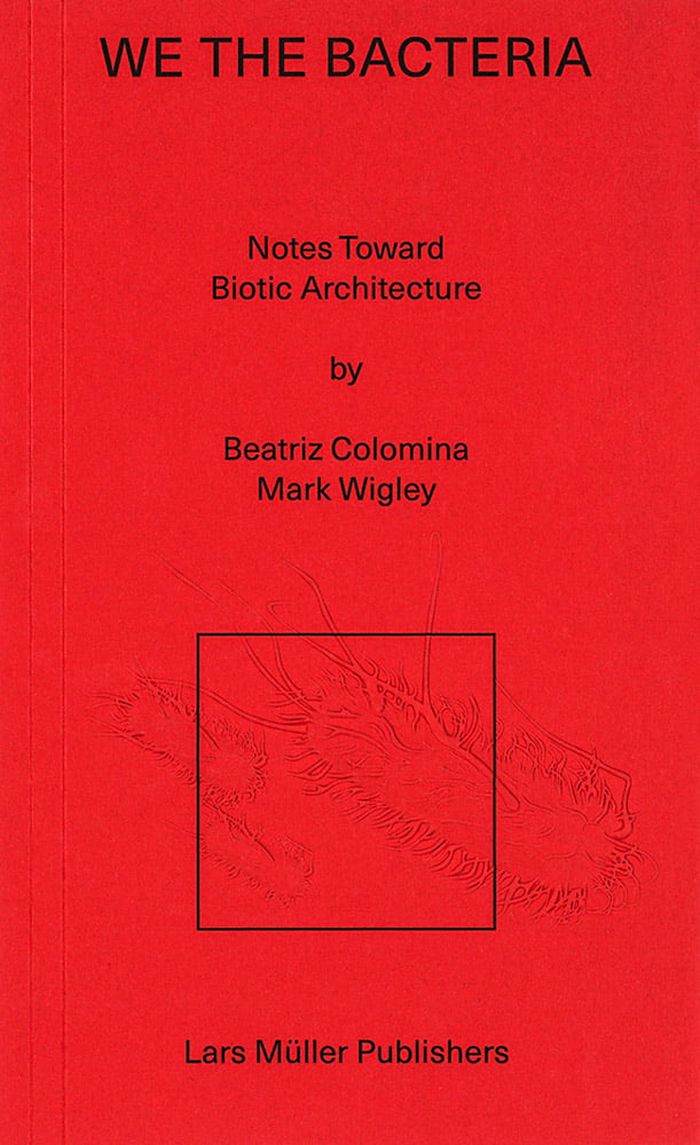
The sequel to the authors’ “Are We Human?”, this provocative book is an urgent manifesto for an alternative architectural philosophy. It treats bacteria as the real architects, construction workers, maintenance crews and inhabitants of buildings. Colomina and Wigley draw on the latest research into microbes to rethink the past and possible futures of the built environment. The book explores the intimate entanglements of the microbes within bodies and buildings over the last 10,000 years, culminating in the antibiotic philosophy of contemporary architecture. The diseases of our time are diseases of the built environment. The deadly combination of rapidly declining microbial diversity and rising antibiotic-resistant bacteria is as great a threat as climate change. Hostility to bacteria has to give way to new forms of hospitality from a more symbiotic architecture that learns from bacteria, embracing them and reconnecting with soil, plants and other species. Buildings based on fear of bacteria, which is to say fear of life itself, must give way to buildings learning from models of coexistence based on bacteria themselves. The main goal of the book is to rethink the very idea of shelter in terms of forms of inclusion rather than prophylactic forms of exclusion.
We the bacteria: Notes towards biotic architecture
Actions:
Price:
$35.00
(available in store)
Summary:
The sequel to the authors’ “Are We Human?”, this provocative book is an urgent manifesto for an alternative architectural philosophy. It treats bacteria as the real architects, construction workers, maintenance crews and inhabitants of buildings. Colomina and Wigley draw on the latest research into microbes to rethink the past and possible futures of the built environment. The book explores the intimate entanglements of the microbes within bodies and buildings over the last 10,000 years, culminating in the antibiotic philosophy of contemporary architecture. The diseases of our time are diseases of the built environment. The deadly combination of rapidly declining microbial diversity and rising antibiotic-resistant bacteria is as great a threat as climate change. Hostility to bacteria has to give way to new forms of hospitality from a more symbiotic architecture that learns from bacteria, embracing them and reconnecting with soil, plants and other species. Buildings based on fear of bacteria, which is to say fear of life itself, must give way to buildings learning from models of coexistence based on bacteria themselves. The main goal of the book is to rethink the very idea of shelter in terms of forms of inclusion rather than prophylactic forms of exclusion.
Form:
books
books
Publication:
October 2025
October 2025
Subject:
Architecture ecologies
Architecture ecologies
Form:
books
books
Title:
Open Space: people space
Open Space: people space
Actions:
Price:
$86.50
(available to order)
Summary:
Highly visual and containing contributions from leading names in landscape, architecture and design, this volume provides a rare insight into people’s engagement with the outdoor environment; looking at the ways in which the design of spaces and places meets people’s needs and desires in the twenty-first century. Embracing issues of social inclusion, recreation, and(...)
$86.50
(available to order)
Summary:
Highly visual and containing contributions from leading names in landscape, architecture and design, this volume provides a rare insight into people’s engagement with the outdoor environment; looking at the ways in which the design of spaces and places meets people’s needs and desires in the twenty-first century. Embracing issues of social inclusion, recreation, and(...)
Subject:
Landscape Theory
Landscape Theory
Publication:
September 2007, London, New York
September 2007, London, New York
Title:
Open Space: people space
Actions:
Price:
$86.50
(available to order)
Summary:
Highly visual and containing contributions from leading names in landscape, architecture and design, this volume provides a rare insight into people’s engagement with the outdoor environment; looking at the ways in which the design of spaces and places meets people’s needs and desires in the twenty-first century. Embracing issues of social inclusion, recreation, and environmental quality, the editors explore innovative ways to develop an understanding of how the landscape, urban or rural, can contribute to health and quality of life. Open Space: People Space examines the nature and value of people’s access to outdoor environments. Led by Edinburgh’s OPENspace research centre, the debate focuses on current research to support good design for open space and brings expertise from a range of disciplines to look at: - an analysis of policy and planning issues and challenges - understanding the nature and experience of exclusion - the development of evidence-based inclusive design -innovative research approaches which focus on people’s access to open space and the implications of that experience. Invaluable to policy makers, researchers, urban designers, landscape architects, planners, managers and students, it is also essential reading for those working in child development, health care and community development.
Open Space: people space
Actions:
Price:
$86.50
(available to order)
Summary:
Highly visual and containing contributions from leading names in landscape, architecture and design, this volume provides a rare insight into people’s engagement with the outdoor environment; looking at the ways in which the design of spaces and places meets people’s needs and desires in the twenty-first century. Embracing issues of social inclusion, recreation, and environmental quality, the editors explore innovative ways to develop an understanding of how the landscape, urban or rural, can contribute to health and quality of life. Open Space: People Space examines the nature and value of people’s access to outdoor environments. Led by Edinburgh’s OPENspace research centre, the debate focuses on current research to support good design for open space and brings expertise from a range of disciplines to look at: - an analysis of policy and planning issues and challenges - understanding the nature and experience of exclusion - the development of evidence-based inclusive design -innovative research approaches which focus on people’s access to open space and the implications of that experience. Invaluable to policy makers, researchers, urban designers, landscape architects, planners, managers and students, it is also essential reading for those working in child development, health care and community development.
Form:
books
books
Publication:
September 2007, London, New York
September 2007, London, New York
Subject:
Landscape Theory
Landscape Theory
Form:
books
books

Actions:
Price:
$40.00
(available to order)
Summary:
Discard studies is an emerging field that looks at waste and wasting broadly construed. Rather than focusing on waste and trash as the primary objects of study, discard studies looks at wider systems of waste and wasting to explore how some materials, practices, regions, and people are valued or devalued, becoming dominant or disposable. In this book, Max Liboiron and(...)
$40.00
(available to order)
Summary:
Discard studies is an emerging field that looks at waste and wasting broadly construed. Rather than focusing on waste and trash as the primary objects of study, discard studies looks at wider systems of waste and wasting to explore how some materials, practices, regions, and people are valued or devalued, becoming dominant or disposable. In this book, Max Liboiron and(...)
Subject:
Environment and environmental theory
Environment and environmental theory
Publication:
May 2022
May 2022
Title:
Discard studies: Wasting, systems, and power
Actions:
Price:
$40.00
(available to order)
Summary:
Discard studies is an emerging field that looks at waste and wasting broadly construed. Rather than focusing on waste and trash as the primary objects of study, discard studies looks at wider systems of waste and wasting to explore how some materials, practices, regions, and people are valued or devalued, becoming dominant or disposable. In this book, Max Liboiron and Josh Lepawsky argue that social, political, and economic systems maintain power by discarding certain people, places, and things. They show how the theories and methods of discard studies can be applied in a variety of cases, many of which do not involve waste, trash, or pollution. Liboiron and Lepawsky consider the partiality of knowledge and offer a theory of scale, exploring the myth that most waste is municipal solid waste produced by consumers; discuss peripheries, centers, and power, using content moderation as an example of how dominant systems find ways to discard; and use theories of difference to show that universalism, stereotypes, and inclusion all have politics of discard and even purification—as exemplified in ''inclusive'' efforts to broaden the Black Lives Matter movement. Finally, they develop a theory of change by considering ''wasting well,'' outlining techniques, methods, and propositions for a justice-oriented discard studies that keeps power in view.
Discard studies: Wasting, systems, and power
Actions:
Price:
$40.00
(available to order)
Summary:
Discard studies is an emerging field that looks at waste and wasting broadly construed. Rather than focusing on waste and trash as the primary objects of study, discard studies looks at wider systems of waste and wasting to explore how some materials, practices, regions, and people are valued or devalued, becoming dominant or disposable. In this book, Max Liboiron and Josh Lepawsky argue that social, political, and economic systems maintain power by discarding certain people, places, and things. They show how the theories and methods of discard studies can be applied in a variety of cases, many of which do not involve waste, trash, or pollution. Liboiron and Lepawsky consider the partiality of knowledge and offer a theory of scale, exploring the myth that most waste is municipal solid waste produced by consumers; discuss peripheries, centers, and power, using content moderation as an example of how dominant systems find ways to discard; and use theories of difference to show that universalism, stereotypes, and inclusion all have politics of discard and even purification—as exemplified in ''inclusive'' efforts to broaden the Black Lives Matter movement. Finally, they develop a theory of change by considering ''wasting well,'' outlining techniques, methods, and propositions for a justice-oriented discard studies that keeps power in view.
Form:
books
books
Publication:
May 2022
May 2022
Subject:
Environment and environmental theory
Environment and environmental theory
Form:
books
books
Actions:
Price:
$35.95
(available to order)
Summary:
Anti-racist design interventions can be difficult. Well-intentioned conversations can fuel tensions, activate racialized trauma, and lead to misunderstandings, especially in spaces not typically focused on diversity, equity, and inclusion. Even when progress is made, white supremacy culture can resurface. We need anti-racist guidelines and approaches that lay bare(...)
$35.95
(available to order)
Summary:
Anti-racist design interventions can be difficult. Well-intentioned conversations can fuel tensions, activate racialized trauma, and lead to misunderstandings, especially in spaces not typically focused on diversity, equity, and inclusion. Even when progress is made, white supremacy culture can resurface. We need anti-racist guidelines and approaches that lay bare(...)
Title:
Racism untaught: Revealing and unlearning racialized design
Actions:
Price:
$35.95
(available to order)
Summary:
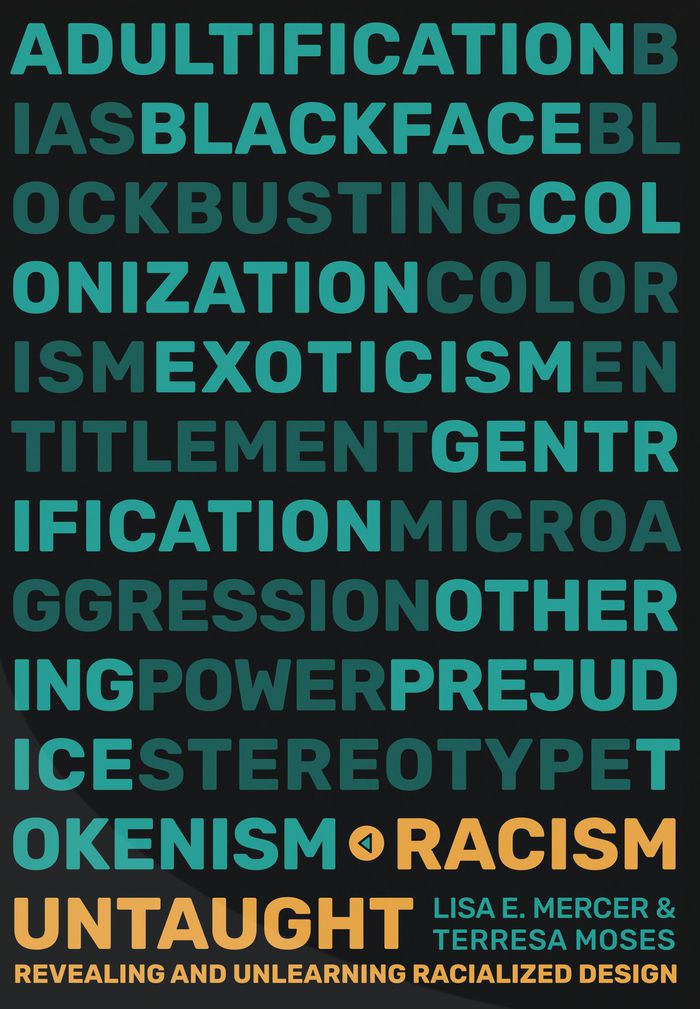
Anti-racist design interventions can be difficult. Well-intentioned conversations can fuel tensions, activate racialized trauma, and lead to misunderstandings, especially in spaces not typically focused on diversity, equity, and inclusion. Even when progress is made, white supremacy culture can resurface. We need anti-racist guidelines and approaches that lay bare racialized systems of oppression and fundamentally disrupt their replication. In Racism Untaught, Lisa E. Mercer and Terresa Moses, two veteran anti-racist educators, deliver this exact approach. Mercer and Moses provide a step-by-step guide to anti-racist interventions in academic, business, and community settings that benefits all participants. Adapted from their successful workshop series and filled with concrete examples and ample case studies, their book teaches participants how to analyze design—and reimagine racialized artifacts, systems, and experiences guided by anti-oppressive principles. They demonstrate how to examine positionality within the context of racism and oppression; help us understand how design can reinforce and perpetuate oppression; and reveal the unique relationship among equity, ethics, and responsibility that constitutes the core value of an anti-racist design discipline. In ''Racism untaught'', Mercer and Moses provide the framework we need to unlearn racialized design practices and move more generatively toward collective liberation.
Racism untaught: Revealing and unlearning racialized design
Actions:
Price:
$35.95
(available to order)
Summary:
Anti-racist design interventions can be difficult. Well-intentioned conversations can fuel tensions, activate racialized trauma, and lead to misunderstandings, especially in spaces not typically focused on diversity, equity, and inclusion. Even when progress is made, white supremacy culture can resurface. We need anti-racist guidelines and approaches that lay bare racialized systems of oppression and fundamentally disrupt their replication. In Racism Untaught, Lisa E. Mercer and Terresa Moses, two veteran anti-racist educators, deliver this exact approach. Mercer and Moses provide a step-by-step guide to anti-racist interventions in academic, business, and community settings that benefits all participants. Adapted from their successful workshop series and filled with concrete examples and ample case studies, their book teaches participants how to analyze design—and reimagine racialized artifacts, systems, and experiences guided by anti-oppressive principles. They demonstrate how to examine positionality within the context of racism and oppression; help us understand how design can reinforce and perpetuate oppression; and reveal the unique relationship among equity, ethics, and responsibility that constitutes the core value of an anti-racist design discipline. In ''Racism untaught'', Mercer and Moses provide the framework we need to unlearn racialized design practices and move more generatively toward collective liberation.
Form:
books
books
Publication:
October 2023
October 2023
Subject:
Design Theory
Design Theory


