


2737 Results
Form:
books
books
Price:
$60.00
(available to order)
Summary:
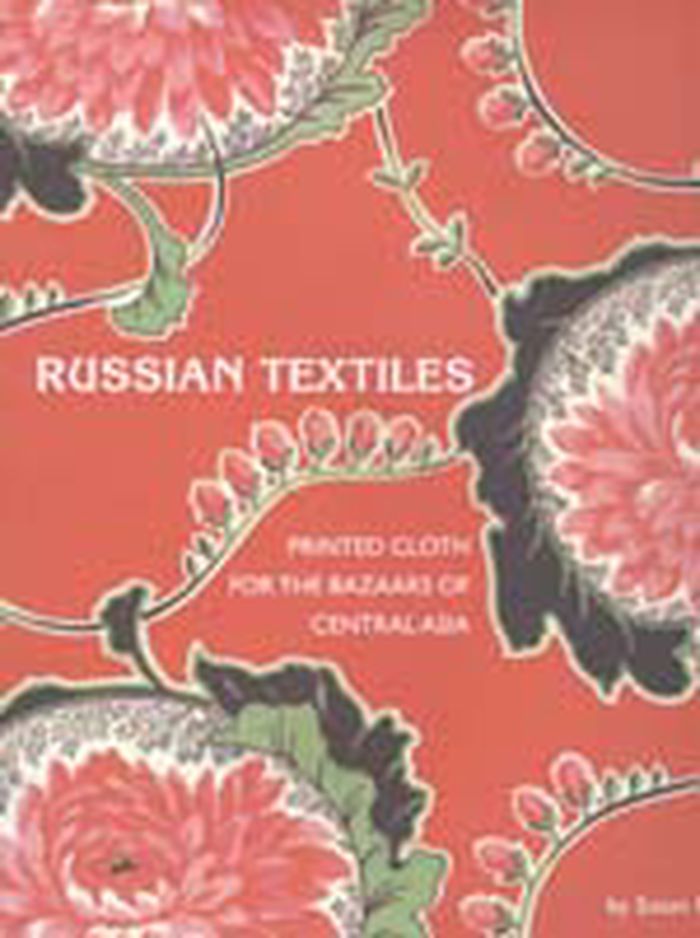
Russian Textiles showcases the gorgeous printed-cotton textiles created and manufactured in Russia and exported to Central Asia from approximately 1860 to 1960. More than 175 spectacular patterns spanning a variety of periods and styles, from Art Nouveau florals to Soviet-era agitprop, are featured. The people in these Central Asian countries—including Uzbeks, Tadjiks,(...)
Title:
Russian Textiles: printed cloth for the bazaars of Central Asia
Actions:
Price:
$60.00
(available to order)
Summary:
Russian Textiles showcases the gorgeous printed-cotton textiles created and manufactured in Russia and exported to Central Asia from approximately 1860 to 1960. More than 175 spectacular patterns spanning a variety of periods and styles, from Art Nouveau florals to Soviet-era agitprop, are featured. The people in these Central Asian countries—including Uzbeks, Tadjiks, and Turkmen—incorporated the brightly patterned material into their clothing, particularly their robes, and in their household items. Brief essays by the author and fellow textile experts describe the “social life” of the fabrics and the fascinating history of this merging of Russian, Western, and Central Asian aesthetic styles; Robert Kushner contributes a lively text on how an artist “sees” and is inspired by these designs. Complementing the pattern images are vintage photographs from the turn of the 20th century as well as beautifully detailed reproductions of the robes and other articles that were lined and embellished with these cloths. This is a must-have book for the inspiration library of every artist; professional fashion, interior, and product designer; crafter; and anyone with a love of extraordinary visual design.
Form:
books
books
Publication:
September 2007, New York
September 2007, New York
Subject:
Interior Design
Interior Design
Form:
books
books
Price:
$54.95
(available in store)
Summary:
Mass-produced from the 1970s to the 1990s, modular kiosks like the seminal K67, designed by the Slovenian architect Saša J. Mächtig, and similar systems – including the Polish Kami, the Macedonian KC190, and the Soviet ‘Bathyscaphe’ – could be found anywhere throughout the former Eastern Bloc and ex-Yugoslav countries, from bustling city squares to socialist-era housing(...)
Title:
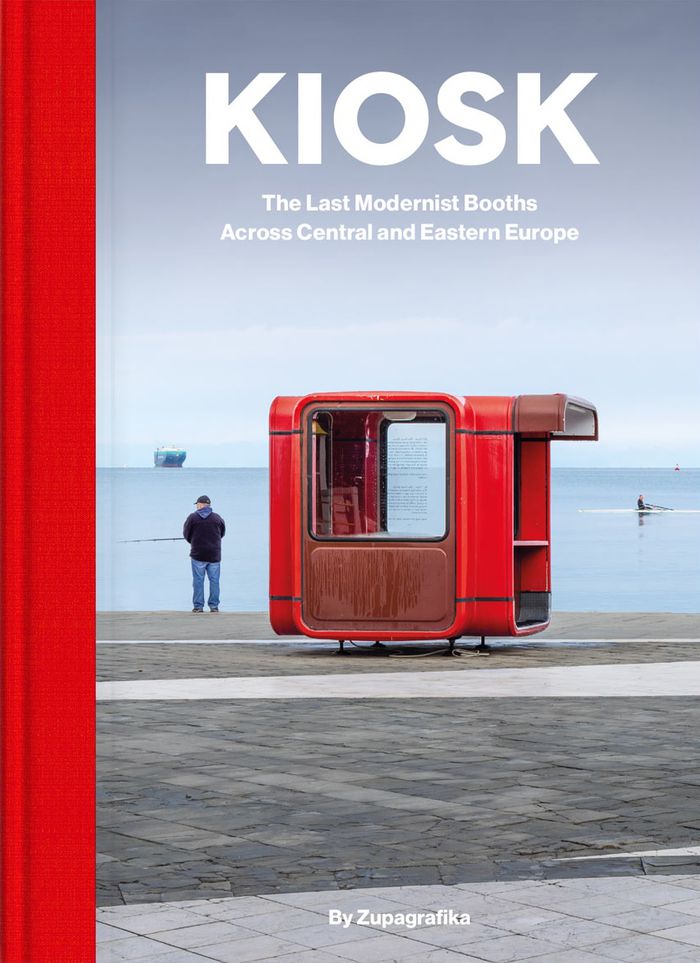
Kiosk: The last modernist booths across Central and Eastern Europe
Actions:
Price:
$54.95
(available in store)
Summary:
Mass-produced from the 1970s to the 1990s, modular kiosks like the seminal K67, designed by the Slovenian architect Saša J. Mächtig, and similar systems – including the Polish Kami, the Macedonian KC190, and the Soviet ‘Bathyscaphe’ – could be found anywhere throughout the former Eastern Bloc and ex-Yugoslav countries, from bustling city squares to socialist-era housing estates. They served as hot dog and Polish zapiekanka joints, farm egg and rotisserie chicken vendors, funeral flower shops, newsstands, car park booths, currency exchange offices, and more. Featuring over 150 kiosks – from Ljubljana to Warsaw, and from Belgrade to Berlin – this photobook provides previously unseen documentation of the remaining modernist booths that witnessed the socio-political transformation of Central and Eastern Europe at the end of the 20th century. While some remain active or have undergone refurbishment, others have been abandoned or have slowly faded from the urban landscape. The photographs in this unique collection were taken over the last decade by Zupagrafika’s founders, David Navarro and Martyna Sobecka. The book includes a foreword by urban explorer Maciej Czarnecki and an introduction by architectural historian Anna Cymer, offering invaluable insights into the history of these mobile structures.
Form:
books
books
Publication:
November 2024
November 2024
Subject:
Modernism
Modernism
Form:
books
books
Actions:
Price:
$50.00
(available in store)
Summary:
Mass housing in post-war socialist countries was a quick and effective way to provide homes for the expanding city populations after WWII, but after the collapse of the Soviet Bloc the fate of these constructions became uncertain. While modernist estates are being renovated or prematurely demolished, their tenants remain undaunted. They have lived through the buildings’(...)
Title:
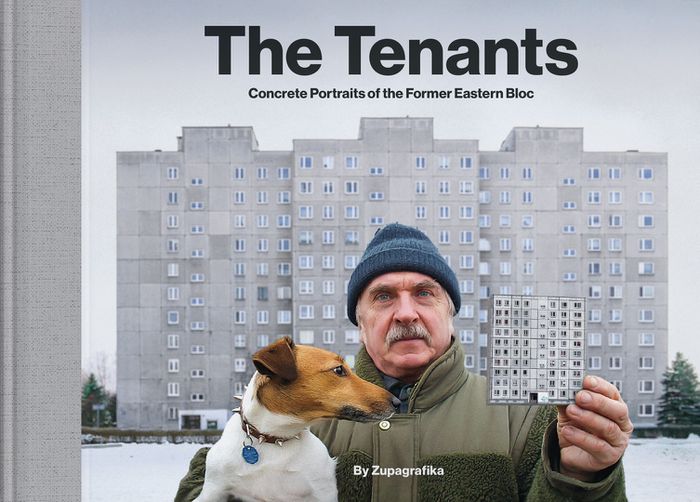
The tenants: Concrete portraits of the former Eastern Bloc
Actions:
Price:
$50.00
(available in store)
Summary:
Mass housing in post-war socialist countries was a quick and effective way to provide homes for the expanding city populations after WWII, but after the collapse of the Soviet Bloc the fate of these constructions became uncertain. While modernist estates are being renovated or prematurely demolished, their tenants remain undaunted. They have lived through the buildings’ golden years and darker times. For the last decade, Zupagrafika has documented the housing estates erected in Central and Eastern Europe, still perceived by many as ‘eyesores,’ through photographs and illustrated paper models. The Tenants features over 40 housing projects in 37 different cities of the former Eastern Bloc and ex-Yugoslavia. From Berlin to Norilsk, and all the way through Kyiv to Tallinn, the album portrays the inhabitants of those complexes holding models of their homes, while sharing the stories of lives lived in the prefab panel blocks. Includes a foreword by the sociologist and urban researcher Maciej Frackowiak and an index of the featured housing estates, providing an insight into their history. The portraits were taken by David Navarro and Martyna Sobecka, with contributions by local photographers.
Form:
books
books
Publication:
September 2022
September 2022
Subject:
Modernism
Modernism
Form:
books
books
Actions:
Price:
$49.95
(available to order)
Summary:
Alexander Brodsky and Ilya Utkin are the best known of a loosely organized group of Soviet artists known as "Paper architects," who designed much but built little in the early days of Glasnost, in the late 1980s. Many of their elaborate etchings, in which they depicted outlandish, often impossible, structures and cityscapes of allegorical content, were collected in the(...)
Title:
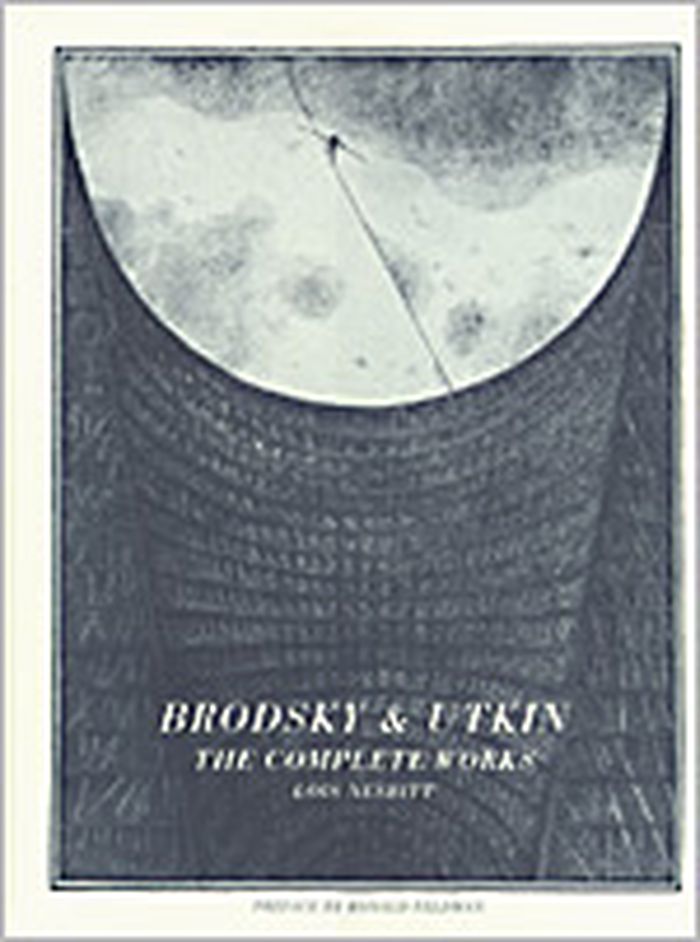
Brodsky & Utkin : the complete works
Actions:
Price:
$49.95
(available to order)
Summary:
Alexander Brodsky and Ilya Utkin are the best known of a loosely organized group of Soviet artists known as "Paper architects," who designed much but built little in the early days of Glasnost, in the late 1980s. Many of their elaborate etchings, in which they depicted outlandish, often impossible, structures and cityscapes of allegorical content, were collected in the 1990 book Brodsky – Utkin. Now, with the addition of forty-three new and never-before-published prints,this book is an updated edition. In their designs, by turns funny, cerebral, and deeply human, Brodsky – Utkin borrow from Egyptian tombs, Ledoux's visionary architecture, Le Corbusier's urban master plans, and other historical precedents, collaging these heterogeneous forms in learned and layered scrambles. Underlying the wit and visual inventiveness is an unmistakable moral: that the dehumanizing architecture of the sort seen in Russian cities in the 1980s and 1990s, and elsewhere around the globe, takes a sinister toll. A new preface assesses the works of Brodsky – Utkin and reminds that the greatest art is often born of adversity. Beautifully printed in 300-screen dry-trap duotones by the Steinhauer Press, Brodsky – Utkin is a book for artists, architects, and collectors alike.
Form:
books
books
Publication:
May 2003, New York
May 2003, New York
Subject:
Architecture Monographs
Architecture Monographs
Form:
books
books
Title:
The Reichstag graffiti
The Reichstag graffiti
Actions:
Price:
$52.50
(available to order)
Summary:
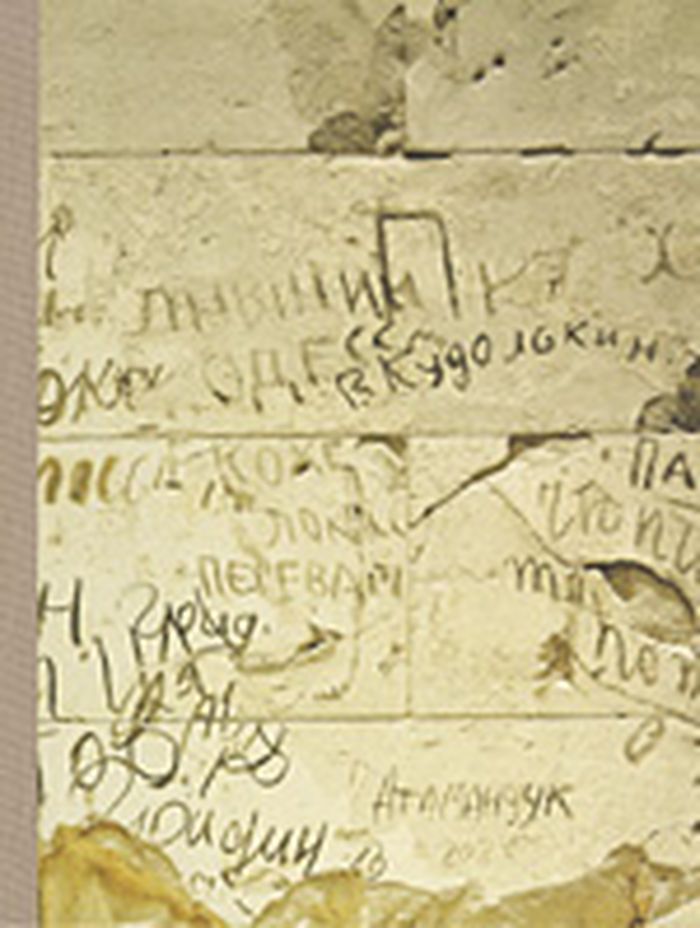
The walls of the Reichstag are covered with graffiti, written by victorious Soviet soldiers in 1945. Hidden for 30 years, the Reichstag graffiti were rediscovered by Norman Foster and his team when they began work on the building in 1995. They were preserved as part of Foster’s concept of the Reichstag as a ‘living museum’ of German history. Published at a time when the(...)
Publication:
March 2003, Berlin
March 2003, Berlin
Title:
The Reichstag graffiti
Actions:
Price:
$52.50
(available to order)
Summary:
The walls of the Reichstag are covered with graffiti, written by victorious Soviet soldiers in 1945. Hidden for 30 years, the Reichstag graffiti were rediscovered by Norman Foster and his team when they began work on the building in 1995. They were preserved as part of Foster’s concept of the Reichstag as a ‘living museum’ of German history. Published at a time when the graffiti are threatened with eradication, this book offers an important visual and literary record. Deborah Lipstadt considers the arguments for and against the preservation of the graffiti: is the preservation, as some charge, "morally offensive" and "masochistic" or does it indicate a brave determination not to forget the tragedies of the past? And what does it mean and say about Germany today? Frederick Baker considers the graffiti as a monument to the individual and offers an historical account of the Battle of Berlin through the eyes of Red Army soldiers as they approached their ultimate goal, including the soldier who first raised the Red Flag above the Reichstag. This illustrated volume allows the inscriptions to be made accessible and understandable to a wider public for the first time.
Form:
books
books
Publication:
March 2003, Berlin
March 2003, Berlin
Form:
books
books
Actions:
Price:
$97.95
(available to order)
Summary:
Lazar Markovich Lissitzky is widely known as a Russian avant-garde artist who made significant contributions to abstract art in the 1920s. Until now his experiments with photography, photomontage, and graphic and exhibition designs in the 1920s and throughout the 1930s have not been documented and thoroughly analyzed. This book explores both the political and(...)
Subject:
Photography monographs
Photography monographs
Publication:
November 1999, New Haven/London
November 1999, New Haven/London
Title:
El Lissitzky : beyond the abstract cabinet
Actions:
Price:
$97.95
(available to order)
Summary:
Lazar Markovich Lissitzky is widely known as a Russian avant-garde artist who made significant contributions to abstract art in the 1920s. Until now his experiments with photography, photomontage, and graphic and exhibition designs in the 1920s and throughout the 1930s have not been documented and thoroughly analyzed. This book explores both the political and aesthetic aspects of Lissitzky's late multimedia work from his designs for the Abstract Cabinet to his death in 1941. The author and the two contributors give special attention to Lissitzky's intense collaboration first with German and then with Soviet photographers, designers, and filmmakers, and they discuss how his various personal friendships and acquaintances influenced the directions he took in photography and design. The book presents photographic works by Lissitzky and these other artists as well as some of Lissitzky's early non-objective art that foreshadows his experiments in figurative art. It also includes Lissitzky's correspondence with his Western colleagues and his wife Sophie Kueppers. This book will accompany an exhibition of Lissitzky's photographic works at the Sprengel Museum in Hannover, Germany, Museu d'Art Contemporani de Barcelona, and Fondaçao de Serralves, Porto.
Form:
books
books
Publication:
November 1999, New Haven/London
November 1999, New Haven/London
Subject:
Photography monographs
Photography monographs
Form:
books
books
Title:
The ideal Communist city
The ideal Communist city
Actions:
Price:
$35.00
(available to order)
Summary:
In 1968, lauded American architect Mary Otis Stevens (born 1928) and her partner, fellow architect Thomas McNulty (1919–84), initiated i Press, the influential imprint that focuses on the social context of architecture. Over the next five years, the duo released five books under the thematic umbrella of ''Human environment'' with the publisher George Braziller. The first(...)
Subject:
Humans and cities
Humans and cities
Publication:
November 2022
November 2022
Title:
The ideal Communist city
Actions:
Price:
$35.00
(available to order)
Summary:
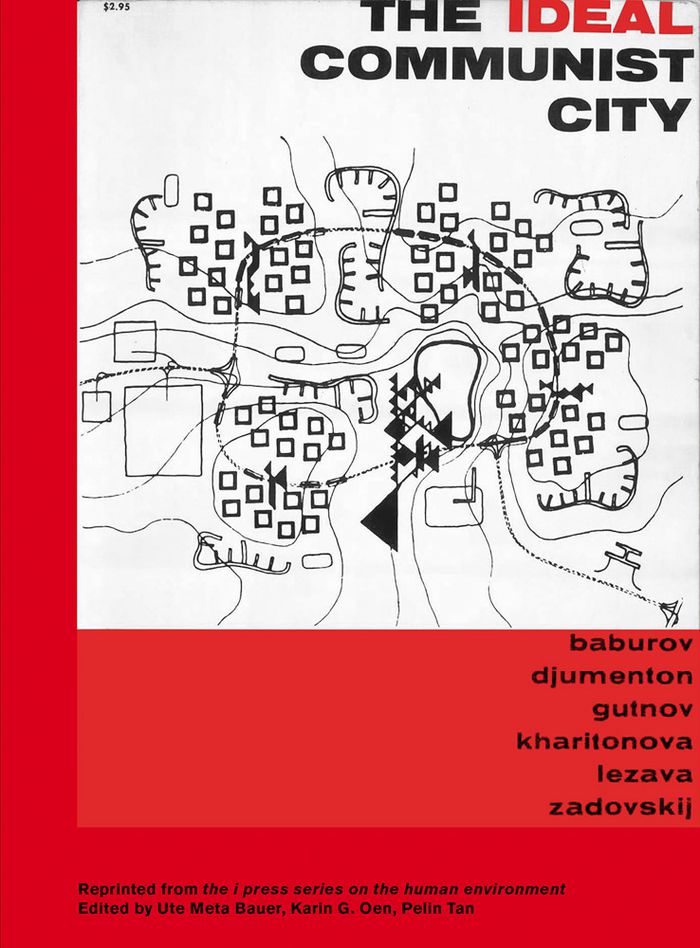
In 1968, lauded American architect Mary Otis Stevens (born 1928) and her partner, fellow architect Thomas McNulty (1919–84), initiated i Press, the influential imprint that focuses on the social context of architecture. Over the next five years, the duo released five books under the thematic umbrella of ''Human environment'' with the publisher George Braziller. The first of this series, ''The ideal Communist city'' (1969) is an English translation of urban concepts advanced by architects and planners from the University of Moscow. The book was first published in a Soviet journal of a communist youth organization in 1960 and was then republished in Italy in 1968. Offering a new way of thinking about mobility, equity and social interaction in neighborhood planning, ''The ideal Communist city'' was a direct response to suburban development and its focus on private spaces for family life: ''the new city is a world belonging to all and each'' where life is ''structured by freely chosen relationships representing the fullest, most well-rounded aspects of each human personality.'' This publication is a facsimile of ''The ideal Communist city'', with additional texts by architectural historians and the editors.
Form:
books
books
Publication:
November 2022
November 2022
Subject:
Humans and cities
Humans and cities
Form:
books
books
Title:
Construire un nouveau nouveau monde : l'amerikanizm dans l'architecture russe / Jean-Louis Cohen.
Construire un nouveau nouveau monde : l'amerikanizm dans l'architecture russe / Jean-Louis Cohen.
Actions:
Holdings:
Description:
544 pages : illustrations (some color), facsimiles, plans, portraits ; 24 cm
Description:
544 pages : illustrations (some color), facsimiles, plans, portraits ; 24 cm
Author:
Subject:
Publication:
Paris : Éditions de la Villette, [2020], ©2020
Paris : Éditions de la Villette, [2020], ©2020
Title:
Construire un nouveau nouveau monde : l'amerikanizm dans l'architecture russe / Jean-Louis Cohen.
Actions:
Holdings:
Description:
544 pages : illustrations (some color), facsimiles, plans, portraits ; 24 cm
Construire un nouveau nouveau monde : l'amerikanizm dans l'architecture russe / Jean-Louis Cohen.
Actions:
Holdings:
Description:
544 pages : illustrations (some color), facsimiles, plans, portraits ; 24 cm
Form:
books
books
Publication:
Paris : Éditions de la Villette, [2020], ©2020
Paris : Éditions de la Villette, [2020], ©2020
Author:
Subject:
Form:
books
books
Actions:
Price:
$49.95
(available to order)
Summary:
What makes Italian Brutalist buildings different to their counterparts in other countries? Containing over 140 exclusive photographs-- ranging from private homes to churches and cemeteries via football stadiums-- across every region of the country, ''Brutalist Italy'' is the first publication to focus entirely on this subject. Architectural photographers Roberto Conte and(...)
Title:
Brutalist Italy: Concrete architecture from the Alps to the Mediterranean Sea
Actions:
Price:
$49.95
(available to order)
Summary:
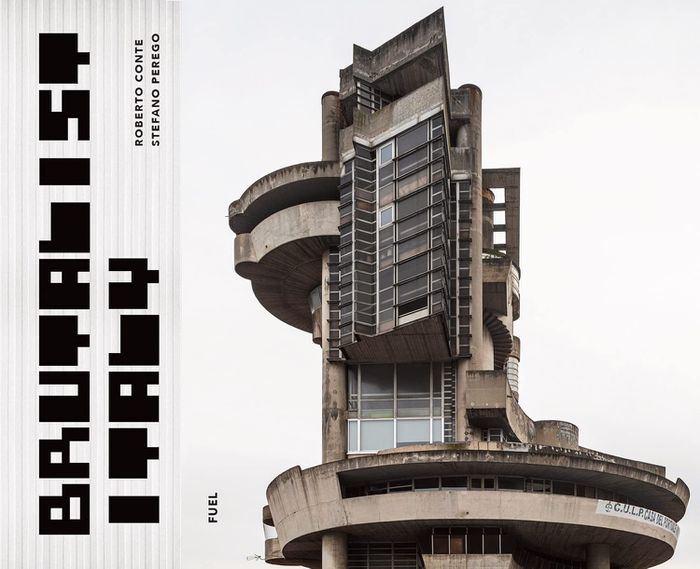
What makes Italian Brutalist buildings different to their counterparts in other countries? Containing over 140 exclusive photographs-- ranging from private homes to churches and cemeteries via football stadiums-- across every region of the country, ''Brutalist Italy'' is the first publication to focus entirely on this subject. Architectural photographers Roberto Conte and Stefano Perego (authors of Soviet Asia) have spent the past five years traveling over 12,000 miles documenting the monumental concrete structures of their native country. Brutalism-- with its minimalist aesthetic, favoring raw materials and structural elements over decorative design-- has a complex relationship with Italian history. After World War II, Italian architects were keen to distance themselves from fascism, without rejecting the architectural modernism that had flourished during that era. They developed a form of contemporary architecture that engaged with traditional methods and materials, drawing on uncontaminated historical references. This plurality of pasts assimilated into new constructions is a recurring feature of the country’s Brutalist buildings, imparting to them a unique identity. From the imposing social housing of Le Vele di Scampia to the celestial Our Lady of Tears Sanctuary, Syracuse, ''Brutalist Italy'' collects the most compelling examples of this extraordinary architecture for the first time in a single volume.
Form:
books
books
Publication:
September 2023
September 2023
Subject:
Brutalism
Brutalism
Form:
journals and magazines
journals and magazines
Title:
Cabinet 24 : shadows
Cabinet 24 : shadows
Actions:
Price:
$11.00
(available to order)
Summary:
The inherently contingent physics of shadows--never things in themselves but instead always "cast" signs of other things; tangible yet insubstantial--has long been a rich source of inspiration for thinkers and artists. From the Biblical valley where humanity is stalked by the "shadow of death" to the purported supernatural phenomenon of the shadow people, the idea has(...)
Title:
Cabinet 24 : shadows
Actions:
Price:
$11.00
(available to order)
Summary:
The inherently contingent physics of shadows--never things in themselves but instead always "cast" signs of other things; tangible yet insubstantial--has long been a rich source of inspiration for thinkers and artists. From the Biblical valley where humanity is stalked by the "shadow of death" to the purported supernatural phenomenon of the shadow people, the idea has always suggested forces of the unseen, of the Other, its relational quality evoking a sense a duality that haunts our supposedly integral identities. Cabinet 24 includes interviews with Michael Baxandall on the Enlightenment's attitude toward shadows and with Victor Stoichita on the battle between light and dark, Kris Lee on Comte de Silhouette and the rise of phrenology, Julia Bryan-Wilson on the perpetually shaded Swiss town of Rattenberg, Trevor Paglen on the secret patches from clandestine divisions of the U.S. Armed Forces and George Pendle on Otto Neurath and his Everyman informational figures. Artist projects include a portfolio of shadow drawings and an unwitting contribution by a celebrated artist secretly trailed by a private detective hired by Cabinet. Plus, Jocko Weyland on the AP archive; Tony Wood on Konstantin Melnikov's proposal for a collectivized Soviet dormitory system; Amelie Hastie on eating at the cinema and Daniel Handler on the color violet.
Form:
journals and magazines
journals and magazines
Publication:
February 2007, New York
February 2007, New York
Subject:
Magazines
Magazines


