


2723 Results
Form:
books
books
Price:
$59.95
(available to order)
Summary:
"The Artist as Producer" reshapes our understanding of the fundamental contribution of the Russian avant-garde to the development of modernism. Focusing on the single most important hotbed of Constructivist activity in the early 1920s - the Institute of Artistic Culture (INKhUK) in Moscow - Maria Gough offers a powerful reinterpretation of the work of the first group of(...)
$59.95
(available to order)
Summary:
"The Artist as Producer" reshapes our understanding of the fundamental contribution of the Russian avant-garde to the development of modernism. Focusing on the single most important hotbed of Constructivist activity in the early 1920s - the Institute of Artistic Culture (INKhUK) in Moscow - Maria Gough offers a powerful reinterpretation of the work of the first group of(...)
Title:
The artist as producer : Russian Constructivism in revolution
Actions:
Price:
$59.95
(available to order)
Summary:
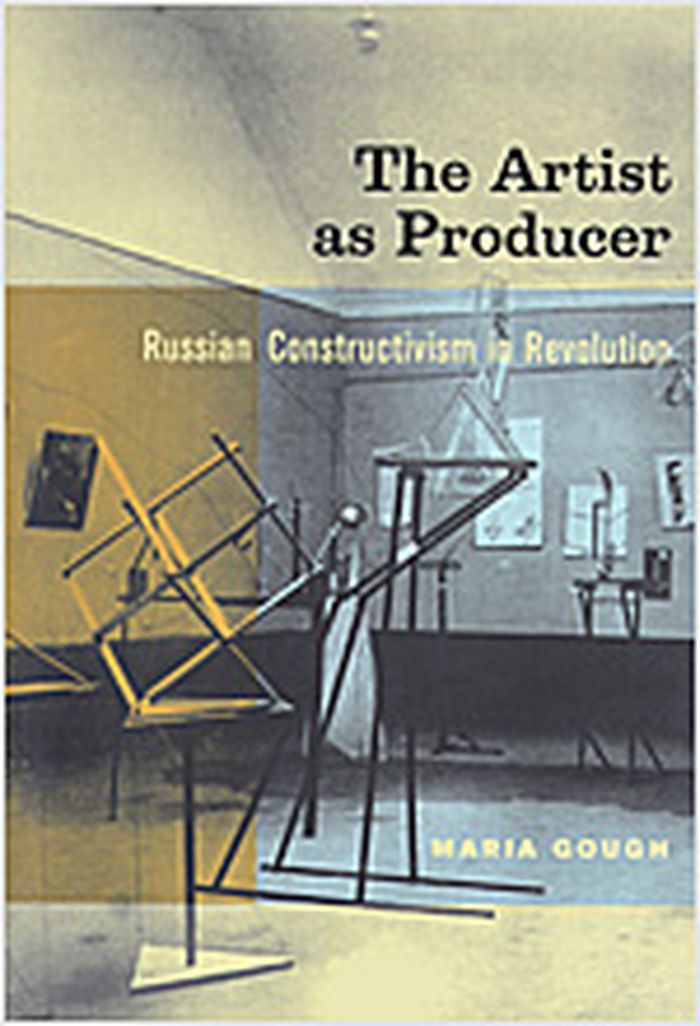
"The Artist as Producer" reshapes our understanding of the fundamental contribution of the Russian avant-garde to the development of modernism. Focusing on the single most important hotbed of Constructivist activity in the early 1920s - the Institute of Artistic Culture (INKhUK) in Moscow - Maria Gough offers a powerful reinterpretation of the work of the first group of artists to call themselves Constructivists. Her lively narrative ranges from famous figures such as Aleksandr Rodchenko to others who are much less well known, such as Karl Ioganson, a key member of the state-funded INKhUK whose work paved the way for an eventual dematerialization of the integral art object. Through the mining of untapped archives and collections in Russia and Latvia and a close reading of key Constructivist works, Gough highlights fundamental differences among the Moscow group in their handling of the experimental new sculptural form - the spatial construction - and of their subsequent shift to industrial production. "The Artist as Producer" upends the standard view that the Moscow group's formalism and abstraction were incompatible with the sociopolitical imperatives of the new Communist state. It challenges the common equation of Constructivism with functionalism and utilitarianism by delineating a contrary tendency toward non-determinism and an alternate orientation to process rather than product. Finally, the book counters the popular perception that Constructivism failed in its ambition to enter production by presenting the first-ever case study of how a Constructivist could, and in fact did, operate within an industrial environment. "The Artist as Producer" offers provocative new perspectives on three critical issues - formalism, functionalism, and failure - that are of central importance to our understanding not only of the Soviet phenomenon but also of the European vanguards more generally.
The artist as producer : Russian Constructivism in revolution
Actions:
Price:
$59.95
(available to order)
Summary:
"The Artist as Producer" reshapes our understanding of the fundamental contribution of the Russian avant-garde to the development of modernism. Focusing on the single most important hotbed of Constructivist activity in the early 1920s - the Institute of Artistic Culture (INKhUK) in Moscow - Maria Gough offers a powerful reinterpretation of the work of the first group of artists to call themselves Constructivists. Her lively narrative ranges from famous figures such as Aleksandr Rodchenko to others who are much less well known, such as Karl Ioganson, a key member of the state-funded INKhUK whose work paved the way for an eventual dematerialization of the integral art object. Through the mining of untapped archives and collections in Russia and Latvia and a close reading of key Constructivist works, Gough highlights fundamental differences among the Moscow group in their handling of the experimental new sculptural form - the spatial construction - and of their subsequent shift to industrial production. "The Artist as Producer" upends the standard view that the Moscow group's formalism and abstraction were incompatible with the sociopolitical imperatives of the new Communist state. It challenges the common equation of Constructivism with functionalism and utilitarianism by delineating a contrary tendency toward non-determinism and an alternate orientation to process rather than product. Finally, the book counters the popular perception that Constructivism failed in its ambition to enter production by presenting the first-ever case study of how a Constructivist could, and in fact did, operate within an industrial environment. "The Artist as Producer" offers provocative new perspectives on three critical issues - formalism, functionalism, and failure - that are of central importance to our understanding not only of the Soviet phenomenon but also of the European vanguards more generally.
Form:
books
books
Publication:
January 1900, Berkeley
January 1900, Berkeley
Subject:
Architecture since 1900, Europe
Architecture since 1900, Europe
Form:
books
books
Title:
The place we live
The place we live
Actions:
Price:
$42.00
(available to order)
Summary:
The year 2008 has witnessed a major shift in the way people across the world live: for the first time in human history more people live in cities than in rural areas. This triumph of the urban, however, does not entirely represent progress, as the number of people living in urban slums—often in abject conditions—will soon exceed one billion. From 2005 to 2007 Jonas(...)
$42.00
(available to order)
Summary:
The year 2008 has witnessed a major shift in the way people across the world live: for the first time in human history more people live in cities than in rural areas. This triumph of the urban, however, does not entirely represent progress, as the number of people living in urban slums—often in abject conditions—will soon exceed one billion. From 2005 to 2007 Jonas(...)
Title:
The place we live
Actions:
Price:
$42.00
(available to order)
Summary:
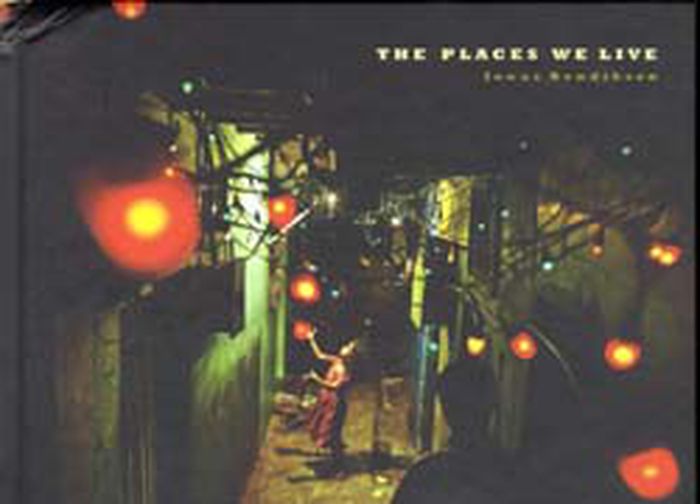
The year 2008 has witnessed a major shift in the way people across the world live: for the first time in human history more people live in cities than in rural areas. This triumph of the urban, however, does not entirely represent progress, as the number of people living in urban slums—often in abject conditions—will soon exceed one billion. From 2005 to 2007 Jonas Bendiksen documented life in the slums of four different cities: Nairobi, Kenya; Mumbai, India; Jakarta, Indonesia; and Caracas, Venezuela. His lyrical images capture the diversity of personal histories and outlooks found in these dense neighborhoods that, despite commonly held assumptions, are not simply places of poverty and misery. Yet, slum residents continuously face enormous challenges, such as the lack of health care, sanitation, and electricity. The Places We Live includes twenty double-gatefold images, each representing an individual home and its denizen’s story. Through its innovative design and experiential approach, The Places We Live brings the modern-day Dickensian reality of these individuals into sharp focus. Artist / Writer Biography A member of Magnum Photos, Jonas Bendiksen (born in Tønsberg, Norway, 1977) has received numerous awards, including the 2003 Infinity Award from the International Center of Photography and first prize in the Pictures of the Year International Awards. His photographs have appeared in National Geographic, Geo , Newsweek, and the Sunday Times Magazine, among other publications. His bestselling first book, Satellites: Photographs from the Fringes of the Former Soviet Union, was published in 2006 by Aperture. In 2007, the Paris Review received a National Magazine Award for Bendiksen’s project The Places We Live. Philip Gourevitch (introduction) is editor of the Paris Review and author of Standard Operating Procedure (a collaboration with Errol Morris) and We Wish to Inform You That Tomorrow We Will Be Killed With Our Families: Stories from Rwanda.
The place we live
Actions:
Price:
$42.00
(available to order)
Summary:
The year 2008 has witnessed a major shift in the way people across the world live: for the first time in human history more people live in cities than in rural areas. This triumph of the urban, however, does not entirely represent progress, as the number of people living in urban slums—often in abject conditions—will soon exceed one billion. From 2005 to 2007 Jonas Bendiksen documented life in the slums of four different cities: Nairobi, Kenya; Mumbai, India; Jakarta, Indonesia; and Caracas, Venezuela. His lyrical images capture the diversity of personal histories and outlooks found in these dense neighborhoods that, despite commonly held assumptions, are not simply places of poverty and misery. Yet, slum residents continuously face enormous challenges, such as the lack of health care, sanitation, and electricity. The Places We Live includes twenty double-gatefold images, each representing an individual home and its denizen’s story. Through its innovative design and experiential approach, The Places We Live brings the modern-day Dickensian reality of these individuals into sharp focus. Artist / Writer Biography A member of Magnum Photos, Jonas Bendiksen (born in Tønsberg, Norway, 1977) has received numerous awards, including the 2003 Infinity Award from the International Center of Photography and first prize in the Pictures of the Year International Awards. His photographs have appeared in National Geographic, Geo , Newsweek, and the Sunday Times Magazine, among other publications. His bestselling first book, Satellites: Photographs from the Fringes of the Former Soviet Union, was published in 2006 by Aperture. In 2007, the Paris Review received a National Magazine Award for Bendiksen’s project The Places We Live. Philip Gourevitch (introduction) is editor of the Paris Review and author of Standard Operating Procedure (a collaboration with Errol Morris) and We Wish to Inform You That Tomorrow We Will Be Killed With Our Families: Stories from Rwanda.
Form:
books
books
Publication:
August 2008, New York
August 2008, New York
Subject:
Photography monographs
Photography monographs
Form:
books
books
Actions:
Holdings:
Description:
36 pages : illustrations ; 24 cm
Description:
36 pages : illustrations ; 24 cm
Author:
Subject:
Publication:
Paris : Société artistique de publications techniques, 1935.
Paris : Société artistique de publications techniques, 1935.
Title:
L'Urbanisme et l'architecture en U.R.S.S. : conférence donnée sous les auspices de la S.A.D.G. au "Centre d'information de l'architecte", rue du Cherche-Midi / par les délégués de l'Union Soviétique au Congrès international des architectes de Rome (1935).
Actions:
Holdings:
Description:
36 pages : illustrations ; 24 cm
L'Urbanisme et l'architecture en U.R.S.S. : conférence donnée sous les auspices de la S.A.D.G. au "Centre d'information de l'architecte", rue du Cherche-Midi / par les délégués de l'Union Soviétique au Congrès international des architectes de Rome (1935).
Actions:
Holdings:
Description:
36 pages : illustrations ; 24 cm
Form:
books
books
Publication:
Paris : Société artistique de publications techniques, 1935.
Paris : Société artistique de publications techniques, 1935.
Author:
Subject:


