


890 Results
Form:
exhibitions
exhibitions
Actions:
Description:
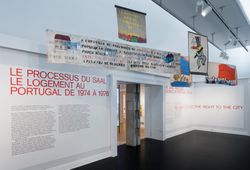
Born out of the Portuguese revolution of 25 April 1974, the Serviço Ambulatório de Apoio Local (Local Ambulatory Support Service) was a pioneering architectural and political experiment designed to address extreme housing shortages and poor living conditions in Portuguese cities. There was not only one SAAL: its initiatives and results varied widely depending on complex(...)
Born out of the Portuguese revolution of 25 April 1974, the Serviço Ambulatório de Apoio Local (Local Ambulatory Support Service) was a pioneering architectural and political experiment designed to address extreme housing shortages and poor living conditions in Portuguese cities. There was not only one SAAL: its initiatives and results varied widely depending on complex(...)
Location:
Main galleries
Main galleries
Date:
12 May 2015 to 4 October 2015
12 May 2015 to 4 October 2015
Title:
The SAAL Process: Housing in Portugal 1974–76
Actions:
Description:
Born out of the Portuguese revolution of 25 April 1974, the Serviço Ambulatório de Apoio Local (Local Ambulatory Support Service) was a pioneering architectural and political experiment designed to address extreme housing shortages and poor living conditions in Portuguese cities. There was not only one SAAL: its initiatives and results varied widely depending on complex(...)
The SAAL Process: Housing in Portugal 1974–76
Actions:
Description:
Born out of the Portuguese revolution of 25 April 1974, the Serviço Ambulatório de Apoio Local (Local Ambulatory Support Service) was a pioneering architectural and political experiment designed to address extreme housing shortages and poor living conditions in Portuguese cities. There was not only one SAAL: its initiatives and results varied widely depending on complex(...)
Form:
exhibitions
exhibitions
Date:
12 May 2015 to
4 October 2015
12 May 2015 to
4 October 2015
Location:
Main galleries
Main galleries
Form:
exhibitions
exhibitions
Actions:
Description:
As they fill their sketchbooks with both texts and images, architects capture initial reactions to sites; record impressions and make drawings as they travel; organise work to be done; articulate design concepts and pose solutions; draft essays, lectures, and letters; write research notes; and copy inspirational passages from their readings. The Architect’s Sketchbook:(...)
As they fill their sketchbooks with both texts and images, architects capture initial reactions to sites; record impressions and make drawings as they travel; organise work to be done; articulate design concepts and pose solutions; draft essays, lectures, and letters; write research notes; and copy inspirational passages from their readings. The Architect’s Sketchbook:(...)
Location:
Hall cases
Hall cases
Date:
26 February 1992 to 24 May 1992
26 February 1992 to 24 May 1992
Title:
The Architect's Sketchbook: Current Practice
Actions:
Description:
As they fill their sketchbooks with both texts and images, architects capture initial reactions to sites; record impressions and make drawings as they travel; organise work to be done; articulate design concepts and pose solutions; draft essays, lectures, and letters; write research notes; and copy inspirational passages from their readings. The Architect’s Sketchbook:(...)
The Architect's Sketchbook: Current Practice
Actions:
Description:
As they fill their sketchbooks with both texts and images, architects capture initial reactions to sites; record impressions and make drawings as they travel; organise work to be done; articulate design concepts and pose solutions; draft essays, lectures, and letters; write research notes; and copy inspirational passages from their readings. The Architect’s Sketchbook:(...)
Form:
exhibitions
exhibitions
Date:
26 February 1992 to
24 May 1992
26 February 1992 to
24 May 1992
Location:
Hall cases
Hall cases
Form:
events
events
Actions:
Description:
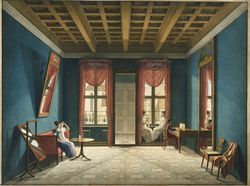
Seeing, perceiving, viewing, envisioning: each is a form of framing that mediates between inside and outside, public and private, what’s evident and what’s hidden. Georges Teyssot, Professor at Université Laval’s School of Architecture in Quebec City and author of A Topology of Everyday Constellations (The MIT Press, 2013), analyzes how the notions of window, door, frame,(...)
Seeing, perceiving, viewing, envisioning: each is a form of framing that mediates between inside and outside, public and private, what’s evident and what’s hidden. Georges Teyssot, Professor at Université Laval’s School of Architecture in Quebec City and author of A Topology of Everyday Constellations (The MIT Press, 2013), analyzes how the notions of window, door, frame,(...)
Location:
Shaughnessy House
Shaughnessy House
Date:
19 February 2015 , 6pm
19 February 2015 , 6pm
Title:
Windows and Screens: Georges Teyssot
Actions:
Description:
Seeing, perceiving, viewing, envisioning: each is a form of framing that mediates between inside and outside, public and private, what’s evident and what’s hidden. Georges Teyssot, Professor at Université Laval’s School of Architecture in Quebec City and author of A Topology of Everyday Constellations (The MIT Press, 2013), analyzes how the notions of window, door, frame,(...)
Windows and Screens: Georges Teyssot
Actions:
Description:
Seeing, perceiving, viewing, envisioning: each is a form of framing that mediates between inside and outside, public and private, what’s evident and what’s hidden. Georges Teyssot, Professor at Université Laval’s School of Architecture in Quebec City and author of A Topology of Everyday Constellations (The MIT Press, 2013), analyzes how the notions of window, door, frame,(...)
Form:
events
events
Date:
19 February 2015
6pm
19 February 2015
6pm
Location:
Shaughnessy House
Shaughnessy House
Form:
exhibitions
exhibitions
Description:
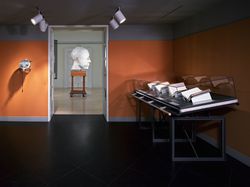
Meditations on Piero presents contemporary sculptures by British/Canadian artist Geoffrey Smedley alongside over thirty rare books from the fifteenth to the eighteenth centuries. The sculptures draw their inspiration from a series of drawings of the human head by the great Italian Renaissance artist Piero della Francesca. The exhibition relates these drawings and(...)
Meditations on Piero presents contemporary sculptures by British/Canadian artist Geoffrey Smedley alongside over thirty rare books from the fifteenth to the eighteenth centuries. The sculptures draw their inspiration from a series of drawings of the human head by the great Italian Renaissance artist Piero della Francesca. The exhibition relates these drawings and(...)
Location:
Octagonal gallery
Octagonal gallery
Date:
2 May 2001 to 16 September 2001
2 May 2001 to 16 September 2001
Title:
Meditations on Piero
Actions:
Description:
Meditations on Piero presents contemporary sculptures by British/Canadian artist Geoffrey Smedley alongside over thirty rare books from the fifteenth to the eighteenth centuries. The sculptures draw their inspiration from a series of drawings of the human head by the great Italian Renaissance artist Piero della Francesca. The exhibition relates these drawings and(...)
Meditations on Piero
Actions:
Description:
Meditations on Piero presents contemporary sculptures by British/Canadian artist Geoffrey Smedley alongside over thirty rare books from the fifteenth to the eighteenth centuries. The sculptures draw their inspiration from a series of drawings of the human head by the great Italian Renaissance artist Piero della Francesca. The exhibition relates these drawings and(...)
Form:
exhibitions
exhibitions
Date:
2 May 2001 to
16 September 2001
2 May 2001 to
16 September 2001
Location:
Octagonal gallery
Octagonal gallery
Form:
exhibitions
exhibitions
Description:
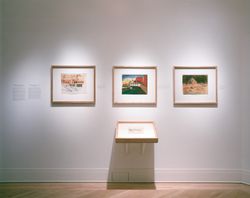
A look at Louis Kahn’s graphic work shows that his search for abstract monumentality, which culminated in his works of the 1960s, began decades earlier in his abundant drawings, travel sketches, and landscapes. The studies, travel sketches, and landscapes shown in the exhibition—such as Kahns intimate landscapes from Gaspé, where he regularly vacationed during the 1930s(...)
A look at Louis Kahn’s graphic work shows that his search for abstract monumentality, which culminated in his works of the 1960s, began decades earlier in his abundant drawings, travel sketches, and landscapes. The studies, travel sketches, and landscapes shown in the exhibition—such as Kahns intimate landscapes from Gaspé, where he regularly vacationed during the 1930s(...)
Location:
Octagonal gallery
Octagonal gallery
Date:
19 May 1993 to 29 August 1993
19 May 1993 to 29 August 1993
Title:
An Architectural Odyssey: The Travel Sketches of Louis I. Kahn
Actions:
Description:
A look at Louis Kahn’s graphic work shows that his search for abstract monumentality, which culminated in his works of the 1960s, began decades earlier in his abundant drawings, travel sketches, and landscapes. The studies, travel sketches, and landscapes shown in the exhibition—such as Kahns intimate landscapes from Gaspé, where he regularly vacationed during the 1930s(...)
An Architectural Odyssey: The Travel Sketches of Louis I. Kahn
Actions:
Description:
A look at Louis Kahn’s graphic work shows that his search for abstract monumentality, which culminated in his works of the 1960s, began decades earlier in his abundant drawings, travel sketches, and landscapes. The studies, travel sketches, and landscapes shown in the exhibition—such as Kahns intimate landscapes from Gaspé, where he regularly vacationed during the 1930s(...)
Form:
exhibitions
exhibitions
Date:
19 May 1993 to
29 August 1993
19 May 1993 to
29 August 1993
Location:
Octagonal gallery
Octagonal gallery
Form:
events
events
Title:
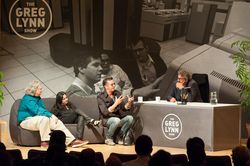
The Greg Lynn Show
The Greg Lynn Show
Actions:
Description:
It’s Greg Lynn, in conversation with architects of seminal digital projects included in the exhibition Archaeology of the Digital: Complexity and Convention. Conversation has been a big part of the CCA’s Archaeology of the Digital program. Greg Lynn has spoken with the architects of projects produced from the late 1980s through the 2000s to develop an archaeological(...)
It’s Greg Lynn, in conversation with architects of seminal digital projects included in the exhibition Archaeology of the Digital: Complexity and Convention. Conversation has been a big part of the CCA’s Archaeology of the Digital program. Greg Lynn has spoken with the architects of projects produced from the late 1980s through the 2000s to develop an archaeological(...)
Date:
11 May 2016
11 May 2016
Title:
The Greg Lynn Show
Actions:
Description:
It’s Greg Lynn, in conversation with architects of seminal digital projects included in the exhibition Archaeology of the Digital: Complexity and Convention. Conversation has been a big part of the CCA’s Archaeology of the Digital program. Greg Lynn has spoken with the architects of projects produced from the late 1980s through the 2000s to develop an archaeological(...)
The Greg Lynn Show
Actions:
Description:
It’s Greg Lynn, in conversation with architects of seminal digital projects included in the exhibition Archaeology of the Digital: Complexity and Convention. Conversation has been a big part of the CCA’s Archaeology of the Digital program. Greg Lynn has spoken with the architects of projects produced from the late 1980s through the 2000s to develop an archaeological(...)
Form:
events
events
Date:
11 May 2016
11 May 2016
Form:
archives
Level of archival description:
Fonds
archives
Level of archival description:
Fonds
Reference number:
AP082
Synopsis:
The OMA Universal Studios project records, 1996-1999, document an unexecuted project by the architectural firm OMA (Office for Metropolitan Architecture) for a headquarters building for Universal Studios at Universal City, Los Angeles County, California. The design process for the project is documented through drawings, models, presentation panels, proposals, reports and project manuals.
AP082
Synopsis:
The OMA Universal Studios project records, 1996-1999, document an unexecuted project by the architectural firm OMA (Office for Metropolitan Architecture) for a headquarters building for Universal Studios at Universal City, Los Angeles County, California. The design process for the project is documented through drawings, models, presentation panels, proposals, reports and project manuals.
People:
Date:
1996-1999
1996-1999
Title:
OMA Universal Studios project records
Actions:
AP082
Synopsis:
The OMA Universal Studios project records, 1996-1999, document an unexecuted project by the architectural firm OMA (Office for Metropolitan Architecture) for a headquarters building for Universal Studios at Universal City, Los Angeles County, California. The design process for the project is documented through drawings, models, presentation panels, proposals, reports and project manuals.
OMA Universal Studios project records
Actions:
AP082
Synopsis:
The OMA Universal Studios project records, 1996-1999, document an unexecuted project by the architectural firm OMA (Office for Metropolitan Architecture) for a headquarters building for Universal Studios at Universal City, Los Angeles County, California. The design process for the project is documented through drawings, models, presentation panels, proposals, reports and project manuals.
Form:
archives
Level of archival description:
Fonds
archives
Level of archival description:
Fonds
Date:
1996-1999
1996-1999
People:
Form:
exhibitions
exhibitions
Actions:
Description:
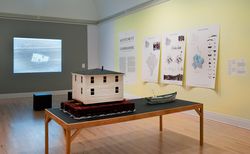
Although immigration is a dominant topic in contemporary culture, its discussion is often limited to the human experience, such as the crossing of borders and issues about national identity. Journeys takes a different perspective: how movements impact the environment. Examples range from the coconut that can drift freely on the ocean current and re-seed wherever it finds(...)
Although immigration is a dominant topic in contemporary culture, its discussion is often limited to the human experience, such as the crossing of borders and issues about national identity. Journeys takes a different perspective: how movements impact the environment. Examples range from the coconut that can drift freely on the ocean current and re-seed wherever it finds(...)
Location:
Main galleries
Main galleries
Date:
20 October 2010 to 13 March 2011
20 October 2010 to 13 March 2011
Title:
Journeys: How travelling fruit, ideas and buildings rearrange our environment
Actions:
Description:
Although immigration is a dominant topic in contemporary culture, its discussion is often limited to the human experience, such as the crossing of borders and issues about national identity. Journeys takes a different perspective: how movements impact the environment. Examples range from the coconut that can drift freely on the ocean current and re-seed wherever it finds(...)
Journeys: How travelling fruit, ideas and buildings rearrange our environment
Actions:
Description:
Although immigration is a dominant topic in contemporary culture, its discussion is often limited to the human experience, such as the crossing of borders and issues about national identity. Journeys takes a different perspective: how movements impact the environment. Examples range from the coconut that can drift freely on the ocean current and re-seed wherever it finds(...)
Form:
exhibitions
exhibitions
Date:
20 October 2010 to
13 March 2011
20 October 2010 to
13 March 2011
Location:
Main galleries
Main galleries
Form:
exhibitions
exhibitions
Title:
Architects’ Books
Architects’ Books
Actions:
Description:
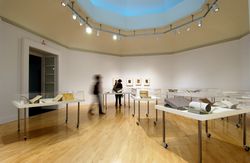
This exhibition presents three phases in the history of the architect’s book: the mid-sixteenth century, when architects first proved themselves in the field; the late-nineteenth to early-twentieth centuries, when architects turned to book design as a serious complement to their professional career; and contemporary times, when architectural firms, in league with their(...)
This exhibition presents three phases in the history of the architect’s book: the mid-sixteenth century, when architects first proved themselves in the field; the late-nineteenth to early-twentieth centuries, when architects turned to book design as a serious complement to their professional career; and contemporary times, when architectural firms, in league with their(...)
Location:
Octagonal gallery
Octagonal gallery
Date:
24 June 2004 to 26 September 2004
24 June 2004 to 26 September 2004
Title:
Architects’ Books
Actions:
Description:
This exhibition presents three phases in the history of the architect’s book: the mid-sixteenth century, when architects first proved themselves in the field; the late-nineteenth to early-twentieth centuries, when architects turned to book design as a serious complement to their professional career; and contemporary times, when architectural firms, in league with their(...)
Architects’ Books
Actions:
Description:
This exhibition presents three phases in the history of the architect’s book: the mid-sixteenth century, when architects first proved themselves in the field; the late-nineteenth to early-twentieth centuries, when architects turned to book design as a serious complement to their professional career; and contemporary times, when architectural firms, in league with their(...)
Form:
exhibitions
exhibitions
Date:
24 June 2004 to
26 September 2004
24 June 2004 to
26 September 2004
Location:
Octagonal gallery
Octagonal gallery
Form:
exhibitions
exhibitions
Actions:
Description:
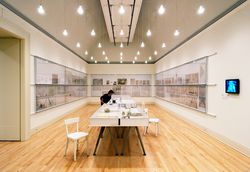
Starting from diverse premises and points of view, Cedric Price, Aldo Rossi, James Stirling, and Gordon Matta-Clark each engaged in a radical rethinking of the status, history, and purpose of architecture. out of the box: price rossi stirling + matta-clark brings the ideas of these four pivotal figures of the 1970s into dialogue through a group of archives that recently(...)
Starting from diverse premises and points of view, Cedric Price, Aldo Rossi, James Stirling, and Gordon Matta-Clark each engaged in a radical rethinking of the status, history, and purpose of architecture. out of the box: price rossi stirling + matta-clark brings the ideas of these four pivotal figures of the 1970s into dialogue through a group of archives that recently(...)
Location:
Main galleries
Main galleries
Date:
23 October 2003 to 6 September 2004
23 October 2003 to 6 September 2004
Title:
out of the box: price rossi stirling + matta-clark
Actions:
Description:
Starting from diverse premises and points of view, Cedric Price, Aldo Rossi, James Stirling, and Gordon Matta-Clark each engaged in a radical rethinking of the status, history, and purpose of architecture. out of the box: price rossi stirling + matta-clark brings the ideas of these four pivotal figures of the 1970s into dialogue through a group of archives that recently(...)
out of the box: price rossi stirling + matta-clark
Actions:
Description:
Starting from diverse premises and points of view, Cedric Price, Aldo Rossi, James Stirling, and Gordon Matta-Clark each engaged in a radical rethinking of the status, history, and purpose of architecture. out of the box: price rossi stirling + matta-clark brings the ideas of these four pivotal figures of the 1970s into dialogue through a group of archives that recently(...)
Form:
exhibitions
exhibitions
Date:
23 October 2003 to
6 September 2004
23 October 2003 to
6 September 2004
Location:
Main galleries
Main galleries


