


291 Results
Form:
books
books
Title:
The sensory studies manifesto: tracking the sensorial revolution in the arts and human sciences
The sensory studies manifesto: tracking the sensorial revolution in the arts and human sciences
Actions:
Price:
$34.95
(available to order)
Summary:
The senses are made, not given. This revolutionary realization has come as of late to inform research across the social sciences and humanities, and is currently inspiring groundbreaking experimentation in the world of art and design, where the focus is now on mixing and manipulating the senses. This book tracks these transformations and opens multiple lines of(...)
$34.95
(available to order)
Summary:
The senses are made, not given. This revolutionary realization has come as of late to inform research across the social sciences and humanities, and is currently inspiring groundbreaking experimentation in the world of art and design, where the focus is now on mixing and manipulating the senses. This book tracks these transformations and opens multiple lines of(...)
Title:
The sensory studies manifesto: tracking the sensorial revolution in the arts and human sciences
Actions:
Price:
$34.95
(available to order)
Summary:
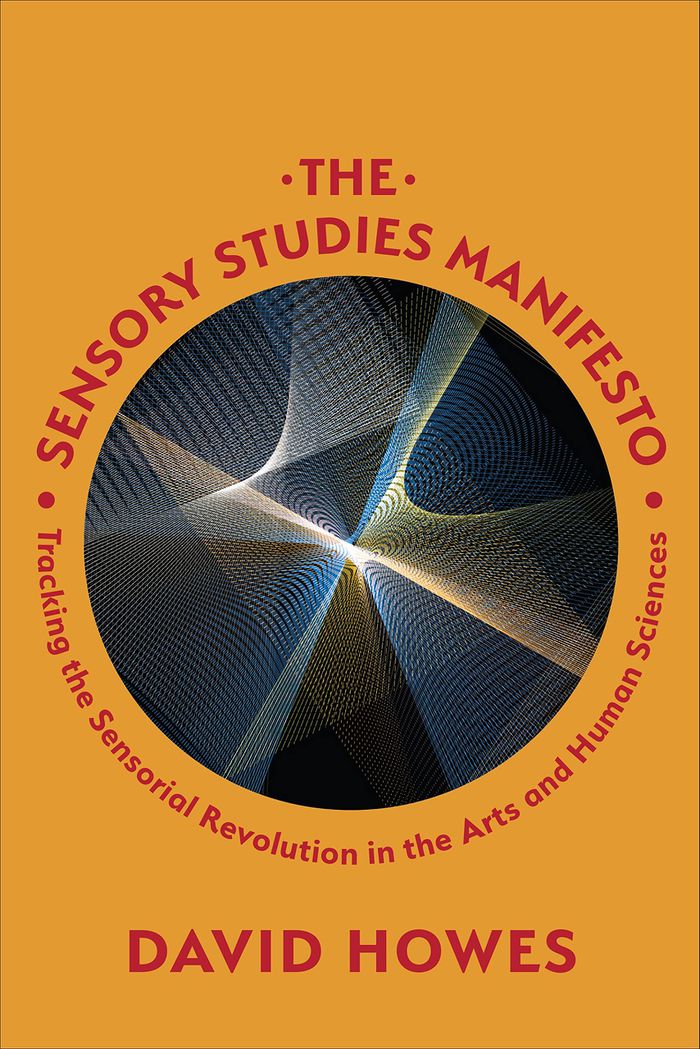
The senses are made, not given. This revolutionary realization has come as of late to inform research across the social sciences and humanities, and is currently inspiring groundbreaking experimentation in the world of art and design, where the focus is now on mixing and manipulating the senses. This book tracks these transformations and opens multiple lines of investigation into the diverse ways in which human beings sense and make sense of the world. It treats the human sensorium as a dynamic whole that is best approached from historical, anthropological, geographic, and sociological perspectives. In doing so, it has altered our understanding of sense perception by directing attention to the sociality of sensation and the cultural mediation of sense experience and expression. Howes challenges the assumptions of mainstream Western psychology by foregrounding the agency, interactivity, creativity, and wisdom of the senses as shaped by culture.
The sensory studies manifesto: tracking the sensorial revolution in the arts and human sciences
Actions:
Price:
$34.95
(available to order)
Summary:
The senses are made, not given. This revolutionary realization has come as of late to inform research across the social sciences and humanities, and is currently inspiring groundbreaking experimentation in the world of art and design, where the focus is now on mixing and manipulating the senses. This book tracks these transformations and opens multiple lines of investigation into the diverse ways in which human beings sense and make sense of the world. It treats the human sensorium as a dynamic whole that is best approached from historical, anthropological, geographic, and sociological perspectives. In doing so, it has altered our understanding of sense perception by directing attention to the sociality of sensation and the cultural mediation of sense experience and expression. Howes challenges the assumptions of mainstream Western psychology by foregrounding the agency, interactivity, creativity, and wisdom of the senses as shaped by culture.
Form:
books
books
Publication:
July 2022
July 2022
Subject:
Critical Theory
Critical Theory
Form:
books
books
Actions:
Holdings:
Description:
1 volume (unpaged [96] pages) : chiefly illustrations (chiefly color) ; 24 cm
Description:
1 volume (unpaged [96] pages) : chiefly illustrations (chiefly color) ; 24 cm
Author:
Subject:
Publication:
Barcelona : ACTAR/Arts Santa Mònica ; Barcelona ; New York : Distribuciò, ACTARBirkhäuserD, [2011]
Barcelona : ACTAR/Arts Santa Mònica ; Barcelona ; New York : Distribuciò, ACTARBirkhäuserD, [2011]
Title:
A green new deal : de la geopolítica al govern de la biosfera = from geopolitics to biosphere politics / Enric Ruiz Geli. El medi empàtic : conferencia = Empathic environment : master lecture / Jeremy Rifkin.
Actions:
Holdings:
Description:
1 volume (unpaged [96] pages) : chiefly illustrations (chiefly color) ; 24 cm
A green new deal : de la geopolítica al govern de la biosfera = from geopolitics to biosphere politics / Enric Ruiz Geli. El medi empàtic : conferencia = Empathic environment : master lecture / Jeremy Rifkin.
Actions:
Holdings:
Description:
1 volume (unpaged [96] pages) : chiefly illustrations (chiefly color) ; 24 cm
Form:
books
books
Publication:
Barcelona : ACTAR/Arts Santa Mònica ; Barcelona ; New York : Distribuciò, ACTARBirkhäuserD, [2011]
Barcelona : ACTAR/Arts Santa Mònica ; Barcelona ; New York : Distribuciò, ACTARBirkhäuserD, [2011]
Author:
Subject:
Form:
books
books
Title:
Ways of knowing cities
Ways of knowing cities
Actions:
Price:
$35.95
(available to order)
Summary:
Technology mediates how we know and experience cities, and the nature of this mediation has always been deeply political. Today, the production and deployment of data is at the forefront of projects to grasp and reshape urban life. ''Ways of knowing cities'' considers the role of technology in generating, materializing, and contesting urban epistemologies- tracing an arc(...)
$35.95
(available to order)
Summary:
Technology mediates how we know and experience cities, and the nature of this mediation has always been deeply political. Today, the production and deployment of data is at the forefront of projects to grasp and reshape urban life. ''Ways of knowing cities'' considers the role of technology in generating, materializing, and contesting urban epistemologies- tracing an arc(...)
Title:
Ways of knowing cities
Actions:
Price:
$35.95
(available to order)
Summary:
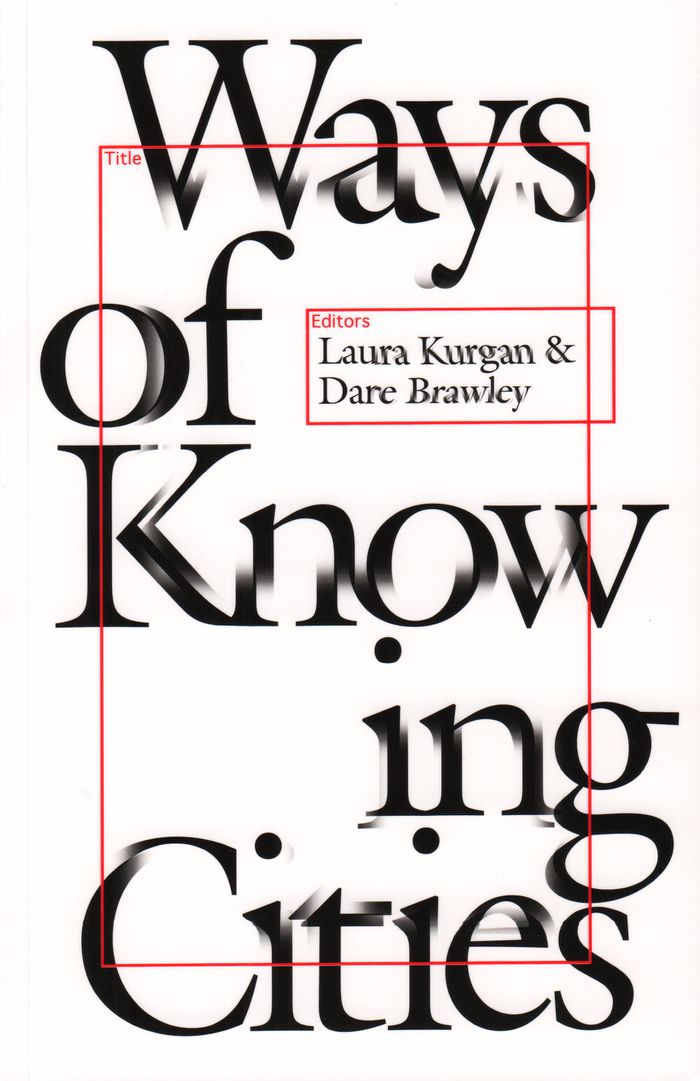
Technology mediates how we know and experience cities, and the nature of this mediation has always been deeply political. Today, the production and deployment of data is at the forefront of projects to grasp and reshape urban life. ''Ways of knowing cities'' considers the role of technology in generating, materializing, and contesting urban epistemologies- tracing an arc from ubiquitous sites of ''smart'' urbanism, to discrete struggles over infrastructural governance, to forgotten histories of segregation now naturalized in urban algorithms, to exceptional territories of border policing. Bringing together architects, urbanists, artists, and scholars of critical migration studies, media theory, geography, anthropology, and literature, the essays stage a deeply interdisciplinary conversation, interrogating the ways in which certain ways of knowing are predicated on the erasure of others. In this opening, the book engages the information systems that structure urban space and social life in it, historically and in the present moment, to imagine alternative practices and generate new critical perspectives on spatial research.
Ways of knowing cities
Actions:
Price:
$35.95
(available to order)
Summary:
Technology mediates how we know and experience cities, and the nature of this mediation has always been deeply political. Today, the production and deployment of data is at the forefront of projects to grasp and reshape urban life. ''Ways of knowing cities'' considers the role of technology in generating, materializing, and contesting urban epistemologies- tracing an arc from ubiquitous sites of ''smart'' urbanism, to discrete struggles over infrastructural governance, to forgotten histories of segregation now naturalized in urban algorithms, to exceptional territories of border policing. Bringing together architects, urbanists, artists, and scholars of critical migration studies, media theory, geography, anthropology, and literature, the essays stage a deeply interdisciplinary conversation, interrogating the ways in which certain ways of knowing are predicated on the erasure of others. In this opening, the book engages the information systems that structure urban space and social life in it, historically and in the present moment, to imagine alternative practices and generate new critical perspectives on spatial research.
Form:
books
books
Publication:
December 2019
December 2019
Subject:
Urban Theory
Urban Theory
Form:
books
books
Title:
The other side of empathy
The other side of empathy
Actions:
Price:
$31.95
(available to order)
Summary:
In The Other Side of Empathy, Jade E. Davis contests the value of empathy as an affective or critical tool. Whether focusing on technology, colonialism, or racism, she shows how empathy can obscure relationships of dominance, control, submission, and victimization, arguing that these histories taint the whole concept of empathy. Drawing on digital archives of photographs,(...)
$31.95
(available to order)
Summary:
In The Other Side of Empathy, Jade E. Davis contests the value of empathy as an affective or critical tool. Whether focusing on technology, colonialism, or racism, she shows how empathy can obscure relationships of dominance, control, submission, and victimization, arguing that these histories taint the whole concept of empathy. Drawing on digital archives of photographs,(...)
Title:
The other side of empathy
Actions:
Price:
$31.95
(available to order)
Summary:
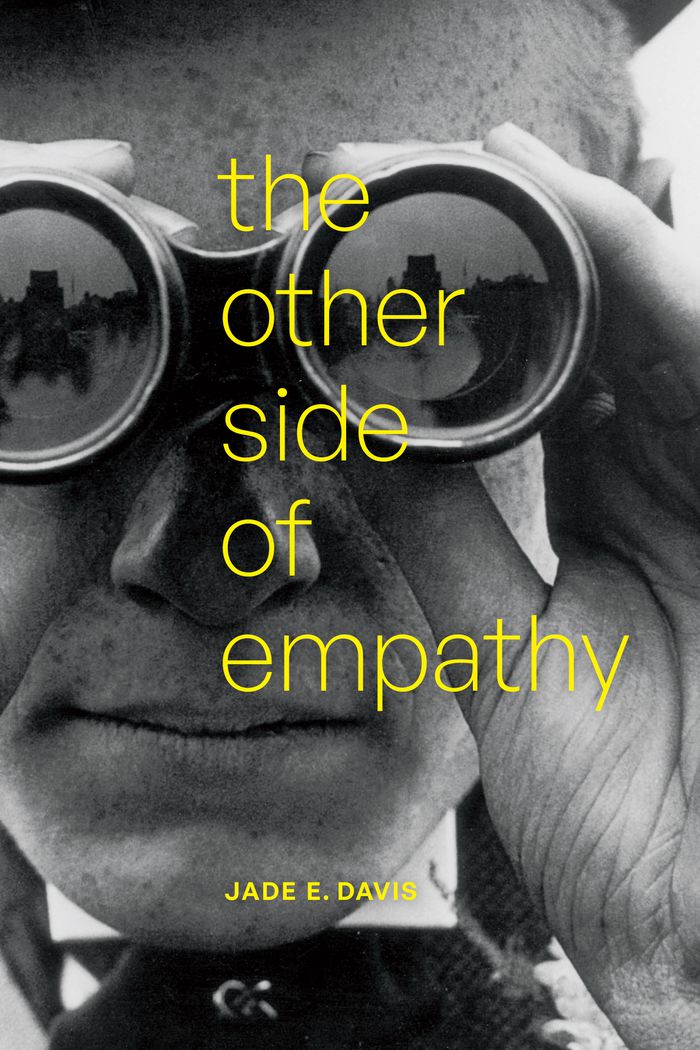
In The Other Side of Empathy, Jade E. Davis contests the value of empathy as an affective or critical tool. Whether focusing on technology, colonialism, or racism, she shows how empathy can obscure relationships of dominance, control, submission, and victimization, arguing that these histories taint the whole concept of empathy. Drawing on digital archives of photographs, memoirs, newspapers, interviews, and advertisements regarding nineteenth-century ethnographic museums and human zoos, Davis shows how empathetic responses erase culpabilities from those institutions that commodify difference. She also contends that empathy’s mediation through digital technology cannot lead to more ethical actions, as technology only connects representations of people rather than the people themselves. In empathy’s place, Davis proposes mutual recognition as a way to see and experience others beyond colonial modes of empathy. Davis illustrates that moving beyond empathy allows for a more nuanced understanding of the colonial past and its ongoing impact while providing for a more meaningful affective engagement with the world.
The other side of empathy
Actions:
Price:
$31.95
(available to order)
Summary:
In The Other Side of Empathy, Jade E. Davis contests the value of empathy as an affective or critical tool. Whether focusing on technology, colonialism, or racism, she shows how empathy can obscure relationships of dominance, control, submission, and victimization, arguing that these histories taint the whole concept of empathy. Drawing on digital archives of photographs, memoirs, newspapers, interviews, and advertisements regarding nineteenth-century ethnographic museums and human zoos, Davis shows how empathetic responses erase culpabilities from those institutions that commodify difference. She also contends that empathy’s mediation through digital technology cannot lead to more ethical actions, as technology only connects representations of people rather than the people themselves. In empathy’s place, Davis proposes mutual recognition as a way to see and experience others beyond colonial modes of empathy. Davis illustrates that moving beyond empathy allows for a more nuanced understanding of the colonial past and its ongoing impact while providing for a more meaningful affective engagement with the world.
Form:
books
books
Publication:
August 2023
August 2023
Subject:
Critical Theory
Critical Theory
Form:
books
books
Actions:
Price:
$38.95
(available in store)
Summary:
Félix Nadar took the first aerial photograph in 1858, so the story goes. The evidence, Emily Doucet notes, is mixed. In Inventing Nadar, Doucet analyzes the historical and material production of the nineteenth-century Parisian photographer’s famous and numerous photographic firsts. Focusing on these oft-labeled groundbreaking elements of his career, she deconstructs(...)
$38.95
(available in store)
Summary:
Félix Nadar took the first aerial photograph in 1858, so the story goes. The evidence, Emily Doucet notes, is mixed. In Inventing Nadar, Doucet analyzes the historical and material production of the nineteenth-century Parisian photographer’s famous and numerous photographic firsts. Focusing on these oft-labeled groundbreaking elements of his career, she deconstructs(...)
Title:
Inventing Nadar: A history of photographic firsts
Actions:
Price:
$38.95
(available in store)
Summary:
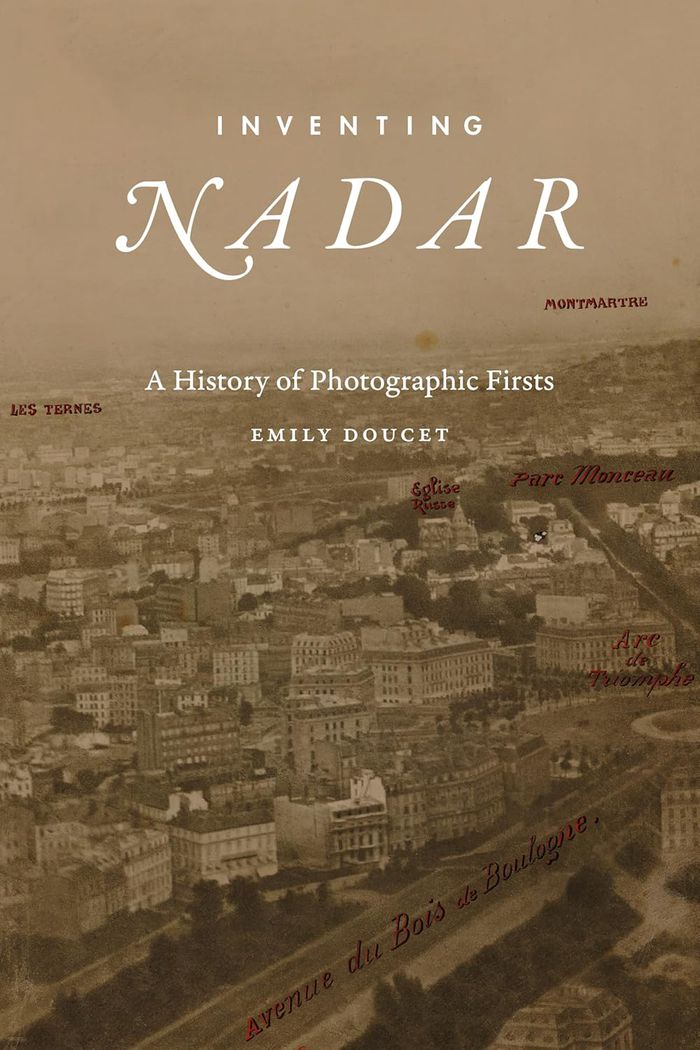
Félix Nadar took the first aerial photograph in 1858, so the story goes. The evidence, Emily Doucet notes, is mixed. In Inventing Nadar, Doucet analyzes the historical and material production of the nineteenth-century Parisian photographer’s famous and numerous photographic firsts. Focusing on these oft-labeled groundbreaking elements of his career, she deconstructs Nadar’s legacy as a prime protagonist in the history of photography by interrogating the media techniques used to construct his invention narratives. Doucet highlights this highly mediated process as one that canonized novel applications of photography as discrete techniques with single authors and inventors. Looking to this process of mediation through the institutions and individuals that shaped Nadar’s archives, Doucet unpacks assumptions of Nadar as a master of early photography and shows how the medium is enmeshed in larger histories of media, science, and technology. The result is both a new account of Nadar’s place in photographic history and a critical study of how stories of innovation take shape.
Inventing Nadar: A history of photographic firsts
Actions:
Price:
$38.95
(available in store)
Summary:
Félix Nadar took the first aerial photograph in 1858, so the story goes. The evidence, Emily Doucet notes, is mixed. In Inventing Nadar, Doucet analyzes the historical and material production of the nineteenth-century Parisian photographer’s famous and numerous photographic firsts. Focusing on these oft-labeled groundbreaking elements of his career, she deconstructs Nadar’s legacy as a prime protagonist in the history of photography by interrogating the media techniques used to construct his invention narratives. Doucet highlights this highly mediated process as one that canonized novel applications of photography as discrete techniques with single authors and inventors. Looking to this process of mediation through the institutions and individuals that shaped Nadar’s archives, Doucet unpacks assumptions of Nadar as a master of early photography and shows how the medium is enmeshed in larger histories of media, science, and technology. The result is both a new account of Nadar’s place in photographic history and a critical study of how stories of innovation take shape.
Form:
books
books
Publication:
April 2026
April 2026
Subject:
Theory of Photography
Theory of Photography
Form:
books
books

Title:
Camouflage
Camouflage
Actions:
Price:
$28.95
(available to order)
Summary:
The desire for camouflage is a desire to feel connected--to find our place in the world and to feel at home. In Camouflage Neil Leach analyzes this desire and its consequences for architectural concerns. Design, Leach argues, can aid the process of assimilation we go through when we adapt to our surroundings. Design can provide a form of connectivity--a mediation between(...)
$28.95
(available to order)
Summary:
The desire for camouflage is a desire to feel connected--to find our place in the world and to feel at home. In Camouflage Neil Leach analyzes this desire and its consequences for architectural concerns. Design, Leach argues, can aid the process of assimilation we go through when we adapt to our surroundings. Design can provide a form of connectivity--a mediation between(...)
Title:
Camouflage
Actions:
Price:
$28.95
(available to order)
Summary:
The desire for camouflage is a desire to feel connected--to find our place in the world and to feel at home. In Camouflage Neil Leach analyzes this desire and its consequences for architectural concerns. Design, Leach argues, can aid the process of assimilation we go through when we adapt to our surroundings. Design can provide a form of connectivity--a mediation between us and our environment--and it can contribute to a sense of belonging. Architecture, and indeed all forms of design and creativity--fashion, art, cinema, and others--can be an effective realm for forging a sense of belonging and establishing an identity. Camouflage offers a range of overlapping and intersecting theoretical perspectives--from an overview of psychoanalytic insights to an account of the magical properties of architectural models--that together suggest a way to rethink our relationship to the world and the role that design plays in that relationship.
Camouflage
Actions:
Price:
$28.95
(available to order)
Summary:
The desire for camouflage is a desire to feel connected--to find our place in the world and to feel at home. In Camouflage Neil Leach analyzes this desire and its consequences for architectural concerns. Design, Leach argues, can aid the process of assimilation we go through when we adapt to our surroundings. Design can provide a form of connectivity--a mediation between us and our environment--and it can contribute to a sense of belonging. Architecture, and indeed all forms of design and creativity--fashion, art, cinema, and others--can be an effective realm for forging a sense of belonging and establishing an identity. Camouflage offers a range of overlapping and intersecting theoretical perspectives--from an overview of psychoanalytic insights to an account of the magical properties of architectural models--that together suggest a way to rethink our relationship to the world and the role that design plays in that relationship.
Form:
books
books
Publication:
June 2006, Cambridge
June 2006, Cambridge
Subject:
Architectural Theory
Architectural Theory
Form:
books
books
Actions:
Price:
$74.95
(available in store)
Summary:
By structuring this volume around the concept of form, Stefano Corbo links together Eisenman’s architecture with his theory. The book argues that form is the sphere of mediation between our body, our inner world and the exterior world and, as such, it enables connections to be made between philosophy and architecture. From the start of his career on, Eisenman has been(...)
$74.95
(available in store)
Summary:
By structuring this volume around the concept of form, Stefano Corbo links together Eisenman’s architecture with his theory. The book argues that form is the sphere of mediation between our body, our inner world and the exterior world and, as such, it enables connections to be made between philosophy and architecture. From the start of his career on, Eisenman has been(...)
Title:
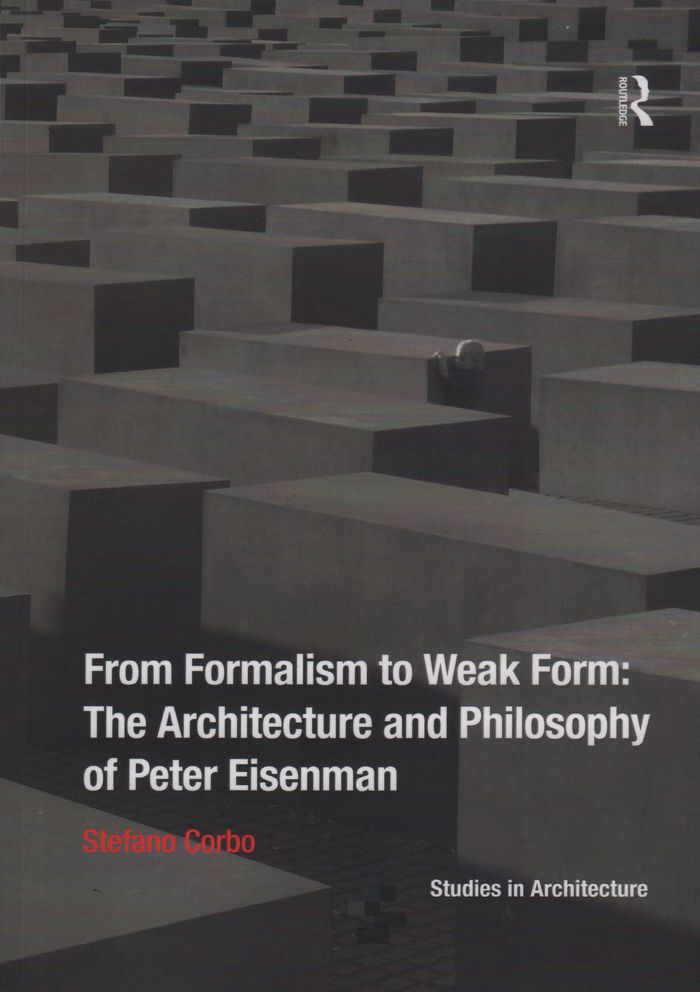
From formalism to weak form: The architecture and philosophy of Peter Eisenman
Actions:
Price:
$74.95
(available in store)
Summary:
By structuring this volume around the concept of form, Stefano Corbo links together Eisenman’s architecture with his theory. The book argues that form is the sphere of mediation between our body, our inner world and the exterior world and, as such, it enables connections to be made between philosophy and architecture. From the start of his career on, Eisenman has been deeply interested in the problem of form in architecture and has constantly challenged the classical concept of it. For him, form is not simply a cognitive tool that determines a physical structure, which discriminates all that is active from what is passive, what is inside from what is outside. He has always tried to connect his own work with the cultural manifestations of the time. These different moments underline different phases, different projects, different programmatic manifestos; and above all, an evolving notion of form. Taking a multi-disciplinary approach based on the intersections between architecture and philosophy, this book investigates all these definitions and, in doing so, provides new insights into and a deeper understanding of the complexity of Eisenman’s work.
From formalism to weak form: The architecture and philosophy of Peter Eisenman
Actions:
Price:
$74.95
(available in store)
Summary:
By structuring this volume around the concept of form, Stefano Corbo links together Eisenman’s architecture with his theory. The book argues that form is the sphere of mediation between our body, our inner world and the exterior world and, as such, it enables connections to be made between philosophy and architecture. From the start of his career on, Eisenman has been deeply interested in the problem of form in architecture and has constantly challenged the classical concept of it. For him, form is not simply a cognitive tool that determines a physical structure, which discriminates all that is active from what is passive, what is inside from what is outside. He has always tried to connect his own work with the cultural manifestations of the time. These different moments underline different phases, different projects, different programmatic manifestos; and above all, an evolving notion of form. Taking a multi-disciplinary approach based on the intersections between architecture and philosophy, this book investigates all these definitions and, in doing so, provides new insights into and a deeper understanding of the complexity of Eisenman’s work.
Form:
books
books
Publication:
December 2020
December 2020
Subject:
Architecture Monographs
Architecture Monographs
Form:
books
books

Actions:
Price:
$39.95
(available to order)
Summary:
In this contribution to contemporary media studies, acclaimed theorist Francesco Casetti advances a provocative hypothesis: instead of being prostheses that expand or extend our perceptions, modern screen-based media are in fact apparatuses that shelter and protect us from exposure to the world. Rather than bringing us closer to external reality, dominant forms of visual(...)
$39.95
(available to order)
Summary:
In this contribution to contemporary media studies, acclaimed theorist Francesco Casetti advances a provocative hypothesis: instead of being prostheses that expand or extend our perceptions, modern screen-based media are in fact apparatuses that shelter and protect us from exposure to the world. Rather than bringing us closer to external reality, dominant forms of visual(...)
Title:
Screening fears: On protective media
Actions:
Price:
$39.95
(available to order)
Summary:
In this contribution to contemporary media studies, acclaimed theorist Francesco Casetti advances a provocative hypothesis: instead of being prostheses that expand or extend our perceptions, modern screen-based media are in fact apparatuses that shelter and protect us from exposure to the world. Rather than bringing us closer to external reality, dominant forms of visual media function as barriers or enclosures that defend against the apparent threats and dangers that seem increasingly to surround us. Working with an original historical overview that begins with the Phantasmagoria of the late eighteenth century, then the shared interior spaces of the movie theater in the early to mid-twentieth century, and finally the solitary digital milieus of the present, Casetti traces the outlines of the protective 'bubbles' that disconnect us from our immediate surroundings. To be provided with a shield of immunity to the hazards and uncertainties of the world while experiencing them at a safe remove might seem a positive development. But, he asks, what if these media, instead of providing invulnerability, ensnare individuals in a suffocating enclosure? What if, in their effort to keep reality under control, they exercise a violence equal to that of the dangers they resist? In a dialectical exercise, and through a vivid range of cultural artifacts, ''Screening fears'' traces the emergence of modern protective media and the way they changed our forms of mediation with the world in which we live.
Screening fears: On protective media
Actions:
Price:
$39.95
(available to order)
Summary:
In this contribution to contemporary media studies, acclaimed theorist Francesco Casetti advances a provocative hypothesis: instead of being prostheses that expand or extend our perceptions, modern screen-based media are in fact apparatuses that shelter and protect us from exposure to the world. Rather than bringing us closer to external reality, dominant forms of visual media function as barriers or enclosures that defend against the apparent threats and dangers that seem increasingly to surround us. Working with an original historical overview that begins with the Phantasmagoria of the late eighteenth century, then the shared interior spaces of the movie theater in the early to mid-twentieth century, and finally the solitary digital milieus of the present, Casetti traces the outlines of the protective 'bubbles' that disconnect us from our immediate surroundings. To be provided with a shield of immunity to the hazards and uncertainties of the world while experiencing them at a safe remove might seem a positive development. But, he asks, what if these media, instead of providing invulnerability, ensnare individuals in a suffocating enclosure? What if, in their effort to keep reality under control, they exercise a violence equal to that of the dangers they resist? In a dialectical exercise, and through a vivid range of cultural artifacts, ''Screening fears'' traces the emergence of modern protective media and the way they changed our forms of mediation with the world in which we live.
Form:
books
books
Publication:
August 2023
August 2023
Subject:
Critical Theory
Critical Theory
Form:
journals and magazines
journals and magazines
Title:
Médiévales.
Médiévales.
Actions:
Description:
volumes : illustrations ; 23 cm
Author:
Subject:
Publication:
Saint-Denis, France : Presses et Publications de l'Université de Paris VIII
Saint-Denis, France : Presses et Publications de l'Université de Paris VIII
Form:
journals and magazines
journals and magazines
Publication:
Saint-Denis, France : Presses et Publications de l'Université de Paris VIII
Saint-Denis, France : Presses et Publications de l'Université de Paris VIII
Author:
Subject:
Form:
books
books
Actions:
Holdings:
Description:
196 pages : illustrations (some color) ; 29 cm
Description:
196 pages : illustrations (some color) ; 29 cm
Author:
Subject:
Publication:
Madison : Fairleigh Dickinson University Press ; London : Associated University Press, ©1997.
Madison : Fairleigh Dickinson University Press ; London : Associated University Press, ©1997.
Title:
Himalayan architecture / Ronald M. Bernier ; with a foreword by Dalai Lama.
Actions:
Holdings:
Description:
196 pages : illustrations (some color) ; 29 cm
Himalayan architecture / Ronald M. Bernier ; with a foreword by Dalai Lama.
Actions:
Holdings:
Description:
196 pages : illustrations (some color) ; 29 cm
Form:
books
books
Publication:
Madison : Fairleigh Dickinson University Press ; London : Associated University Press, ©1997.
Madison : Fairleigh Dickinson University Press ; London : Associated University Press, ©1997.
Author:
Subject:


