


332 Results
Form:
books
books
Actions:
Price:
$34.95
(available to order)
Summary:
"The complex answer: On art as a non-binary intelligence" presents a series of entangled essays on the question on how art—and contemporary art practices in particular—embodies an intelligence capable of serving the erasure of the culture/nature distinction. The book is conceived in four parts and each not only introduces a slightly different writing on the subject(...)
$34.95
(available to order)
Summary:
"The complex answer: On art as a non-binary intelligence" presents a series of entangled essays on the question on how art—and contemporary art practices in particular—embodies an intelligence capable of serving the erasure of the culture/nature distinction. The book is conceived in four parts and each not only introduces a slightly different writing on the subject(...)
Title:
The complex answer: On art as a non-binary intelligence
Actions:
Price:
$34.95
(available to order)
Summary:
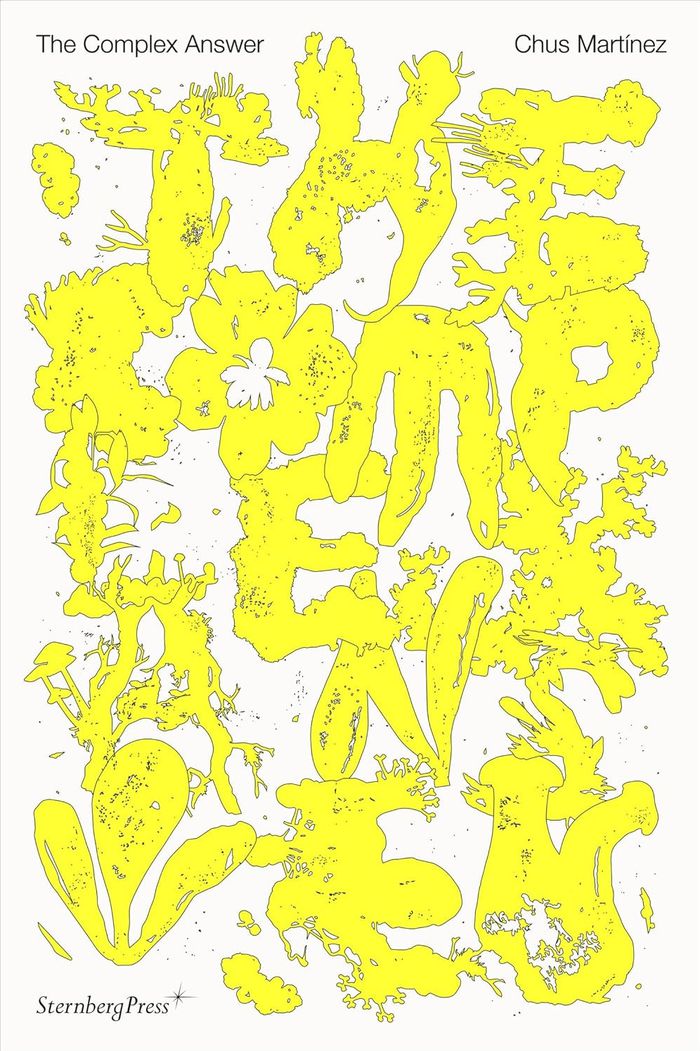
"The complex answer: On art as a non-binary intelligence" presents a series of entangled essays on the question on how art—and contemporary art practices in particular—embodies an intelligence capable of serving the erasure of the culture/nature distinction. The book is conceived in four parts and each not only introduces a slightly different writing on the subject matter, but also refers to concrete questions that affect the practice of art, the exercise of exhibiting, the duty of reflecting, and the institutional forms that define our present but may radically change in a near future. The book imagines art and contemporary art as an organ. An organ that produces an experience of inexpressible realities that are fundamental to understanding life and its processes. Stem cells exist, first, without a purpose and it is for the whole organism to decide if they will become part of an auditive nerve or the brain or the cornea of an eye. This adding to an organ is how Chus Martínez understands the intelligence of art. Poets and artists have claimed to understand the language of birds and flowers. We speak now of multi-species communication without a trace of metaphoric language. The experience of nature has evolved inside artistic practice. One could claim that the very fact that we talk about artificial intelligence is a merit of the arts. To transfer traits of organic life to inorganic entities such as information systems is a bold move that took centuries to prepare. Art has been essential in getting our senses and our arguments ready to accept this reality. The same with animal language, the synchronized reactions of a rainforest, and the transformative way fish have been discovered as able to recognize their own image in a mirror. These are just jests on the part of the sciences, developments of technical knowledges.
The complex answer: On art as a non-binary intelligence
Actions:
Price:
$34.95
(available to order)
Summary:
"The complex answer: On art as a non-binary intelligence" presents a series of entangled essays on the question on how art—and contemporary art practices in particular—embodies an intelligence capable of serving the erasure of the culture/nature distinction. The book is conceived in four parts and each not only introduces a slightly different writing on the subject matter, but also refers to concrete questions that affect the practice of art, the exercise of exhibiting, the duty of reflecting, and the institutional forms that define our present but may radically change in a near future. The book imagines art and contemporary art as an organ. An organ that produces an experience of inexpressible realities that are fundamental to understanding life and its processes. Stem cells exist, first, without a purpose and it is for the whole organism to decide if they will become part of an auditive nerve or the brain or the cornea of an eye. This adding to an organ is how Chus Martínez understands the intelligence of art. Poets and artists have claimed to understand the language of birds and flowers. We speak now of multi-species communication without a trace of metaphoric language. The experience of nature has evolved inside artistic practice. One could claim that the very fact that we talk about artificial intelligence is a merit of the arts. To transfer traits of organic life to inorganic entities such as information systems is a bold move that took centuries to prepare. Art has been essential in getting our senses and our arguments ready to accept this reality. The same with animal language, the synchronized reactions of a rainforest, and the transformative way fish have been discovered as able to recognize their own image in a mirror. These are just jests on the part of the sciences, developments of technical knowledges.
Form:
books
books
Publication:
February 2024
February 2024
Subject:
Art Theory
Art Theory
Form:
books
books
Actions:
Price:
$60.95
(available to order)
Summary:
In this volume, Molly Wright Steenson explores the work of four architects in the 1960s and 1970s who incorporated elements of interactivity into their work. Christopher Alexander, Richard Saul Wurman, Cedric Price, and Nicholas Negroponte and the MIT Architecture Machine Group all incorporated technologies—including cybernetics and artificial intelligence—into their work(...)
$60.95
(available to order)
Summary:
In this volume, Molly Wright Steenson explores the work of four architects in the 1960s and 1970s who incorporated elements of interactivity into their work. Christopher Alexander, Richard Saul Wurman, Cedric Price, and Nicholas Negroponte and the MIT Architecture Machine Group all incorporated technologies—including cybernetics and artificial intelligence—into their work(...)
Title:
Architectural intelligence: How designers and architects created the digital landscape
Actions:
Price:
$60.95
(available to order)
Summary:
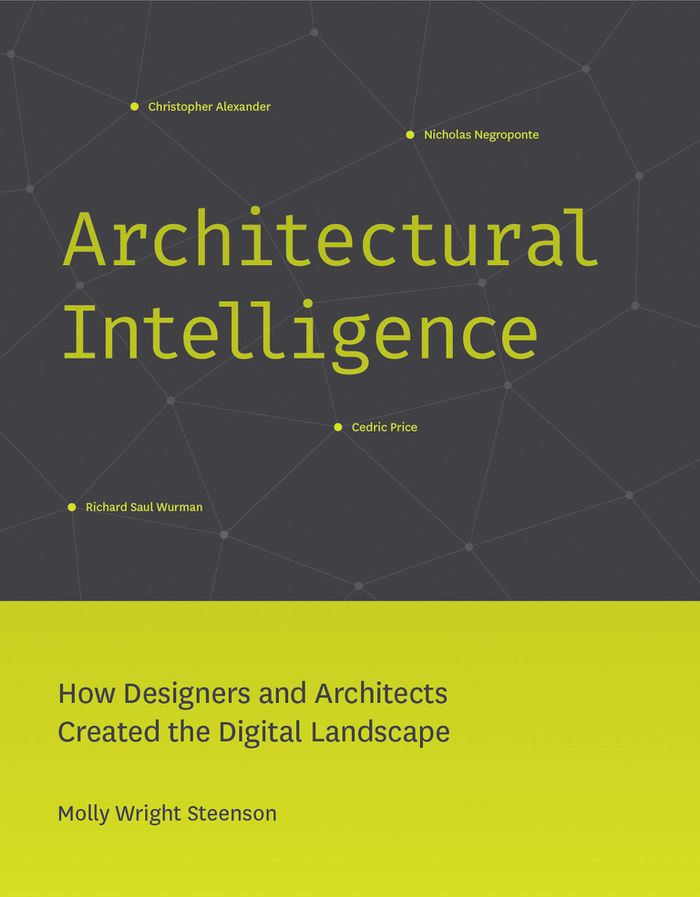
In this volume, Molly Wright Steenson explores the work of four architects in the 1960s and 1970s who incorporated elements of interactivity into their work. Christopher Alexander, Richard Saul Wurman, Cedric Price, and Nicholas Negroponte and the MIT Architecture Machine Group all incorporated technologies—including cybernetics and artificial intelligence—into their work and influenced digital design practices from the late 1980s to the present day. The projects Steenson examines mostly did not result in constructed buildings, but rather in design processes and tools, computer programs, interfaces, digital environments. Alexander, Wurman, Price, and Negroponte laid the foundation for many of our contemporary interactive practices, from information architecture to interaction design, from machine learning to smart cities.
Architectural intelligence: How designers and architects created the digital landscape
Actions:
Price:
$60.95
(available to order)
Summary:
In this volume, Molly Wright Steenson explores the work of four architects in the 1960s and 1970s who incorporated elements of interactivity into their work. Christopher Alexander, Richard Saul Wurman, Cedric Price, and Nicholas Negroponte and the MIT Architecture Machine Group all incorporated technologies—including cybernetics and artificial intelligence—into their work and influenced digital design practices from the late 1980s to the present day. The projects Steenson examines mostly did not result in constructed buildings, but rather in design processes and tools, computer programs, interfaces, digital environments. Alexander, Wurman, Price, and Negroponte laid the foundation for many of our contemporary interactive practices, from information architecture to interaction design, from machine learning to smart cities.
Form:
books
books
Publication:
December 2022
December 2022
Subject:
Digital Architecture
Digital Architecture
Form:
books
books
Actions:
Holdings:
Description:
93 pages : illustrations ; 19 cm.
Description:
93 pages : illustrations ; 19 cm.
Subject:
Publication:
Basel : Birkhäuser, 2000.
Basel : Birkhäuser, 2000.
Title:
New wombs : electronic bodies and architectural disorders / Maria Luisa Palumbo ; [translation into English : Lucinda Byatt].
Actions:
Holdings:
Description:
93 pages : illustrations ; 19 cm.
New wombs : electronic bodies and architectural disorders / Maria Luisa Palumbo ; [translation into English : Lucinda Byatt].
Actions:
Holdings:
Description:
93 pages : illustrations ; 19 cm.
Form:
books
books
Publication:
Basel : Birkhäuser, 2000.
Basel : Birkhäuser, 2000.
Form:
books
books
Actions:
Price:
$39.50
(available in store)
Summary:
Updated to cover all the latest developments, "Architecture in the age of artificial intelligence" introduces AI for designers and explores its seismic impact on the future of architecture and design. From ChatGPT and smart assistants to groundbreaking diffusion models for video and 3D modelling, this updated new edition investigates the profound effects of AI(...)
$39.50
(available in store)
Summary:
Updated to cover all the latest developments, "Architecture in the age of artificial intelligence" introduces AI for designers and explores its seismic impact on the future of architecture and design. From ChatGPT and smart assistants to groundbreaking diffusion models for video and 3D modelling, this updated new edition investigates the profound effects of AI(...)
Title:
Architecture in the age of artficial intelligence: An introduction to AI for architects
Actions:
Price:
$39.50
(available in store)
Summary:
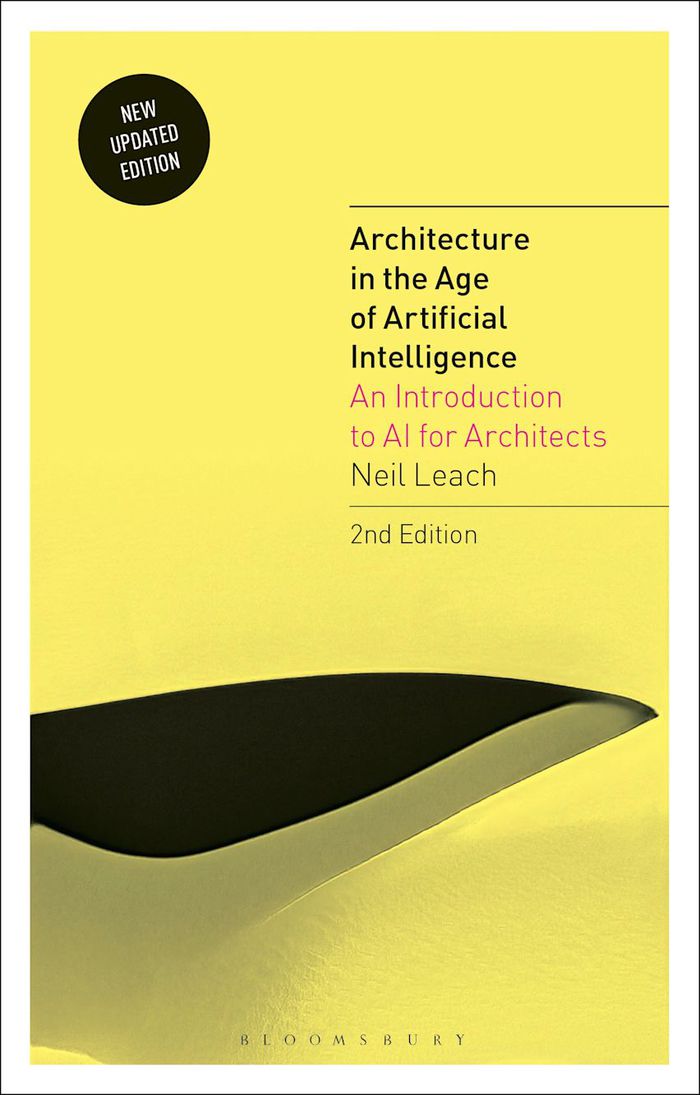
Updated to cover all the latest developments, "Architecture in the age of artificial intelligence" introduces AI for designers and explores its seismic impact on the future of architecture and design. From ChatGPT and smart assistants to groundbreaking diffusion models for video and 3D modelling, this updated new edition investigates the profound effects of AI technologies on architectural practice. It explores how AI transforms every part of the process-from the inspiration and brief, to regulations and copyright, to performance-driven design- and looks beyond discussions of software and functionality to ask more fundamental questions too: How did AI evolve? How does it work? What does it tell us about creativity? And what does it mean for the very future of the profession itself?
Architecture in the age of artficial intelligence: An introduction to AI for architects
Actions:
Price:
$39.50
(available in store)
Summary:
Updated to cover all the latest developments, "Architecture in the age of artificial intelligence" introduces AI for designers and explores its seismic impact on the future of architecture and design. From ChatGPT and smart assistants to groundbreaking diffusion models for video and 3D modelling, this updated new edition investigates the profound effects of AI technologies on architectural practice. It explores how AI transforms every part of the process-from the inspiration and brief, to regulations and copyright, to performance-driven design- and looks beyond discussions of software and functionality to ask more fundamental questions too: How did AI evolve? How does it work? What does it tell us about creativity? And what does it mean for the very future of the profession itself?
Form:
books
books
Publication:
June 2025
June 2025
Subject:
Digital Architecture
Digital Architecture
Form:
books
books
Actions:
Holdings:
Description:
xx, 193 pages : illustrations ; 27 cm.
Description:
xx, 193 pages : illustrations ; 27 cm.
Subject:
Publication:
Cambridge, Massachusetts : The MIT Press, [2021]
Cambridge, Massachusetts : The MIT Press, [2021]
Title:
Art in the age of machine learning / Sofian Audry ; foreword by Yoshua Bengio.
Actions:
Holdings:
Description:
xx, 193 pages : illustrations ; 27 cm.
Art in the age of machine learning / Sofian Audry ; foreword by Yoshua Bengio.
Actions:
Holdings:
Description:
xx, 193 pages : illustrations ; 27 cm.
Form:
books
books
Publication:
Cambridge, Massachusetts : The MIT Press, [2021]
Cambridge, Massachusetts : The MIT Press, [2021]
Form:
books
books
Actions:
Holdings:
Description:
128 pages : illustrations (chiefly color) ; 23 cm
Description:
128 pages : illustrations (chiefly color) ; 23 cm
Author:
Subject:
- Photography, Artistic Exhibitions.,
- Metadata.,
- Digital images.,
- Art Florida Catalogs.,
- Métadonnées.,
- Images numériques.,
- Photographie artistique Expositions.,
- Art Floride Catalogues.,
- digital images.,
- Art,
- Photography, Artistic,
- Florida,
- Catalogs.,
- Exhibition catalogs.,
- exhibition catalogs.,
- Catalogues d'exposition.
(See more)
Publication:
New York, NY : Scala Arts, 2022., New York, NY : John & Mable Ringling Museum of Art., ©2022, New York, NY : ACC Art Books.
New York, NY : Scala Arts, 2022., New York, NY : John & Mable Ringling Museum of Art., ©2022, New York, NY : ACC Art Books.
Title:
Metadata : rethinking photography in the 21st century / [author, Christopher Jones].
Actions:
Holdings:
Description:
128 pages : illustrations (chiefly color) ; 23 cm
Metadata : rethinking photography in the 21st century / [author, Christopher Jones].
Actions:
Holdings:
Description:
128 pages : illustrations (chiefly color) ; 23 cm
Form:
books
books
Publication:
New York, NY : Scala Arts, 2022., New York, NY : John & Mable Ringling Museum of Art., ©2022, New York, NY : ACC Art Books.
New York, NY : Scala Arts, 2022., New York, NY : John & Mable Ringling Museum of Art., ©2022, New York, NY : ACC Art Books.
Subject:
- Photography, Artistic Exhibitions.,
- Metadata.,
- Digital images.,
- Art Florida Catalogs.,
- Métadonnées.,
- Images numériques.,
- Photographie artistique Expositions.,
- Art Floride Catalogues.,
- digital images.,
- Art,
- Photography, Artistic,
- Florida,
- Catalogs.,
- Exhibition catalogs.,
- exhibition catalogs.,
- Catalogues d'exposition.
(See more)
Form:
books
books
Actions:
Holdings:
Description:
734 pages : illustrations (chiefly color), charts, plans ; 25 cm
Description:
734 pages : illustrations (chiefly color), charts, plans ; 25 cm
Author:
Subject:
- Ingels, Bjarke.,
- BIG Bjarke Ingels Group.,
- BIG Bjarke Ingels Group Exhibitions.,
- Architecture Denmark.,
- Futurism (Architecture),
- Sustainable architecture.,
- Architecture Danemark.,
- Futurisme (Architecture),
- Architecture durable.,
- Exhibition catalogs.,
- Architecture,
- Bouwkunst.,
- Vormgeving.,
- Architecture, Modern 21st century Exhibitions.,
- Denmark.,
- exhibition catalogs.,
- Catalogues d'exposition.
(See more)
Publication:
Köln : Taschen, [2020], ©2020
Köln : Taschen, [2020], ©2020
Title:
Formgiving / text, Bjarke Ingels.
Actions:
Holdings:
Description:
734 pages : illustrations (chiefly color), charts, plans ; 25 cm
Formgiving / text, Bjarke Ingels.
Actions:
Holdings:
Description:
734 pages : illustrations (chiefly color), charts, plans ; 25 cm
Form:
books
books
Publication:
Köln : Taschen, [2020], ©2020
Köln : Taschen, [2020], ©2020
Subject:
- Ingels, Bjarke.,
- BIG Bjarke Ingels Group.,
- BIG Bjarke Ingels Group Exhibitions.,
- Architecture Denmark.,
- Futurism (Architecture),
- Sustainable architecture.,
- Architecture Danemark.,
- Futurisme (Architecture),
- Architecture durable.,
- Exhibition catalogs.,
- Architecture,
- Bouwkunst.,
- Vormgeving.,
- Architecture, Modern 21st century Exhibitions.,
- Denmark.,
- exhibition catalogs.,
- Catalogues d'exposition.
(See more)
Form:
books
books
Title:
The smart enough city : putting technology in its place to reclaim our urban future / Ben Green.
The smart enough city : putting technology in its place to reclaim our urban future / Ben Green.
Actions:
Holdings:
Description:
xiv, 223 pages : illustrations, maps ; 24 cm
Description:
xiv, 223 pages : illustrations, maps ; 24 cm
Subject:
- Automation,
- Smart cities.,
- Appropriate technology.,
- Civic improvement.,
- City planning.,
- Technology Social aspects.,
- Technology and state.,
- Villes intelligentes.,
- Technologie appropriée.,
- Villes Aménagement et assainissement.,
- Politique scientifique et technique.,
- appropriate technology.,
- civic improvement.,
- Futurologie,
- Nachhaltigkeit,
- Sicherheit und Ordnung,
- Smart City,
- Stadtplanung,
- Technologiemanagement,
- Verkehrsregelung
(See more)
Publication:
Cambridge, Massachusetts : The MIT Press, [2019]
Cambridge, Massachusetts : The MIT Press, [2019]
Title:
The smart enough city : putting technology in its place to reclaim our urban future / Ben Green.
Actions:
Holdings:
Description:
xiv, 223 pages : illustrations, maps ; 24 cm
The smart enough city : putting technology in its place to reclaim our urban future / Ben Green.
Actions:
Holdings:
Description:
xiv, 223 pages : illustrations, maps ; 24 cm
Form:
books
books
Publication:
Cambridge, Massachusetts : The MIT Press, [2019]
Cambridge, Massachusetts : The MIT Press, [2019]
Subject:
- Automation,
- Smart cities.,
- Appropriate technology.,
- Civic improvement.,
- City planning.,
- Technology Social aspects.,
- Technology and state.,
- Villes intelligentes.,
- Technologie appropriée.,
- Villes Aménagement et assainissement.,
- Politique scientifique et technique.,
- appropriate technology.,
- civic improvement.,
- Futurologie,
- Nachhaltigkeit,
- Sicherheit und Ordnung,
- Smart City,
- Stadtplanung,
- Technologiemanagement,
- Verkehrsregelung
(See more)
Form:
books
books
Actions:
Holdings:
Description:
195 p. : ill. (some col.) ; 23 cm.
Description:
195 p. : ill. (some col.) ; 23 cm.
Author:
Subject:
- Beesley, Philip, 1956-,
- Interactive art Canada.,
- Kinetic sculpture Canada.,
- Installations (Art) Canada.,
- Art and architecture Canada.,
- Sculpture, Canadian 21st century Exhibitions.,
- Art interactif Canada.,
- Sculpture cinétique Canada.,
- Art et architecture Canada.,
- Art and architecture,
- Installations (Art),
- Interactive art,
- Kinetic sculpture,
- Art and Design.,
- Canada,
- Exhibition publications.,
- Exhibition catalogs
(See more)
Publication:
[Cambridge, Ont.] : Riverside Architectural Press, c2010.
[Cambridge, Ont.] : Riverside Architectural Press, c2010.
Title:
Hylozoic ground : liminal responsive architecture : Philip Beesley / contributions by Rob Gorbet ... [et al.] ; edited by Pernilla Ohrstedt & Hayley Isaacs.
Actions:
Holdings:
Description:
195 p. : ill. (some col.) ; 23 cm.
Hylozoic ground : liminal responsive architecture : Philip Beesley / contributions by Rob Gorbet ... [et al.] ; edited by Pernilla Ohrstedt & Hayley Isaacs.
Actions:
Holdings:
Description:
195 p. : ill. (some col.) ; 23 cm.
Form:
books
books
Publication:
[Cambridge, Ont.] : Riverside Architectural Press, c2010.
[Cambridge, Ont.] : Riverside Architectural Press, c2010.
Subject:
- Beesley, Philip, 1956-,
- Interactive art Canada.,
- Kinetic sculpture Canada.,
- Installations (Art) Canada.,
- Art and architecture Canada.,
- Sculpture, Canadian 21st century Exhibitions.,
- Art interactif Canada.,
- Sculpture cinétique Canada.,
- Art et architecture Canada.,
- Art and architecture,
- Installations (Art),
- Interactive art,
- Kinetic sculpture,
- Art and Design.,
- Canada,
- Exhibition publications.,
- Exhibition catalogs
(See more)
Form:
books
books
Actions:
Holdings:
Description:
88 pages : illustrations ; 27 cm
Description:
88 pages : illustrations ; 27 cm
Subject:
- Sustainable architecture Taiwan.,
- Architecture Environmental aspects Taiwan.,
- Urban ecology (Sociology) Taiwan.,
- Architecture durable Taiwan.,
- Architecture Aspect de l'environnement Taiwan.,
- Écologie urbaine Taiwan.,
- Architecture Environmental aspects,
- Sustainable architecture,
- Urban ecology (Sociology),
- Taiwan
(See more)
Publication:
Taiwan : National Taiwan Museum of Fine Arts, 2023.
Taiwan : National Taiwan Museum of Fine Arts, 2023.
Title:
Diachronic apparatuses of Taiwan : architecture as on-going details within landscape / chief editor, Chia-Cheng Wang
Actions:
Holdings:
Description:
88 pages : illustrations ; 27 cm
Diachronic apparatuses of Taiwan : architecture as on-going details within landscape / chief editor, Chia-Cheng Wang
Actions:
Holdings:
Description:
88 pages : illustrations ; 27 cm
Form:
books
books
Publication:
Taiwan : National Taiwan Museum of Fine Arts, 2023.
Taiwan : National Taiwan Museum of Fine Arts, 2023.
Subject:
- Sustainable architecture Taiwan.,
- Architecture Environmental aspects Taiwan.,
- Urban ecology (Sociology) Taiwan.,
- Architecture durable Taiwan.,
- Architecture Aspect de l'environnement Taiwan.,
- Écologie urbaine Taiwan.,
- Architecture Environmental aspects,
- Sustainable architecture,
- Urban ecology (Sociology),
- Taiwan
(See more)


