


308 Results
Form:
books
books
Price:
$46.00
(available in store)
Summary:
How can art, science and institutional practices counteract the negative consequences of climate and ecological breakdown? How can these practices and ideas advance systemic change? ''Worlding Ecologies'' serves as an anthology of examples and wayward navigational tool, assembling eighteen authors exploring this question from their diverse backgrounds––as scientists,(...)
Subject:
Environment and environmental theory
Environment and environmental theory
Publication:
October 2024
October 2024
Title:
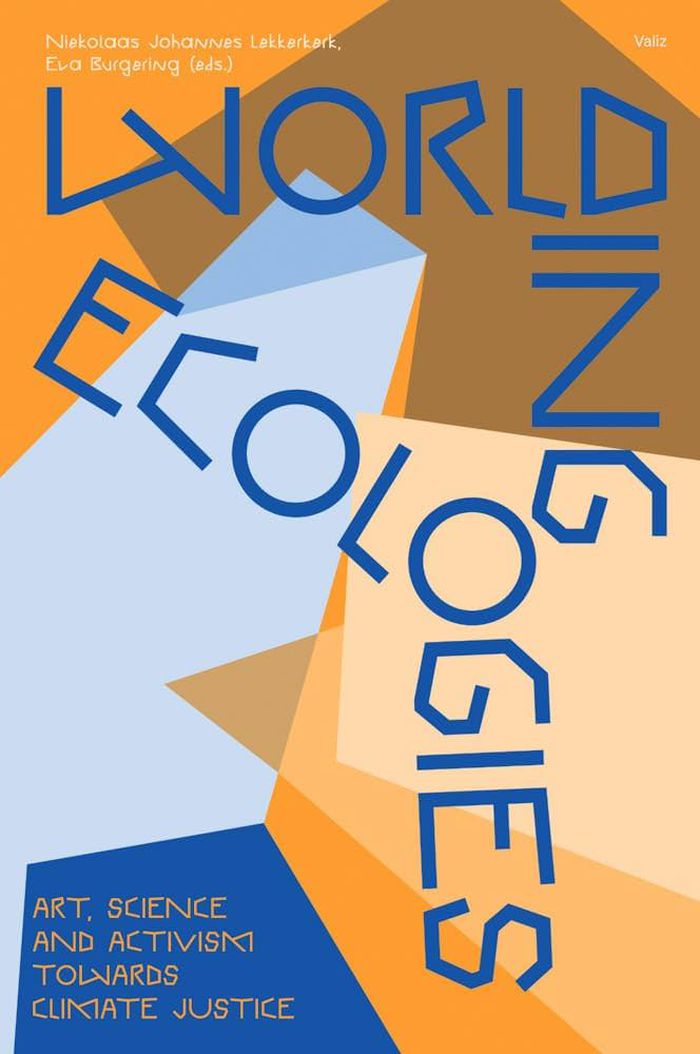
Worlding Ecologies: Art, science and activism towards climate justice
Actions:
Price:
$46.00
(available in store)
Summary:
How can art, science and institutional practices counteract the negative consequences of climate and ecological breakdown? How can these practices and ideas advance systemic change? ''Worlding Ecologies'' serves as an anthology of examples and wayward navigational tool, assembling eighteen authors exploring this question from their diverse backgrounds––as scientists, artists, philosophers, activists, theorists and curators––to rigorously approach urgent ecological challenges, including climate breakdown, pollution, biodiversity loss, environmental and social justice. This book emphasizes the fundamental role of art as a vehicle and support structure for intersectional ecological thought. Whilst navigating imagination, worlding-possibility, science fact, social justice and climate action, the book prompts a fundamental role for art to create the blueprints for regenerative and sustainable more-than-human worlds. Structured alongside three sections––Science and Climate Truth; Activism and Climate Justice and Social Justice in Institutional Ecosystems–– ''Worlding Ecologies'' moves from fieldwork-taking to patchwork-making, unifying the arts with science, politics and ecology into a field of synthetic thought and commitment.
Form:
books
books
Publication:
October 2024
October 2024
Subject:
Environment and environmental theory
Environment and environmental theory
Form:
books
books
Title:
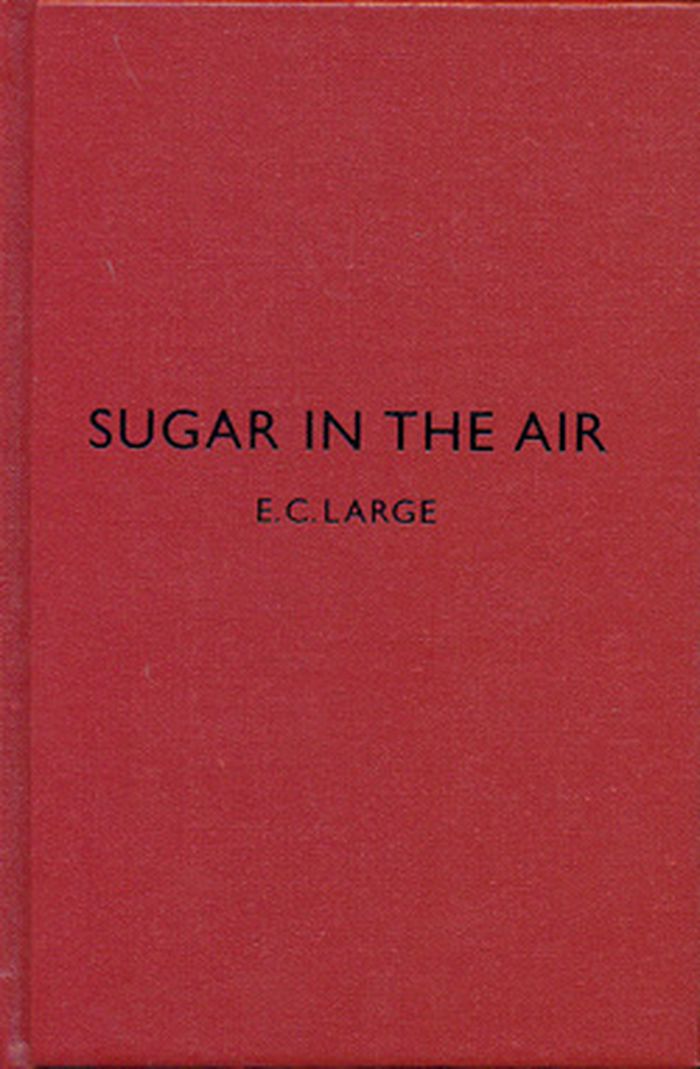
Sugar in the air
Sugar in the air
Actions:
Price:
$48.95
(available to order)
Summary:
First published by Jonathan Cape, London, in 1937. Reprinted in 2008 by Hyphen Press, layout by Stuart Bailey. "The title of Mr Large's novel is a strange one: SUGAR IN THE AIR. It was published in this country (England) by Scribner's and had a considerable success. It is the story of a hard-working and serious-minded chemist who devotes himself to the problem of making(...)
Title:
Sugar in the air
Actions:
Price:
$48.95
(available to order)
Summary:
First published by Jonathan Cape, London, in 1937. Reprinted in 2008 by Hyphen Press, layout by Stuart Bailey. "The title of Mr Large's novel is a strange one: SUGAR IN THE AIR. It was published in this country (England) by Scribner's and had a considerable success. It is the story of a hard-working and serious-minded chemist who devotes himself to the problem of making synthetic sugar. Not being a chemist myself, I do not know how plausible Mr Large's formulas and processes would sound to a technical man, but they are convincing to the lay reader, and by the time we see the first supply of "Sunsap" coming out of the vats we believe in it, and are prepared to see the food industry revolutionized. But we have forgotten the profit-takers. Mr Large's hard-working chemist finds himself and his process tied into knots by the financiers." Upton Sinclair
Form:
books
books
Publication:
November 2008, New York
November 2008, New York
Subject:
Architectural Theory
Architectural Theory
Form:
books
books
Price:
$33.95
(available in store)
Summary:
In ''Brutalism'', eminent social and critical theorist Achille Mbembe invokes the architectural aesthetic of brutalism to describe our moment, caught up in the pathos of demolition and production on a planetary scale. Just as brutalist architecture creates an affect of overwhelming weight and destruction, Mbembe contends that contemporary capitalism crushes and dominates(...)
Title:
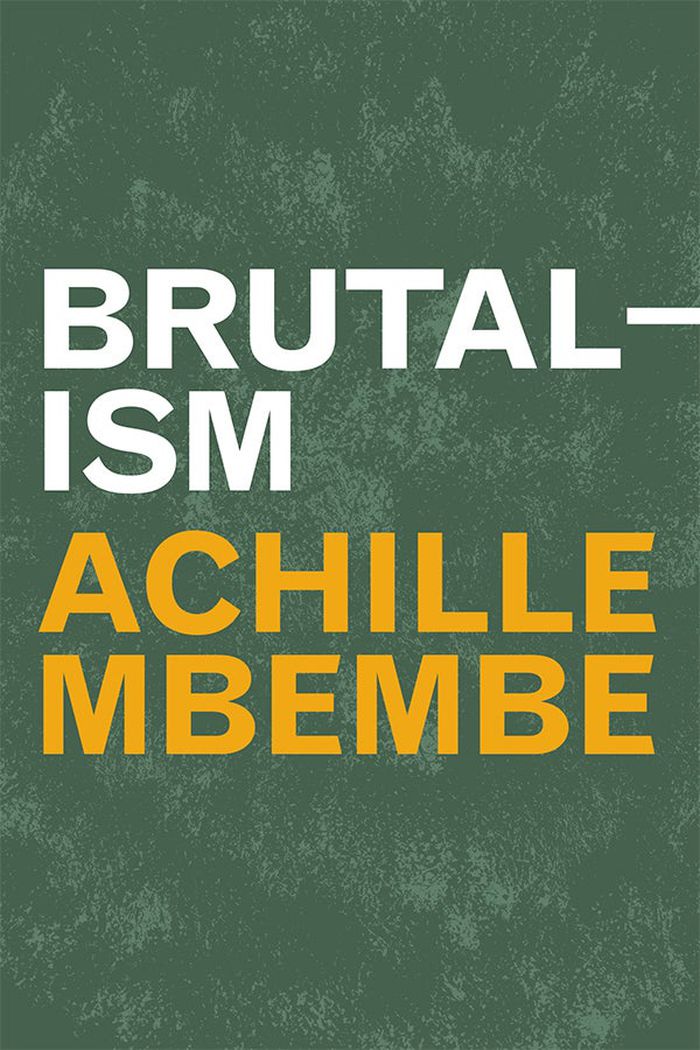
Brutalism
Actions:
Price:
$33.95
(available in store)
Summary:
In ''Brutalism'', eminent social and critical theorist Achille Mbembe invokes the architectural aesthetic of brutalism to describe our moment, caught up in the pathos of demolition and production on a planetary scale. Just as brutalist architecture creates an affect of overwhelming weight and destruction, Mbembe contends that contemporary capitalism crushes and dominates all spheres of existence. In our digital, technologically focused era, capitalism has produced a becoming-artificial of humanity and the becoming-human of machines. This blurring of the natural and artificial presents a planetary existential threat in which contemporary society’s goal is to precipitate the mutation of the human species into a condition that is at once plastic and synthetic. Mbembe argues that Afro-diasporic thought presents the only solution for breaking the totalizing logic of contemporary capitalism: repairing that which is broken, developing a new planetary consciousness, and reforming a community of humans in solidarity with all living things.
Form:
books
books
Publication:
June 2024
June 2024
Subject:
Social
Social
Form:
books
books
Actions:
Price:
$24.95
(available to order)
Summary:
Robots designed to care for people and neglected landscapes of digital trash. The promise of synthetic biology and the panic of living on a dying planet. Wonderful feats of intelligence and systemic acts of violence. Exhilaration and exhaustion. Rosi Braidotti argues that we must think about these apparent contradictions all together in order to make differences that(...)
Title:
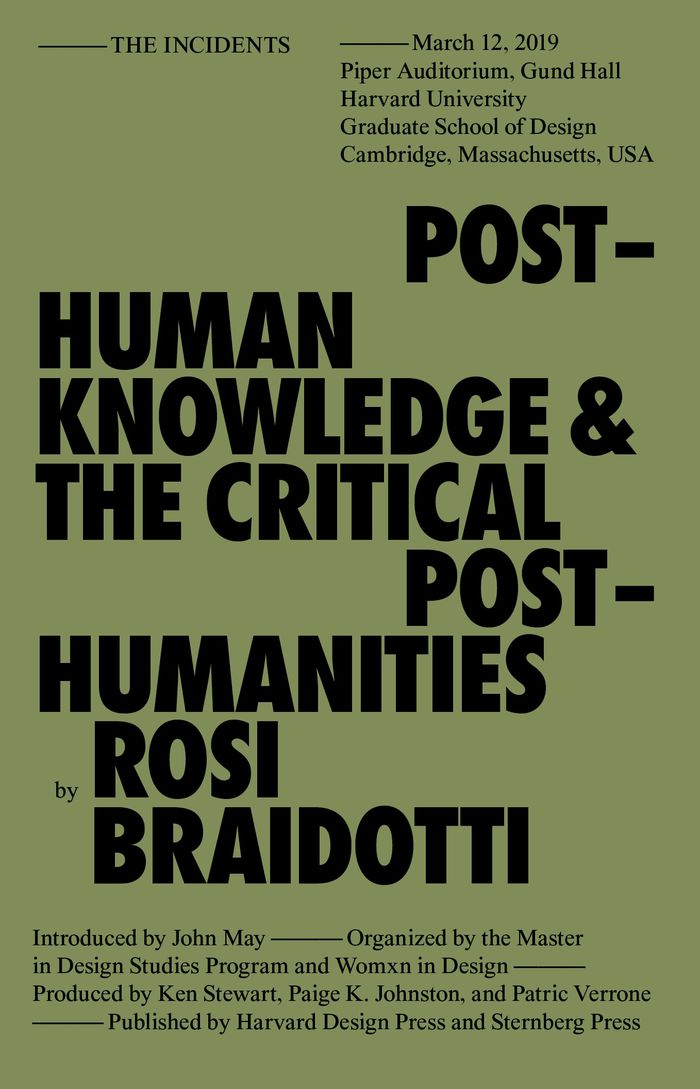
Posthuman knowledge and the critical posthumanities
Actions:
Price:
$24.95
(available to order)
Summary:
Robots designed to care for people and neglected landscapes of digital trash. The promise of synthetic biology and the panic of living on a dying planet. Wonderful feats of intelligence and systemic acts of violence. Exhilaration and exhaustion. Rosi Braidotti argues that we must think about these apparent contradictions all together in order to make differences that actually matter. "Posthuman knowledge and the critical posthumanities" oscillates between evocations and transections of contemporary conditions, for which Braidotti offers what she calls the "posthuman convergence" as a new paradigm for situating and navigating their problems and possibilities. Reflecting on the knotted situation of the academic humanities, cognitive capitalism, and advanced climate change, she delivers an intersectional critique of humanism and anthropocentrism, and targets their exclusions and aporias to address subjectivity, knowledge production, and academic structures within that posthuman convergence. Braidotti's convergence demands imagination, endurance, connectivity, and perspectives multiplied, embodied, and grounded in the only world we have.
Form:
books
books
Publication:
November 2022
November 2022
Subject:
Critical Theory
Critical Theory
Form:
books
books
Actions:
Price:
$48.00
(available in store)
Summary:
Throughout the ages architects have attempted to capture the essence of living systems as design inspiration. However, practitioners of the built environment have had to deal with a fundamental split between the artificial urban landscape and nature owing to a technological 'gap' that means architects have been unable to make effective use of biological systems in urban(...)
Title:
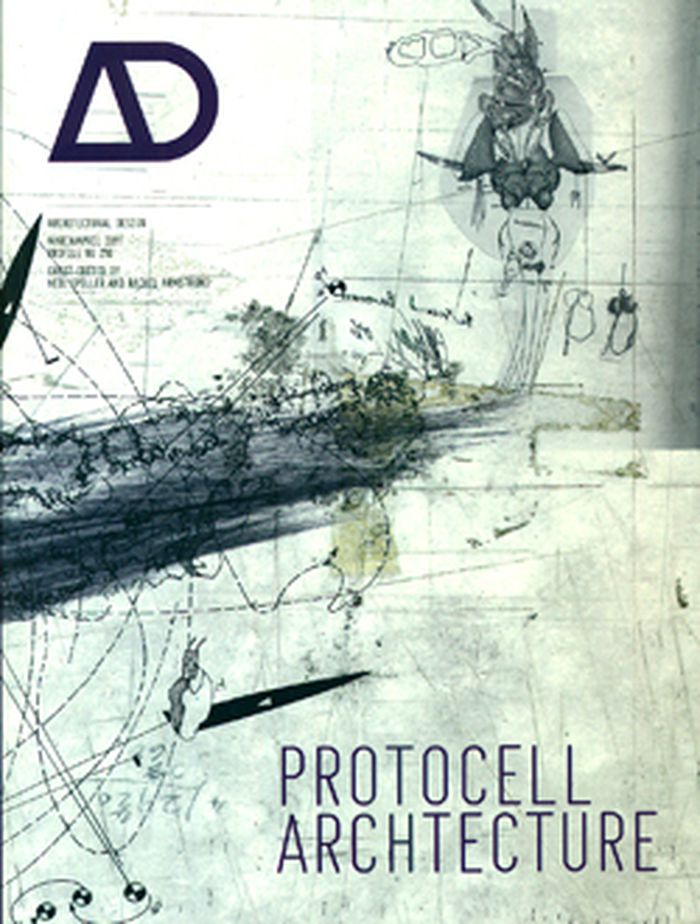
AD 81:02 Protocell architecture
Actions:
Price:
$48.00
(available in store)
Summary:
Throughout the ages architects have attempted to capture the essence of living systems as design inspiration. However, practitioners of the built environment have had to deal with a fundamental split between the artificial urban landscape and nature owing to a technological 'gap' that means architects have been unable to make effective use of biological systems in urban environments. This edition of AD that shows for the first time that contemporary architects can create and construct architectures that are bottom up, synthetically biological, green and have no recourse to shallow bio-mimicry. In the next few decades, synthetic biology is set to have as much, if not more, impact on architecture as cyberspace and the digital. The key to these amazing architectural innovations is the Protocell. Contributors include: Rachel Armstrong; Martin Hanczyc; Lee Cronin; Mark Morris Architects include: Neil Spiller; Nic Clear; IwamotoScott; Paul Preissner; Omar Khan;Dan Slavinsky; Philip Beesley; Neri Oxman
Form:
books
books
Publication:
April 2011
April 2011
Subject:
Magazines
Magazines
Form:
books
books
Actions:
Price:
$36.00
(available to order)
Summary:
This book documents and exhibition of contemporary Japanese artists who are active at the cutting edge of the global fiber-art movement, transforming fabrics into sculptures, pictures, emulations of nature, or even abstract meditations on memory and identity. The materials they use range from silk, cotton, recycled cocoons, antique paper scraps, jute, and hemp to(...)
Publication:
October 2011
October 2011
Title:
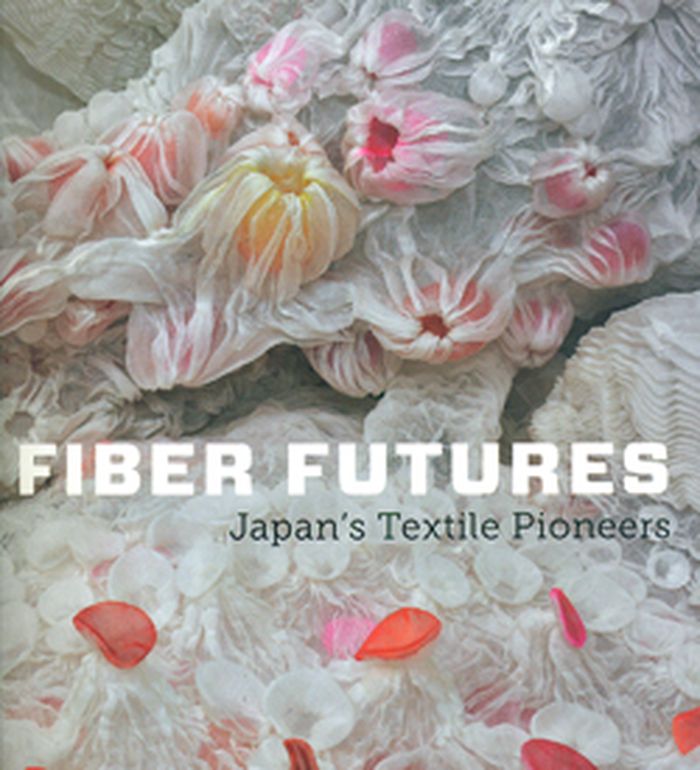
Fiber futures: Japan's textile pioneers
Actions:
Price:
$36.00
(available to order)
Summary:
This book documents and exhibition of contemporary Japanese artists who are active at the cutting edge of the global fiber-art movement, transforming fabrics into sculptures, pictures, emulations of nature, or even abstract meditations on memory and identity. The materials they use range from silk, cotton, recycled cocoons, antique paper scraps, jute, and hemp to stainless-steel wire and synthetic fiber. Their methods are sometimes traditional, but can also incorporate the latest weaving and dyeing technology, often with the goal of expressing an environmentally conscious green ethic. The thirty artists were selected for "Fiber Futures: Japan's Textile Pioneers," an exhibition at New York's Japan Society Gallery. Introductory essays by Hiroko Watanabe, President of International Textile Network, and Gallery Director Joe Earle provide the context for these innovative, beautiful, and sometimes challenging works of art. The catalogue section features artist statements, informative commentary, and lavish photography, much of it commissioned especially by Japan Society.
Form:
books
books
Publication:
October 2011
October 2011
Form:
books
books
Price:
$21.95
(available to order)
Summary:
Black gold. Liquid sunlight. Texas tea. Oil remains the ur-commodity of our global era, having been distilled from ancient algae and marine life to turn modernity's wheels. Wars are fought over it. Some communities are displaced by its extraction, so that others may reap its benefits. But despite its heated history, few will ever see oil on the ground. Shrouded within a(...)
Title:
Oil
Actions:
Price:
$21.95
(available to order)
Summary:
Black gold. Liquid sunlight. Texas tea. Oil remains the ur-commodity of our global era, having been distilled from ancient algae and marine life to turn modernity's wheels. Wars are fought over it. Some communities are displaced by its extraction, so that others may reap its benefits. But despite its heated history, few will ever see oil on the ground. Shrouded within a labyrinth of oil fields, pipelines, and manufacturies, it tends to be known only through its magical effects: the thrill of the road, the euphoria of flight, and the metamorphic allure of everything from vinyl records to celluloid film and synthetic clothing. Michael Tondre shows how hydrocarbon became today's pre-eminent power. How did oil come to structure selfhood and social relations? And to what extent is oil not only a commercial product but a cultural one-something shaped by widely imagined dreams and desires? Amid a warming world unleashed by fossil fuels, oil appears as a rich resource for thinking about histories of globalization and technology no less than the energetic underpinnings of literature, film, and art.
Form:
books
books
Publication:
November 2024
November 2024
Subject:
Critical Theory
Critical Theory
Form:
books
books
Actions:
Price:
$75.00
(available to order)
Summary:
No Man’s Land’ is a surreal and terrifying place, a world at once horrific and hilarious. We know that human beings people these places, but they have scurried away, leaving behind nothing but furniture, machines, instruments, walls, floors, lighting – the impersonal, neutral artefacts of modern existence. An air of claustrophobia hangs over everything: there is no way in(...)
Subject:
Photography monographs
Photography monographs
Publication:
October 2001, London
October 2001, London
Title:
No man's land : the photography of Lynne Cohen
Actions:
Price:
$75.00
(available to order)
Summary:
No Man’s Land’ is a surreal and terrifying place, a world at once horrific and hilarious. We know that human beings people these places, but they have scurried away, leaving behind nothing but furniture, machines, instruments, walls, floors, lighting – the impersonal, neutral artefacts of modern existence. An air of claustrophobia hangs over everything: there is no way in and no way out of such stifling spaces, either physically or ideologically. We need a good deal of persuading that environments as extraordinary as these actually exist in the real world. But they do, and for thirty years Lynne Cohen has been searching them out and recording them. She collects fragments of the real world photographically and turns them into found installations. ‘From the first photographs I made’, she has said, ‘I felt the world couldn’t be like this. It seemed as if it was full of finished works of art.’ Her fascination with synthetic materials adds a further distancing coldness to these disturbing images. These are images that force us to ask ourselves what kind of world we have made. "No Man’s Land" includes a critique of Cohen’s work by photographic curator Ann Thomas, an interview with the photographer, and a preface by Pierre Théberge and William A. Ewing
Form:
books
books
Publication:
October 2001, London
October 2001, London
Subject:
Photography monographs
Photography monographs
Form:
books
books
Title:
Inverted world
Inverted world
Actions:
Price:
$16.95
(available to order)
Summary:
The city is winched along tracks through a devastated land full of hostile tribes. Rails must be freshly laid ahead of the city and carefully removed in its wake. Rivers and mountains present nearly insurmountable challenges to the ingenuity of the city’s engineers. But if the city does not move, it will fall farther and farther behind the “optimum” into the crushing(...)
Title:
Inverted world
Actions:
Price:
$16.95
(available to order)
Summary:
The city is winched along tracks through a devastated land full of hostile tribes. Rails must be freshly laid ahead of the city and carefully removed in its wake. Rivers and mountains present nearly insurmountable challenges to the ingenuity of the city’s engineers. But if the city does not move, it will fall farther and farther behind the “optimum” into the crushing gravitational field that has transformed life on Earth. The only alternative to progress is death. The secret directorate that governs the city makes sure that its inhabitants know nothing of this. Raised in common in crèches, nurtured on synthetic food, prevented above all from venturing outside the closed circuit of the city, they are carefully sheltered from the dire necessities that have come to define human existence. And yet the city is in crisis. The people are growing restive, the population is dwindling, and the rulers know that, for all their efforts, slowly but surely the city is slipping ever farther behind the optimum. Helward Mann is a member of the city’s elite. Better than anyone, he knows how tenuous is the city’s continued existence. But the world—he is about to discover—is infinitely stranger than the strange world he believes he knows so well.
Form:
books
books
Publication:
July 2008, New York
July 2008, New York
Subject:
Architectural Theory
Architectural Theory
Form:
books
books
Actions:
Price:
$56.00
(available in store)
Summary:
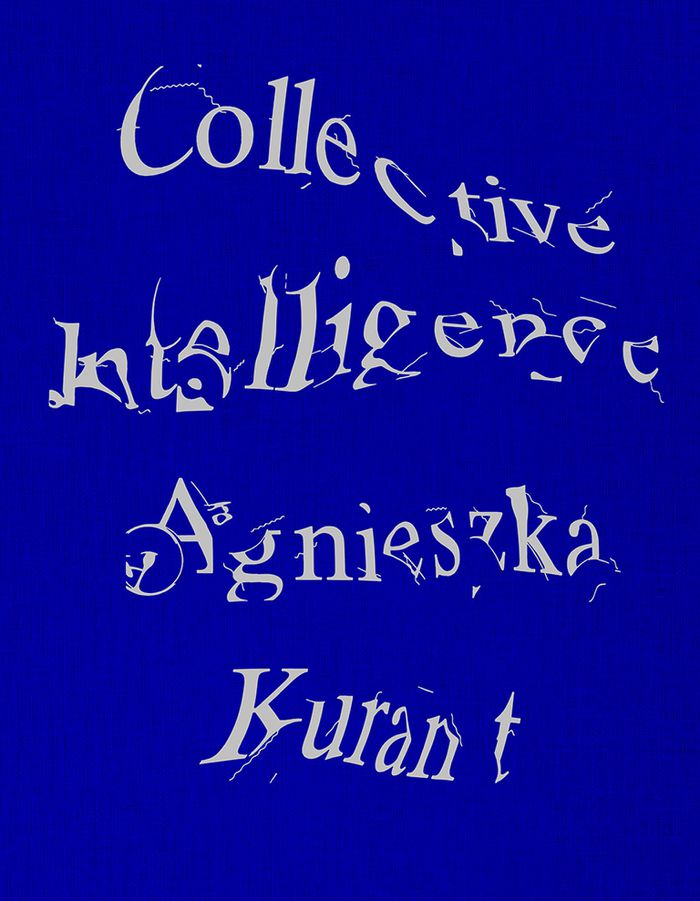
''Collective Intelligence'' is an innovative monograph that documents the last ten years of Polish-born conceptual artist Agnieszka Kurant’s interdisciplinary practice. It includes newly commissioned texts by renowned thinkers in science, philosophy, art, technology, anthropology, and economics. Kurant’s experimental work investigates collective and nonhuman(...)
Subject:
Contemporary Art Monographs
Contemporary Art Monographs
Publication:
December 2025
December 2025
Title:
Agnieszka Kurant: Collective intelligence
Actions:
Price:
$56.00
(available in store)
Summary:
''Collective Intelligence'' is an innovative monograph that documents the last ten years of Polish-born conceptual artist Agnieszka Kurant’s interdisciplinary practice. It includes newly commissioned texts by renowned thinkers in science, philosophy, art, technology, anthropology, and economics. Kurant’s experimental work investigates collective and nonhuman intelligences and their impact on transformations of the human, the future of labor and creativity, and the exploitations within digital capitalism. Questioning the ideology of individualism, Kurant proposes that we rethink human and more-than-human worlds from a perspective of plural subjectivity, and, through this fundamental shift in perspective, posits the possibility of alternative political imaginaries. Her work probes the replacement of individual authorship with collective intelligence—a phenomenon observed in slime molds, termite colonies, social movements, cities, the internet, and inside our brains. In her collaborative practice, the artist investigates artificial intelligence, emergence, cybernetics, automation, artificial life, mining industries, and energy circuits to explore our collective evolution and the shifting status of objects in relation to agency, value, circulation, and redistribution. Through crowdsourcing the production of her artworks to thousands of humans and nonhumans, Kurant creates unstable, hybrid forms that constantly evolve. Her works, oscillating between biological, digital, and geological, embody the crumbling distinctions between what is natural and artificial, real and synthetic, and life and nonlife.
Form:
books
books
Publication:
December 2025
December 2025
Subject:
Contemporary Art Monographs
Contemporary Art Monographs


