


582 Results
Form:
events
events
Actions:
Description:
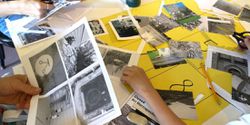
We invite kids to get out of the house and into the museum for a day of free activities at the CCA: workshops, animated activities and an interactive gallery tour will be on the agenda.
We invite kids to get out of the house and into the museum for a day of free activities at the CCA: workshops, animated activities and an interactive gallery tour will be on the agenda.
Title:
Click, Cut, Paste
Actions:
Description:
We invite kids to get out of the house and into the museum for a day of free activities at the CCA: workshops, animated activities and an interactive gallery tour will be on the agenda.
Click, Cut, Paste
Actions:
Description:
We invite kids to get out of the house and into the museum for a day of free activities at the CCA: workshops, animated activities and an interactive gallery tour will be on the agenda.
Form:
events
events
Date:
13 December 2023
9am to 3:30pm
13 December 2023
9am to 3:30pm
Form:
events
events
Actions:
Description:
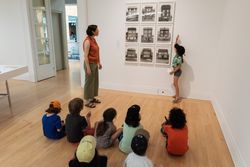
We invite kids to get out of the house and into the museum for a day of free activities at the CCA: workshops, animated activities and an interactive gallery tour will be on the agenda.
We invite kids to get out of the house and into the museum for a day of free activities at the CCA: workshops, animated activities and an interactive gallery tour will be on the agenda.
Title:
Get Out of Your House!
Actions:
Description:
We invite kids to get out of the house and into the museum for a day of free activities at the CCA: workshops, animated activities and an interactive gallery tour will be on the agenda.
Get Out of Your House!
Actions:
Description:
We invite kids to get out of the house and into the museum for a day of free activities at the CCA: workshops, animated activities and an interactive gallery tour will be on the agenda.
Form:
events
events
Date:
6 December 2023
9am to 3:30pm
6 December 2023
9am to 3:30pm
Level of archival description:
Series
Series
Title:
Olzweg
Olzweg
Actions:
Reference number:
AP193.S3
Description:
Series 3, Olzweg, 2006, relates to a competition proposal conceptualized in 2006 for an extension to the Fond Régional d’Art Contemporain (FRAC) in Orléans, France. The records contain images of plans, elevations, sections, and renderings of the project and the robot. There are also pictures of the model and an animated rendering of different 3D model views. The FRAC competition sought an emblematic extension that would complement the original 18th century building hosting the collection. R&Sie(n)’s project earned second place in the competition. The project takes its name from Holzwege a book from Heidegger inspired by the paths that winds through the forest. It consists of a labyrinth of recycled glass sticks, which appeared to be “glued” to the existing building and courtyard. The glass comes from recycled bottles provided by the neighborhood inhabitants. R&Sie(n) sees this as a form of criticism of France’s relation to wine consumption through its materialization. The labyrinth is progressively constructed and rearranged by a robotic arm and randomized, interactive software continuously reprogramming its parameters during construction.
AP193.S3
Description:
Series 3, Olzweg, 2006, relates to a competition proposal conceptualized in 2006 for an extension to the Fond Régional d’Art Contemporain (FRAC) in Orléans, France. The records contain images of plans, elevations, sections, and renderings of the project and the robot. There are also pictures of the model and an animated rendering of different 3D model views. The FRAC competition sought an emblematic extension that would complement the original 18th century building hosting the collection. R&Sie(n)’s project earned second place in the competition. The project takes its name from Holzwege a book from Heidegger inspired by the paths that winds through the forest. It consists of a labyrinth of recycled glass sticks, which appeared to be “glued” to the existing building and courtyard. The glass comes from recycled bottles provided by the neighborhood inhabitants. R&Sie(n) sees this as a form of criticism of France’s relation to wine consumption through its materialization. The labyrinth is progressively constructed and rearranged by a robotic arm and randomized, interactive software continuously reprogramming its parameters during construction.
People:
Date:
2006
2006
Title:
Olzweg
Actions:
AP193.S3
Description:
Series 3, Olzweg, 2006, relates to a competition proposal conceptualized in 2006 for an extension to the Fond Régional d’Art Contemporain (FRAC) in Orléans, France. The records contain images of plans, elevations, sections, and renderings of the project and the robot. There are also pictures of the model and an animated rendering of different 3D model views. The FRAC competition sought an emblematic extension that would complement the original 18th century building hosting the collection. R&Sie(n)’s project earned second place in the competition. The project takes its name from Holzwege a book from Heidegger inspired by the paths that winds through the forest. It consists of a labyrinth of recycled glass sticks, which appeared to be “glued” to the existing building and courtyard. The glass comes from recycled bottles provided by the neighborhood inhabitants. R&Sie(n) sees this as a form of criticism of France’s relation to wine consumption through its materialization. The labyrinth is progressively constructed and rearranged by a robotic arm and randomized, interactive software continuously reprogramming its parameters during construction.
Olzweg
Actions:
AP193.S3
Description:
Series 3, Olzweg, 2006, relates to a competition proposal conceptualized in 2006 for an extension to the Fond Régional d’Art Contemporain (FRAC) in Orléans, France. The records contain images of plans, elevations, sections, and renderings of the project and the robot. There are also pictures of the model and an animated rendering of different 3D model views. The FRAC competition sought an emblematic extension that would complement the original 18th century building hosting the collection. R&Sie(n)’s project earned second place in the competition. The project takes its name from Holzwege a book from Heidegger inspired by the paths that winds through the forest. It consists of a labyrinth of recycled glass sticks, which appeared to be “glued” to the existing building and courtyard. The glass comes from recycled bottles provided by the neighborhood inhabitants. R&Sie(n) sees this as a form of criticism of France’s relation to wine consumption through its materialization. The labyrinth is progressively constructed and rearranged by a robotic arm and randomized, interactive software continuously reprogramming its parameters during construction.
Level of archival description:
Series
Series
Date:
2006
2006
People:
Form:
archives
Level of archival description:
Fonds
archives
Level of archival description:
Fonds
Title:
Peter Eisenman fonds
Peter Eisenman fonds
Reference number:
AP143
Synopsis:
The Peter Eisenman fonds documents Eisenman's professional activities as an architect, teacher, and author from the 1950s to 2008. More than 200 projects are represented through conceptual and design development drawings, models, photographs, textual records, and computer-aided drawings. Also well represented in the fonds are materials related to Eisenman's exhibitions, publications, and writings.
AP143
Synopsis:
The Peter Eisenman fonds documents Eisenman's professional activities as an architect, teacher, and author from the 1950s to 2008. More than 200 projects are represented through conceptual and design development drawings, models, photographs, textual records, and computer-aided drawings. Also well represented in the fonds are materials related to Eisenman's exhibitions, publications, and writings.
People:
Date:
1925-2008, predominant 1951-2008
1925-2008, predominant 1951-2008
Title:
Peter Eisenman fonds
Actions:
AP143
Synopsis:
The Peter Eisenman fonds documents Eisenman's professional activities as an architect, teacher, and author from the 1950s to 2008. More than 200 projects are represented through conceptual and design development drawings, models, photographs, textual records, and computer-aided drawings. Also well represented in the fonds are materials related to Eisenman's exhibitions, publications, and writings.
Peter Eisenman fonds
Actions:
AP143
Synopsis:
The Peter Eisenman fonds documents Eisenman's professional activities as an architect, teacher, and author from the 1950s to 2008. More than 200 projects are represented through conceptual and design development drawings, models, photographs, textual records, and computer-aided drawings. Also well represented in the fonds are materials related to Eisenman's exhibitions, publications, and writings.
Form:
archives
Level of archival description:
Fonds
archives
Level of archival description:
Fonds
Date:
1925-2008, predominant 1951-2008
1925-2008, predominant 1951-2008
People:
Level of archival description:
Series
Series
Actions:
Reference number:
AP170.S2
Description:
Series 2, Software and related documentation, 1990 – 2014, contains unique iterations of the ACDC, Aegis, and HypoSurface software, and contains roughly 45,000 digital files. The bulk of the files date from approximately 2000 – 2001. This series chiefly consists of the materials received from Xavier Robitaille. This includes a virtual machine and DOS emulator for Aegis HypoSurface, as well as ACDC and Aegis Simulator software for Microsoft DOS and Win32 for Hyposurface installations. There is also a small amount of email correspondence in MBOX format between Robitaille, Mark Goulthorpe, and other project members documenting their work on the project. Additionally, there are two computer backups in this series. One is for Goulthorpe’s computer. The files from the disk image were carved out and only unique files were kept. It includes his files for the Aegis HypoSurface project and reflects his working environment. The second backup is a disk image of Paul Steenhuisen’s Mac G5 computer. The Mac G5 computer is a clone of an earlier G4, and is included with the archive to allow demonstration of the interactive logic that was developed through CeBIT, the International Manufacturers Technology Show (IMTS), and the Biotechnology Industry Organization (BIO) conference at the Boston Convention Centre, including an interactive soundscape piece executed by artist Paul Steenhuisen. The G5 has a copy of FIELD, the user interface software developed for HypoSurface 2 and HypoSurface 3. The files from this computer were processed and made available in Series 3: Projects and events, and Series 4: Promotional materials. The disk image of the internal hard drive was retained in case future emulation is necessary. Because much of this series is software, roughly 42,000 files are or relate to executable programs. Formats for these materials are largely Java source code and Java object code, but also include HTML, plain text files, Aegis pattern files, and some unidentified formats. The remaining files in this series are chiefly vector and raster images referenced in the software. Notably, the Steenhuisen disk image is approximately 250 GB, and represents the largest part of this series. This series overlaps significantly with Series 3: Projects and events. This series contains software generally, while Series 3 contains any software related to a specific project or event.
AP170.S2
Description:
Series 2, Software and related documentation, 1990 – 2014, contains unique iterations of the ACDC, Aegis, and HypoSurface software, and contains roughly 45,000 digital files. The bulk of the files date from approximately 2000 – 2001. This series chiefly consists of the materials received from Xavier Robitaille. This includes a virtual machine and DOS emulator for Aegis HypoSurface, as well as ACDC and Aegis Simulator software for Microsoft DOS and Win32 for Hyposurface installations. There is also a small amount of email correspondence in MBOX format between Robitaille, Mark Goulthorpe, and other project members documenting their work on the project. Additionally, there are two computer backups in this series. One is for Goulthorpe’s computer. The files from the disk image were carved out and only unique files were kept. It includes his files for the Aegis HypoSurface project and reflects his working environment. The second backup is a disk image of Paul Steenhuisen’s Mac G5 computer. The Mac G5 computer is a clone of an earlier G4, and is included with the archive to allow demonstration of the interactive logic that was developed through CeBIT, the International Manufacturers Technology Show (IMTS), and the Biotechnology Industry Organization (BIO) conference at the Boston Convention Centre, including an interactive soundscape piece executed by artist Paul Steenhuisen. The G5 has a copy of FIELD, the user interface software developed for HypoSurface 2 and HypoSurface 3. The files from this computer were processed and made available in Series 3: Projects and events, and Series 4: Promotional materials. The disk image of the internal hard drive was retained in case future emulation is necessary. Because much of this series is software, roughly 42,000 files are or relate to executable programs. Formats for these materials are largely Java source code and Java object code, but also include HTML, plain text files, Aegis pattern files, and some unidentified formats. The remaining files in this series are chiefly vector and raster images referenced in the software. Notably, the Steenhuisen disk image is approximately 250 GB, and represents the largest part of this series. This series overlaps significantly with Series 3: Projects and events. This series contains software generally, while Series 3 contains any software related to a specific project or event.
People:
Date:
1990 - 2014
1990 - 2014
Title:
Software and related documentation
Actions:
AP170.S2
Description:
Series 2, Software and related documentation, 1990 – 2014, contains unique iterations of the ACDC, Aegis, and HypoSurface software, and contains roughly 45,000 digital files. The bulk of the files date from approximately 2000 – 2001. This series chiefly consists of the materials received from Xavier Robitaille. This includes a virtual machine and DOS emulator for Aegis HypoSurface, as well as ACDC and Aegis Simulator software for Microsoft DOS and Win32 for Hyposurface installations. There is also a small amount of email correspondence in MBOX format between Robitaille, Mark Goulthorpe, and other project members documenting their work on the project. Additionally, there are two computer backups in this series. One is for Goulthorpe’s computer. The files from the disk image were carved out and only unique files were kept. It includes his files for the Aegis HypoSurface project and reflects his working environment. The second backup is a disk image of Paul Steenhuisen’s Mac G5 computer. The Mac G5 computer is a clone of an earlier G4, and is included with the archive to allow demonstration of the interactive logic that was developed through CeBIT, the International Manufacturers Technology Show (IMTS), and the Biotechnology Industry Organization (BIO) conference at the Boston Convention Centre, including an interactive soundscape piece executed by artist Paul Steenhuisen. The G5 has a copy of FIELD, the user interface software developed for HypoSurface 2 and HypoSurface 3. The files from this computer were processed and made available in Series 3: Projects and events, and Series 4: Promotional materials. The disk image of the internal hard drive was retained in case future emulation is necessary. Because much of this series is software, roughly 42,000 files are or relate to executable programs. Formats for these materials are largely Java source code and Java object code, but also include HTML, plain text files, Aegis pattern files, and some unidentified formats. The remaining files in this series are chiefly vector and raster images referenced in the software. Notably, the Steenhuisen disk image is approximately 250 GB, and represents the largest part of this series. This series overlaps significantly with Series 3: Projects and events. This series contains software generally, while Series 3 contains any software related to a specific project or event.
Software and related documentation
Actions:
AP170.S2
Description:
Series 2, Software and related documentation, 1990 – 2014, contains unique iterations of the ACDC, Aegis, and HypoSurface software, and contains roughly 45,000 digital files. The bulk of the files date from approximately 2000 – 2001. This series chiefly consists of the materials received from Xavier Robitaille. This includes a virtual machine and DOS emulator for Aegis HypoSurface, as well as ACDC and Aegis Simulator software for Microsoft DOS and Win32 for Hyposurface installations. There is also a small amount of email correspondence in MBOX format between Robitaille, Mark Goulthorpe, and other project members documenting their work on the project. Additionally, there are two computer backups in this series. One is for Goulthorpe’s computer. The files from the disk image were carved out and only unique files were kept. It includes his files for the Aegis HypoSurface project and reflects his working environment. The second backup is a disk image of Paul Steenhuisen’s Mac G5 computer. The Mac G5 computer is a clone of an earlier G4, and is included with the archive to allow demonstration of the interactive logic that was developed through CeBIT, the International Manufacturers Technology Show (IMTS), and the Biotechnology Industry Organization (BIO) conference at the Boston Convention Centre, including an interactive soundscape piece executed by artist Paul Steenhuisen. The G5 has a copy of FIELD, the user interface software developed for HypoSurface 2 and HypoSurface 3. The files from this computer were processed and made available in Series 3: Projects and events, and Series 4: Promotional materials. The disk image of the internal hard drive was retained in case future emulation is necessary. Because much of this series is software, roughly 42,000 files are or relate to executable programs. Formats for these materials are largely Java source code and Java object code, but also include HTML, plain text files, Aegis pattern files, and some unidentified formats. The remaining files in this series are chiefly vector and raster images referenced in the software. Notably, the Steenhuisen disk image is approximately 250 GB, and represents the largest part of this series. This series overlaps significantly with Series 3: Projects and events. This series contains software generally, while Series 3 contains any software related to a specific project or event.
Level of archival description:
Series
Series
Date:
1990 - 2014
1990 - 2014
People:
Level of archival description:
Project
Project
Actions:
Reference number:
AP056.S1.2000.PR05
Description:
This project series documents the James Stewart Centre for Mathematics at McMaster University in Hamilton, Ontario from 2000-2003. The office identified the project number as 2000-22. This project consisted of the complete interior renovation of Hamilton Hall, originally built in 1929, for use as a mathematics school at the University. An insulated envelope was added to the historic building in order to preserve its gothic exteriors, which were juxtaposed against new modern and abstract interior spaces. Transparent blue glass was used throughout the four-storey building for walls, ceilings and railings to draw sunlight deep into its interiors. A mix of enclosed rooms and open, interactive spaces were created and slate chalkboards were added throughout the building to inspire spontaneous thought and collaborative work.[1] This project was awarded a Governor General's Medal in Architecture in 2004. The project is recorded through drawings dating from around 2000 to around 2002, which include sketches, plans, elevations, sections, perspectives, details, presentation drawings and digital renderings. A large part of the sketches are drawings for custom furniture. [1]"James Stewart Centre for Mathematics, McMaster University." KPMB. Accessed April 12, 2019. http://www.kpmb.com/project/james-stewart-centre-for-mathematics/
AP056.S1.2000.PR05
Description:
This project series documents the James Stewart Centre for Mathematics at McMaster University in Hamilton, Ontario from 2000-2003. The office identified the project number as 2000-22. This project consisted of the complete interior renovation of Hamilton Hall, originally built in 1929, for use as a mathematics school at the University. An insulated envelope was added to the historic building in order to preserve its gothic exteriors, which were juxtaposed against new modern and abstract interior spaces. Transparent blue glass was used throughout the four-storey building for walls, ceilings and railings to draw sunlight deep into its interiors. A mix of enclosed rooms and open, interactive spaces were created and slate chalkboards were added throughout the building to inspire spontaneous thought and collaborative work.[1] This project was awarded a Governor General's Medal in Architecture in 2004. The project is recorded through drawings dating from around 2000 to around 2002, which include sketches, plans, elevations, sections, perspectives, details, presentation drawings and digital renderings. A large part of the sketches are drawings for custom furniture. [1]"James Stewart Centre for Mathematics, McMaster University." KPMB. Accessed April 12, 2019. http://www.kpmb.com/project/james-stewart-centre-for-mathematics/
People:
Date:
circa 2000-2002
circa 2000-2002
Title:
James Stewart Centre for Mathematics, McMaster University, Hamilton, Ontario (2000-2003)
Actions:
AP056.S1.2000.PR05
Description:
This project series documents the James Stewart Centre for Mathematics at McMaster University in Hamilton, Ontario from 2000-2003. The office identified the project number as 2000-22. This project consisted of the complete interior renovation of Hamilton Hall, originally built in 1929, for use as a mathematics school at the University. An insulated envelope was added to the historic building in order to preserve its gothic exteriors, which were juxtaposed against new modern and abstract interior spaces. Transparent blue glass was used throughout the four-storey building for walls, ceilings and railings to draw sunlight deep into its interiors. A mix of enclosed rooms and open, interactive spaces were created and slate chalkboards were added throughout the building to inspire spontaneous thought and collaborative work.[1] This project was awarded a Governor General's Medal in Architecture in 2004. The project is recorded through drawings dating from around 2000 to around 2002, which include sketches, plans, elevations, sections, perspectives, details, presentation drawings and digital renderings. A large part of the sketches are drawings for custom furniture. [1]"James Stewart Centre for Mathematics, McMaster University." KPMB. Accessed April 12, 2019. http://www.kpmb.com/project/james-stewart-centre-for-mathematics/
James Stewart Centre for Mathematics, McMaster University, Hamilton, Ontario (2000-2003)
Actions:
AP056.S1.2000.PR05
Description:
This project series documents the James Stewart Centre for Mathematics at McMaster University in Hamilton, Ontario from 2000-2003. The office identified the project number as 2000-22. This project consisted of the complete interior renovation of Hamilton Hall, originally built in 1929, for use as a mathematics school at the University. An insulated envelope was added to the historic building in order to preserve its gothic exteriors, which were juxtaposed against new modern and abstract interior spaces. Transparent blue glass was used throughout the four-storey building for walls, ceilings and railings to draw sunlight deep into its interiors. A mix of enclosed rooms and open, interactive spaces were created and slate chalkboards were added throughout the building to inspire spontaneous thought and collaborative work.[1] This project was awarded a Governor General's Medal in Architecture in 2004. The project is recorded through drawings dating from around 2000 to around 2002, which include sketches, plans, elevations, sections, perspectives, details, presentation drawings and digital renderings. A large part of the sketches are drawings for custom furniture. [1]"James Stewart Centre for Mathematics, McMaster University." KPMB. Accessed April 12, 2019. http://www.kpmb.com/project/james-stewart-centre-for-mathematics/
Level of archival description:
project
project
Date:
circa 2000-2002
circa 2000-2002
People:
Form:
exhibitions
exhibitions
Actions:
Description:
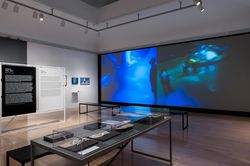
Media and Machines marks the second phase of the research project initiated with the 2013 exhibition Archaeology of the Digital. This initiative investigates how architecture engaged with digital technology from the 1980s until the turn of the century. The first exhibition identified the earliest practices looking to computation as a design medium that could serve(...)
Media and Machines marks the second phase of the research project initiated with the 2013 exhibition Archaeology of the Digital. This initiative investigates how architecture engaged with digital technology from the 1980s until the turn of the century. The first exhibition identified the earliest practices looking to computation as a design medium that could serve(...)
Location:
Main galleries
Main galleries
Date:
21 May 2014 to 5 October 2014
21 May 2014 to 5 October 2014
Title:
Archaeology of the Digital: Media and Machines
Actions:
Description:
Media and Machines marks the second phase of the research project initiated with the 2013 exhibition Archaeology of the Digital. This initiative investigates how architecture engaged with digital technology from the 1980s until the turn of the century. The first exhibition identified the earliest practices looking to computation as a design medium that could serve(...)
Archaeology of the Digital: Media and Machines
Actions:
Description:
Media and Machines marks the second phase of the research project initiated with the 2013 exhibition Archaeology of the Digital. This initiative investigates how architecture engaged with digital technology from the 1980s until the turn of the century. The first exhibition identified the earliest practices looking to computation as a design medium that could serve(...)
Form:
exhibitions
exhibitions
Date:
21 May 2014 to
5 October 2014
21 May 2014 to
5 October 2014
Location:
Main galleries
Main galleries
Level of archival description:
Series
Series
Reference number:
AP189.S2
Description:
Series 2, Software for producing the projection and narration, 2007-2008, is composed of ten different versions of the module that generates the projection and narration in the open gallery. Seven of the versions were among the files saved to a compact disc following the CCA exhibition and have been kept together as group ARCH275207. Three of the versions were on a hard drive that was used in Rovereto and comprise group ARCH275212. The core elements of each module are two application files. One of these, whose name begins with "VE1" uses parameters contained in a file called "config.txt". The other application file, called "VECalibration" displays the entire volume of the projected architectural space. The geometric parameters for a room are recorded in a separate image file called "ecan-angles.jpg". A readme file in each module explains how the different files interact with one another. It also identifies the version of the "VE1" application files and any issues that may be related to the version. Each module includes hundreds of Shockwave Flash files (.swf), each containing an animated or still image of a person or persons and/or one or more pieces of furniture. Some of the .swf files contain an image of one or more furnished rooms inhabited by one or more persons. In most versions, the config.txt file contains a URL that accesses the database containing the sensor data. The URL references the file "captorsxml.aspx". As mentioned earlier, the config.txt file also contains parameters for the projected image, including scene geometry, colors and space occupation, and lists of the .swf files for persons and objects. Most versions of the module also include twenty-one .mp3 files, one of which is "empty". The other twenty each contain an audio recording of a female voice that states values for temperature, illumination and relative humidity and narrates a scenario written by Alain Robbe-Grillet. There is a French- and English-language version of each scenario
AP189.S2
Description:
Series 2, Software for producing the projection and narration, 2007-2008, is composed of ten different versions of the module that generates the projection and narration in the open gallery. Seven of the versions were among the files saved to a compact disc following the CCA exhibition and have been kept together as group ARCH275207. Three of the versions were on a hard drive that was used in Rovereto and comprise group ARCH275212. The core elements of each module are two application files. One of these, whose name begins with "VE1" uses parameters contained in a file called "config.txt". The other application file, called "VECalibration" displays the entire volume of the projected architectural space. The geometric parameters for a room are recorded in a separate image file called "ecan-angles.jpg". A readme file in each module explains how the different files interact with one another. It also identifies the version of the "VE1" application files and any issues that may be related to the version. Each module includes hundreds of Shockwave Flash files (.swf), each containing an animated or still image of a person or persons and/or one or more pieces of furniture. Some of the .swf files contain an image of one or more furnished rooms inhabited by one or more persons. In most versions, the config.txt file contains a URL that accesses the database containing the sensor data. The URL references the file "captorsxml.aspx". As mentioned earlier, the config.txt file also contains parameters for the projected image, including scene geometry, colors and space occupation, and lists of the .swf files for persons and objects. Most versions of the module also include twenty-one .mp3 files, one of which is "empty". The other twenty each contain an audio recording of a female voice that states values for temperature, illumination and relative humidity and narrates a scenario written by Alain Robbe-Grillet. There is a French- and English-language version of each scenario
People:
Date:
2007-2008
2007-2008
Title:
Software for producing the projection and narration
Actions:
AP189.S2
Description:
Series 2, Software for producing the projection and narration, 2007-2008, is composed of ten different versions of the module that generates the projection and narration in the open gallery. Seven of the versions were among the files saved to a compact disc following the CCA exhibition and have been kept together as group ARCH275207. Three of the versions were on a hard drive that was used in Rovereto and comprise group ARCH275212. The core elements of each module are two application files. One of these, whose name begins with "VE1" uses parameters contained in a file called "config.txt". The other application file, called "VECalibration" displays the entire volume of the projected architectural space. The geometric parameters for a room are recorded in a separate image file called "ecan-angles.jpg". A readme file in each module explains how the different files interact with one another. It also identifies the version of the "VE1" application files and any issues that may be related to the version. Each module includes hundreds of Shockwave Flash files (.swf), each containing an animated or still image of a person or persons and/or one or more pieces of furniture. Some of the .swf files contain an image of one or more furnished rooms inhabited by one or more persons. In most versions, the config.txt file contains a URL that accesses the database containing the sensor data. The URL references the file "captorsxml.aspx". As mentioned earlier, the config.txt file also contains parameters for the projected image, including scene geometry, colors and space occupation, and lists of the .swf files for persons and objects. Most versions of the module also include twenty-one .mp3 files, one of which is "empty". The other twenty each contain an audio recording of a female voice that states values for temperature, illumination and relative humidity and narrates a scenario written by Alain Robbe-Grillet. There is a French- and English-language version of each scenario
Software for producing the projection and narration
Actions:
AP189.S2
Description:
Series 2, Software for producing the projection and narration, 2007-2008, is composed of ten different versions of the module that generates the projection and narration in the open gallery. Seven of the versions were among the files saved to a compact disc following the CCA exhibition and have been kept together as group ARCH275207. Three of the versions were on a hard drive that was used in Rovereto and comprise group ARCH275212. The core elements of each module are two application files. One of these, whose name begins with "VE1" uses parameters contained in a file called "config.txt". The other application file, called "VECalibration" displays the entire volume of the projected architectural space. The geometric parameters for a room are recorded in a separate image file called "ecan-angles.jpg". A readme file in each module explains how the different files interact with one another. It also identifies the version of the "VE1" application files and any issues that may be related to the version. Each module includes hundreds of Shockwave Flash files (.swf), each containing an animated or still image of a person or persons and/or one or more pieces of furniture. Some of the .swf files contain an image of one or more furnished rooms inhabited by one or more persons. In most versions, the config.txt file contains a URL that accesses the database containing the sensor data. The URL references the file "captorsxml.aspx". As mentioned earlier, the config.txt file also contains parameters for the projected image, including scene geometry, colors and space occupation, and lists of the .swf files for persons and objects. Most versions of the module also include twenty-one .mp3 files, one of which is "empty". The other twenty each contain an audio recording of a female voice that states values for temperature, illumination and relative humidity and narrates a scenario written by Alain Robbe-Grillet. There is a French- and English-language version of each scenario
Level of archival description:
Series 2
Series 2
Date:
2007-2008
2007-2008
People:
Form:
events
events
Title:
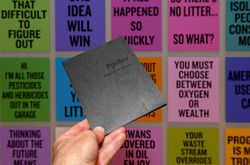
Second Nature
Second Nature
Actions:
Description:
As part of the exhibition It’s All Happening So Fast, an interactive workshop is offered to cegep and university groups in order to explore the complex and contradictory relationships that Canada maintains with the environment. By taking a stand and speaking on behalf of entities motivated by a multiplicity of interests—ecosystems, architecture, ethics, economic systems,(...)
As part of the exhibition It’s All Happening So Fast, an interactive workshop is offered to cegep and university groups in order to explore the complex and contradictory relationships that Canada maintains with the environment. By taking a stand and speaking on behalf of entities motivated by a multiplicity of interests—ecosystems, architecture, ethics, economic systems,(...)
Date:
26 January 2017 to 7 April 2017
26 January 2017 to 7 April 2017
Title:
Second Nature
Actions:
Description:
As part of the exhibition It’s All Happening So Fast, an interactive workshop is offered to cegep and university groups in order to explore the complex and contradictory relationships that Canada maintains with the environment. By taking a stand and speaking on behalf of entities motivated by a multiplicity of interests—ecosystems, architecture, ethics, economic systems,(...)
Second Nature
Actions:
Description:
As part of the exhibition It’s All Happening So Fast, an interactive workshop is offered to cegep and university groups in order to explore the complex and contradictory relationships that Canada maintains with the environment. By taking a stand and speaking on behalf of entities motivated by a multiplicity of interests—ecosystems, architecture, ethics, economic systems,(...)
Form:
events
events
Date:
26 January 2017 to
7 April 2017
26 January 2017 to
7 April 2017
Form:
events
events
Title:
Inter / Faces
Inter / Faces
Actions:
Description:
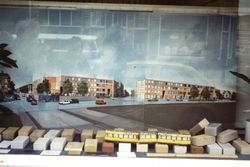
How can architecture respond to a specific urban context? How can the various typologies and cultural needs of diverse inhabitants influence design? How to capture the character of a city through its buildings? Portuguese architect Álvaro Siza’s social housing projects Bonjour Tristesse and Punt en Komma, designed for immigrant communities in Berlin and The Hague(...)
How can architecture respond to a specific urban context? How can the various typologies and cultural needs of diverse inhabitants influence design? How to capture the character of a city through its buildings? Portuguese architect Álvaro Siza’s social housing projects Bonjour Tristesse and Punt en Komma, designed for immigrant communities in Berlin and The Hague(...)
Date:
29 November 2015, 2:30pm - 4:30pm
29 November 2015, 2:30pm - 4:30pm
Title:
Inter / Faces
Actions:
Description:
How can architecture respond to a specific urban context? How can the various typologies and cultural needs of diverse inhabitants influence design? How to capture the character of a city through its buildings? Portuguese architect Álvaro Siza’s social housing projects Bonjour Tristesse and Punt en Komma, designed for immigrant communities in Berlin and The Hague(...)
Inter / Faces
Actions:
Description:
How can architecture respond to a specific urban context? How can the various typologies and cultural needs of diverse inhabitants influence design? How to capture the character of a city through its buildings? Portuguese architect Álvaro Siza’s social housing projects Bonjour Tristesse and Punt en Komma, designed for immigrant communities in Berlin and The Hague(...)
Form:
events
events
Date:
29 November 2015
2:30pm - 4:30pm
29 November 2015
2:30pm - 4:30pm


