


303 Results
Form:
books
books
Title:
Lost architectures
Lost architectures
Actions:
Price:
$55.50
(available to order)
Summary:
This book stands in opposition to the popular notion that the best architecture is built on compromise. Rather, Neil Spiller argues, the most original and brave products of the architectural mind are often to be found in those projects which, for whatever reason, never came to fruition. (...)
$55.50
(available to order)
Summary:
This book stands in opposition to the popular notion that the best architecture is built on compromise. Rather, Neil Spiller argues, the most original and brave products of the architectural mind are often to be found in those projects which, for whatever reason, never came to fruition. (...)
Subject:
Architecture since 1900, Europe
Architecture since 1900, Europe
Publication:
January 2001, Great Britain
January 2001, Great Britain
Title:
Lost architectures
Actions:
Price:
$55.50
(available to order)
Summary:
This book stands in opposition to the popular notion that the best architecture is built on compromise. Rather, Neil Spiller argues, the most original and brave products of the architectural mind are often to be found in those projects which, for whatever reason, never came to fruition. "Lost Architectures" presents an array of such projects from the last decades of the twentieth century, consituting the unrealised dreams of some of the most inspirational architects working in the period. Most of the projects featured here have seldom, if ever, been published before, and some represent the last hand-drawn work of their creators before the age of the computer finally came into full force. Whilst they do not follow any specific style, these projects embody a spirit defined by Spiller as New Romanticism - a spirit which combines elements of aesthetic decadence and a certain camp mannerism with a love of angularity and mechanised ritual. Some of the architects in question are still in practice, with a great deal of high-profile built work behind them; others have never been recognised as they perhaps should have been. In both cases, this book is an invaluable resource of information and inspiration for students of architecture, as well as for theorists, historians and lay readers. It provides essential exposure for a range of work of great vitality which might otherwise risk being lost in the course of time.
Lost architectures
Actions:
Price:
$55.50
(available to order)
Summary:
This book stands in opposition to the popular notion that the best architecture is built on compromise. Rather, Neil Spiller argues, the most original and brave products of the architectural mind are often to be found in those projects which, for whatever reason, never came to fruition. "Lost Architectures" presents an array of such projects from the last decades of the twentieth century, consituting the unrealised dreams of some of the most inspirational architects working in the period. Most of the projects featured here have seldom, if ever, been published before, and some represent the last hand-drawn work of their creators before the age of the computer finally came into full force. Whilst they do not follow any specific style, these projects embody a spirit defined by Spiller as New Romanticism - a spirit which combines elements of aesthetic decadence and a certain camp mannerism with a love of angularity and mechanised ritual. Some of the architects in question are still in practice, with a great deal of high-profile built work behind them; others have never been recognised as they perhaps should have been. In both cases, this book is an invaluable resource of information and inspiration for students of architecture, as well as for theorists, historians and lay readers. It provides essential exposure for a range of work of great vitality which might otherwise risk being lost in the course of time.
Form:
books
books
Publication:
January 2001, Great Britain
January 2001, Great Britain
Subject:
Architecture since 1900, Europe
Architecture since 1900, Europe
Form:
books
books
Actions:
Price:
$67.95
(available to order)
Summary:
Between 1949 and 1953, Robert Frank continually returned to Europe from his new home in New York to take photographs in France, Switzerland, Spain, and Great Britain, photographs that show the development of his uniquely humanist, poetic, and realist eye. In 1951 and early 1952, Frank visited London--"I liked the light, I liked the fog."--and set out to photograph the(...)
$67.95
(available to order)
Summary:
Between 1949 and 1953, Robert Frank continually returned to Europe from his new home in New York to take photographs in France, Switzerland, Spain, and Great Britain, photographs that show the development of his uniquely humanist, poetic, and realist eye. In 1951 and early 1952, Frank visited London--"I liked the light, I liked the fog."--and set out to photograph the(...)
Subject:
Photography monographs
Photography monographs
Publication:
June 2003, Zurich, Berlin and New York
June 2003, Zurich, Berlin and New York
Title:
Robert Frank : London / Wales
Actions:
Price:
$67.95
(available to order)
Summary:
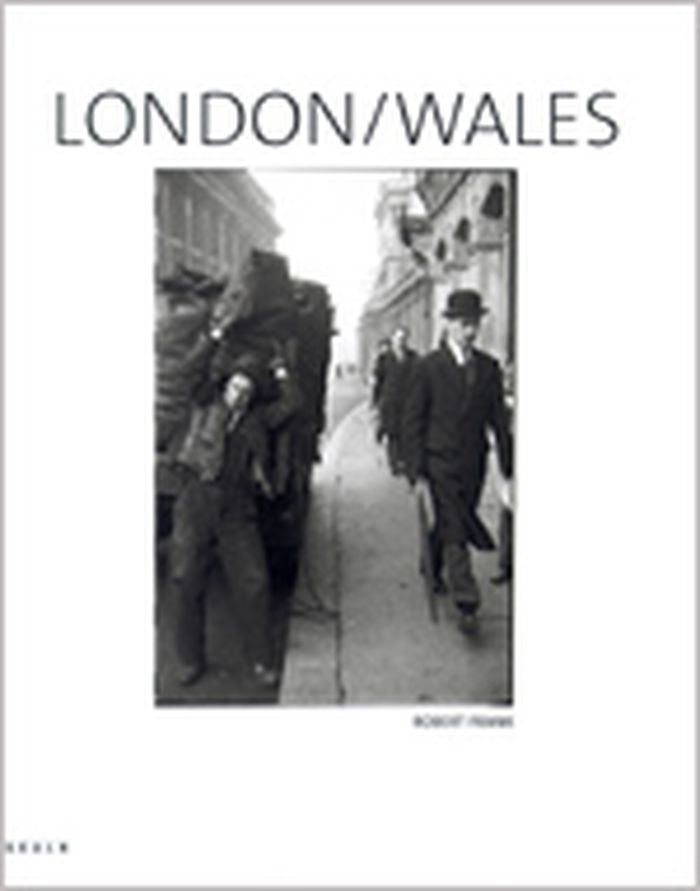
Between 1949 and 1953, Robert Frank continually returned to Europe from his new home in New York to take photographs in France, Switzerland, Spain, and Great Britain, photographs that show the development of his uniquely humanist, poetic, and realist eye. In 1951 and early 1952, Frank visited London--"I liked the light, I liked the fog."--and set out to photograph the unique atmosphere of the city. He followed British financiers around the City, capturing them in their traditional top hats and long coats, creating images that depict them in a poetic dance with their fog-shrouded environment. He shot pictures of workers, men delivering coal, children playing on the streets, people waiting or relaxing in the parks, and images of poverty. In these photographs he juxtaposed money and work, wealth and poverty, creating a dynamic photographic project that has never been shown before in its entirety. Then, in March 1953, before the impending nationalization of the country's coal mines, Frank travelled to the town of Careau, in Wales, to photograph the coal miners whose lives revolved around their work. One miner, Ben James, and his family became the subject of a picture essay (originally published in a 1955 issue of U.S. Camera) in which Frank downplayed the classic modernist photographic moment in favor of a more provocative form that offered informal, revealing glances rather than an official document. In "Robert Frank: London/Wales", Frank returns for the first time to these old negatives. The volume explores a stylistic transformation in his work, a period of development which saw his mode of photography move from an innovative romanticism to a highly charged, metaphorical realism.
Robert Frank : London / Wales
Actions:
Price:
$67.95
(available to order)
Summary:
Between 1949 and 1953, Robert Frank continually returned to Europe from his new home in New York to take photographs in France, Switzerland, Spain, and Great Britain, photographs that show the development of his uniquely humanist, poetic, and realist eye. In 1951 and early 1952, Frank visited London--"I liked the light, I liked the fog."--and set out to photograph the unique atmosphere of the city. He followed British financiers around the City, capturing them in their traditional top hats and long coats, creating images that depict them in a poetic dance with their fog-shrouded environment. He shot pictures of workers, men delivering coal, children playing on the streets, people waiting or relaxing in the parks, and images of poverty. In these photographs he juxtaposed money and work, wealth and poverty, creating a dynamic photographic project that has never been shown before in its entirety. Then, in March 1953, before the impending nationalization of the country's coal mines, Frank travelled to the town of Careau, in Wales, to photograph the coal miners whose lives revolved around their work. One miner, Ben James, and his family became the subject of a picture essay (originally published in a 1955 issue of U.S. Camera) in which Frank downplayed the classic modernist photographic moment in favor of a more provocative form that offered informal, revealing glances rather than an official document. In "Robert Frank: London/Wales", Frank returns for the first time to these old negatives. The volume explores a stylistic transformation in his work, a period of development which saw his mode of photography move from an innovative romanticism to a highly charged, metaphorical realism.
Form:
books
books
Publication:
June 2003, Zurich, Berlin and New York
June 2003, Zurich, Berlin and New York
Subject:
Photography monographs
Photography monographs
Form:
books
books
Title:
Heidegger's hut
Heidegger's hut
Actions:
Price:
$32.95
(available to order)
Summary:
"This is the most thorough architectural 'crit' of a hut ever set down, the justification for which is that the hut was the setting in which Martin Heidegger wrote phenomenological texts that became touchstones for late-twentieth-century architectural theory." --from the foreword by Simon Sadler Beginning in the summer of 1922, philosopher Martin Heidegger(...)
$32.95
(available to order)
Summary:
"This is the most thorough architectural 'crit' of a hut ever set down, the justification for which is that the hut was the setting in which Martin Heidegger wrote phenomenological texts that became touchstones for late-twentieth-century architectural theory." --from the foreword by Simon Sadler Beginning in the summer of 1922, philosopher Martin Heidegger(...)
Subject:
Architectural Theory
Architectural Theory
Publication:
October 2006, Cambridge / London
October 2006, Cambridge / London
Title:
Heidegger's hut
Actions:
Price:
$32.95
(available to order)
Summary:
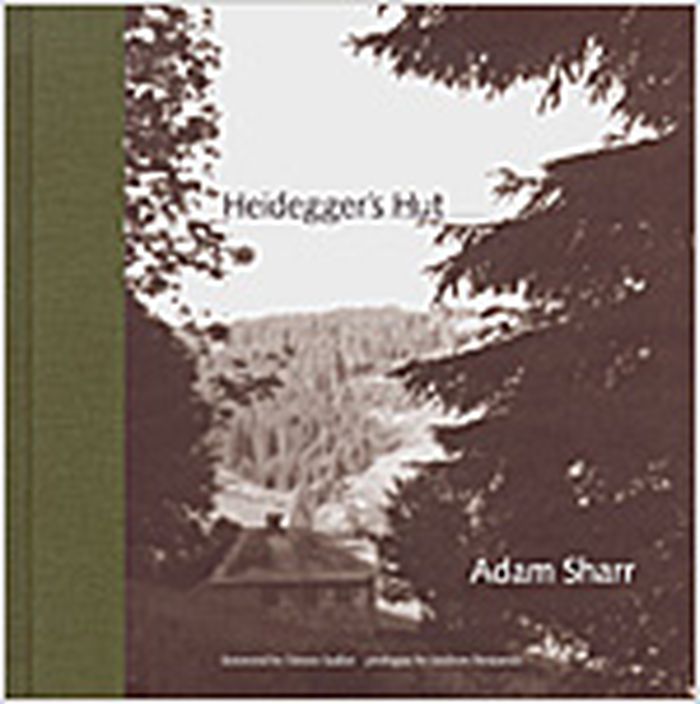
"This is the most thorough architectural 'crit' of a hut ever set down, the justification for which is that the hut was the setting in which Martin Heidegger wrote phenomenological texts that became touchstones for late-twentieth-century architectural theory." --from the foreword by Simon Sadler Beginning in the summer of 1922, philosopher Martin Heidegger (1889-1976) occupied a small, three-room cabin in the Black Forest Mountains of southern Germany. He called it "die Hütte" ("the hut"). Over the years, Heidegger worked on many of his most famous writings in this cabin, from his early lectures to his last enigmatic texts. He claimed an intellectual and emotional intimacy with the building and its surroundings, and even suggested that the landscape expressed itself through him, almost without agency. In Heidegger's Hut, Adam Sharr explores this intense relationship of thought, place, and person. Heidegger's mountain hut has been an object of fascination for many, including architects interested in his writings about "dwelling" and "place." Sharr's account--the first substantive investigation of the building and Heidegger's life there--reminds us that, in approaching Heidegger's writings, it is important to consider the circumstances in which the philosopher, as he himself said, felt "transported" into the work's "own rhythm." Indeed, Heidegger's apparent abdication of agency and tendency toward romanticism seem especially significant in light of his troubling involvement with the Nazi regime in the early 1930s. Sharr draws on original research, including interviews with Heidegger's relatives, as well as on written accounts of the hut by Heidegger and his visitors. The book's evocative photographs include scenic and architectural views taken by the author and many remarkable images of a septuagenarian Heidegger in the hut taken by the photojournalist Digne Meller-Markovicz. There are many ways to interpret Heidegger's hut--as the site of heroic confrontation between philosopher and existence; as the petit bourgeois escape of a misguided romantic; as a place overshadowed by fascism; or as an entirely unremarkable little building. Heidegger's Hut does not argue for any one reading, but guides readers toward their own possible interpretations of the importance of "die Hütte."
Heidegger's hut
Actions:
Price:
$32.95
(available to order)
Summary:
"This is the most thorough architectural 'crit' of a hut ever set down, the justification for which is that the hut was the setting in which Martin Heidegger wrote phenomenological texts that became touchstones for late-twentieth-century architectural theory." --from the foreword by Simon Sadler Beginning in the summer of 1922, philosopher Martin Heidegger (1889-1976) occupied a small, three-room cabin in the Black Forest Mountains of southern Germany. He called it "die Hütte" ("the hut"). Over the years, Heidegger worked on many of his most famous writings in this cabin, from his early lectures to his last enigmatic texts. He claimed an intellectual and emotional intimacy with the building and its surroundings, and even suggested that the landscape expressed itself through him, almost without agency. In Heidegger's Hut, Adam Sharr explores this intense relationship of thought, place, and person. Heidegger's mountain hut has been an object of fascination for many, including architects interested in his writings about "dwelling" and "place." Sharr's account--the first substantive investigation of the building and Heidegger's life there--reminds us that, in approaching Heidegger's writings, it is important to consider the circumstances in which the philosopher, as he himself said, felt "transported" into the work's "own rhythm." Indeed, Heidegger's apparent abdication of agency and tendency toward romanticism seem especially significant in light of his troubling involvement with the Nazi regime in the early 1930s. Sharr draws on original research, including interviews with Heidegger's relatives, as well as on written accounts of the hut by Heidegger and his visitors. The book's evocative photographs include scenic and architectural views taken by the author and many remarkable images of a septuagenarian Heidegger in the hut taken by the photojournalist Digne Meller-Markovicz. There are many ways to interpret Heidegger's hut--as the site of heroic confrontation between philosopher and existence; as the petit bourgeois escape of a misguided romantic; as a place overshadowed by fascism; or as an entirely unremarkable little building. Heidegger's Hut does not argue for any one reading, but guides readers toward their own possible interpretations of the importance of "die Hütte."
Form:
books
books
Publication:
October 2006, Cambridge / London
October 2006, Cambridge / London
Subject:
Architectural Theory
Architectural Theory


