


11284 Results
Form:
exhibitions
exhibitions
Actions:
Description:
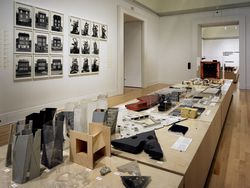
Herzog de Meuron: Archaeology of the Mind presents an exhaustive display of materials from the architects’ archive and from related collections. Referencing a natural history, the exhibition includes study models, books, photographs, toys, fossils, Chinese scholars’ rocks, and significant works of contemporary art, all of which have informed the thinking of the Swiss(...)
Herzog de Meuron: Archaeology of the Mind presents an exhaustive display of materials from the architects’ archive and from related collections. Referencing a natural history, the exhibition includes study models, books, photographs, toys, fossils, Chinese scholars’ rocks, and significant works of contemporary art, all of which have informed the thinking of the Swiss(...)
Location:
Main galleries
Main galleries
Date:
23 October 2002 to 6 April 2003
23 October 2002 to 6 April 2003
Title:
Herzog & de Meuron: Archaeology of the Mind
Actions:
Description:
Herzog de Meuron: Archaeology of the Mind presents an exhaustive display of materials from the architects’ archive and from related collections. Referencing a natural history, the exhibition includes study models, books, photographs, toys, fossils, Chinese scholars’ rocks, and significant works of contemporary art, all of which have informed the thinking of the Swiss(...)
Herzog & de Meuron: Archaeology of the Mind
Actions:
Description:
Herzog de Meuron: Archaeology of the Mind presents an exhaustive display of materials from the architects’ archive and from related collections. Referencing a natural history, the exhibition includes study models, books, photographs, toys, fossils, Chinese scholars’ rocks, and significant works of contemporary art, all of which have informed the thinking of the Swiss(...)
Form:
exhibitions
exhibitions
Date:
23 October 2002 to
6 April 2003
23 October 2002 to
6 April 2003
Location:
Main galleries
Main galleries
Form:
photographs
photographs
Reference number:
ARCH280044
Description:
This box mostly contains transparencies and negatives of maps from various archives which the van Ginkels used for their own work and transparencies of the van Ginkels own work. They used the transparencies to present their projects and proposals. The transparencies of their work are numbered and titled, ex. Old City 193. The van Ginkels would produce their own maps prior to starting a project. Also included are about 60 slides of facades of buildings in Old Montreal. These were photos the van Ginkels took and were likely taken in the late 1950s. They likely used these as reference material.
ARCH280044
Description:
This box mostly contains transparencies and negatives of maps from various archives which the van Ginkels used for their own work and transparencies of the van Ginkels own work. They used the transparencies to present their projects and proposals. The transparencies of their work are numbered and titled, ex. Old City 193. The van Ginkels would produce their own maps prior to starting a project. Also included are about 60 slides of facades of buildings in Old Montreal. These were photos the van Ginkels took and were likely taken in the late 1950s. They likely used these as reference material.
People:
Date:
circa 1950s-1960s
circa 1950s-1960s
Title:
Reference transparencies, negatives, and photographs
Actions:
ARCH280044
Description:
This box mostly contains transparencies and negatives of maps from various archives which the van Ginkels used for their own work and transparencies of the van Ginkels own work. They used the transparencies to present their projects and proposals. The transparencies of their work are numbered and titled, ex. Old City 193. The van Ginkels would produce their own maps prior to starting a project. Also included are about 60 slides of facades of buildings in Old Montreal. These were photos the van Ginkels took and were likely taken in the late 1950s. They likely used these as reference material.
Reference transparencies, negatives, and photographs
Actions:
ARCH280044
Description:
This box mostly contains transparencies and negatives of maps from various archives which the van Ginkels used for their own work and transparencies of the van Ginkels own work. They used the transparencies to present their projects and proposals. The transparencies of their work are numbered and titled, ex. Old City 193. The van Ginkels would produce their own maps prior to starting a project. Also included are about 60 slides of facades of buildings in Old Montreal. These were photos the van Ginkels took and were likely taken in the late 1950s. They likely used these as reference material.
Form:
photographs
photographs
Date:
circa 1950s-1960s
circa 1950s-1960s
People:
Level of archival description:
Series
Series
Actions:
Reference number:
AP129.S1
Description:
La série comprend des archives relatives à douze projets pour lesquels Jean Ouellet et ses différents partenaires ont participé. À l'exception d'un seul à Québec, tous les projets sont situés ou ont été prévus sur l'île de Montréal. Les documents ont été principalement créés entre les années 1960 à 2000. On y retrouve cependant une forte proportion de documents provenant des années 70. Le classement suit l'organisation de Jean Ouellet. C'est ainsi que chaque projet a une ou plusieurs chemises de documents (groupes) et ces dernières peuvent être à leur tour subdivisées par d'autres chemises (sous-groupes).
AP129.S1
Description:
La série comprend des archives relatives à douze projets pour lesquels Jean Ouellet et ses différents partenaires ont participé. À l'exception d'un seul à Québec, tous les projets sont situés ou ont été prévus sur l'île de Montréal. Les documents ont été principalement créés entre les années 1960 à 2000. On y retrouve cependant une forte proportion de documents provenant des années 70. Le classement suit l'organisation de Jean Ouellet. C'est ainsi que chaque projet a une ou plusieurs chemises de documents (groupes) et ces dernières peuvent être à leur tour subdivisées par d'autres chemises (sous-groupes).
People:
Date:
1944-2002
1944-2002
Title:
Projets d'architecture et d'urbanisme
Actions:
AP129.S1
Description:
La série comprend des archives relatives à douze projets pour lesquels Jean Ouellet et ses différents partenaires ont participé. À l'exception d'un seul à Québec, tous les projets sont situés ou ont été prévus sur l'île de Montréal. Les documents ont été principalement créés entre les années 1960 à 2000. On y retrouve cependant une forte proportion de documents provenant des années 70. Le classement suit l'organisation de Jean Ouellet. C'est ainsi que chaque projet a une ou plusieurs chemises de documents (groupes) et ces dernières peuvent être à leur tour subdivisées par d'autres chemises (sous-groupes).
Projets d'architecture et d'urbanisme
Actions:
AP129.S1
Description:
La série comprend des archives relatives à douze projets pour lesquels Jean Ouellet et ses différents partenaires ont participé. À l'exception d'un seul à Québec, tous les projets sont situés ou ont été prévus sur l'île de Montréal. Les documents ont été principalement créés entre les années 1960 à 2000. On y retrouve cependant une forte proportion de documents provenant des années 70. Le classement suit l'organisation de Jean Ouellet. C'est ainsi que chaque projet a une ou plusieurs chemises de documents (groupes) et ces dernières peuvent être à leur tour subdivisées par d'autres chemises (sous-groupes).
Level of archival description:
Série 1
Série 1
Date:
1944-2002
1944-2002
People:
Level of archival description:
Project
Project
Title:
Renovação do Elevador de Santa Justa [Restoration of Santa Justa lift], Lisbon, Portugal (1994)
Renovação do Elevador de Santa Justa [Restoration of Santa Justa lift], Lisbon, Portugal (1994)
Actions:
Reference number:
AP178.S1.1994.PR08
Description:
This project series documents the Renovação do Elevador de Santa Justa in Lisbon, Portugal. While the project was held at the office's archives, it was assigned the project number 54/90. The office assigned the date 1994 to this project. The project was for the restoration of the Santa Justa lift, which was originally built at the end of the 19th century in order to give access to the Carmo Square and the Baixa. The renovations included modifications to the information booth and renovations of the mechanical system. Documenting this project are studies, details and working drawings. There are photographs showing the model and the elevator. Textual materials include correspondence, competition documentation, project documentation and technical specifications.
AP178.S1.1994.PR08
Description:
This project series documents the Renovação do Elevador de Santa Justa in Lisbon, Portugal. While the project was held at the office's archives, it was assigned the project number 54/90. The office assigned the date 1994 to this project. The project was for the restoration of the Santa Justa lift, which was originally built at the end of the 19th century in order to give access to the Carmo Square and the Baixa. The renovations included modifications to the information booth and renovations of the mechanical system. Documenting this project are studies, details and working drawings. There are photographs showing the model and the elevator. Textual materials include correspondence, competition documentation, project documentation and technical specifications.
People:
Date:
1994-2002
1994-2002
Title:
Renovação do Elevador de Santa Justa [Restoration of Santa Justa lift], Lisbon, Portugal (1994)
Actions:
AP178.S1.1994.PR08
Description:
This project series documents the Renovação do Elevador de Santa Justa in Lisbon, Portugal. While the project was held at the office's archives, it was assigned the project number 54/90. The office assigned the date 1994 to this project. The project was for the restoration of the Santa Justa lift, which was originally built at the end of the 19th century in order to give access to the Carmo Square and the Baixa. The renovations included modifications to the information booth and renovations of the mechanical system. Documenting this project are studies, details and working drawings. There are photographs showing the model and the elevator. Textual materials include correspondence, competition documentation, project documentation and technical specifications.
Renovação do Elevador de Santa Justa [Restoration of Santa Justa lift], Lisbon, Portugal (1994)
Actions:
AP178.S1.1994.PR08
Description:
This project series documents the Renovação do Elevador de Santa Justa in Lisbon, Portugal. While the project was held at the office's archives, it was assigned the project number 54/90. The office assigned the date 1994 to this project. The project was for the restoration of the Santa Justa lift, which was originally built at the end of the 19th century in order to give access to the Carmo Square and the Baixa. The renovations included modifications to the information booth and renovations of the mechanical system. Documenting this project are studies, details and working drawings. There are photographs showing the model and the elevator. Textual materials include correspondence, competition documentation, project documentation and technical specifications.
Level of archival description:
Project
Project
Date:
1994-2002
1994-2002
People:
Level of archival description:
Project
Project
Reference number:
AP178.S1.1982.PR04
Description:
This project series document the Centro Cultural de Sines in Sines, Portugal. While the records were held in the office’s archives this project was assigned the number 15/80. The office assigned the dates 1982-1985 to this project. The project was for the Sines Cultural Centre, which was divided into three buildings (A, B, and C). Building A included offices, an auditorium, meeting rooms and a bar, Building B held a museum, and Building C included a library on two floors. The project was not built. Documenting this project are sketches, studies, design development drawings and plans. Textual materials include project documentation and correspondence. Photographic materials document the models.
AP178.S1.1982.PR04
Description:
This project series document the Centro Cultural de Sines in Sines, Portugal. While the records were held in the office’s archives this project was assigned the number 15/80. The office assigned the dates 1982-1985 to this project. The project was for the Sines Cultural Centre, which was divided into three buildings (A, B, and C). Building A included offices, an auditorium, meeting rooms and a bar, Building B held a museum, and Building C included a library on two floors. The project was not built. Documenting this project are sketches, studies, design development drawings and plans. Textual materials include project documentation and correspondence. Photographic materials document the models.
People:
Date:
1982-1985
1982-1985
Title:
Centro Cultural de Sines [Sines Cultural Centre], Sines, Portugal (1982-1985)
Actions:
AP178.S1.1982.PR04
Description:
This project series document the Centro Cultural de Sines in Sines, Portugal. While the records were held in the office’s archives this project was assigned the number 15/80. The office assigned the dates 1982-1985 to this project. The project was for the Sines Cultural Centre, which was divided into three buildings (A, B, and C). Building A included offices, an auditorium, meeting rooms and a bar, Building B held a museum, and Building C included a library on two floors. The project was not built. Documenting this project are sketches, studies, design development drawings and plans. Textual materials include project documentation and correspondence. Photographic materials document the models.
Centro Cultural de Sines [Sines Cultural Centre], Sines, Portugal (1982-1985)
Actions:
AP178.S1.1982.PR04
Description:
This project series document the Centro Cultural de Sines in Sines, Portugal. While the records were held in the office’s archives this project was assigned the number 15/80. The office assigned the dates 1982-1985 to this project. The project was for the Sines Cultural Centre, which was divided into three buildings (A, B, and C). Building A included offices, an auditorium, meeting rooms and a bar, Building B held a museum, and Building C included a library on two floors. The project was not built. Documenting this project are sketches, studies, design development drawings and plans. Textual materials include project documentation and correspondence. Photographic materials document the models.
Level of archival description:
Project
Project
Date:
1982-1985
1982-1985
People:
Form:
photographs
photographs
![View of the Seventeen-Arch Bridge with Longevity Hill [Wanshou Shan] in the background, Garden of the Clear Ripples [Qing Yi Yuan] (now known as the Summer Palace or Yihe Yuan), Peking (now Beijing), China](/img-collection/JbWFE-NbXkrvUJuhuXOfOtdPqJU=/500x375/359144.jpg)
Actions:
Reference number:
PH1980:0943
Description:
- This photograph also shows in the right background the Temple of the Sea of Wisdom, the Revolving Archive and the Pavilion of Precious Clouds on Longevity Hill.
PH1980:0943
Description:
- This photograph also shows in the right background the Temple of the Sea of Wisdom, the Revolving Archive and the Pavilion of Precious Clouds on Longevity Hill.
People:
Subject:
architecture, engineering
architecture, engineering
Date:
1871
1871
Title:
View of the Seventeen-Arch Bridge with Longevity Hill [Wanshou Shan] in the background, Garden of the Clear Ripples [Qing Yi Yuan] (now known as the Summer Palace or Yihe Yuan), Peking (now Beijing), China
Actions:
PH1980:0943
Description:
- This photograph also shows in the right background the Temple of the Sea of Wisdom, the Revolving Archive and the Pavilion of Precious Clouds on Longevity Hill.
View of the Seventeen-Arch Bridge with Longevity Hill [Wanshou Shan] in the background, Garden of the Clear Ripples [Qing Yi Yuan] (now known as the Summer Palace or Yihe Yuan), Peking (now Beijing), China
Actions:
PH1980:0943
Description:
- This photograph also shows in the right background the Temple of the Sea of Wisdom, the Revolving Archive and the Pavilion of Precious Clouds on Longevity Hill.
Form:
photographs
photographs
Date:
1871
1871
People:
Subject:
architecture, engineering
architecture, engineering
Form:
archives
Level of archival description:
Fonds
archives
Level of archival description:
Fonds
Actions:
Reference number:
AP218
Synopsis:
The Gillian Hopwood and John Godwin fonds documents Hopwood and Godwin’s architectural projects from the early 1950s to the late 1980s, as well as their training to become architects, the administration of their architecture practice, and their career as architectural consultants, and their writing from the 1940s to 2023. The fonds mostly contains material related to their architectural projects, over 450 of them, mostly in Nigeria and some from their practice in the United Kingdom.
AP218
Synopsis:
The Gillian Hopwood and John Godwin fonds documents Hopwood and Godwin’s architectural projects from the early 1950s to the late 1980s, as well as their training to become architects, the administration of their architecture practice, and their career as architectural consultants, and their writing from the 1940s to 2023. The fonds mostly contains material related to their architectural projects, over 450 of them, mostly in Nigeria and some from their practice in the United Kingdom.
People:
Date:
1940-2025
1940-2025
Title:
Gillian Hopwood and John Godwin fonds
Actions:
AP218
Synopsis:
The Gillian Hopwood and John Godwin fonds documents Hopwood and Godwin’s architectural projects from the early 1950s to the late 1980s, as well as their training to become architects, the administration of their architecture practice, and their career as architectural consultants, and their writing from the 1940s to 2023. The fonds mostly contains material related to their architectural projects, over 450 of them, mostly in Nigeria and some from their practice in the United Kingdom.
Gillian Hopwood and John Godwin fonds
Actions:
AP218
Synopsis:
The Gillian Hopwood and John Godwin fonds documents Hopwood and Godwin’s architectural projects from the early 1950s to the late 1980s, as well as their training to become architects, the administration of their architecture practice, and their career as architectural consultants, and their writing from the 1940s to 2023. The fonds mostly contains material related to their architectural projects, over 450 of them, mostly in Nigeria and some from their practice in the United Kingdom.
Form:
archives
Level of archival description:
Fonds
archives
Level of archival description:
Fonds
Date:
1940-2025
1940-2025
People:
Form:
archives
Level of archival description:
Fonds
archives
Level of archival description:
Fonds
Title:
Gene Summers fonds
Gene Summers fonds
Reference number:
AP114
Synopsis:
The Gene Summers fonds documents primarily the later part of Gene Summers' career as an architect, developer, artist and art collector. Summer's early work with the Office of Mies van der Rohe and C.F. Murphy Associates is summarily represented by notes, sketches and photographs.
AP114
Synopsis:
The Gene Summers fonds documents primarily the later part of Gene Summers' career as an architect, developer, artist and art collector. Summer's early work with the Office of Mies van der Rohe and C.F. Murphy Associates is summarily represented by notes, sketches and photographs.
People:
Date:
1957 - 2004
1957 - 2004
Title:
Gene Summers fonds
Actions:
AP114
Synopsis:
The Gene Summers fonds documents primarily the later part of Gene Summers' career as an architect, developer, artist and art collector. Summer's early work with the Office of Mies van der Rohe and C.F. Murphy Associates is summarily represented by notes, sketches and photographs.
Gene Summers fonds
Actions:
AP114
Synopsis:
The Gene Summers fonds documents primarily the later part of Gene Summers' career as an architect, developer, artist and art collector. Summer's early work with the Office of Mies van der Rohe and C.F. Murphy Associates is summarily represented by notes, sketches and photographs.
Form:
archives
Level of archival description:
Fonds
archives
Level of archival description:
Fonds
Date:
1957 - 2004
1957 - 2004
People:
Level of archival description:
Project
Project
Reference number:
AP178.S1.1972.PR06
Description:
This project series documents the Cooperativa Unicoope Domus / Pasteleira in Porto, Portugal. While the records were held in the office’s archives this project was assigned the number 14/70. In the past the office identified the project as number 136. The office assigned the date 1972 for this project. The project was for the completion of the interior, water system and electrical circuits of a three-storey supermarket. The first floor consisted of storage space and annexes, the second floor for the store, and the third floor for administrative activities. Documenting this project are sketches, studies and working drawings. Textual material includes project documentation and correspondence. Photographs and negatives document the project site and model.
AP178.S1.1972.PR06
Description:
This project series documents the Cooperativa Unicoope Domus / Pasteleira in Porto, Portugal. While the records were held in the office’s archives this project was assigned the number 14/70. In the past the office identified the project as number 136. The office assigned the date 1972 for this project. The project was for the completion of the interior, water system and electrical circuits of a three-storey supermarket. The first floor consisted of storage space and annexes, the second floor for the store, and the third floor for administrative activities. Documenting this project are sketches, studies and working drawings. Textual material includes project documentation and correspondence. Photographs and negatives document the project site and model.
People:
Date:
1972-1976
1972-1976
Title:
Cooperativa Unicoope Domus / Pasteleira [Domus co-operative supermarket], Porto, Portugal (1972)
Actions:
AP178.S1.1972.PR06
Description:
This project series documents the Cooperativa Unicoope Domus / Pasteleira in Porto, Portugal. While the records were held in the office’s archives this project was assigned the number 14/70. In the past the office identified the project as number 136. The office assigned the date 1972 for this project. The project was for the completion of the interior, water system and electrical circuits of a three-storey supermarket. The first floor consisted of storage space and annexes, the second floor for the store, and the third floor for administrative activities. Documenting this project are sketches, studies and working drawings. Textual material includes project documentation and correspondence. Photographs and negatives document the project site and model.
Cooperativa Unicoope Domus / Pasteleira [Domus co-operative supermarket], Porto, Portugal (1972)
Actions:
AP178.S1.1972.PR06
Description:
This project series documents the Cooperativa Unicoope Domus / Pasteleira in Porto, Portugal. While the records were held in the office’s archives this project was assigned the number 14/70. In the past the office identified the project as number 136. The office assigned the date 1972 for this project. The project was for the completion of the interior, water system and electrical circuits of a three-storey supermarket. The first floor consisted of storage space and annexes, the second floor for the store, and the third floor for administrative activities. Documenting this project are sketches, studies and working drawings. Textual material includes project documentation and correspondence. Photographs and negatives document the project site and model.
Level of archival description:
Project
Project
Date:
1972-1976
1972-1976
People:
Level of archival description:
Project
Project
Reference number:
AP178.S1.2001.PR03
Description:
This project series documents the Monumento 25 Anos do Poder Local em Coimbra in Coimbra, Portugal. While the records were held in the office’s archives this project was assigned the number 27/00. The office assigned the dates 2001-2002 for this project. The project files document the design for a monument for the city of Coimbra to celebrate 25 years of local government. The project site was located near the Portuguese Pavilion for Expo 2000. The monument consisted of a set of limestone blocks with the inscription of Portuguese municipalities. The project was not built. Documenting this project are a sketch, electrical drawings and structural drawings. Textual materials include technical, structural, electrical and mechanical documentation.
AP178.S1.2001.PR03
Description:
This project series documents the Monumento 25 Anos do Poder Local em Coimbra in Coimbra, Portugal. While the records were held in the office’s archives this project was assigned the number 27/00. The office assigned the dates 2001-2002 for this project. The project files document the design for a monument for the city of Coimbra to celebrate 25 years of local government. The project site was located near the Portuguese Pavilion for Expo 2000. The monument consisted of a set of limestone blocks with the inscription of Portuguese municipalities. The project was not built. Documenting this project are a sketch, electrical drawings and structural drawings. Textual materials include technical, structural, electrical and mechanical documentation.
People:
Date:
2001-2005
2001-2005
Title:
Monumento 25 Anos do Poder Local em Coimbra [Monument to 25 Years of Local Government in Coimbra], Coimbra, Portugal (2001-2002)
Actions:
AP178.S1.2001.PR03
Description:
This project series documents the Monumento 25 Anos do Poder Local em Coimbra in Coimbra, Portugal. While the records were held in the office’s archives this project was assigned the number 27/00. The office assigned the dates 2001-2002 for this project. The project files document the design for a monument for the city of Coimbra to celebrate 25 years of local government. The project site was located near the Portuguese Pavilion for Expo 2000. The monument consisted of a set of limestone blocks with the inscription of Portuguese municipalities. The project was not built. Documenting this project are a sketch, electrical drawings and structural drawings. Textual materials include technical, structural, electrical and mechanical documentation.
Monumento 25 Anos do Poder Local em Coimbra [Monument to 25 Years of Local Government in Coimbra], Coimbra, Portugal (2001-2002)
Actions:
AP178.S1.2001.PR03
Description:
This project series documents the Monumento 25 Anos do Poder Local em Coimbra in Coimbra, Portugal. While the records were held in the office’s archives this project was assigned the number 27/00. The office assigned the dates 2001-2002 for this project. The project files document the design for a monument for the city of Coimbra to celebrate 25 years of local government. The project site was located near the Portuguese Pavilion for Expo 2000. The monument consisted of a set of limestone blocks with the inscription of Portuguese municipalities. The project was not built. Documenting this project are a sketch, electrical drawings and structural drawings. Textual materials include technical, structural, electrical and mechanical documentation.
Level of archival description:
Project
Project
Date:
2001-2005
2001-2005
People:


