


346 Results
Form:
books
books
Actions:
Price:
$27.95
(available to order)
Summary:
By painstakingly combing through unpublished archival records of the seventeenth, eighteenth and nineteenth centuries, Marcel Trudel gives a human face to the over 4,000 Aboriginal and Black slaves bought, sold and exploited in colonial Canada. He reveals the identities of the slave owners, who ranged from governors, seigneurs, and military officers to bishops, priests,(...)
$27.95
(available to order)
Summary:
By painstakingly combing through unpublished archival records of the seventeenth, eighteenth and nineteenth centuries, Marcel Trudel gives a human face to the over 4,000 Aboriginal and Black slaves bought, sold and exploited in colonial Canada. He reveals the identities of the slave owners, who ranged from governors, seigneurs, and military officers to bishops, priests,(...)
Title:
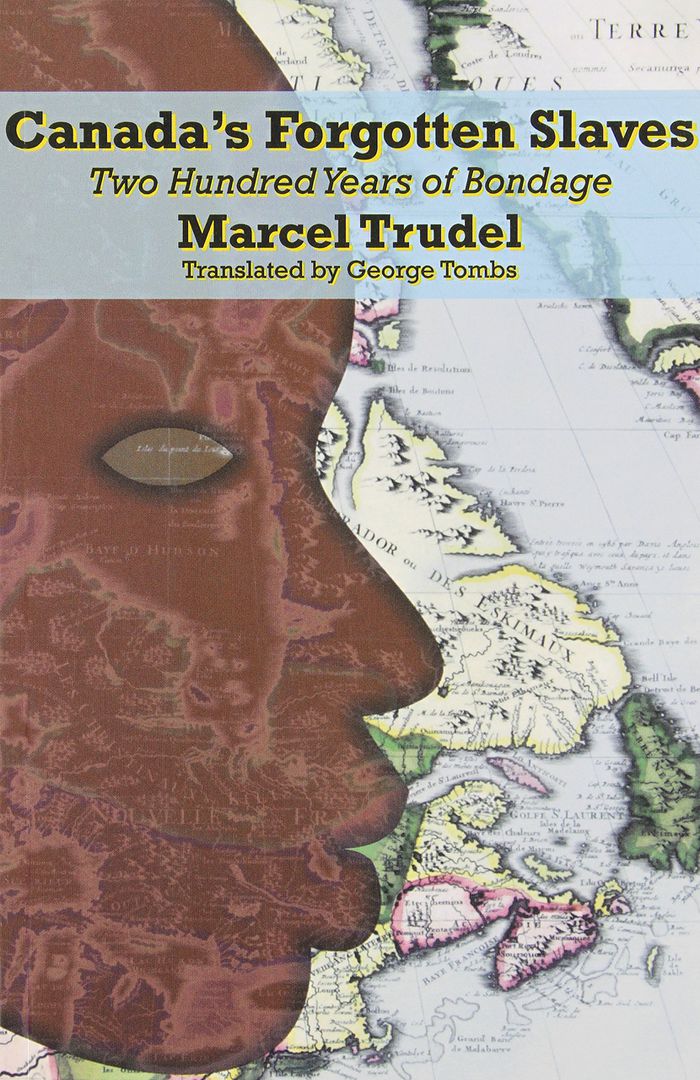
Canada's forgotten slaves: two hundred years of bondage
Actions:
Price:
$27.95
(available to order)
Summary:
By painstakingly combing through unpublished archival records of the seventeenth, eighteenth and nineteenth centuries, Marcel Trudel gives a human face to the over 4,000 Aboriginal and Black slaves bought, sold and exploited in colonial Canada. He reveals the identities of the slave owners, who ranged from governors, seigneurs, and military officers to bishops, priests, nuns, judges, and merchants. Trudel describes the plight of slaves-the joys and sorrows of their daily existence. Trudel also recounts how some slaves struggled to gain their liberty. He documents Canadian politicians, historians and ecclesiastics who deliberately falsified the record, glorifying their own colonial-era heroes, in order to remove any trace of the thousands of Aboriginal and Black slaves held in bondage for two centuries in Canada.
Canada's forgotten slaves: two hundred years of bondage
Actions:
Price:
$27.95
(available to order)
Summary:
By painstakingly combing through unpublished archival records of the seventeenth, eighteenth and nineteenth centuries, Marcel Trudel gives a human face to the over 4,000 Aboriginal and Black slaves bought, sold and exploited in colonial Canada. He reveals the identities of the slave owners, who ranged from governors, seigneurs, and military officers to bishops, priests, nuns, judges, and merchants. Trudel describes the plight of slaves-the joys and sorrows of their daily existence. Trudel also recounts how some slaves struggled to gain their liberty. He documents Canadian politicians, historians and ecclesiastics who deliberately falsified the record, glorifying their own colonial-era heroes, in order to remove any trace of the thousands of Aboriginal and Black slaves held in bondage for two centuries in Canada.
Form:
books
books
Publication:
May 2013
May 2013
Subject:
Architecture in Canada
Architecture in Canada
Form:
books
books
Price:
$140.00
(available to order)
Summary:
For nearly three centuries Leonardo da Vinci's work was known primarily through the abridged version of his "Treatise on Painting", first published in Paris in 1651 and soon translated into all the major European languages. Here for the first time is a study that examines the historical reception of this vastly influential text. This collection charts the varied(...)
$140.00
(available to order)
Summary:
For nearly three centuries Leonardo da Vinci's work was known primarily through the abridged version of his "Treatise on Painting", first published in Paris in 1651 and soon translated into all the major European languages. Here for the first time is a study that examines the historical reception of this vastly influential text. This collection charts the varied(...)
Title:
Re-reading Leonardo: the treatise on painting across Europe, 1550-1900
Actions:
Price:
$140.00
(available to order)
Summary:
For nearly three centuries Leonardo da Vinci's work was known primarily through the abridged version of his "Treatise on Painting", first published in Paris in 1651 and soon translated into all the major European languages. Here for the first time is a study that examines the historical reception of this vastly influential text. This collection charts the varied interpretations of Leonardo's ideas in French, Italian, Spanish, English, German, Dutch, Flemish, Greek, and Polish speaking environments where the Trattato was an important resource for the academic instruction of artists, one of the key sources drawn upon by art theorists, and widely read by a diverse network of artists, architects, biographers, natural philosophers, translators, astronomers, publishers, engineers, theologians, aristocrats, lawyers, politicians, entrepreneurs, and collectors.
Re-reading Leonardo: the treatise on painting across Europe, 1550-1900
Actions:
Price:
$140.00
(available to order)
Summary:
For nearly three centuries Leonardo da Vinci's work was known primarily through the abridged version of his "Treatise on Painting", first published in Paris in 1651 and soon translated into all the major European languages. Here for the first time is a study that examines the historical reception of this vastly influential text. This collection charts the varied interpretations of Leonardo's ideas in French, Italian, Spanish, English, German, Dutch, Flemish, Greek, and Polish speaking environments where the Trattato was an important resource for the academic instruction of artists, one of the key sources drawn upon by art theorists, and widely read by a diverse network of artists, architects, biographers, natural philosophers, translators, astronomers, publishers, engineers, theologians, aristocrats, lawyers, politicians, entrepreneurs, and collectors.
Form:
books
books
Publication:
July 2009
July 2009
Subject:
History until 1900, Renaissance
History until 1900, Renaissance
Form:
books
books
Title:
The portable John Latham
The portable John Latham
Actions:
Price:
$28.00
(available to order)
Summary:
The Portable John Latham features a rich selection of documents from the archive of the late British artist John Latham. Through reproductions of letters, invitation cards, exhibition reviews, performance scripts and images, the publication retraces Latham’s radical practice over six decades, from the late 1940s to his death in 2006. The book highlights Latham’s(...)
$28.00
(available to order)
Summary:
The Portable John Latham features a rich selection of documents from the archive of the late British artist John Latham. Through reproductions of letters, invitation cards, exhibition reviews, performance scripts and images, the publication retraces Latham’s radical practice over six decades, from the late 1940s to his death in 2006. The book highlights Latham’s(...)
Title:
The portable John Latham
Actions:
Price:
$28.00
(available to order)
Summary:
The Portable John Latham features a rich selection of documents from the archive of the late British artist John Latham. Through reproductions of letters, invitation cards, exhibition reviews, performance scripts and images, the publication retraces Latham’s radical practice over six decades, from the late 1940s to his death in 2006. The book highlights Latham’s prodigious linguistic inventiveness as well as the variety of his interlocutors, from artists and art world figures (Clement Greenberg, Lucy Lippard) to academics (Noam Chomsky, Stephen Hawking) and politicians (Margaret Thatcher). The Portable John Latham is introduced by co-editors Antony Hudek and Athanasios Velios, and includes a reprint of an interview of Latham by the late Charles Harrison from 1968 and a useful glossary section.
The portable John Latham
Actions:
Price:
$28.00
(available to order)
Summary:
The Portable John Latham features a rich selection of documents from the archive of the late British artist John Latham. Through reproductions of letters, invitation cards, exhibition reviews, performance scripts and images, the publication retraces Latham’s radical practice over six decades, from the late 1940s to his death in 2006. The book highlights Latham’s prodigious linguistic inventiveness as well as the variety of his interlocutors, from artists and art world figures (Clement Greenberg, Lucy Lippard) to academics (Noam Chomsky, Stephen Hawking) and politicians (Margaret Thatcher). The Portable John Latham is introduced by co-editors Antony Hudek and Athanasios Velios, and includes a reprint of an interview of Latham by the late Charles Harrison from 1968 and a useful glossary section.
Form:
books
books
Publication:
December 2012
December 2012
Subject:
Art Theory
Art Theory
Form:
books
books
Price:
$58.95
(available to order)
Summary:
After seizing Jerusalem's eastern precincts from Jordan at the conclusion of the Six-Day War in 1967, Israel unilaterally unified the city and plunged into an ambitious building program, eager to transform the very meaning of one of the world's most emotionally charged urban spaces. The goal was as simple as it was controversial: to both Judaize and modernize Jerusalem.(...)
$58.95
(available to order)
Summary:
After seizing Jerusalem's eastern precincts from Jordan at the conclusion of the Six-Day War in 1967, Israel unilaterally unified the city and plunged into an ambitious building program, eager to transform the very meaning of one of the world's most emotionally charged urban spaces. The goal was as simple as it was controversial: to both Judaize and modernize Jerusalem.(...)
Title:
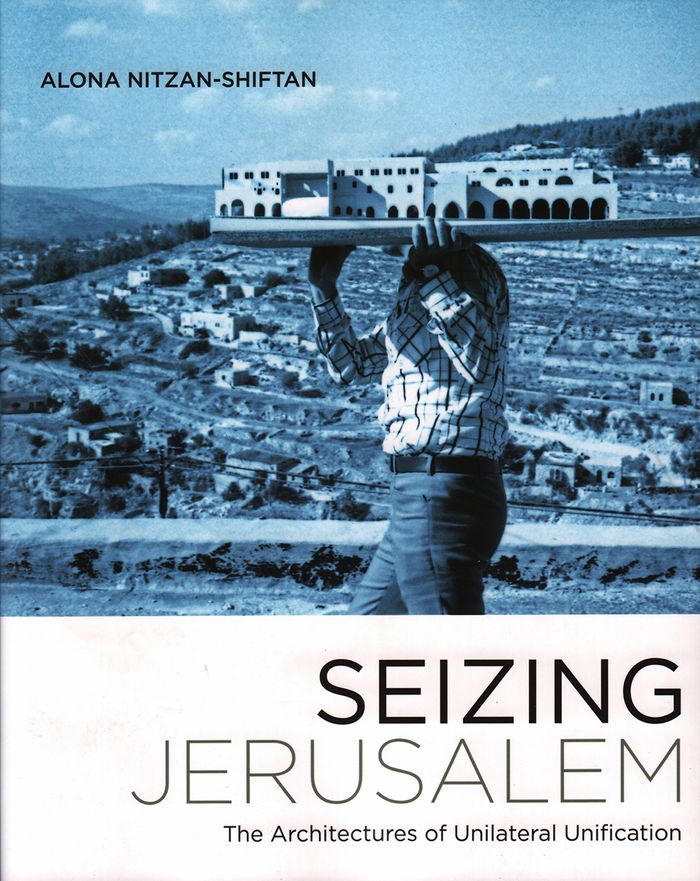
Seizing Jerusalem: the architectures of unilateral unification
Actions:
Price:
$58.95
(available to order)
Summary:
After seizing Jerusalem's eastern precincts from Jordan at the conclusion of the Six-Day War in 1967, Israel unilaterally unified the city and plunged into an ambitious building program, eager to transform the very meaning of one of the world's most emotionally charged urban spaces. The goal was as simple as it was controversial: to both Judaize and modernize Jerusalem. Seizing Jerusalem, the first architectural history of "united Jerusalem," chronicles how numerous disciplines, including architecture, landscape design, and urban planning, as well as everyone from municipal politicians to state bureaucrats, from Israeli-born architects to international luminaries such as Louis Kahn, Buckminster Fuller, and Bruno Zevi, competed to create Jerusalem's new image. This decade-long competition happened with the Palestinian residents still living in the city, even as the new image was inspired by the city's Arab legacy. The politics of space in the Holy City, still contested today, were shaped in this post-1967 decade not only by the legacy of the war and the politics of dispossession, but curiously also by emerging trends in postwar architectural culture.Drawing on previously unexamined archival documents and in-depth interviews with architects, planners, and politicians, Alona Nitzan-Shiftan analyzes the cultural politics of the Israeli state and, in particular, of Jerusalem's influential mayor, Teddy Kollek, whose efforts to legitimate Israeli rule over Jerusalem provided architects a unique, real-world laboratory to explore the possibilities and limits of modernist design--as built form as well as political and social action. Seizing Jerusalem reveals architecture as an active agent in the formation of urban and national identity, and demonstrates how contemporary debates about Zionism, and the crisis within the discipline of architecture over postwar modernism, affected Jerusalem's built environment in ways that continue to resonate today.
Seizing Jerusalem: the architectures of unilateral unification
Actions:
Price:
$58.95
(available to order)
Summary:
After seizing Jerusalem's eastern precincts from Jordan at the conclusion of the Six-Day War in 1967, Israel unilaterally unified the city and plunged into an ambitious building program, eager to transform the very meaning of one of the world's most emotionally charged urban spaces. The goal was as simple as it was controversial: to both Judaize and modernize Jerusalem. Seizing Jerusalem, the first architectural history of "united Jerusalem," chronicles how numerous disciplines, including architecture, landscape design, and urban planning, as well as everyone from municipal politicians to state bureaucrats, from Israeli-born architects to international luminaries such as Louis Kahn, Buckminster Fuller, and Bruno Zevi, competed to create Jerusalem's new image. This decade-long competition happened with the Palestinian residents still living in the city, even as the new image was inspired by the city's Arab legacy. The politics of space in the Holy City, still contested today, were shaped in this post-1967 decade not only by the legacy of the war and the politics of dispossession, but curiously also by emerging trends in postwar architectural culture.Drawing on previously unexamined archival documents and in-depth interviews with architects, planners, and politicians, Alona Nitzan-Shiftan analyzes the cultural politics of the Israeli state and, in particular, of Jerusalem's influential mayor, Teddy Kollek, whose efforts to legitimate Israeli rule over Jerusalem provided architects a unique, real-world laboratory to explore the possibilities and limits of modernist design--as built form as well as political and social action. Seizing Jerusalem reveals architecture as an active agent in the formation of urban and national identity, and demonstrates how contemporary debates about Zionism, and the crisis within the discipline of architecture over postwar modernism, affected Jerusalem's built environment in ways that continue to resonate today.
Form:
books
books
Publication:
June 2017
June 2017
Subject:
Arch Middle East
Arch Middle East
Form:
books
books
Price:
$29.95
(available to order)
Summary:
All urban dwellers have seen them: vacant apartment blocks, blighted business districts, destitute streets, industrial wastelands. Exurban growth has led to shrinking cities, a perennial problem. Grappling with this change, both philosophically and practically, is the purpose of this illustrated collection of essays, a rich resource for the generation of architects,(...)
$29.95
(available to order)
Summary:
All urban dwellers have seen them: vacant apartment blocks, blighted business districts, destitute streets, industrial wastelands. Exurban growth has led to shrinking cities, a perennial problem. Grappling with this change, both philosophically and practically, is the purpose of this illustrated collection of essays, a rich resource for the generation of architects,(...)
Title:
Work place city : perspectives of an urban redevelopment culture
Actions:
Price:
$29.95
(available to order)
Summary:
All urban dwellers have seen them: vacant apartment blocks, blighted business districts, destitute streets, industrial wastelands. Exurban growth has led to shrinking cities, a perennial problem. Grappling with this change, both philosophically and practically, is the purpose of this illustrated collection of essays, a rich resource for the generation of architects, engineers, and urban planners who must face the decay. The contributions by a range of politicians, scholars, and planners arose out of the series of "Tatort Stadt" ("Work Place City") events, conferences, and exhibitions sponsored by the German government and the Bauhaus Dessau Foundation (the research and design center carrying forward the Bauhaus legacy). Exploring both current and proposed projects, these approaches recognize the need for structural change, acknowledging that urban redevelopment requires much more than demolition.
Work place city : perspectives of an urban redevelopment culture
Actions:
Price:
$29.95
(available to order)
Summary:
All urban dwellers have seen them: vacant apartment blocks, blighted business districts, destitute streets, industrial wastelands. Exurban growth has led to shrinking cities, a perennial problem. Grappling with this change, both philosophically and practically, is the purpose of this illustrated collection of essays, a rich resource for the generation of architects, engineers, and urban planners who must face the decay. The contributions by a range of politicians, scholars, and planners arose out of the series of "Tatort Stadt" ("Work Place City") events, conferences, and exhibitions sponsored by the German government and the Bauhaus Dessau Foundation (the research and design center carrying forward the Bauhaus legacy). Exploring both current and proposed projects, these approaches recognize the need for structural change, acknowledging that urban redevelopment requires much more than demolition.
Form:
books
books
Publication:
August 2005, Berlin
August 2005, Berlin
Subject:
Urban Theory
Urban Theory
Form:
books
books
Price:
$34.95
(available in store)
Summary:
Sex and jazz, liquor and gambling: Montreal in the early twentieth century was a city that offered an exceptional nighttime scene in North America. By mid-century that scene came under scrutiny, and Montreal’s influential mayor Jean Drapeau would be elected for the first time on a reformist platform that promised to end corruption. Over more than three decades, Drapeau(...)
$34.95
(available in store)
Summary:
Sex and jazz, liquor and gambling: Montreal in the early twentieth century was a city that offered an exceptional nighttime scene in North America. By mid-century that scene came under scrutiny, and Montreal’s influential mayor Jean Drapeau would be elected for the first time on a reformist platform that promised to end corruption. Over more than three decades, Drapeau(...)
Title:
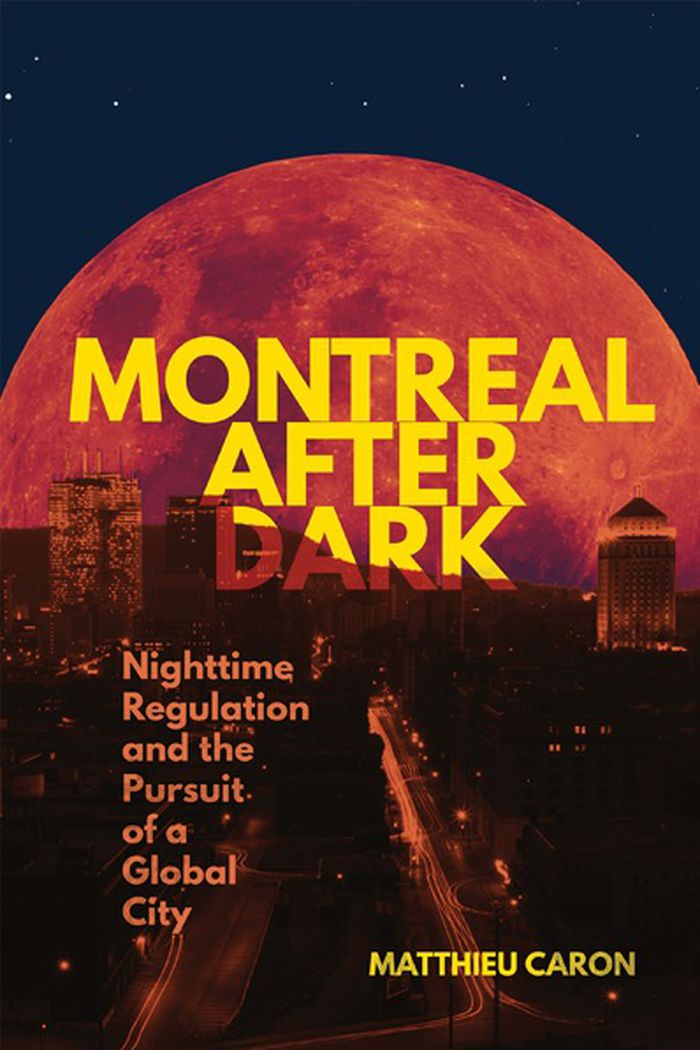
Montreal after dark: nighttime regulation and the pursuit of a global city
Actions:
Price:
$34.95
(available in store)
Summary:
Sex and jazz, liquor and gambling: Montreal in the early twentieth century was a city that offered an exceptional nighttime scene in North America. By mid-century that scene came under scrutiny, and Montreal’s influential mayor Jean Drapeau would be elected for the first time on a reformist platform that promised to end corruption. Over more than three decades, Drapeau would endeavour to transform Montreal into a world-class global city by regulating its nightlife. "Montreal after dark" chronicles the spaces where nighttime regulations were enforced and contested. City authorities understood the night as enabling disorder, and they reorganized policing and crafted bylaws to gain control over it. Police and politicians mutually reinforced each other’s drive to morally cleanse the urban landscape, especially for international events like Expo 67 and the 1976 Olympics.
Montreal after dark: nighttime regulation and the pursuit of a global city
Actions:
Price:
$34.95
(available in store)
Summary:
Sex and jazz, liquor and gambling: Montreal in the early twentieth century was a city that offered an exceptional nighttime scene in North America. By mid-century that scene came under scrutiny, and Montreal’s influential mayor Jean Drapeau would be elected for the first time on a reformist platform that promised to end corruption. Over more than three decades, Drapeau would endeavour to transform Montreal into a world-class global city by regulating its nightlife. "Montreal after dark" chronicles the spaces where nighttime regulations were enforced and contested. City authorities understood the night as enabling disorder, and they reorganized policing and crafted bylaws to gain control over it. Police and politicians mutually reinforced each other’s drive to morally cleanse the urban landscape, especially for international events like Expo 67 and the 1976 Olympics.
Form:
books
books
Publication:
May 2025
May 2025
Subject:
Architecture de Montréal
Architecture de Montréal
Form:
books
books
Title:
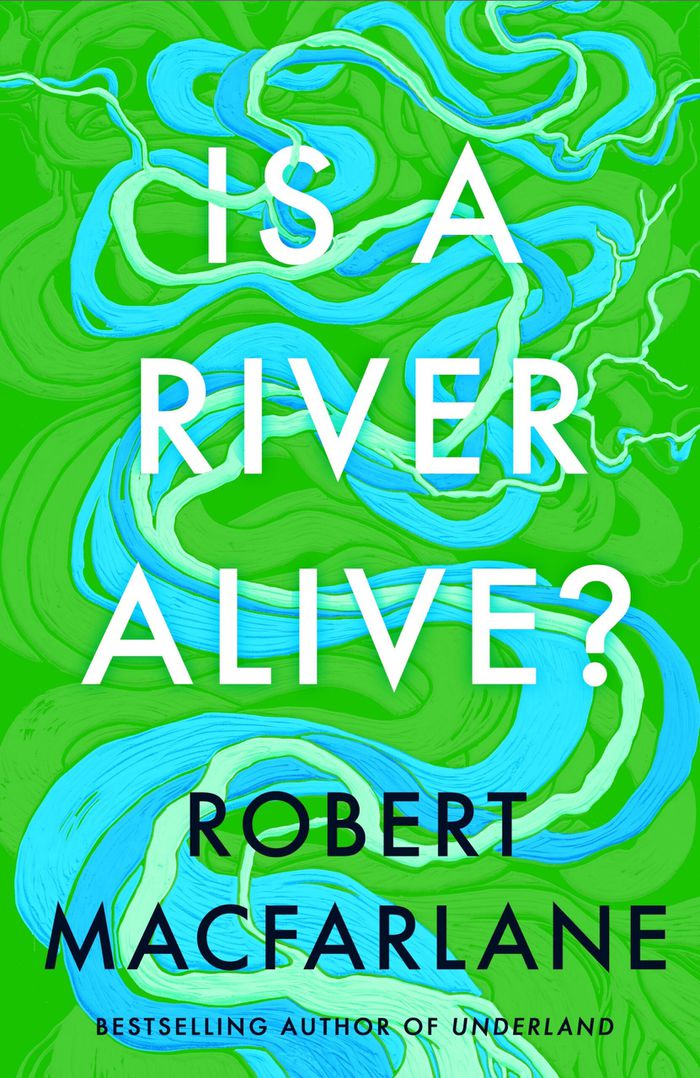
Is a river alive?
Is a river alive?
Actions:
Price:
$39.00
(available to order)
Summary:
At the heart of "Is a River Alive?" is a single, transformative idea: that rivers are not mere matter for human use, but living beings, who should be recognized as such in both imagination and law. Macfarlane takes the reader on a mind-expanding global journey into the history, futures, people and places of the ancient, urgent concept. Around the world, rivers are dying(...)
$39.00
(available to order)
Summary:
At the heart of "Is a River Alive?" is a single, transformative idea: that rivers are not mere matter for human use, but living beings, who should be recognized as such in both imagination and law. Macfarlane takes the reader on a mind-expanding global journey into the history, futures, people and places of the ancient, urgent concept. Around the world, rivers are dying(...)
Title:
Is a river alive?
Actions:
Price:
$39.00
(available to order)
Summary:
At the heart of "Is a River Alive?" is a single, transformative idea: that rivers are not mere matter for human use, but living beings, who should be recognized as such in both imagination and law. Macfarlane takes the reader on a mind-expanding global journey into the history, futures, people and places of the ancient, urgent concept. Around the world, rivers are dying from pollution, drought and damming. But a powerful movement is also underway to recognize the lives and the rights of rivers, and to re-animate our relationships with these vast, mysterious presences whose landscapes we share. The young "rights of nature" movement has lit up activists, artists, law-makers and politicians across six continents—and become the focus for revolutionary thinking about rivers in particular.
Is a river alive?
Actions:
Price:
$39.00
(available to order)
Summary:
At the heart of "Is a River Alive?" is a single, transformative idea: that rivers are not mere matter for human use, but living beings, who should be recognized as such in both imagination and law. Macfarlane takes the reader on a mind-expanding global journey into the history, futures, people and places of the ancient, urgent concept. Around the world, rivers are dying from pollution, drought and damming. But a powerful movement is also underway to recognize the lives and the rights of rivers, and to re-animate our relationships with these vast, mysterious presences whose landscapes we share. The young "rights of nature" movement has lit up activists, artists, law-makers and politicians across six continents—and become the focus for revolutionary thinking about rivers in particular.
Form:
books
books
Publication:
May 2025
May 2025
Subject:
Landscape Theory
Landscape Theory
Form:
books
books
Actions:
Price:
$33.95
(available in store)
Summary:
"You’re not a painter if you haven’t painted gray", declared Paul Cézanne. The same could be said of philosophers: you’re not a philosopher if you have never thought gray. This simple four-letter word signifies much more than a quasi-neutral color lying between black and white: we use the same word to describe moods, November skies, the hair of the elderly, the withered(...)
$33.95
(available in store)
Summary:
"You’re not a painter if you haven’t painted gray", declared Paul Cézanne. The same could be said of philosophers: you’re not a philosopher if you have never thought gray. This simple four-letter word signifies much more than a quasi-neutral color lying between black and white: we use the same word to describe moods, November skies, the hair of the elderly, the withered(...)
Title:
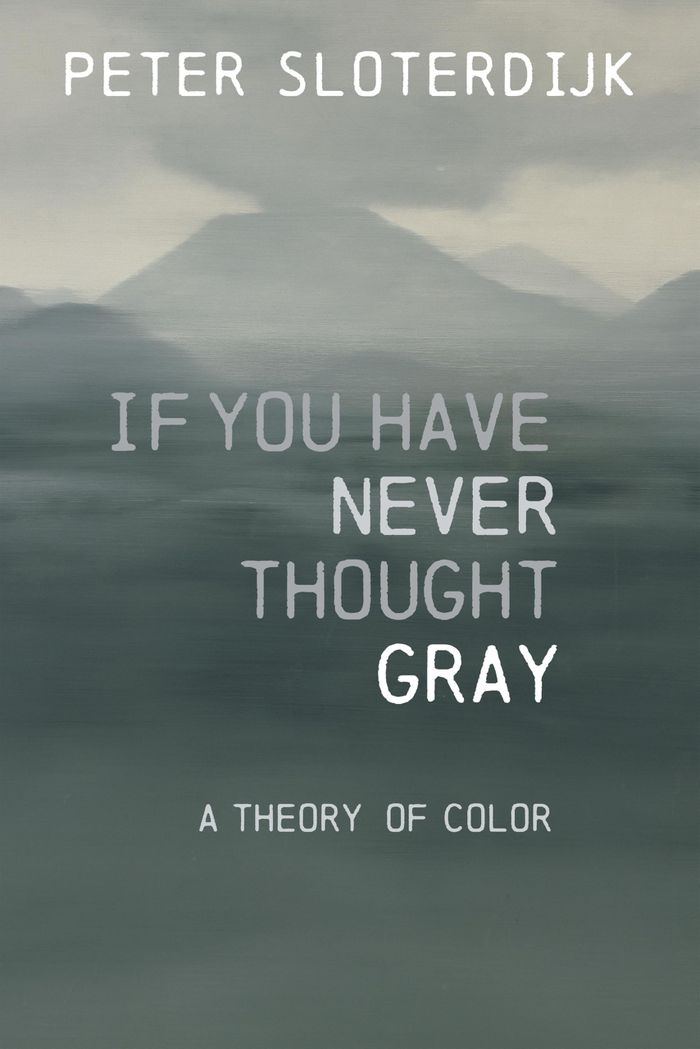
If you have never thought gray: A theory of color
Actions:
Price:
$33.95
(available in store)
Summary:
"You’re not a painter if you haven’t painted gray", declared Paul Cézanne. The same could be said of philosophers: you’re not a philosopher if you have never thought gray. This simple four-letter word signifies much more than a quasi-neutral color lying between black and white: we use the same word to describe moods, November skies, the hair of the elderly, the withered features of faces, dusty shelves, faceless bureaucracies, dreary politicians and hundreds of other things. This plain, unassuming word conceals a multitude of thoughts that we seldom pause to consider. In this exceptionally original book, Peter Sloterdijk follows the grey thread through the history of philosophy, art, literature and politics, enabling us to see familiar things in new ways and highlighting features of our lives that would otherwise remain unseen.
If you have never thought gray: A theory of color
Actions:
Price:
$33.95
(available in store)
Summary:
"You’re not a painter if you haven’t painted gray", declared Paul Cézanne. The same could be said of philosophers: you’re not a philosopher if you have never thought gray. This simple four-letter word signifies much more than a quasi-neutral color lying between black and white: we use the same word to describe moods, November skies, the hair of the elderly, the withered features of faces, dusty shelves, faceless bureaucracies, dreary politicians and hundreds of other things. This plain, unassuming word conceals a multitude of thoughts that we seldom pause to consider. In this exceptionally original book, Peter Sloterdijk follows the grey thread through the history of philosophy, art, literature and politics, enabling us to see familiar things in new ways and highlighting features of our lives that would otherwise remain unseen.
Form:
books
books
Publication:
September 2025
September 2025
Subject:
Art Theory
Art Theory
Form:
books
books
Actions:
Price:
$25.00
(available in store)
Summary:
At the heart of "Is a River Alive?" is a single, transformative idea: that rivers are not mere matter for human use, but living beings, who should be recognized as such in both imagination and law. Macfarlane takes the reader on a mind-expanding global journey into the history, futures, people and places of the ancient, urgent concept. Around the world, rivers are dying(...)
$25.00
(available in store)
Summary:
At the heart of "Is a River Alive?" is a single, transformative idea: that rivers are not mere matter for human use, but living beings, who should be recognized as such in both imagination and law. Macfarlane takes the reader on a mind-expanding global journey into the history, futures, people and places of the ancient, urgent concept. Around the world, rivers are dying(...)
Title:
Is a river alive: A journey with water
Actions:
Price:
$25.00
(available in store)
Summary:
At the heart of "Is a River Alive?" is a single, transformative idea: that rivers are not mere matter for human use, but living beings, who should be recognized as such in both imagination and law. Macfarlane takes the reader on a mind-expanding global journey into the history, futures, people and places of the ancient, urgent concept. Around the world, rivers are dying from pollution, drought and damming. But a powerful movement is also underway to recognize the lives and the rights of rivers, and to re-animate our relationships with these vast, mysterious presences whose landscapes we share. The young "rights of nature" movement has lit up activists, artists, law-makers and politicians across six continents—and become the focus for revolutionary thinking about rivers in particular.
Is a river alive: A journey with water
Actions:
Price:
$25.00
(available in store)
Summary:
At the heart of "Is a River Alive?" is a single, transformative idea: that rivers are not mere matter for human use, but living beings, who should be recognized as such in both imagination and law. Macfarlane takes the reader on a mind-expanding global journey into the history, futures, people and places of the ancient, urgent concept. Around the world, rivers are dying from pollution, drought and damming. But a powerful movement is also underway to recognize the lives and the rights of rivers, and to re-animate our relationships with these vast, mysterious presences whose landscapes we share. The young "rights of nature" movement has lit up activists, artists, law-makers and politicians across six continents—and become the focus for revolutionary thinking about rivers in particular.
Form:
books
books
Publication:
April 2026
April 2026
Subject:
Landscape Theory
Landscape Theory
Form:
books
books
Actions:
Price:
$41.00
(available in store)
Summary:
This book positions Ulaanbaatar as a unique case and one that allows us to view our urban world differently. Operating as a primordial soup of emerging conditions, Ulaanbaatar is conceived as an incubator for alternative urban concepts. The book rejects the agency of the masterplan as an effective tool in emerging urban conditions and instead positions the framework as a(...)
$41.00
(available in store)
Summary:
This book positions Ulaanbaatar as a unique case and one that allows us to view our urban world differently. Operating as a primordial soup of emerging conditions, Ulaanbaatar is conceived as an incubator for alternative urban concepts. The book rejects the agency of the masterplan as an effective tool in emerging urban conditions and instead positions the framework as a(...)
Title:
Becoming urban: City of nomads
Actions:
Price:
$41.00
(available in store)
Summary:
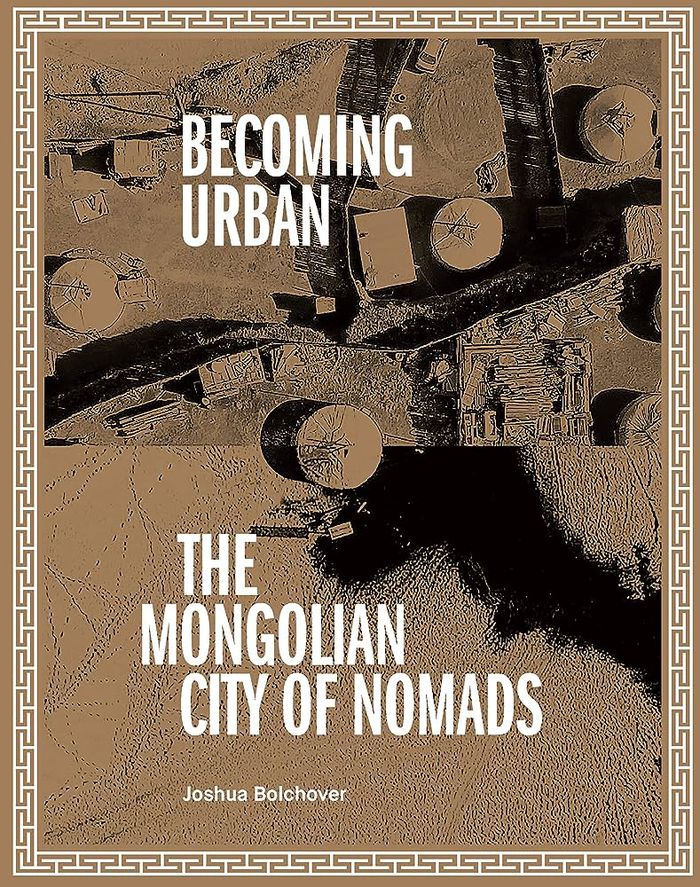
This book positions Ulaanbaatar as a unique case and one that allows us to view our urban world differently. Operating as a primordial soup of emerging conditions, Ulaanbaatar is conceived as an incubator for alternative urban concepts. The book rejects the agency of the masterplan as an effective tool in emerging urban conditions and instead positions the framework as a tool for incremental urbanism. Although specific to the Ger districts of Mongolia, the story of how people, communities, planners, and politicians are grappling with the effects of becoming urban remains one of the critical issues facing the 21st century. How this process will be materialized and organized spatially, and by whom, will have profound ramifications on the climate and the social and economic make-up of our future cities.
Becoming urban: City of nomads
Actions:
Price:
$41.00
(available in store)
Summary:
This book positions Ulaanbaatar as a unique case and one that allows us to view our urban world differently. Operating as a primordial soup of emerging conditions, Ulaanbaatar is conceived as an incubator for alternative urban concepts. The book rejects the agency of the masterplan as an effective tool in emerging urban conditions and instead positions the framework as a tool for incremental urbanism. Although specific to the Ger districts of Mongolia, the story of how people, communities, planners, and politicians are grappling with the effects of becoming urban remains one of the critical issues facing the 21st century. How this process will be materialized and organized spatially, and by whom, will have profound ramifications on the climate and the social and economic make-up of our future cities.
Form:
books
books
Publication:
September 2022
September 2022
Subject:
Rurality
Rurality


