


4223 Results
Form:
events
events
Actions:
Description:
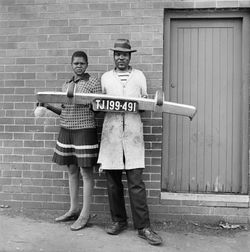
David Goldblatt and Ivan Vladislavić talk about their joint publication TJ/Double Negative, an innovative combination of photographs and fiction that tries to make sense of Johannesburg. They discuss their approach to representing this troubled but intriguing city in words and images. Goldblatt is a renowned documenter of South African people and places, and has been(...)
David Goldblatt and Ivan Vladislavić talk about their joint publication TJ/Double Negative, an innovative combination of photographs and fiction that tries to make sense of Johannesburg. They discuss their approach to representing this troubled but intriguing city in words and images. Goldblatt is a renowned documenter of South African people and places, and has been(...)
Location:
Paul-Desmarais Theatre
Paul-Desmarais Theatre
Date:
9 May 2013 , 7pm
9 May 2013 , 7pm
Title:
Learning from... Johannesburg
Actions:
Description:
David Goldblatt and Ivan Vladislavić talk about their joint publication TJ/Double Negative, an innovative combination of photographs and fiction that tries to make sense of Johannesburg. They discuss their approach to representing this troubled but intriguing city in words and images. Goldblatt is a renowned documenter of South African people and places, and has been(...)
Form:
events
events
Date:
9 May 2013
7pm
9 May 2013
7pm
Location:
Paul-Desmarais Theatre
Paul-Desmarais Theatre
Form:
events
events
Title:
Learning from... Rome
Learning from... Rome
Actions:
Description:
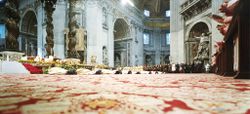
Filmmaker and photographer Armin Linke reveals the societal changes, cultural complexities, and beauty of contemporary Rome through two short films and architectural photographs from his archives. The first film focuses on a moment of natural choreography as some 100,000 starlings fly against the backdrop of the city of Rome. Linke presents a selection of photographs,(...)
Filmmaker and photographer Armin Linke reveals the societal changes, cultural complexities, and beauty of contemporary Rome through two short films and architectural photographs from his archives. The first film focuses on a moment of natural choreography as some 100,000 starlings fly against the backdrop of the city of Rome. Linke presents a selection of photographs,(...)
Location:
Paul Desmarais Theatre
Paul Desmarais Theatre
Date:
5 March 2009
5 March 2009
Title:
Learning from... Rome
Actions:
Description:
Filmmaker and photographer Armin Linke reveals the societal changes, cultural complexities, and beauty of contemporary Rome through two short films and architectural photographs from his archives. The first film focuses on a moment of natural choreography as some 100,000 starlings fly against the backdrop of the city of Rome. Linke presents a selection of photographs,(...)
Form:
events
events
Date:
5 March 2009
5 March 2009
Location:
Paul Desmarais Theatre
Paul Desmarais Theatre
Form:
articles
articles
Title:
Shifting Shores
Shifting Shores
Actions:
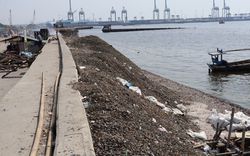
Kirsten Keller and Feifei Zhou on the dynamic materialities of property-making in Jakarta
Title:
Shifting Shores
Kirsten Keller and Feifei Zhou on the dynamic materialities of property-making in Jakarta
Actions:
Shifting Shores
Kirsten Keller and Feifei Zhou on the dynamic materialities of property-making in Jakarta
Actions:
Issue:
Forces of Friction
Forces of Friction
Level of archival description:
Project
Project
Reference number:
CD034.S1.1974.PR01
Description:
This project series contains four reproductions of drawings displayed in the exhibit to document the neighbourhood Quinta do Bacalhau-Monte Coxo, in Lisbon, Portugal. The exhibit text explained the following: The project architect Manuel Vicente was already working on a design for the intervention in the Quintas de Bacalhau and Monte Coxo when he was co-opted by SAAL. The proposed typology referred to another ambitious urban project of 615 housing units, Quinta das Fonsecas - Quinta da Calçada neighbourhood by the architect Raúl Hestnes Ferreira. The intention was to bring the city to the outlying shanty town areas. None of these projects was carried out in full, and they are now fragmented and besieged by the traffic system without having produced any of the essential community and socialising facilities. In Bacalhau-Monte Coxo the structure of the internal patios reveals the ways in which the public space and community was organised. The architecture assigned importance to the facades, although access to the community courtyards was also a central design concept. In a 1976 interview, the architect himself argued that the release of bourgeois guilt allowed for spatial beauty, adopting the slogan 'Facades First' in defence of architectural design. In a way, this proposal anticipated the post-modern, although in a form that did not deny architecture's social engagement. The design emphasizes a strong idea of architectural autonomy, unfortunately only a part of the project was actually built. (The SAAL Process, Housing in Portugal 1974–76) Manuel Vicente worked for SAAL/Lisbon and Central South with the following collaborators: Afonso José Baptista, Agostinho Xavier de Andrade, António Albano Leitão, Cristina Catela Martins Pereira, Eduardo Serrano de Sousa, Gentil Noras, José Manuel Diniz Cabral Caldeira, Manuel Augusto Lopes de Sousa, Nuno Matos Silva, Rita Cabral and the resident association Cooperativa de Habitação Económica Portugal Novo, that was founded on September 6th, 1974. The team built 384 dwellings. The operation began in September 1974, with a construction date in January 1977. This project series contains reproductions of design development drawings and a cadastral plan. The original drawings were produced in 1974 or after and were reproduced in 2015 for the exhibit.
People:
Date:
circa 1974
circa 1974
Title:
Bairro Quinta do Bacalhau–Monte Coxo, Lisbon
Actions:
CD034.S1.1974.PR01
Description:
This project series contains four reproductions of drawings displayed in the exhibit to document the neighbourhood Quinta do Bacalhau-Monte Coxo, in Lisbon, Portugal. The exhibit text explained the following: The project architect Manuel Vicente was already working on a design for the intervention in the Quintas de Bacalhau and Monte Coxo when he was co-opted by SAAL. The proposed typology referred to another ambitious urban project of 615 housing units, Quinta das Fonsecas - Quinta da Calçada neighbourhood by the architect Raúl Hestnes Ferreira. The intention was to bring the city to the outlying shanty town areas. None of these projects was carried out in full, and they are now fragmented and besieged by the traffic system without having produced any of the essential community and socialising facilities. In Bacalhau-Monte Coxo the structure of the internal patios reveals the ways in which the public space and community was organised. The architecture assigned importance to the facades, although access to the community courtyards was also a central design concept. In a 1976 interview, the architect himself argued that the release of bourgeois guilt allowed for spatial beauty, adopting the slogan 'Facades First' in defence of architectural design. In a way, this proposal anticipated the post-modern, although in a form that did not deny architecture's social engagement. The design emphasizes a strong idea of architectural autonomy, unfortunately only a part of the project was actually built. (The SAAL Process, Housing in Portugal 1974–76) Manuel Vicente worked for SAAL/Lisbon and Central South with the following collaborators: Afonso José Baptista, Agostinho Xavier de Andrade, António Albano Leitão, Cristina Catela Martins Pereira, Eduardo Serrano de Sousa, Gentil Noras, José Manuel Diniz Cabral Caldeira, Manuel Augusto Lopes de Sousa, Nuno Matos Silva, Rita Cabral and the resident association Cooperativa de Habitação Económica Portugal Novo, that was founded on September 6th, 1974. The team built 384 dwellings. The operation began in September 1974, with a construction date in January 1977. This project series contains reproductions of design development drawings and a cadastral plan. The original drawings were produced in 1974 or after and were reproduced in 2015 for the exhibit.
Level of archival description:
Project
Project
Date:
circa 1974
circa 1974
People:
Form:
events
events
Actions:
Description:
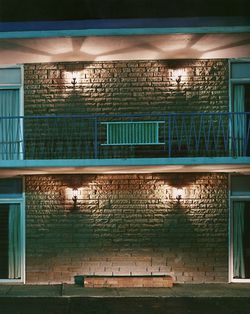
Architectural historian Barbara Penner traces the evolution of Niagara Falls – from its 19th-century honeymoon tourism to its state of post-industrial kitsch to its recent rebirth as a honeymoon destination. The photographer Alec Soth, whose work is the starting point for this lecture, compellingly portrays a ruined post-industrial landscape of love in his series Niagara(...)
Architectural historian Barbara Penner traces the evolution of Niagara Falls – from its 19th-century honeymoon tourism to its state of post-industrial kitsch to its recent rebirth as a honeymoon destination. The photographer Alec Soth, whose work is the starting point for this lecture, compellingly portrays a ruined post-industrial landscape of love in his series Niagara(...)
Location:
Paul Desmarais Theatre
Paul Desmarais Theatre
Date:
23 April 2009
23 April 2009
Title:
Learning from... Niagara Falls
Actions:
Description:
Architectural historian Barbara Penner traces the evolution of Niagara Falls – from its 19th-century honeymoon tourism to its state of post-industrial kitsch to its recent rebirth as a honeymoon destination. The photographer Alec Soth, whose work is the starting point for this lecture, compellingly portrays a ruined post-industrial landscape of love in his series Niagara(...)
Form:
events
events
Date:
23 April 2009
23 April 2009
Location:
Paul Desmarais Theatre
Paul Desmarais Theatre
Form:
events
events
Title:
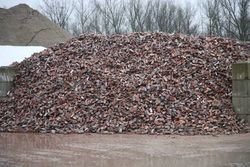
Learning from... Brussels
Learning from... Brussels
Actions:
Description:
Rotor members Michael Ghyoot and Maarten Gielen investigate the processes and practices of material management in Brussels and its suburbs. The concept of waste played a key role in their research and was informed by hundreds of visits to businesses, work sites, and recycling plants. The examination of discarded, unfinished products or those considered of inferior quality(...)
Rotor members Michael Ghyoot and Maarten Gielen investigate the processes and practices of material management in Brussels and its suburbs. The concept of waste played a key role in their research and was informed by hundreds of visits to businesses, work sites, and recycling plants. The examination of discarded, unfinished products or those considered of inferior quality(...)
Location:
Paul Desmarais Theatre
Paul Desmarais Theatre
Date:
19 April 2012 , 7pm
19 April 2012 , 7pm
Title:
Learning from... Brussels
Actions:
Description:
Rotor members Michael Ghyoot and Maarten Gielen investigate the processes and practices of material management in Brussels and its suburbs. The concept of waste played a key role in their research and was informed by hundreds of visits to businesses, work sites, and recycling plants. The examination of discarded, unfinished products or those considered of inferior quality(...)
Form:
events
events
Date:
19 April 2012
7pm
19 April 2012
7pm
Location:
Paul Desmarais Theatre
Paul Desmarais Theatre
Form:
events
events
Title:
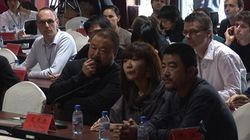
Learning from... Ordos
Learning from... Ordos
Actions:
Description:
The coal- and gas-rich city of Ordos in northern China boasts a new central district devoid of people. The contemporary city centre was built from scratch on the arid Mongolian steppe at a cost of over $161 billion, and was projected to house over 1 million people. Currently, the government claims that 28,000 reside in the new area. Despite the lack of residents, property(...)
The coal- and gas-rich city of Ordos in northern China boasts a new central district devoid of people. The contemporary city centre was built from scratch on the arid Mongolian steppe at a cost of over $161 billion, and was projected to house over 1 million people. Currently, the government claims that 28,000 reside in the new area. Despite the lack of residents, property(...)
Location:
Paul-Desmarais Theatre
Paul-Desmarais Theatre
Date:
8 November 2012 , 7pm
8 November 2012 , 7pm
Title:
Learning from... Ordos
Actions:
Description:
The coal- and gas-rich city of Ordos in northern China boasts a new central district devoid of people. The contemporary city centre was built from scratch on the arid Mongolian steppe at a cost of over $161 billion, and was projected to house over 1 million people. Currently, the government claims that 28,000 reside in the new area. Despite the lack of residents, property(...)
Form:
events
events
Date:
8 November 2012
7pm
8 November 2012
7pm
Location:
Paul-Desmarais Theatre
Paul-Desmarais Theatre
Form:
events
events

Title:
Learning from... Montréal
Learning from... Montréal
Actions:
Description:
Lance Blomgren uses his 2009 book Walkups—a novella set entirely within Montréal’s row house apartment buildings—as a springboard for an analysis of the discursive plane of fictional architecture. Looking at works by John Hejduk, Ilya Kabakov, Alice Aycock and others, Blomgren argues that contemporary modes of speculative architecture offer a vital, if ethically fraught,(...)
Lance Blomgren uses his 2009 book Walkups—a novella set entirely within Montréal’s row house apartment buildings—as a springboard for an analysis of the discursive plane of fictional architecture. Looking at works by John Hejduk, Ilya Kabakov, Alice Aycock and others, Blomgren argues that contemporary modes of speculative architecture offer a vital, if ethically fraught,(...)
Location:
Paul-Desmarais Theatre
Paul-Desmarais Theatre
Date:
2 May 2013 , 7pm
2 May 2013 , 7pm
Title:
Learning from... Montréal
Actions:
Description:
Lance Blomgren uses his 2009 book Walkups—a novella set entirely within Montréal’s row house apartment buildings—as a springboard for an analysis of the discursive plane of fictional architecture. Looking at works by John Hejduk, Ilya Kabakov, Alice Aycock and others, Blomgren argues that contemporary modes of speculative architecture offer a vital, if ethically fraught,(...)
Form:
events
events
Date:
2 May 2013
7pm
2 May 2013
7pm
Location:
Paul-Desmarais Theatre
Paul-Desmarais Theatre
Form:
exhibitions
exhibitions
Title:
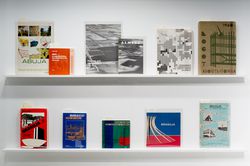
Old Books New Cities
Old Books New Cities
Actions:
Description:
The pressing need to reconstruct cities after the Second World War and the sudden post-war rise in population led the public sector to assume an ever-increasing role in the design and construction of the urban environment. In different political contexts, large urban developments or the construction of entirely new towns were directed by municipal or state powers and(...)
The pressing need to reconstruct cities after the Second World War and the sudden post-war rise in population led the public sector to assume an ever-increasing role in the design and construction of the urban environment. In different political contexts, large urban developments or the construction of entirely new towns were directed by municipal or state powers and(...)
Location:
Hall cases
Hall cases
Date:
12 December 2013 to 15 June 2014
12 December 2013 to 15 June 2014
Title:
Old Books New Cities
Actions:
Description:
The pressing need to reconstruct cities after the Second World War and the sudden post-war rise in population led the public sector to assume an ever-increasing role in the design and construction of the urban environment. In different political contexts, large urban developments or the construction of entirely new towns were directed by municipal or state powers and(...)
Form:
exhibitions
exhibitions
Date:
12 December 2013 to
15 June 2014
12 December 2013 to
15 June 2014
Location:
Hall cases
Hall cases
Form:
archives
Level of archival description:
Fonds
archives
Level of archival description:
Fonds
Actions:
Reference number:
AP190
Synopsis:
The Preston Scott Cohen Eyebeam project records, 2001-2016, consist of 281 digital files that document the architect’s competition entry for the Eyebeam Atelier Museum in New York City, developed in 2001. The archive includes 154 digital models in Rhinoceros, 30 digital models in STL, approximately 90 digital images, one video, and a number of Illustrator, Photoshop, PDF, and Microsoft Word files.
People:
Date:
2001-2016
2001-2016
Title:
Preston Scott Cohen Eyebeam project records
Actions:
AP190
Synopsis:
The Preston Scott Cohen Eyebeam project records, 2001-2016, consist of 281 digital files that document the architect’s competition entry for the Eyebeam Atelier Museum in New York City, developed in 2001. The archive includes 154 digital models in Rhinoceros, 30 digital models in STL, approximately 90 digital images, one video, and a number of Illustrator, Photoshop, PDF, and Microsoft Word files.
Form:
archives
Level of archival description:
Fonds
archives
Level of archival description:
Fonds
Date:
2001-2016
2001-2016
People:


