


308 Results
Form:
books
books
Actions:
Price:
$26.00
(available to order)
Summary:
A step-by-step guide to more synthetic, holistic, and integrated urban design strategies, Design Charrettes for Sustainable Communities is a practical manual to accomplish complex community design decisions and create more green, clean, and equitable communities. The design charrette has become an increasingly popular way to engage the public and stakeholders in public(...)
Title:
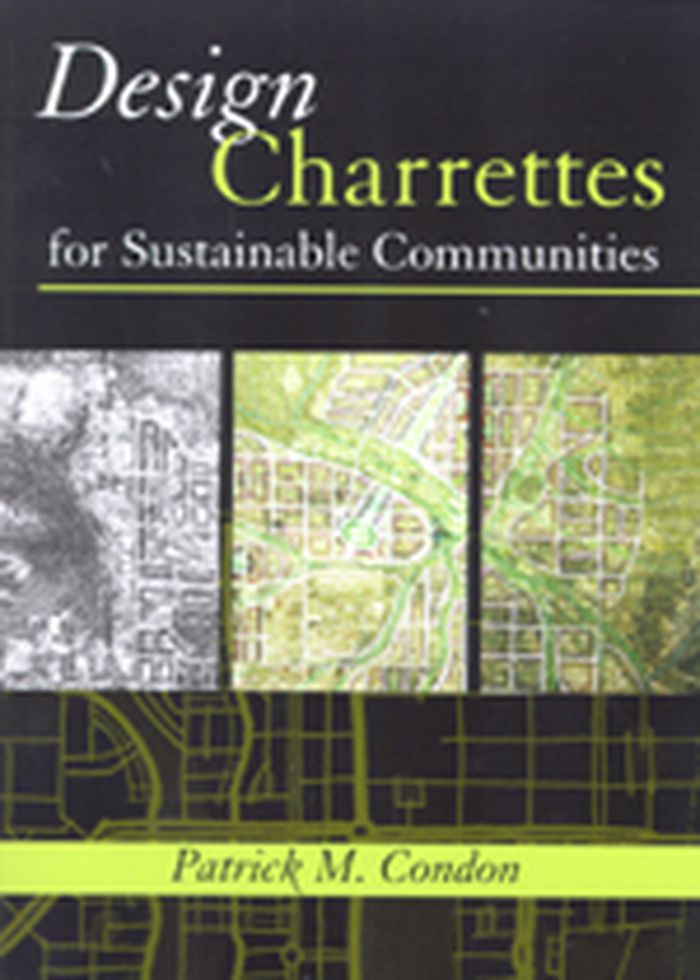
Design charettes for Sustainable communities
Actions:
Price:
$26.00
(available to order)
Summary:
A step-by-step guide to more synthetic, holistic, and integrated urban design strategies, Design Charrettes for Sustainable Communities is a practical manual to accomplish complex community design decisions and create more green, clean, and equitable communities. The design charrette has become an increasingly popular way to engage the public and stakeholders in public planning, and Design Charrettes for Sustainable Communities shows how citizens and officials can use this tool to change the way they make decisions, especially when addressing issues of the sustainable community. Designed to build consensus and cooperation, a successful charrette produces a design that expresses the values and vision of the community. Patrick Condon outlines the key features of the charrette, an inclusive decision-making process that brings together citizens, designers, public officials, and developers in several days of collaborative workshops. Drawing on years of experience designing sustainable urban environments and bringing together communities for charrettes, Condon’s manual provides step-by-step instructions for making this process work to everyone’s benefit. He translates emerging sustainable development concepts and problem-solving theory into concrete principles in order to explain what a charrette is, how to organize one, and how to make it work to produce sustainable urban design results.
Form:
books
books
Publication:
November 2007
November 2007
Subject:
Green Architecture
Green Architecture
Form:
books
books
Actions:
Price:
$47.95
(available to order)
Summary:
Plastiglomerates, surveillance robot dogs, fordite, artificial grass, antenna trees, COVID-19, decapitated mountains, drone-fighting eagles, standardized bananas: all of these specimens—some more familiar than others—are examples of the hybridity that shapes the current landscapes of science, technology and everyday life. Inspired by medieval bestiaries and the(...)
Title:
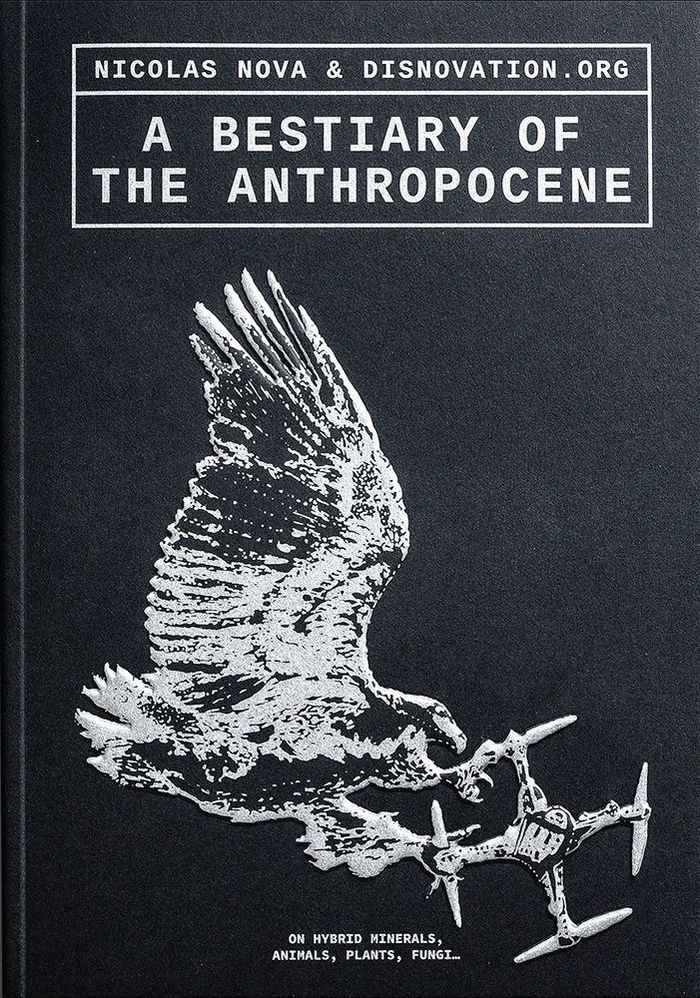
A bestiary of the Anthropocene. Hybrid plants, animals, minerals, fungi, and other specimens
Actions:
Price:
$47.95
(available to order)
Summary:
Plastiglomerates, surveillance robot dogs, fordite, artificial grass, antenna trees, COVID-19, decapitated mountains, drone-fighting eagles, standardized bananas: all of these specimens—some more familiar than others—are examples of the hybridity that shapes the current landscapes of science, technology and everyday life. Inspired by medieval bestiaries and the increasingly visible effects of climate change on the planet, French researcher Nicolas Nova & art collective DISNOVATION.ORG provide an ethnographic guide to the ''post-natural'' era in which we live, highlighting the amalgamations of nature and artifice that already co-exist in the 21st century. A sort of field handbook, ''A bestiary of the Anthropocene'' aims to help us orient ourselves within the technosphere and the biosphere. What happens when technologies and their unintended consequences become so ubiquitous that it is difficult to define what is “natural” or not? What does it mean to live in a hybrid environment made of organic and synthetic matter? In order to answer such questions, Nova & DISNOVATION.ORG bring their own research together with contributions from collectives such as the Center for Genomic Gastronomy and Aliens in Green as well as text by scholars and researchers from around the world. Polish graphic designer Maria Roszkowska provides illustrations.
Form:
books
books
Publication:
May 2021
May 2021
Subject:
Environment and environmental theory
Environment and environmental theory
Form:
books
books
Actions:
Price:
$26.00
(available to order)
Summary:
"Bodyline" is a visual essay on the human body, approaches its subject in a spirit both playful and seriously experimental. Organised by themes in turn figurative and abstract, organic, and mechanical, immaterial, "Bodyline" contains not one predictable image of the body. Instead it uses diffracted views to conjure seven alternative visions of the flesh in the age of(...)
Subject:
Architectural Theory
Architectural Theory
Publication:
January 1900, London
January 1900, London
Title:
Bodyline : the end of our meta-mechanical body
Actions:
Price:
$26.00
(available to order)
Summary:
"Bodyline" is a visual essay on the human body, approaches its subject in a spirit both playful and seriously experimental. Organised by themes in turn figurative and abstract, organic, and mechanical, immaterial, "Bodyline" contains not one predictable image of the body. Instead it uses diffracted views to conjure seven alternative visions of the flesh in the age of meta-mechanical reproduction, reconstructing the human physique by means of synthetic images, clothing patterns and technical blueprints. As such, "Bodyline" is a much about perception and delineation as it is about the body. The book is devided into three chapters loosely based on Robert Hughe's "Nothing if not critical". Here, through, the original categories are reversed : "Ancestors" explores the latest paradigms of virtual bodies, the computer-generated meshes of the gaming industry, which are also figurative; "Moderns", which constitutes the book's central exploration, features twentieth-century micro-narratives of pattern and garnment in which the body is already all but unrecognisable; and "Contemporaries" celebrates the reflections of self-portraiture through the projective network of Mongean geometry. The seven images of the body contained in this book - "Ectopic birth" (Nazila Maghzian), "How tall am I?" (Sharon Givony), "Vital points" (Eiichi Matsuda), "Inside out" (Kun-Min Kim), "Growth and decay" (Lawrence Ler), "Tiny deaths" (Carolin Hinne) and "10 years after" (Ema Bonifacio) - are accompagned by concise, literary texts.
Form:
books
books
Publication:
January 1900, London
January 1900, London
Subject:
Architectural Theory
Architectural Theory
Form:
books
books
Actions:
Price:
$84.00
(available to order)
Summary:
After a century largely dominated by discussions of space and form, there is now renewed interest in the material and tectonic aspects of architecture. This illustrated book takes a detailed and timely look at the importance of materials in architecture, focusing particularly on modern and contemporary buildings. Richard Weston begins with a brief cultural history of(...)
Title:
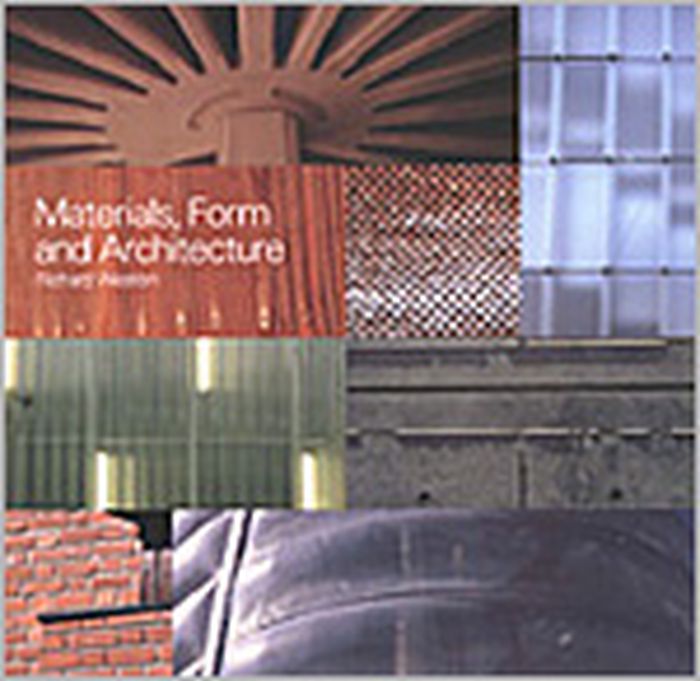
Materials, form and architecture
Actions:
Price:
$84.00
(available to order)
Summary:
After a century largely dominated by discussions of space and form, there is now renewed interest in the material and tectonic aspects of architecture. This illustrated book takes a detailed and timely look at the importance of materials in architecture, focusing particularly on modern and contemporary buildings. Richard Weston begins with a brief cultural history of major building materials--such as timber, earth, stone, steel, and glass--exploring how they have been produced, considered, worked, and used in a variety of buildings and cultures. He then explores the ways that architects, theorists, and critics have articulated the relationship between materials and architectural forms and spaces throughout modern history. Other featured topics include the importance of place, time, junctions, finish, and meaning; the proposition that in an increasingly global and virtual world, many architects emphasize the material qualities of buildings to ensure a heightened sense of reality; and a comprehensive survey of current and prospective developments in materials, from refinements of such familiar materials as fiber-reinforced concrete and “intelligent” glass to new synthetic compounds and working methods. Together, these varied perspectives on the material art of building offer insights into the impact that the type and treatment of materials has on how buildings can be constructed and designed, how they function, and how they fare over time.
Form:
books
books
Publication:
September 2003, New Haven
September 2003, New Haven
Subject:
Materials and Lighting
Materials and Lighting
Form:
books
books

Actions:
Price:
$37.95
(available to order)
Summary:
Profoundly intimate yet immediately giving onto distant spaces, both an ‘organ of fear’ and an echo chamber of anticipated pleasures, an uncontrollable flow subject to unconscious selection and augmentation, the subtlety, complexity, and variety of modes of hearing has meant that sound has rarely received the same philosophical attention as the visual. In "The order of(...)
Title:
The order of sounds: a sonorous archipelago
Actions:
Price:
$37.95
(available to order)
Summary:
Profoundly intimate yet immediately giving onto distant spaces, both an ‘organ of fear’ and an echo chamber of anticipated pleasures, an uncontrollable flow subject to unconscious selection and augmentation, the subtlety, complexity, and variety of modes of hearing has meant that sound has rarely received the same philosophical attention as the visual. In "The order of sounds", François J. Bonnet makes a compelling case for the irreducible heterogeneity of ‘sound’, navigating between the physical models constructed by psychophysics and refined through recording technologies, and the synthetic production of what is heard. From primitive vigilance and sonic mythologies to digital sampling and sound installations, he examines the ways in which we make sound speak to us, in an analysis of listening as a plurivocal phenomenon drawing on Foucault, Deleuze and Guattari, Barthes, Nancy, Adorno, and de Certeau, and experimental pioneers such as Tesla, Bell, and Raudive. Stringent critiques of the ‘soundscape’ and ‘reduced listening’ demonstrate that univocal ontologies of sound are always partial and politicized; for listening is always a selective fetishism, a hallucination of sound filtered by desire and convention, territorialized by discourse and its authorities. Bonnet proposes neither a disciplined listening that targets sound ‘itself’, nor an ‘ocean of sound’ in which we might lose ourselves, but instead maps out a sonorous archipelago—a heterogeneous set of shifting sonic territories shaped and aggregated by the vicissitudes of desire and discourse.
Form:
books
books
Publication:
May 2016
May 2016
Subject:
Acoustics
Acoustics
Form:
books
books
Actions:
Price:
$24.95
(available to order)
Summary:
Industrialization created cities of Dickensian squalor that were crowded, smoky, dirty, and disease-ridden. By the beginning of the twentieth century, urban visionaries were looking for ways to improve living and working conditions in industrial cities. In "Invented Edens", Robert Kargon and Arthur Molella trace the arc of one form of urban design, which they term the(...)
Subject:
Green Architecture
Green Architecture
Publication:
October 2005, Cambridge (MA), London
October 2005, Cambridge (MA), London
Title:
Invented Edens : techno-cities of the twentieth century
Actions:
Price:
$24.95
(available to order)
Summary:
Industrialization created cities of Dickensian squalor that were crowded, smoky, dirty, and disease-ridden. By the beginning of the twentieth century, urban visionaries were looking for ways to improve living and working conditions in industrial cities. In "Invented Edens", Robert Kargon and Arthur Molella trace the arc of one form of urban design, which they term the techno-city : a planned city developed in conjunction with large industrial or technological enterprises, blending the technological and the pastoral, the mill town and the garden city. Techno-cities of the twentieth century range from factory towns in Mussolini's Italy to the Disney creation of Celebration, Florida. Kargon and Molella show that the techno-city represents an experiment in integrating modern technology into the world of ideal life. Techno-cities mirror society's understanding of current technologies and, at the same time, seek to regain the lost virtues of the edenic pre-industrial village. The idea of the techno-city transcended ideologies, crossed national borders, and spanned the entire twentieth century. Kargon and Molella map the concept through a series of exemplars. These include Norris, Tennessee, home to the Tennessee Valley Authority; Torviscosa, Italy, built by Italy's Fascist government to accommodate synthetic textile manufacturing (and featured in an early short by Michelangelo Antonioni); Ciudad Guayana, Venezuela, planned by a team from MIT and Harvard; and, finally, Disney's Celebration - perhaps the ultimate techno-city, a fantasy city reflecting an era in which virtual experiences are rapidly replacing actual ones.
Form:
books
books
Publication:
October 2005, Cambridge (MA), London
October 2005, Cambridge (MA), London
Subject:
Green Architecture
Green Architecture
Form:
books
books
Actions:
Price:
$46.95
(available to order)
Summary:
"XXL-XS" represents the emerging discipline of ecological design by assembling a wide range of innovators with diverse interests. Geo-engineering, synthetic biology, construction site co-robotics, low-energy fabrication, up-cycling waste, minimally invasive design, living materials, and molecular self-assembly are just a few of the important advances explored in the book.(...)
Title:
XXL-XS: new directions on ecological design
Actions:
Price:
$46.95
(available to order)
Summary:
"XXL-XS" represents the emerging discipline of ecological design by assembling a wide range of innovators with diverse interests. Geo-engineering, synthetic biology, construction site co-robotics, low-energy fabrication, up-cycling waste, minimally invasive design, living materials, and molecular self-assembly are just a few of the important advances explored in the book. At one extreme are massive public works, at the other, micro to nano-sized interventions that can have equally profound impacts on our world. From terraforming to bio-manufacturing, a whole new generation of designers is proposing unique ways of confronting the difficult challenges ahead. In this way design becomes a totality of relationships that affects all disciplines, which can no-longer be thought of as self-contained fields, each handled separately by narrowly focused specialists. Globalization demands a restructuring of the profession, as we know it. This requires a new breed of generalists who can work across fields and engage research on multiple sites around the globe. Today we need planetary designers versed in the craft of integral design. Our thesis is therefore both global and performative in scope. We need an architecture that is more than just a constellation of bio-picturesque images, digitally generated surface effects, and conventional materials. We seek a holistic architecture that uses the best techniques to connect directly with existing natural systems while creating a renewed ecology that can sustain itself well into the future. Along these lines, many of the projects featured in this book simply abandon the old tropes and construction processes of the past by creating numerous green alternatives that proliferate along unexpected pathways.
Form:
books
books
Publication:
June 2017
June 2017
Subject:
Green Architecture
Green Architecture
Form:
audio
audio
Actions:
Description:
1 online resource.
Author:
Subject:
Publication:
[Place of publication not identified] : Lateral Addition, 2018.
[Place of publication not identified] : Lateral Addition, 2018.
Form:
audio
audio
Publication:
[Place of publication not identified] : Lateral Addition, 2018.
[Place of publication not identified] : Lateral Addition, 2018.
Author:
Subject:


