


3028 Results
Form:
books
books
Price:
$66.00
(available to order)
Summary:
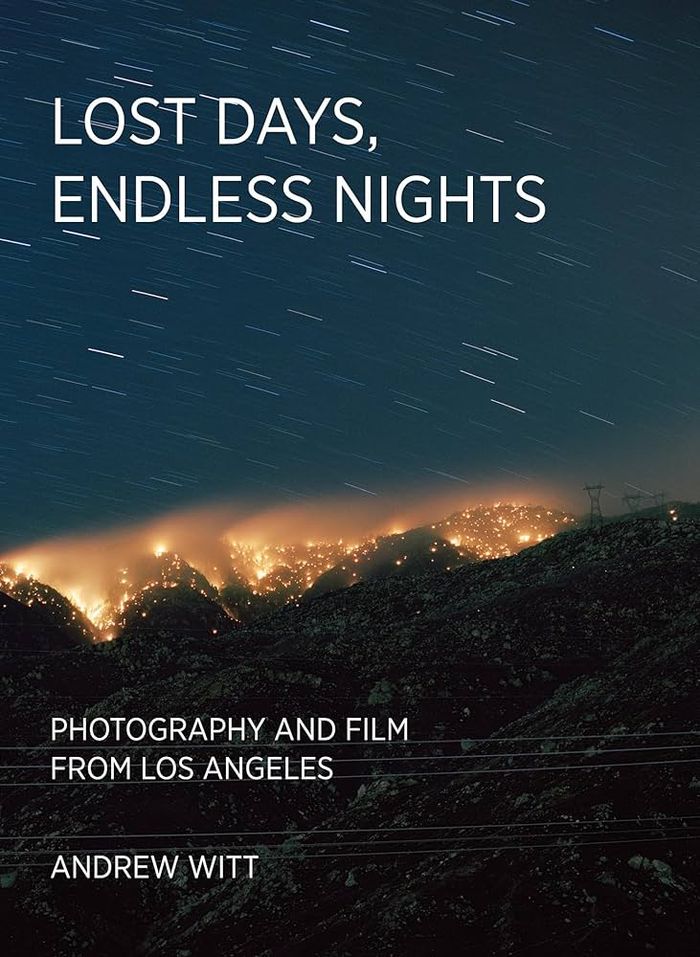
''Lost Days, Endless Nights'' tells a history from below—an account of the lives of the forgotten and dispossessed of Los Angeles: the unemployed, the precariously employed, the evicted, the alienated, the unhoused, the anxious, the exhausted. Through an analysis of abandoned archival works, experimental films, and other projects, Andrew Witt offers an expansive account(...)
Title:
Lost days, endless nights: Photography and film from Los Angeles
Actions:
Price:
$66.00
(available to order)
Summary:
''Lost Days, Endless Nights'' tells a history from below—an account of the lives of the forgotten and dispossessed of Los Angeles: the unemployed, the precariously employed, the evicted, the alienated, the unhoused, the anxious, the exhausted. Through an analysis of abandoned archival works, experimental films, and other projects, Andrew Witt offers an expansive account of the artists who have lived or worked in Los Angeles, delving into the region's history and geography, highlighting its racial, gender, and class conflicts. Presented as a series of nine case studies, Witt explores how artists as diverse as Agnès Varda, Dana Lixenberg, Allan Sekula, Catherine Opie, John Divola, Gregory Halpern, Paul Sepuya, and Guadalupe Rosales have reimagined and reshaped our understanding of contemporary Los Angeles. The book features portraits of those who struggle and attempt to get by in the city: dock workers, students, bus riders, petty criminals, office workers, immigrants, queer and trans activists. Set against the landscape of economic turmoil and environmental crises that shadowed the 1970s, Witt highlights the urgent need for a historical perspective of cultural retrieval and counternarrative. Extending into the present, ''Lost Days, Endless Nights'' advocates for an approach that actively embraces the works and projects that have been overlooked and evicted from the historical imaginary
Form:
books
books
Publication:
December 2024
December 2024
Subject:
Architecture and Film, Set Design
Architecture and Film, Set Design
Form:
books
books
Actions:
Price:
$83.00
(available to order)
Summary:
The ecological approach to building is the great untold story in the architectural history of the past century. This book is essential reading for architects and students. As an urgent wake-up call on the state of our built environment, it will be of interest to everyone who cares about the future of our planet. In the past, many of the key tenets of the ecological(...)
Title:
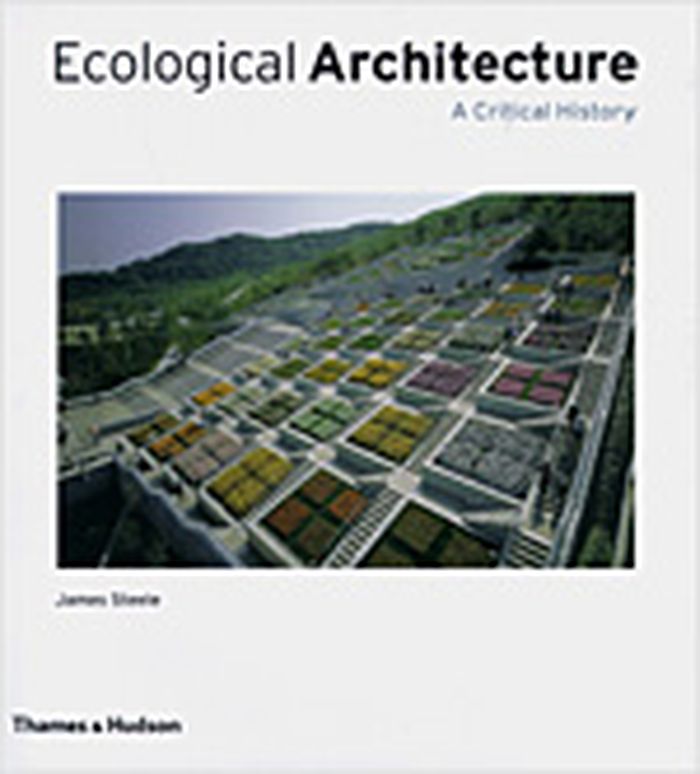
Ecological architecture : a critical history
Actions:
Price:
$83.00
(available to order)
Summary:
The ecological approach to building is the great untold story in the architectural history of the past century. This book is essential reading for architects and students. As an urgent wake-up call on the state of our built environment, it will be of interest to everyone who cares about the future of our planet. In the past, many of the key tenets of the ecological philosophy - sustainability, energy efficiency, harmonious relationship with the environment - appeared to stand contrast to the sweep of science-led ‘progress’ that characterized the modern movement. Today, however, past visionaries are vindicated and yesterday’s eccentricities are today’s legal requirements: every architect has an obligation to the environment as well as to his or her client. After an introduction to the terminology of ecological architecture - including terms such as ‘green’ and ‘sustainable’, ’Part one’ identifies recurring themes in ecological architecture. ‘Part two’ features twenty-five case studies each focusing on a specific architect, movement or topic. Some of the names are familiar in this context - Rasem Badran, Hassan Fathy - but there are also plenty of surprises - Le Corbusier, Buckminster Fuller, Rudolf Schindler. ‘Part three’ looks to the future as ecological architecture struggles to deal with global urbanization.
Form:
books
books
Publication:
October 2005, London
October 2005, London
Subject:
Green Architecture
Green Architecture
Form:
books
books
Price:
$56.50
(available to order)
Summary:
In an effort to create a secure urban environment in which residents can work, live, and prosper with minimal disruption, New York and London established a network of laws, policing, and municipal government in the nineteenth century aimed at building the confidence of the citizenry and creating stability for economic growth. At the same time, these two world cities(...)
Title:
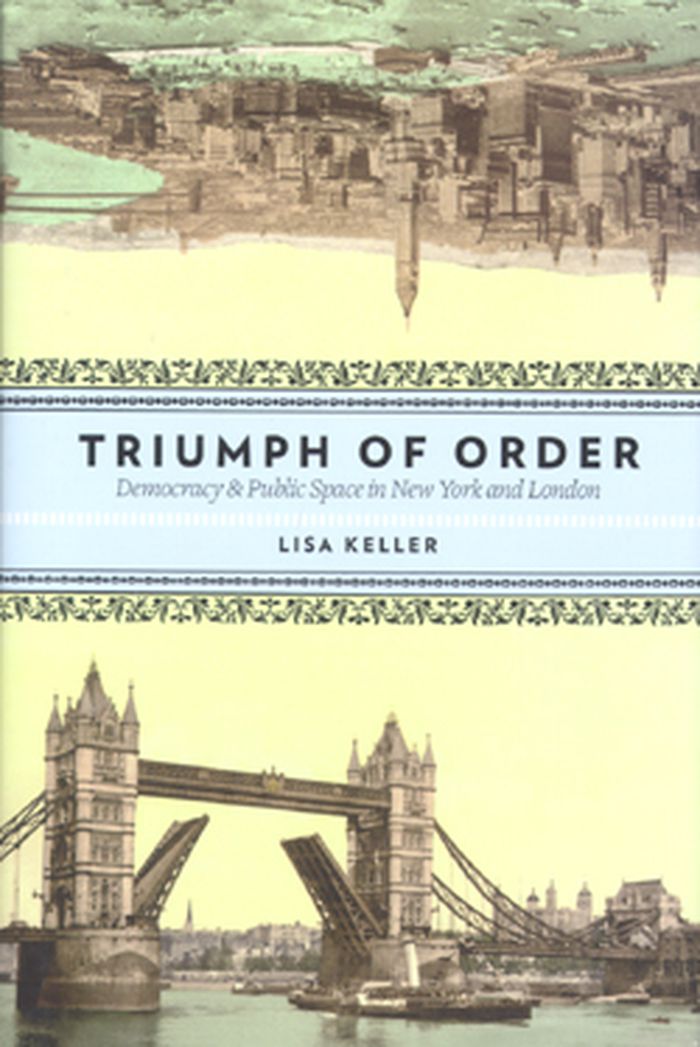
Triumph of order, democracy and public space in New York and London
Actions:
Price:
$56.50
(available to order)
Summary:
In an effort to create a secure urban environment in which residents can work, live, and prosper with minimal disruption, New York and London established a network of laws, policing, and municipal government in the nineteenth century aimed at building the confidence of the citizenry and creating stability for economic growth. At the same time, these two world cities attempted to maintain an expansive level of free speech and assembly, concepts deeply ingrained in both national cultures. As democracy expanded in tandem with the size of the cities themselves, the two goals clashed, resulting in tensions over their compatibility. The results of this clash continue to resonate in our society today. Treating nineteenth-century London and New York as case studies, Lisa Keller examines the critical development of sanctioned free speech, controlled public assembly, new urban regulations, and the quelling of riots, all in the name of a proper regard for order. Drawing on rich archival sources that include the unpublished correspondence of government officials and ordinary citizens, Keller paints an intimate portrait of daily life in these two cities and the intricacies of their emerging bureaucracies. She finds that New York eventually settled on a policy of preempting disruption before it occurred, while London chose a path of greater tolerance toward street activities.
Form:
books
books
Publication:
November 2008, New -York
November 2008, New -York
Subject:
Urban Theory
Urban Theory
Form:
books
books
Actions:
Price:
$135.00
(available to order)
Summary:
"Antiquity and its Interpreters" examines how the physical and textual remains of the ancient Romans were viewed and received by writers, artists, and cultural (...)
$135.00
(available to order)
Summary:
"Antiquity and its Interpreters" examines how the physical and textual remains of the ancient Romans were viewed and received by writers, artists, and cultural (...)
Subject:
History until 1900, Classicism
History until 1900, Classicism
Publication:
November 1999, Cambridge
November 1999, Cambridge
Title:
Antiquity and its interpreters
Actions:
Price:
$135.00
(available to order)
Summary:
"Antiquity and its Interpreters" examines how the physical and textual remains of the ancient Romans were viewed and received by writers, artists, and cultural makers of early modern Italy. This volume reconsiders the complex relationship between the two cultures, in light of recent scholarship in the field a new appreciation and awareness of the act of history writing itself. The case studies analyze specific texts, the archaeological projects that made ‘antiquity’ available, the revival of art history and theory, and the appropriation of antiquities to serve social ideologies, among other topics. Demonstrating that the antique model was itself an artful contruct, "Antiquity and its Interpretors" shows that the originality of Renaissance culture owed as much to ignorance about antiquity as to an understanding of it. It also provides a synthesis of seminal work that recognizes the reciprocal relationship of the Renaissance to Antiquity. Contributors include James Ackerman, David Galbraith, Patricia Fortini Brown, Philip Sohm, Sheila Bonde, Martine Furno II, Marina Belozerskaya, Kenneth D. S. Lapatin, Leonard Barkan, Julia Branna Perlman, Nicola Courtright, Alina A. Payne, Rebekah Smick, Gehard Wolf, Christof Thoenes, Michael Koortbojian, Tod Marder, Phyllis Pray Bober, Richard Betts, Catherine Wilkinson Zerner, Richard Brilliant, Michael Ann Holly, Carl Goldstein.
Form:
books
books
Publication:
November 1999, Cambridge
November 1999, Cambridge
Subject:
History until 1900, Classicism
History until 1900, Classicism
Form:
journals and magazines
journals and magazines
Actions:
Price:
$32.00
(available to order)
Summary:
Perspecta 31 examines the relationship between architectural design and structural engineering through the processes and products of both disciplines. The contributing architects, engineers, and historians explore how structures reflect both the professions and(...)
Title:
Perspecta 31 : reading structures
Actions:
Price:
$32.00
(available to order)
Summary:
Perspecta 31 examines the relationship between architectural design and structural engineering through the processes and products of both disciplines. The contributing architects, engineers, and historians explore how structures reflect both the professions and the cultures that produce them. The authors' common approach to structure, which carefully considers context, reveals the politics, economic influences, design ideas, and chance circumstances that influence its configuration. The resulting series of articles and case studies shows how one can understand structures that are embedded in architecture. The journal looks specifically at issues of collaboration between architects and engineers. It also addresses the relationship of structural form to materials, the transition from conceptual to actual structures, and the cultural history of architectural and industrial structures. Reflecting the theme of structure as process, the journal documents an ongoing conversation between the editors, contributors, and others. The twelve articles are followed by short responses, and major themes emerging from the articles are identified and explored by the editors. The journal concludes with the results of an informal survey of architects on the role of structure in the design process. Contributors include Thomas H. Beeby, Eric DeLony, Gregory K. Dreicer, Hugh Dutton, Lucie Fontein, Antonio Juarez, Guy Nordenson, Alan Organschi, Tom F. Peters, Herman D. J. Spiegel, Carles Vallhonrat, Peter D. Waldman.
Form:
journals and magazines
journals and magazines
Publication:
May 2000, Cambridge
May 2000, Cambridge
Subject:
Magazines
Magazines
Form:
books
books
Title:
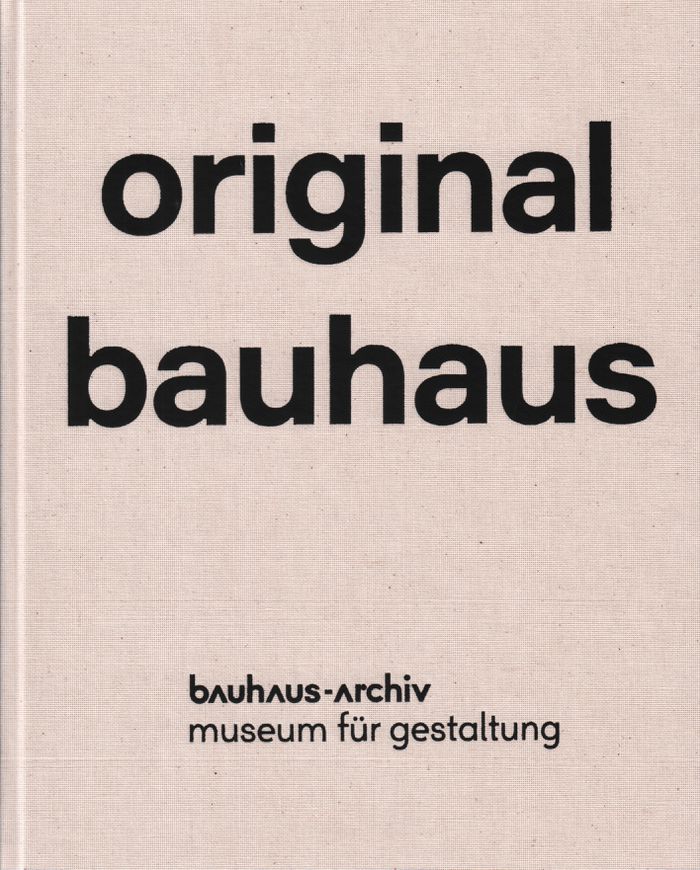
Original Bauhaus Catalogue
Original Bauhaus Catalogue
Actions:
Price:
$79.00
(available to order)
Summary:
The Bauhaus existed for only 14 years in Germany, but for the past 100 years its ideas have been passed on and its products relaunched, imitated, and further developed. Using 14 famous, familiar, or forgotten objects, this book offers 14 case studies. It examines questions such as how did the woman sitting on the tubular-steel chair become the most famous anonymous figure(...)
Title:
Original Bauhaus Catalogue
Actions:
Price:
$79.00
(available to order)
Summary:
The Bauhaus existed for only 14 years in Germany, but for the past 100 years its ideas have been passed on and its products relaunched, imitated, and further developed. Using 14 famous, familiar, or forgotten objects, this book offers 14 case studies. It examines questions such as how did the woman sitting on the tubular-steel chair become the most famous anonymous figure from the Bauhaus; whether the Haus am Horn in Weimar has a secret twin; and why the tea infusers by Marianne Brandt which were created as prototypes for industrial production always remained one-of-a-kind pieces. This book presents art and design from the Bauhaus-Archiv's collection, along with exceptional loans from international collections. It sheds light on how unique work and series, remake and original are inseparably linked in the history of the Bauhaus. This is because Bauhaus artists did not see art and technology as opposed to each other. Instead, they used technical innovations to create exceptional works of art, and they took serial production into account from the moment they began drafting their designs. Reproductions, re-editions, and remakes have made the Bauhaus the 20th century's most influential school of architecture, design, and art, and this book offers a new take on the Bauhaus legacy.
Form:
books
books
Publication:
November 2019
November 2019
Subject:
Modernism
Modernism
Form:
books
books
Price:
$49.95
(available in store)
Summary:
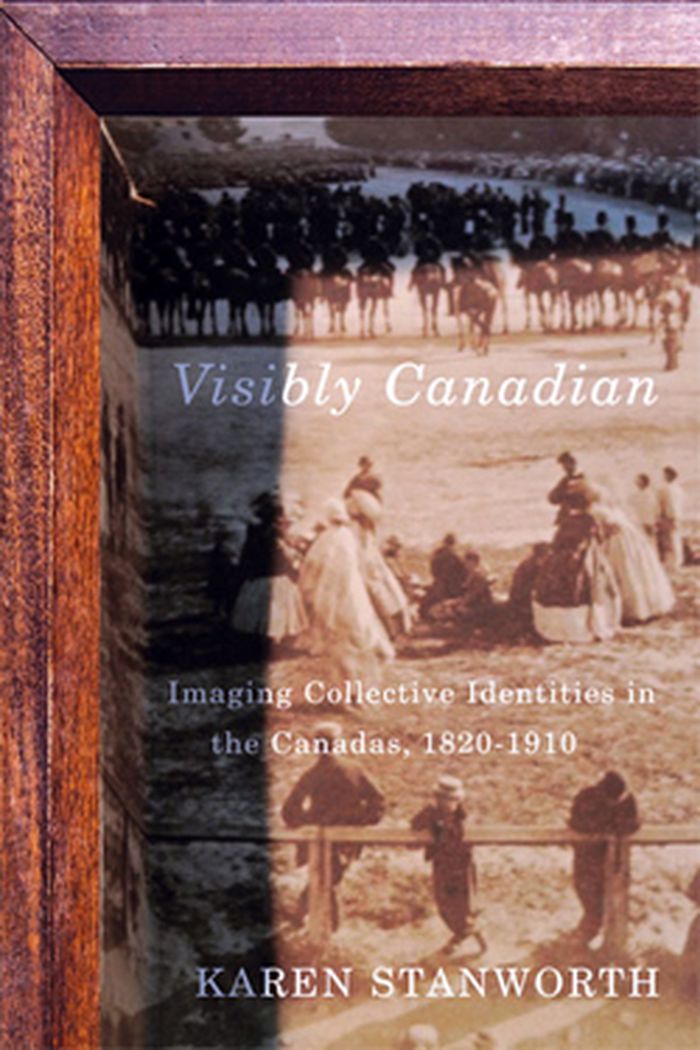
Spectacular, scientific, and educational cultural practices were used to establish and define public identities in the British colonies of nineteenth-century Canada. In Visibly Canadian, Karen Stanworth argues that visual representations were the era's primary mode of expressing identity, and shows how the citizenry of Quebec and Ontario was - or was not - represented in(...)
Title:
Visibly Canadian: imaging collective identities in the Canadas, 1820-1910
Actions:
Price:
$49.95
(available in store)
Summary:
Spectacular, scientific, and educational cultural practices were used to establish and define public identities in the British colonies of nineteenth-century Canada. In Visibly Canadian, Karen Stanworth argues that visual representations were the era's primary mode of expressing identity, and shows how the citizenry of Quebec and Ontario was - or was not - represented in the visual culture of the time.Through nine case studies, each representing key moments of identity formation and contestation, Stanworth investigates how a broad range of cultural phenomena, from fine arts to institutional histories to public spectacles, were used to order, resist, and articulate identities within specific social and economic contexts. The negotiation and planning underpinning civic culture are evident in rare moments of compromise such as the surprising proposal from the Saint-Jean-Baptiste Society to merge their annual parade with the celebration of Queen Victoria's Diamond Jubilee in 1897. Equally astounding is the scale of nineteenth-century public spectacles; reenactments of Victorian scenes of war often attracted crowds of upwards of 10,000 people. Illustrated with over fifty images, many unseen for over a century, Visibly Canadian establishes the significance of artwork and public spectacles in cutting across language, religion, and class to tell stories of nationhood, belonging, and difference.
Form:
books
books
Publication:
November 2014
November 2014
Subject:
Architecture in Canada
Architecture in Canada
Form:
books
books
Actions:
Price:
$43.50
(available to order)
Summary:
The manner in which global trends affect cities and increase the instability in local environments with their own dynamics, is like letting a rising river loose on a house. Global trends create urban flotsam. Urban flotsam and its complex dynamics form a second skin of the earth. How is this second skin visible and how can it be put to use in the quest for new urban(...)
Subject:
Urban Theory
Urban Theory
Publication:
October 1999, Rotterdam
October 1999, Rotterdam
Title:
Urban flotsam : stirring the city
Actions:
Price:
$43.50
(available to order)
Summary:
The manner in which global trends affect cities and increase the instability in local environments with their own dynamics, is like letting a rising river loose on a house. Global trends create urban flotsam. Urban flotsam and its complex dynamics form a second skin of the earth. How is this second skin visible and how can it be put to use in the quest for new urban planning tools and policies? Who gives it form and sustains its organization? 'Urban Flotsam' is a book that attempts to answer these questions through examples, but in doing so it postulates the need for a more consistent way of answering them. The book addresses this need through the formation of an outline for a methodology. This methodology consists of four major parts: 1. How to see manifestations of global influences on local environments? 2. How to model them? 3. How to develop and communicate scenarios on the basis of this knowledge? 4. How to implement scenarios? The book contains a manifesto for a general debate of these issues, a more poetic setting of the theme of the second skin of the earth as urban phenomenon, short theoretical introductions to individual issues, case studies undertaken in urban situations and didactic exercises to demonstrate the need for research in a pedagogical context. The book is the first major publication by Chora architecture and urbanism, an independent research laboratory. Chora has built up a body of knowledge and experience through workshops, commissions, teaching and self-initiated studies which has led to the formulation of the methodology and practice outlined in 'Urban Flotsam'. Chora postulates that drastic reforms or innovations are necessary within the practice and education of architecture, urban design and urban planning in order to meet the challenges of the second skin and the demands of its inhabitants. Together with the artist Jeanne van Heeswijk it calls for a new practice called 'urban curation'.
Form:
books
books
Publication:
October 1999, Rotterdam
October 1999, Rotterdam
Subject:
Urban Theory
Urban Theory
Form:
books
books

Actions:
Price:
$58.00
(available to order)
Summary:
The first book to demystify the process of producing and publishing a book of photographs, ''Publish your photography book'' was first released in 2011 and subsequently sold out two editions. This highly anticipated third edition guides photo-based artists through the steps involved in publishing a book of their work. Industry insiders Darius D. Himes and Mary Virginia(...)
Subject:
Theory of Photography
Theory of Photography
Publication:
September 2023
September 2023
Title:
Publish your photography book, 3rd edition
Actions:
Price:
$58.00
(available to order)
Summary:
The first book to demystify the process of producing and publishing a book of photographs, ''Publish your photography book'' was first released in 2011 and subsequently sold out two editions. This highly anticipated third edition guides photo-based artists through the steps involved in publishing a book of their work. Industry insiders Darius D. Himes and Mary Virginia Swanson survey the current landscape of photography-book publishing and point out the many avenues to pursue and pitfalls to avoid. This updated, expert guide covers: a history of the photobook; an overview of the publishing industry; the process of bringing your project to book form (with both traditional publishing and self-publishing options); how to market a photography book (including a dialogue with collectors on the limited edition and artist-made books); case studies with published photographers; and valuable resources on production materials, publishing and marketing timelines. Filled with educational wisdom, the book features interviews and contributions from artists, agents, editors, designers, printers, publishers, distributors, booksellers, curators and librarians who share their experiences and provide advice about each step on the path to publication and placement. A removable workbook helps readers address book preparation, draft submission guidelines, production timelines and marketing plans. With over 50 years of combined industry experience and insights, the authors also provide both historical context and contemporary expertise about the international photobook scene, including awards, fairs and grants.
Form:
books
books
Publication:
September 2023
September 2023
Subject:
Theory of Photography
Theory of Photography
Form:
books
books
Actions:
Price:
$79.00
(available to order)
Summary:
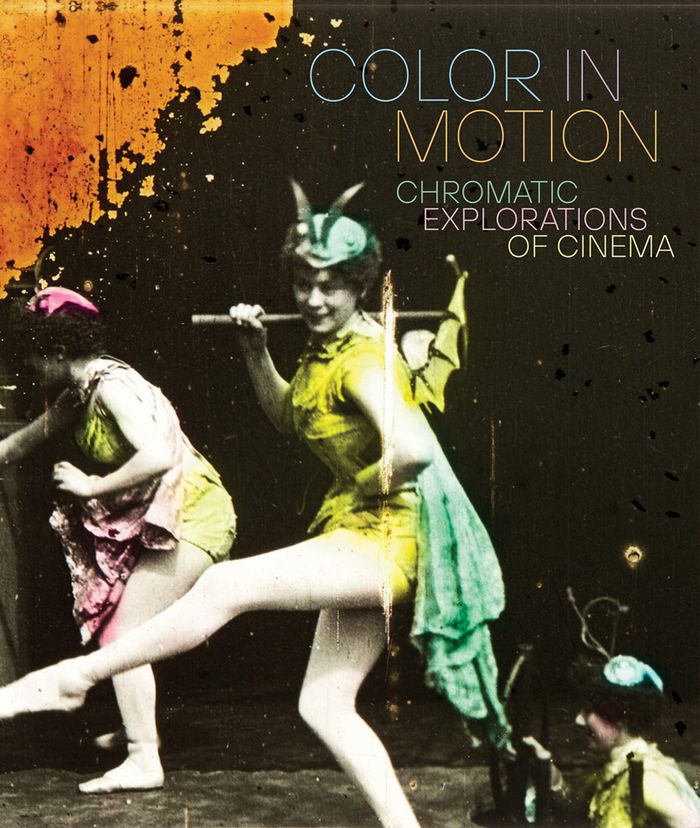
The art of producing color in movies is a fascinating process with a long history. Many people don’t realize that, as early as the 1890s, much of silent cinema was in color. They also may not know that women were the main workforce behind the techniques that first produced these effects, a tradition that continued as the practice evolved. Breakthroughs in color technology(...)
Subject:
Architecture and Film, Set Design
Architecture and Film, Set Design
Publication:
October 2024
October 2024
Title:
Color in motion: Chromatic explorations of cinema
Actions:
Price:
$79.00
(available to order)
Summary:
The art of producing color in movies is a fascinating process with a long history. Many people don’t realize that, as early as the 1890s, much of silent cinema was in color. They also may not know that women were the main workforce behind the techniques that first produced these effects, a tradition that continued as the practice evolved. Breakthroughs in color technology have created ongoing opportunities for filmmakers to experiment with new forms of narrative and emotional storytelling. Spectacular, psychological and sensory, color has become an integral part of the cinematic experience. From the earliest hand-painted films to Technicolor and today’s digital cinema, Color in Motion takes readers on a journey through the evolution and significance of color in film. Presenting insightful analysis, engaging case studies and inspiring conversations with scholars and experts in the field, with topics ranging from animation to the intersections of color and race in cinema, it traces the historical development of color technologies and their impact onscreen. Incorporating vivid images of color films throughout history—Serpentine Dance, The Cabinet of Dr. Caligari, Fantasia, The Red Shoes, Vertigo, West Side Story, 2001: A Space Odyssey, Moonlight and more, as well as new multispectral scans of rare silent-era film prints—this essential volume celebrates color’s enduring influence on the medium of film.
Form:
books
books
Publication:
October 2024
October 2024
Subject:
Architecture and Film, Set Design
Architecture and Film, Set Design


