


3028 Results
Form:
books
books
Actions:
Price:
$30.00
(available to order)
Summary:
Urban parks such as New York City's Central park provide vital public spaces where city dwellers of all races and classes can mingle safely while enjoying a variety of recreations. By coming together in these relaxed settings, different groups become comfortable with each other, thereby strengthening their communities and the democratic fabric of society. But just the(...)
Subject:
Landscape Theory
Landscape Theory
Publication:
November 2005, Austin
November 2005, Austin
Title:
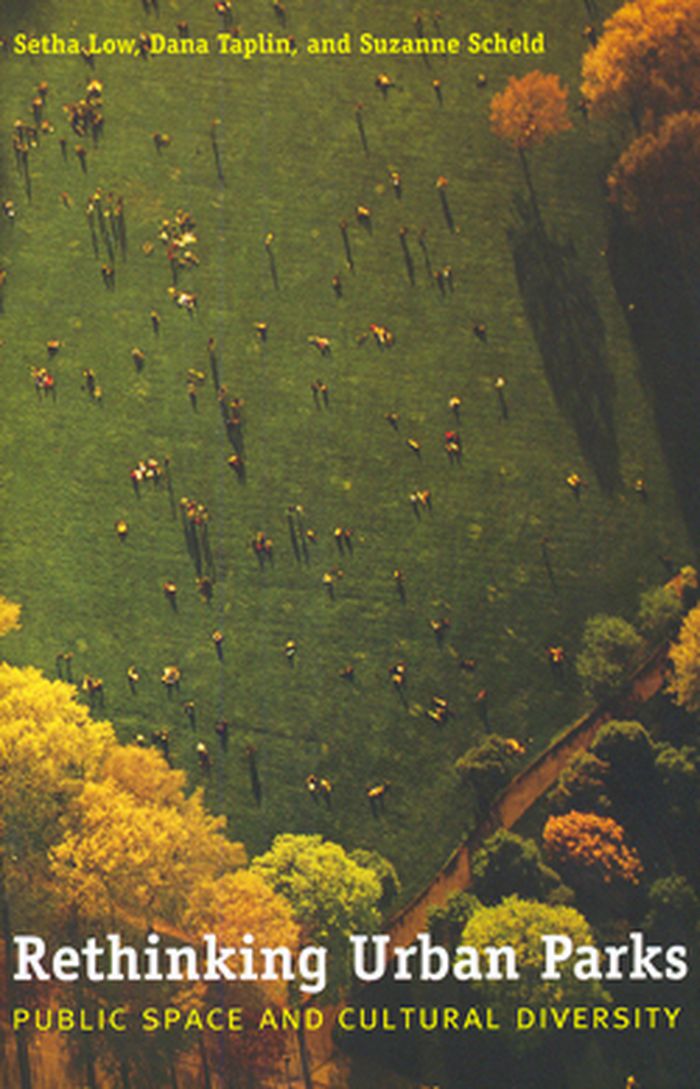
Rethinking urban parks : public space and cultural diversity
Actions:
Price:
$30.00
(available to order)
Summary:
Urban parks such as New York City's Central park provide vital public spaces where city dwellers of all races and classes can mingle safely while enjoying a variety of recreations. By coming together in these relaxed settings, different groups become comfortable with each other, thereby strengthening their communities and the democratic fabric of society. But just the opposite happens when, by design or in ignorance, parks are made inhospitable to certain groups of people. This pathfinding book argues that cultural diversity should be a key goal in designing and maintaining urban parks. Using case studies of New York City's Prospect park, Orchard beach in Pelham Bay park, and Jacob Riis park in the Gateway national recreation area, as well as New York's Ellis Island bridge proposal and Philadelphia's Independence national historical park, the authors identify specific ways to promote, maintain, and manage cultural diversity in urban parks. They also uncover the factors that can limit park use, including historical interpretive materials that ignore the contributions of different ethnic groups, high entrance or access fees, park usage rules that restrict ethnic activities, and park "restorations" that focus only on historical or aesthetic values. With the wealth of data in this book, urban planners, park professionals, and all concerned citizens will have the tools to create and maintain public parks that serve the needs and interests of all the public.
Form:
books
books
Publication:
November 2005, Austin
November 2005, Austin
Subject:
Landscape Theory
Landscape Theory
Form:
books
books
Actions:
Price:
$44.95
(available to order)
Summary:
Green design is the major architectural movement of our time. Throughout the world architects are producing sustainable buildings in an attempt to preserve the environment and our globe's natural resources. However, current strategies for forming sustainable solutions are typically too general and fail to take advantage of critical geographical, environmental, and(...)
Title:
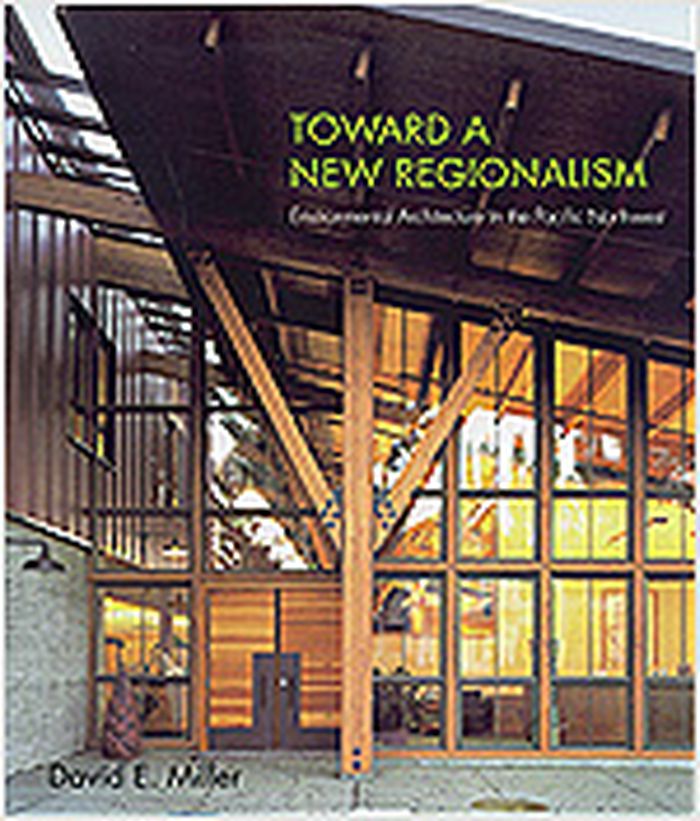
Towards a new regionalism : environmental architecture in the Pacific northwest
Actions:
Price:
$44.95
(available to order)
Summary:
Green design is the major architectural movement of our time. Throughout the world architects are producing sustainable buildings in an attempt to preserve the environment and our globe's natural resources. However, current strategies for forming sustainable solutions are typically too general and fail to take advantage of critical geographical, environmental, and cultural factors particular to a specific place. By focusing on the Pacific northwest, this book provides essential lessons to architects and students on how sustainable architecture can and should be shaped by the unique conditions of a region. Pacific northwest regionalism has consistently supported an architecture aimed at environmental needs and priorities. This book illuminates the history of a "green trail" in the work of key architects of the northwest. It discusses environmental strategies that work in the region, organized according to nature's most basic elements - earth, air, water, and fire - and their underlying principles and forces. The book focuses on technologies, materials, and methods, with a final section that examines thirteen exceptional northwest buildings in detail and in light of their contributions to sustainable architecture. Critical case studies by northwest architects illustrate some of the best environmental design work in North America. Notable architects from Seattle, Portland, and British Columbia are included. These projects feature innovative design in water and site stewardship, intelligent technologies, passive energy strategies, ecologically sound building materials, and environmentally sensitive energy management systems.
Form:
books
books
Publication:
July 2005, Seattle, London
July 2005, Seattle, London
Subject:
Green Architecture
Green Architecture
Form:
books
books
Actions:
Price:
$128.99
(available to order)
Summary:
This new edition of the classic text that has become a standard in architecture curricula gives students in-depth understanding and insight for improving architectural working drawings through the integration of traditional guidelines, standards, and fundamentals with today's CAD operations. Ralph Liebing uses detailed coverage to emphasize the importance of learning the(...)
Publication:
August 1999, New York, Chichester
August 1999, New York, Chichester
Title:
Architectural working drawings, fourth edition
Actions:
Price:
$128.99
(available to order)
Summary:
This new edition of the classic text that has become a standard in architecture curricula gives students in-depth understanding and insight for improving architectural working drawings through the integration of traditional guidelines, standards, and fundamentals with today's CAD operations. Ralph Liebing uses detailed coverage to emphasize the importance of learning the basics first, while encouraging mastery and application of a broad array of techniques and procedures. "Architectural working drawings, fourth edition" provides clear explanations of why these drawings are required, what they must contain to be relevant, the importance of understanding drawing intent and content, and how to combine individual drawings into meaningful and construction-ready sets. Using hundreds of real-world examples from a geographically diverse base, this book covers everything from site plans, floor plans, and interior and exterior elevations to wiring schematics, plumbing specifications, and miscellaneous details. Nearly 500 illustrations provide examples of the best and the worst in architectural working drawings. This fourth edition contains a wealth of new and updated material, including a new chapter of CAD case studies as well as substantially increased and integrated CAD coverage throughout the book, new drawing coordination systems from the Construction Specifications Institute and AIA, a new chapter on the coordination of working drawings and specificationS, and more than 140 new illustrations reflecting the methods for improving CAD drawings.
Form:
books
books
Publication:
August 1999, New York, Chichester
August 1999, New York, Chichester
Form:
books
books
Title:
Buildings must die
Buildings must die
Actions:
Price:
$38.95
(available to order)
Summary:
Buildings, although inanimate, are often assumed to have “life.” And the architect, through the act of design, is assumed to be their conceiver and creator. But what of the “death” of buildings? What of the decay, deterioration, and destruction to which they are inevitably subject? And what might such endings mean for architecture’s sense of itself? In Buildings Must Die,(...)
Title:
Buildings must die
Actions:
Price:
$38.95
(available to order)
Summary:
Buildings, although inanimate, are often assumed to have “life.” And the architect, through the act of design, is assumed to be their conceiver and creator. But what of the “death” of buildings? What of the decay, deterioration, and destruction to which they are inevitably subject? And what might such endings mean for architecture’s sense of itself? In Buildings Must Die, Stephen Cairns and Jane Jacobs look awry at core architectural concerns. They examine spalling concrete and creeping rust, contemplate ruins old and new, and pick through the rubble of earthquake-shattered churches, imploded housing projects, and demolished Brutalist office buildings. Their investigation of the death of buildings reorders architectural notions of creativity, reshapes architecture’s preoccupation with good form, loosens its vanities of durability, and expands its sense of value. It does so not to kill off architecture as we know it, but to rethink its agency and its capacity to make worlds differently. Cairns and Jacobs offer an original contemplation of architecture that draws on theories of waste and value. Their richly illustrated case studies of building “deaths” include the planned and the unintended, the lamented and the celebrated. They take us from Moline to Christchurch, from London to Bangkok, from Tokyo to Paris. And they feature the work of such architects as Eero Saarinen, Carlo Scarpa, Cedric Price, Arata Isozaki, Rem Koolhaas and François Roche.
Form:
books
books
Publication:
August 2017
August 2017
Subject:
Architectural Theory
Architectural Theory
Form:
books
books
Price:
$51.95
(available to order)
Summary:
"The Organizational Complex" is a historical and theoretical analysis of corporate architecture in the United States after the Second World War. Its title refers to the aesthetic and technological extension of the military-industrial complex, in which architecture, computers, and corporations formed a network of objects, images, and discourses that realigned social(...)
Subject:
Architectural Theory
Architectural Theory
Publication:
July 2003, Cambridge, Massachusetts
July 2003, Cambridge, Massachusetts
Title:
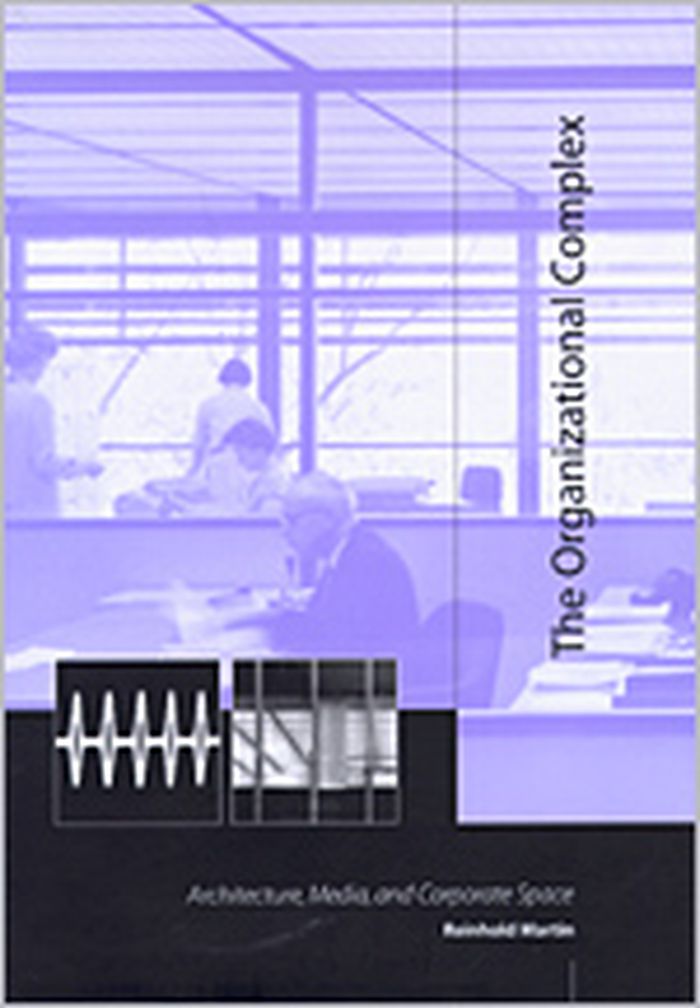
The organizational complex : architecture, media, and corporate space
Actions:
Price:
$51.95
(available to order)
Summary:
"The Organizational Complex" is a historical and theoretical analysis of corporate architecture in the United States after the Second World War. Its title refers to the aesthetic and technological extension of the military-industrial complex, in which architecture, computers, and corporations formed a network of objects, images, and discourses that realigned social relations and transformed the postwar landscape. In-depth case studies of architect Eero Saarinen's work for General Motors, IBM, and Bell Laboratories and analyses of office buildings designed by Skidmore, Owings & Merrill trace the emergence of a systems-based model of organization in architecture, in which the modular curtain wall acts as both an organizational device and a carrier of the corporate image. Such an image--of the corporation as a flexible, integrated system--is seen to correspond with a "humanization" of corporate life, as corporations decentralize both spatially and administratively. Parallel analyses follow the assimilation of cybernetics into aesthetics in the writings of artist and visual theorist Gyorgy Kepes, as art merges with techno-science in the service of a dynamic new "pattern-seeing." Image and system thus converge in the organizational complex, while top-down power dissolves into networked, pattern-based control. Architecture, as one among many media technologies, supplies the patterns--images of organic integration designed to regulate new and unstable human-machine assemblages.
Form:
books
books
Publication:
July 2003, Cambridge, Massachusetts
July 2003, Cambridge, Massachusetts
Subject:
Architectural Theory
Architectural Theory
Form:
books
books
Actions:
Price:
$42.00
(available to order)
Summary:
Art historian Hans Belting proposes a new anthropological theory for interpreting human picture making. Rather than focus exclusively on pictures as they are embodied in various media such as painting, sculpture, or photography, he links pictures to our mental images and therefore our bodies. The body is understood as a "living medium" that produces, perceives, or(...)
Title:
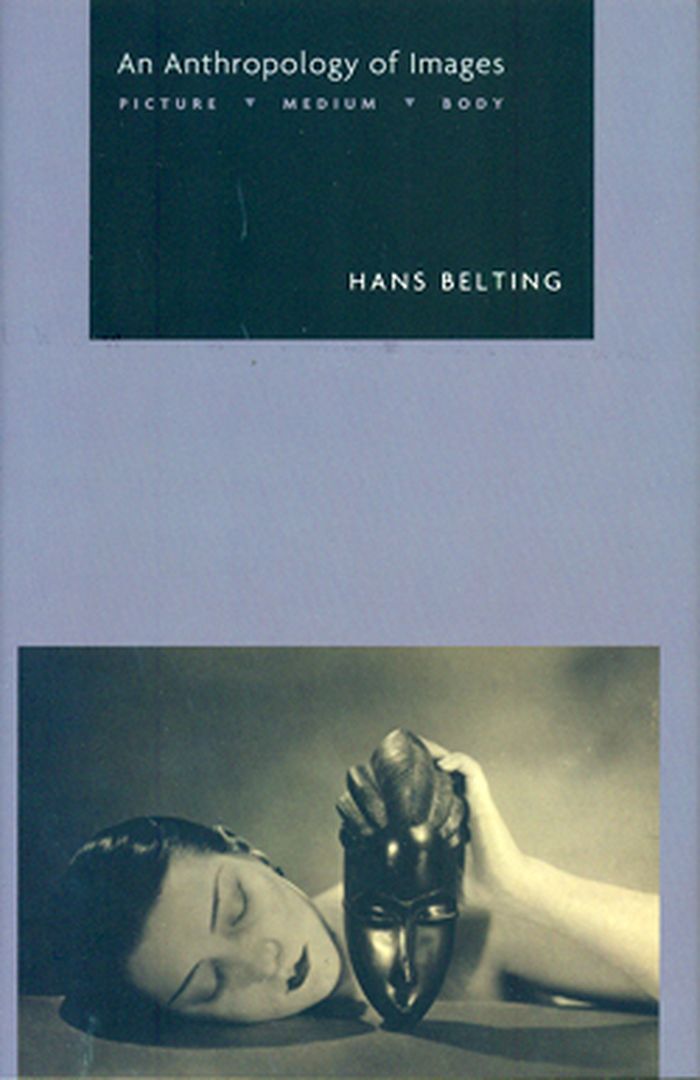
An anthropology of images: picture, medium, body
Actions:
Price:
$42.00
(available to order)
Summary:
Art historian Hans Belting proposes a new anthropological theory for interpreting human picture making. Rather than focus exclusively on pictures as they are embodied in various media such as painting, sculpture, or photography, he links pictures to our mental images and therefore our bodies. The body is understood as a "living medium" that produces, perceives, or remembers images that are different from the images we encounter through handmade or technical pictures. Refusing to reduce images to their material embodiment yet acknowledging the importance of the historical media in which images are manifested, this publication presents a challenging and provocative new account of what pictures are and how they function. The book demonstrates these ideas with a series of case studies, ranging from Dante's picture theory to post-photography. One chapter explores the tension between image and medium in two "media of the body," the coat of arms and the portrait painting. Another, central chapter looks at the relationship between image and death, tracing picture production, including the first use of the mask, to early funerary rituals in which pictures served to represent the missing bodies of the dead. Pictures were tools to re-embody the deceased, to make them present again, a fact that offers a surprising clue to the riddle of presence and absence in most pictures and that reveals a genealogy of pictures obscured by Platonic picture theory.
Form:
books
books
Publication:
September 2011
September 2011
Subject:
Art Theory
Art Theory
Form:
books
books
Price:
$24.95
(available to order)
Summary:
What begins as a meditation on "the museum" becomes, in this book, a far-reaching critical examination of how art history and museums have guided and controlled not only the way we look at art but the ways in which we understand modernity itself. Originally delivered as the 2001 Slade Lectures in the Fine Arts at Oxford University, the book makes its deeply complex(...)
Title:
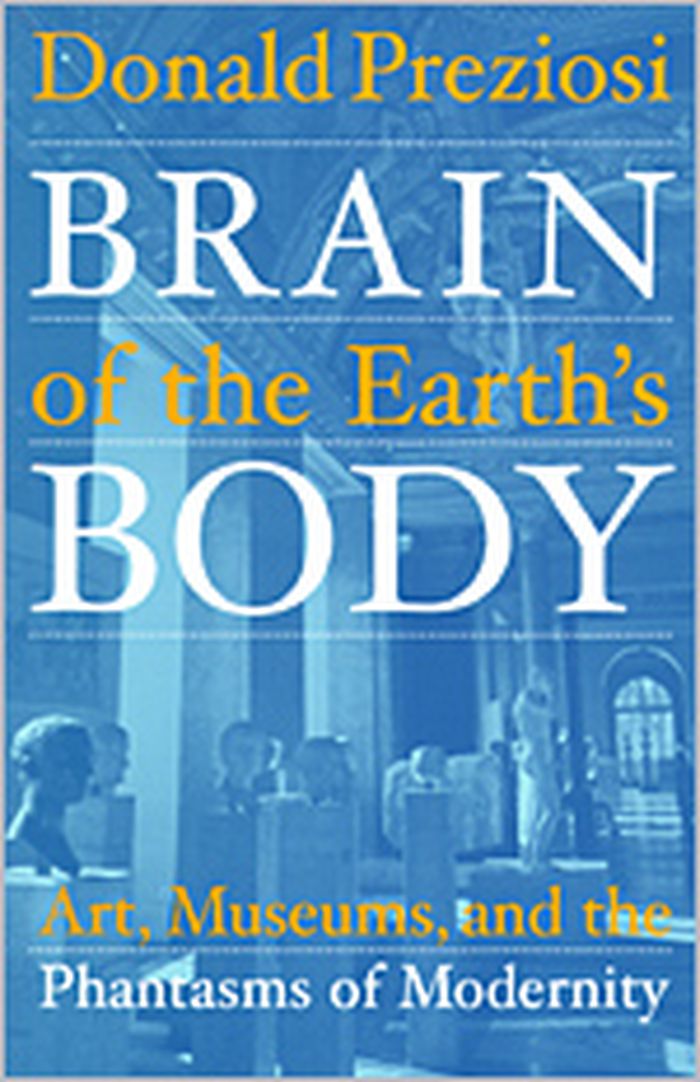
Brain of the earth's body : art, museums and the phantasms of modernity
Actions:
Price:
$24.95
(available to order)
Summary:
What begins as a meditation on "the museum" becomes, in this book, a far-reaching critical examination of how art history and museums have guided and controlled not only the way we look at art but the ways in which we understand modernity itself. Originally delivered as the 2001 Slade Lectures in the Fine Arts at Oxford University, the book makes its deeply complex argument remarkably accessible and powerfully clear. Concentrating on a period from the beginning of the nineteenth century to the beginning of the twentieth, Donald Preziosi presents case studies of major institutions that, he argues, have defined--and are still defining--the possible limits of museological and art historical theory and practice. These include Sir John Soane's Museum in London, preserved in its 1837 state; the Crystal Palace Exhibition of 1851; and four museums founded by Europeans in Egypt in the late nineteenth century, which divided up that country's history into "ethnically marked" aesthetic hierarchies and genealogies that accorded with Europe's construction of itself as the present of the world's past, and the "brain of the earth's body." Through this epistemological and institutional archaeology, Preziosi unearths the outlines of the more radical Enlightenment project that academic art history, professional museology, and art criticism have rendered marginal or invisible. Finally, he sketches a new theory about art, artifice, and visual signification in the cracks and around the margins of the "secular theologisms" of the globalized imperial capital called modernity.
Form:
books
books
Publication:
July 2003, Minneapolis
July 2003, Minneapolis
Subject:
Museology
Museology
Form:
books
books
Title:
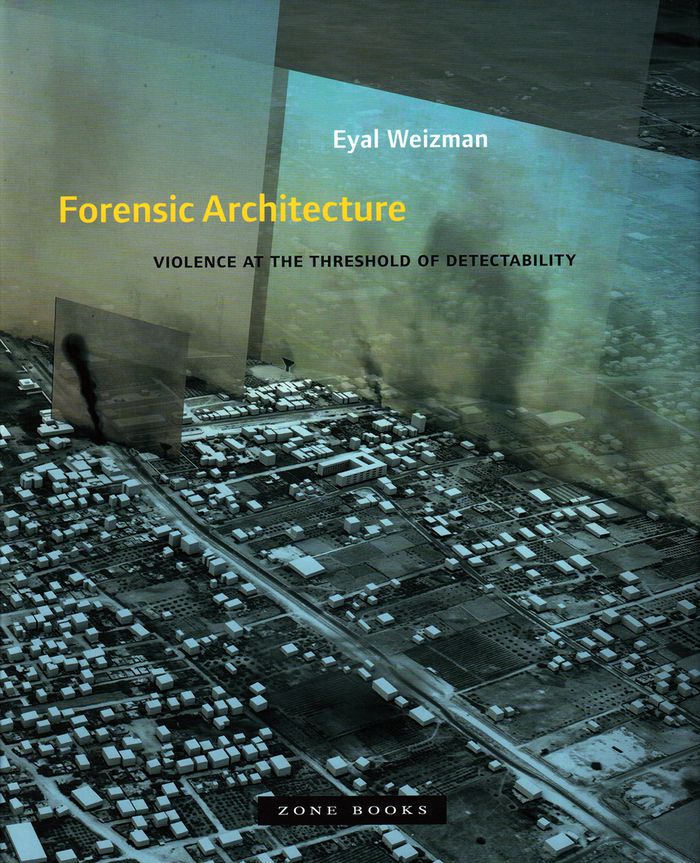
Forensic architecture
Forensic architecture
Actions:
Price:
$49.95
(available to order)
Summary:
In recent years, the group Forensic Architecture began using novel research methods to undertake a series of investigations into human rights abuses. Today, the group provides crucial evidence for international courts and works with a wide range of activist groups, NGOs, Amnesty International, and the UN. Forensic Architecture has not only shed new light on human rights(...)
Title:
Forensic architecture
Actions:
Price:
$49.95
(available to order)
Summary:
In recent years, the group Forensic Architecture began using novel research methods to undertake a series of investigations into human rights abuses. Today, the group provides crucial evidence for international courts and works with a wide range of activist groups, NGOs, Amnesty International, and the UN. Forensic Architecture has not only shed new light on human rights violations and state crimes across the globe, but has also created a new form of investigative practice that bears its name. The group uses architecture as an optical device to investigate armed conflicts and environmental destruction, as well as to cross-reference a variety of evidence sources, such as new media, remote sensing, material analysis, witness testimony, and crowd-sourcing. In "Forensic architecture", Eyal Weizman, the group’s founder, provides, for the first time, an in-depth introduction to the history, practice, assumptions, potentials, and double binds of this practice. The book includes an extensive array of images, maps, and detailed documentation that records the intricate work the group has performed. Traversing multiple scales and durations, the case studies in this volume include the analysis of the shrapnel fragments in a room struck by drones in Pakistan, the reconstruction of a contested shooting in the West Bank, the architectural recreation of a secret Syrian detention center from the memory of its survivors, a blow-by-blow account of a day-long battle in Gaza, and an investigation of environmental violence and climate change in the Guatemalan highlands and elsewhere.
Form:
books
books
Publication:
April 2017
April 2017
Subject:
Architectural Theory
Architectural Theory
Form:
books
books
Price:
$47.00
(available to order)
Summary:
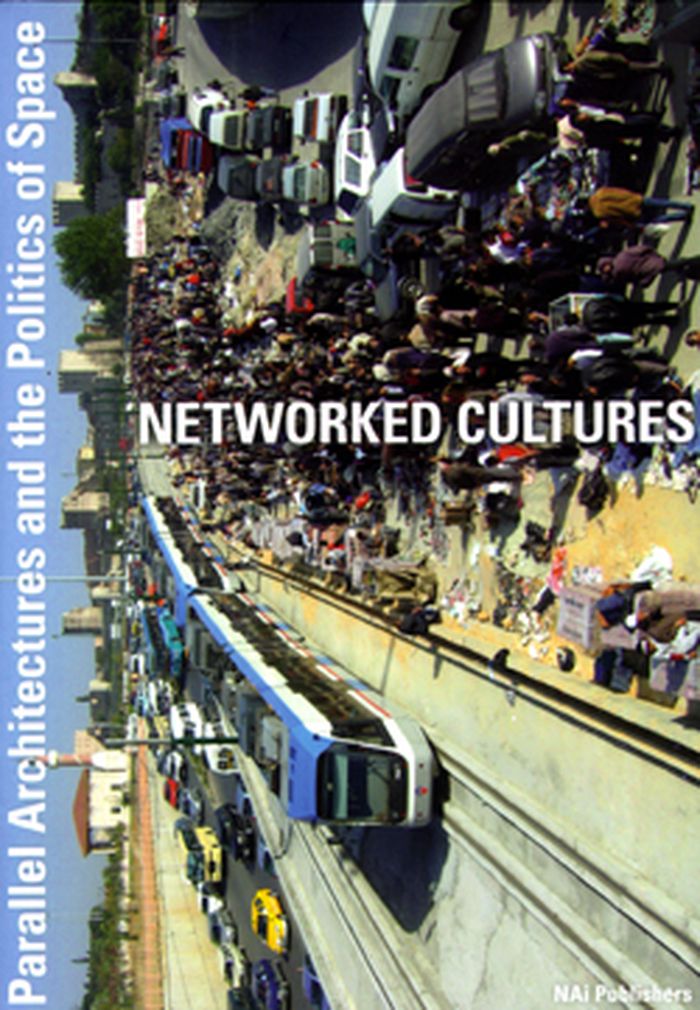
Political conflicts, humanitarian disasters, wars and migrations – we live in an age of global unrest and discontinuity. While official reactions consist in the search for means of stabilization and restraint, the dynamics of deregulation are giving rise to a situation characterized by global parallel systems: parallel architectures, parallel societies, parallel(...)
Subject:
Architectural Theory
Architectural Theory
Publication:
August 2008, Rotterdam
August 2008, Rotterdam
Title:
Networked cultures: parallel architectures and the politics of space
Actions:
Price:
$47.00
(available to order)
Summary:
Political conflicts, humanitarian disasters, wars and migrations – we live in an age of global unrest and discontinuity. While official reactions consist in the search for means of stabilization and restraint, the dynamics of deregulation are giving rise to a situation characterized by global parallel systems: parallel architectures, parallel societies, parallel lives. This book offers an insight into the complex spatial and social realities of globalization, from city-like informal markets in Moscow and the post-war self-urbanization in Kosovo to the border economies of the Mediterranean and the parallel worlds of today’s burgeoning megacities. In this state of uncertainties, networks have become the most powerful tool in how we organize our lives. The emerging struggle between network formations produces a space that is both fragmented and contested, yet testifies to the creativity of its inhabitants. As a result, our cities have become topologies of overlapping realities and narratives as much as they are geographical entities. Networked Cultures traces these conflictual negotiations in dialogue with artists, architects, curators and theorists whose work explores possibilities for a multi-inhabitation of territories and narratives across cultural, social or geographic boundaries. Their shared knowledge and accompanying case studies provide stirring insights as well as imaginative encounters with a world of networks – our world. The enclosed DVD features conversations with the contributors to this book that follow the thematic strands along which the collaborative format of Networked Cultures has evolved: Network Creativity – Contested Spaces – Trading Places – Parallel Worlds.
Form:
books
books
Publication:
August 2008, Rotterdam
August 2008, Rotterdam
Subject:
Architectural Theory
Architectural Theory
Form:
books
books
Actions:
Price:
$29.95
(available to order)
Summary:
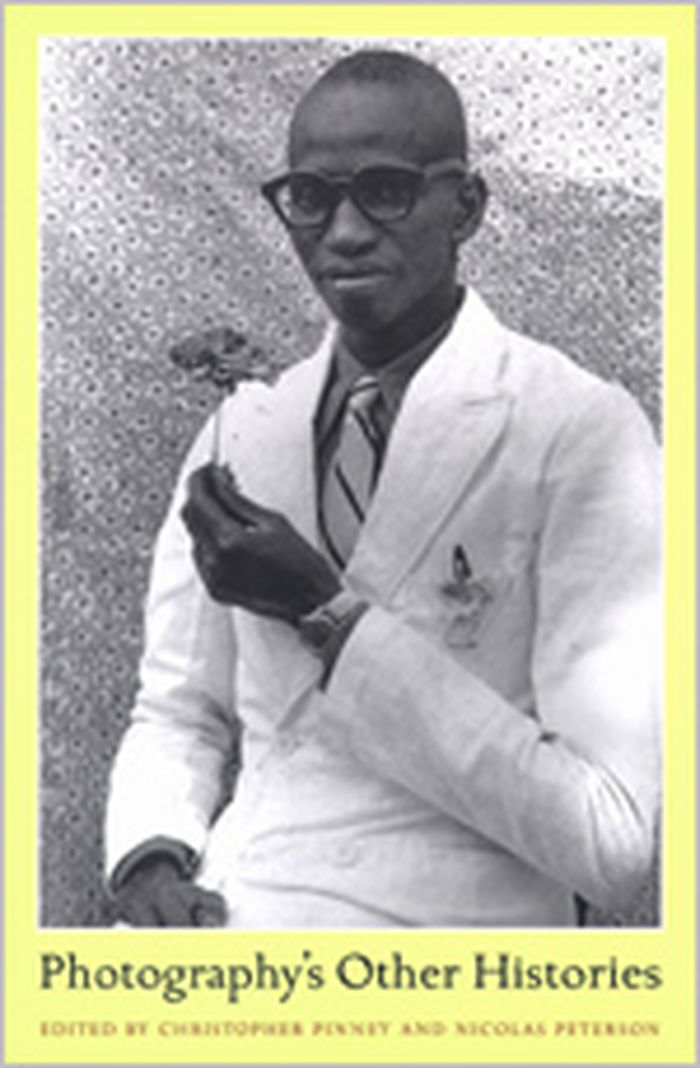
Moving the critical debate about photography away from its current Euro-American centre of gravity, "Photography’s Other Histories" breaks with the notion that photographic history is best seen as the explosion of a Western technology advanced by the work of singular individuals. This collection presents a different account, describing photography as a globally(...)
Subject:
Theory of Photography
Theory of Photography
Publication:
March 2003, Durham, N.C.
March 2003, Durham, N.C.
Title:
Photography's other histories
Actions:
Price:
$29.95
(available to order)
Summary:
Moving the critical debate about photography away from its current Euro-American centre of gravity, "Photography’s Other Histories" breaks with the notion that photographic history is best seen as the explosion of a Western technology advanced by the work of singular individuals. This collection presents a different account, describing photography as a globally disseminated and locally appropriated medium. Essays firmly grounded in photographic practice — in the actual making of pictures — suggest the extraordinary diversity of nonwestern photography "Photography’s Other Histories" explores from a variety of geographic, cultural, and historic perspectives the role of photography in raising historical consciousness. It includes two first-person pieces by indigenous Australians and one by a Seminole/Muskogee/Diné artist. Some of the essays analyze representations of colonial subjects—from the limited ways Westerners have depicted Navajos to Japanese photos recording the occupation of Manchuria and from the changing nature of the "contract" between Aboriginal subjects and photographers to the surprising range of cultural influences evident in the photographs colonialist F. R. Barton took in New Guinea in the late 1800s and early 1900s. Focusing on photographic self-fashioning and the development of vernacular modernisms, other essays highlight the visionary quality of much popular photography. Case studies centered in early-twentieth-century Peru and contemporary India, Kenya, and Nigeria chronicle the diverse practices that have flourished in postcolonial societies. "Photography’s Other Histories" recasts popular photography around the world, as not simply reproducing culture but creating it.
Form:
books
books
Publication:
March 2003, Durham, N.C.
March 2003, Durham, N.C.
Subject:
Theory of Photography
Theory of Photography


