


322 Results
Form:
books
books
Title:
Imagery in the 21st century
Imagery in the 21st century
Actions:
Price:
$44.95
(available in store)
Summary:
We are surrounded by images as never before: on Flickr, Facebook, and YouTube; on thousands of television channels; in digital games and virtual worlds; in media art and science. Without new efforts to visualize complex ideas, structures, and systems, today’s informatio explosion would be unmanageable. The digital image represents endless options for manipulation; images(...)
$44.95
(available in store)
Summary:
We are surrounded by images as never before: on Flickr, Facebook, and YouTube; on thousands of television channels; in digital games and virtual worlds; in media art and science. Without new efforts to visualize complex ideas, structures, and systems, today’s informatio explosion would be unmanageable. The digital image represents endless options for manipulation; images(...)
Title:
Imagery in the 21st century
Actions:
Price:
$44.95
(available in store)
Summary:
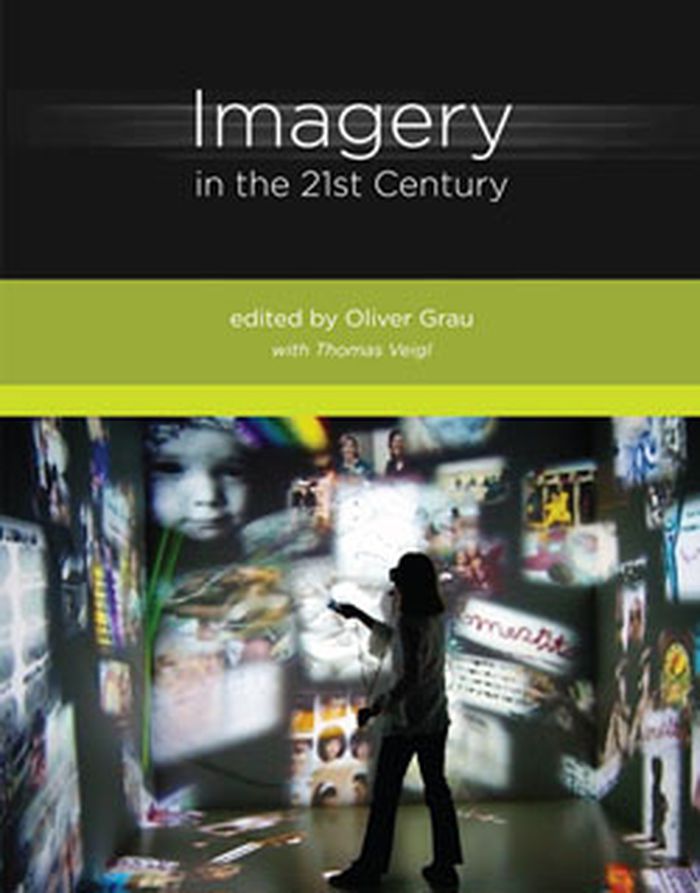
We are surrounded by images as never before: on Flickr, Facebook, and YouTube; on thousands of television channels; in digital games and virtual worlds; in media art and science. Without new efforts to visualize complex ideas, structures, and systems, today’s informatio explosion would be unmanageable. The digital image represents endless options for manipulation; images seem capable of changing interactively or even autonomously. This volume offers systematic and interdisciplinary reflections on these new image worlds and new analytical approaches to the visual. This publication examines this revolution in various fields, with researchers from the natural sciences and the humanities meeting to achieve a deeper understanding of the meaning and impact of the image in our time. The contributors explore and discuss new critical terms of multidisciplinary scope, from database economy to the dramaturgy of hypermedia, from visualizations in neurosciences to the image in bio art. They consider the power of the image in the development of human consciousness, pursue new definitions of visual phenomena, and examine new tools for image research and visual analysis. The goal is to expand visual competence in investigating new visual worlds and to build cross-disciplinary exchanges among the arts, humanities, and natural sciences.
Imagery in the 21st century
Actions:
Price:
$44.95
(available in store)
Summary:
We are surrounded by images as never before: on Flickr, Facebook, and YouTube; on thousands of television channels; in digital games and virtual worlds; in media art and science. Without new efforts to visualize complex ideas, structures, and systems, today’s informatio explosion would be unmanageable. The digital image represents endless options for manipulation; images seem capable of changing interactively or even autonomously. This volume offers systematic and interdisciplinary reflections on these new image worlds and new analytical approaches to the visual. This publication examines this revolution in various fields, with researchers from the natural sciences and the humanities meeting to achieve a deeper understanding of the meaning and impact of the image in our time. The contributors explore and discuss new critical terms of multidisciplinary scope, from database economy to the dramaturgy of hypermedia, from visualizations in neurosciences to the image in bio art. They consider the power of the image in the development of human consciousness, pursue new definitions of visual phenomena, and examine new tools for image research and visual analysis. The goal is to expand visual competence in investigating new visual worlds and to build cross-disciplinary exchanges among the arts, humanities, and natural sciences.
Form:
books
books
Publication:
September 2011
September 2011
Subject:
Art Theory
Art Theory
Form:
books
books
Title:
Elastic architecture: Frederick Kiesler and design research in the first age of robotic culture
Elastic architecture: Frederick Kiesler and design research in the first age of robotic culture
Actions:
Price:
$42.95
(available to order)
Summary:
In 1960, architect Philip Johnson championed Frederick Kiesler, calling him “the greatest non-building architect of our time.” Kiesler’s ideas were difficult to construct, but as Johnson believed, “enormous” and “profound.” Kiesler (1890–1965) went against the grain of the accepted modern style, rejecting rectilinear glass and steel in favor of more organic forms and(...)
$42.95
(available to order)
Summary:
In 1960, architect Philip Johnson championed Frederick Kiesler, calling him “the greatest non-building architect of our time.” Kiesler’s ideas were difficult to construct, but as Johnson believed, “enormous” and “profound.” Kiesler (1890–1965) went against the grain of the accepted modern style, rejecting rectilinear glass and steel in favor of more organic forms and(...)
Title:
Elastic architecture: Frederick Kiesler and design research in the first age of robotic culture
Actions:
Price:
$42.95
(available to order)
Summary:
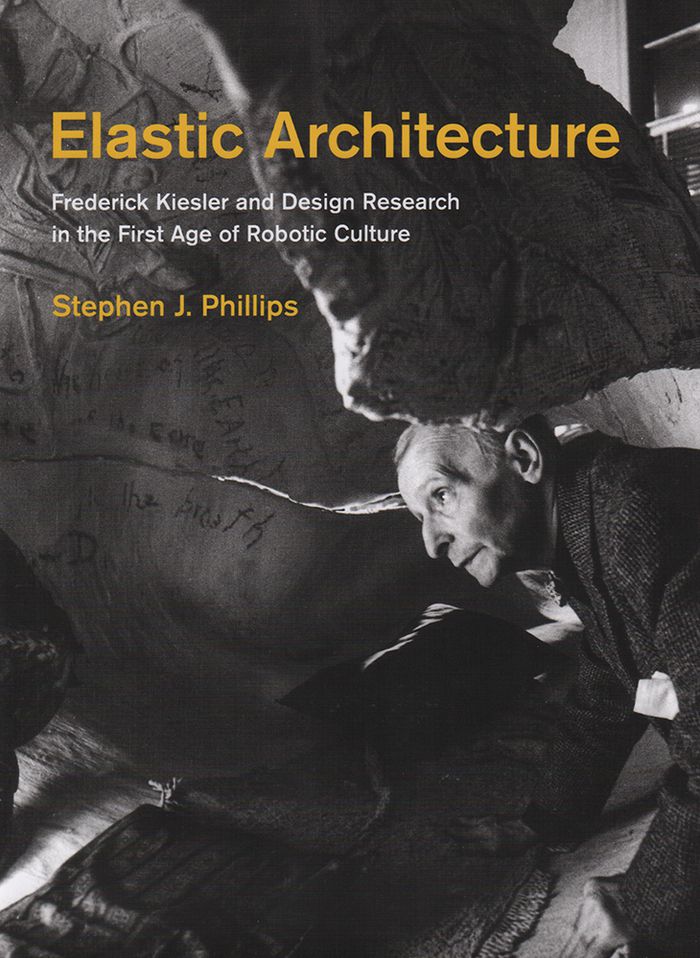
In 1960, architect Philip Johnson championed Frederick Kiesler, calling him “the greatest non-building architect of our time.” Kiesler’s ideas were difficult to construct, but as Johnson believed, “enormous” and “profound.” Kiesler (1890–1965) went against the grain of the accepted modern style, rejecting rectilinear glass and steel in favor of more organic forms and flexible structures that could respond to the ever-changing needs of the body in motion. In Elastic Architecture, Stephen Phillips offers the first in-depth exploration of Kiesler’s innovative and multidisciplinary research and design practice. Exploring Kiesler’s formative relationships with the European avant-garde, Phillips shows how Kiesler found inspiration in the plastic arts, experimental theater, early animation, and automatons to develop and refine his spatial concept of the Endless. Moving from Europe to New York in the 1920s, Kiesler applied these radical Dadaist, constructivist, and surrealist practices to his urban display projects, which included shop windows for Saks Fifth Avenue. After launching his innovative Design Correlation Laboratory at Columbia and Yale, Kiesler went on to invent new houses, theaters, and galleries that were meant to move, shift, and adapt to evolutionary changes occurring within the natural and built environment.
Elastic architecture: Frederick Kiesler and design research in the first age of robotic culture
Actions:
Price:
$42.95
(available to order)
Summary:
In 1960, architect Philip Johnson championed Frederick Kiesler, calling him “the greatest non-building architect of our time.” Kiesler’s ideas were difficult to construct, but as Johnson believed, “enormous” and “profound.” Kiesler (1890–1965) went against the grain of the accepted modern style, rejecting rectilinear glass and steel in favor of more organic forms and flexible structures that could respond to the ever-changing needs of the body in motion. In Elastic Architecture, Stephen Phillips offers the first in-depth exploration of Kiesler’s innovative and multidisciplinary research and design practice. Exploring Kiesler’s formative relationships with the European avant-garde, Phillips shows how Kiesler found inspiration in the plastic arts, experimental theater, early animation, and automatons to develop and refine his spatial concept of the Endless. Moving from Europe to New York in the 1920s, Kiesler applied these radical Dadaist, constructivist, and surrealist practices to his urban display projects, which included shop windows for Saks Fifth Avenue. After launching his innovative Design Correlation Laboratory at Columbia and Yale, Kiesler went on to invent new houses, theaters, and galleries that were meant to move, shift, and adapt to evolutionary changes occurring within the natural and built environment.
Form:
books
books
Publication:
March 2017
March 2017
Subject:
Architectural Theory
Architectural Theory
Form:
books
books
Price:
$38.95
(available to order)
Summary:
Conceived and directed by Emilio Ambasz. With essays by Jean Baudrillard, Manuel Castells, Gillo Dorfles, Ronald Dworkin, Umberto Eco, Erich Jantsch, Suzanne Keller, Gyorgy Kepes, Richard L. Meier, Martin Pawley, Octavio Paz, Anatol Rapoport, Meyer Schapiro, Carl Schorske and Jivan Tabibian, among others. With foreword by Terrance Riley. In January of 1972, The Museum(...)
$38.95
(available to order)
Summary:
Conceived and directed by Emilio Ambasz. With essays by Jean Baudrillard, Manuel Castells, Gillo Dorfles, Ronald Dworkin, Umberto Eco, Erich Jantsch, Suzanne Keller, Gyorgy Kepes, Richard L. Meier, Martin Pawley, Octavio Paz, Anatol Rapoport, Meyer Schapiro, Carl Schorske and Jivan Tabibian, among others. With foreword by Terrance Riley. In January of 1972, The Museum(...)
Title:
The universitas project : solutions for a post-technological society
Actions:
Price:
$38.95
(available to order)
Summary:
Conceived and directed by Emilio Ambasz. With essays by Jean Baudrillard, Manuel Castells, Gillo Dorfles, Ronald Dworkin, Umberto Eco, Erich Jantsch, Suzanne Keller, Gyorgy Kepes, Richard L. Meier, Martin Pawley, Octavio Paz, Anatol Rapoport, Meyer Schapiro, Carl Schorske and Jivan Tabibian, among others. With foreword by Terrance Riley. In January of 1972, The Museum of Modern Art hosted "The universitas project," a two-day conference sponsored by the Museum’s International Council and the Institute for Architecture and Urban Studies. The participants, from a wide range of scholarly and artistic disciplines, engaged in a multidisciplinary debate on the future of design and design institutions in the postindustrial era. The project was originally described as "a critical and prospective inquiry into the relation of man to the natural and the sociocultural environment...specifically planned to explore the possibility of establishing in the United States a new type of institution centered around the task of evaluating and designing the man-made milieu." This volume publishes in their entirety the various components of the conference : the working papers that set the terms of the debate; the essays submitted by the invitees; the proceedings of the symposia responding to the papers; and the postscripts provided by the participants after the event.
The universitas project : solutions for a post-technological society
Actions:
Price:
$38.95
(available to order)
Summary:
Conceived and directed by Emilio Ambasz. With essays by Jean Baudrillard, Manuel Castells, Gillo Dorfles, Ronald Dworkin, Umberto Eco, Erich Jantsch, Suzanne Keller, Gyorgy Kepes, Richard L. Meier, Martin Pawley, Octavio Paz, Anatol Rapoport, Meyer Schapiro, Carl Schorske and Jivan Tabibian, among others. With foreword by Terrance Riley. In January of 1972, The Museum of Modern Art hosted "The universitas project," a two-day conference sponsored by the Museum’s International Council and the Institute for Architecture and Urban Studies. The participants, from a wide range of scholarly and artistic disciplines, engaged in a multidisciplinary debate on the future of design and design institutions in the postindustrial era. The project was originally described as "a critical and prospective inquiry into the relation of man to the natural and the sociocultural environment...specifically planned to explore the possibility of establishing in the United States a new type of institution centered around the task of evaluating and designing the man-made milieu." This volume publishes in their entirety the various components of the conference : the working papers that set the terms of the debate; the essays submitted by the invitees; the proceedings of the symposia responding to the papers; and the postscripts provided by the participants after the event.
Form:
books
books
Publication:
August 2006, New York
August 2006, New York
Subject:
Architectural Theory
Architectural Theory
Form:
books
books
Actions:
Price:
$63.95
(available to order)
Summary:
In Soviet Salvage, Catherine Walworth explores how artists on the margins of the Constructivist movement of the 1920s rejected “elitist” media and imagined a new world, knitting together avant-garde art, imperial castoffs, and everyday life. Applying anthropological models borrowed from Claude Lévi-Strauss, Walworth shows that his mythmaker typologies—the “engineer”(...)
$63.95
(available to order)
Summary:
In Soviet Salvage, Catherine Walworth explores how artists on the margins of the Constructivist movement of the 1920s rejected “elitist” media and imagined a new world, knitting together avant-garde art, imperial castoffs, and everyday life. Applying anthropological models borrowed from Claude Lévi-Strauss, Walworth shows that his mythmaker typologies—the “engineer”(...)
Title:
Soviet salvage: Imperial debris, revolutionary reuse, and Russian Constructivism
Actions:
Price:
$63.95
(available to order)
Summary:
In Soviet Salvage, Catherine Walworth explores how artists on the margins of the Constructivist movement of the 1920s rejected “elitist” media and imagined a new world, knitting together avant-garde art, imperial castoffs, and everyday life. Applying anthropological models borrowed from Claude Lévi-Strauss, Walworth shows that his mythmaker typologies—the “engineer” and “bricoleur”—illustrate, respectively, the canonical Constructivists and artists on the movement’s margins who deployed a wide range of clever make-do tactics. Walworth explores the relationships of Nadezhda Lamanova, Esfir Shub, and others with Constructivists such as Aleksei Gan, Varvara Stepanova, and Aleksandr Rodchenko. Together, the work of these artists reflected the chaotic and often contradictory zeitgeist of the decade from 1918 to 1929 and redefined the concept of mass production. Reappropriated fragments of a former enemy era provided a wide range of play and possibility for these artists, and the resulting propaganda porcelain, film, fashion, and architecture tell a broader story of the unique political and economic pressures felt by their makers. An engaging multidisciplinary study of objects and their makers during the Soviet Union’s early years, this volume highlights a group of artists who hover like free radicals at the border of existing art-historical discussions of Constructivism and deepens our knowledge of Soviet art and material culture.
Soviet salvage: Imperial debris, revolutionary reuse, and Russian Constructivism
Actions:
Price:
$63.95
(available to order)
Summary:
In Soviet Salvage, Catherine Walworth explores how artists on the margins of the Constructivist movement of the 1920s rejected “elitist” media and imagined a new world, knitting together avant-garde art, imperial castoffs, and everyday life. Applying anthropological models borrowed from Claude Lévi-Strauss, Walworth shows that his mythmaker typologies—the “engineer” and “bricoleur”—illustrate, respectively, the canonical Constructivists and artists on the movement’s margins who deployed a wide range of clever make-do tactics. Walworth explores the relationships of Nadezhda Lamanova, Esfir Shub, and others with Constructivists such as Aleksei Gan, Varvara Stepanova, and Aleksandr Rodchenko. Together, the work of these artists reflected the chaotic and often contradictory zeitgeist of the decade from 1918 to 1929 and redefined the concept of mass production. Reappropriated fragments of a former enemy era provided a wide range of play and possibility for these artists, and the resulting propaganda porcelain, film, fashion, and architecture tell a broader story of the unique political and economic pressures felt by their makers. An engaging multidisciplinary study of objects and their makers during the Soviet Union’s early years, this volume highlights a group of artists who hover like free radicals at the border of existing art-historical discussions of Constructivism and deepens our knowledge of Soviet art and material culture.
Form:
books
books
Publication:
September 2018
September 2018
Form:
books
books

Actions:
Price:
$34.50
(available in store)
Summary:
This volume presents the ''Circle of Doing Research'' : a model to get you started in art and design research. Conceived within the contextual setting of the art school, it is holistic, multidisciplinary and prioritizes practice. It consists of six actions. The basis of the circle is formed by the following: research by making, research of context and participatory(...)
$34.50
(available in store)
Summary:
This volume presents the ''Circle of Doing Research'' : a model to get you started in art and design research. Conceived within the contextual setting of the art school, it is holistic, multidisciplinary and prioritizes practice. It consists of six actions. The basis of the circle is formed by the following: research by making, research of context and participatory(...)
Title:
Hands on research for artists, designers & educators
Actions:
Price:
$34.50
(available in store)
Summary:
This volume presents the ''Circle of Doing Research'' : a model to get you started in art and design research. Conceived within the contextual setting of the art school, it is holistic, multidisciplinary and prioritizes practice. It consists of six actions. The basis of the circle is formed by the following: research by making, research of context and participatory research, where information, prototypes, encounters and experiences are gathered and produced. The remaining three actions are concerned with documenting research, publicizing research and reflecting on research. The ''Circle of Doing Research'' is an open, accessible and non-linear model. Each action can be an entry point, whether you want to start with material experiments, conversations with others, or in the library. All actions are connected and inform each other which encourages a process of iteration and constant reflection. The ''Circle'' can be enriched with methods, sources and focal points according to specific disciplines and needs. The book contains research trajectories of art and design students throughout, illustrating the rich possibilities to be uncovered in the unfolding of a research project. This illuminating model can be useful to all, from those beginning to learn about research in art and design to more advanced practitioners.
Hands on research for artists, designers & educators
Actions:
Price:
$34.50
(available in store)
Summary:
This volume presents the ''Circle of Doing Research'' : a model to get you started in art and design research. Conceived within the contextual setting of the art school, it is holistic, multidisciplinary and prioritizes practice. It consists of six actions. The basis of the circle is formed by the following: research by making, research of context and participatory research, where information, prototypes, encounters and experiences are gathered and produced. The remaining three actions are concerned with documenting research, publicizing research and reflecting on research. The ''Circle of Doing Research'' is an open, accessible and non-linear model. Each action can be an entry point, whether you want to start with material experiments, conversations with others, or in the library. All actions are connected and inform each other which encourages a process of iteration and constant reflection. The ''Circle'' can be enriched with methods, sources and focal points according to specific disciplines and needs. The book contains research trajectories of art and design students throughout, illustrating the rich possibilities to be uncovered in the unfolding of a research project. This illuminating model can be useful to all, from those beginning to learn about research in art and design to more advanced practitioners.
Form:
books
books
Publication:
December 2024
December 2024
Subject:
Museology
Museology
Form:
books
books
Price:
$67.95
(available to order)
Summary:
The uncertain state of Europe is the primary concern of Multiplicity : a multidisciplinary group of Europeans architects, photographers, urban developers and artists who met to explore and develop a series of studies focusing on contemporary European cities and their ongoing changes. The group uses on-site investigations, documented with beautiful photographs by(...)
$67.95
(available to order)
Summary:
The uncertain state of Europe is the primary concern of Multiplicity : a multidisciplinary group of Europeans architects, photographers, urban developers and artists who met to explore and develop a series of studies focusing on contemporary European cities and their ongoing changes. The group uses on-site investigations, documented with beautiful photographs by(...)
Title:
USE- Uncertain states of Europe : a trip through a changing Europe
Actions:
Price:
$67.95
(available to order)
Summary:
The uncertain state of Europe is the primary concern of Multiplicity : a multidisciplinary group of Europeans architects, photographers, urban developers and artists who met to explore and develop a series of studies focusing on contemporary European cities and their ongoing changes. The group uses on-site investigations, documented with beautiful photographs by Francesco Jodice and Gabriele Basilico, to illustrate the radical and dramatic changes occurring on European land and in its cities. Traditional spaces are slowly, yet forcefully, transforming due to the constant economic, political, and social upheavals and alterations. With an introduction by prominent political and intellectual figures such as Etienne Balibar, Rem Koolhas and Jeremy Rifkin, this volume analyses 24 cases of urban transformation. The cases cover geographical locations from Paris to Pristina, Helsinki to Bucharest, and show the extraordinary riches a modern city can offer while, at the same time, highlighting the abnormal spaces created by the existence of a so-called secondary world. The final section is dedicated to a series of ideas which view Europe as a single entity : a network of relations, trade, encounters, migration, transportation, construction, and offers an absolutely novel view of the ‘old’ world. Richly illustrated, this tome includes passages by architectural critics such as Stefano Boeri, Yorgos Semiforidis, Eduard Bru, Bart Lootsma.
USE- Uncertain states of Europe : a trip through a changing Europe
Actions:
Price:
$67.95
(available to order)
Summary:
The uncertain state of Europe is the primary concern of Multiplicity : a multidisciplinary group of Europeans architects, photographers, urban developers and artists who met to explore and develop a series of studies focusing on contemporary European cities and their ongoing changes. The group uses on-site investigations, documented with beautiful photographs by Francesco Jodice and Gabriele Basilico, to illustrate the radical and dramatic changes occurring on European land and in its cities. Traditional spaces are slowly, yet forcefully, transforming due to the constant economic, political, and social upheavals and alterations. With an introduction by prominent political and intellectual figures such as Etienne Balibar, Rem Koolhas and Jeremy Rifkin, this volume analyses 24 cases of urban transformation. The cases cover geographical locations from Paris to Pristina, Helsinki to Bucharest, and show the extraordinary riches a modern city can offer while, at the same time, highlighting the abnormal spaces created by the existence of a so-called secondary world. The final section is dedicated to a series of ideas which view Europe as a single entity : a network of relations, trade, encounters, migration, transportation, construction, and offers an absolutely novel view of the ‘old’ world. Richly illustrated, this tome includes passages by architectural critics such as Stefano Boeri, Yorgos Semiforidis, Eduard Bru, Bart Lootsma.
Form:
books
books
Publication:
May 2002, Milano
May 2002, Milano
Subject:
Urban Theory
Urban Theory
Form:
books
books
Actions:
Price:
$69.50
(available to order)
Summary:
This publication brings together the manifold, international and multidisciplinary contributions of the GameSetandMatch II conference - the architecture co-laboratory, directed by Kas Oosterhuis, professor at the Faculty of Architecture of the Delft University of technology, the Netherlands. It adresses contemporary and future changes within and across the boundaries of(...)
$69.50
(available to order)
Summary:
This publication brings together the manifold, international and multidisciplinary contributions of the GameSetandMatch II conference - the architecture co-laboratory, directed by Kas Oosterhuis, professor at the Faculty of Architecture of the Delft University of technology, the Netherlands. It adresses contemporary and future changes within and across the boundaries of(...)
Subject:
Architecture since 1900, Europe
Architecture since 1900, Europe
Publication:
January 1900, Delft
January 1900, Delft
Title:
The architecture co-laboratory : game set and match II - on computer games, advanced geometries, and digital technologies
Actions:
Price:
$69.50
(available to order)
Summary:
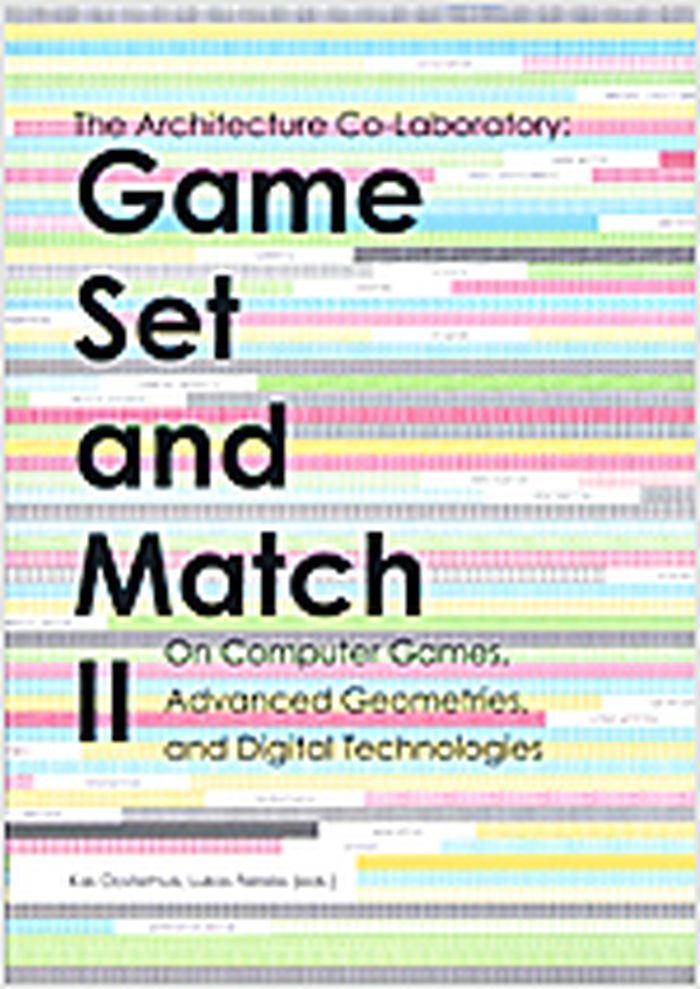
This publication brings together the manifold, international and multidisciplinary contributions of the GameSetandMatch II conference - the architecture co-laboratory, directed by Kas Oosterhuis, professor at the Faculty of Architecture of the Delft University of technology, the Netherlands. It adresses contemporary and future changes within and across the boundaries of digitally driven architectural and design practices. The notion of architecture as a co-laboratory accentuates this strong devotion to experimentation and collaboration. In so doing it offers a kaleidoscopic view of, rather than a defines perspective on current developments in the digital design domain. The authors of the essays and papers included in this book come from very diverse backgrounds ranging from architecture and design to technology and engineering as well as computer sciences and humanities. An interlaced series of three thematic areas - 'Play', 'Geometry ++' and 'Open Source' - will relate diverse sources of knowledge and enable the reader to cross reference, question, recontextualize, and even create new connections among the content presented. "GameSetandMatch II" includes contributions from Robert Aish, Ole Bouman, Raoul Bunschoten, Bernard Cache, Jan Edler and Tim Edler, Georg Flachbart, John Frazer, Mark Goulthorpe, Branko Kolarevic, Anne Nigten, Marcos Novak, Kas Oosterhuis, Antonino Saggio, Katie Salen, Norbert Streitz, Tom Verebes, Peter Weibel and many more.
The architecture co-laboratory : game set and match II - on computer games, advanced geometries, and digital technologies
Actions:
Price:
$69.50
(available to order)
Summary:
This publication brings together the manifold, international and multidisciplinary contributions of the GameSetandMatch II conference - the architecture co-laboratory, directed by Kas Oosterhuis, professor at the Faculty of Architecture of the Delft University of technology, the Netherlands. It adresses contemporary and future changes within and across the boundaries of digitally driven architectural and design practices. The notion of architecture as a co-laboratory accentuates this strong devotion to experimentation and collaboration. In so doing it offers a kaleidoscopic view of, rather than a defines perspective on current developments in the digital design domain. The authors of the essays and papers included in this book come from very diverse backgrounds ranging from architecture and design to technology and engineering as well as computer sciences and humanities. An interlaced series of three thematic areas - 'Play', 'Geometry ++' and 'Open Source' - will relate diverse sources of knowledge and enable the reader to cross reference, question, recontextualize, and even create new connections among the content presented. "GameSetandMatch II" includes contributions from Robert Aish, Ole Bouman, Raoul Bunschoten, Bernard Cache, Jan Edler and Tim Edler, Georg Flachbart, John Frazer, Mark Goulthorpe, Branko Kolarevic, Anne Nigten, Marcos Novak, Kas Oosterhuis, Antonino Saggio, Katie Salen, Norbert Streitz, Tom Verebes, Peter Weibel and many more.
Form:
books
books
Publication:
January 1900, Delft
January 1900, Delft
Subject:
Architecture since 1900, Europe
Architecture since 1900, Europe
Form:
books
books
Actions:
Price:
$54.50
(available to order)
Summary:
What does the Western city at the end of the twentieth century look like? How did the modern metropolis of congestion and density turn into a posturban or even postsuburban cityscape? What are edge cities and technoburbs? How has the social composition of cities changed in the postwar era? What do gated communities tell us about social fragmentation? Is public space in(...)
$54.50
(available to order)
Summary:
What does the Western city at the end of the twentieth century look like? How did the modern metropolis of congestion and density turn into a posturban or even postsuburban cityscape? What are edge cities and technoburbs? How has the social composition of cities changed in the postwar era? What do gated communities tell us about social fragmentation? Is public space in(...)
Publication:
January 1900, Rotterdam
January 1900, Rotterdam
Title:
The urban condition : space, community, and self in the contemporary metropolis
Actions:
Price:
$54.50
(available to order)
Summary:
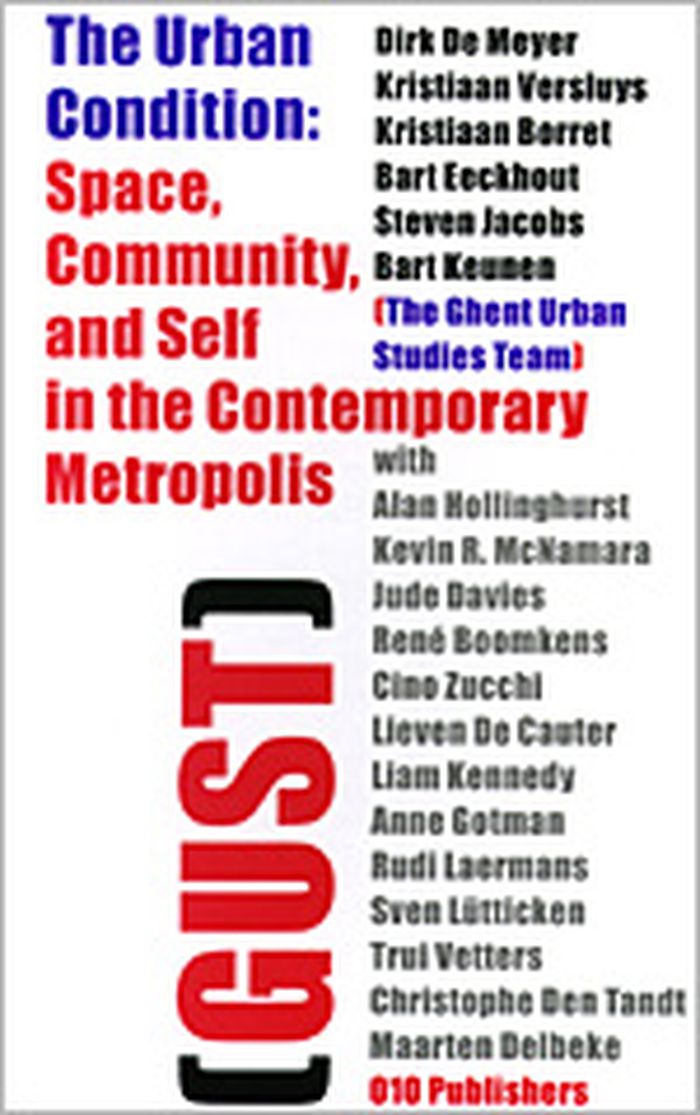
What does the Western city at the end of the twentieth century look like? How did the modern metropolis of congestion and density turn into a posturban or even postsuburban cityscape? What are edge cities and technoburbs? How has the social composition of cities changed in the postwar era? What do gated communities tell us about social fragmentation? Is public space in the contemporary city being privatized and militarized? How can the urban self still be defined? What role does consumer aestheticism have to play in this? These and many more questions are addressed by this uniquely conceived multidisciplinary study. "The Urban Condition" seeks to interfere in current debates over the future and interpretation of our urban landscapes by reuniting studies of the city as a physical and material phenomenon and as a cultural and mental (arte)fact. The Ghent Urban Studies Team responsible for the writing and editing of this volume is directed by Kristiaan Versluys and Dirk De Meyer at the University of Ghent, Belgium. It is an interdisciplinary research team of young academics that further consists of Kristiaan Borret, Bart Eeckhout, Steven Jacobs, and Bart Keunen. The collective expertise of GUST ranges from architectural theory, urban planning, and art history to philosophy, literary criticism and cultural theory.
The urban condition : space, community, and self in the contemporary metropolis
Actions:
Price:
$54.50
(available to order)
Summary:
What does the Western city at the end of the twentieth century look like? How did the modern metropolis of congestion and density turn into a posturban or even postsuburban cityscape? What are edge cities and technoburbs? How has the social composition of cities changed in the postwar era? What do gated communities tell us about social fragmentation? Is public space in the contemporary city being privatized and militarized? How can the urban self still be defined? What role does consumer aestheticism have to play in this? These and many more questions are addressed by this uniquely conceived multidisciplinary study. "The Urban Condition" seeks to interfere in current debates over the future and interpretation of our urban landscapes by reuniting studies of the city as a physical and material phenomenon and as a cultural and mental (arte)fact. The Ghent Urban Studies Team responsible for the writing and editing of this volume is directed by Kristiaan Versluys and Dirk De Meyer at the University of Ghent, Belgium. It is an interdisciplinary research team of young academics that further consists of Kristiaan Borret, Bart Eeckhout, Steven Jacobs, and Bart Keunen. The collective expertise of GUST ranges from architectural theory, urban planning, and art history to philosophy, literary criticism and cultural theory.
Form:
books
books
Publication:
January 1900, Rotterdam
January 1900, Rotterdam
Form:
books
books
Price:
$13.00
(available to order)
Summary:
At the turn of the millennium--the end of a calibrated period of time--it seems necessary to ask certain questions, foremost among them: Anymore? Anymore history and theory? Anymore architecture? Of particular concern are the last two hundred years, a self-conscious (...)
$13.00
(available to order)
Summary:
At the turn of the millennium--the end of a calibrated period of time--it seems necessary to ask certain questions, foremost among them: Anymore? Anymore history and theory? Anymore architecture? Of particular concern are the last two hundred years, a self-conscious (...)
Subject:
Architectural Theory
Architectural Theory
Publication:
September 2000, Cambridge, Mass.
September 2000, Cambridge, Mass.
Title:
Anymore
Actions:
Price:
$13.00
(available to order)
Summary:
At the turn of the millennium--the end of a calibrated period of time--it seems necessary to ask certain questions, foremost among them: Anymore? Anymore history and theory? Anymore architecture? Of particular concern are the last two hundred years, a self-conscious period known as modernism. Can we assume that a simple calendar change signals an end or a time of end? Is there anymore? The contributions in "Anymore" are by architects, critics, historians, philosophers, sociologists, urbanists, and others. They include Akira Asada, Hubert Damisch, Peter Eisenman, Arata Isozki, Rem Koolhaas, Rosalind Krauss, Ignasi de Solà-Morales, Mark C. Taylor, Bernard Tschumi, and Anthony Vidler, as well as young architects from France whose work many American readers will encounter here for the first time. Anymore is the ninth book in the ongoing series that began in 1991 with "Anyone" and was followed by "Anywhere", "Anyway", "Anyplace", "Anywise", "Anybody", "Anyhow", and "Anytime". Each volume is based on a conference at which architects and leaders in other fields come together to present papers and discuss a particular idea in architecture from a cross-cultural and multidisciplinary perspective. The conference upon which "Anymore" is based took place in Paris in June 1999 and will be followed by "Anything".
Anymore
Actions:
Price:
$13.00
(available to order)
Summary:
At the turn of the millennium--the end of a calibrated period of time--it seems necessary to ask certain questions, foremost among them: Anymore? Anymore history and theory? Anymore architecture? Of particular concern are the last two hundred years, a self-conscious period known as modernism. Can we assume that a simple calendar change signals an end or a time of end? Is there anymore? The contributions in "Anymore" are by architects, critics, historians, philosophers, sociologists, urbanists, and others. They include Akira Asada, Hubert Damisch, Peter Eisenman, Arata Isozki, Rem Koolhaas, Rosalind Krauss, Ignasi de Solà-Morales, Mark C. Taylor, Bernard Tschumi, and Anthony Vidler, as well as young architects from France whose work many American readers will encounter here for the first time. Anymore is the ninth book in the ongoing series that began in 1991 with "Anyone" and was followed by "Anywhere", "Anyway", "Anyplace", "Anywise", "Anybody", "Anyhow", and "Anytime". Each volume is based on a conference at which architects and leaders in other fields come together to present papers and discuss a particular idea in architecture from a cross-cultural and multidisciplinary perspective. The conference upon which "Anymore" is based took place in Paris in June 1999 and will be followed by "Anything".
Form:
books
books
Publication:
September 2000, Cambridge, Mass.
September 2000, Cambridge, Mass.
Subject:
Architectural Theory
Architectural Theory
Form:
journals and magazines
journals and magazines
Actions:
Price:
$36.00
(available to order)
Summary:
In our culture, in which the media play a predominant role, there is an increasing emphasis on achieving visibility and transparency. Openness and communication are subservient to that visibility, and even seem to coincide with it more and more emphatically. At the same time, both notions form the foundations for social order and political power. In our over-visualized(...)
$36.00
(available to order)
Summary:
In our culture, in which the media play a predominant role, there is an increasing emphasis on achieving visibility and transparency. Openness and communication are subservient to that visibility, and even seem to coincide with it more and more emphatically. At the same time, both notions form the foundations for social order and political power. In our over-visualized(...)
Title:
Open 8 : (in)visibility : beyond the image in art, culture and the public domain
Actions:
Price:
$36.00
(available to order)
Summary:
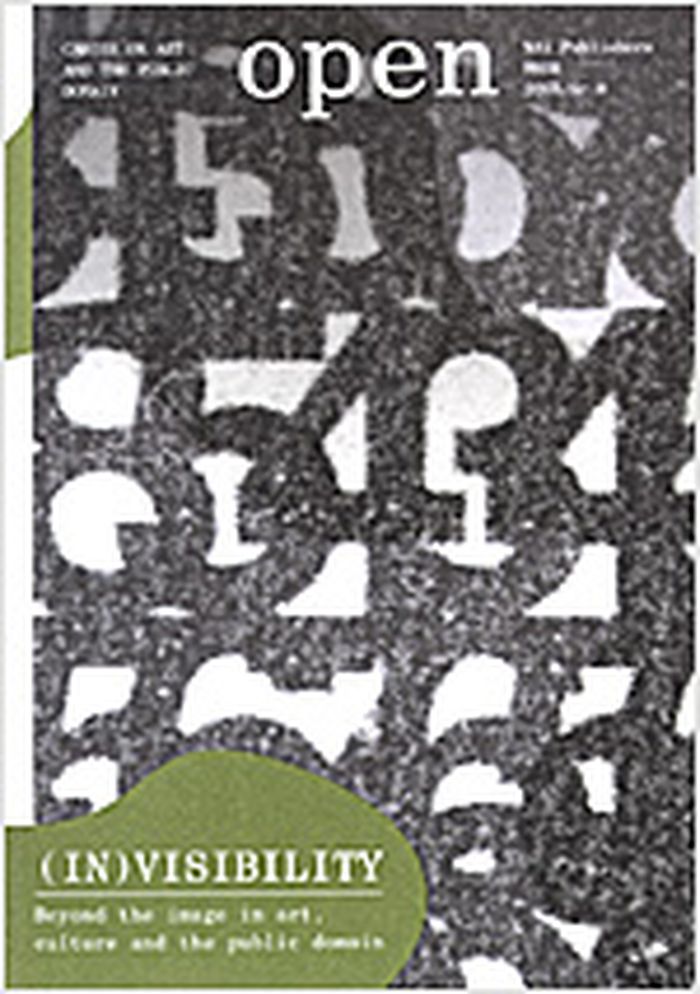
In our culture, in which the media play a predominant role, there is an increasing emphasis on achieving visibility and transparency. Openness and communication are subservient to that visibility, and even seem to coincide with it more and more emphatically. At the same time, both notions form the foundations for social order and political power. In our over-visualized culture, however, it seems as if every message or social agenda is being squeezed out in favour of styling, commerce and fashion. What position does art occupy in this, or what position should it occupy? In "Open" 8, guest editors Willem van Weelden and Jan van Grunsven write a general introduction, Brian Holmes explores (in)visibility as a tactic in art, and Jouke Kleerebezem asks who actually decides about (in)visibility in the public space; Camiel van Winkel writes over the visual deficit of contemporary culture; Dieter Lesage critically examines the proposals by OMA/AMO for a new iconography of Europe; Henk Oosterling investigates the FBI's prosecution of the Critical Art Ensemble; Jorinde Seijdel considers how media images are used as evidence for social and political events. "Open" 8 includes interviews with Arno van der Mark of DRFTWD, an Amsterdam-based multidisciplinary design bureau, and with the French research organization Bureau d'études, as well as an account of a roundtable discussion about a possible new legitimation for academic training in 'art and the public space'. The cahier also presents a column by the Belgian architect/author Wouter Davidts, photographic essays and book reviews.
Open 8 : (in)visibility : beyond the image in art, culture and the public domain
Actions:
Price:
$36.00
(available to order)
Summary:
In our culture, in which the media play a predominant role, there is an increasing emphasis on achieving visibility and transparency. Openness and communication are subservient to that visibility, and even seem to coincide with it more and more emphatically. At the same time, both notions form the foundations for social order and political power. In our over-visualized culture, however, it seems as if every message or social agenda is being squeezed out in favour of styling, commerce and fashion. What position does art occupy in this, or what position should it occupy? In "Open" 8, guest editors Willem van Weelden and Jan van Grunsven write a general introduction, Brian Holmes explores (in)visibility as a tactic in art, and Jouke Kleerebezem asks who actually decides about (in)visibility in the public space; Camiel van Winkel writes over the visual deficit of contemporary culture; Dieter Lesage critically examines the proposals by OMA/AMO for a new iconography of Europe; Henk Oosterling investigates the FBI's prosecution of the Critical Art Ensemble; Jorinde Seijdel considers how media images are used as evidence for social and political events. "Open" 8 includes interviews with Arno van der Mark of DRFTWD, an Amsterdam-based multidisciplinary design bureau, and with the French research organization Bureau d'études, as well as an account of a roundtable discussion about a possible new legitimation for academic training in 'art and the public space'. The cahier also presents a column by the Belgian architect/author Wouter Davidts, photographic essays and book reviews.
Form:
journals and magazines
journals and magazines
Publication:
January 1900, Rotterdam
January 1900, Rotterdam
Subject:
Magazines
Magazines


