


3189 Results
Form:
books
books

Title:
Architecture and the right to heal: Resettler nationalism in the aftermath of conflict and disaster
Architecture and the right to heal: Resettler nationalism in the aftermath of conflict and disaster
Actions:
Price:
$52.95
(available in store)
Summary:
In "Architecture and the right to heal," Esra Akcan calls for architecture to take an active role in healing communities affected by socioeconomic, political, and environmental disasters. Akcan frames these processes by discussing buildings and spaces in relation to climate change mitigation and transitional justice. Focusing on lands held by the former Ottoman Empire,(...)
$52.95
(available in store)
Summary:
In "Architecture and the right to heal," Esra Akcan calls for architecture to take an active role in healing communities affected by socioeconomic, political, and environmental disasters. Akcan frames these processes by discussing buildings and spaces in relation to climate change mitigation and transitional justice. Focusing on lands held by the former Ottoman Empire,(...)
Title:
Architecture and the right to heal: Resettler nationalism in the aftermath of conflict and disaster
Actions:
Price:
$52.95
(available in store)
Summary:
In "Architecture and the right to heal," Esra Akcan calls for architecture to take an active role in healing communities affected by socioeconomic, political, and environmental disasters. Akcan frames these processes by discussing buildings and spaces in relation to climate change mitigation and transitional justice. Focusing on lands held by the former Ottoman Empire, Akcan highlights the ongoing struggle to heal after internal social, state, and business-led violence ranging from forced disappearance to mass extinction. Putting forth the concept of resettler nationalism as a source of displacement and partition, she argues that while architecture and urban planning have been weaponized to segregate and subjugate minorities throughout history, they could instead confront systemic violence and make accountability and reparations possible. For Akcan, healing constitutes a matter of rights as well as a holistic notion of justice that addresses the intersections of social, global, and environmental issues and one can be achieved through architecture. By locating spaces of political and ecological harm, Akcan advocates for healing on individual, communal, and planetary levels.
Architecture and the right to heal: Resettler nationalism in the aftermath of conflict and disaster
Actions:
Price:
$52.95
(available in store)
Summary:
In "Architecture and the right to heal," Esra Akcan calls for architecture to take an active role in healing communities affected by socioeconomic, political, and environmental disasters. Akcan frames these processes by discussing buildings and spaces in relation to climate change mitigation and transitional justice. Focusing on lands held by the former Ottoman Empire, Akcan highlights the ongoing struggle to heal after internal social, state, and business-led violence ranging from forced disappearance to mass extinction. Putting forth the concept of resettler nationalism as a source of displacement and partition, she argues that while architecture and urban planning have been weaponized to segregate and subjugate minorities throughout history, they could instead confront systemic violence and make accountability and reparations possible. For Akcan, healing constitutes a matter of rights as well as a holistic notion of justice that addresses the intersections of social, global, and environmental issues and one can be achieved through architecture. By locating spaces of political and ecological harm, Akcan advocates for healing on individual, communal, and planetary levels.
Form:
books
books
Publication:
November 2025
November 2025
Subject:
Architecture ecologies
Architecture ecologies
Form:
books
books
Price:
$50.00
(available to order)
Summary:
Daring, bold, dramatic, towering, impossibly glamorous: this is how we imagine New York in its golden age, and this is how Samuel H. Gottscho, the preeminent architectural photographer of his generation, captured it. Through his lens, New York of the 1930s became the quintessential modern metropolis, a round-the-clock city in which night was as charismatic as day.(...)
$50.00
(available to order)
Summary:
Daring, bold, dramatic, towering, impossibly glamorous: this is how we imagine New York in its golden age, and this is how Samuel H. Gottscho, the preeminent architectural photographer of his generation, captured it. Through his lens, New York of the 1930s became the quintessential modern metropolis, a round-the-clock city in which night was as charismatic as day.(...)
Title:
The mythic city : photographs of New York by Samuel H. Gottscho, 1925-1940
Actions:
Price:
$50.00
(available to order)
Summary:
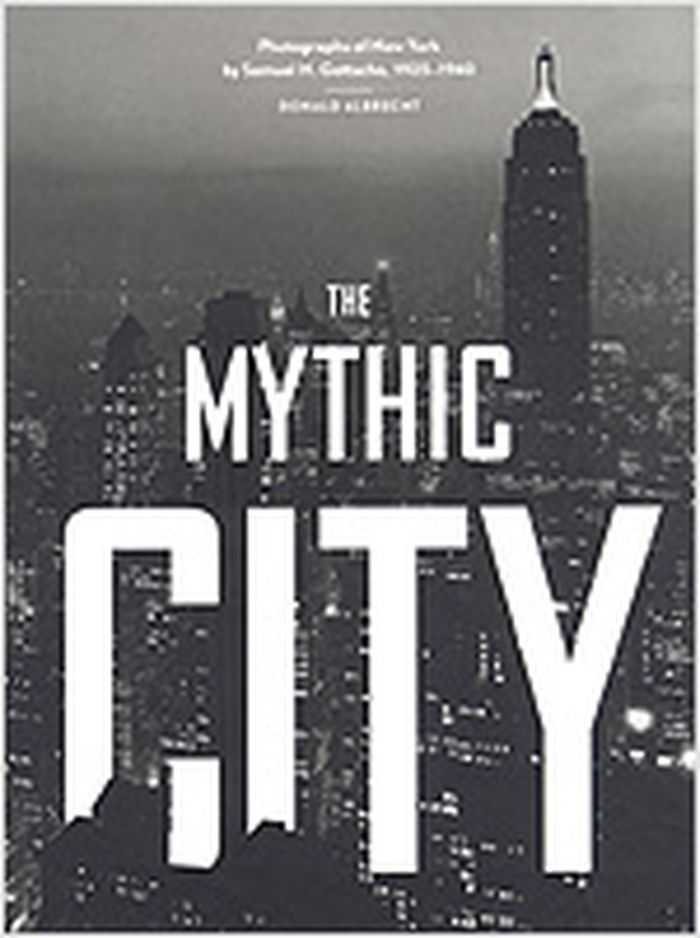
Daring, bold, dramatic, towering, impossibly glamorous: this is how we imagine New York in its golden age, and this is how Samuel H. Gottscho, the preeminent architectural photographer of his generation, captured it. Through his lens, New York of the 1930s became the quintessential modern metropolis, a round-the-clock city in which night was as charismatic as day. Rigorously editing out the Depression-weary city's more seamy aspects—its tenement slums, breadlines, and soup kitchens—Gottscho presented a dreamlike Gotham of skyscrapers and penthouse luxury that literally and figuratively glowed with glamour's sheen. His gimlet eye focused on the bold interplay of sun and shadow, dramatizing the chiseled forms of Manhattan's signature skyline and bridges. The Empire State and Chrysler buildings, Rockefeller Center, the Plaza, the George Washington Bridge—Gottscho brought them all to sparkling life. In this book, historian Donald Albrecht presents 175 of Gottscho's images of the city, from the Battery to Harlem. An introductory essay tells the story of this photographer, describing his working methods and philosophy, while placing his work in the broader context of photographic history.
The mythic city : photographs of New York by Samuel H. Gottscho, 1925-1940
Actions:
Price:
$50.00
(available to order)
Summary:
Daring, bold, dramatic, towering, impossibly glamorous: this is how we imagine New York in its golden age, and this is how Samuel H. Gottscho, the preeminent architectural photographer of his generation, captured it. Through his lens, New York of the 1930s became the quintessential modern metropolis, a round-the-clock city in which night was as charismatic as day. Rigorously editing out the Depression-weary city's more seamy aspects—its tenement slums, breadlines, and soup kitchens—Gottscho presented a dreamlike Gotham of skyscrapers and penthouse luxury that literally and figuratively glowed with glamour's sheen. His gimlet eye focused on the bold interplay of sun and shadow, dramatizing the chiseled forms of Manhattan's signature skyline and bridges. The Empire State and Chrysler buildings, Rockefeller Center, the Plaza, the George Washington Bridge—Gottscho brought them all to sparkling life. In this book, historian Donald Albrecht presents 175 of Gottscho's images of the city, from the Battery to Harlem. An introductory essay tells the story of this photographer, describing his working methods and philosophy, while placing his work in the broader context of photographic history.
Form:
books
books
Publication:
October 2005, New York
October 2005, New York
Subject:
Photography monographs
Photography monographs
Form:
books
books
Price:
$52.50
(available to order)
Summary:
In this book, Maureen Carroll examines the most recent evidence of the existence of ancient gardens, the horticultural practices used to plant and maintain them, and the many forms and functions they assumed. Surveying the ancient Near East, Egypt, Greece, Italy, and the provinces of the Roman Empire from the second millennium B.C. to the middle of the first millennium(...)
$52.50
(available to order)
Summary:
In this book, Maureen Carroll examines the most recent evidence of the existence of ancient gardens, the horticultural practices used to plant and maintain them, and the many forms and functions they assumed. Surveying the ancient Near East, Egypt, Greece, Italy, and the provinces of the Roman Empire from the second millennium B.C. to the middle of the first millennium(...)
Title:
Earthly paradises : ancient gardens in history and archeology
Actions:
Price:
$52.50
(available to order)
Summary:
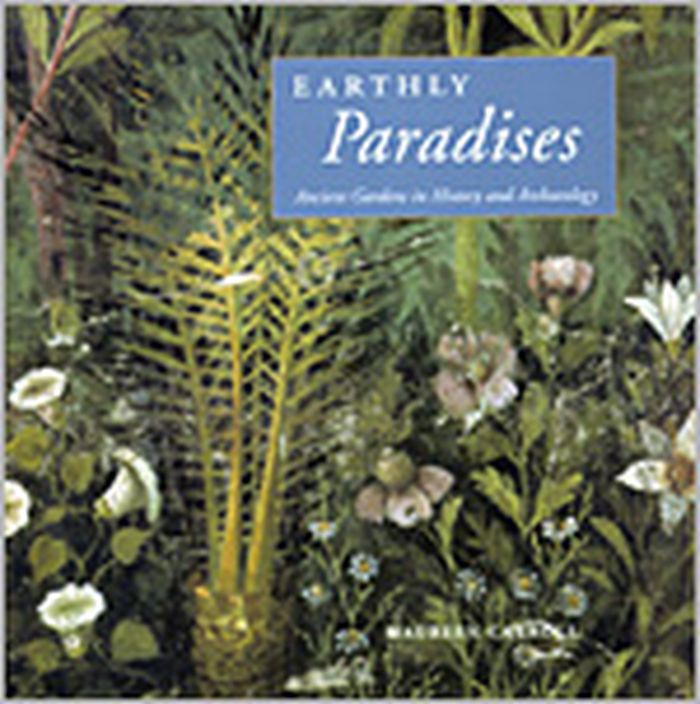
In this book, Maureen Carroll examines the most recent evidence of the existence of ancient gardens, the horticultural practices used to plant and maintain them, and the many forms and functions they assumed. Surveying the ancient Near East, Egypt, Greece, Italy, and the provinces of the Roman Empire from the second millennium B.C. to the middle of the first millennium A.D., Carroll finds that whether grown as sources of food, symbols of wealth and prestige, or dwellings for the gods, the cultivation of gardens played an integral role in both the public and private spheres of the ancient world. She concludes with a chapter on the survival of ancient gardening traditions in the Islamic and Byzantine worlds and the ways in which gardens have figured in these cultures' perceptions and depictions of paradise. Culling evidence from a wide variety of archaeological, textual, and pictorial sources, and illustrated with images from tomb and wall paintings, sculptural reliefs, manuscripts, and reconstructions, Carroll provides fascinating insights into the earthly paradises of antiquity.
Earthly paradises : ancient gardens in history and archeology
Actions:
Price:
$52.50
(available to order)
Summary:
In this book, Maureen Carroll examines the most recent evidence of the existence of ancient gardens, the horticultural practices used to plant and maintain them, and the many forms and functions they assumed. Surveying the ancient Near East, Egypt, Greece, Italy, and the provinces of the Roman Empire from the second millennium B.C. to the middle of the first millennium A.D., Carroll finds that whether grown as sources of food, symbols of wealth and prestige, or dwellings for the gods, the cultivation of gardens played an integral role in both the public and private spheres of the ancient world. She concludes with a chapter on the survival of ancient gardening traditions in the Islamic and Byzantine worlds and the ways in which gardens have figured in these cultures' perceptions and depictions of paradise. Culling evidence from a wide variety of archaeological, textual, and pictorial sources, and illustrated with images from tomb and wall paintings, sculptural reliefs, manuscripts, and reconstructions, Carroll provides fascinating insights into the earthly paradises of antiquity.
Form:
books
books
Publication:
September 2003, Los Angeles
September 2003, Los Angeles
Subject:
Gardens
Gardens
Form:
books
books
Title:
The Forbidden City
The Forbidden City
Actions:
Price:
$19.95
(available to order)
Summary:
The Forbidden City (Zijin Cheng) lying at the heart of Beijing formed the hub of the Celestial Empire for five centuries. Over the past century it has led a reduced life as the refuge for a deposed emperor, as well as a heritage museum for monarchist, republican, and socialist citizens, and it has been celebrated and excoriated as a symbol of all that was magnificent and(...)
$19.95
(available to order)
Summary:
The Forbidden City (Zijin Cheng) lying at the heart of Beijing formed the hub of the Celestial Empire for five centuries. Over the past century it has led a reduced life as the refuge for a deposed emperor, as well as a heritage museum for monarchist, republican, and socialist citizens, and it has been celebrated and excoriated as a symbol of all that was magnificent and(...)
Title:
The Forbidden City
Actions:
Price:
$19.95
(available to order)
Summary:
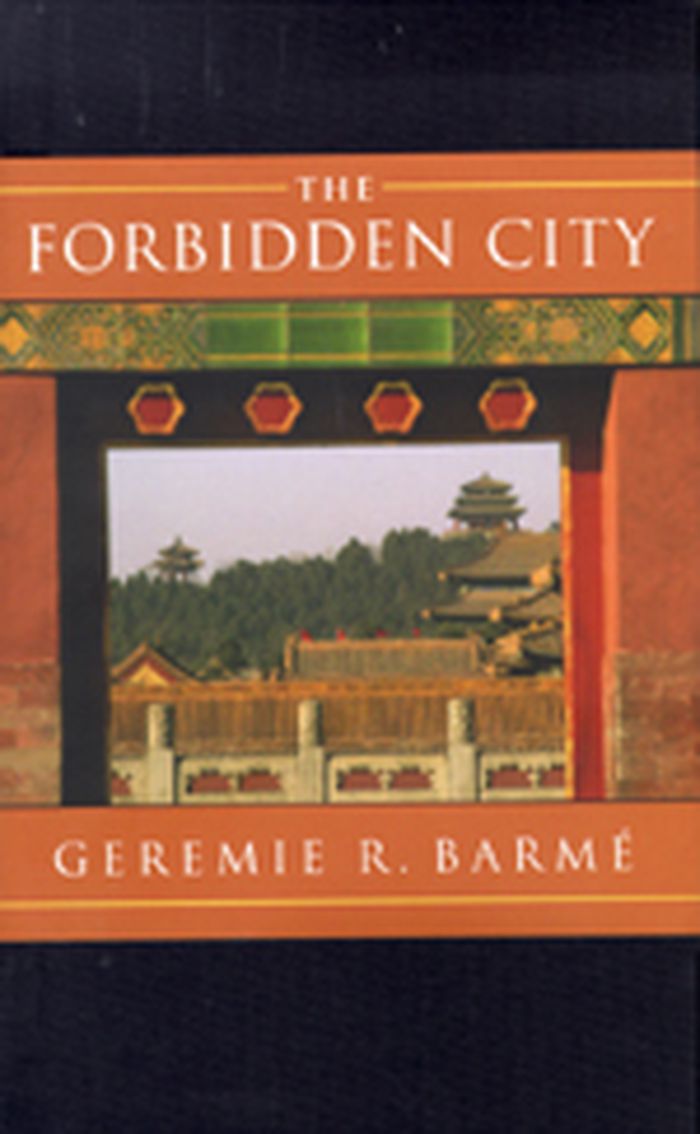
The Forbidden City (Zijin Cheng) lying at the heart of Beijing formed the hub of the Celestial Empire for five centuries. Over the past century it has led a reduced life as the refuge for a deposed emperor, as well as a heritage museum for monarchist, republican, and socialist citizens, and it has been celebrated and excoriated as a symbol of all that was magnificent and terrible in dynastic China’s legacy. The Forbidden City’s vermilion walls have fueled literary fantasies that have become an intrinsic part of its disputed and documented history. Mao Zedong even considered razing the entire structure to make way for the buildings of a new socialist China. The fictions surrounding the Forbidden City have also had an international reach, and writers like Franz Kafka, Elias Canetti, Jorge Luis Borges, and Mervyn Peake have all succumbed to its myths. The politics it enshrined have provided the vocabulary of power that is used in China to the present day, though it is now better known as a film set or the background of displays of opera, rock, and fashion.
The Forbidden City
Actions:
Price:
$19.95
(available to order)
Summary:
The Forbidden City (Zijin Cheng) lying at the heart of Beijing formed the hub of the Celestial Empire for five centuries. Over the past century it has led a reduced life as the refuge for a deposed emperor, as well as a heritage museum for monarchist, republican, and socialist citizens, and it has been celebrated and excoriated as a symbol of all that was magnificent and terrible in dynastic China’s legacy. The Forbidden City’s vermilion walls have fueled literary fantasies that have become an intrinsic part of its disputed and documented history. Mao Zedong even considered razing the entire structure to make way for the buildings of a new socialist China. The fictions surrounding the Forbidden City have also had an international reach, and writers like Franz Kafka, Elias Canetti, Jorge Luis Borges, and Mervyn Peake have all succumbed to its myths. The politics it enshrined have provided the vocabulary of power that is used in China to the present day, though it is now better known as a film set or the background of displays of opera, rock, and fashion.
Form:
books
books
Publication:
May 2008, Cambridge
May 2008, Cambridge
Subject:
History until 1900, Asia
History until 1900, Asia
Form:
books
books
Actions:
Price:
$131.95
(available to order)
Summary:
This is the first in a new series of five books describing and illustrating the seminal architectural traditions of the world. "Antiquity" traces architectural history from its very beginnings until the time when the traditions that shape today's environments began to flourish. Highly illustrated, with 1,200 colour photographs and 400 drawings, the book is divided into(...)
$131.95
(available to order)
Summary:
This is the first in a new series of five books describing and illustrating the seminal architectural traditions of the world. "Antiquity" traces architectural history from its very beginnings until the time when the traditions that shape today's environments began to flourish. Highly illustrated, with 1,200 colour photographs and 400 drawings, the book is divided into(...)
Title:
Antiquity :origins, classicism and the new Rome
Actions:
Price:
$131.95
(available to order)
Summary:
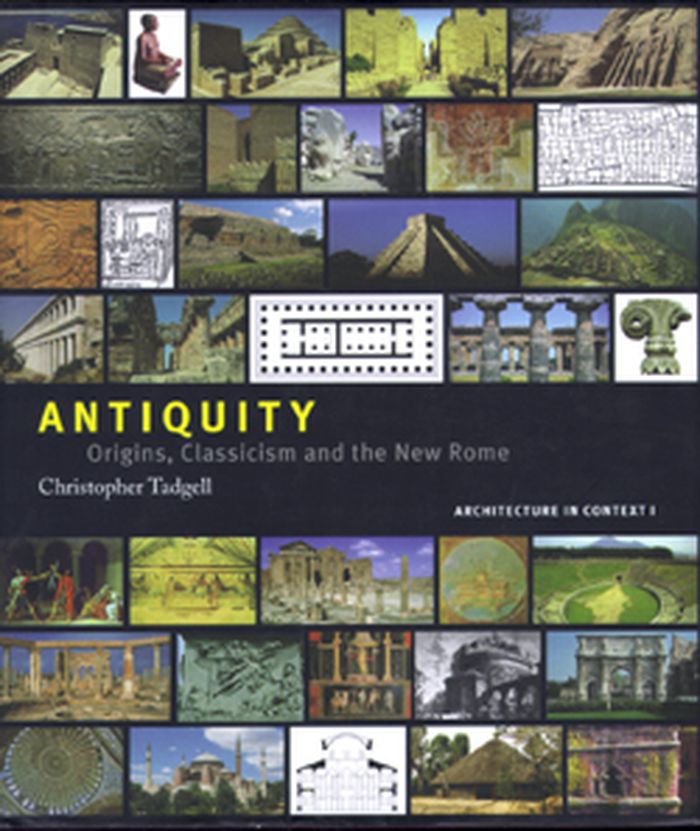
This is the first in a new series of five books describing and illustrating the seminal architectural traditions of the world. "Antiquity" traces architectural history from its very beginnings until the time when the traditions that shape today's environments began to flourish. Highly illustrated, with 1,200 colour photographs and 400 drawings, the book is divided into ten sections progressing through time: West Asia and the Eastern Mediterranean, Pre-Columbian America, Hellenic Hellenes Divided; Macedonians Ascendant Etruscans and Hellenistic Romans, Imperial Rome Christianity, and Empire Rome, and New Rome; The West: Imperial Revival and the Latin Cross; and The East: Imperial Survival and the Greek Cross. More than a catalogue of buildings, in this work Tadgell provides their political, technological, social and cultural contexts and explores architecture, not only as the development of form and space but as an expression of the civilization within which it evolves. The buildings are analyzed and illustrated with photographs and drawings while the societies that produced them are brought to life through a broad selection of their artefacts
Antiquity :origins, classicism and the new Rome
Actions:
Price:
$131.95
(available to order)
Summary:
This is the first in a new series of five books describing and illustrating the seminal architectural traditions of the world. "Antiquity" traces architectural history from its very beginnings until the time when the traditions that shape today's environments began to flourish. Highly illustrated, with 1,200 colour photographs and 400 drawings, the book is divided into ten sections progressing through time: West Asia and the Eastern Mediterranean, Pre-Columbian America, Hellenic Hellenes Divided; Macedonians Ascendant Etruscans and Hellenistic Romans, Imperial Rome Christianity, and Empire Rome, and New Rome; The West: Imperial Revival and the Latin Cross; and The East: Imperial Survival and the Greek Cross. More than a catalogue of buildings, in this work Tadgell provides their political, technological, social and cultural contexts and explores architecture, not only as the development of form and space but as an expression of the civilization within which it evolves. The buildings are analyzed and illustrated with photographs and drawings while the societies that produced them are brought to life through a broad selection of their artefacts
Form:
books
books
Publication:
April 2007, New York
April 2007, New York
Subject:
History until 1900
History until 1900
Form:
books
books
Title:
Sugimoto : architecture
Sugimoto : architecture
Actions:
Price:
$82.50
(available to order)
Summary:
Known for his long-exposure photographic series of empty movie theaters and drive-ins, seascapes, museum dioramas, and waxworks, Hiroshi Sugimoto has been turning his camera on international icons of 20th-century architecture since 1997. His deliberately blurred and seemingly timeless photographs depict structures as diverse as the Empire State Building, Le Corbusier's(...)
$82.50
(available to order)
Summary:
Known for his long-exposure photographic series of empty movie theaters and drive-ins, seascapes, museum dioramas, and waxworks, Hiroshi Sugimoto has been turning his camera on international icons of 20th-century architecture since 1997. His deliberately blurred and seemingly timeless photographs depict structures as diverse as the Empire State Building, Le Corbusier's(...)
Subject:
Photography monographs
Photography monographs
Publication:
March 2003, New York
March 2003, New York
Title:
Sugimoto : architecture
Actions:
Price:
$82.50
(available to order)
Summary:
Known for his long-exposure photographic series of empty movie theaters and drive-ins, seascapes, museum dioramas, and waxworks, Hiroshi Sugimoto has been turning his camera on international icons of 20th-century architecture since 1997. His deliberately blurred and seemingly timeless photographs depict structures as diverse as the Empire State Building, Le Corbusier's Chapel de Nôtre Dame du Haut, and Tadao Ando's Church of Light in Osaka. The resulting black-and-white photographs, shot distinctly out of focus and from unusual angles, are not attempts at documentation but rather evocation--meant to isolate the buildings from their contexts, allowing them to exist as dreamlike, uninhabited ideals. Among the other buildings represented in the series are Philippe Starck's Asahi Breweries, Fumihiko Maki's Fujisawa Municipal Gymnasium, the United Nations Building, the Chrysler Building, Giuseppi Terragni's Santelia Monument Como, the World Trade Center, Mies van der Rohe's Seagram Building, Antonio Gaudí's Casa Batlló II, the 1922 Schindler House, and buildings by Frank Gehry, Frank Lloyd Wright, and many others in Europe, North America, and Asia.
Sugimoto : architecture
Actions:
Price:
$82.50
(available to order)
Summary:
Known for his long-exposure photographic series of empty movie theaters and drive-ins, seascapes, museum dioramas, and waxworks, Hiroshi Sugimoto has been turning his camera on international icons of 20th-century architecture since 1997. His deliberately blurred and seemingly timeless photographs depict structures as diverse as the Empire State Building, Le Corbusier's Chapel de Nôtre Dame du Haut, and Tadao Ando's Church of Light in Osaka. The resulting black-and-white photographs, shot distinctly out of focus and from unusual angles, are not attempts at documentation but rather evocation--meant to isolate the buildings from their contexts, allowing them to exist as dreamlike, uninhabited ideals. Among the other buildings represented in the series are Philippe Starck's Asahi Breweries, Fumihiko Maki's Fujisawa Municipal Gymnasium, the United Nations Building, the Chrysler Building, Giuseppi Terragni's Santelia Monument Como, the World Trade Center, Mies van der Rohe's Seagram Building, Antonio Gaudí's Casa Batlló II, the 1922 Schindler House, and buildings by Frank Gehry, Frank Lloyd Wright, and many others in Europe, North America, and Asia.
Form:
books
books
Publication:
March 2003, New York
March 2003, New York
Subject:
Photography monographs
Photography monographs
Form:
books
books
Price:
$70.00
(available to order)
Summary:
From its birth as a remote trading outpost on the fringes of the Dutch empire to its current status as the so-called Capital of the World, New York has always captivated visual artists. The extraordinary prints collected by the New-York Historical Society over the course of its history vividly preserve these impressions on paper. In this handsome volume more than 150 of(...)
$70.00
(available to order)
Summary:
From its birth as a remote trading outpost on the fringes of the Dutch empire to its current status as the so-called Capital of the World, New York has always captivated visual artists. The extraordinary prints collected by the New-York Historical Society over the course of its history vividly preserve these impressions on paper. In this handsome volume more than 150 of(...)
Title:
Impressions of New York : prints from the New-York historical society
Actions:
Price:
$70.00
(available to order)
Summary:
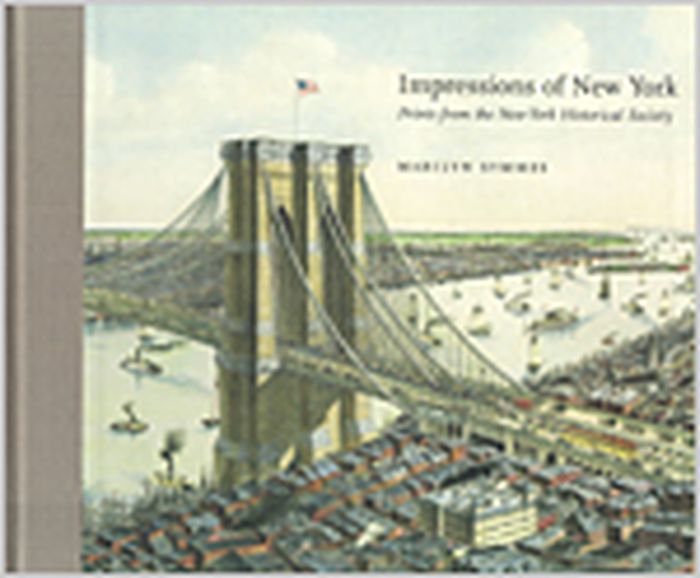
From its birth as a remote trading outpost on the fringes of the Dutch empire to its current status as the so-called Capital of the World, New York has always captivated visual artists. The extraordinary prints collected by the New-York Historical Society over the course of its history vividly preserve these impressions on paper. In this handsome volume more than 150 of these views of the city—including two spectacular gatefold panoramas—speak eloquently of the surging power of this dynamic urban centre. At the same time, they present an intimate portrait of everyday life as it has been lived and savoured in this great city for more than three centuries. The companion to an exhibition celebrating the New-York Historical Society's bicentennial anniversary, this beautifully printed volume presents a full range of historic images, from 1672 to the present. In the lively essay and information-filled captions, curator and historian Marilyn Symmes tells the unique stories behind the people and places, parks and buildings, streets and neighbourhoods, parades and events depicted in each image—in essence, the story of New York City itself.
Impressions of New York : prints from the New-York historical society
Actions:
Price:
$70.00
(available to order)
Summary:
From its birth as a remote trading outpost on the fringes of the Dutch empire to its current status as the so-called Capital of the World, New York has always captivated visual artists. The extraordinary prints collected by the New-York Historical Society over the course of its history vividly preserve these impressions on paper. In this handsome volume more than 150 of these views of the city—including two spectacular gatefold panoramas—speak eloquently of the surging power of this dynamic urban centre. At the same time, they present an intimate portrait of everyday life as it has been lived and savoured in this great city for more than three centuries. The companion to an exhibition celebrating the New-York Historical Society's bicentennial anniversary, this beautifully printed volume presents a full range of historic images, from 1672 to the present. In the lively essay and information-filled captions, curator and historian Marilyn Symmes tells the unique stories behind the people and places, parks and buildings, streets and neighbourhoods, parades and events depicted in each image—in essence, the story of New York City itself.
Form:
books
books
Publication:
December 2004, New York
December 2004, New York
Subject:
History until 1900
History until 1900
Form:
books
books
Holdings:
Description:
320 pages
Description:
320 pages
Author:
Subject:
Publication:
La Garenne Colombes : Bernard Chauveau Editeur 2019.
La Garenne Colombes : Bernard Chauveau Editeur 2019.
Title:
Otto Wagner. Maître de l'Art nouveau viennois. Hervé Doucet.
Actions:
Holdings:
Description:
320 pages
Otto Wagner. Maître de l'Art nouveau viennois. Hervé Doucet.
Actions:
Holdings:
Description:
320 pages
Form:
books
books
Publication:
La Garenne Colombes : Bernard Chauveau Editeur 2019.
La Garenne Colombes : Bernard Chauveau Editeur 2019.
Author:
Subject:
Form:
books
books
Actions:
Price:
$82.50
(available to order)
Summary:
Piloting a single-engine biplane high above Washington D.C. in 1920, the intrepid inventor and aviation pioneer Sherman Fairchild first tested his custom-built sky camera, effectively founding the aerial photography company that would bear his name. Roaming America's skies for the next 40 years, the photographers of the Fairchild Aerial Survey Company documented nearly(...)
$82.50
(available to order)
Summary:
Piloting a single-engine biplane high above Washington D.C. in 1920, the intrepid inventor and aviation pioneer Sherman Fairchild first tested his custom-built sky camera, effectively founding the aerial photography company that would bear his name. Roaming America's skies for the next 40 years, the photographers of the Fairchild Aerial Survey Company documented nearly(...)
Subject:
Architectural Plans and Cartography
Architectural Plans and Cartography
Publication:
October 2001, New York
October 2001, New York
Title:
Cities from the sky : an aerial portrait of America
Actions:
Price:
$82.50
(available to order)
Summary:
Piloting a single-engine biplane high above Washington D.C. in 1920, the intrepid inventor and aviation pioneer Sherman Fairchild first tested his custom-built sky camera, effectively founding the aerial photography company that would bear his name. Roaming America's skies for the next 40 years, the photographers of the Fairchild Aerial Survey Company documented nearly every major city in the United States. Their images, bot maplike shots from high above and low-angle raking views, form a definitive portrait of the American landscape. By the 1970s, the Fairchild archive was scattered across the country. Painstakingly reassembled for this book, the images (many of which have never been seen before) are brought together here for the first time. This large-format book collects over 125 extraordinary images taken between the 1920s and the 1960s. The photographs, valued both as works of art and as tools for urban historians, often capture historic moments: the Capitol Building during Franklin Delano Roosevelt's first inauguration and Yankee Stadium during Don Larsen's perfect game in the 1956 World Series. Others depict architectural lands: the Empire State Building, the Statue of Liberty, the Washington Monument, Hoover Dam, and Alcatraz, to name a few.
Cities from the sky : an aerial portrait of America
Actions:
Price:
$82.50
(available to order)
Summary:
Piloting a single-engine biplane high above Washington D.C. in 1920, the intrepid inventor and aviation pioneer Sherman Fairchild first tested his custom-built sky camera, effectively founding the aerial photography company that would bear his name. Roaming America's skies for the next 40 years, the photographers of the Fairchild Aerial Survey Company documented nearly every major city in the United States. Their images, bot maplike shots from high above and low-angle raking views, form a definitive portrait of the American landscape. By the 1970s, the Fairchild archive was scattered across the country. Painstakingly reassembled for this book, the images (many of which have never been seen before) are brought together here for the first time. This large-format book collects over 125 extraordinary images taken between the 1920s and the 1960s. The photographs, valued both as works of art and as tools for urban historians, often capture historic moments: the Capitol Building during Franklin Delano Roosevelt's first inauguration and Yankee Stadium during Don Larsen's perfect game in the 1956 World Series. Others depict architectural lands: the Empire State Building, the Statue of Liberty, the Washington Monument, Hoover Dam, and Alcatraz, to name a few.
Form:
books
books
Publication:
October 2001, New York
October 2001, New York
Subject:
Architectural Plans and Cartography
Architectural Plans and Cartography
Form:
books
books
Title:
Don't build, rebuild
Don't build, rebuild
Actions:
Price:
$43.95
(available to order)
Summary:
As climate change has escalated into a crisis, the reuse of existing structures is the only way to even begin to preserve our wood, sand, silicon, and iron, let alone stop belching carbon monoxide into the air. Our housing crisis means that we need usable buildings now more than ever, but architect and critic Aaron Betsky shows that new construction—often seeking to(...)
$43.95
(available to order)
Summary:
As climate change has escalated into a crisis, the reuse of existing structures is the only way to even begin to preserve our wood, sand, silicon, and iron, let alone stop belching carbon monoxide into the air. Our housing crisis means that we need usable buildings now more than ever, but architect and critic Aaron Betsky shows that new construction—often seeking to(...)
Title:
Don't build, rebuild
Actions:
Price:
$43.95
(available to order)
Summary:
As climate change has escalated into a crisis, the reuse of existing structures is the only way to even begin to preserve our wood, sand, silicon, and iron, let alone stop belching carbon monoxide into the air. Our housing crisis means that we need usable buildings now more than ever, but architect and critic Aaron Betsky shows that new construction—often seeking to maximize profits rather than resources, often soulless in its feel—is not the answer. Whenever possible, it is better to repair, recycle, renovate, and reuse—not only from an environmental perspective, but culturally and artistically as well. Architectural reuse is as old as civilization itself. In the streets of Europe, you can find fragments from the Roman Empire. More recently, marginalized communities from New York to Detroit—queer people looking for places to gather or cruise, punks looking to make loud music, artists and displaced people looking for space to work and live—have taken over industrial spaces created then abandoned by capitalism, forging a unique style in the process. Their methods—from urban mining to dumpster diving—now inform architects transforming old structures today.
Don't build, rebuild
Actions:
Price:
$43.95
(available to order)
Summary:
As climate change has escalated into a crisis, the reuse of existing structures is the only way to even begin to preserve our wood, sand, silicon, and iron, let alone stop belching carbon monoxide into the air. Our housing crisis means that we need usable buildings now more than ever, but architect and critic Aaron Betsky shows that new construction—often seeking to maximize profits rather than resources, often soulless in its feel—is not the answer. Whenever possible, it is better to repair, recycle, renovate, and reuse—not only from an environmental perspective, but culturally and artistically as well. Architectural reuse is as old as civilization itself. In the streets of Europe, you can find fragments from the Roman Empire. More recently, marginalized communities from New York to Detroit—queer people looking for places to gather or cruise, punks looking to make loud music, artists and displaced people looking for space to work and live—have taken over industrial spaces created then abandoned by capitalism, forging a unique style in the process. Their methods—from urban mining to dumpster diving—now inform architects transforming old structures today.
Form:
books
books
Publication:
November 2024
November 2024
Subject:
Architectural Theory
Architectural Theory


