


354 Results
Form:
books
books
Actions:
Price:
$55.95
(available to order)
Summary:
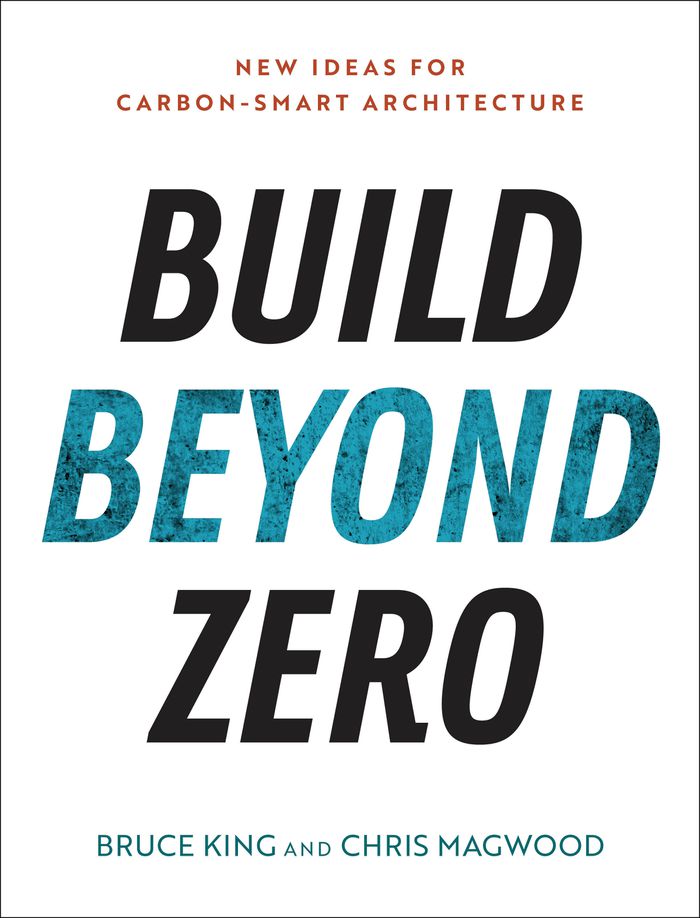
In this volume, carbon pioneers Bruce King and Chris Magwood re-envision buildings as one of our most practical and affordable climate solutions instead of leading drivers of climate change. They provide a snapshot of a beginning and map towards a carbon-smart built environment that acts as a CO2 filter. Professional engineers, designers, and developers are invited to(...)
Title:
Build beyond zero: New ideas for carbon smart architecture
Actions:
Price:
$55.95
(available to order)
Summary:
In this volume, carbon pioneers Bruce King and Chris Magwood re-envision buildings as one of our most practical and affordable climate solutions instead of leading drivers of climate change. They provide a snapshot of a beginning and map towards a carbon-smart built environment that acts as a CO2 filter. Professional engineers, designers, and developers are invited to imagine the very real potential for our built environment to be a site of net carbon storage, a massive drawdown pool that could help to heal our climate.This book looks at the good and the bad of how we track carbon (Life Cycle Assessment), then takes a deep dive into materials (with a focus on steel and concrete) and biological architecture, and wraps up with education, policy and governance, circular economy, and where we go in the next three decades.
Form:
books
books
Publication:
June 2022
June 2022
Subject:
Green Architecture
Green Architecture
Form:
books
books
Actions:
Price:
$34.00
(available in store)
Summary:
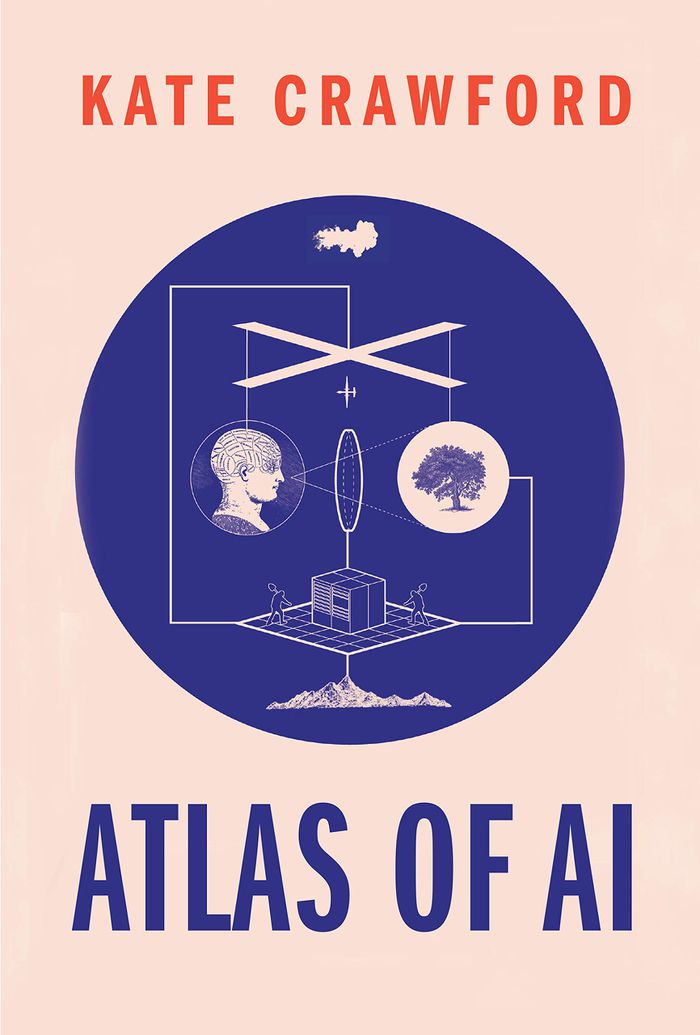
What happens when artificial intelligence saturates political life and depletes the planet? How is AI shaping our understanding of ourselves and our societies? Drawing on more than a decade of research, award-winning scholar Kate Crawford reveals how AI is a technology of extraction: from the minerals drawn from the earth, to the labor pulled from low-wage information(...)
Title:
Atlas of AI: Power, politics, and the planetary costs of artificial intelligence
Actions:
Price:
$34.00
(available in store)
Summary:
What happens when artificial intelligence saturates political life and depletes the planet? How is AI shaping our understanding of ourselves and our societies? Drawing on more than a decade of research, award-winning scholar Kate Crawford reveals how AI is a technology of extraction: from the minerals drawn from the earth, to the labor pulled from low-wage information workers, to the data taken from every action and expression. This book reveals how this planetary network is fueling a shift toward undemocratic governance and increased inequity. Rather than taking a narrow focus on code and algorithms, Crawford offers us a material and political perspective on what it takes to make AI and how it centralizes power. This is an urgent account of what is at stake as technology companies use artificial intelligence to reshape the world.
Form:
books
books
Publication:
August 2022
August 2022
Subject:
Critical Theory
Critical Theory
Form:
books
books
Title:
Two cheers for anarchism
Two cheers for anarchism
Actions:
Price:
$26.95
(available to order)
Summary:
Having studied how people in marginal societies deal with the state, Yale political scientist and anthropologist Scott (The Art of Not Being Governed) found himself drawn to a study of anarchism. his brief, six-part study is the result. Having concluded that revolution too often leads to such repressive regimes as France's Committee of Public Safety or the Soviet(...)
Title:
Two cheers for anarchism
Actions:
Price:
$26.95
(available to order)
Summary:
Having studied how people in marginal societies deal with the state, Yale political scientist and anthropologist Scott (The Art of Not Being Governed) found himself drawn to a study of anarchism. his brief, six-part study is the result. Having concluded that revolution too often leads to such repressive regimes as France's Committee of Public Safety or the Soviet state, Scott began to examine leaderless mass efforts disorganized strivings towards social improvement. Scott recognizes that anarchism is not a panacea and that there are problems that only government can treat. Nevertheless, he expresses a strong dislike for centralized governance and a preference for expanding chaos. He refers to his sections as "fragments," highlighting the book's key shortcoming: every chapter seems rushed and incomplete, as though Scott were hurrying to get his thoughts down on paper before they vanished.
Form:
books
books
Publication:
November 2012
November 2012
Subject:
Critical Theory
Critical Theory
Form:
books
books

Price:
$70.00
(available to order)
Summary:
Informal markets are a central feature of the 21st century's first tumultuous years. Both part of and response to the homogenizing forces of globalization, they constitute a volatile shadow system of heterogeneous micro-locations. Informal Market Worlds maps this new kind of urban system emerging from ongoing deregulations and realignments. Bringing together imaginative(...)
Title:
Informal market worlds: atlas, the architecture of economic pressure
Actions:
Price:
$70.00
(available to order)
Summary:
Informal markets are a central feature of the 21st century's first tumultuous years. Both part of and response to the homogenizing forces of globalization, they constitute a volatile shadow system of heterogeneous micro-locations. Informal Market Worlds maps this new kind of urban system emerging from ongoing deregulations and realignments. Bringing together imaginative architectural approaches with texts by key contemporary thinkers, the two-part Informal Market Worlds explores new ways to interrupt the dominant logics of neoliberal governance. With groundbreaking research, the hefty Atlas includes 73 case studies, in locations ranging from Kabul's post-conflict Bush Bazaar to Arizona's Snow Birds hipster markets. Offering a global perspective on the conflicted realities of informal marketplaces--from survival activities of the urban poor to transnational clandestine trade networks--these analyses reveal how informality has become a political instrument in the struggles around global market integration.
Form:
books
books
Publication:
June 2015
June 2015
Subject:
Architectural Theory
Architectural Theory
Form:
books
books
Actions:
Price:
$12.50
(available in store)
Summary:
Recognizing the dire threats of climate collapse and mass extinction, the global initiative Bauhaus Earth convened a team of scientists, architects, spatial planners, and policymakers from around the world to author a manifesto. ''Toward Re-Entanglement: A Charter for the City and the Earth'' is a call for radical transformation. It challenges all those with a role in the(...)
Title:
Toward re-entanglement: A charter for the city and the earth
Actions:
Price:
$12.50
(available in store)
Summary:
Recognizing the dire threats of climate collapse and mass extinction, the global initiative Bauhaus Earth convened a team of scientists, architects, spatial planners, and policymakers from around the world to author a manifesto. ''Toward Re-Entanglement: A Charter for the City and the Earth'' is a call for radical transformation. It challenges all those with a role in the conception, production, operation, and governance of the building sector to address the systemic ecological, climatic, and social impacts incurred by its activities. Twelve principles of "re-entanglement" guide the redesign of the entire life cycle of the urban realm: the reforming and rematerializing of the physical artifacts that comprise it, the reconfiguring of the socioeconomic structures that underpin it, and the reengaging of the bioregions that might sustainably supply it. In this way, the unprecedented convergence of the environmental and social crises we are causing offers powerful opportunities for systemic change.
Form:
books
books
Publication:
September 2023
September 2023
Subject:
Green Architecture
Green Architecture
Form:
books
books
Price:
$34.99
(available in store)
Summary:
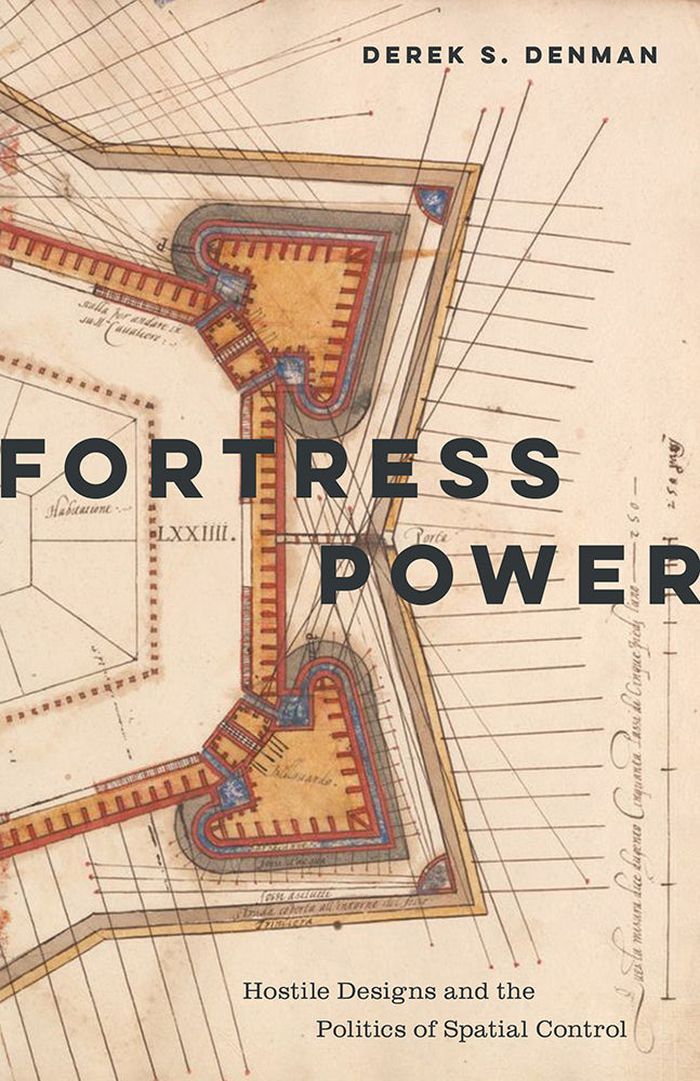
''Fortress Power'' presents a genealogy of fortification as a material and political technology intent on obstruction, tracing its implementation across battlefields, borders, and urban environments. Drawing on the influential work of philosophers Michel Foucault and Giorgio Agamben, Derek S. Denman places the fortress alongside the archetypes of the prison and the camp,(...)
Title:
Fortress power: Hostile designs and the politics of spatial control
Actions:
Price:
$34.99
(available in store)
Summary:
''Fortress Power'' presents a genealogy of fortification as a material and political technology intent on obstruction, tracing its implementation across battlefields, borders, and urban environments. Drawing on the influential work of philosophers Michel Foucault and Giorgio Agamben, Derek S. Denman places the fortress alongside the archetypes of the prison and the camp, citing them as paradigmatic of how space is transformed into a tool of domination and control. Focusing on the defensive architecture of bastion fortresses, urban design, and border landscapes, ''Fortress Power'' charts the rise of a form of governance grounded in hostility, extending the scope of its subject from a piece of military construction to a much broader political concept. Detailing how power manifests in everything from city centers to international boundaries, the book analyzes the logic of fortification as it moves through various contexts in the advancement of surveillance, exploitation, warfare, and political authority.
Form:
books
books
Publication:
July 2025
July 2025
Subject:
Architectural Theory
Architectural Theory
Form:
books
books
Actions:
Price:
$62.90
(available to order)
Summary:
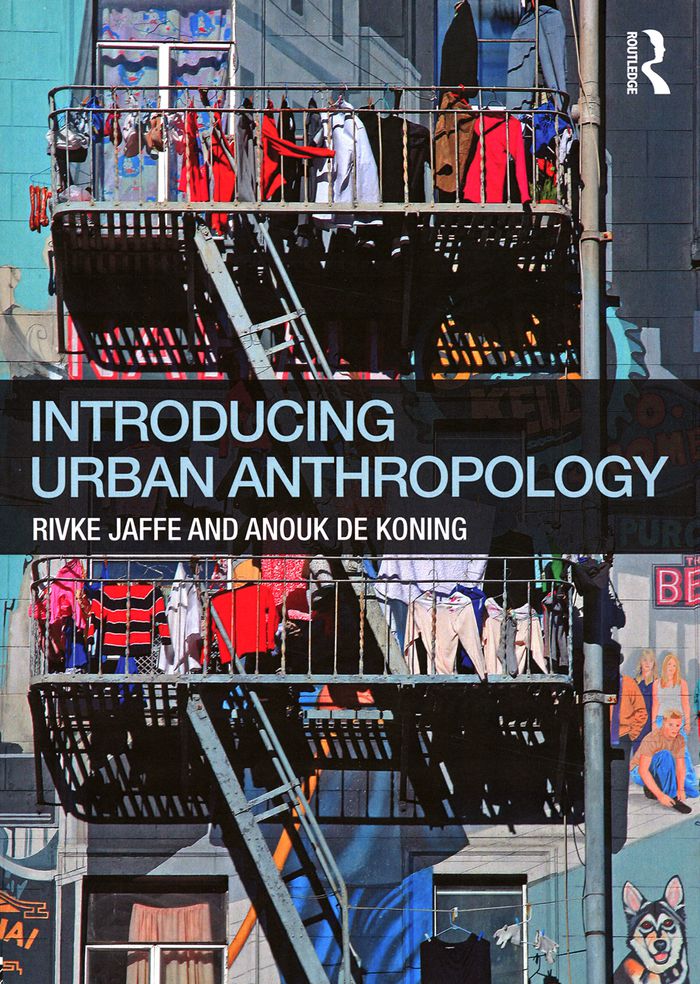
This book provides an up-to-date introduction to the important and growing field of urban anthropology. This is an increasingly critical area of study, as more than half of the world's population now lives in cities and anthropological research is increasingly done in an urban context. Exploring contemporary anthropological approaches to the urban, the authors(...)
Title:
Introducing urban anthropology
Actions:
Price:
$62.90
(available to order)
Summary:
This book provides an up-to-date introduction to the important and growing field of urban anthropology. This is an increasingly critical area of study, as more than half of the world's population now lives in cities and anthropological research is increasingly done in an urban context. Exploring contemporary anthropological approaches to the urban, the authors consider: How can we define urban anthropology? What are the main themes of twenty-first century urban anthropological research? What are the possible future directions in the field? The chapters cover topics such as urban mobilities, place-making and public space, production and consumption, politics and governance. These are illustrated by lively case studies drawn from a diverse range of urban settings in the global North and South. Accessible yet theoretically incisive, Introducing Urban Anthropology will be a valuable resource for anthropology students as well as of interest to those working in urban studies and related disciplines such as sociology and geography.
Form:
books
books
Publication:
January 2016
January 2016
Subject:
Architectural Theory
Architectural Theory
Form:
books
books
Actions:
Price:
$61.95
(available to order)
Summary:
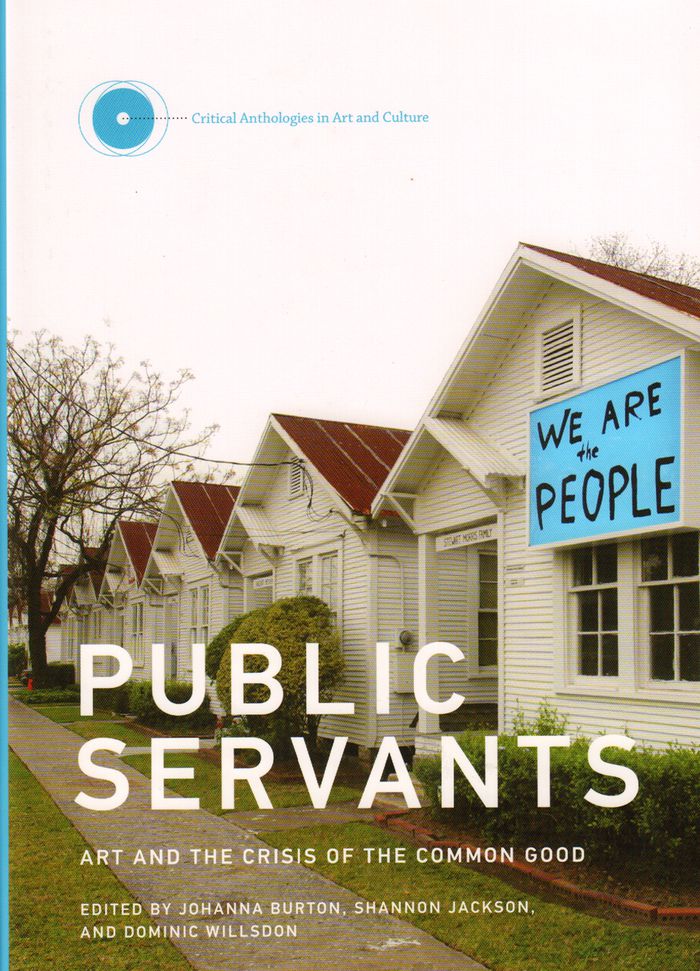
Concepts such as “new genre public art,” “social practice,” or “socially engaged art” may imply a synergy between the role of art and the role of government in providing social services. Yet the arts and social services differ crucially in terms of their methods and metrics. Socially engaged artists need not be aligned (and may often be opposed) to the public sector and(...)
Subject:
Art Theory
Art Theory
Publication:
September 2016
September 2016
Title:
Public servants: and the crisis of the common good
Actions:
Price:
$61.95
(available to order)
Summary:
Concepts such as “new genre public art,” “social practice,” or “socially engaged art” may imply a synergy between the role of art and the role of government in providing social services. Yet the arts and social services differ crucially in terms of their methods and metrics. Socially engaged artists need not be aligned (and may often be opposed) to the public sector and to institutionalized systems. In many countries, structures of democratic governance and public responsibility are shifting, eroding, and being remade in profound ways—driven by radical economic, political, and global forces. According to what terms and through what means can art engage with these changes? This volume gathers essays, dialogues, and art projects—some previously published and some newly commissioned—to illuminate the ways the arts shape and reshape a rapidly changing social and governmental landscape. An artist portfolio section presents original statements and projects by some of the key figures grappling with these ideas.
Form:
books
books
Publication:
September 2016
September 2016
Subject:
Art Theory
Art Theory
Form:
books
books
Actions:
Price:
$30.00
(available in store)
Summary:
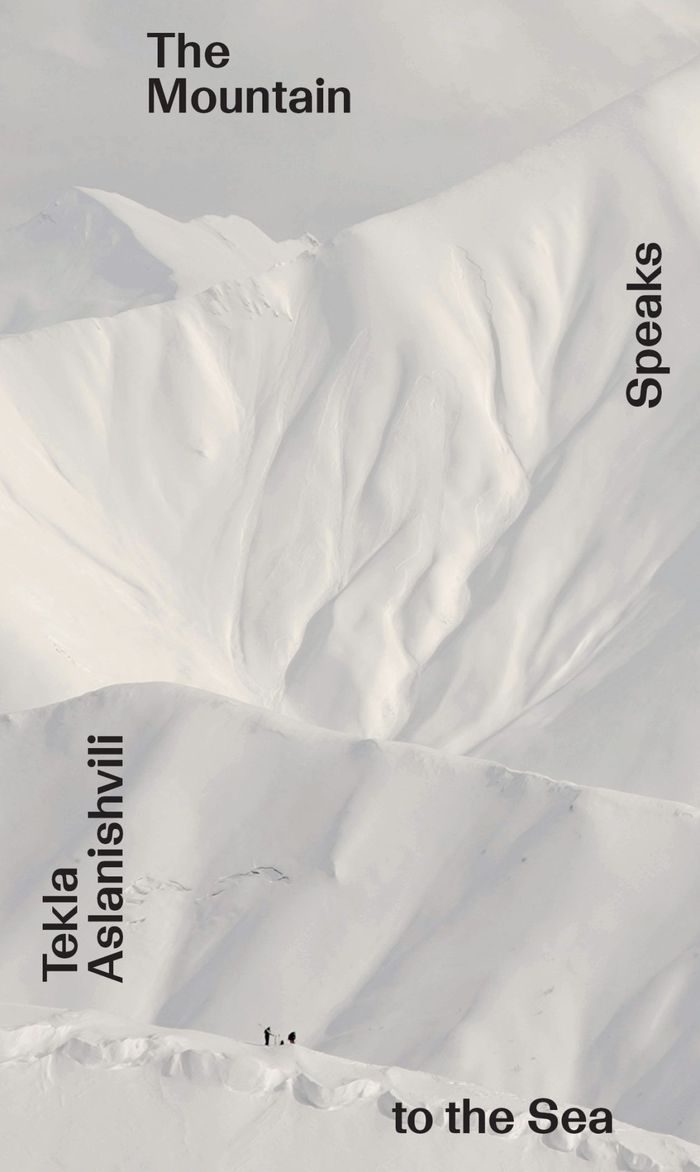
''The Mountain Speaks to the Sea'' delves into Tekla Aslanishvili’s experimental film trilogy, which investigates regimes of infrastructural governance by examining how ports, railways, and smart city projects act as technologies of citizenship and sovereignty. Images of distant geographies are connected with future orientations, revealing the disruptive impacts of(...)
Title:
Tekla Aslanishvili: The Mountain Speaks to the Sea
Actions:
Price:
$30.00
(available in store)
Summary:
''The Mountain Speaks to the Sea'' delves into Tekla Aslanishvili’s experimental film trilogy, which investigates regimes of infrastructural governance by examining how ports, railways, and smart city projects act as technologies of citizenship and sovereignty. Images of distant geographies are connected with future orientations, revealing the disruptive impacts of large-scale energy and transportation projects on the ecologies of the South Caucasus. The publication focuses on the potentiality of moving images in the making and unmaking of infrastructures. By zooming in and out on the grand narratives of infrastructural development, it assembles fragmented (hi)stories of people who live and work around sites of transit and extraction, sabotaging their material systems to challenge violent practices of statecraft. Positioned between an artist’s book and a reader, ''The Mountain Speaks to the Sea'' features contributions from writers and scholars in visual culture, political science and critical geography, and experiments with ways of translating film into printed matter.
Form:
books
books
Publication:
September 2025
September 2025
Subject:
Art Theory
Art Theory
Form:
books
books
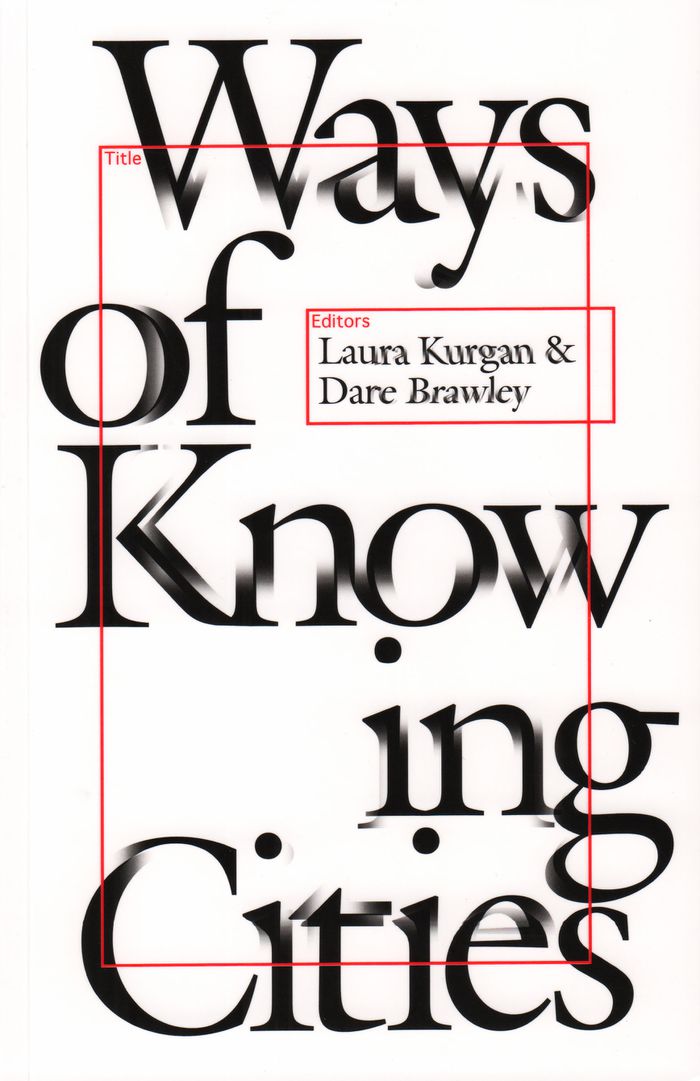
Title:
Ways of knowing cities
Ways of knowing cities
Actions:
Price:
$35.95
(available to order)
Summary:
Technology mediates how we know and experience cities, and the nature of this mediation has always been deeply political. Today, the production and deployment of data is at the forefront of projects to grasp and reshape urban life. ''Ways of knowing cities'' considers the role of technology in generating, materializing, and contesting urban epistemologies- tracing an arc(...)
Title:
Ways of knowing cities
Actions:
Price:
$35.95
(available to order)
Summary:
Technology mediates how we know and experience cities, and the nature of this mediation has always been deeply political. Today, the production and deployment of data is at the forefront of projects to grasp and reshape urban life. ''Ways of knowing cities'' considers the role of technology in generating, materializing, and contesting urban epistemologies- tracing an arc from ubiquitous sites of ''smart'' urbanism, to discrete struggles over infrastructural governance, to forgotten histories of segregation now naturalized in urban algorithms, to exceptional territories of border policing. Bringing together architects, urbanists, artists, and scholars of critical migration studies, media theory, geography, anthropology, and literature, the essays stage a deeply interdisciplinary conversation, interrogating the ways in which certain ways of knowing are predicated on the erasure of others. In this opening, the book engages the information systems that structure urban space and social life in it, historically and in the present moment, to imagine alternative practices and generate new critical perspectives on spatial research.
Form:
books
books
Publication:
December 2019
December 2019
Subject:
Urban Theory
Urban Theory


