


5752 Results
Form:
photographs
photographs
Actions:
Reference number:
ARCH255870
Description:
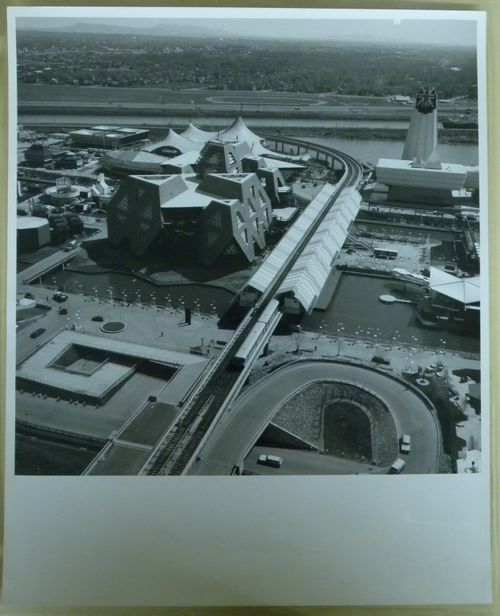
Front row (left to right): - CN Pavilion = C.N.R. Pavilion = Canadian National Pavilion; - Man the Producer Pavilion. Middle bottom row (left to right): - Pavilion of Economic Progress; - Cuban Pavilion = Pavilion of Cuba. Middle top row (left to right): - Ceylon Pavilion = Pavilion of Ceylon; - European Communities Pavilion. Back row (left to right): - Australian Pavilion = Pavilion of Australia; - German Pavilion = Pavilion of Federal Republic of Germany; - Pavilion of Great Britain.
ARCH255870
Description:
Front row (left to right): - CN Pavilion = C.N.R. Pavilion = Canadian National Pavilion; - Man the Producer Pavilion. Middle bottom row (left to right): - Pavilion of Economic Progress; - Cuban Pavilion = Pavilion of Cuba. Middle top row (left to right): - Ceylon Pavilion = Pavilion of Ceylon; - European Communities Pavilion. Back row (left to right): - Australian Pavilion = Pavilion of Australia; - German Pavilion = Pavilion of Federal Republic of Germany; - Pavilion of Great Britain.
People:
Date:
1967?
1967?
Title:
Partial view of the Île Notre-Dame site, Expo 67, Montréal, Québec
Actions:
ARCH255870
Description:
Front row (left to right): - CN Pavilion = C.N.R. Pavilion = Canadian National Pavilion; - Man the Producer Pavilion. Middle bottom row (left to right): - Pavilion of Economic Progress; - Cuban Pavilion = Pavilion of Cuba. Middle top row (left to right): - Ceylon Pavilion = Pavilion of Ceylon; - European Communities Pavilion. Back row (left to right): - Australian Pavilion = Pavilion of Australia; - German Pavilion = Pavilion of Federal Republic of Germany; - Pavilion of Great Britain.
Partial view of the Île Notre-Dame site, Expo 67, Montréal, Québec
Actions:
ARCH255870
Description:
Front row (left to right): - CN Pavilion = C.N.R. Pavilion = Canadian National Pavilion; - Man the Producer Pavilion. Middle bottom row (left to right): - Pavilion of Economic Progress; - Cuban Pavilion = Pavilion of Cuba. Middle top row (left to right): - Ceylon Pavilion = Pavilion of Ceylon; - European Communities Pavilion. Back row (left to right): - Australian Pavilion = Pavilion of Australia; - German Pavilion = Pavilion of Federal Republic of Germany; - Pavilion of Great Britain.
Form:
photographs
photographs
Date:
1967?
1967?
People:
Form:
events
events

Actions:
Description:
Join us on 8 May at 6pm for a lecture by Noelia Monteiro on her work at Estudio Flume. The studio, based in São Paulo, develops socio-environmental projects in remote areas of Brazil, aiming to protect traditional communities that preserve the Amazon rainforest. Monteiro’s work poses a key question: in the face of resource scarcity, how can we build with almost nothing?(...)
Join us on 8 May at 6pm for a lecture by Noelia Monteiro on her work at Estudio Flume. The studio, based in São Paulo, develops socio-environmental projects in remote areas of Brazil, aiming to protect traditional communities that preserve the Amazon rainforest. Monteiro’s work poses a key question: in the face of resource scarcity, how can we build with almost nothing?(...)
Location:
Paul-Desmarais Theatre
Paul-Desmarais Theatre
Date:
8 May 2025, 6pm
8 May 2025, 6pm
Title:
Groundwork with Noelia Monteiro
Actions:
Description:
Join us on 8 May at 6pm for a lecture by Noelia Monteiro on her work at Estudio Flume. The studio, based in São Paulo, develops socio-environmental projects in remote areas of Brazil, aiming to protect traditional communities that preserve the Amazon rainforest. Monteiro’s work poses a key question: in the face of resource scarcity, how can we build with almost nothing?(...)
Groundwork with Noelia Monteiro
Actions:
Description:
Join us on 8 May at 6pm for a lecture by Noelia Monteiro on her work at Estudio Flume. The studio, based in São Paulo, develops socio-environmental projects in remote areas of Brazil, aiming to protect traditional communities that preserve the Amazon rainforest. Monteiro’s work poses a key question: in the face of resource scarcity, how can we build with almost nothing?(...)
Form:
events
events
Date:
8 May 2025
6pm
8 May 2025
6pm
Location:
Paul-Desmarais Theatre
Paul-Desmarais Theatre
Level of archival description:
Project
Project
Actions:
Reference number:
AP022.S1.1976.PR06
Description:
File documents an aboriginal community centre (not built), Prior Street, Vancouver, British Columbia. File contains design development drawings.
AP022.S1.1976.PR06
Description:
File documents an aboriginal community centre (not built), Prior Street, Vancouver, British Columbia. File contains design development drawings.
People:
Date:
1976
1976
Title:
Vancouver Indian Friendship Centre
Actions:
AP022.S1.1976.PR06
Description:
File documents an aboriginal community centre (not built), Prior Street, Vancouver, British Columbia. File contains design development drawings.
Vancouver Indian Friendship Centre
Actions:
AP022.S1.1976.PR06
Description:
File documents an aboriginal community centre (not built), Prior Street, Vancouver, British Columbia. File contains design development drawings.
Level of archival description:
Project
Project
Date:
1976
1976
People:
Level of archival description:
Series
Series
Title:
Housing Research Projects
Housing Research Projects
Reference number:
AP149.S1
Description:
Series related to the Minimum Cost Housing Group projects and publications, including the publications known as the "The Problem is" series about low-cost housing between 1971 and 1978 and all the other publications related to projects from 1984 to 2004. This series documents publications about the projects of prefabricated houses for the developing countries, a self-sufficient habitable low-cost house, low-cost sanitation systems, sulphur concrete for low-cost housing, building components from secondary use, rooftop gardens and urban agriculture, domestic water saving devices, human settlement developement or improvement in developping countries and in Native American communities. The material in this series was produced between 1970 and 2011. The file contains textual records, mainly dummies for the publications, office records and reports, photographic material related to the projects, copies of the publications, a few drawings and plans related to the housing project and samples of the sulphur bricks developed by the Minimum Cost Housing Group.
AP149.S1
Description:
Series related to the Minimum Cost Housing Group projects and publications, including the publications known as the "The Problem is" series about low-cost housing between 1971 and 1978 and all the other publications related to projects from 1984 to 2004. This series documents publications about the projects of prefabricated houses for the developing countries, a self-sufficient habitable low-cost house, low-cost sanitation systems, sulphur concrete for low-cost housing, building components from secondary use, rooftop gardens and urban agriculture, domestic water saving devices, human settlement developement or improvement in developping countries and in Native American communities. The material in this series was produced between 1970 and 2011. The file contains textual records, mainly dummies for the publications, office records and reports, photographic material related to the projects, copies of the publications, a few drawings and plans related to the housing project and samples of the sulphur bricks developed by the Minimum Cost Housing Group.
People:
Date:
1970-2011
1970-2011
Title:
Housing Research Projects
Actions:
AP149.S1
Description:
Series related to the Minimum Cost Housing Group projects and publications, including the publications known as the "The Problem is" series about low-cost housing between 1971 and 1978 and all the other publications related to projects from 1984 to 2004. This series documents publications about the projects of prefabricated houses for the developing countries, a self-sufficient habitable low-cost house, low-cost sanitation systems, sulphur concrete for low-cost housing, building components from secondary use, rooftop gardens and urban agriculture, domestic water saving devices, human settlement developement or improvement in developping countries and in Native American communities. The material in this series was produced between 1970 and 2011. The file contains textual records, mainly dummies for the publications, office records and reports, photographic material related to the projects, copies of the publications, a few drawings and plans related to the housing project and samples of the sulphur bricks developed by the Minimum Cost Housing Group.
Housing Research Projects
Actions:
AP149.S1
Description:
Series related to the Minimum Cost Housing Group projects and publications, including the publications known as the "The Problem is" series about low-cost housing between 1971 and 1978 and all the other publications related to projects from 1984 to 2004. This series documents publications about the projects of prefabricated houses for the developing countries, a self-sufficient habitable low-cost house, low-cost sanitation systems, sulphur concrete for low-cost housing, building components from secondary use, rooftop gardens and urban agriculture, domestic water saving devices, human settlement developement or improvement in developping countries and in Native American communities. The material in this series was produced between 1970 and 2011. The file contains textual records, mainly dummies for the publications, office records and reports, photographic material related to the projects, copies of the publications, a few drawings and plans related to the housing project and samples of the sulphur bricks developed by the Minimum Cost Housing Group.
Level of archival description:
Series
Series
Date:
1970-2011
1970-2011
People:
Form:
events
events

Actions:
Description:
Over three evenings on 15-17 August, join us for free outdoor Inuit games, stories, food, and films, in parc Baile as part of the 4th edition of the Tillitarniit festival. Organized by Inuit visual artist and filmmaker asinnajaq, this year’s festival titled home, body, land will bring together Inuit artists and filmmakers who are shaping todays world with stories from(...)
Over three evenings on 15-17 August, join us for free outdoor Inuit games, stories, food, and films, in parc Baile as part of the 4th edition of the Tillitarniit festival. Organized by Inuit visual artist and filmmaker asinnajaq, this year’s festival titled home, body, land will bring together Inuit artists and filmmakers who are shaping todays world with stories from(...)
Date:
15 August 2024 to 17 August 2024, 6pm
15 August 2024 to 17 August 2024, 6pm
Title:
Tillitarniit at CCA – home, body, land
Actions:
Description:
Over three evenings on 15-17 August, join us for free outdoor Inuit games, stories, food, and films, in parc Baile as part of the 4th edition of the Tillitarniit festival. Organized by Inuit visual artist and filmmaker asinnajaq, this year’s festival titled home, body, land will bring together Inuit artists and filmmakers who are shaping todays world with stories from(...)
Tillitarniit at CCA – home, body, land
Actions:
Description:
Over three evenings on 15-17 August, join us for free outdoor Inuit games, stories, food, and films, in parc Baile as part of the 4th edition of the Tillitarniit festival. Organized by Inuit visual artist and filmmaker asinnajaq, this year’s festival titled home, body, land will bring together Inuit artists and filmmakers who are shaping todays world with stories from(...)
Form:
events
events
Date:
15 August 2024 to
17 August 2024
6pm
15 August 2024 to
17 August 2024
6pm
Level of archival description:
Project
Project
Reference number:
AP022.S1.1974.PR06
Description:
File documents recreation study and proposal for a community reacreation complex (not built), Kanata, Ontario. File contains photographic material, textual records.
AP022.S1.1974.PR06
Description:
File documents recreation study and proposal for a community reacreation complex (not built), Kanata, Ontario. File contains photographic material, textual records.
People:
Date:
1974-1976
1974-1976
Title:
Kanata Recreation Plan and Leisure Centre
Actions:
AP022.S1.1974.PR06
Description:
File documents recreation study and proposal for a community reacreation complex (not built), Kanata, Ontario. File contains photographic material, textual records.
Kanata Recreation Plan and Leisure Centre
Actions:
AP022.S1.1974.PR06
Description:
File documents recreation study and proposal for a community reacreation complex (not built), Kanata, Ontario. File contains photographic material, textual records.
Level of archival description:
Project
Project
Date:
1974-1976
1974-1976
People:
Form:
events
events
Title:
Bazaar 2026
Bazaar 2026
Actions:
Description:
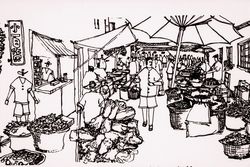
Cities are not shaped by planning alone, but by a collaborative ethos of making, tending, and sharing. For a second year, the CCA Bazaar opens its doors to the community, bringing together the independent businesses, makers, and community organizations that give Montreals neighbourhoods their character.
Cities are not shaped by planning alone, but by a collaborative ethos of making, tending, and sharing. For a second year, the CCA Bazaar opens its doors to the community, bringing together the independent businesses, makers, and community organizations that give Montreals neighbourhoods their character.
Date:
12 September 2026, 10am to 2pm
12 September 2026, 10am to 2pm
Title:
Bazaar 2026
Actions:
Description:
Cities are not shaped by planning alone, but by a collaborative ethos of making, tending, and sharing. For a second year, the CCA Bazaar opens its doors to the community, bringing together the independent businesses, makers, and community organizations that give Montreals neighbourhoods their character.
Bazaar 2026
Actions:
Description:
Cities are not shaped by planning alone, but by a collaborative ethos of making, tending, and sharing. For a second year, the CCA Bazaar opens its doors to the community, bringing together the independent businesses, makers, and community organizations that give Montreals neighbourhoods their character.
Form:
events
events
Date:
12 September 2026
10am to 2pm
12 September 2026
10am to 2pm
Form:
photographs
Quantity:
112 photograph(s)
photographs
Quantity:
112 photograph(s)
Actions:
Reference number:
PH1988:0426:001-112
Description:
Group consists of 112 photographic prints depicting the Victoria Falls Bridge over the Zambezi River, crossing the border between Victoria Falls, Zimbabwe and Livingstone, Zambia. Some photographs depict the processes of 1904-05 construction and 1929-1930 reconstruction of Victoria Falls Bridge. This collection also contains photographs of local communities, living conditions, and Europeans. Photographs were compiled by an engineer associated with the Cleveland Bridge & Engineering Company.
PH1988:0426:001-112
Description:
Group consists of 112 photographic prints depicting the Victoria Falls Bridge over the Zambezi River, crossing the border between Victoria Falls, Zimbabwe and Livingstone, Zambia. Some photographs depict the processes of 1904-05 construction and 1929-1930 reconstruction of Victoria Falls Bridge. This collection also contains photographs of local communities, living conditions, and Europeans. Photographs were compiled by an engineer associated with the Cleveland Bridge & Engineering Company.
People:
Subject:
engineering
engineering
Date:
1903-1962
1903-1962
Title:
Construction stages of Victoria Falls Bridge, Zambezi River, crossing the border between Victoria Falls, Zimbabwe and Livingstone, Zambia
Actions:
PH1988:0426:001-112
Description:
Group consists of 112 photographic prints depicting the Victoria Falls Bridge over the Zambezi River, crossing the border between Victoria Falls, Zimbabwe and Livingstone, Zambia. Some photographs depict the processes of 1904-05 construction and 1929-1930 reconstruction of Victoria Falls Bridge. This collection also contains photographs of local communities, living conditions, and Europeans. Photographs were compiled by an engineer associated with the Cleveland Bridge & Engineering Company.
Construction stages of Victoria Falls Bridge, Zambezi River, crossing the border between Victoria Falls, Zimbabwe and Livingstone, Zambia
Actions:
PH1988:0426:001-112
Description:
Group consists of 112 photographic prints depicting the Victoria Falls Bridge over the Zambezi River, crossing the border between Victoria Falls, Zimbabwe and Livingstone, Zambia. Some photographs depict the processes of 1904-05 construction and 1929-1930 reconstruction of Victoria Falls Bridge. This collection also contains photographs of local communities, living conditions, and Europeans. Photographs were compiled by an engineer associated with the Cleveland Bridge & Engineering Company.
Form:
photographs
Quantity:
112 photograph(s)
photographs
Quantity:
112 photograph(s)
Date:
1903-1962
1903-1962
People:
Subject:
engineering
engineering
Level of archival description:
Project
Project
Title:
Detroit Think Grid
Detroit Think Grid
Reference number:
AP144.S2.D73
Description:
File documents Detroit Think Grid, an unrealized project for a series of experiments which were to be developed by Price in collaboration with various groups in the Greater Detroit and Oakland area and implemented over a five-year period. Collaborators were to include the municipality, industry, commerce, and the existing education network, particularly Oakland County Community College in Detroit, Michigan. The principle aim of the Detroit Think Grid was to make the education "system" flexible and responsive to the needs of the community and readily accessible to everyone. Detroit Think Grid components include mobile units such as swimming pools, public learning booths and packaged workshops. Material in this group consists of existing conditions documentation concerning Oakland County and Oakland Community College campuses, such as aerial photographs of streets, zoning maps and maps of various townships, maps of traffic flow in Oakland County, and site plans of Oakland Community College campuses. Design development drawings include zoning plans showing present and projected uses of various zones, major transportation modes, patterns, and access points, and predictions for general population, school population, and retail growth within Oakland County. Material from this file was published in "Cedric Price Supplement No. 3", 'Architectural Design', vol. 41, (June 1971), 353-363 and 'Cedric Price-Works II' (London: Architectural Press, 1984), 54, 66. Material in this file was produced between 1957 and 1975, but predominantly between 1969 and 1971. Cedric Price presented a conference at the Cranbrook Institute of Science, in Michigan in 1968 and produced 2 reports for them titled 'Oakland Community College: An Investigation into Educational Servicing' (1968) and 'Oakland Community College: An Investigation into New Forms of Learning' (1968). File contains cartographic materials, design development drawings, photographic materials, reference drawings, and textual records.
AP144.S2.D73
Description:
File documents Detroit Think Grid, an unrealized project for a series of experiments which were to be developed by Price in collaboration with various groups in the Greater Detroit and Oakland area and implemented over a five-year period. Collaborators were to include the municipality, industry, commerce, and the existing education network, particularly Oakland County Community College in Detroit, Michigan. The principle aim of the Detroit Think Grid was to make the education "system" flexible and responsive to the needs of the community and readily accessible to everyone. Detroit Think Grid components include mobile units such as swimming pools, public learning booths and packaged workshops. Material in this group consists of existing conditions documentation concerning Oakland County and Oakland Community College campuses, such as aerial photographs of streets, zoning maps and maps of various townships, maps of traffic flow in Oakland County, and site plans of Oakland Community College campuses. Design development drawings include zoning plans showing present and projected uses of various zones, major transportation modes, patterns, and access points, and predictions for general population, school population, and retail growth within Oakland County. Material from this file was published in "Cedric Price Supplement No. 3", 'Architectural Design', vol. 41, (June 1971), 353-363 and 'Cedric Price-Works II' (London: Architectural Press, 1984), 54, 66. Material in this file was produced between 1957 and 1975, but predominantly between 1969 and 1971. Cedric Price presented a conference at the Cranbrook Institute of Science, in Michigan in 1968 and produced 2 reports for them titled 'Oakland Community College: An Investigation into Educational Servicing' (1968) and 'Oakland Community College: An Investigation into New Forms of Learning' (1968). File contains cartographic materials, design development drawings, photographic materials, reference drawings, and textual records.
People:
Date:
1957-1975, predominant 1969-1971
1957-1975, predominant 1969-1971
Title:
Detroit Think Grid
Actions:
AP144.S2.D73
Description:
File documents Detroit Think Grid, an unrealized project for a series of experiments which were to be developed by Price in collaboration with various groups in the Greater Detroit and Oakland area and implemented over a five-year period. Collaborators were to include the municipality, industry, commerce, and the existing education network, particularly Oakland County Community College in Detroit, Michigan. The principle aim of the Detroit Think Grid was to make the education "system" flexible and responsive to the needs of the community and readily accessible to everyone. Detroit Think Grid components include mobile units such as swimming pools, public learning booths and packaged workshops. Material in this group consists of existing conditions documentation concerning Oakland County and Oakland Community College campuses, such as aerial photographs of streets, zoning maps and maps of various townships, maps of traffic flow in Oakland County, and site plans of Oakland Community College campuses. Design development drawings include zoning plans showing present and projected uses of various zones, major transportation modes, patterns, and access points, and predictions for general population, school population, and retail growth within Oakland County. Material from this file was published in "Cedric Price Supplement No. 3", 'Architectural Design', vol. 41, (June 1971), 353-363 and 'Cedric Price-Works II' (London: Architectural Press, 1984), 54, 66. Material in this file was produced between 1957 and 1975, but predominantly between 1969 and 1971. Cedric Price presented a conference at the Cranbrook Institute of Science, in Michigan in 1968 and produced 2 reports for them titled 'Oakland Community College: An Investigation into Educational Servicing' (1968) and 'Oakland Community College: An Investigation into New Forms of Learning' (1968). File contains cartographic materials, design development drawings, photographic materials, reference drawings, and textual records.
Detroit Think Grid
Actions:
AP144.S2.D73
Description:
File documents Detroit Think Grid, an unrealized project for a series of experiments which were to be developed by Price in collaboration with various groups in the Greater Detroit and Oakland area and implemented over a five-year period. Collaborators were to include the municipality, industry, commerce, and the existing education network, particularly Oakland County Community College in Detroit, Michigan. The principle aim of the Detroit Think Grid was to make the education "system" flexible and responsive to the needs of the community and readily accessible to everyone. Detroit Think Grid components include mobile units such as swimming pools, public learning booths and packaged workshops. Material in this group consists of existing conditions documentation concerning Oakland County and Oakland Community College campuses, such as aerial photographs of streets, zoning maps and maps of various townships, maps of traffic flow in Oakland County, and site plans of Oakland Community College campuses. Design development drawings include zoning plans showing present and projected uses of various zones, major transportation modes, patterns, and access points, and predictions for general population, school population, and retail growth within Oakland County. Material from this file was published in "Cedric Price Supplement No. 3", 'Architectural Design', vol. 41, (June 1971), 353-363 and 'Cedric Price-Works II' (London: Architectural Press, 1984), 54, 66. Material in this file was produced between 1957 and 1975, but predominantly between 1969 and 1971. Cedric Price presented a conference at the Cranbrook Institute of Science, in Michigan in 1968 and produced 2 reports for them titled 'Oakland Community College: An Investigation into Educational Servicing' (1968) and 'Oakland Community College: An Investigation into New Forms of Learning' (1968). File contains cartographic materials, design development drawings, photographic materials, reference drawings, and textual records.
Level of archival description:
File 73
File 73
Date:
1957-1975, predominant 1969-1971
1957-1975, predominant 1969-1971
People:
Form:
events
events
Actions:
Description:
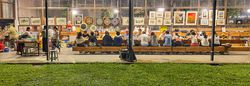
Making Mamak is a toolkit for all cultural workers, social organizers, and community members. The toolkit is devised to help commit to local, community-based forms of creating and gathering. Learning from arts collectives in the urban centres of Malaysia, one can develop kinships with one’s own community, formulate mutual aid, appropriate collective spaces, and start(...)
Making Mamak is a toolkit for all cultural workers, social organizers, and community members. The toolkit is devised to help commit to local, community-based forms of creating and gathering. Learning from arts collectives in the urban centres of Malaysia, one can develop kinships with one’s own community, formulate mutual aid, appropriate collective spaces, and start(...)
Date:
2024
2024
Title:
Making Mamak: Collective Ecologies of Urban Space
Actions:
Description:
Making Mamak is a toolkit for all cultural workers, social organizers, and community members. The toolkit is devised to help commit to local, community-based forms of creating and gathering. Learning from arts collectives in the urban centres of Malaysia, one can develop kinships with one’s own community, formulate mutual aid, appropriate collective spaces, and start(...)
Making Mamak: Collective Ecologies of Urban Space
Actions:
Description:
Making Mamak is a toolkit for all cultural workers, social organizers, and community members. The toolkit is devised to help commit to local, community-based forms of creating and gathering. Learning from arts collectives in the urban centres of Malaysia, one can develop kinships with one’s own community, formulate mutual aid, appropriate collective spaces, and start(...)
Form:
events
events
Date:
2024 to
2024
2024 to
2024


