


354 Results
Form:
books
books
Actions:
Price:
$39.95
(available to order)
Summary:
The preservation enterprise helps fashion the physical contours of memory in public space, and thus has the power to curate a multidimensional and inclusive representation of societal values and narratives. Increasingly, the field of preservation is being challenged to consider questions of social inclusion, of how multiple publics are—or are not—represented in heritage(...)
Title:
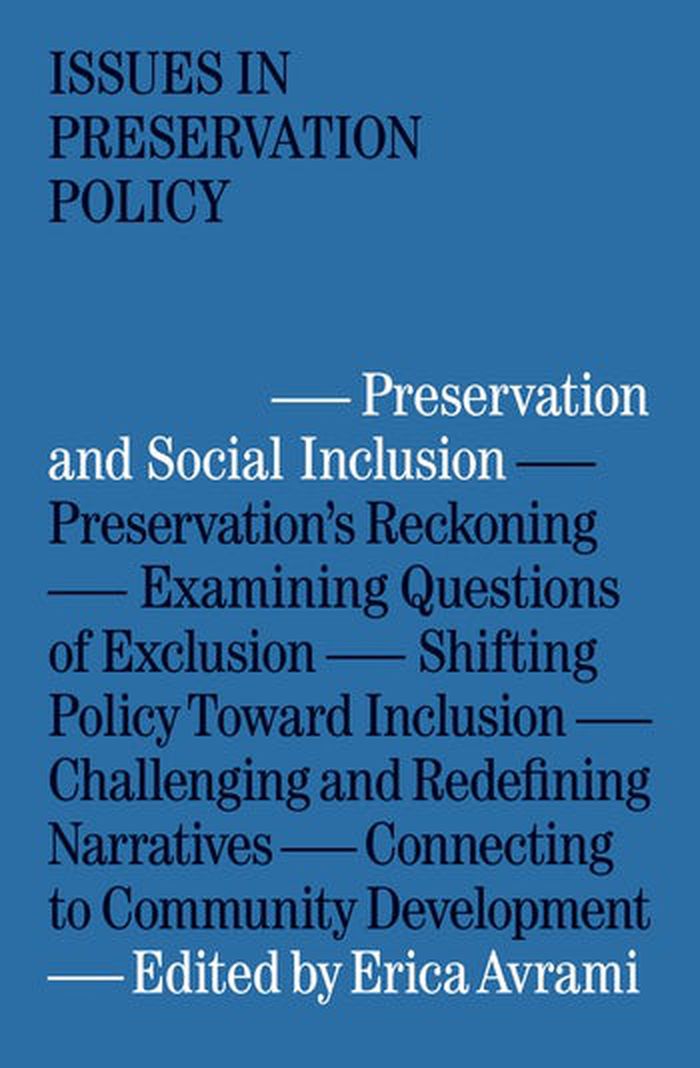
Preservation and social exclusion
Actions:
Price:
$39.95
(available to order)
Summary:
The preservation enterprise helps fashion the physical contours of memory in public space, and thus has the power to curate a multidimensional and inclusive representation of societal values and narratives. Increasingly, the field of preservation is being challenged to consider questions of social inclusion, of how multiple publics are—or are not—represented in heritage decision-making, geographies, and governance structures. Community engagement is increasingly being integrated into project-based preservation practice, but the policy toolbox has been slower to evolve. Recognizing how preservation and other land use decisions can both empower and marginalize publics compels greater reflection on preservation’s past and future and collective action beyond the project level. This requires professionals and institutions to consider systemic policy change with integrity, sensitivity, and intentionality. Bringing together a broad range of academics, historians, and practitioners, this second volume in the Issues in Preservation Policy series documents historic preservation’s progress toward inclusivity and explores further steps to be taken.
Form:
books
books
Publication:
March 2020
March 2020
Subject:
Architectural Theory
Architectural Theory
Form:
books
books
Price:
$33.95
(available in store)
Summary:
There is widespread consensus that we are living at the end—of democracy, of liberalism, of capitalism, of a healthy planet, of the Holocene, of civilization as we know it. In this book, drawing on radical futurisms and visions of justice-to-come emerging from the traditions of the oppressed—Indigenous, African-American, multispecies, anti-capitalist—as materialized in(...)
Title:
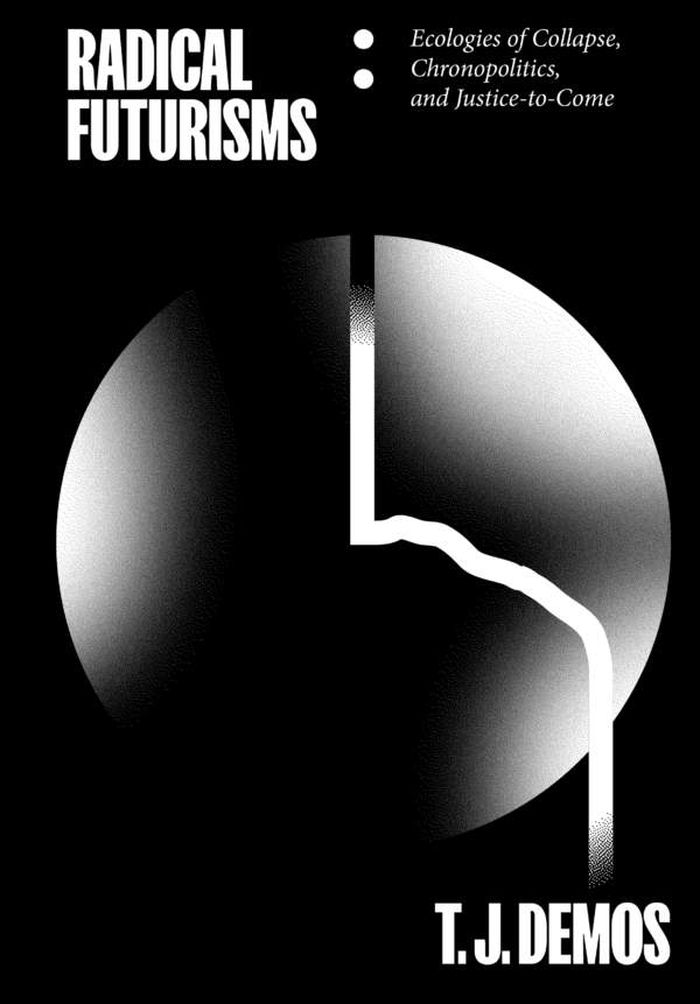
Radical futurisms: Ecologies of collapse/chronopolitics/justice to come
Actions:
Price:
$33.95
(available in store)
Summary:
There is widespread consensus that we are living at the end—of democracy, of liberalism, of capitalism, of a healthy planet, of the Holocene, of civilization as we know it. In this book, drawing on radical futurisms and visions of justice-to-come emerging from the traditions of the oppressed—Indigenous, African-American, multispecies, anti-capitalist—as materialized in experimental visual cultural, new media, aesthetic practices, and social movements, T. J. Demos poses speculative questions about what comes after end-of-world narratives. He argues that it's as vital to defeat fatalistic nihilism as it is to defeat the false solutions of green capitalism and algorithmic governance. How might we decolonize the future, and cultivate an emancipated chronopolitics in relation to an undetermined not-yet? If we are to avoid climate emergency's cooptation by technofixes, and the defuturing of multitudes by xenophobic eco-fascism, Demos argues, we must cultivate visions of just futurity and multispecies flourishing.
Form:
books
books
Publication:
May 2023
May 2023
Subject:
Architecture ecologies
Architecture ecologies
Form:
books
books
Price:
$48.99
(available to order)
Summary:
For almost seven years after World War II, a small group of architects took on an exciting task: to imagine the spaces of global governance for a new political organization called the United Nations (UN). To create the iconic headquarters of the UN in New York City, these architects experimented with room layouts, media technologies, and design in tribunal courtrooms,(...)
Title:
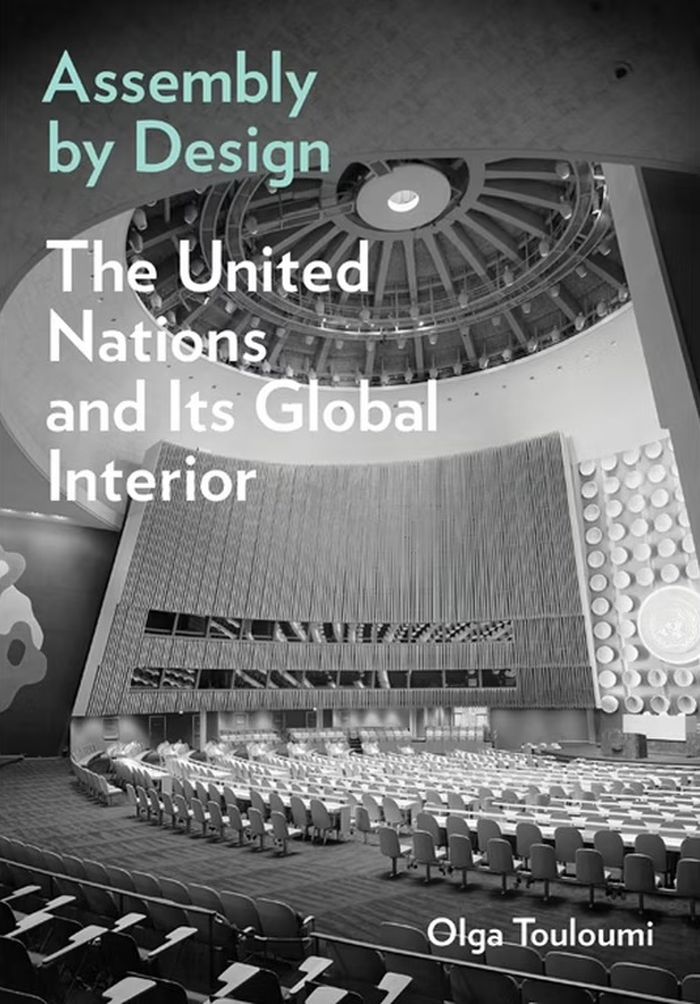
Assembly by design: The United Nations and its global interior
Actions:
Price:
$48.99
(available to order)
Summary:
For almost seven years after World War II, a small group of architects took on an exciting task: to imagine the spaces of global governance for a new political organization called the United Nations (UN). To create the iconic headquarters of the UN in New York City, these architects experimented with room layouts, media technologies, and design in tribunal courtrooms, assembly halls, and council chambers. The result was the creation of a new type of public space, the global interior. "Assembly by design" shows how this space leveraged media to help the UN communicate with the world. With its media infrastructure, symbols, acoustic design, and architecture, the global interior defined political assembly both inside and outside the UN headquarters, serving as the architectural medium to organize multilateral encounters of international publics around the globe. Demonstrating how aesthetics have long held sway over political work, Olga Touloumi posits that the building framed diplomacy on the ground amid a changing political landscape that brought the United States to the forefront of international politics, destabilizing old and establishing new geopolitical alliances.
Form:
books
books
Publication:
October 2024
October 2024
Subject:
Architectural Theory
Architectural Theory
Form:
books
books
Price:
$37.95
(available to order)
Summary:
In "Histories of dirt," Stephanie Newell traces the ways in which urban spaces and urban dwellers come to be regarded as dirty, as exemplified in colonial and postcolonial Lagos. Newell conceives dirt as an interpretive category that facilitates moral, sanitary, economic, and aesthetic evaluations of other cultures under the rubric of uncleanliness. She examines a number(...)
Title:
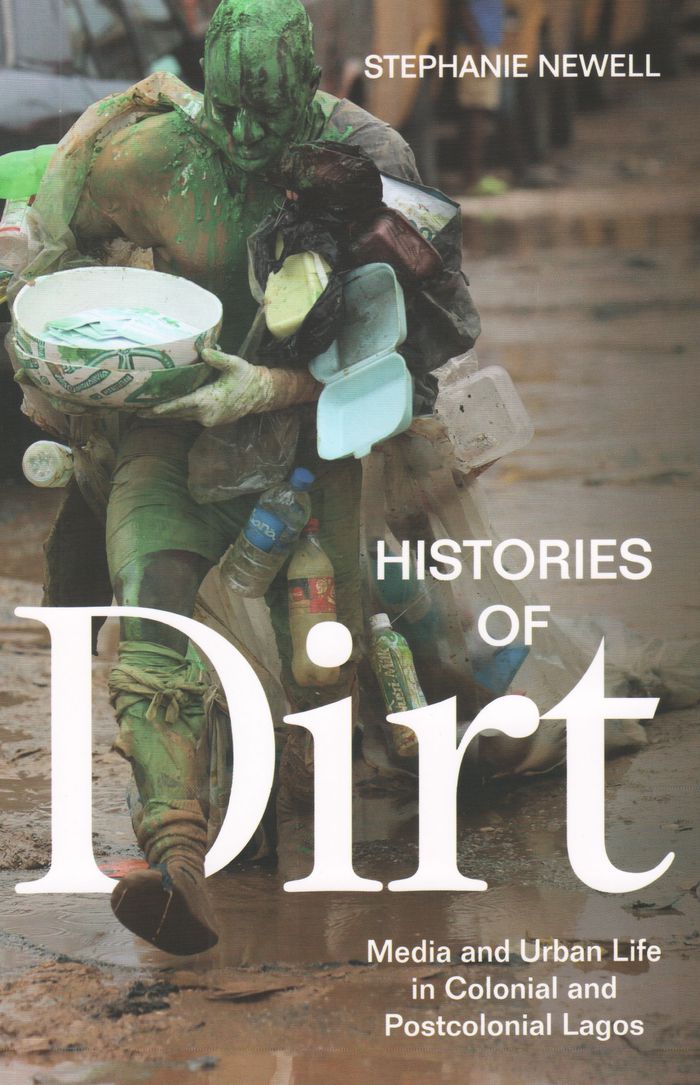
Histories of dirt: media and urban life in Colonial and Postcolonial Lagos
Actions:
Price:
$37.95
(available to order)
Summary:
In "Histories of dirt," Stephanie Newell traces the ways in which urban spaces and urban dwellers come to be regarded as dirty, as exemplified in colonial and postcolonial Lagos. Newell conceives dirt as an interpretive category that facilitates moral, sanitary, economic, and aesthetic evaluations of other cultures under the rubric of uncleanliness. She examines a number of texts ranging from newspaper articles by elite Lagosians to colonial travel writing, public health films, and urban planning to show how understandings of dirt came to structure colonial governance. Seeing Lagosians as sources of contagion and dirt, British colonizers used racist ideologies and discourses of dirt to justify racial segregation and public health policies. Newell also explores possibilities for non-Eurocentric methods for identifying African urbanites' own values and opinions by foregrounding the voices of contemporary Lagosians through interviews and focus groups in which their responses to public health issues reflect local aesthetic tastes and values. In excavating the shifting role of dirt in structuring social and political life in Lagos, Newell provides new understandings of colonial and postcolonial urban history in West Africa.
Form:
books
books
Publication:
December 2019
December 2019
Subject:
History until 1900, Middle East
History until 1900, Middle East
Form:
books
books
Actions:
Price:
$36.95
(available to order)
Summary:
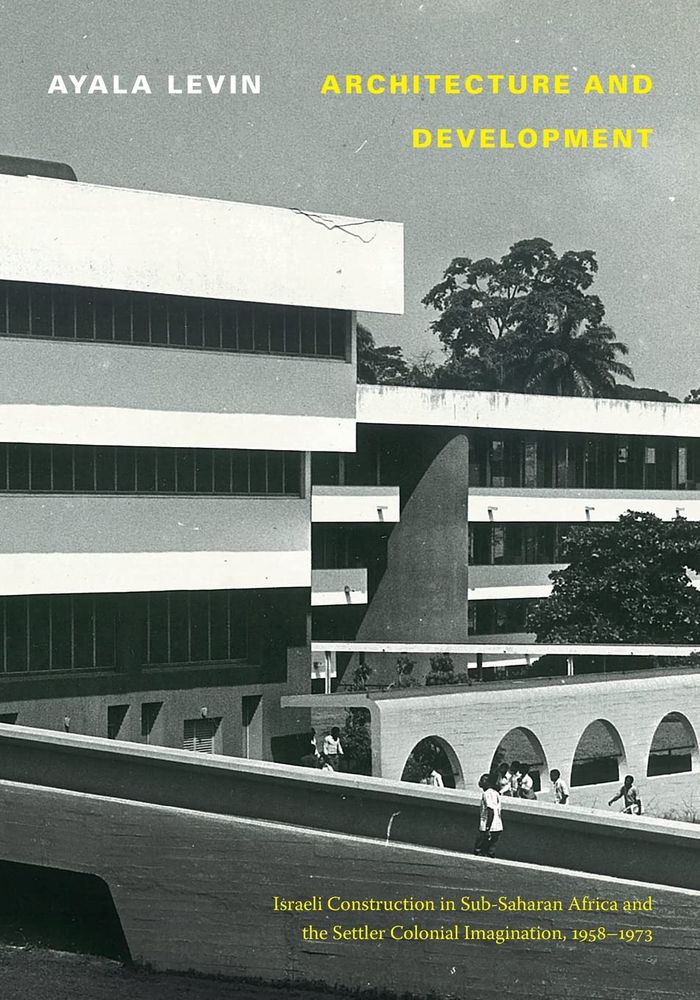
In this volume, Ayala Levin charts the settler colonial imagination and practices that undergirded Israeli architectural development aid in Africa. Focusing on the ''golden age'' of Israel’s diplomatic relations in and throughout the continent from 1958 to 1973, Levin finds that Israel positioned itself as a developing-nation alternative in the competition over aid and(...)
Title:
Architecture and development: Israeli construction in sub-saharan Africa 1958-1973
Actions:
Price:
$36.95
(available to order)
Summary:
In this volume, Ayala Levin charts the settler colonial imagination and practices that undergirded Israeli architectural development aid in Africa. Focusing on the ''golden age'' of Israel’s diplomatic relations in and throughout the continent from 1958 to 1973, Levin finds that Israel positioned itself as a developing-nation alternative in the competition over aid and influence between global North and global South. In analyses of the design and construction of prestigious governmental projects in Nigeria, Sierra Leone, and Ethiopia, Levin details how architects, planners, and a trade union--owned construction company staged Israel as a new center of nonaligned expertise. These actors and professionals paradoxically capitalized on their settler colonial experience in Palestine, refashioning it as an alternative to Western colonial expertise. Levin traces how Israel became involved in the modernization of governance, education, and agriculture in Africa, as well as how African leaders chose to work with Israel to forge new South-South connections. In so doing, she offers new ways of understanding the role of architecture as a vehicle of postcolonial development and in the mobilization of development resources.
Form:
books
books
Publication:
March 2022
March 2022
Subject:
Architecture since 1900, Africa
Architecture since 1900, Africa
Form:
books
books
Title:
Why the museum matters
Why the museum matters
Actions:
Price:
$37.95
(available to order)
Summary:
Art museums have played a vital role in our culture, drawing on Enlightenment ideals in shaping ideas, advancing learning, fostering community, and providing spaces of beauty and permanence. In this thoughtful and often personal volume, Daniel H. Weiss contemplates the idea of the universal art museum alongside broad considerations about the role of art in society and(...)
Title:
Why the museum matters
Actions:
Price:
$37.95
(available to order)
Summary:
Art museums have played a vital role in our culture, drawing on Enlightenment ideals in shaping ideas, advancing learning, fostering community, and providing spaces of beauty and permanence. In this thoughtful and often personal volume, Daniel H. Weiss contemplates the idea of the universal art museum alongside broad considerations about the role of art in society and what defines a cultural experience. The future of art museums is far from secure, and Weiss reflects on many of the difficulties these institutions face, from their financial health to their collecting practices to the audiences they engage to ensuring freedom of expression on the part of artists and curators. In grappling with these challenges, Weiss sees a solution in shared governance. His tone is one of optimism as he looks to a future where the museum will serve a greater public while continuing to be a steward of culture and a place of discovery, discourse, inspiration, and pleasure. This poignant questioning and affirmation of the museum explores our enduring values while embracing the need for change in a rapidly evolving world.
Form:
books
books
Publication:
November 2022
November 2022
Subject:
Museology
Museology
Form:
books
books
Actions:
Price:
$54.95
(available to order)
Summary:
What form of housing will emerge in Dubai, where the majority of the population are non-citizens and average length of stay three days? How will depopulating cities reclaim vacant space, reorganize infrastructure and redefine their economic identity? What type of architecture results from the prevalence of airborne contaminants? What kind of urbanism does Google Earth(...)
Title:
Distributed urbanism : cities after Google Earth
Actions:
Price:
$54.95
(available to order)
Summary:
What form of housing will emerge in Dubai, where the majority of the population are non-citizens and average length of stay three days? How will depopulating cities reclaim vacant space, reorganize infrastructure and redefine their economic identity? What type of architecture results from the prevalence of airborne contaminants? What kind of urbanism does Google Earth produce? Exploring the increasingly decentralized systems through which cities are organized and produced, this publication highlights the architectural practices that are emerging in response. Unlike early models of urbanism, in which centralized models of production, communication and governance were sited within a central business district, contemporary urbanism is shaped by remote, distributed mechanisms such as information technologies, (i.e. SatNav, Google Earth, E-trade, Photosynth or RSS web feeds) cooperative economic models and environmental networks, many of which are physically remote from the cities they shape. Consisting of a collection of case studies on global cities including Rotterdam, Tokyo, Barcelona, Detroit, Hong Kong, Dubai, Beijing and Mumbai, the authors draw on these cities in relation to current events, urban schemes and demographic data.
Form:
books
books
Publication:
July 2010
July 2010
Subject:
Urban Theory
Urban Theory
Form:
books
books

Actions:
Price:
$25.95
(available to order)
Summary:
Larry Bennett calls contemporary Chicago the third city to distinguish it from its two predecessors: the first city, a sprawling industrial center whose historical arc ran from the Civil War to the Great Depression; and the second city, the Rustbelt exemplar of the period from around 1950 to 1990. The third city features a dramatically revitalized urban core, a shifting(...)
Title:
The third city: Chicago and American urbanism
Actions:
Price:
$25.95
(available to order)
Summary:
Larry Bennett calls contemporary Chicago the third city to distinguish it from its two predecessors: the first city, a sprawling industrial center whose historical arc ran from the Civil War to the Great Depression; and the second city, the Rustbelt exemplar of the period from around 1950 to 1990. The third city features a dramatically revitalized urban core, a shifting population mix that includes new immigrant streams, and a growing number of middle-class professionals working in new economy sectors. It is also a city utterly transformed by the top-to-bottom reconstruction of public housing developments and the ambitious provision of public works like Millennium Park. It is, according to Bennett, a work in progress spearheaded by Richard M. Daley, a self-consciously innovative mayor whose strategy of neighborhood revitalization and urban renewal is a prototype of city governance for the twenty-first century. The Third City ultimately contends that to understand Chicago under Daley’s charge is to understand what metropolitan life across North America may well look like in the coming decades.
Form:
books
books
Publication:
September 2010
September 2010
Subject:
History since 1900, Reference Books
History since 1900, Reference Books
Form:
books
books

Actions:
Price:
$124.50
(available to order)
Summary:
In Planning Asian Cities: Risks and Resilience, Stephen Hamnett and Dean Forbes explore the planning history and recent development of Pacific Asia’s major cities. They show how globalization, and the competition to achieve global city status, has had a profound effect on all these cities. But how resilient are these cities to the risks that they face? How can they(...)
Subject:
Contemporary Asian Architecture
Contemporary Asian Architecture
Publication:
April 2012
April 2012
Title:
Planning asian cities: risks and resilience
Actions:
Price:
$124.50
(available to order)
Summary:
In Planning Asian Cities: Risks and Resilience, Stephen Hamnett and Dean Forbes explore the planning history and recent development of Pacific Asia’s major cities. They show how globalization, and the competition to achieve global city status, has had a profound effect on all these cities. But how resilient are these cities to the risks that they face? How can they manage continuing pressures for development and growth while reducing their vulnerability to a range of potential crises? How well prepared are they for climate change? How can they build social capital, so important to a city’s recovery from shocks and disasters? What forms of governance and planning are appropriate for the vast mega-regions that are emerging? And, given the tradition of top-down, centralized, state-directed planning which drove the economic growth of many of these cities in the last century, what prospects are there of them becoming more inclusive and sensitive to the diverse needs of their populations and to the importance of culture, heritage and local places in creating liveable cities?
Form:
books
books
Publication:
April 2012
April 2012
Subject:
Contemporary Asian Architecture
Contemporary Asian Architecture
Form:
books
books
Actions:
Price:
$29.95
(available to order)
Summary:
"At the edge" is a rich and evocative call to action at a time when new ideas are urgently needed. Mandatory reading for policy analysts and decision makers in the public, private, and volunteer sectors, it will be equally useful to scholars, teachers, students, and others interested in creating sustainable societies. Throughout the world, biophysical evidence is mounting(...)
Title:
At the edge : sustainable development in the 21st century
Actions:
Price:
$29.95
(available to order)
Summary:
"At the edge" is a rich and evocative call to action at a time when new ideas are urgently needed. Mandatory reading for policy analysts and decision makers in the public, private, and volunteer sectors, it will be equally useful to scholars, teachers, students, and others interested in creating sustainable societies. Throughout the world, biophysical evidence is mounting that human growth and activity patterns are slowly destroying the earth. This ecological deterioration is accompanied by similar social and economic decline, with potentially grave consequences for the continued existence of human societies. Yet, as Ann Dale compassionately argues, it is not too late to take action. Hope lies in sustainable development - the fundamental human imperative of the 21st century. Sustainable development, in Dale's view, is the process of reconciling three imperatives: the ecological, the social, and the economic. Equitable access to resources in all three spheres is fundamental to the global realization of sustainable development. This will not be realized without strong leadership by governments at all levels. Ultimately needed is a new framework for governance based on human responsibility and a recognition of the interconnectedness of human and natural systems.
Form:
books
books
Publication:
January 2001, Vancouver
January 2001, Vancouver
Subject:
Green Architecture
Green Architecture


