


6899 Results
Form:
photographs
photographs
Actions:
Reference number:
ARCH256324
Description:
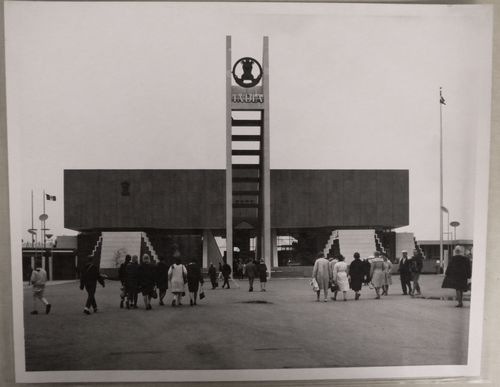
"Le Pavillon de l'Inde à l'Expo 67 ----- Situé dans l'île [sic] Notre-Dame, le Pavillon Indien illustre par son contenu l'influence que l'Inde a exercée sur des peuples aussi civilisés que les Grecs, les Romains et les Arabes. Le visiteur constatera l'effort d'un pays qui veut marquer l'époque actuelle d'une civilisation aussi belle que l'ancienne. / Pavillon of India -------- The rich traditions and diverse languages, costumes, religions and customs of India are exhibited in a magnificent pavilion on Ile Notre-Dame. Special attractions include famous bronzes and Mughal paintings, weapons, drums, jewelry, pictorial panorama, changing gallery of modern art, music and dance."--Description.
ARCH256324
Description:
"Le Pavillon de l'Inde à l'Expo 67 ----- Situé dans l'île [sic] Notre-Dame, le Pavillon Indien illustre par son contenu l'influence que l'Inde a exercée sur des peuples aussi civilisés que les Grecs, les Romains et les Arabes. Le visiteur constatera l'effort d'un pays qui veut marquer l'époque actuelle d'une civilisation aussi belle que l'ancienne. / Pavillon of India -------- The rich traditions and diverse languages, costumes, religions and customs of India are exhibited in a magnificent pavilion on Ile Notre-Dame. Special attractions include famous bronzes and Mughal paintings, weapons, drums, jewelry, pictorial panorama, changing gallery of modern art, music and dance."--Description.
People:
Date:
1967
1967
Title:
View of the Pavilion of India, Expo 67, Montréal, Québec
Actions:
ARCH256324
Description:
"Le Pavillon de l'Inde à l'Expo 67 ----- Situé dans l'île [sic] Notre-Dame, le Pavillon Indien illustre par son contenu l'influence que l'Inde a exercée sur des peuples aussi civilisés que les Grecs, les Romains et les Arabes. Le visiteur constatera l'effort d'un pays qui veut marquer l'époque actuelle d'une civilisation aussi belle que l'ancienne. / Pavillon of India -------- The rich traditions and diverse languages, costumes, religions and customs of India are exhibited in a magnificent pavilion on Ile Notre-Dame. Special attractions include famous bronzes and Mughal paintings, weapons, drums, jewelry, pictorial panorama, changing gallery of modern art, music and dance."--Description.
View of the Pavilion of India, Expo 67, Montréal, Québec
Actions:
ARCH256324
Description:
"Le Pavillon de l'Inde à l'Expo 67 ----- Situé dans l'île [sic] Notre-Dame, le Pavillon Indien illustre par son contenu l'influence que l'Inde a exercée sur des peuples aussi civilisés que les Grecs, les Romains et les Arabes. Le visiteur constatera l'effort d'un pays qui veut marquer l'époque actuelle d'une civilisation aussi belle que l'ancienne. / Pavillon of India -------- The rich traditions and diverse languages, costumes, religions and customs of India are exhibited in a magnificent pavilion on Ile Notre-Dame. Special attractions include famous bronzes and Mughal paintings, weapons, drums, jewelry, pictorial panorama, changing gallery of modern art, music and dance."--Description.
Form:
photographs
photographs
Date:
1967
1967
People:
Level of archival description:
Project
Project
Reference number:
AP154.S1.1973.PR01
Description:
Project series AP154.S1.1973.PR01, the Seagram Building interior design and renovation project series (1973) documents several renovation projects for the Seagram Building, 375 Park Avenue, New York, N.Y. The series is arranged in two subseries. The first subseries consists drawings for interior design projects undertaken by Giovanni Pasanella in the 1970s for Joseph E. Seagram and Sons (JES). In 1980, the Seagram Building was sold to the Teachers Insurance and Annuity Association of America (TIAA). Attached to the deed of sale was a lease agreement between the landlord TIAA and the tenant JES. The tenant's exclusive rights, which included rights related to modifications to the building, were outlined in Article 26 of the lease agreement. A substantial part of the second subseries is related to projects undertaken since 1980, including projects that have been identified by Tom Stetz as being related to Article 26. The second subseries also includes copies of original working drawings for the Seagram Building, which, under the terms of Article 26, were the standard against which changes to the building would be measured.
AP154.S1.1973.PR01
Description:
Project series AP154.S1.1973.PR01, the Seagram Building interior design and renovation project series (1973) documents several renovation projects for the Seagram Building, 375 Park Avenue, New York, N.Y. The series is arranged in two subseries. The first subseries consists drawings for interior design projects undertaken by Giovanni Pasanella in the 1970s for Joseph E. Seagram and Sons (JES). In 1980, the Seagram Building was sold to the Teachers Insurance and Annuity Association of America (TIAA). Attached to the deed of sale was a lease agreement between the landlord TIAA and the tenant JES. The tenant's exclusive rights, which included rights related to modifications to the building, were outlined in Article 26 of the lease agreement. A substantial part of the second subseries is related to projects undertaken since 1980, including projects that have been identified by Tom Stetz as being related to Article 26. The second subseries also includes copies of original working drawings for the Seagram Building, which, under the terms of Article 26, were the standard against which changes to the building would be measured.
People:
Date:
1955-2007
1955-2007
Title:
Seagram Building interior design and renovation, 375 Park Avenue, New York, N.Y. (1973-2001)
Actions:
AP154.S1.1973.PR01
Description:
Project series AP154.S1.1973.PR01, the Seagram Building interior design and renovation project series (1973) documents several renovation projects for the Seagram Building, 375 Park Avenue, New York, N.Y. The series is arranged in two subseries. The first subseries consists drawings for interior design projects undertaken by Giovanni Pasanella in the 1970s for Joseph E. Seagram and Sons (JES). In 1980, the Seagram Building was sold to the Teachers Insurance and Annuity Association of America (TIAA). Attached to the deed of sale was a lease agreement between the landlord TIAA and the tenant JES. The tenant's exclusive rights, which included rights related to modifications to the building, were outlined in Article 26 of the lease agreement. A substantial part of the second subseries is related to projects undertaken since 1980, including projects that have been identified by Tom Stetz as being related to Article 26. The second subseries also includes copies of original working drawings for the Seagram Building, which, under the terms of Article 26, were the standard against which changes to the building would be measured.
Seagram Building interior design and renovation, 375 Park Avenue, New York, N.Y. (1973-2001)
Actions:
AP154.S1.1973.PR01
Description:
Project series AP154.S1.1973.PR01, the Seagram Building interior design and renovation project series (1973) documents several renovation projects for the Seagram Building, 375 Park Avenue, New York, N.Y. The series is arranged in two subseries. The first subseries consists drawings for interior design projects undertaken by Giovanni Pasanella in the 1970s for Joseph E. Seagram and Sons (JES). In 1980, the Seagram Building was sold to the Teachers Insurance and Annuity Association of America (TIAA). Attached to the deed of sale was a lease agreement between the landlord TIAA and the tenant JES. The tenant's exclusive rights, which included rights related to modifications to the building, were outlined in Article 26 of the lease agreement. A substantial part of the second subseries is related to projects undertaken since 1980, including projects that have been identified by Tom Stetz as being related to Article 26. The second subseries also includes copies of original working drawings for the Seagram Building, which, under the terms of Article 26, were the standard against which changes to the building would be measured.
Level of archival description:
Project
Project
Date:
1955-2007
1955-2007
People:
Form:
photographs
photographs
Actions:
Reference number:
PH1982:0020:001-012
Description:
The photogaraphs in this portfolio were made in 1975-77 for the Joseph E. Seagram & Sons Bicentennial project directed by Phyllis Lambert and edited by Richard Pare.
PH1982:0020:001-012
Description:
The photogaraphs in this portfolio were made in 1975-77 for the Joseph E. Seagram & Sons Bicentennial project directed by Phyllis Lambert and edited by Richard Pare.
People:
Date:
between 1975 and 1977
between 1975 and 1977
Title:
Portfolio with interior and exterior views of courthouses across the United States
Actions:
PH1982:0020:001-012
Description:
The photogaraphs in this portfolio were made in 1975-77 for the Joseph E. Seagram & Sons Bicentennial project directed by Phyllis Lambert and edited by Richard Pare.
Portfolio with interior and exterior views of courthouses across the United States
Actions:
PH1982:0020:001-012
Description:
The photogaraphs in this portfolio were made in 1975-77 for the Joseph E. Seagram & Sons Bicentennial project directed by Phyllis Lambert and edited by Richard Pare.
Form:
photographs
photographs
Date:
between 1975 and 1977
between 1975 and 1977
People:
Form:
drawings
Quantity:
3 File
drawings
Quantity:
3 File
Actions:
Reference number:
ARCH49058
Description:
plan and elevations for East End Boy's Club Rotary by John Flood & Sons Ltd., plan of a cerebral Palsy Centre, Hamilton, by Luget [?] & Secord, architect
ARCH49058
Description:
plan and elevations for East End Boy's Club Rotary by John Flood & Sons Ltd., plan of a cerebral Palsy Centre, Hamilton, by Luget [?] & Secord, architect
People:
Title:
Plan and elevations for East End Boy's Club Rotary, plan of a cerebral Palsy Centre
Actions:
ARCH49058
Description:
plan and elevations for East End Boy's Club Rotary by John Flood & Sons Ltd., plan of a cerebral Palsy Centre, Hamilton, by Luget [?] & Secord, architect
Plan and elevations for East End Boy's Club Rotary, plan of a cerebral Palsy Centre
Actions:
ARCH49058
Description:
plan and elevations for East End Boy's Club Rotary by John Flood & Sons Ltd., plan of a cerebral Palsy Centre, Hamilton, by Luget [?] & Secord, architect
Form:
drawings
Quantity:
3 File
drawings
Quantity:
3 File
People:
Form:
events
events
Actions:
Description:
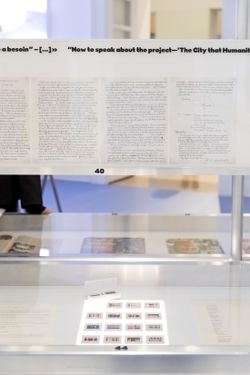
As part of our exhibition Far From Nostalgia, we invite you to a reading of the correspondence between Argentine architect Amancio Williams concerning his project The City That Humanity Needs (Ciudad que Necesita la Humanidad), in and around the gallery space, from 6 to 7 pm on Thursday, 23 November.
As part of our exhibition Far From Nostalgia, we invite you to a reading of the correspondence between Argentine architect Amancio Williams concerning his project The City That Humanity Needs (Ciudad que Necesita la Humanidad), in and around the gallery space, from 6 to 7 pm on Thursday, 23 November.
Date:
23 November 2023, 6pm to 7pm
23 November 2023, 6pm to 7pm
Title:
A reading of Amancio Williams’s letters
Actions:
Description:
As part of our exhibition Far From Nostalgia, we invite you to a reading of the correspondence between Argentine architect Amancio Williams concerning his project The City That Humanity Needs (Ciudad que Necesita la Humanidad), in and around the gallery space, from 6 to 7 pm on Thursday, 23 November.
A reading of Amancio Williams’s letters
Actions:
Description:
As part of our exhibition Far From Nostalgia, we invite you to a reading of the correspondence between Argentine architect Amancio Williams concerning his project The City That Humanity Needs (Ciudad que Necesita la Humanidad), in and around the gallery space, from 6 to 7 pm on Thursday, 23 November.
Form:
events
events
Date:
23 November 2023
6pm to 7pm
23 November 2023
6pm to 7pm
Form:
drawings
drawings
Actions:
Reference number:
DR2004:1334
Description:
site plans, detail section, details plan, and floor plans, and includes site plan for offices for P. Traut at Hythe by W.H. Saunders & Sons, Architects (1965)
DR2004:1334
Description:
site plans, detail section, details plan, and floor plans, and includes site plan for offices for P. Traut at Hythe by W.H. Saunders & Sons, Architects (1965)
People:
Title:
site plans, detail section, details plan, and floor plans and site plan for offices for P. Traut at Hythe
Actions:
DR2004:1334
Description:
site plans, detail section, details plan, and floor plans, and includes site plan for offices for P. Traut at Hythe by W.H. Saunders & Sons, Architects (1965)
site plans, detail section, details plan, and floor plans and site plan for offices for P. Traut at Hythe
Actions:
DR2004:1334
Description:
site plans, detail section, details plan, and floor plans, and includes site plan for offices for P. Traut at Hythe by W.H. Saunders & Sons, Architects (1965)
Form:
drawings
drawings
People:
Form:
articles
articles
Actions:
On Ludwig Berger’s recordings of melting landscapes
Keyword(s):
Oscillanting Spaces, Ludwig Berger, glacier, Morteratsch, Furka, melting, climate change, Alps, Switzerland, sound
Oscillanting Spaces, Ludwig Berger, glacier, Morteratsch, Furka, melting, climate change, Alps, Switzerland, sound
Published:
18 August 2025
18 August 2025
Title:
What does a glacier (or climate change) sound like?
On Ludwig Berger’s recordings of melting landscapes
Actions:
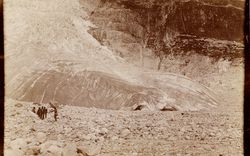
What does a glacier (or climate change) sound like?
On Ludwig Berger’s recordings of melting landscapes
Actions:
Level of archival description:
Project
Project
Actions:
Reference number:
AP013.S1.D289
Description:
File documents an executed (?) project for factory alterations in Longueuil, Québec. Material in this file was produced in 1947. File contains index cards, survey drawings, preliminary drawings, a working drawing, detail drawings, mechanical drawings, electrical drawings, and textual documents.
AP013.S1.D289
Description:
File documents an executed (?) project for factory alterations in Longueuil, Québec. Material in this file was produced in 1947. File contains index cards, survey drawings, preliminary drawings, a working drawing, detail drawings, mechanical drawings, electrical drawings, and textual documents.
People:
Date:
1947
1947
Title:
Alterations to Plant for Weston Ltd.
Actions:
AP013.S1.D289
Description:
File documents an executed (?) project for factory alterations in Longueuil, Québec. Material in this file was produced in 1947. File contains index cards, survey drawings, preliminary drawings, a working drawing, detail drawings, mechanical drawings, electrical drawings, and textual documents.
Alterations to Plant for Weston Ltd.
Actions:
AP013.S1.D289
Description:
File documents an executed (?) project for factory alterations in Longueuil, Québec. Material in this file was produced in 1947. File contains index cards, survey drawings, preliminary drawings, a working drawing, detail drawings, mechanical drawings, electrical drawings, and textual documents.
Level of archival description:
Project
Project
Date:
1947
1947
People:
Form:
drawings, textual records
drawings, textual records
Actions:
Reference number:
DR2012:0012:061:001:006
Description:
File containing a leaf from a newspaper, sketches, and a transparency related to the Parable series. Original folder inscribed in graphite: FATHERS AND SONS 1996/07 1996/08
DR2012:0012:061:001:006
Description:
File containing a leaf from a newspaper, sketches, and a transparency related to the Parable series. Original folder inscribed in graphite: FATHERS AND SONS 1996/07 1996/08
People:
Date:
1996
1996
Title:
Press clippings, and sketches, The Parable series
Actions:
DR2012:0012:061:001:006
Description:
File containing a leaf from a newspaper, sketches, and a transparency related to the Parable series. Original folder inscribed in graphite: FATHERS AND SONS 1996/07 1996/08
Press clippings, and sketches, The Parable series
Actions:
DR2012:0012:061:001:006
Description:
File containing a leaf from a newspaper, sketches, and a transparency related to the Parable series. Original folder inscribed in graphite: FATHERS AND SONS 1996/07 1996/08
Form:
drawings, textual records
drawings, textual records
Date:
1996
1996
People:
Form:
textual records
textual records
Title:
Compte rendu du cas juridique de la Ville de Montréal contre James Morgan à la Cour du banc du roi
Compte rendu du cas juridique de la Ville de Montréal contre James Morgan à la Cour du banc du roi
Actions:
Reference number:
ARCH6373
Description:
Compte rendu du cas juridique de la Ville de Montréal contre James Morgan à la Cour du banc du roi, Montréal, pour l'audition de l'appel interjeté à la Cour suprême du Canada, Ottawa, [après le 8 août 1919]. Coupures de journaux. Devis estimatif et calcul des frais de démolition du garage, 1921. Notes de Cormier au sujet de l'affaire, incluant son opinion sur l'impossibilité de la proposition de transformer le garage en appartements. Correspondance avec L. E. Beaulieu, avocat; Léon-Mercier Gouin, avocat; J. C. Lamothe, avocat, et Omer Lapierre, shérif du district de Montréal, au sujet du procès et des honoraires dus à Cormier.
ARCH6373
Description:
Compte rendu du cas juridique de la Ville de Montréal contre James Morgan à la Cour du banc du roi, Montréal, pour l'audition de l'appel interjeté à la Cour suprême du Canada, Ottawa, [après le 8 août 1919]. Coupures de journaux. Devis estimatif et calcul des frais de démolition du garage, 1921. Notes de Cormier au sujet de l'affaire, incluant son opinion sur l'impossibilité de la proposition de transformer le garage en appartements. Correspondance avec L. E. Beaulieu, avocat; Léon-Mercier Gouin, avocat; J. C. Lamothe, avocat, et Omer Lapierre, shérif du district de Montréal, au sujet du procès et des honoraires dus à Cormier.
People:
Date:
1921, 1925-1926
1921, 1925-1926
Title:
Compte rendu du cas juridique de la Ville de Montréal contre James Morgan à la Cour du banc du roi
Actions:
ARCH6373
Description:
Compte rendu du cas juridique de la Ville de Montréal contre James Morgan à la Cour du banc du roi, Montréal, pour l'audition de l'appel interjeté à la Cour suprême du Canada, Ottawa, [après le 8 août 1919]. Coupures de journaux. Devis estimatif et calcul des frais de démolition du garage, 1921. Notes de Cormier au sujet de l'affaire, incluant son opinion sur l'impossibilité de la proposition de transformer le garage en appartements. Correspondance avec L. E. Beaulieu, avocat; Léon-Mercier Gouin, avocat; J. C. Lamothe, avocat, et Omer Lapierre, shérif du district de Montréal, au sujet du procès et des honoraires dus à Cormier.
Compte rendu du cas juridique de la Ville de Montréal contre James Morgan à la Cour du banc du roi
Actions:
ARCH6373
Description:
Compte rendu du cas juridique de la Ville de Montréal contre James Morgan à la Cour du banc du roi, Montréal, pour l'audition de l'appel interjeté à la Cour suprême du Canada, Ottawa, [après le 8 août 1919]. Coupures de journaux. Devis estimatif et calcul des frais de démolition du garage, 1921. Notes de Cormier au sujet de l'affaire, incluant son opinion sur l'impossibilité de la proposition de transformer le garage en appartements. Correspondance avec L. E. Beaulieu, avocat; Léon-Mercier Gouin, avocat; J. C. Lamothe, avocat, et Omer Lapierre, shérif du district de Montréal, au sujet du procès et des honoraires dus à Cormier.
Form:
textual records
textual records
Date:
1921, 1925-1926
1921, 1925-1926
People:


